2027 Engineering Degree Bachelor's-Level ROI Report: Best Career Returns Without Graduate School

Co-Founder and Chief Data Scientist
Engineering students often face a high-stakes question: start earning after a bachelor's degree or pay for graduate school first? The choice matters because the U. S. Bureau of Labor Statistics reported a May 2024 median annual wage of $97,310 for architecture and engineering occupations, well above the national median for all jobs. This guide is for students, career changers, and parents comparing engineering majors, job paths, and costs. You'll learn which bachelor's-level engineering careers tend to deliver the strongest financial return without assuming that a master's degree is automatically necessary.
Key Things You Should Know
- For many engineering careers, an ABET-accredited bachelor's degree is enough to enter the field; BLS May 2024 wage data shows several engineering occupations with median annual wages above $100,000.
- The highest bachelor's-level ROI usually comes from combining a strong major, low net tuition, paid internships or co-ops, and entry into high-paying industries such as semiconductors, energy, aerospace, software-enabled manufacturing, and consulting.
- Graduate school makes the most financial sense when it is required for a specialized role, funded by an employer or assistantship, or clearly tied to a promotion path; otherwise, delaying full-time engineering income can reduce near-term ROI.
- Which Engineering Bachelor's Degree Careers Deliver the Highest ROI Without Graduate School?
- Which Industries Reward Engineering Bachelor's Graduates the Most?
Which Engineering Bachelor's Degree Careers Deliver the Highest ROI Without Graduate School?
The best bachelor's-level ROI comes from careers where employers routinely hire graduates directly into technical roles, pay strong starting salaries, and offer promotion paths based on experience, licensure, project results, or technical specialization. ROI here means the financial return after considering tuition, time in school, debt, opportunity cost, and realistic earnings without requiring graduate study.
Engineering differs from many licensed fields because a bachelor's degree can be the main professional entry credential. That is not true in some health and counseling careers, where graduate study is structurally built into the career path, such as online speech pathology programs. For engineering students, the key is choosing a path where the bachelor's degree connects directly to paid technical work.
The table below compares engineering occupations that commonly offer strong bachelor's-level ROI. Salary figures are national medians from BLS May 2024 occupational wage data, so they should be used as a benchmark rather than a guarantee for any individual graduate.
| Career path | Typical bachelor's major | May 2024 median annual wage | Why ROI can be strong without graduate school |
| Computer hardware engineer | Computer engineering, electrical engineering | $155,020 | High pay in chip design, embedded systems, cloud hardware, and electronics; graduate school can help for research roles but is not always required. |
| Petroleum engineer | Petroleum, chemical, mechanical engineering | $141,280 | Very high compensation potential in energy, though hiring can be cyclical and location-dependent. |
| Aerospace engineer | Aerospace, mechanical engineering | $130,720 | Strong pay in defense, space systems, propulsion, and aircraft design; security clearance can increase opportunities. |
| Nuclear engineer | Nuclear, mechanical, electrical engineering | $125,460 | Specialized workforce with roles in power, defense, safety, and medical applications. |
| Chemical engineer | Chemical engineering | $121,860 | Broad use in energy, pharmaceuticals, materials, manufacturing, and process optimization. |
| Electrical or electronics engineer | Electrical engineering | $118,780 | Demand across power systems, automation, communications, defense, and electronics. |
| Mechanical engineer | Mechanical engineering | $102,320 | Versatile degree with roles in manufacturing, robotics, HVAC, vehicles, product design, and energy systems. |
| Industrial engineer | Industrial engineering, systems engineering | $101,140 | Strong fit for operations, supply chain, analytics, manufacturing, and process improvement. |
| Civil engineer | Civil engineering | $99,590 | Stable infrastructure demand; professional licensure can significantly improve advancement without a graduate degree. |
For most students, the strongest ROI is not simply the highest salary on the table. A lower-cost public university with ABET accreditation, strong co-op placement, and access to local employers can outperform a more expensive program if it leads to the same engineering role with less debt.
Which Industries Reward Engineering Bachelor's Graduates the Most?
Industry choice can change engineering ROI as much as major choice. Two graduates with the same bachelor's degree may see very different pay, bonus opportunities, relocation support, and advancement speed depending on whether they enter software-adjacent hardware, energy, public infrastructure, consulting, manufacturing, or government work.
Engineering bachelor's graduates should compare industries by compensation, volatility, work-life trade-offs, and the type of experience they build. The table below summarizes common ROI patterns rather than ranking every possible employer.
| Industry | Engineering roles commonly hired | ROI advantages | Trade-offs to evaluate |
| Semiconductors and electronics | Computer hardware, electrical, process, test, manufacturing engineers | High wages, technical specialization, strong demand tied to chips, AI infrastructure, and advanced manufacturing | Competitive hiring; roles may cluster in specific regions and require strong lab or design experience. |
| Energy and utilities | Petroleum, electrical, mechanical, nuclear, chemical engineers | High pay in some segments, long-term infrastructure needs, clear technical ladders | Oil and gas can be cyclical; utilities may offer steadier but sometimes slower compensation growth. |
| Aerospace and defense | Aerospace, mechanical, systems, electrical engineers | Strong salaries, large projects, clearance-based job security, structured advancement | Hiring may depend on citizenship, clearance eligibility, and geographic concentration. |
| Pharmaceuticals and chemicals | Chemical, biomedical, materials, process engineers | Good pay for process validation, quality, scale-up, and regulatory manufacturing roles | Some research roles prefer graduate degrees, while plant and process roles often value experience. |
| Construction and infrastructure | Civil, environmental, structural, transportation engineers | Stable public and private demand; PE licensure can raise responsibility and earnings | Early pay may be lower than in hardware or energy, but licensure can improve long-term ROI. |
| Manufacturing and logistics | Mechanical, industrial, manufacturing engineers | Broad hiring base, practical advancement into operations, quality, automation, and plant leadership | Compensation varies widely by sector, automation maturity, and shift or site expectations. |
A common mistake is assuming that a "hot" major automatically leads to the best outcome. The better question is whether the industry using that major has paid internships, strong entry-level hiring, and promotion paths that do not require pausing work for a full-time graduate degree.
The fastest financial return usually comes from roles that start paying well immediately, require no long licensing delay before meaningful work, and let students gain experience through co-ops or internships before graduation. The speed of return matters because every year spent working full time can reduce the opportunity cost of education.
Students trying to recover tuition quickly should look for entry-level roles that provide immediate technical responsibility and measurable business value. These paths often turn classroom knowledge into paid work faster than research-heavy or graduate-prep tracks.
- Field engineer or applications engineer: good for graduates who want client-facing technical work, travel opportunities, and early responsibility supporting products, equipment, or systems.
- Manufacturing engineer: strong for students who like hands-on problem solving, process improvement, automation, quality control, and plant operations.
- Electrical test engineer: useful for graduates with circuit, instrumentation, lab, and troubleshooting experience who want fast entry into electronics, defense, energy, or hardware companies.
- Civil design engineer or engineer-in-training: a practical route for students aiming for PE licensure, public infrastructure, transportation, water, or land development.
- Industrial or process improvement analyst: strong for students who combine engineering fundamentals with statistics, operations, Lean, supply chain, and data tools.
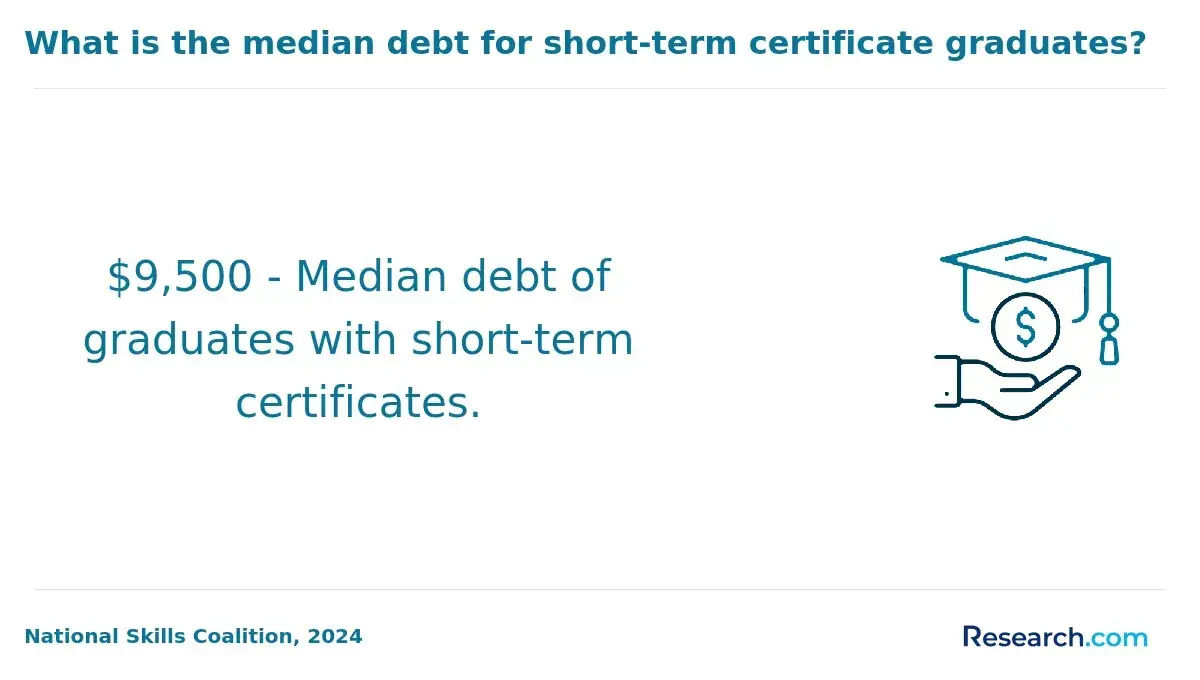
Cost control is central to fast ROI. College Board's 2024-25 pricing report lists average published tuition and fees of $11,610 for in-state students at public four-year institutions, before grants and scholarships. That means a student who chooses a lower-cost accredited option and secures paid internships may reach positive financial return much earlier than a student with the same job outcome but substantially higher debt.
Location affects ROI in two ways: wages vary by region, and living costs can absorb a large share of higher pay. A $95,000 engineering job in a lower-cost metro may leave more disposable income than a $115,000 role in a very expensive housing market, especially for graduates repaying loans.
Students should compare location-adjusted ROI, not salary alone. The most useful comparison includes rent, transportation, state taxes, relocation costs, commute time, and whether the employer offers overtime, bonuses, clearance premiums, or tuition support.
| Location factor | How it affects ROI | What students should check before accepting an offer |
| Industry cluster | Regions with aerospace, energy, semiconductor, automotive, or infrastructure employers may offer better networking and job mobility. | Look for multiple employers in the same metro so one job loss or team change does not force a major relocation. |
| Cost of housing | High salaries can be offset by rent, mortgage costs, parking, and long commutes. | Estimate monthly take-home pay after taxes, housing, loan payments, and transportation. |
| Licensure rules | PE requirements are state-based, and civil, structural, environmental, and public-facing work can be more license-sensitive. | Confirm whether the role counts as qualifying experience under the state engineering board. |
| Remote or hybrid options | Some software-adjacent, design, analysis, and systems roles offer flexibility, while labs, plants, and field roles usually require site presence. | Ask whether remote work is permanent policy, team-specific, or manager-dependent. |
| Regional employer mix | Public agencies, utilities, defense contractors, startups, and manufacturers may reward different skills and credentials. | Compare salary growth, benefits, stability, and promotion criteria instead of only first-year pay. |
The biggest red flag is accepting the highest nominal salary without calculating net income. Engineering graduates should create a simple monthly budget for each offer because cost-of-living differences can change which job produces the better real return.
Skills raise ROI when they make a bachelor's graduate productive sooner or eligible for higher-paying technical assignments. Employers still value engineering fundamentals, but current hiring increasingly rewards graduates who can connect design, data, software, manufacturing, safety, and communication.
The most valuable skill mix depends on the engineering discipline, but several skill categories consistently improve employability and advancement. Students should prioritize skills that can be demonstrated through projects, internships, portfolios, lab work, or measurable outcomes.
- Programming and automation: Python, MATLAB, C/C++, SQL, LabVIEW, PLCs, or scripting can help engineers analyze data, automate tests, and improve systems.
- CAD, simulation, and modeling: SolidWorks, AutoCAD, Revit, ANSYS, finite element analysis, computational fluid dynamics, or circuit simulation tools can make graduates more useful in design roles.
- Data analysis and statistics: regression, design of experiments, quality metrics, reliability analysis, and dashboarding help engineers prove performance improvements.
- Manufacturing and process improvement: Lean, Six Sigma, root-cause analysis, process capability, and failure mode analysis are valuable in plants, logistics, and quality roles.
- Communication and project coordination: technical writing, client communication, cost estimation, scheduling, and risk tracking help engineers move toward leadership without needing a graduate degree first.
AI is changing engineering work, but it is not replacing the need for judgment. Graduates who can use AI-assisted design, code generation, simulation support, and documentation tools while still checking assumptions, safety, constraints, and standards may be better positioned than graduates who rely only on classroom theory.
Certifications can improve ROI when they connect directly to job duties, employer requirements, safety responsibilities, or promotion criteria. They are most useful when paired with experience; a credential alone rarely substitutes for strong engineering judgment or practical project work.
The best certification depends on discipline and career target. Students should avoid collecting random credentials and instead choose credentials that appear repeatedly in job descriptions for the roles they want.
- Engineer-in-Training or Fundamentals of Engineering exam: especially important for civil, structural, environmental, geotechnical, transportation, and public infrastructure paths that may lead to PE licensure.
- Professional Engineer license: often valuable after qualifying experience, particularly for engineers who sign off on public-facing designs or supervise regulated engineering work.
- Six Sigma Green Belt or Black Belt: useful for manufacturing, quality, operations, process improvement, and industrial engineering roles.
- Project Management Professional or Certified Associate in Project Management: useful once an engineer begins coordinating budgets, schedules, vendors, or cross-functional teams.
- Certified Energy Manager or energy-related credentials: useful for facilities, utilities, sustainability, building systems, and energy efficiency roles.
- AWS, Azure, cybersecurity, or data credentials: useful for engineers moving into cloud infrastructure, industrial IoT, controls, smart manufacturing, or software-enabled hardware systems.
The smartest credential strategy is targeted and cost-aware. Just as someone comparing the cheapest paralegal certificate online would check whether the credential matches employer expectations, engineering graduates should verify that a certification is recognized in their specific industry before paying for it.
Employer type and company size affect ROI through pay, benefits, training, stability, promotion speed, and exposure to high-value projects. The best choice depends on whether the graduate wants technical depth, management experience, work-life balance, faster raises, or long-term security.
Large employers often provide structured rotational programs, relocation support, tuition assistance, formal mentoring, and clearer pay bands. Smaller employers may offer broader responsibility sooner, closer access to senior leaders, and faster skill development, but compensation and training can be less predictable.
| Employer type | ROI strengths | Possible limitations | Best fit |
| Large private company | Competitive compensation, benefits, training programs, mobility across teams | Promotion may be structured and slower; work can be specialized | Graduates who want stability, brand-name experience, and formal development |
| Startup or small engineering firm | Broad responsibilities, rapid learning, potential upside | Benefits, mentoring, and job security can vary widely | Graduates comfortable with ambiguity and fast problem solving |
| Government agency | Stability, public service mission, benefits, infrastructure experience | Pay growth may be slower than in some private industries | Civil, environmental, transportation, and public works engineers |
| Defense contractor | Strong technical projects, clearance value, long program cycles | Eligibility requirements and location constraints may apply | Aerospace, systems, mechanical, electrical, and software-adjacent engineers |
| Consulting firm | Client exposure, project variety, faster business skill development | Billable hours, travel, and deadlines can be demanding | Graduates who want communication-heavy technical work and leadership growth |
Some engineers later use employer tuition assistance for management education, especially if they are moving from technical contributor to product, operations, or executive roles. In that case, comparing options such as easiest MBA programs can make sense, but the strongest ROI usually comes when the degree is tied to a clear promotion or employer-funded pathway.
Emerging career paths can increase future ROI when they build on engineering fundamentals rather than abandoning them. The best opportunities often sit at the intersection of physical systems, software, data, sustainability, and automation.
Students do not need to chase every trend, but they should understand which technical areas are expanding across multiple industries. These paths may reward bachelor's graduates who build relevant projects, internships, and tool fluency early.
- AI-enabled hardware and edge computing: combines electrical, computer, thermal, and systems engineering for devices, sensors, robotics, and data centers.
- Semiconductor manufacturing and advanced packaging: uses process engineering, materials, equipment maintenance, yield improvement, and quality systems.
- Battery, grid, and energy storage engineering: supports electric vehicles, renewable integration, utilities, and industrial power systems.
- Robotics and automation: blends mechanical design, controls, embedded systems, machine vision, manufacturing, and safety.
- Climate resilience and water infrastructure: creates demand for civil, environmental, coastal, and transportation engineers who can design for risk, reliability, and regulation.
- Digital manufacturing and industrial IoT: connects sensors, analytics, controls, cybersecurity, and production systems to improve efficiency and uptime.
The risk is over-specializing too early in a trend with uncertain hiring. A safer strategy is to keep the core engineering major strong while adding evidence of relevance through senior design projects, internships, technical electives, and certifications that employers already request.
Students should evaluate engineering ROI by comparing total cost, realistic job outcomes, time to employment, and advancement options without assuming that graduate school is the default. The best decision is usually career-specific: a master's may be valuable for research, specialized technical design, academia, or certain leadership tracks, while many applied engineering roles reward experience first.
A practical ROI review should include both school-level and career-level factors. Use this sequence before choosing a program, changing majors, or committing to graduate school.
- Confirm accreditation: for most traditional engineering fields, prioritize ABET-accredited bachelor's programs because they can affect licensure eligibility, employer screening, and graduate school options.
- Calculate net cost, not sticker price: subtract grants, scholarships, employer support, and family contributions, then estimate debt at graduation.
- Check outcomes by major: ask schools for internship placement, co-op participation, employer partners, FE exam support, graduation rates, and career services data by engineering discipline.
- Compare entry-level roles: look at actual job postings for the region and industry you want, then identify required tools, security clearance needs, licensure language, and preferred experience.
- Estimate opportunity cost: compare the income you could earn by working immediately after the bachelor's degree with the cost and lost earnings of full-time graduate school.
- Identify advancement triggers: determine whether raises come from PE licensure, technical expertise, project management, relocation, industry switching, or graduate education.
- Stress-test the plan: ask what happens if you do not land the highest-paying job right away, need to relocate, or choose a lower-paying but more stable employer.
The biggest mistakes are choosing a school based only on prestige, choosing a major based only on a single salary figure, borrowing without a repayment plan, or entering graduate school without a specific financial reason. In contrast, students in fields where graduate education is required, such as counseling or therapy, may need to approach ROI differently than engineering students comparing immediate workforce entry with advanced study.
Some engineering careers do not start at the very top of the salary range but offer excellent growth through licensure, project leadership, technical specialization, management, or movement into high-margin industries. This is why ROI should include both starting pay and the ability to move into higher-value responsibilities over time.
The strongest salary growth without graduate school tends to come from paths where employers can clearly measure impact: cost reduction, safer designs, faster production, higher reliability, better energy efficiency, or successful delivery of complex projects. These advancement routes often reward engineers who combine technical depth with communication and business judgment.
- Civil engineering can grow significantly after Engineer-in-Training status, PE licensure, and responsibility for sealed designs, client relationships, or project management.
- Electrical engineering can scale through power systems expertise, controls, embedded systems, radio frequency design, semiconductor work, or technical sales engineering.
- Mechanical engineering can grow through robotics, thermal systems, product development, reliability engineering, manufacturing leadership, or energy systems.
- Industrial engineering can grow into operations leadership, supply chain analytics, continuous improvement, quality management, or consulting.
- Chemical engineering can grow through process safety, scale-up, plant optimization, pharmaceuticals, specialty chemicals, or energy transition work.
Graduate school is not the only way to move up, but it can be valuable when the target role truly requires advanced research, simulation, leadership theory, or a regulated credential. That differs from fields where the graduate credential is the standard entry point, such as marriage and family therapy master's programs; in engineering, the bachelor's-to-workforce path is often financially competitive.
Other Things You Should Know About Engineering
Yes, for many engineering roles. An ABET-accredited bachelor's degree can qualify graduates for entry-level engineering jobs in civil, mechanical, electrical, industrial, chemical, aerospace, and computer hardware fields. Graduate school is more important for research-heavy, academic, or highly specialized roles.
Computer hardware, petroleum, aerospace, nuclear, chemical, and electrical engineering often show strong wage potential at the bachelor's level. The best ROI, however, depends on tuition cost, internships, location, industry, and whether the student can enter a high-paying role without additional full-time schooling.
Often, yes. Working first can clarify whether a master's degree is necessary and may allow the graduate to use employer tuition assistance. A master's degree is more financially compelling when it directly supports a target role, promotion, specialization, or funded research opportunity.
The most common mistake is focusing only on starting salary. Students should also compare debt, cost of living, job stability, licensure paths, salary growth, benefits, and whether graduate school would delay earnings without a clear payoff.
See What Experts Have To Say About Studying Engineering
Read our interview with Engineering experts

Joseph Reichenberger
Engineering Expert
Professor of Civil Engineering & Environmental Science
Loyola Marymount University


Jasna Jankovic
Engineering Expert
Associate Professor
University of Connecticut

- Benefits of a College Degree on Salary & Earning Potential | UMass Global https://www.umassglobal.edu/blog-news/how-college-impacts-salary-and-future-earning-potential
- Bachelor's vs. Master's for Engineers https://talk.collegeconfidential.com/t/bachelors-vs-masters-for-engineers/1462121
- How Do Engineer Salaries Compare? | All Engineering Schools https://www.allengineeringschools.com/engineering-careers/article/engineer-salary/
- Career earnings by college major - The Hamilton Project https://www.hamiltonproject.org/data/career-earnings-by-college-major/
- How does a college degree improve graduates’ employment and earnings potential? - APLU https://www.aplu.org/our-work/4-policy-and-advocacy/publicuvalues/employment-earnings/
- Top Degrees in Demand for the Future: 2026 & Beyond https://skillifysolutions.com/blogs/career-growth/top-degrees-in-demand-for-the-future/
- Study Engineering Degree Careers and Salary in Europe in Europe - 2026 - StudyinEurope.eu https://www.studyineurope.eu/engineering/engineering-degree-careers-salary-europe/
- High School Course - School and Money - Hands on Banking https://youth.handsonbanking.org/courses/high-school-school-and-money/
- Master’s Degree vs Industry Experience: What Engineers Should Do After Graduation https://vision-constructors.com/careers-job-market/masters-degree-vs-industry-experience-what-engineers-should-do-after-graduation
- The Labor Market for Recent College Graduates - Part 2: Labor Market Tradeoffs https://encoura.org/resources/wake-up-call/the-labor-market-for-recent-college-graduates-part-2-labor-market-tradeoffs/