
2027 How to Choose an Online Counselor Education Doctorate Program: Accreditation, Cost, Format, and Career Fit

Co-Founder and Chief Data Scientist
Choosing an online Counselor Education doctorate is a high-stakes academic and financial decision, especially for licensed counselors, supervisors, faculty hopefuls, and practitioners seeking leadership roles. The U. S. Bureau of Labor Statistics reported a 2024 median wage of $59,190 for substance abuse, behavioral disorder, and mental health counselors, but doctoral-level paths often depend on accreditation, teaching preparation, research fit, and state rules.
This guide shows you how to compare accreditation, total cost, format, pacing, curriculum, and career alignment so you can build a shortlist that fits your goals before you apply.
Key Things to Know About Choosing Counselor Education Doctorate Programs
- Start with accreditation: regional institutional accreditation is the baseline, while CACREP doctoral accreditation is often the most relevant programmatic signal for Counselor Education and Supervision programs.
- Plan beyond tuition: recent 2024-2025 published tuition pages for online and hybrid counselor education doctorates commonly place per-credit tuition in the roughly $700 to $1,300 range, and most programs require about 48 to 72 credits beyond the master's degree.
- Match the format to your life and career goal: asynchronous courses are usually the most flexible, but many credible programs still require synchronous seminars, residencies, internships, supervision hours, teaching experiences, or dissertation milestones.
What criteria should you use to assess an online Counselor Education doctorate program?
The best online Counselor Education doctorate program is not simply the one with the lowest tuition or the highest ranking. It is the program whose accreditation, curriculum, delivery model, faculty expertise, research expectations, and professional outcomes match the role you want next.
Use the same comparison framework for every program you consider so you do not overvalue marketing language or miss practical details that affect completion. If you are still exploring counseling pathways before committing to a doctoral route, resources on the easiest counseling degree programs can help you understand how program structure and admissions expectations vary across counseling education levels.
The table below summarizes the major criteria to compare when you are building a shortlist. It is designed to help you separate "nice to have" features from factors that can affect licensure, employability, affordability, and persistence.
| Criterion | What to compare | Why it matters |
| Institutional accreditation | Whether the university is accredited by a recognized U.S. institutional accreditor | It affects federal financial aid eligibility, transferability, employer recognition, and overall legitimacy. |
| Programmatic accreditation | Whether the doctoral counseling program holds CACREP accreditation or another relevant recognition | It signals that the curriculum, faculty, supervision, and doctoral outcomes have been reviewed against counseling-specific standards. |
| Credit requirement | Total credits beyond the master's degree, dissertation credits, internship credits, and transfer-credit limits | A lower per-credit price may not save money if the program requires more credits or allows fewer transfer credits. |
| Format | Asynchronous, synchronous, hybrid, low-residency, cohort-based, or self-paced structure | The format determines whether the program can realistically fit around full-time work, supervision duties, clinical practice, and family responsibilities. |
| Faculty fit | Faculty research areas, counselor education experience, supervision background, publication record, and mentoring availability | Doctoral success depends heavily on research guidance, dissertation support, and professional mentoring. |
| Career alignment | Preparation for faculty roles, clinical supervision, counseling leadership, research, program evaluation, or advocacy | A doctorate should build toward a specific professional direction, not just add another credential. |
After you compare those factors, narrow your list to programs that meet your nonnegotiables first. For example, a counselor aiming for a future faculty position should prioritize research training, teaching experiences, CACREP alignment, and faculty mentoring, while a director of counseling services may weigh leadership, supervision, program evaluation, and flexible pacing more heavily.
How do you check if an online Counselor Education doctorate program is accredited?
To check accreditation, verify it yourself instead of relying only on a program webpage. Accreditation can change, and a school may use broad language that sounds stronger than it is.
Follow a simple verification sequence before you apply. This process helps you confirm whether the university and the specific doctoral program meet the standards you need.
- Find the university's exact legal name, campus, and online program name as listed on the admissions page.
- Check institutional accreditation through the U.S. Department of Education's Database of Accredited Postsecondary Institutions and Programs or the Council for Higher Education Accreditation directory.
- Confirm that the accreditor covers the institution that will award your degree, not just a partner platform or affiliated campus.
- Search the CACREP directory for the specific doctoral program name, concentration, and delivery location if the school claims CACREP accreditation.
- Ask admissions for the program's accreditation status in writing, including any teach-out, probation, candidacy, or review timeline if applicable.
- Check your state licensing board, employer, or target university hiring requirements if you need the doctorate for a specific role.
A common mistake is assuming that "online" accreditation is separate from campus accreditation. In the U.S., legitimate accreditation generally applies to the institution and program, not simply the delivery mode. However, the exact online program still needs to be included under the institution's approved offerings and any relevant programmatic accreditation scope.
Another mistake is confusing state authorization with accreditation. State authorization allows an institution to offer distance education to students in certain states; it does not necessarily mean the program meets counseling-specific academic standards.
What programmatic accreditations matter most for an online Counselor Education doctorate?
For an online Counselor Education doctorate, the most important accreditation layers are institutional accreditation and, when available, counseling-specific programmatic accreditation. The Council for Accreditation of Counseling and Related Educational Programs, commonly known as CACREP, is the best-known programmatic accreditor for counselor education programs in the U.S.
The table below explains the accreditation types you are most likely to encounter. Use it to understand what each one actually signals before you treat an accreditation label as a decision-maker.
| Accreditation or approval type | What it usually signals | How to use it in your decision |
| Institutional accreditation | The university meets broad academic, financial, governance, and student-support standards reviewed by a recognized accreditor | Treat this as a baseline requirement before considering cost, convenience, or prestige. |
| CACREP doctoral accreditation | The counselor education doctoral program has been reviewed against counseling-specific standards for curriculum, supervision, faculty, professional identity, research, and practice | Give this strong weight if you want academic, supervision, or counselor education roles where CACREP alignment is valued. |
| State authorization | The school is authorized to enroll online students in your state or participates in an authorization agreement | Confirm this if you live outside the school's home state, but do not treat it as a substitute for accreditation. |
| Specialized institutional approvals | The university may hold approvals related to educator preparation, veterans benefits, or state-specific requirements | Consider these only if they connect directly to your funding source, employer, or career path. |
CACREP's 2024 standards continue to emphasize doctoral-level preparation in counselor education, supervision, research, leadership, advocacy, and advanced practice. That matters because a doctoral program should not simply repeat master's-level counseling coursework; it should prepare you to teach, supervise, conduct research, evaluate programs, and lead within the profession.
If a program is not CACREP-accredited, it is not automatically illegitimate. However, you should ask more questions about faculty qualifications, doctoral outcomes, supervision structure, dissertation support, employer acceptance, and whether graduates have successfully moved into the roles you are targeting.
Assessing cost means calculating the full cost to finish, not just the advertised per-credit tuition. Online Counselor Education doctorate programs often look affordable at first glance, but total cost can change significantly based on credits, dissertation length, residency travel, university fees, and whether you can keep working while enrolled.
Recent 2024-2025 published tuition pages for U.S. online and hybrid counselor education doctorates commonly show tuition in this planning range:
- Lower-cost public or private options: about $700 to $900 per credit
- Midrange online doctoral options: about $900 to $1,100 per credit
- Higher-cost private or specialized options: about $1,100 to $1,300+ per credit
Those figures are useful for early budgeting, but they are not a substitute for a program-specific cost sheet. A 60-credit doctorate at $900 per credit has a very different total price from a 72-credit doctorate at $1,200 per credit, even before fees and travel are added.
The table below shows the cost categories you should request from each school. It helps you compare programs on total financial exposure rather than headline tuition.
| Cost component | Where it appears | Why it changes the real price |
| Tuition per credit | Program tuition page or graduate catalog | This is the largest visible cost, but it must be multiplied by required credits. |
| Total credits | Degree plan, catalog, or curriculum map | Programs with more credits can cost more even if the per-credit rate is lower. |
| Dissertation continuation | Graduate school policies | Students who need extra dissertation terms may pay ongoing tuition or registration fees. |
| Residency travel | Program handbook or admissions materials | Online programs may still require campus visits, lodging, meals, and transportation. |
| Books and materials | Course syllabi or bookstore estimates | Research methods, statistics, assessment, and supervision courses may require specialized materials. |
| Lost income or reduced workload | Personal budget | Time away from clinical work, supervision, or administrative duties can be a major opportunity cost. |
Many doctoral students also compare counseling doctorates with broader education doctorates when they are targeting leadership, teaching, or administrative roles. If your goal is cost containment, reviewing the cheapest online PhD in counseling can give you a starting point for understanding how tuition varies across counseling-related doctoral programs.
Financial aid may reduce the amount you pay upfront, but it does not automatically make a program affordable. Ask whether doctoral students are eligible for federal aid, graduate assistantships, tuition discounts, employer reimbursement, scholarships, or dissertation grants, and confirm whether online students qualify under the same rules as campus students.
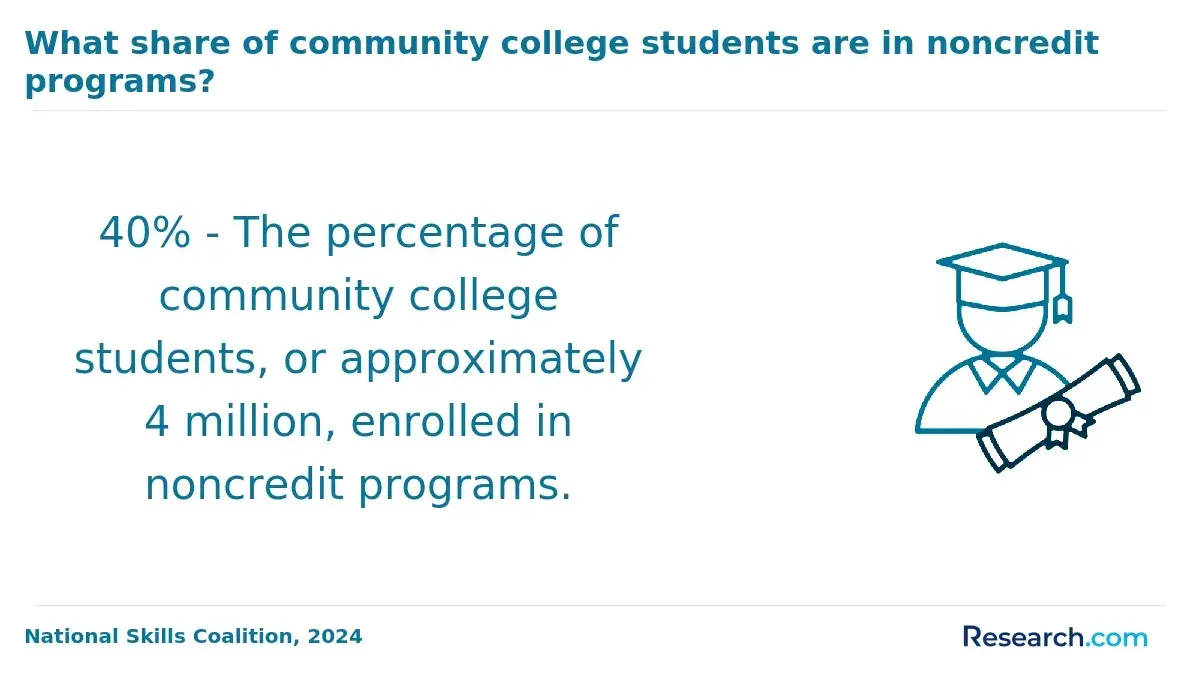
Online Counselor Education doctorate programs are not all equally flexible. "Online" may mean fully asynchronous coursework, live evening seminars, a hybrid model with campus residencies, or a cohort structure where students move through the program together.
The table below compares common formats. It can help you choose a model that fits your schedule rather than assuming every online program will work the same way.
| Format | Typical scheduling style | Best fit | Potential drawback |
| Fully asynchronous | Coursework can usually be completed within weekly deadlines without required live class meetings | Working counselors with unpredictable clinical, supervisory, or family schedules | Less real-time discussion and fewer scheduled accountability points |
| Synchronous online | Live virtual classes meet at set times, often evenings or weekends | Students who want faculty interaction, peer discussion, and a structured weekly rhythm | Harder for students across time zones or with evening clinical responsibilities |
| Hybrid or low-residency | Most coursework is online, but students attend required campus or in-person sessions | Students who value online flexibility but want in-person networking, supervision labs, or research intensives | Travel costs, time away from work, and residency scheduling conflicts |
| Cohort-based | Students enter and progress through courses together on a fixed sequence | Students who want peer support, predictable course rotation, and a structured timeline | Less flexibility if you need to pause, reduce course load, or accelerate |
| Individually paced | Students may have more control over term-by-term course load within program limits | Students balancing licensure work, leadership roles, caregiving, or changing employment demands | May require more self-management and careful advising to avoid delayed completion |
Current online doctoral formats are evolving toward more flexible access, but counseling doctoral education still depends heavily on interaction, supervision, research mentoring, and professional identity development. For that reason, a program with some live components may be worth considering if those sessions strengthen faculty access and doctoral community.
Avoid choosing a program solely because it advertises "100% online" without checking whether residencies, synchronous seminars, internship hours, or dissertation defenses require fixed attendance. The most convenient program on paper may not be the most manageable program in practice.
Pacing determines whether you can finish the doctorate while maintaining your professional and personal responsibilities. Most online Counselor Education doctorates are designed for working adults, but the expected time commitment can still be substantial.
As a planning benchmark, many U.S. online and hybrid Counselor Education doctoral programs advertise completion timelines of about three to five years after the master's degree, depending on credit load, dissertation progress, residency requirements, and whether students attend full time or part time. That range is helpful because a program promising unusually fast completion should be examined carefully for dissertation expectations, transfer-credit assumptions, and workload intensity.
Before choosing a pace, estimate the weekly workload and compare it with your actual calendar. A realistic plan should account for clinical hours, supervision responsibilities, teaching or administrative work, family care, commuting, and rest.
Use these questions to decide whether a program's pacing is realistic for you:
- How many courses are students expected to take during a standard term?
- Can students reduce to one course per term without losing financial aid eligibility or cohort standing?
- Are dissertation milestones built into the curriculum, or do students begin serious dissertation work only after coursework ends?
- What is the maximum time allowed to complete the degree?
- What happens if a student needs to pause for work, health, caregiving, or licensure-related reasons?
- Are summer terms required, optional, or strongly recommended to stay on track?
Flexible pacing makes the most sense if you are employed full time, managing a caseload, supervising interns, or supporting family responsibilities. A more structured cohort pace may make more sense if you need external accountability and want to finish within a predictable timeline.
The core curriculum should show that the program is truly doctoral-level counselor education, not just advanced counseling coursework. Strong programs typically build competence in teaching, supervision, research, leadership, advocacy, program evaluation, ethics, and advanced counseling theory.
Look for a curriculum that connects coursework to your intended role. For example, future faculty members need teaching practice and research mentoring, while future clinical supervisors need advanced supervision models, ethics, consultation, and assessment of supervisee development.
The following curriculum areas are especially important to compare because they reveal whether the program prepares you for doctoral-level responsibilities:
- Counselor education and pedagogy, including opportunities to teach or assist in master's-level counseling courses
- Clinical supervision theory, supervision ethics, documentation, gatekeeping, and evaluation of counselor trainees
- Quantitative, qualitative, or mixed-methods research methods that support dissertation work and evidence-based leadership
- Advanced counseling theory, multicultural counseling, social justice, advocacy, and ethical decision-making
- Program evaluation, assessment, consultation, and leadership in counseling agencies, schools, universities, or community systems
- Dissertation preparation, research seminars, faculty mentoring, and structured milestones that begin before the final stage of the program
Pay attention to how the program teaches online pedagogy and technology-supported learning. Doctoral graduates who plan to teach may benefit from understanding course design, student engagement, and digital learning environments; if that interests you, comparing the best online instructional design master's programs can provide useful context for how online teaching preparation is structured in education-related fields.
Also review electives and specializations carefully. Emerging areas such as trauma-informed counseling, telebehavioral health, integrated care, counselor wellness, multicultural supervision, and program evaluation can be valuable when they support your goals, but they should not replace the doctoral foundations expected in counselor education and supervision.
A Counselor Education doctorate is usually the right investment when it moves you toward a role that genuinely requires or strongly values doctoral preparation. It may be less appropriate if your primary goal is only to become licensed for independent counseling practice, since licensure usually begins at the master's level and varies by state.
Start by identifying the role you want within five to ten years. Then compare each program against that role rather than asking whether the degree is broadly "good."
Use this career-fit sequence before committing:
- Write down your primary career goal, such as university faculty member, clinical supervisor, program director, researcher, consultant, or counseling leader.
- Review job postings for that role and note whether they request a PhD, EdD, CACREP background, teaching experience, supervision experience, publications, grants, or leadership experience.
- Compare the program curriculum with those requirements, especially research, teaching, supervision, leadership, and dissertation expectations.
- Review faculty biographies to see whether faculty publish, practice, supervise, or lead in areas connected to your interests.
- Ask for recent graduate outcome examples, such as faculty placements, leadership roles, supervisory positions, publications, or doctoral internship experiences.
- Estimate the total cost and time commitment against the likely professional benefit, being careful not to assume a guaranteed salary increase.
For teaching-oriented goals, look for supervised teaching opportunities, course-design experience, mentoring, conference support, and faculty research collaboration. For clinical leadership goals, look for supervision, consultation, ethics, program evaluation, and organizational leadership. For research-focused goals, look closely at dissertation support, methodology courses, faculty expertise, and whether students present or publish before graduation.
Salary data should be used cautiously. Doctoral preparation may support access to faculty, leadership, supervision, or consulting roles, but pay varies by employer, state, setting, experience, licensure, and role responsibilities. Treat the doctorate as a strategic credential, not a guaranteed financial outcome.
What red flags should I watch out for in an online Counselor Education doctorate program?
Red flags do not always mean a program is fraudulent, but they do mean you should slow down and verify details before applying. The biggest warning signs involve unclear accreditation, vague costs, unrealistic timelines, weak faculty transparency, and pressure-based admissions tactics.
The table below separates common red flags from signs of a credible online Counselor Education doctorate. Use it when comparing final options or when an admissions conversation leaves you unsure.
| Red flag | Better sign |
| The school makes accreditation claims but does not clearly identify the institutional accreditor or programmatic accreditation status | The program links accreditation status to recognized directories and provides written clarification when asked |
| The advertised cost excludes required fees, residencies, dissertation continuation, or technology charges | The school provides a full cost estimate and explains which fees are required versus optional |
| The program promises unusually fast completion without explaining dissertation expectations or transfer-credit assumptions | The program gives realistic timelines and describes dissertation milestones, faculty review, and extension policies |
| Faculty information is minimal, outdated, or unrelated to counselor education and supervision | Faculty profiles show counseling credentials, doctoral mentoring, research activity, supervision experience, and relevant professional involvement |
| Admissions staff pressure you to enroll quickly before you verify accreditation, cost, or state authorization | The program encourages careful review and gives you time to compare options |
| Residency, internship, or supervision expectations are hard to find until after admission | The program handbook clearly explains in-person, online, field, and supervision requirements before enrollment |
Common mistakes include choosing based on rankings alone, assuming all online programs are equally flexible, ignoring residency travel, and underestimating dissertation time. The best way to avoid these mistakes is to create a spreadsheet that compares accreditation, credits, tuition, fees, format, residencies, faculty fit, dissertation structure, and career alignment for every program on your list.
If a program cannot answer basic questions about accreditation, cost, curriculum, or outcomes, do not treat that as a minor inconvenience. In doctoral education, transparency is part of quality.
Other Things You Should Know About Counselor Education
In most cases, yes. Counselor Education doctoral programs typically expect applicants to hold a master's degree in counseling or a closely related field, often with coursework aligned to professional counseling standards. Some programs may require licensure, eligibility for licensure, or post-master's counseling experience.
Neither is automatically better. A PhD often emphasizes research and academic preparation, while an EdD may emphasize applied leadership and professional practice, but the distinction varies by university. Compare the curriculum, dissertation expectations, faculty expertise, and graduate outcomes rather than relying on the degree title alone.
Some programs require the GRE, some make it optional, and others do not use it at all. Admissions committees may place more weight on your counseling background, graduate GPA, statement of purpose, writing sample, licensure status, professional experience, references, and fit with faculty research areas.
Usually, the doctorate itself is not the main pathway to initial counseling licensure; master's-level education and state-supervised experience are typically central. If licensure is part of your plan, check your state counseling board before enrolling because requirements vary by state and may depend on your prior master's coursework.
- Choosing a PhD in Counselor Education: Is It the Right Fit for You? https://paloaltou.edu/resources/blog/choosing-phd-counselor-education-it-right-fit-you
- Top Accrediting Bodies For Counseling Degrees https://www.psychology.org/resources/accreditation-for-counseling-degrees/
- About CACREP - CACREP https://www.cacrep.org/about-cacrep/
- The Pipeline Problem in Doctoral Counselor Education and Supervision - The Professional Counselor https://tpcjournal.nbcc.org/the-pipeline-problem-in-doctoral-counselor-education-and-supervision/
- What is CACREP Accreditation? https://onlinecounselingprograms.com/online-counseling-degrees/cacrep-accredited/what-is-cacrep-accreditation/
- Why Pursue an Online Ph.D. in Counselor Education and Supervision? https://www.ucumberlands.edu/blog/why-pursue-an-online-phd-counselor-education-supervision
- Asynchronous Learning Online Platform - D2L https://www.d2l.com/blog/guide-synchronous-vs-asynchronous-learning/
- insights https://aituedu.org/insights/


