2027 Emergency Department Nurse Orientation: Training, Competency Reviews, and Support to Compare
Audited and Verified:
Our Editorial and Data Verification Process
Research.com uses government datasets, official education statistics and primary institutional information to support its career and degree guides. Our review process checks factual accuracy, occupational definitions, source dates and the requirements associated with the credentials discussed.
How This Article Was Fact-Checked
Our editorial team verifies salary estimates, employment projections, education requirements and program information against original data providers and official organizations. Salary figures are checked against the relevant occupational definitions and reporting periods. Information about licensure, accreditation and required in-person training is reviewed separately.
Fact-checked and verified on:

Co-Founder and Chief Data Scientist
Emergency department orientation is where a licensed nurse learns to manage an unfamiliar mix of acuity, interruptions, and rapid decisions with appropriate supervision. For a new graduate or RN moving into emergency care, the quality of that transition can matter more than a program's advertised length.
This guide explains what ED onboarding should teach, how employers evaluate readiness, and which questions reveal whether a position offers enough preceptor time, feedback, and support for your experience level.
Key Things You Should Know
- ED orientation should progress from supervised assignments to documented competency reviews; completing a set number of shifts does not, by itself, establish independent readiness.
- Compare offers by preceptor continuity, patient-acuity progression, protected learning time, and the process for extending orientation - not duration alone.
- An active RN license is the practice requirement; specialty courses and certifications can support development but do not replace employer onboarding.
What Does Emergency Department Nurse Orientation Include?
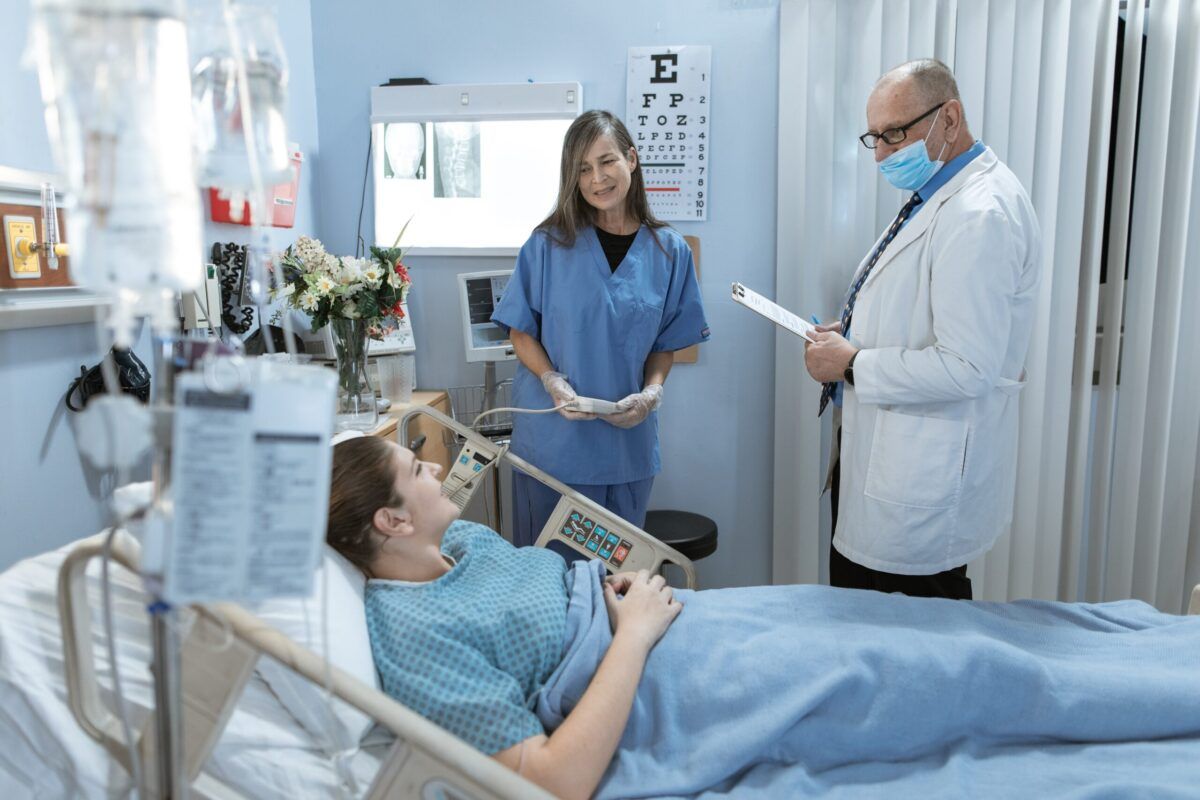
Emergency department nurse orientation is an employer-led transition to a particular unit, not another nursing degree. It usually combines organizational policies, supervised shifts, skills practice, case review, and periodic evaluations. A new graduate may need a longer progression through increasingly complex assignments; an experienced RN may need focused training in ED triage, trauma workflows, or the hospital's equipment.
Strong onboarding makes the learning conditions visible: who precepts each shift, when the orientee may take a larger assignment, how to summon help, and what happens if a skill has not yet been demonstrated. A nurse residency may add seminars and mentoring, but its name alone says little about the amount of bedside supervision provided.
Academic and workplace requirements remain separate. For example, online BSN completion clinical policies concern degree requirements; they do not determine whether an ED employer will require supervised orientation.
What Education and Licensure Are Required for Emergency Nursing?
ED RNs generally enter practice through an approved prelicensure nursing program, meet their state board's eligibility requirements, pass the NCLEX-RN, and obtain an active RN license. An ADN, diploma, or BSN may provide an initial RN pathway, while individual employers can set additional hiring preferences. Graduation, permission to test, and licensure are distinct steps.
An LPN/LVN or nursing assistant brings useful patient-care experience but does not acquire RN authority through ED employment. Someone considering a guide to faster practical-to-registered nursing routes should confirm that the specific program leads to RN examination eligibility in the intended state and includes required supervised clinical education. After licensure, the employer still decides what ED orientation the new RN needs.
How Do New Nurses Train for Emergency Department Practice?
For a new graduate, the safest training sequence starts with observation and shared care, then moves toward supervised responsibility for patients with different needs. The preceptor should make prioritization, reassessment, handoffs, and escalation explicit - not simply assign more patients as shifts pass. Simulation can provide practice with uncommon emergencies, while observed care shows how the nurse performs in the actual department.
Ask whether preceptors receive preparation for the role, whether schedules allow repeated shifts together, and who reviews progress when a preceptor changes. A formal residency can offer useful reflection and peer support, but it should complement, not substitute for, unit-level coaching.
If you have not yet entered nursing, exploring less competitive nursing programs is a separate admissions decision. Select a licensure-qualifying program first; no admission route guarantees placement in an ED or a particular employer's orientation.
Competency reviews should test whether the nurse can practice safely in the assigned role and knows when to get help. The following comparison separates evidence of learning from evidence of performance; an employer's checklist should specify who observes and signs off each skill.
| Competency area | Useful evaluation evidence | What a checkmark cannot prove |
| Assessment and prioritization | Observed reassessment, recognition of deterioration, and timely escalation | Readiness for every acuity level or assignment |
| Medication and procedural safety | Supervised performance using current policy and equipment | Permission to perform every procedure independently |
| Communication and documentation | Observed handoffs, accurate charting, and coordination with the team | Consistent performance under all workload conditions |
| Emergency response | Simulation followed, where feasible, by observed team participation | Independent leadership of an unfamiliar emergency |
Reviews are most useful when they record specific strengths, gaps, the next supervised opportunity, and a reassessment date. Ask who can slow assignment progression or extend orientation if evidence is insufficient.
Here, a preceptor is an employer-designated clinician supporting workplace onboarding. That differs from academic clinical placement; comparing clinical site support for FNP students addresses a separate graduate-education obligation, not ED competency sign-off.
An ED orientation curriculum builds on general RN preparation rather than reteaching an entire nursing degree. Common topics include triage principles, recognition of time-sensitive conditions, trauma and resuscitation teamwork, pediatric and older-adult considerations, behavioral health safety, infection prevention, medication and blood-product policies, and local documentation and transfer workflows. The exact sequence should reflect the department's patients, services, and nurse scope.
Ask how each topic is taught and assessed. A lecture may establish background knowledge; simulation can rehearse team communication; supervised shifts let the preceptor assess performance in context. A completion certificate for a course is not proof of competence across all ED assignments.
Specialty interests should not be mistaken for equivalent preparation. Shorter postgraduate psychiatric nursing routes concern advanced practice education for eligible nurses, not the behavioral health assessment and escalation skills an ED RN learns within their licensed role.
There is no single ED orientation length that fits every nurse or department. Employers may combine an initial supervised period with a longer residency or mentorship program. Previous emergency experience, the unit's acuity, preceptor availability, shift pattern, and documented progress all affect the appropriate timeline.
When comparing offers, request the planned number of precepted shifts and the review points in writing. Then ask what changes if you need more practice: Is additional preceptor time available, who approves it, and will your assignment remain appropriately supervised? A short schedule with no extension process is less informative than a clearly supported progression.
Do not compare that workplace timeline with the advertised length of an academic program. Comparing shorter MSN-PMHNP routes answers a different education question; faster degree completion would not shorten an employer's required ED onboarding.
Campus and hybrid prelicensure nursing programs both must provide the approved preparation required for their students' intended RN pathway. Online coursework can help with scheduling, but skills labs, simulation, and supervised clinical experiences may still require attendance at set times and places. Neither format makes a graduate independently ready for an ED assignment.
For an RN already licensed, an online RN-to-BSN program may support broader academic development while the employer provides specialty training. Before enrolling, check required on-site activities, weekly scheduling, clinical or practice assignments, and whether the degree serves a real career goal. An RN seeking non-ED leadership education might also consider nonclinical DNP specialization options; that choice should not be confused with bedside emergency orientation.
Employers may require or offer courses in resuscitation, pediatric emergencies, or trauma care, depending on the role and patient population. Check the employer's exact course, provider, and completion deadline before paying for one yourself. Course completion can demonstrate training, but it does not expand RN scope or replace an observed workplace competency review.
For experienced emergency nurses, the Board of Certification for Emergency Nursing awards the Certified Emergency Nurse (CEN) credential. Check its current eligibility, examination, fees, and renewal rules directly before applying. Certification can recognize specialty knowledge, but it is distinct from an RN license and from authorization to perform a particular workplace skill.
Likewise, accelerated FNP education comparisons concern preparation for a different, regulated advanced practice role. An FNP program or credential is not a substitute for ED RN orientation.
ED nurses work in hospital emergency departments and, depending on the position, may also encounter emergency-focused roles in other healthcare settings. Work can include nights, weekends, rapid changes in patient acuity, and frequent coordination with clinicians and receiving units. Compare the actual unit and schedule rather than relying on the job title alone.
The U.S. Bureau of Labor Statistics reports pay and employment projections for registered nurses as an occupation, not a separate national ED-nurse wage. Its occupation-wide median cannot predict a new graduate's offer or the pay difference between departments. For a useful comparison, request the employer's base rate, shift differentials, benefits, and any terms attached to a residency or hiring incentive.
If your longer-term goal is advanced psychiatric practice, psychiatric NP program affordability comparisons may inform that later decision. Do not use projected NP earnings to justify an ED RN offer or assume ED experience alone qualifies you for advanced practice.
How Should You Choose an Emergency Nursing Program?
Choose an ED orientation program by comparing the support you will receive on an ordinary difficult shift, not just the program brochure. Request a written outline and speak with both an educator and a nurse who recently completed onboarding.
These questions expose differences that a stated orientation length can hide:
- Who will precept me, how consistently will we work together, and what training do preceptors receive?
- How will patient assignments and acuity increase, and who decides when I am ready?
- Which competencies require direct observation, and how often will I receive documented feedback?
- What help is available during a busy shift, and what is the process for additional supervised time?
- How do scheduling, required classes, and any employment commitment affect my finances and home responsibilities?
A current RN deciding between ED jobs may benefit more from stronger onboarding than another degree. Further education can make sense for a defined later role, but exploring less expensive MSN pathways after a BSN should be a separate decision based on that role's requirements and total costs.
Other Things You Should Know About Nursing
Yes. Ask how the employer handles extensions and what specific competencies you would practice and reassess. The decision depends on its policy and your documented progress.
Raise a specific learning or safety concern promptly with the educator or manager. Request a plan for feedback and, if appropriate, a different preceptor rather than waiting for the final evaluation.
Tell the charge nurse or supervisor what you have and have not demonstrated, and request the supervision required by employer policy. Do not treat assignment pressure as a competency sign-off.
Yes. Ask the employer about its accommodation process and the essential functions of the position. Discuss workable adjustments early while preserving patient-safety and competency standards.
- A Cross-Sectional Study on Nursing Preceptors' Perspectives About Preceptorship and Organizational Support - PMC https://pmc.ncbi.nlm.nih.gov/articles/PMC11526305/
- Chapter 09 Standards of Practice for Registered Nurses | Library of Maryland Regulations https://regs.maryland.gov/us/md/exec/comar/10.27.09/index.full.html
- Frequently Asked Questions (FAQs) | Mississippi Board of Nursing https://www.msbn.ms.gov/faqs
- Nursing Practice FAQ - Texas Board of Nursing - Texas.gov https://www.bon.texas.gov/faq_nursing_practice.asp
- What Is a Nurse Preceptor? Role, Skills, and Career Fit | post.edu https://post.edu/blog/considering-becoming-a-nurse-preceptor/
- How to Become an ER Nurse | Education & BSN Requirements | Nevada State University https://nevadastate.edu/son/rn-bsn/how-to-become-an-er-nurse-education-requirements-and-the-bsn-advantage/
- Practice Resources | ENA - Emergency Nurses Association https://www.ena.org/practice-resources
- Components of an Effective Nurse Orientation Pathway | American Association of Critical-Care Nurses https://solutions.aacn.org/blog/components-of-an-effective-nurse-orientation-pathway
- 5 Essentials of Nursing Orientation | HealthStream, Inc. https://www.healthstream.com/blog/five-essentials-of-nursing-orientation
- New Grad Nurse Expectations: Orientation, Patient Load & Reality Guide | RegisteredNursing.org https://www.registerednursing.org/articles/new-grad-nurse-expectations/