
2027 How to Become a Statistician: Education, Salary, and Job Outlook

Co-Founder and Chief Data Scientist
Becoming a statistician is a strong fit if you like turning messy information into evidence people can act on. Statisticians design studies, evaluate data quality, build models, explain uncertainty, and help organizations make better decisions in areas such as healthcare, business, public policy, technology, finance, and research.
The career can be intellectually demanding because your work is not only about running calculations. You must ask the right questions, choose appropriate methods, communicate limitations clearly, and understand how the results will be used. This guide explains the credentials, skills, career paths, salary expectations, internships, advancement strategies, workplaces, challenges, and decision points involved in becoming a statistician.
What are the benefits of becoming a statistician?
- Statistician roles are projected to grow by 35% from 2021 to 2031, driven by demand for data-driven decisions across industries.
- The average annual salary for statisticians in the US is around $95,000, with higher earnings in specialized fields.
- A career in statistics offers strong job security, intellectual challenge, and opportunities to impact public policy, healthcare, and business innovation.
What credentials do you need to become a statistician?
Most statistician roles require at least a bachelor’s degree in statistics, mathematics, data science, or a closely related quantitative field. However, the strongest opportunities, especially in research, government, pharmaceuticals, healthcare, and advanced analytics, often favor candidates with a master’s degree. A Ph.D. is usually reserved for academic, highly specialized, or research-intensive positions.
- Bachelor's degree: A bachelor’s degree provides the core foundation in probability, statistical inference, calculus, linear algebra, research methods, and data analysis. It can qualify you for entry-level analyst, research assistant, or junior statistician roles, especially when paired with programming experience.
- Master's degree in statistics required: Many employers strongly prefer or require a master’s degree for statistician positions. Graduate study helps you handle complex modeling, study design, statistical computing, and applied research with greater independence.
- Ph.D. degree: A doctoral degree is commonly needed for tenure-track university roles, advanced methodology research, and highly specialized scientific positions. It is most useful if you want to create new statistical methods, lead major research programs, or work in academia.
- Professional certifications: Statisticians do not need a national license in the United States, but voluntary credentials can strengthen your profile. The American Statistical Association’s Graduate Statistician (GStat) and Accredited Professional Statistician (PStat) credentials can demonstrate professional preparation. Software-focused credentials, such as the SAS Certified Statistical Business Analyst, may help in roles where SAS is widely used.
- Industry-specific credentials and ongoing education: Some sectors, including pharmaceuticals, government, public health, and regulated research, may expect training in privacy, ethics, clinical trials, compliance, or specialized reporting standards. These requirements vary by employer and role.
The best credential path depends on the type of work you want. If you want applied business analytics, a bachelor’s degree plus strong programming and project experience may be enough to start. If you want to design studies, lead technical analyses, or compete for research-heavy roles, a master’s degree is usually the safer investment. If you want academic or advanced scientific research roles, a Ph.D. may be necessary.
Beyond degrees, look for ways to prove that you can work with real data, explain uncertainty, and use professional tools. Certificates can help when they add concrete skills rather than simply filling a resume. You can also compare broader credential options through these certifications for high-paying jobs.
What skills do you need to have as a statistician?
A good statistician combines mathematical judgment, programming ability, domain knowledge, and clear communication. Employers value candidates who can do more than produce outputs from software. You need to understand whether the method fits the question, whether the data can support the conclusion, and how to explain the results without overstating them.
- Data analysis: You should be able to explore datasets, identify patterns, test assumptions, measure uncertainty, and explain what the results do and do not show.
- Statistical methods: Core methods include regression, ANOVA, experimental design, sampling, hypothesis testing, confidence intervals, Bayesian methods, and model validation. The specific mix depends on your field.
- Programming: R, Python, and SAS are commonly used for data preparation, modeling, simulation, automation, and reproducible reporting. SQL is also useful for retrieving and organizing data from databases.
- Software proficiency: Tools such as SPSS, Minitab, and SAS remain important in many organizations. The goal is not to know every platform, but to become fluent enough to work accurately and efficiently in the tools your industry uses.
- Mathematical reasoning: Probability, calculus, linear algebra, and optimization help you understand why methods work, when they fail, and how to interpret model behavior.
- Data management: Strong statisticians know how to check data quality, document cleaning decisions, handle missing values, structure datasets, and preserve reproducibility.
- Critical thinking: You must recognize weak study designs, biased samples, confounding variables, unrealistic assumptions, and misleading interpretations.
- Communication: Your work has value only if decision-makers understand it. You need to translate technical findings into plain language, visuals, recommendations, and limitations.
- Collaboration: Statisticians often work with scientists, clinicians, engineers, economists, product teams, or executives. Learning enough about their domain helps you ask better questions and avoid technically correct but practically irrelevant analysis.
One common mistake is focusing only on technical tools. Programming matters, but employers also look for judgment: Can you choose the right model? Can you explain why a result is uncertain? Can you defend your assumptions? Can your analysis be reproduced by another analyst?
What is the typical career progression for a statistician?
Statistician careers usually progress from supporting data work to designing analyses, leading projects, and shaping research or business strategy. Advancement depends on education, technical depth, communication skill, industry knowledge, and your ability to manage uncertainty in high-stakes decisions.
- Early Career (0-3 years): Common titles include Junior Statistician, Data Analyst, Statistical Analyst, or Research Assistant. You may clean data, run standard analyses, prepare reports, validate results, and build fluency in R, Python, SAS, or other tools. This stage is about accuracy, documentation, and learning how real datasets differ from textbook examples.
- Mid Career (3-7 years): You may move into roles such as Statistician, Biostatistician, Quantitative Analyst, or Research Statistician. Responsibilities often include designing studies, building more complex models, interpreting findings for stakeholders, mentoring newer staff, and recommending methods. Specializations such as machine learning, econometrics, clinical trials, survey methodology, or causal inference can increase your value.
- Senior and Leadership Roles (7+ years): Senior Statistician, Principal Statistician, Director of Analytics, or Head of Statistical Research roles typically involve leading teams, reviewing methodology, setting standards, managing stakeholder expectations, and aligning statistical work with organizational goals. At this level, communication and judgment are as important as technical skill.
- Specialization and Career Shifts: Some statisticians move deeper into fields such as public health, finance, pharmaceuticals, social science, or government research. Others transition into data science, machine learning, analytics leadership, consulting, or product experimentation. Lateral moves can be valuable when they add domain expertise or exposure to larger, more complex datasets.
Internships, research assistantships, capstone projects, and applied consulting projects can speed up early progression because they show employers you can handle real data and communicate results. Graduate education can also open doors, but advancement still depends on producing reliable work, earning trust, and learning the business or scientific context behind the numbers.
How much can you earn as a statistician?
Statistician salaries vary by education level, experience, industry, location, technical specialization, and responsibility. Roles in pharmaceuticals, technology, finance, specialized research, and senior analytics leadership often pay more than entry-level research or general analyst positions.
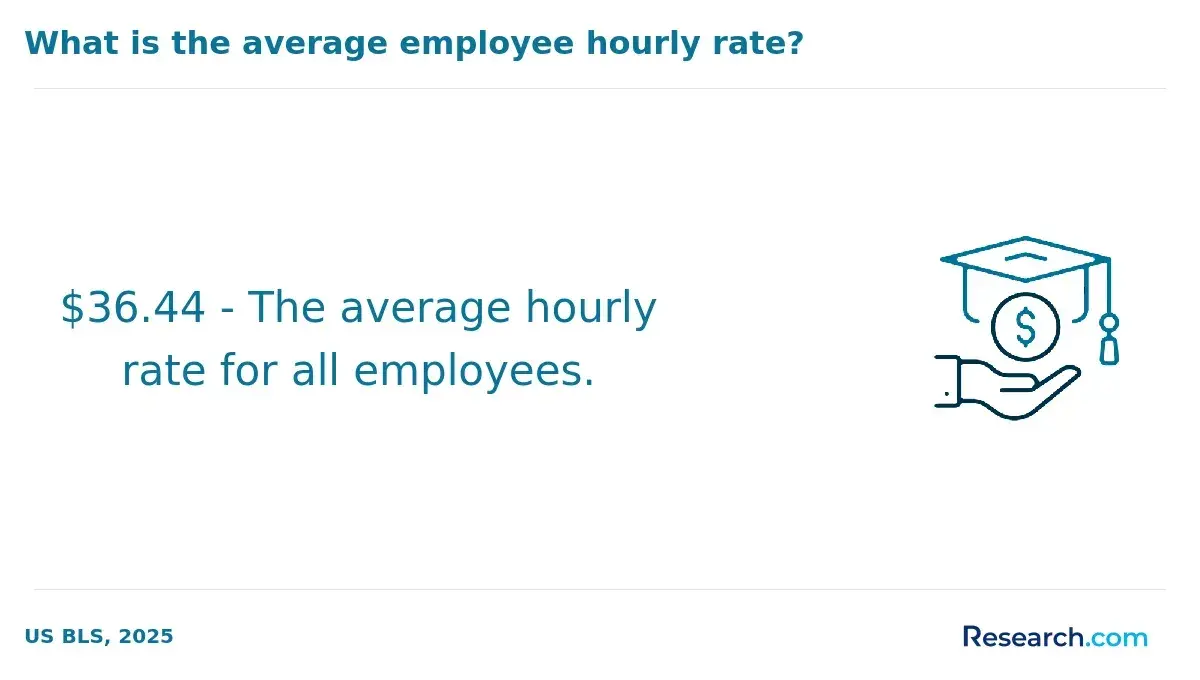
In the United States, the median annual wage for statisticians is about $103,300 according to the U.S. Bureau of Labor Statistics. Entry-level roles start around $53,000 to $61,000 per year, while seasoned experts, especially those in senior or specialized positions, can earn over $140,000 annually. On average, salaries range between $75,500 and $105,600, varying by source and methodology. Early-career statisticians earn roughly $77,000, but those with 10 to 14 years of experience can approach $150,000.
| Career factor | How it can affect earnings |
| Education | A master’s degree or Ph.D. can help qualify you for advanced research, technical, and leadership roles that may pay more. |
| Industry | Pharmaceuticals, technology, finance, and specialized research roles often offer stronger compensation than some general support roles. |
| Location | High-cost labor markets such as New York or Cupertino may offer higher salaries, though living costs can reduce the net advantage. |
| Specialization | Biostatistics, data science, machine learning, econometrics, and clinical trial statistics can increase marketability. |
| Experience | Pay typically rises as you move from execution-focused work to independent study design, project leadership, and strategic decision support. |
When comparing salary offers, look beyond the base number. Consider remote-work options, health benefits, retirement contributions, bonus potential, tuition support, publication opportunities, workload, and the quality of mentorship. A slightly lower-paying role with stronger training or exposure to high-value methods can sometimes improve your long-term earnings.
For statisticians considering research-heavy or senior roles, doctoral study can be a strategic option. If you are comparing possible doctoral routes, you can review doctoral program options as part of your planning.
With a strong job outlook projected through 2033, statistics remains a career path with both stability and room for financial growth, especially for professionals who keep their technical skills current.
What internships can you apply for to gain experience as a statistician?
Internships help aspiring statisticians prove they can apply classroom methods to real data. The best opportunities give you exposure to data cleaning, analysis planning, statistical programming, documentation, and communication with non-statistical stakeholders. In 2025, several types of internships can help build that experience.
- Astellas Pharma, Biogen, Takeda Pharmaceuticals, and AbbVie: These pharmaceutical companies offer summer internships where interns may work with senior statisticians on clinical trial design, data analysis, biostatistics, epidemiology, and research support. Experience with SAS, R, or Python is often valuable in these settings.
- StataCorp: Students interested in statistical software and methodology can look at internships focused on statistical software development, testing, documentation, and feature improvement for analysis tools.
- Nonprofits, government agencies, and healthcare providers: These organizations may recruit interns for research, program evaluation, policy analysis, public health projects, and operational reporting. Such roles are useful if you want experience with mission-driven data and public-facing decisions.
- Statistics internships in New York: New York-based opportunities can provide exposure to finance, healthcare, research, media, nonprofits, and business analytics, making the city attractive for students who want a broad set of options.
When evaluating internships, ask what you will actually do. A strong internship should include meaningful data work, supervision from an experienced analyst or statistician, opportunities to present findings, and a final project you can discuss in future interviews. Avoid roles that are labeled as analytics internships but involve mostly administrative work with little technical learning.
If you want to combine work experience with a faster academic path, you can also compare accelerated online master's degree programs while planning internships and early career moves.
How can you advance your career as a statistician?
Career advancement in statistics comes from building deeper technical expertise, gaining domain knowledge, and becoming someone others trust with important decisions. The strongest statisticians are not just skilled analysts; they are methodologically careful, clear communicators, and reliable partners.
- Advanced Degrees: A master’s degree can improve access to statistician roles that require independent analysis and study design. A Ph.D. is most useful for academic research, advanced methodology, and senior scientific roles.
- Cross-Disciplinary Skills: Add knowledge in computer science, economics, public health, biology, finance, social science, or data science. Domain expertise helps you choose better methods and interpret results in context.
- Professional Certifications: Courses and credentials can help when they build practical skill in statistical programming, clinical trials, machine learning, causal inference, survey design, or regulated research. Choose credentials that align with the roles you want rather than collecting certificates without a plan.
- Networking: Join professional groups such as the American Statistical Association, attend conferences, participate in webinars, and contribute to technical communities. Networking can help you find mentors, collaborators, internships, jobs, and emerging specialty areas.
- Mentorship: A good mentor can help you avoid common errors, select high-value projects, prepare for promotions, and understand workplace expectations. As you gain experience, mentoring others can also strengthen your leadership profile.
To move into senior roles, build a portfolio of work that shows more than technical execution. Employers want evidence that you can frame a problem, select the right approach, document your reasoning, explain trade-offs, and guide stakeholders toward responsible decisions.
Where can you work as a statistician?
Statisticians work anywhere decisions depend on data quality, uncertainty, experimentation, forecasting, risk, or evidence. The right workplace for you depends on whether you prefer scientific research, public service, business strategy, software products, healthcare outcomes, financial risk, or teaching.
- Pharmaceutical and medicine manufacturing: Companies like Pfizer and Johnson & Johnson employ statisticians to support clinical trial design, drug safety analysis, regulatory submissions, and evidence generation.
- Scientific research and development: National labs and private research firms rely on statisticians to design experiments, analyze complex data, evaluate uncertainty, and support scientific discovery.
- Federal government agencies: Organizations including the U.S. Census Bureau, CDC, and NIH use statistical data to guide public health, population measurement, research funding, and national programs.
- Technology sector: Companies such as Google, Microsoft, and IBM use statistical modeling for experimentation, product analytics, machine learning, quality improvement, and user behavior analysis.
- Academia: Colleges and universities employ statisticians as faculty, researchers, consulting statisticians, and instructors. If you are exploring degree options, you can compare accredited online colleges with free application options.
- Healthcare systems: Institutions like Mayo Clinic and Kaiser Permanente use statisticians to evaluate treatments, improve patient outcomes, support population health, and analyze operational performance.
- Financial services: Banks and financial institutions such as JPMorgan Chase and Goldman Sachs use statistical methods for risk assessment, fraud detection, forecasting, portfolio analysis, and decision modeling.
- Nonprofits: Social impact organizations hire statisticians to measure program effectiveness, evaluate interventions, report outcomes, and improve resource allocation.
Each setting has trade-offs. Government and academic roles may offer strong mission alignment and research depth, while private-sector roles may offer faster project cycles and higher compensation. Healthcare and pharmaceuticals can be highly meaningful but may involve strict regulatory standards. Technology and finance can be lucrative but may require stronger programming and business-facing communication.
What challenges will you encounter as a statistician?
Statistics is a rewarding field, but it comes with pressure. Your conclusions may influence funding, product launches, medical research, public policy, financial decisions, or patient care. That makes accuracy, transparency, and professional judgment essential.
- Competition with data scientists: Statisticians often work alongside data scientists, machine learning engineers, and analysts. To stand out, you need strong statistical theory, credible modeling judgment, and the ability to explain uncertainty better than someone who only knows tools.
- Demanding workloads: Real data is often incomplete, inconsistent, biased, or poorly documented. Data preparation can take substantial time, and deadlines may be tight when analysis supports major decisions.
- Emotional pressure: Your analysis may affect communities, budgets, research conclusions, or business outcomes. You must be comfortable saying when evidence is weak, results are inconclusive, or a proposed interpretation is not supported.
- Rapidly evolving regulations and tools: Software, privacy expectations, reporting standards, and analytical methods change frequently. You will need to keep learning throughout your career.
- Commitment to lifelong learning: A statistician who stops learning can fall behind quickly. Staying current may involve research reading, professional development, competitions, conferences, technical communities, and cross-disciplinary collaboration.
Another common challenge is managing stakeholder expectations. Some decision-makers want a simple answer when the honest answer is conditional or uncertain. A strong statistician explains uncertainty clearly without making the analysis sound weaker than it is.
What tips do you need to know to excel as a statistician?
To excel as a statistician, focus on becoming both technically rigorous and easy to work with. The professionals who advance fastest are usually those who can solve difficult problems, document their choices, and explain results in a way that helps others act responsibly.
- Master the fundamentals before chasing advanced methods. Regression, sampling, probability, study design, uncertainty, and bias are still central to most statistical work.
- Become proficient in R or Python, and learn the tools your target industry uses. In some fields, SAS remains especially important.
- Practice reproducible work. Use clear code, version control, documentation, and organized workflows so another person can understand or audit your analysis.
- Learn to communicate results in plain language. Decision-makers need to know the conclusion, the uncertainty, the assumptions, and the practical implications.
- Ask better questions at the start of a project. Clarify the decision being made, the available data, the population of interest, and the cost of being wrong.
- Build domain knowledge. A statistician in healthcare, finance, public policy, or technology makes better recommendations when they understand the field’s terminology, constraints, and risks.
- Find mentors and join professional communities such as the American Statistical Association for guidance, networking, and exposure to real-world problems.
- Keep learning through courses, certifications, conferences, technical reading, and applied projects. Prioritize learning that improves your ability to solve problems, not just credentials that look impressive.
- Consider flexible work arrangements, including remote roles, if they expand your access to better projects or employers.
- Stay humble. Good statistical work requires skepticism, peer review, and willingness to revise your conclusions when the evidence changes.
How do you know if becoming a statistician is the right career choice for you?
Becoming a statistician may be a good choice if you enjoy math, evidence-based reasoning, careful problem-solving, and explaining complex ideas to people who need to make decisions. It may be less appealing if you want quick answers, dislike ambiguity, or prefer work that does not involve long periods of technical focus.
- Analytical and mathematical skills: You should be comfortable with quantitative reasoning and willing to work through complex problems patiently.
- Communication abilities: You need to explain technical findings to people who may not understand statistical terminology. If you enjoy teaching, translating, and clarifying, that is a strong sign.
- Interest in data and technology: Statisticians spend much of their time working with data, code, software, and documentation. Curiosity about tools and methods will help you stay engaged.
- Work environment preferences: Statisticians often collaborate with teams in business, healthcare, academia, government, and research. If you like combining independent analysis with collaborative problem-solving, the field may fit well.
- Flexibility and lifelong learning: Statistical methods, software, and industry expectations evolve. You should be willing to keep learning throughout your career.
- Career outlook and stability: Demand for data-driven decision-making supports strong job prospects projected for 2025 and beyond.
A useful test is to try a small applied project: take a real dataset, define a question, clean the data, choose a method, analyze the results, and explain the limitations. If you enjoy that full process, not just the final answer, statistics may be a strong career match.
If you need an affordable and flexible route into the field, especially while working, compare options such as the best affordable online colleges for working students.
What Professionals Who Work as a Statistician Say About Their Careers
- : "Working as a statistician has given me remarkable job stability and a competitive salary that grows with experience. The demand for data-driven decision-making across industries means I rarely worry about job security. Pursuing this career has truly been a financially rewarding and secure choice. — Ambrose"
- : "The challenges I face daily as a statistician keep me intellectually engaged, especially when developing innovative models to tackle complex real-world problems. The variety in projects and sectors, from healthcare to finance, offers unique opportunities to expand my expertise continuously. This dynamic field is perfect for those who love problem-solving and lifelong learning. — Julius"
- : "My career as a statistician has opened doors for ongoing professional development through advanced training and certifications. The ability to move into leadership, data science, or specialized roles demonstrates clear growth paths. I appreciate how the profession values continual skill advancement and adaptation to new technologies. — Ellis"
Other Things You Should Know About Becoming a Statistician
The American Statistical Association’s Accredited Professional Statistician (PStat) credential can strengthen a statistician’s résumé. It is aimed at experienced statisticians and requires a combination of education, professional practice, and peer review. Employers in research, government, and healthcare often value it when hiring for advanced roles.
In 2027, statisticians should master programming languages like R and Python for data analysis. Strong skills in mathematics, statistical theory, and analytical thinking are vital. Familiarity with machine learning, AI technologies, and proficiency in tools like SAS and SQL will enhance employability in diverse industries.
To become a statistician in 2027, a bachelor's degree in statistics, mathematics, or a related field is typically necessary. However, many positions require a master's degree or higher, given the field's increasing complexity. Continuous learning in data analysis software and statistical techniques is also crucial.
References
- How to Become a Statistician in 2025 | DataCamp https://www.datacamp.com/blog/how-to-become-a-statistician
- Career Path for a Statistician - Informatics Magazine https://informaticsmagazine.com/insight/career-path-for-a-statistician/
- Internships and Fellowships https://www.amstat.org/education/statistics-students/internships-and-fellowships
- Internships | Department of Statistics | Illinois https://stat.illinois.edu/resources/career-services-resources/internships
- What can I do with a statistics degree? | Prospects.ac.uk https://www.prospects.ac.uk/careers-advice/what-can-i-do-with-my-degree/statistics
- Statistician - Wikipedia https://en.wikipedia.org/wiki/Statistician
- Excel Statistics: Facts & Figures [Original Research] - Acuity Training https://www.acuitytraining.co.uk/news-tips/new-excel-facts-statistics/
- Becoming a Statistician: A Comprehensive Guide | Huzzle https://www.huzzle.app/blog/becoming-a-statistician-a-comprehensive-guide
- Statistician -- Is It the Right Career for You? https://www.careerfittest.com/how-to-become-a-statistician/
- Mathematicians and Statisticians : Occupational Outlook Handbook: : U.S. Bureau of Labor Statistics https://www.bls.gov/ooh/math/mathematicians-and-statisticians.htm


