
2027 Homeland Security Analyst Careers: Skills, Education, Salary & Job Outlook

Co-Founder and Chief Data Scientist
Homeland security analyst careers appeal to people who want analytical work with a clear public-safety mission, but the path can be hard to judge from the outside. Candidates often wonder whether they need a criminal justice degree, cybersecurity training, emergency management experience, a security clearance, or all of the above. The answer depends on the employer and specialization, but the strongest candidates usually combine formal education, practical analysis experience, sound judgment, and the ability to work with sensitive information.
This guide explains what homeland security analysts do, which skills and credentials matter most, how to enter the field, and what to expect from the work environment, salary range, advancement options, and related careers. It is designed for students, career changers, military-connected professionals, public safety workers, and early-career analysts comparing national security, intelligence, emergency management, and cybersecurity paths.
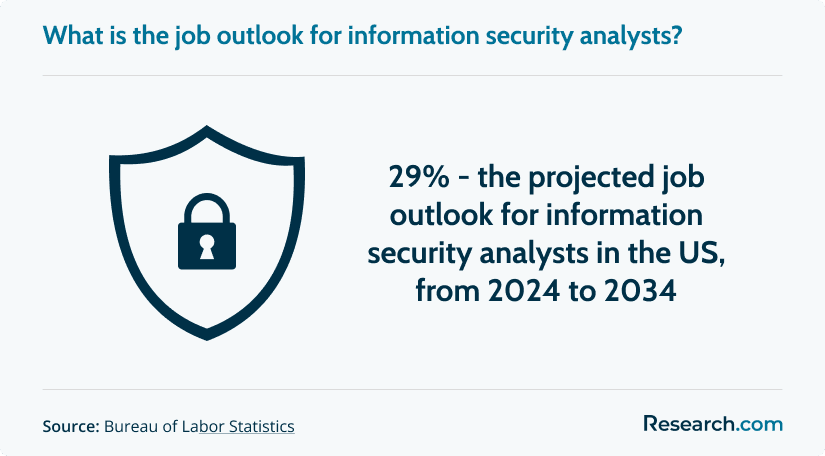
The field can be competitive and demanding, but it also offers meaningful long-term opportunity. Employment in related analyst roles is projected to grow 29% over the next decade, with median salaries reaching over $90,000. For readers who want mission-driven work that blends research, risk assessment, technology, and public service, homeland security analysis can be a strong career target.
Key Things You Should Know About Homeland Security Analyst Career
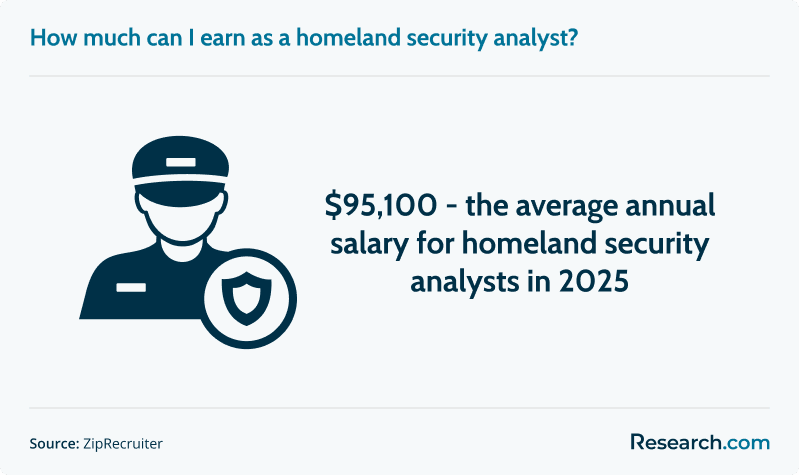
- The typical earning potential for a homeland security analyst in the United States averages around $95,100 annually, with salaries ranging from $69,000 to $118,000 depending on experience and location.
- This career field is considered stable due to continuous national security needs, even though specific growth projections are not detailed.
- A bachelor's degree in homeland security, intelligence studies, criminal justice, or a related discipline is generally required to enter this profession.
- Success depends on strong analytical and problem-solving abilities, effective communication skills, knowledge of security protocols and technologies, and strategic thinking.
- Advancement opportunities include specializing in cybersecurity or intelligence analysis and moving into leadership roles, which offer higher pay and increased responsibility with experience and additional certifications.
What do homeland security analysts do?
Homeland security analysts help agencies, public safety organizations, and private-sector security teams understand threats before they become crises. Their work may involve reviewing intelligence reports, monitoring security trends, analyzing cyber or physical vulnerabilities, preparing risk assessments, and briefing decision-makers on what actions should be taken next.
The role is not limited to one type of threat. Depending on the position, analysts may focus on terrorism, cyberattacks, border security, emergency preparedness, natural disasters, infrastructure protection, public health risks, organized crime, or suspicious activity that crosses agency boundaries. The common thread is analysis: turning incomplete, sensitive, and fast-changing information into clear recommendations.
A day in the life of homeland security analysts
A typical day may include reviewing incident reports, checking intelligence feeds, validating data sources, coordinating with law enforcement or emergency management partners, and drafting written assessments. Some days are routine and research-heavy. Others change quickly when an incident, emerging threat, or executive briefing requires immediate attention.
Most analysts work in secure office settings, operations centers, intelligence units, or agency facilities. The work often combines independent concentration with frequent collaboration. Accuracy matters, but so does timing: an excellent analysis that arrives too late may not help leaders prevent or contain a threat.
How this role differs from similar security jobs
| Role | Main focus | Best fit for |
| Homeland security analyst | Threat assessment, intelligence review, preparedness, and coordination across security domains | People who want broad national security work involving policy, operations, and risk analysis |
| Cybersecurity analyst | Protecting networks, systems, and data from cyber threats | People who prefer technical security tools, incident response, and digital forensics |
| Emergency management specialist | Planning and coordinating responses to disasters and public emergencies | People who want preparedness, logistics, and community resilience work |
| Intelligence analyst | Collecting, evaluating, and interpreting intelligence for decision-makers | People who want deeper work in intelligence production and classified analysis environments |
What are the key responsibilities of homeland security analysts?
Homeland security analysts are responsible for identifying risks, explaining their significance, and helping leaders choose practical responses. The exact duties vary by agency, clearance level, and specialization, but the work usually sits at the intersection of intelligence, public safety, cybersecurity, emergency preparedness, and policy.
Common responsibilities include:
- Analyzing information from multiple sources: Analysts review intelligence reports, law enforcement data, emergency alerts, cyber indicators, open-source information, and internal security records to identify patterns and risks.
- Assessing threats and vulnerabilities: They evaluate how likely a threat is, what assets may be affected, and which actions can reduce exposure.
- Monitoring systems, networks, or incident channels: In more technical roles, analysts may use tools such as SIEM platforms to detect suspicious behavior and escalate potential incidents.
- Supporting incident response: During a breach, emergency, or security event, analysts may help investigate what happened, isolate affected systems or operations, and coordinate containment steps.
- Preparing reports and briefings: Analysts translate complex findings into clear written products, executive summaries, and recommendations for leaders who may not be technical specialists.
- Coordinating across teams and agencies: Homeland security work often requires communication with law enforcement, emergency management, cybersecurity teams, intelligence partners, and private-sector infrastructure operators.
- Improving readiness: Analysts may help update security policies, training materials, continuity plans, disaster recovery plans, and response protocols.
The most challenging vs. the most rewarding tasks
The most challenging part of the job is often making sound judgments under pressure with incomplete information. During an active incident, analysts may need to separate credible signals from noise, brief leaders quickly, and avoid overstating or understating a threat. The stakes can be high, and mistakes may affect public safety, operations, or national security priorities.
The most rewarding part is seeing analysis turn into prevention. A strong threat assessment can lead to better protective measures, faster response, or improved coordination among agencies. For many professionals, the value of the work comes from knowing that careful analysis may help prevent harm before it occurs.
Students looking for a faster first credential can compare options such as a 6 month associate online degree, but they should check whether a target employer requires a bachelor's degree, internship experience, or eligibility for a security clearance.
What are the key skills for homeland security analysts?
Homeland security analysts need more than an interest in national security. Employers look for people who can evaluate evidence, write clearly, protect sensitive information, and work calmly across agencies or departments. Technical ability helps, but judgment and communication often determine whether an analysis is useful in real operations.
Key hard skills
- Intelligence analysis: Turning raw information into structured findings, confidence levels, and actionable recommendations.
- Threat assessment: Evaluating likelihood, impact, intent, capability, and vulnerability to help prioritize limited resources.
- Cybersecurity and technical literacy: Understanding security tools, network activity, data analysis software, and incident indicators when the role involves cyber or infrastructure protection.
- Research and source evaluation: Distinguishing credible reporting from weak, outdated, biased, or unverified information.
- Legal and ethical awareness: Handling sensitive information appropriately and respecting privacy, civil liberties, chain-of-custody rules, and agency policy.
- Report writing and briefing: Producing concise products that leaders can understand and act on quickly.
Essential soft skills
- Analytical thinking: Breaking complex problems into evidence, assumptions, gaps, and implications.
- Critical thinking: Challenging first impressions and testing alternative explanations before reaching conclusions.
- Integrity: Maintaining trust when working with sensitive, classified, or personally identifiable information.
- Sound judgment: Knowing when to escalate a concern, when to request more information, and how to communicate uncertainty.
- Clear communication: Explaining findings to technical teams, public safety officials, executives, or policy staff without jargon.
- Composure: Staying focused during emergencies, high-pressure briefings, or rapidly changing threat environments.
The one overlooked skill that separates the good from the great
Interagency collaboration is often the difference between an analyst who produces good work and one whose work changes outcomes. Homeland security problems rarely fit neatly inside one department. A cyber incident may affect public utilities. A public health concern may involve border operations. A local law enforcement lead may connect to a wider intelligence picture.
Strong analysts know how to share information responsibly, ask the right partner agencies for context, and build trust before a crisis. They also understand the limits of their own data. A threat may look minor in one system but become serious when combined with information from another jurisdiction or agency.
For professionals planning long-term growth, advanced education can support specialized policy, research, or leadership goals. Readers comparing graduate pathways may also want to understand options such as what is the easiest doctorate degree, while remembering that doctoral study is not typically required for most entry-level homeland security analyst roles.
Homeland Security Analyst Careers: A Step-by-Step Guide to Getting Started
The path into homeland security analysis is usually built in stages: education, experience, specialization, and employer-specific vetting. Some candidates enter through criminal justice, cybersecurity, military, emergency management, public administration, or intelligence backgrounds. Others start in adjacent security or public safety roles and move into analysis after building relevant skills.
- Choose a relevant educational foundation. Common fields include homeland security, criminal justice, cybersecurity, emergency management, public administration, political science, international relations, data analytics, or a related discipline.
- Build analytical writing skills early. Employers value candidates who can summarize evidence, identify uncertainty, and write clear assessments. Course projects, research papers, policy memos, and intelligence-style briefs can help.
- Gain practical experience. Look for internships, volunteer emergency management work, campus security roles, military experience, public safety support roles, cybersecurity labs, or entry-level government positions.
- Learn the hiring and clearance process. Many roles require background checks, suitability reviews, or security clearances. Candidates should be prepared for detailed employment, education, financial, legal, and personal history reviews when required.
- Develop a specialization. Strong options include cybersecurity, intelligence analysis, critical infrastructure protection, emergency management, border security, counterterrorism, or public health security.
- Apply strategically. Tailor resumes to the language of the job posting. Highlight evidence-based analysis, written products, incident response, research methods, technical tools, and cross-agency collaboration.
- Continue training after hiring. Many analysts receive employer-specific instruction in systems, reporting formats, legal requirements, operational procedures, and classified or sensitive information handling.
The steps to become a homeland security analyst typically include earning a relevant degree, gaining practical experience, and completing the federal hiring process when applying for government roles. Candidates who plan early for internships, writing samples, technical skills, and background requirements will be better positioned than those who rely on a degree alone.
What education, training, or certifications are required?
The most common qualification for homeland security analyst roles is a bachelor's degree in Homeland Security Studies, Criminal Justice, Emergency Management, Public Administration, Cybersecurity, Political Science, International Relations, or a closely related field. Some employers may accept equivalent experience, especially for candidates with military, law enforcement, intelligence, cybersecurity, or emergency management backgrounds, but degree expectations depend heavily on the agency and role.
Coursework that is especially useful includes intelligence analysis, terrorism studies, cybersecurity fundamentals, emergency planning, risk management, research methods, statistics, public policy, constitutional law, ethics, and technical writing. Students should prioritize programs that include applied projects, simulations, internships, or partnerships with agencies such as DHS or FEMA when available.
Certifications can help, but they should be chosen carefully. The Certified Homeland Protection Associate (CHPA) from the National Sheriffs' Association and the Certified Protection Professional (CPP) issued by ASIS International are examples of credentials that may strengthen a profile, particularly when paired with relevant work experience. Certifications are not a substitute for judgment, writing ability, or employer-required vetting.
On-the-job training often includes supervised onboarding, background checks, security clearance procedures where applicable, and instruction in agency-specific intelligence tools, reporting standards, data systems, and information-handling rules. There are no formal residency programs, but probationary employment, rotations, and supervised analyst development are common in many agencies.
Are advanced degrees or niche certifications worth the investment?
Advanced degrees such as a Master of Science in Homeland Security or a Master of Public Administration with a Homeland Security focus can be worthwhile for candidates aiming at leadership, policy analysis, research, program management, or specialized federal roles. Graduate certificates may also help professionals pivot into cybersecurity, emergency management, intelligence, or infrastructure protection without committing to a full degree.
The trade-off is cost and time. Tuition costs frequently range from $15,000 to $40,000, and full-time study can delay work experience. Many entry-level roles do not require more than a bachelor's degree, so candidates should avoid enrolling in graduate school simply because they feel underqualified. In this field, relevant experience, clear writing, technical competence, and clearance eligibility can be just as important as additional academic credentials.
For research-focused or policy-oriented professionals, comparing low cost phd programs may be useful. Before committing, verify accreditation, total cost, time to completion, faculty expertise, and whether the credential aligns with the roles you actually plan to pursue.
What is the earning potential for homeland security analysts?
Homeland security analyst pay varies by employer, location, clearance requirements, specialization, and experience. The average starting salary for homeland security analyst candidates typically begins around $48,000 per year. This is a practical baseline for entry-level candidates, but compensation can rise as analysts gain technical expertise, federal experience, supervisory responsibility, or specialized knowledge in areas such as cybersecurity and critical infrastructure protection.
The median annual salary for a homeland security intelligence analyst stands at about $82,454. The homeland security analyst salary range 2025 extends from entry-level figures near $48,000 to senior-level earnings that can reach $124,000 or more. This range shows why the role can be financially attractive, but candidates should not assume top-end earnings immediately. Senior pay usually reflects experience, specialized capability, leadership, and higher-responsibility positions.
What affects pay the most?
- Employer type: Federal agencies, state and local governments, contractors, consulting firms, and private security employers may use different pay structures.
- Location: Pay can differ widely by geographic region, especially in areas with a large federal, defense, intelligence, or cybersecurity presence.
- Experience level: Entry-level analysts generally earn less than those who can lead projects, brief executives, or manage incident response.
- Specialization: Cybersecurity, intelligence, data analysis, infrastructure protection, and emergency operations skills can improve competitiveness.
- Clearance and suitability requirements: Roles involving sensitive or classified work may have stricter hiring requirements and different compensation dynamics.
To improve earning potential, candidates should build a portfolio of concrete capabilities: analytical writing samples when appropriate, technical tools, relevant certifications, internships, incident response experience, and evidence of responsible work with sensitive information.
What is the job outlook for homeland security analysts?
The job outlook is strong for homeland security analyst careers, especially for roles that overlap with cybersecurity, intelligence, and critical infrastructure protection. The homeland security analyst field, particularly for information security analysts, is expected to grow by 33% from 2023 to 2033, far above the 4% average growth projected for all occupations.
This growth reflects a broader reality: governments, infrastructure operators, and private organizations need analysts who can understand complex risks and communicate them clearly. Threats are not static. Cyberattacks, geopolitical tensions, terrorism concerns, natural disasters, border security challenges, public health risks, and infrastructure vulnerabilities all create demand for people who can interpret information and support decisions.
The key factors shaping the future outlook
- Cybersecurity demand: More homeland security work now involves digital systems, data protection, cyber intelligence, and incident response.
- Critical infrastructure protection: Energy, water, transportation, communications, and other essential systems require ongoing risk assessment and continuity planning.
- Geopolitical and transnational threats: International events can affect domestic security planning, intelligence priorities, and emergency preparedness.
- Technology changes: AI-driven analytics, biometric systems, cyber intelligence tools, and drone-related threats require analysts who can interpret new tools without losing sight of legal and ethical limits.
- Disaster readiness: Natural and man-made disasters continue to place pressure on emergency management and homeland security systems.
The outlook is promising, but competition can still be significant for federal roles, intelligence positions, and jobs requiring clearances. Candidates can strengthen their prospects by choosing accredited education, building relevant experience, and applying broadly across government, contractor, infrastructure, and cybersecurity employers. Those comparing flexible education pathways may find it useful to review accredited online schools offering no-cost applications.
What is the typical work environment for homeland security analysts?
Homeland security analysts usually work in secure offices, government facilities, intelligence centers, emergency operations centers, fusion centers, or corporate security environments. The setting depends on the employer and specialization. A cybersecurity-focused analyst may spend more time with technical monitoring tools, while an emergency management analyst may work closely with response planners and public safety partners.
Most professionals, over 70%, work for the federal government, including agencies like the Department of Homeland Security, Department of Defense, and intelligence organizations. Others work in state and local government, law enforcement support units, emergency management offices, private security firms, defense contractors, infrastructure organizations, and consulting companies.
The work is highly collaborative. Analysts may coordinate with law enforcement, emergency management officials, cybersecurity teams, intelligence partners, infrastructure operators, policy staff, and senior leaders. Written communication is central because reports, briefings, and assessments often guide operational or policy decisions.
Schedules are often Monday through Friday, but overtime may be required during emergencies, investigations, major public events, cyber incidents, severe weather, or critical operations. Remote work is limited in many roles because of sensitive information, secure systems, and classified or restricted environments. Some private-sector roles may offer more flexibility, but candidates should expect on-site work to be common.
What to expect day to day
- High information volume: Analysts may review large amounts of data, reports, alerts, and messages before identifying what matters.
- Strict confidentiality: Sensitive information must be handled according to policy, law, and security procedures.
- Fast priority shifts: A routine research day can become an urgent briefing or incident-support day quickly.
- Team-based decisions: Analysts rarely work in isolation; their findings are often checked, challenged, and combined with input from others.
What are the pros and cons of homeland security analyst careers?
Homeland security analysis can be meaningful, stable, and intellectually challenging, but it is not a low-pressure career. The work involves sensitive information, public safety concerns, bureaucracy, and threats that can change without warning. A good career decision requires weighing both the mission and the demands.
Pros
- Strong sense of mission: The work directly supports public safety, national security, emergency readiness, or infrastructure protection.
- Intellectual challenge: Analysts solve complex problems using incomplete information, competing explanations, and time-sensitive evidence.
- Varied specialization options: Professionals can move toward cybersecurity, intelligence, emergency management, border security, infrastructure protection, or policy work.
- Collaboration with skilled professionals: Analysts often work with law enforcement, emergency managers, cyber teams, intelligence professionals, and public officials.
- Long-term relevance: Security threats, cyber risks, and emergency preparedness needs make analytical roles important across sectors.
Cons
- High stress: Decisions and recommendations may affect public safety, critical operations, or national security priorities.
- Constant learning requirements: Threats, tools, policies, and procedures change often, so analysts must keep skills current.
- Repetitive data review: Some work involves long periods of monitoring, documentation, and sorting through low-value information to find useful signals.
- Bureaucratic complexity: Security work often requires approvals, interagency coordination, strict documentation, and careful information-sharing rules.
- Limited remote work: Many roles require secure facilities, controlled systems, or on-site presence.
This career is a better fit for people who value mission, precision, discretion, and structured decision-making. It may be less satisfying for those who want highly flexible work, quick organizational change, or low-stress routines. Readers comparing other practical career routes with strong earning potential may also want to explore the highest paying trade school jobs.
What are the opportunities for advancement for homeland security analysts?
Homeland security analysts can advance by moving into senior analysis, team leadership, program management, policy roles, technical specialization, or interagency coordination positions. Advancement usually depends on performance, writing quality, operational judgment, specialized knowledge, clearance eligibility when required, and the ability to brief decision-makers clearly.
Advancement path
- Entry-Level Homeland Security Analyst: Builds foundational skills in research, data review, intelligence gathering, threat monitoring, reporting, and agency procedures.
- Intermediate Analyst / Subject Matter Specialist: Handles more complex assessments, develops expertise in a specific threat area, contributes to briefings, and may support incident response or planning efforts.
- Senior Analyst / Lead or Supervisory Analyst / Program Manager: Leads analytic projects, reviews the work of other analysts, manages programs, briefs senior leaders, mentors staff, or shapes strategy at the agency or organizational level.
Specialization areas
- Cybersecurity Analysis: Focuses on defending digital infrastructure, identifying vulnerabilities, monitoring threat activity, and supporting cyber incident response.
- Critical Infrastructure Protection: Assesses and reduces risks to essential sectors such as energy, water, transportation, communications, and related systems.
- Intelligence Analysis: Interprets information related to terrorism, transnational crime, regional security, suspicious activity, or emerging threats.
- Emergency Management and Disaster Response: Supports planning, coordination, continuity, and response for natural disasters, terrorist incidents, and other emergencies.
- Biosecurity and Public Health Security: Addresses biological threats, pandemic readiness, food safety, water safety, and related policy or scientific security concerns.
How to improve advancement prospects
- Develop a reputation for accurate, concise, evidence-based reporting.
- Seek assignments that involve cross-agency coordination or incident response.
- Build technical fluency in data analysis, cybersecurity, geospatial tools, or other systems relevant to your specialization.
- Learn how senior leaders use analysis so your products support real decisions.
- Consider graduate education or targeted certifications only when they align with the roles you want.
There are meaningful opportunities to advance and specialize in homeland security analyst careers. The strongest long-term path combines subject-matter expertise with leadership, communication, and sound operational judgment.
What other careers should you consider?
If homeland security analysis interests you, it is worth comparing nearby careers before choosing a degree plan or training path. Many related roles use similar skills but differ in daily work, risk level, technical depth, and hiring requirements.
- Intelligence Analyst: Focuses on collecting, evaluating, and interpreting intelligence to assess threats and inform decision-makers. This path may involve classified work and deeper intelligence production.
- Information Security Analyst / Cybersecurity Analyst: Protects networks, systems, and sensitive information from cyber threats. This is a strong fit for people who prefer technical tools, incident response, and digital risk management.
- Special Agent (e.g., FBI, DHS, ICE, HSI): Investigates criminal and national security threats. This path is more enforcement-oriented and may involve fieldwork, interviews, evidence collection, and law enforcement authority.
- Defense Analyst: Studies security risks, military issues, strategy, and policy to support defense planning and decision-making.
- Risk Management Professional: Identifies, evaluates, and reduces risks for organizations, infrastructure systems, communities, or government programs.
How to choose among these paths
Choose homeland security analysis if you want a broad security role that blends research, public safety, policy, and coordination. Choose cybersecurity if you want deeper technical work. Choose intelligence analysis if you want to focus heavily on classified or strategic information. Choose special agent roles if you want investigative authority and fieldwork. Choose risk management if you want a broader organizational security and resilience career that may extend beyond government.
The best choice depends on your strengths, tolerance for stress, interest in technical work, willingness to complete background investigations, and preferred work environment. Before committing, review job postings from target employers and compare the actual requirements, not just the job titles.
Here's What Professionals Say About Their Homeland Security Analyst Careers
- Amina: "Knowing that the intelligence I gather and analyze plays a direct role in defending our nation gives me a deep sense of fulfillment. Every briefing I prepare could inform critical decisions that prevent security breaches or terrorist acts. It's a weighty responsibility because the data I handle translates to real lives being protected. This drives me to maintain precision and vigilance every day."
- Albus: "The pace is relentless in my day-to-day as a Homeland Security Analyst, and the constant policy shifts mean I'm always adjusting to new priorities. Sometimes the bureaucratic steps can feel like obstacles, but having committed colleagues to rely on makes the pressure bearable. I've learned that staying flexible and focused is vital, especially when the stakes are life and death. That challenge keeps me sharp and determined."
- Clarisse: "The most rewarding aspect of my role is witnessing how my threat assessments lead to actionable security enhancements. When a report I've contributed to results in the implementation of new protective measures, I feel a profound sense of accomplishment. The intense collaboration with my team during critical incidents strengthens the impact of our work. Knowing I play a part in making communities safer is incredibly satisfying."
Key Findings
- Homeland security analysts evaluate threats, vulnerabilities, and security information to help agencies and organizations prevent, prepare for, or respond to risks.
- The role can involve terrorism, cybersecurity, emergency management, border security, public health threats, critical infrastructure, or intelligence analysis, depending on the employer.
- A bachelor's degree is the most common educational foundation, with relevant fields including Homeland Security Studies, Criminal Justice, Emergency Management, Public Administration, Cybersecurity, and related disciplines.
- Certifications such as the Certified Homeland Protection Associate (CHPA) and Certified Protection Professional (CPP) can strengthen a profile, but they are most useful when paired with experience and strong analytical ability.
- The average starting salary typically begins around $48,000 per year, while the median annual salary for a homeland security intelligence analyst stands at about $82,454.
- The homeland security analyst salary range 2025 extends from entry-level figures near $48,000 to senior-level earnings that can reach $124,000 or more.
- The field, particularly for information security analysts, is expected to grow by 33% from 2023 to 2033, compared with the 4% average growth projected for all occupations.
- Most professionals, over 70%, work for the federal government, though opportunities also exist in state and local government, private security, consulting, infrastructure, and contractor roles.
- The best candidates combine analytical writing, threat assessment, technical literacy, ethical judgment, discretion, and interagency collaboration.
- This career is a strong fit for people who want mission-driven work and can handle pressure, sensitive information, changing priorities, and structured security procedures.
Other Things You Should Know About Homeland Security Analyst
Certifications in Homeland Security, Emergency Management, or Intelligence Analysis can strengthen a candidate’s profile, and some employers value the FEMA Professional Development Series. For federal roles, security clearance eligibility and training from DHS, FEMA, or the IC community are often more important than one single certification.
In 2027, homeland security analysts need strong analytical skills, proficiency in cybersecurity tools, knowledge of international relations, and effective communication skills. A keen understanding of emerging technologies like AI and data analytics is increasingly important to effectively assess threats and propose solutions.
References
- Cybersecurity | Homeland Security https://www.dhs.gov/homeland-security-careers/dhs-cybersecurity
- What Can You Do With a Homeland Security Degree? https://www.apu.apus.edu/area-of-study/homeland-security/resources/what-can-you-do-with-a-homeland-security-degree/
- Homeland Security and Intelligence Careers Outlook | VCU Online https://onlinewilder.vcu.edu/careers/homeland-security-career-pathways/
- 3 Homeland Security Careers https://www.augusta.edu/online/blog/homeland-security-careers
- Careers https://www.intelligence.gov/careers
- The Top 3 Job Requirements For a Homeland Security Career https://graduate.northeastern.edu/knowledge-hub/homeland-security-job-requirements/
- Cybersecurity Skills: Soft & Hard Skills for Cybersecurity | NU https://www.nu.edu/blog/essential-soft-and-hard-skills-for-cybersecurity-professionals/
- Homeland Security Analyst Career Overview https://onlineprograms.ecu.edu/blog/homeland-security-analyst/
- Intelligence Community career fields https://www.intelligencecareers.gov/career-fields
- Homeland Security Analyst Job Description https://www.jobed.ai/homeland-security-analyst


