2027 Global Security Master's Degree vs Graduate Certificate: Which Is Better?

Co-Founder and Chief Data Scientist
Choosing between a global security master's degree and a graduate certificate can create a dilemma for professionals aiming to enhance their expertise efficiently. The master's degree demands greater investment-both in time and money-typically taking two years versus under one for a certificate. Employers often value the master's more, yet 34% of certificate holders report comparable salary gains within three years.
Admission standards also differ, influencing access. This article will dissect these factors-cost, duration, admissions, employer recognition, salary effects, and career relevance-to equip readers with well-rounded knowledge for deciding which credential best aligns with their professional goals.
Key Things to Know About Which Is Better: A Global Security Master's Degree or a Global Security Graduate Certificate
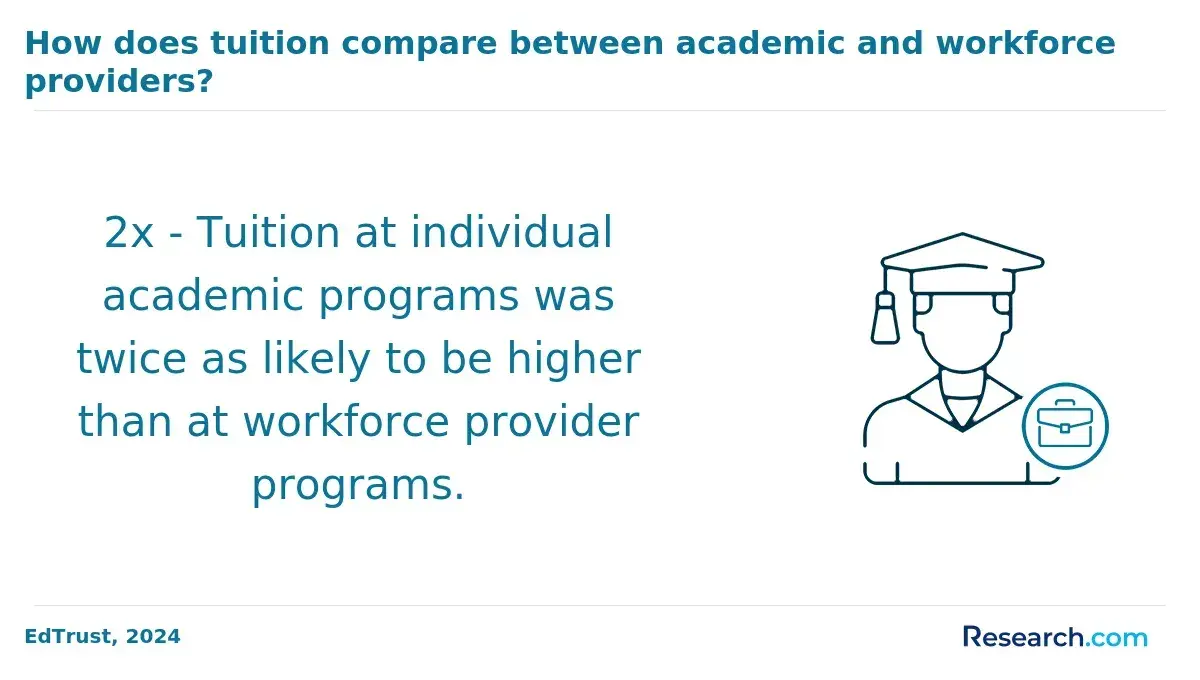
- A master's degree typically demands greater financial investment-averaging 50% higher tuition-while graduate certificates offer cost-effective alternatives suitable for budget-conscious learners.
- Graduate certificates can be completed within six to nine months, significantly faster than the 18 to 24 months required for a master's, enabling quicker workforce entry or skill enhancement.
- Employers generally recognize master's degrees more strongly-reflecting in 15% higher median salaries-but certificates suffice for specialized roles seeking targeted expertise without extensive credentials.
What Is the Difference Between a Global Security Master's Degree and a Global Security Graduate Certificate?
A global security master's degree and a global security graduate certificate serve distinct academic and professional purposes-each catering to different student needs and career ambitions. The master's degree generally requires 30 to 40 credit hours and offers a broad curriculum with comprehensive coursework, research components, and sometimes a thesis or capstone project. Its academic objectives focus on building advanced knowledge, critical thinking, and leadership skills for specialized roles in global security.
- Credit Hours: Master's programs demand substantial coursework compared to graduate certificates, which typically require 12 to 15 credit hours centered on specific skills.
- Curriculum Scope: A master's degree provides a wide academic foundation covering theory, policy, strategy, and practical applications, whereas certificates emphasize focused topics like cybersecurity or counterterrorism with a skills-based approach.
- Academic Objectives: Master's degrees prepare students for in-depth mastery and research; certificates are geared toward practical, immediate skill acquisition, ideal for professionals seeking a targeted upgrade.
- Duration and Structure: Master's programs often take one to two years full-time, unlike graduate certificates, which can be completed in six months to a year, accommodating working professionals or those interested in accelerated credentials such as 1 year associate degree programs.
- Misconceptions: Contrary to common belief, a graduate certificate is not just a shorter or lesser master's degree. It holds a distinct academic status and is not equivalent to a full degree, although some institutions allow certificates to be stacked toward a master's program.
- Intended Audiences: Master's degrees primarily attract recent graduates and professionals aiming for leadership positions, while certificates appeal to those seeking focused skill enhancement or quicker entry into the global security field.
- Institutional Purpose: Certificates offer flexible, modular study options that complement existing degrees or professional development, whereas master's degrees reflect a comprehensive educational commitment in global security.
This guide further compares cost, admission requirements, employer recognition, salary effects, and career utility of these global security credentials-providing a clear, data-driven perspective to inform decisions about advancing education or transitioning careers in this dynamic field.
What Are the Typical Admission Requirements for a Global Security Master's Program Compared to a Global Security Graduate Certificate?
Admission standards for a global security master's program typically demand a higher level of academic preparation and commitment than those for a global security graduate certificate. This distinction is crucial for recent undergraduates or working professionals deciding which path best aligns with their academic and career goals.
- Undergraduate GPA: Master's programs usually require a minimum undergraduate GPA around 3.0 on a 4.0 scale, signaling strong prior academic achievement. Graduate certificate admission criteria in global security programs, by contrast, tend to be more flexible or do not specify a threshold, making these programs accessible to a broader range of applicants.
- Prerequisite Coursework: For master's candidates, foundational coursework in global security or related fields such as international relations or criminal justice is often mandatory. Certificate programs usually allow learners to begin without extensive prior study, easing entry for career-changers or those new to the topic.
- Standardized Tests: Many master's programs require GRE scores or similar standardized tests, although some are adopting test-optional policies. Graduate certificates generally waive this requirement, simplifying the application process.
- Letters of Recommendation: Master's applications often demand two or three letters highlighting academic ability or professional promise. Graduate certificate programs may reduce this requirement or omit it entirely.
- Personal Statement: Both programs ask for a statement, but master's applicants must provide a detailed purpose or career plan, while certificates accept shorter, less formal submissions.
These differences serve a practical purpose. Graduate certificate programs provide an academic on-ramp for students who do not yet meet master's admission standards but seek to build skills and credentials before applying. For working professionals or career changers looking for a faster and more affordable route, certificates offer foundational knowledge without the rigorous entry barriers of a master's degree. Aspiring students should consider these factors alongside other outcomes such as employer recognition, salary impact, and career utility.
For those exploring options in related fields, a cheap online engineering degree can provide insight into affordable credential pathways with varied admission requirements that parallel some of the contrasts seen between global security's graduate certificates and master's programs.
What Is the Minimum GPA Requirement for a Global Security Master's Program?
Accredited master's programs in global security typically require a minimum GPA ranging from 3.0 to 3.5 on a 4.0 scale. These thresholds serve as initial indicators rather than strict cutoffs. Programs at research-intensive universities tend to demand higher GPAs-usually closer to or above 3.5-reflecting their competitive admissions environment. Conversely, schools with a professional or open-enrollment focus may accept applicants with GPAs nearer 3.0, placing more weight on relevant experience and competencies.
It's common that the average GPA of admitted students surpasses the stated minimums, illustrating that these figures act as a baseline instead of an admission guarantee. Some institutions also offer conditional admission to candidates slightly below the minimum GPA, provided they meet academic performance goals during early coursework or complete remedial classes. Such arrangements create a probationary period to demonstrate capability before full admission is granted.
A professional who recently completed a global security master's shared his experience: "I entered the program just meeting the minimum GPA, which felt daunting given the competition. Early on, I had to prove my skills through a provisional status, focusing on foundational courses. That period was stressful but essential-it taught me discipline and confirmed my commitment. Ultimately, surpassing those initial expectations gave me confidence that my academic past didn't define my future potential."
How Long Does It Take to Complete a Global Security Master's Degree Versus a Global Security Graduate Certificate?
Completion times for a global security master's degree vary widely depending on enrollment status-ranging from 18 to 24 months full-time, extending to three years or more part-time. Accelerated options can shorten this to 12 to 18 months but require intensive study. Graduate certificate programs, by contrast, are crafted for speed, often completed within six months to a year, with flexible part-time schedules that accommodate working professionals.
- Credit Load: Master's programs require 30 to 36 credits, frequently mandating comprehensive exams or a thesis/capstone project, which lengthen the timeline and increase academic demands.
- Focused Curriculum: Graduate certificates consist of 9 to 15 credits centered on specific skills, eliminating comprehensive exams and thesis requirements, thereby enabling quicker completion.
- Working Professionals: Those balancing full-time jobs often prefer graduate certificates because of their manageable duration and immediate applicability, whereas master's candidates typically commit to a longer path aiming for sustained career growth.
- Personal and Financial Factors: Family responsibilities and financial resources heavily influence which option is feasible. Certificates offer a faster, cost-effective credential boost, ideal for those needing agility in career shifts or limited budgets.
- Career Alignment: Time-to-completion realistically maps to individual circumstances-professionals must evaluate how their work life, family situation, and finances align with program demands and urgency of skill acquisition.
Those weighing the choice between a global security graduate certificate and master's degree should also consider program structures. Graduate degrees require broader mastery and rigorous assessments that require more time, while certificates provide targeted training with quicker payoff. For those interested in an accelerated pathway, exploring options like an accelerated business management degree may offer insights into compressed program formats and pacing.
How Much Does a Global Security Master's Degree Cost Compared to a Global Security Graduate Certificate?
Tuition for a global security master's varies by institution type and residency status. Public in-state students typically incur total costs between $15,000 and $30,000, while out-of-state attendees pay more-commonly $25,000 to $50,000. Private universities charge significantly higher, often ranging from $40,000 to $80,000. Graduate certificates, by contrast, offer a more budget-friendly option: public in-state prices fall between $5,000 and $10,000, out-of-state fees run $7,000 to $15,000, and private institution certificates usually cost $10,000 to $20,000.
Cost Drivers: The master's degree price premium stems largely from its longer duration-often about two years compared to a few months for certificates-and a higher total of credit hours. Added expenses arise from faculty expertise, research infrastructure, and extensive student services. Certificates require fewer credits and less administrative effort, resulting in lower direct tuition.
Financial Aid: Master's students have greater access to graduate assistantships, fellowships, and employer tuition assistance programs, which can substantially reduce their net expenses. Certificate candidates are less likely to benefit from these aid forms, so sticker prices often better reflect their final cost. Employer reimbursement plans tend to favor full degree programs rather than certificates, especially in security industries.
Hidden Costs: Master's studies typically demand full-time commitment, leading to potential lost wages and delayed career progression-factors that may outweigh the upfront tuition. Graduate certificates often come in part-time or online formats, allowing working professionals to maintain income and reduce opportunity cost despite a narrower credential scope.
ROI Considerations: Evaluating net cost after aid-not sticker price-and factoring in career impact and salary gains is essential. Prospective students are encouraged to use free online calculators to explore total costs, likely earnings, and loan repayment scenarios to make informed decisions between pursuing a master's degree or a graduate certificate in global security.
One professional who advanced her career following a global security master's degree reflected on the financial and time investment: "Balancing full-time study and part-time work was challenging, but the assistantship eased tuition worries. The extended program length meant sacrificing short-term earnings, yet the depth of knowledge I gained and the network I built opened doors I wouldn't have reached otherwise. Looking back, the decision to invest in the master's paid off beyond the initial cost, especially as employer tuition support softened the financial load."
How Does Earning a Global Security Master's Degree Affect Salary Compared to a Global Security Graduate Certificate?
The wage advantage for global security professionals holding a master's degree over those with only a graduate certificate is well documented in 2024 data from the Bureau of Labor Statistics and Georgetown University. The median salary for master's degree holders is typically 15-25% higher, driven by the advanced knowledge and strategic roles these graduates fill.
- Salary Premium: Master's degree holders earn substantially more on average, reflecting their broader expertise and increased leadership responsibilities in the field.
- Sector Differences: The greatest pay gaps appear in government agencies, defense contractors, and multinational firms that prioritize comprehensive risk management and policy skills.
- Employer Size: Larger organizations tend to value master's credentials more, aligning them with leadership pipelines and complex operational needs.
- Role Level: Senior analysts, security consultants, and policy advisors see especially significant salary increases with a master's degree compared to certificate holders in equivalent positions.
- Certificate Strengths: In specialized, technical roles such as cybersecurity and intelligence analysis, focused graduate certificates can offer salaries on par with master's graduates by emphasizing high-demand skill sets.
- Return on Investment: Although master's programs require more time and money, the long-term salary uplift often justifies the investment. Conversely, certificates provide quicker, less costly upskilling with respectable earnings for those seeking a fast career shift.
Which Global Security Career Paths Favor a Master's Degree Over a Graduate Certificate?
Several career paths within the field of global security distinctly favor candidates who hold a master's degree over those with only a graduate certificate. Employers, licensure boards, and professional associations consistently emphasize the value of the master's degree in roles that demand comprehensive expertise, leadership skills, and ongoing research or policy development.
- Leadership Roles: Senior positions such as security directors, intelligence managers, and policy advisors typically require a master's degree. These roles involve strategic decision-making, broader organizational oversight, and complex problem-solving where the theoretical depth and analytical training from a master's program prove indispensable.
- Research-Intensive Positions: Careers in cybersecurity research, threat analysis, and global security policy research often mandate a master's degree as a minimum qualification. The degree's emphasis on academic rigor and methodology equips professionals to address evolving security challenges with evidence-based solutions.
- Licensed Professions: Certain sectors-such as homeland security analysts or specific government contractor roles-may require licensure or certification that demands a master's degree for eligibility. This credential signals mastery of advanced principles and qualifies individuals for specialized responsibilities.
- Promotion and Specialization: Many agencies and corporations explicitly list a master's degree as a formal prerequisite for promotion to mid- and upper-level positions or entry into specialized units. Thus, the degree is structurally integrated into career advancement pathways rather than merely preferred.
According to recent U.S. Bureau of Labor Statistics projections, jobs requiring a master's degree in security-related fields are expected to grow approximately 10% between 2022 and 2032-faster than the average for all occupations. For those aiming for higher-level roles or licensure, planning a path toward the master's degree should be a strategic priority.
Which Global Security Career Paths Favor a Graduate Certificate Over a Master's Degree?
Certain careers within global security favor a graduate certificate over a master's degree due to the demand for specific technical skills and the need for quicker upskilling. Employers in fields like cybersecurity, intelligence analysis, and homeland security often prioritize proven applied competencies that a focused certificate delivers-especially when balancing time and cost is crucial. This dynamic influences when to choose a global security graduate certificate over a master's degree for many professionals.
- Cybersecurity Specialist: Organizations seek candidates with certifications validating expertise in network defense, threat detection, or ethical hacking. A graduate certificate in cybersecurity tools and techniques can offer faster entry or advancement without the broader theoretical coursework of a master's program.
- Intelligence Analyst: Roles demanding proficiency with data analytics software, open-source intelligence, or geospatial analysis often accept certificates as evidence of mastery. Hiring managers frequently prefer certificates confirming technical expertise over comprehensive master's degrees.
- Emergency Management Coordinator: Professionals holding earlier degrees may pursue certificates to update skills in crisis communication, risk assessment, or federal compliance swiftly, adapting to evolving threats without enrolling in a full degree.
- Security Consultant or Auditor: Certificates focused on regulatory standards such as ISO or NIST often prove more relevant and immediately practical to clients than a broader academic credential.
Job market analytics from platforms like Lightcast show that many employers treat graduate certificates as equivalent or even preferable in these contexts-certificates signal focused expertise and readiness to apply skills immediately. For career-changers, recent undergraduates, and working professionals, graduate certificates offer a strategic, time-efficient way to bridge competency gaps without the commitment of multiple years of graduate study. Professionals aiming to close specific skill gaps after earning a bachelor's or master's often maximize ROI by choosing certificates instead of pursuing another full degree.
Those considering further education in related fields might explore options including an online counseling degree as a parallel pathway to enhance their career versatility. The best careers for a graduate certificate in global security typically combine specialized, technical needs with employers' recognition of certificates as valid credentials, making targeted certifications a compelling alternative to longer master's programs.
Is a Global Security Graduate Certificate Stackable Toward a Master's Degree?
The question of whether a global security graduate certificate credit transfer is possible toward a master's degree depends on specific institutional policies-there is no universal standard that applies across all universities. Some accredited institutions offer stackable credentials allowing coursework completed in a graduate certificate program to count toward a related master's degree. This pathway provides flexibility and a cost-effective stepwise approach for students.
Key considerations include:
- Institutional Matching: Credits generally must come from the same university or an affiliated institution offering both the certificate and the master's program.
- Grade Thresholds: Most schools require a minimum grade-often a B or above-for certificate courses to be eligible for transfer.
- Time Limits: Credits usually must be applied within a specific timeframe to remain valid for stacking into the master's degree.
- Program Alignment: The certificate curriculum needs strong relevance to the master's content to ensure academic coherence.
- Risk Reduction: Stacking offers students a lower-risk way to experience graduate coursework and manage tuition costs before fully committing.
- Verification: Prospective students should confirm stackability directly with graduate admissions offices, as policies vary widely.
This stackable approach suits recent undergraduates and working professionals wanting a faster entry into global security careers or those exploring the full master's degree. For example, students interested in the best online colleges for forensic science might consider similar stacking options in related fields.
How Do Employers in the Global Security Field Perceive a Master's Degree Versus a Graduate Certificate?
Employer preferences in the global security field show notable differences when comparing master's degrees with graduate certificates, influenced heavily by industry and job function. Traditional sectors-such as government agencies, defense firms, and academia-often prioritize master's degrees, viewing them as comprehensive credentials that demonstrate deep expertise and preparation for complex challenges.
- Industry Variation: In technology and consulting, certificates are more widely accepted due to their focus on specific skills and faster completion times, appealing to employers seeking practical knowledge and adaptability.
- Role-Relevance: Positions in leadership and strategic analysis usually favor master's degrees, while operational or technical roles may find certificates equally or more appropriate for their targeted skill sets.
- Institutional Prestige: The reputation and accreditation of the institution awarding the credential heavily impact employer perception. A certificate from a highly regarded university can surpass a master's degree from a lesser-known school in value.
- Expectation Management: Candidates should align their credential choice with industry norms and job descriptions, recognizing some employers explicitly require a master's, while others prioritize demonstrated skills from certificates.
Can a Global Security Graduate Certificate Help Someone Transition Into the Field From a Different Background?
Professionals moving from unrelated fields can find a global security graduate certificate a practical and efficient credential for entering the sector faster and with less financial burden than a master's degree. Designed with career switchers in mind, many certificate programs offer accelerated coursework that quickly delivers foundational knowledge without the extended commitment associated with full graduate studies.
Cost-Effectiveness: Certificates typically require lower tuition, making them accessible without the larger investment of master's programs.
Accelerated Pathways: These programs often feature streamlined curricula focused on applied skills and current industry trends, enabling learners to build relevant expertise rapidly.
Stackability: Many certificates can later be credited toward a master's degree, providing flexibility for those considering further education.
Portfolio Building: Coursework frequently includes projects or practical assignments that help candidates develop a tangible portfolio to demonstrate subject-matter expertise to employers.
Yet, certificates have inherent limits. They generally lack the comprehensive theoretical depth of master's degrees-potentially restricting access to senior or specialized roles that expect advanced credentials. Moreover, employer recognition favors the prestige of a master's degree, especially in competitive global security careers. Thus, certificates often function best as stepping stones, not endpoints.
To enhance employability, certificate holders should complement their studies with visible applied work such as internships, volunteering, or independent projects-creating a portfolio that bridges experience gaps and bolsters credibility during career transitions.
What Graduates Say About Which Is Better: A Global Security Master's Degree or a Global Security Graduate Certificate
- Samantha: "Choosing between the global security master's degree and the graduate certificate was tough-but the cost difference really stood out to me. The certificate was a more affordable way to get my foot in the door, yet the master's provided deeper knowledge that many employers respect more. Ultimately, if you want to save money and time, the certificate is great, but the master's degree definitely helped boost my salary and career opportunities."
- Hugh: "Reflecting on my journey, I see the master's degree as an investment that took longer but offered far more career utility. The certificate program's admission requirements are lighter, which might appeal if you're pressed for time-but employers in high-level roles tend to favor the comprehensive training the master's delivers. For me, the added time to completion was worth the enhanced recognition and the doors it opened in the security sector."
- Andrew: "From a professional standpoint, I appreciated how the certificate's shorter time-to-completion helped me quickly gain tangible skills without the extended commitment of a master's degree. Both pathways hold employer recognition-but the certificate fits better for those balancing work and study. That said, if salary impact is your priority, the master's degree has a stronger track record of boosting earning potential in the long run."
Other Things You Should Know About Global Security Degrees
Online global security master's programs typically offer a more comprehensive curriculum with in-depth theory and practical applications, leading to stronger recognition by employers and academic institutions. Graduate certificates focus on specific skills or topics and are shorter, making them less prestigious but highly valuable for targeted knowledge or quick career upgrades. Quality varies by school and program accreditation, but master's degrees generally carry more weight in hiring and promotion decisions.
Accreditation ensures that a program meets established standards of quality and rigor-critical for both global security master's and graduate certificate programs. A degree or certificate from an accredited institution is more likely to be respected by employers and accepted for further academic study. Choosing an accredited program affects credential legitimacy and can impact salary potential and job opportunities within the global security field.
Individuals seeking comprehensive expertise, leadership roles, or long-term career advancement in global security are best suited for a master's degree. Conversely, working professionals, career changers, or current certificate holders looking to quickly gain or update specific skills may find a graduate certificate more practical and time-efficient. The choice depends on career goals, time availability, and whether credential depth or targeted knowledge is the priority.
References
- Top affordable online cybersecurity master degree programs https://cybersecurityguide.org/rankings/most-affordable-online-masters/
- Is international security and global security the same? | UF - UFV https://www.ufv.es/is-international-security-and-global-security-the-same-preguntas-masters/
- How to Get Into Cybersecurity from a General IT Career https://www.cyberdegrees.org/resources/transitioning-from-general-it/
- MA in Global Security and Strategy https://www.brussels-school.be/education/ma-global-security-and-strategy
- Transitioning to a cybersecurity career - stories from non-technical infosec pros - DefCamp 2025 https://def.camp/cybersecurity-career-stories-non-technical-infosec-pros/
- Difference Between Graduate Certificate and Master's Degree - Rosemont College https://rosemont.edu/whats-the-difference-between-graduate-certificate-and-masters-degree/
- Skills You'll Learn in National Security Studies | UT San Antonio Online https://online.utsa.edu/blog-content/what-to-expect-and-skills-youll-learn-in-national-security-studies/
- Graduate Certificate in Global Security and Strategy | SUSS https://www.suss.edu.sg/programmes/detail/graduate-certificate-in-global-security-and-strategy
- Master's Degree in Security and Defense | ILERI https://www.ileri.fr/en/program/master-in-international-security-cybersecurity-and-defense
- Master in International Security https://www.sciencespo.fr/psia/academics/masters/master-international-security/