2027 Can You Transfer From a Closed School?

Co-Founder and Chief Data Scientist
When a college closes, your credits, transcript, loans, and career timeline can all be affected at once. The stakes are high: Federal Student Aid's 2024 portfolio data shows more than $1.6 trillion in outstanding federal student loans, so a wrong transfer decision can affect both degree progress and debt relief. This guide is for students whose campus or online school closed, paused instruction, or announced a teach-out. You'll learn how transfer, teach-out, transcripts, financial aid, and career planning work so you can choose the least costly path.
Key Things You Should Know
- Yes, you can often transfer from a closed school, but the receiving institution decides which credits apply, and credits from nationally accredited, unaccredited, or discontinued programs may be harder to use.
- Federal closed school discharge may cancel eligible federal loans, but you can lose that option if you complete a comparable program through a teach-out or by transferring the closed school's credits into another program.
- Cost matters: College Board's 2024-25 data lists average published tuition and fees at $4,050 for public two-year in-district colleges, $11,610 for public four-year in-state colleges, and $43,350 for private nonprofit four-year colleges.
What are your options when your college or career school suddenly closes?
If your school closes, your main options are usually to enter an approved teach-out, transfer to another institution, apply for a federal closed school discharge if eligible, seek state tuition recovery, or restart in a new program. The right choice depends on how close you are to finishing, whether your credits are usable, your loan balance, and whether your career requires licensure or accreditation.
A "closed school" generally means the institution stopped offering instruction to the students in your program. A program shutdown can be just as disruptive if your campus remains open but the specific degree, certificate, or training path you entered is no longer available.
The comparison below summarizes the major routes students usually consider after a closure. Use it to narrow your decision before speaking with a state agency, loan servicer, accreditor, or receiving school.
| Option | Best fit | Main advantage | Main risk |
| Teach-out agreement | Students close to completion in the same program | May preserve more coursework and shorten time to credential | Can affect closed school discharge eligibility if you complete a comparable program |
| Transfer to a new school | Students who want a different institution, format, location, or major | Gives you more control over school quality and career fit | Some credits may transfer only as electives or not at all |
| Closed school discharge | Federal loan borrowers who do not complete a comparable program | May discharge eligible federal loans tied to the closed school | You may need to give up using some credits toward the same credential |
| State tuition recovery or refund claim | Students who paid out of pocket or used private financing | May recover some tuition depending on state rules | Deadlines, documentation, and coverage vary widely |
| Restart in a different program | Students whose career goal changed or whose credits have low transfer value | Can prevent throwing more money at a poor-fit credential | May extend completion time and total cost |
Before you commit, gather your transcript, enrollment agreement, ledger or billing statement, financial aid history, program catalog, syllabi, and any closure notices. Those documents can make the difference between getting credits accepted, proving loan discharge eligibility, or qualifying for a state recovery program.
Can you transfer credits from a closed school to another accredited institution?
You can ask another accredited institution to evaluate credits from a closed school, but transfer is never automatic. Colleges typically review institutional accreditation, program accreditation, course level, grades, credit hours, course descriptions, learning outcomes, age of credits, and whether the courses fit the new degree plan.
The most important concept is "applicability." A course may transfer to the new college but not count toward your major. For example, 45 transferred credits may look helpful, but if 25 count only as general electives, you may still need several semesters of major coursework.
To improve your odds, prepare a clean transfer-credit file before applying. The receiving school needs enough evidence to compare your prior coursework with its own curriculum.
- Request an official transcript or record from the closed school's custodian before applying if possible.
- Save syllabi, course catalogs, lab hour descriptions, clinical hour logs, and program handbooks.
- Ask for a written preliminary credit evaluation before paying a deposit or committing to enrollment.
- Confirm which credits apply to general education, major requirements, electives, prerequisites, and residency requirements.
- Ask whether transferred credits could affect federal closed school discharge eligibility before you use them in a comparable program.
If you are changing fields and want a faster route to a credential, compare legitimate accelerated options carefully rather than chasing the school that promises the most transfer credit. Guides on the easiest online degrees that pay well can help you think about speed, career fit, and labor-market value together.
A common mistake is assuming that accreditation alone guarantees transfer. Accreditation helps, but every college controls its own transfer policy. Regional institutional accreditation is often the most portable, while credits from schools with different accreditation types, clock-hour formats, or occupation-specific curricula may require closer review.
How do teach-out agreements differ from transferring to a new school?
A teach-out is an arranged path that lets students complete a closed or closing program through the original institution or an approved partner. A transfer is broader: you leave the closed school and apply to another institution under that school's normal or special transfer process.
The table below explains the practical differences. This matters because a teach-out may be convenient, but it can also limit your choices and may affect loan discharge decisions.
| Factor | Teach-out agreement | Transfer to a new school |
| Program match | Usually designed to match the closed program closely | May be same field, related field, or different major |
| Credit treatment | Often accepts most or all applicable coursework under the agreement | Credits are evaluated by the receiving school's policy |
| Speed | Often fastest for students near graduation | Can be slower if many credits do not apply |
| Choice of institution | Limited to approved teach-out partners or arrangements | Broader choice of public, private nonprofit, online, campus, or hybrid options |
| Loan discharge impact | Completing a comparable program can make you ineligible for closed school discharge | Using closed-school credits in a comparable program can also affect eligibility |
| Best use case | You are close to finishing and the partner is reputable, accredited, and affordable | You want a better fit, lower cost, different schedule, or stronger career alignment |
Choose a teach-out when it clearly saves time and money without compromising licensure, accreditation, or employment goals. Choose a transfer when the teach-out partner is too expensive, inconvenient, weakly aligned with your career, or unable to provide the academic support you need.
Before signing a teach-out agreement, ask for the total remaining cost, exact course plan, delivery format, refund rules, accreditation status, clinical or internship placement details, and a written explanation of how completion may affect federal loan discharge.
How do you find and request transcripts and records from a closed school?
Transcripts are often the first bottleneck after a closure. Without them, a receiving school may not evaluate your credits, a licensing board may not verify your training, and a loan servicer may take longer to review your discharge application.
Records may be held by different custodians depending on state law, school type, and the closure plan. The table below shows where students commonly need to look.
| Possible record holder | What it may provide | When to check there |
| State higher education agency | Transcript custodian information, closure notices, complaint procedures | First stop for many closed private career schools and degree-granting institutions |
| State workforce or licensing agency | Training records, clock hours, licensure-related documentation | Useful for cosmetology, allied health, truck driving, skilled trades, and similar programs |
| Accrediting agency | Teach-out information and institutional closure contacts | Helpful when a school had an approved teach-out plan |
| Partner teach-out institution | Enrollment records and accepted coursework under the teach-out | Relevant if your school arranged completion through another college |
| Third-party transcript service | Official transcript delivery | Common when the closed school used an outside transcript vendor |
Use a step-by-step approach so you do not lose time contacting the wrong office. Keep copies of every request, confirmation number, and email response.
- Search your state higher education agency's closed school records page for the school name, campus location, and closure date.
- Check the school's final closure notice, accreditor notice, or teach-out announcement for the named records custodian.
- Request both an official transcript for the receiving school and an unofficial copy for your own review.
- Ask for course descriptions, clock-hour records, clinical logs, externship records, and completion documents if your field requires licensure.
- If records are missing, ask the receiving institution whether syllabi, catalogs, grade reports, or instructor documentation can support a credit appeal.
Do not wait until an admissions deadline to request records. Closed-school transcript systems can move slowly, especially when multiple campuses, owners, or custodians were involved.
Will transferring from a closed school affect your federal student loans and discharge eligibility?
Yes, transferring can affect federal closed school discharge eligibility. The key rule is that you generally cannot receive a closed school discharge if you complete a comparable program through a teach-out, transfer credits or hours from the closed school into a comparable program, or otherwise finish the program for which the loans were borrowed.
Federal Student Aid rules are detailed, so borrowers should verify their situation with their loan servicer and the U.S. Department of Education before making an irreversible decision. The table below shows the decision trade-off in plain language.
| Path | Potential loan impact | What to verify before choosing |
| Do not continue the comparable program | You may remain eligible to apply for closed school discharge if other conditions are met | Whether your withdrawal and closure timing fit federal rules |
| Enter and complete a teach-out | You may lose closed school discharge eligibility for loans tied to that program | Whether the teach-out is considered comparable and whether completion is worth the debt trade-off |
| Transfer credits into the same or comparable program | You may lose eligibility if those credits help you complete the comparable program | Whether the new program is comparable and how many closed-school credits will apply |
| Start a different program without using closed-school credits | You may preserve eligibility depending on your facts | Whether the new program is truly different and how the servicer will review it |
Do not rely only on an admissions representative's verbal answer. Before enrolling, ask your servicer how transfer, teach-out completion, and comparable-program rules apply to your loans. Then save the response in writing if possible.
Also remember that private student loans are not governed by the same federal discharge rules. Some private lenders offer school-closure relief, but terms vary by lender, loan contract, and state consumer protection rules.
What should you look for in a receiving school's transfer and teach-out policies?
A receiving school should make it easy to understand how many credits you can use, how much the remaining program will cost, and whether the credential will support your career goal. If a school pressures you to enroll before giving written answers, treat that as a red flag.
The checklist below summarizes policy features that can protect you from repeating the same disruption. It is especially important if you are comparing online, private, public, nonprofit, and career-focused institutions.
| Policy area | Strong signal | Red flag |
| Accreditation | Clear institutional accreditation and, when needed, programmatic accreditation | Vague claims such as "fully approved" without naming the accreditor |
| Transfer evaluation | Written course-by-course review before enrollment commitment | Promises of maximum transfer credit without reviewing records |
| Residency requirement | Transparent minimum credits you must complete at the new school | Late disclosure that many credits cannot count toward graduation |
| Total cost | Full estimate including tuition, fees, books, technology, labs, clinical costs, and exam fees | Only monthly payment or per-credit price is shown |
| Licensure alignment | Written disclosure for state licensure, certification, clinical, or internship requirements | No clear answer about whether the program meets your state's requirements |
| Student support | Dedicated transfer advising, academic planning, tutoring, and career services | You are told to enroll first and "figure out credits later" |
When comparing schools, include accredited public and private nonprofit options, not just the institution named in a closure notice. A list of non profit online universities can be a useful starting point for identifying institutions with established online programs and recognized accreditation.
A practical rule: do not judge a receiving school by the number of credits it accepts alone. The better measure is how many credits apply to the degree you actually need, how much debt remains, and whether the credential is respected in your target field.
Can you switch programs or majors when transferring from a closed school?
Yes, you can switch programs or majors after a school closure, and sometimes it is the smartest move. If your prior program had weak employment value, poor licensure alignment, or low credit transferability, changing direction may reduce long-term risk even if it adds short-term coursework.
Switching majors works best when your completed courses satisfy general education or prerequisite requirements in the new program. It is harder when most of your credits were occupation-specific, clock-hour based, or tied to equipment, labs, or clinical training that the new school will not accept.
Use these questions to decide whether changing majors is worth it. They help you compare time, cost, and career relevance rather than reacting only to the closure.
- How many credits will apply to the new major, not just transfer as electives?
- Will the new program lead to a credential required or preferred for your target job?
- Does the new field have realistic entry-level openings in your region or remote job market?
- Will switching majors preserve or reduce your eligibility for loan discharge, grants, or state recovery funds?
- Can you complete the new path part time, online, or through a lower-cost public institution?
If your priority is finishing a bachelor's degree with minimal additional complexity, compare majors by transfer friendliness, course availability, and career fit. Guides on what's the easiest bachelor's degree to get can help you understand which programs are commonly more flexible, but you should still verify accreditation, cost, and employment relevance.
A common mistake is switching to the fastest-sounding major without checking whether employers value it. A faster degree can be useful, but only if it supports your next step, whether that is graduate school, licensure, promotion, or entry into a specific occupation.
How do online programs compare to campus options for students from closed schools?
Online programs can be a strong option after a closure because they expand your school choices beyond your local area. They may also help working adults, parents, military-connected students, and displaced students continue without relocating. Campus programs may be better for lab-heavy, clinical, technical, or licensure-based fields that require hands-on training.
The comparison below focuses on transfer students affected by closures. It shows where each format tends to be stronger and where you need to ask extra questions.
| Factor | Online program | Campus program |
| Schedule flexibility | Often stronger for working adults and students with caregiving duties | More structured class times may help students who need routine |
| Program access | Broader geographic choice if the school is authorized in your state | Limited by commuting distance or relocation |
| Hands-on training | May require local placements, intensives, simulations, or partner sites | Often stronger for labs, studios, shops, and clinical practice |
| Transfer advising | Can be efficient if the school has mature online transfer systems | May offer easier in-person advising and department visits |
| Cost control | May reduce commuting or relocation costs, but fees vary | May offer lower tuition at local public colleges, especially community colleges |
Cost should be reviewed as total cost, not just tuition. College Board's 2024-25 figures show why: published tuition and fees vary widely by sector, so an online private program is not automatically cheaper than a local public option. If affordability is your top concern, cheap online colleges can ease some of the financial burden.
Before choosing online, verify state authorization, proctored exam rules, technology requirements, clinical placement support, transfer-credit limits, and whether the program satisfies any state licensure requirements. This is especially important in nursing, teaching, counseling, social work, allied health, and skilled trades.
What financial aid, tuition recovery, or grant options exist after a school closure?
After a closure, your financial options may include federal loan discharge, remaining Pell Grant or Direct Loan eligibility, state tuition recovery funds, school refunds, veterans education benefit restoration, workforce grants, employer tuition assistance, scholarships, or payment plans at a receiving school. Availability depends on your funding source and state.
Start by separating money you borrowed, money you paid, and aid you may still be eligible to use. Each category has different rules and deadlines.
- Federal loans: Ask your loan servicer about closed school discharge, deferment or forbearance while your application is reviewed, and how transfer or teach-out completion affects eligibility.
- Federal grants and new aid: File or update the FAFSA if you plan to continue elsewhere, and ask the receiving school how prior enrollment affects satisfactory academic progress.
- State recovery funds: Contact the state agency that oversaw the closed school to ask about tuition recovery, surety bonds, student protection funds, or complaint procedures.
- Private loans: Request closure-related relief from the lender and review your promissory note; private loan cancellation is not automatic.
- Veterans benefits: If you used GI Bill benefits, contact the VA or your school certifying official about restoration rules after closure or disapproval.
- Shorter credentials: If a full degree is no longer the best investment, compare recognized certificates, apprenticeships, licensure programs, or employer-funded training.
Some students decide not to transfer immediately and instead pursue a shorter credential with clearer job alignment. If that is your situation, online certifications that pay well can help you align your career, though you should still verify employer recognition and licensing requirements.
Avoid using new loans to rush into the first school that accepts you. A safer approach is to calculate remaining cost, credits applied, expected time to completion, loan discharge trade-offs, and the credential's value in your target job market.
How can transferring from a closed school impact your career goals and job outlook?
A school closure can delay your career timeline, but it can also be a chance to choose a stronger credential. The career impact depends on whether you can preserve progress, maintain licensure eligibility, and graduate from an institution that employers and licensing boards recognize.
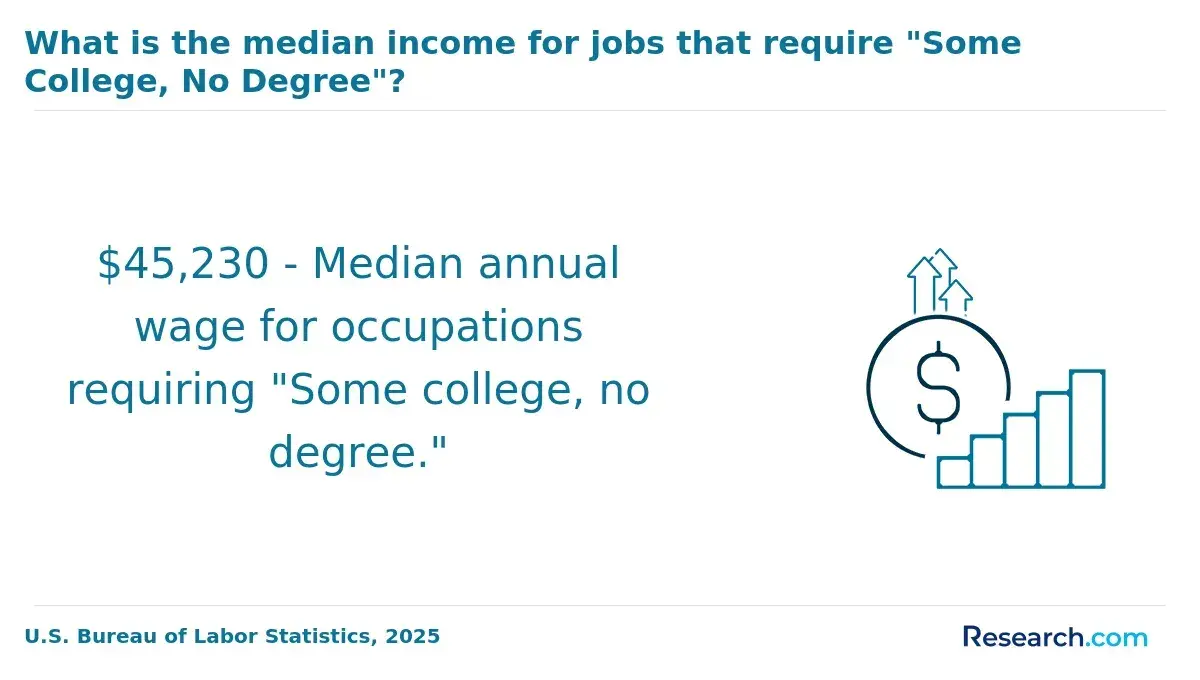
Education still matters in the labor market, but it should be weighed against cost and time. BLS 2024 data shows median weekly earnings of $1,543 for workers with a bachelor's degree, compared with $1,099 for workers with an associate degree and $992 for workers with some college but no degree. This does not mean every degree pays off, but it shows why completing a credential can matter more than simply accumulating credits.
The table below shows how different transfer outcomes may affect your career plan. Use it to decide whether you should prioritize speed, credential quality, licensure, or cost reduction.
| Student situation | Career risk | Better decision focus |
| Near graduation in a licensed field | Losing clinical hours, exam eligibility, or state board approval | Prioritize approved teach-out or accredited program continuity |
| Mid-program with many general education credits | Delaying graduation by choosing a poor transfer fit | Prioritize written credit evaluation and degree-map comparison |
| Credits are mostly technical or clock-hour based | Few credits apply to a degree program | Compare career certificates, apprenticeships, and competency-based options |
| Original program had weak employment outcomes | Completing quickly but earning a low-value credential | Consider switching majors or institutions after checking job requirements |
| Student has high loan balance | Taking on more debt while losing discharge eligibility | Compare loan discharge, state recovery, and lower-cost transfer options before enrolling |
Current hiring trends also matter. Employers in many fields are placing more weight on demonstrated skills, industry tools, portfolios, internships, certifications, and work-based learning. AI and automation are increasing the value of adaptable skills such as data literacy, communication, project coordination, digital collaboration, and problem-solving.
The best next step is to work backward from your target job. Review job postings, licensure board requirements, employer-preferred credentials, and salary ranges in your region. Then choose the school that offers the shortest credible path to that outcome, not simply the school that advertises the easiest transfer.
Other Things You Should Know About
Yes. You can apply to another institution and request a transfer-credit evaluation. The new school decides which credits apply, so ask for a written evaluation before enrolling or borrowing more money.
You might. If you use credits from the closed school to complete a comparable program, or finish through a teach-out, you may become ineligible for closed school discharge. Confirm your situation with your federal loan servicer before transferring credits.
Contact your state higher education agency, the school's accreditor, or the listed records custodian. If an official transcript is unavailable, ask the receiving school whether catalogs, syllabi, grade reports, or clock-hour records can support a credit review.
A teach-out is often better if you are close to finishing, the partner school is accredited, and the total cost is reasonable. Transferring may be better if the teach-out is expensive, inconvenient, weakly aligned with your career, or risky for licensure.
References
- Transfer of Credit - ACCSC https://www.accsc.org/student-center/transfer-of-credit/
- Closed School Discharge - Student Loan Borrowers Assistance https://studentloanborrowerassistance.org/for-borrowers/dealing-with-student-loan-debt/loan-cancellation-forgiveness-bankruptcy/cancellation-forgiveness-options/closed-school/
- NASFAA Next Steps https://www.nextstepsed.org/closed-school-federal-loan-discharge
- How to Transfer Credits from One College to Another: A Comprehensive Guide - NEIT https://www.neit.edu/blog/how-to-transfer-credits-from-one-college-to-another
- As traditional college campuses shut down, online schools get their chance to shine https://www.cnbc.com/2020/05/03/online-schools-thrive-amid-college-campus-closures-due-to-coronavirus.html
- Closed School Discharge for Students and Parents https://www.savingforcollege.com/article/closed-school-discharge-for-students-and-parents
- Advantages And Disadvantages Of Jumping Straight Into Work After School - What Career Live https://www.whatcareerlive.co.uk/advantages-and-disadvantages-of-jumping-straight-into-work-after-school/
- What to Do if Your College Closes | SoFi https://www.sofi.com/learn/content/what-to-do-if-college-closes/
- Supporting Students After College Closures: Transfer Strategies - Collegis Education https://collegiseducation.com/insights/supporting-students-after-college-closures-transfer-strategies/
- Teach-out and Transfer Agreements https://www.northland.edu/teach-out-and-transfer-agreements/