2027 How to Transfer From an Online College to a Campus Program

Co-Founder and Chief Data Scientist
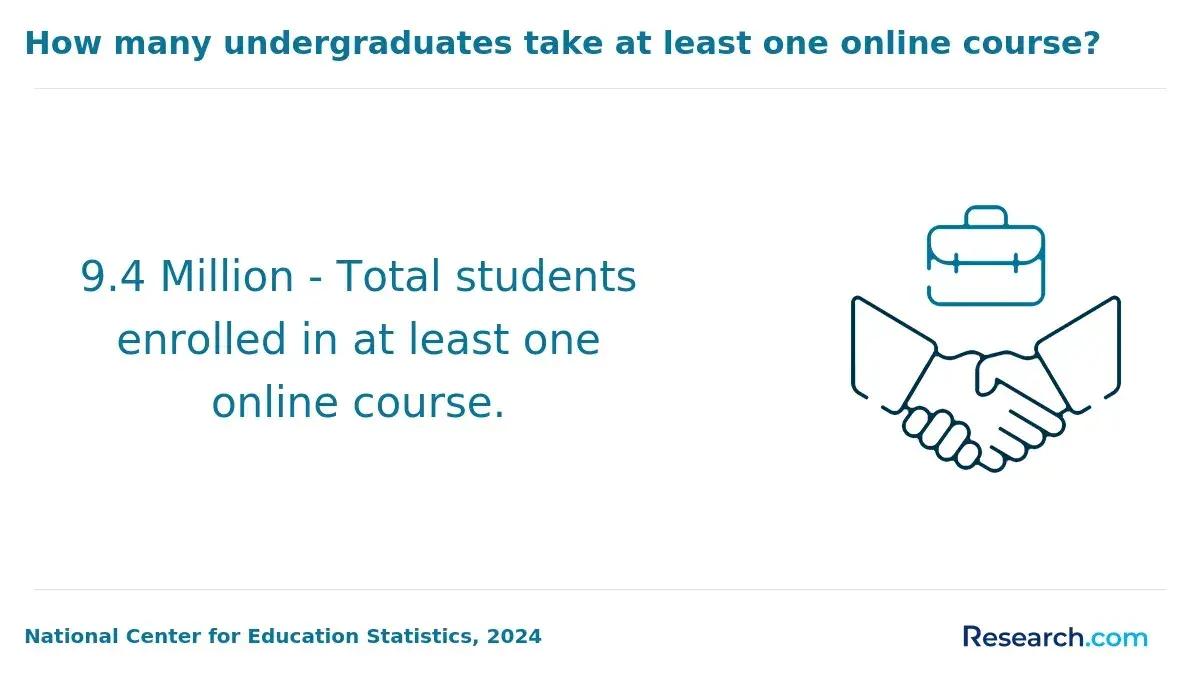
Transferring from an online college to a campus program can change your costs, schedule, credits, and career options. NCES data published in 2024 shows that more than half of U. S. undergraduates took at least one distance education course in fall 2022, making online-to-campus transfers a common planning issue. This guide is for students who want in-person labs, campus support, a different major, or stronger recruiting access.
You will learn how transfer credits, accreditation, admissions, timelines, and costs work so you can choose a campus program without losing unnecessary time or money.
Key Things You Should Know
- Most campus colleges evaluate online transfer credits by accreditation, course level, grade, syllabus match, and whether the course fits the new degree plan.
- College Board's 2024 pricing data lists average published tuition and fees at $11,610 for in-state public four-year colleges and $43,350 for private nonprofit four-year colleges, so transfer cost should include more than tuition.
- Transfer timelines usually take several months because students must request transcripts, meet admissions deadlines, complete credit evaluations, and arrange housing, aid, and registration.
How do you transfer from an online college to a campus program?
To transfer from an online college to a campus program, you apply as a transfer student, send official transcripts, meet the receiving school's admission rules, and wait for the campus school to decide which credits count toward your new degree. The key is to treat the move as both an admissions decision and a degree-planning decision: being admitted does not automatically mean every online credit will apply.
The process is usually straightforward, but each step affects your time to graduation. Follow this sequence before you withdraw from your current online school:
- Choose a campus program and confirm that it offers the major, concentration, clinical placement, lab sequence, internship access, or career services you want.
- Check the campus school's transfer admission page for minimum GPA, completed credit requirements, deadlines, residency rules, and required documents.
- Request official transcripts from every college you have attended, including dual-enrollment, community college, military, certificate, and withdrawn institutions.
- Collect syllabi for major courses, especially upper-division, lab, writing-intensive, business, nursing, education, engineering, computer science, and licensure-related classes.
- Ask for a preliminary transfer credit review before committing, if the school offers one, and compare how credits apply to the degree rather than only how many are accepted.
- File or update the FAFSA, compare financial aid packages, and ask whether institutional scholarships are available to transfer students.
- Accept admission only after you understand your remaining credits, estimated graduation date, total cost, housing options, and registration priority.
If you started with online associate degrees, transferring to a campus bachelor's program may be especially efficient when the associate degree follows a formal articulation pathway. Without that pathway, the campus college may still accept credits, but some may count only as electives.
A common mistake is transferring because a campus feels more prestigious without checking degree fit. A better approach is to compare the exact remaining course map at each school, including prerequisites that could add a semester or more.
What credits transfer from online college to campus?
Campus schools can accept credits earned online when they come from a properly accredited institution and match the receiving program's academic standards. In most cases, the transcript does not label a course as "online" in a way that makes it automatically less valid; what matters is the institution, course content, credit hours, grade, and relevance to the new degree.
Transfer credits usually fall into several categories. Understanding these categories helps you predict whether your credits will shorten your path to graduation or simply appear on your record.
| Credit type | How campus colleges often treat it | Why it matters |
| General education credits | Often transferable when course outcomes match the campus school's core curriculum | These credits can reduce the number of required writing, math, science, humanities, and social science courses |
| Lower-division major prerequisites | Frequently reviewed by department faculty for course equivalency | A mismatch can delay entry into upper-division coursework |
| Upper-division major courses | Accepted more selectively, especially in regulated or sequential majors | These courses may affect how long you remain in the program |
| Electives | Often accepted if college-level and within transfer limits | They add credit total but may not reduce major requirements |
| Prior learning, exams, or competency credits | Accepted only if the campus school recognizes that credit type | Policies vary widely, so these credits need extra review |
Students coming from competency-based online colleges should pay close attention to transcript format. Some campus programs want to see credit-hour equivalents, grades, course descriptions, and measurable learning outcomes before they decide how competency-based coursework fits a traditional degree plan.
The best result is not necessarily the highest number of accepted credits. The better question is how many credits apply directly to the degree you want, because elective-heavy transfer evaluations can leave you with more remaining courses than expected.
Which accreditation matters when transferring schools?
Accreditation matters because it signals that a college has been reviewed for academic quality, financial stability, student support, and institutional integrity. For transfer purposes, campus schools generally prefer credits from institutions accredited by agencies recognized by the U.S. Department of Education or the Council for Higher Education Accreditation.
Institutional accreditation is the baseline for transfer. Programmatic accreditation may also matter when you are entering fields such as nursing, education, engineering, architecture, social work, counseling, accounting, or allied health, because licensing boards or employers may expect graduation from an approved program.
| Accreditation type | What it reviews | Transfer relevance |
| Institutional accreditation | The college or university as a whole | Usually the first thing a campus school checks when reviewing transfer credits |
| Programmatic accreditation | A specific degree, department, or professional program | Important for majors tied to licensure, certification, clinical work, or professional standards |
| State authorization | Whether an institution can offer education to students in a state | Relevant for online enrollment history, but not a substitute for accreditation |
| Articulation agreement | A formal transfer pathway between schools | Can make credit transfer more predictable, especially from associate to bachelor's programs |
Be careful with schools that use vague phrases such as "nationally recognized" without naming a recognized accreditor. Also avoid assuming that every accredited course transfers automatically; accreditation opens the door to review, but the receiving college still decides course equivalency.
What admission requirements apply to transfer students?
Transfer admission requirements vary by school, major, and number of credits completed. A student with 15 college credits may be evaluated partly like a first-year applicant, while a student with 60 credits may be reviewed mostly on college performance.
Most campus programs ask for a combination of academic records and enrollment documents. Competitive majors may add extra requirements because classroom seats, labs, clinical placements, or cohort spots are limited.
- Official college transcripts from every institution attended, even if credits were not completed or grades were poor
- Minimum college GPA, often with a higher threshold for selective majors than for general admission
- High school transcript or test scores if the applicant has completed only a small number of college credits
- Prerequisite courses for majors such as nursing, engineering, business, education, computer science, or health sciences
- Good academic and disciplinary standing at the previous institution
- Personal statement, resume, portfolio, audition, interview, or recommendation letters for certain programs
- Proof of immunization, background check, clinical clearance, or field placement eligibility for some campus-based professional programs
Admissions standards can also affect your strategy. If your GPA is below the preferred range, it may be smarter to complete transferable general education courses with strong grades before applying, rather than rushing into a campus application that gives you fewer options.
One red flag is a school that admits you quickly but cannot explain how your credits apply. Admission is useful only if the resulting degree plan is affordable, realistic, and aligned with your goals.
How does transfer credit evaluation work?
Transfer credit evaluation is the formal review that determines whether your previous coursework becomes credit at the new campus school. The registrar, admissions office, academic departments, and sometimes faculty evaluators may all participate, especially when a course is in your major.
The evaluation usually answers three separate questions: whether the credit is accepted, what it equals at the new school, and where it fits in your degree audit. Those answers can produce very different outcomes.
| Evaluation result | What it means | Impact on graduation |
| Direct equivalency | Your course matches a specific course at the campus school | Usually the most valuable outcome because it can satisfy a clear requirement |
| General education credit | Your course satisfies a core curriculum category | Can reduce broad degree requirements |
| Major elective credit | Your course counts in the field but not as a required course | Helpful, but may not replace a required sequence |
| Free elective credit | Your course counts toward total credits only | May not shorten the remaining path much if your degree has few elective slots |
| No credit awarded | The course does not meet policy, grade, level, accreditation, or content requirements | May require retaking a similar course |
Before you appeal a decision, gather evidence rather than relying on a short course catalog description. Useful documentation may include a full syllabus, textbook list, weekly topics, learning outcomes, lab hours, major assignments, exams, accreditation details, and the course number from your original school.
Do not wait until orientation to challenge missing credits. Departments often need time to review appeals, and late decisions can affect registration, financial aid status, and whether you qualify as full time.
How many online credits can a campus school accept?
The number of online credits a campus school can accept depends on institutional policy, degree level, major rules, accreditation standards, and residency requirements. "Residency" in this context usually means the number of credits you must complete at the new school, not where you physically live.
Many bachelor's programs accept substantial lower-division transfer credit, especially from regionally accredited community colleges or universities, but still require students to complete a minimum number of credits through the campus institution. For example, a school may accept many credits in theory but require the final 30 credits, a share of upper-division credits, or a capstone sequence to be completed in residence.
Credit caps are especially important when you already have many completed credits. The table below summarizes common policy areas that can limit how many credits actually help you graduate.
| Policy area | Typical issue | Why students should check it |
| Maximum transfer credit | The school may limit how many outside credits can count toward the degree | Extra credits may appear on the transcript but not reduce remaining requirements |
| Residency requirement | The school requires a minimum number of credits completed through its own programs | This can set the shortest possible time to graduation |
| Upper-division requirement | The degree may require advanced courses from the campus institution | Lower-division online credits may not replace junior- or senior-level work |
| Major-specific limit | Departments may restrict transfer credit in the major | Sequential or accredited programs may require retaking key courses |
| Age of credit | Older credits may be reviewed more closely in fast-changing fields | Technology, health, and science courses may expire under program policy |
Ask for both the total accepted credits and the remaining credits required. A school that accepts 75 credits but applies only 45 to your chosen major may cost more time than a school that accepts fewer credits but applies them more efficiently.
Which courses are most likely to transfer?
The courses most likely to transfer are lower-division, college-level classes from accredited institutions that closely match common general education or prerequisite requirements. Courses are less likely to transfer when they are remedial, vocational in a narrow way, ungraded, outdated, duplicate prior credit, or misaligned with the receiving major.
For many students, the most transferable courses are broad academic subjects. These courses are common across colleges, which makes equivalency easier to determine.
- First-year composition and research writing
- College algebra, statistics, precalculus, or calculus, depending on the major
- Introductory biology, chemistry, physics, or environmental science with appropriate lab documentation
- U.S. history, government, psychology, sociology, economics, humanities, and communication courses
- Introductory business, accounting, computer science, education, or health science prerequisites when they match the new program
Courses that are harder to transfer often need department review. This is common for nursing clinicals, teacher preparation fieldwork, engineering design sequences, studio art, lab-heavy science courses, cybersecurity labs, software development projects, and upper-division business or accounting classes.
A practical way to reduce risk is to compare course descriptions before you enroll in additional online classes. If a campus program publishes a transfer equivalency database, use it to choose courses that already have approved matches.
How much does transferring schools cost?
Transferring schools can cost more than the application fee. You may pay transcript fees, enrollment deposits, housing deposits, moving costs, technology fees, orientation fees, lab fees, parking, meal plans, health insurance, and lost wages if campus attendance reduces your work hours.
Tuition is still the largest visible cost. College Board's 2024 data reports average published tuition and fees of $11,610 for in-state students at public four-year institutions and $43,350 at private nonprofit four-year institutions. This gap does not automatically mean one option has better value, because financial aid, transfer scholarships, housing, time to degree, and career outcomes can change the real cost.
The table below shows cost categories to compare before committing. Use it to identify expenses that are easy to miss when moving from an online format to a residential or commuter campus.
| Cost category | Why it changes after transferring to campus | Decision impact |
| Tuition and mandatory fees | Campus programs may charge different rates than online programs | A lower tuition rate can be offset by added fees or longer time to degree |
| Housing and meals | Residential students may need dorms, rent, meal plans, or commuter expenses | This can make campus attendance significantly more expensive than online study |
| Books, supplies, labs, and equipment | Campus labs, studios, uniforms, software, and clinical supplies can add costs | Major choice can affect total cost beyond tuition |
| Transportation and parking | Commuting adds fuel, transit, parking, and time costs | A nearby campus may be more affordable than a distant school with lower tuition |
| Lost transfer credits | Rejected or elective-only credits can require extra semesters | The costliest transfer is often the one that delays graduation |
If affordability is the main reason you started online, compare the campus offer with cheap online colleges that accept federal aid. Some students are better served by finishing online and using campus resources through internships, local labs, or hybrid options instead of relocating.
How long does transferring to campus take?
Transferring to a campus program often takes one full admissions cycle, but the practical timeline depends on deadlines, transcript processing, credit evaluation, financial aid, and course availability. A student applying for fall admission may need to begin planning in the prior winter or spring, especially for selective majors.
The timeline below describes common phases rather than guaranteed dates. Campus programs with nursing cohorts, engineering sequences, education field placements, athletics eligibility, veteran benefits, or housing limits may require more lead time.
| Transfer phase | What usually happens | Possible delay |
| Program research | You compare majors, costs, credit policies, and campus requirements | Unclear degree maps can make schools hard to compare |
| Application preparation | You gather transcripts, syllabi, recommendations, essays, and aid documents | Old transcripts or holds at a prior school can slow processing |
| Admission review | The campus school evaluates your academic record and program fit | Selective majors may have separate review committees |
| Credit evaluation | Registrar and departments determine how credits apply | Missing syllabi can delay major-course decisions |
| Enrollment transition | You register, attend orientation, arrange housing, and finalize aid | Late credit decisions can affect course registration |
To avoid losing a term, work backward from the campus program's priority deadline. Priority deadlines often matter for scholarships, housing, course access, and competitive major review, not just admission.
If you are near the end of an online term, ask your current school how withdrawal affects grades, aid, and transcript release. Leaving mid-term can create financial aid complications or incomplete credits that the new school cannot use.
Graduate students should make a separate comparison because master's programs often have fewer transferable credits and different aid options. If you are considering graduate study after finishing your bachelor's degree, reviewing online affordable master's programs can help you decide whether to save money now or later.
How do you choose a campus program that fits your career goals?
Choose a campus program by matching the degree to your career goal, not by focusing only on campus reputation. A strong transfer choice should help you graduate efficiently, access the experiences your field values, and keep total debt manageable.
Start with the outcome you want. Some careers need a specific accredited degree, some reward internships and portfolios, and others care most about technical skills, licensure eligibility, or graduate school prerequisites.
- Confirm that the major leads to your intended occupation or graduate program, especially in licensed fields such as nursing, teaching, counseling, engineering, architecture, and social work.
- Compare how many credits apply to the degree, how many semesters remain, and whether required courses are offered every term or only once per year.
- Ask about internships, clinical placements, labs, undergraduate research, career fairs, employer partnerships, alumni outcomes, and portfolio support.
- Review net price after grants and scholarships rather than relying only on published tuition.
- Check whether the campus format fits your life, including commuting, work schedule, childcare, disability accommodations, veteran services, and advising access.
- Look for red flags such as unclear accreditation, pressure to enroll before credit review, vague job placement claims, limited course availability, or transfer policies that are hard to get in writing.
Career return varies by field, region, employer, and graduate education. Reviewing labor-market alignment and highest paying majors can help you compare potential outcomes, but salary lists should not be your only decision tool. A major is a better fit when it matches your strengths, licensing needs, local opportunities, and willingness to complete required training.
Campus transfer makes the most sense when in-person resources clearly improve your path: labs you cannot complete online, clinical or field placements, stronger advising, better recruiting access, or a major unavailable at your current school. Staying online may make more sense if you are progressing well, need schedule flexibility, have strong transfer risk, or would take on high housing costs without a clear academic benefit.
Other Things You Should Know About
Yes, if the online college is properly accredited and the traditional university accepts your coursework. The receiving school decides which credits transfer and how they apply to your degree.
Many transcripts do not distinguish online and campus sections, but policies vary by institution. Even when the format is visible, transfer decisions usually focus on accreditation, course content, credit hours, grade, and degree fit.
Often, yes, especially if the associate degree is part of an articulation agreement with a four-year campus program. However, if your target major has strict prerequisites or course sequencing, transferring earlier may sometimes prevent delays.
Yes. Eligible transfer students can use federal financial aid at participating institutions, and many schools also offer transfer scholarships. You should update the FAFSA and compare net price, not just tuition.
References
- The Best Schools for Transferring - Top Tier Admissions https://toptieradmissions.com/the-best-schools-for-transferring/
- How Does Accreditation Impact a Student’s Ability to Transfer? http://www.accredited-online-schools.net/faq/how-does-accreditation-impact-a-students-ability-to-transfer/
- Understanding Credit Evaluation for College Admissions https://goedmo.com/blog/credit-evaluation-for-college-admissions/
- Transferology https://www.transferology.com/
- How Long Does It Take to Transfer Colleges? | University of Bridgeport https://www.bridgeport.edu/news/how-long-to-transfer-colleges/
- TES® – Transfer evaluation system – CollegeSource https://collegesource.com/transfer-tools/tes/
- Transfer Admission Rates for Top Schools | Command Education https://www.commandeducation.com/resource/college-transfer-admission-rates/
- How to Transfer Colleges (Step-by-Step Guide for 2025) from Spark Admissions https://www.sparkadmissions.com/blog/transferring-colleges-guide/
- The Hidden Cost of Transferring Schools — A2A Academy https://www.joina2a.com/blog/2022/06/20/the-hidden-cost-of-transferring-schools
- The Ultimate Guide to Transferring Credits: Accredited vs. Non-Accredited Schools https://transfercreditguide.com/the-ultimate-guide-to-transferring-credits-accredited-vs-non-accredited-schools/