2027 Biggest Mistakes Transfer Students Make

Co-Founder and Chief Data Scientist
Transferring colleges can save money, open better academic options, or move you closer to your career goal, but one wrong assumption can add semesters and debt. The National Student Clearinghouse Research Center reported that transfer enrollment rose 4.4% in fall 2024, showing that more students are using transfer as a serious college strategy.
This guide is for community college, four-year, online, returning, and working students who want to transfer without losing momentum. You will learn the mistakes that delay graduation, reduce aid, weaken admissions chances, and make a new school a poor fit.
Key Things You Should Know
- Transfer enrollment is rising, but students often lose time when they assume credits, prerequisites, residency requirements, and major requirements will transfer automatically.
- Cost planning matters because College Board's 2024-25 data lists average published tuition and fees at $4,050 for public two-year in-district colleges and $11,610 for public four-year in-state colleges, before housing, books, transportation, and lost aid are considered.
- The smartest transfer students confirm accreditation, credit applicability, financial aid timing, academic fit, and career outcomes before enrolling, not after they receive an admission offer.
What are the biggest academic planning mistakes transfer students make that delay graduation?
The biggest academic planning mistake transfer students make is treating "accepted credits" as the same thing as "credits that count toward the degree." A college may accept a course as elective credit, but that does not mean it satisfies a major requirement, general education category, prerequisite sequence, or upper-division requirement.
Academic planning gets especially risky when students change majors, move between quarter and semester systems, transfer from a community college to a university, or enroll part time while working. Students who need a flexible path should compare options built for adult learners, including degree programs for working adults, but they still need a written degree plan showing how every course applies.
The table below summarizes common planning errors and how they typically affect graduation timelines. Use it to identify which risks apply to your situation before you register for another term.
| Academic planning mistake | Why it delays graduation | Who is most at risk |
| Taking courses without a transfer map | Credits may become electives instead of degree requirements | Students who choose classes term by term |
| Ignoring prerequisite sequences | One missed course can delay upper-level major classes by a semester or more | STEM, business, nursing, education, and health majors |
| Changing majors late | Previously useful credits may no longer apply to the new program | Students who transfer before confirming career goals |
| Overlooking residency requirements | The new school may require a minimum number of credits completed in-house | Students transferring with many credits already earned |
Before applying, build an academic transfer checklist that focuses on degree completion rather than simple admission. The most useful steps are specific and document-based.
- Ask the receiving school for a degree audit or unofficial transfer evaluation before you commit.
- Compare your completed courses against both general education and major requirements.
- Check whether your intended major has a separate admission process after university admission.
- Confirm how many upper-division credits, lab courses, clinical hours, or capstone courses must be completed at the new institution.
- Save syllabi for courses that may require department-level review.
How do transfer students commonly mishandle credit transfer and evaluation between colleges?
Transfer students often mishandle credit evaluation by relying on informal advice, outdated equivalency tools, or assumptions based on what happened to another student. Credit transfer is not just about whether a school "takes" credits; it is about how those credits are classified, whether they match the new catalog, and whether the department approves them for the major.
Students coming from community colleges should pay special attention to associate degree completion. In some states and systems, completing an approved associate pathway can improve transferability, but it is not automatic everywhere; students exploring shorter pathways can compare associate degree online programs while verifying that the credits align with the intended bachelor's program.
Credit transfer problems usually start before the student ever submits an application. These are the errors that most often lead to lost credits or unexpected extra requirements.
- Sending transcripts late, which delays evaluation and registration priority.
- Assuming a course with a similar title is equivalent to a required course at the new school.
- Failing to provide syllabi, lab descriptions, or course outcomes when departments request them.
- Not checking minimum grade rules, since some schools require a C or higher for transfer credit and higher grades for competitive majors.
- Ignoring credit age limits in fields where content changes quickly, such as technology, health care, accounting, and some sciences.
A strong transfer strategy separates three questions: Will the credit be accepted, will it meet a requirement, and will it move you closer to graduation? If the answer to any one of those questions is unclear, get written clarification from the registrar, academic department, or transfer advisor before enrolling.
What admission and application errors most often hurt transfer students' chances of acceptance?
Transfer admissions are different from first-year admissions. Colleges often care more about your college GPA, completed credits, major readiness, course rigor, conduct history, and fit with the program than about your high school record. A common mistake is submitting a generic application that explains why you want to leave your current school but not why the new school is the right academic destination.
Another mistake is applying too late. Transfer deadlines can be earlier than students expect, and competitive programs may require supplemental materials, portfolios, auditions, prerequisite verification, or separate departmental applications. Missing one document can move an otherwise qualified student out of consideration for the preferred term.
Use the following sequence to reduce avoidable admissions risk. It is especially important if you are applying to impacted majors such as nursing, engineering, computer science, business, education, or social work.
- Confirm whether the college admits by institution, by major, or by both.
- Review the minimum credits, GPA, prerequisite courses, and good-standing requirements for transfer applicants.
- Request official transcripts from every college attended, including dual enrollment and summer coursework.
- Write a transfer statement that explains your academic direction, not just dissatisfaction with your current college.
- Submit financial aid forms, housing requests, and scholarship applications by the transfer-specific deadlines, not the freshman deadlines.
Students should also avoid applying only to reach schools or only to schools that appear easy to enter. A balanced transfer list usually includes at least one institution with strong credit alignment, clear affordability, and a realistic path into the intended major.
How do transfer students misjudge school fit when choosing where to transfer?
School fit is more than prestige, location, or the name on the diploma. For transfer students, fit means the school can accept the right credits, offer the right major courses on a workable schedule, support your learning style, and connect you to the internships, clinical placements, research, or employer networks that matter for your goal.
Many transfer students overvalue rankings and undervalue daily logistics. A highly ranked school can still be a poor fit if required courses are offered once a year, commuting costs are high, childcare is unavailable, or the major is so competitive that admitted students must reapply later.
The table below helps compare fit factors that are easy to overlook during the excitement of admission. These factors are not equal for every student, so weigh them based on your academic and personal constraints.
| Fit factor | What to examine | Why it matters for transfer students |
| Major access | Direct admission, secondary admission, GPA gates, capacity limits | Admission to the university may not mean admission to the major |
| Course availability | Evening, online, summer, and upper-division course schedules | Limited offerings can delay part-time or commuting students |
| Location and commute | Transportation, parking, housing, travel time, safety | Hidden logistics can affect attendance and persistence |
| Student support | Transfer advising, tutoring, career services, disability services | Transfers often have less time to find help before advanced coursework begins |
| Career alignment | Internships, employer partnerships, licensure preparation, alumni network | The right program should support the outcome you are paying for |
A better fit decision starts with your nonnegotiables. If you need to work 30 hours a week, attend online labs, complete clinical hours near home, or graduate within a certain timeframe, those needs should shape your transfer list before brand reputation does.
In what ways do transfer students overlook accreditation and program quality when switching schools?
Accreditation is one of the most important transfer issues because it affects credit recognition, financial aid eligibility, licensure preparation, graduate school admission, and employer confidence. Institutional accreditation applies to the college or university as a whole, while programmatic accreditation applies to specific fields such as nursing, education, counseling, engineering, business, social work, and allied health.
The mistake is assuming that any college with a professional-looking website is academically comparable. Students should verify accreditation through recognized agencies and confirm whether the specific program meets requirements for their intended career. This is especially important in licensed fields, where state boards may require graduation from an approved program.
Accreditation checks should be practical, not symbolic. Before enrolling, ask questions that connect accreditation to your actual outcome.
- Is the institution accredited by an agency recognized by the U.S. Department of Education or the Council for Higher Education Accreditation?
- Does my intended major require programmatic accreditation for licensure, certification, or employer eligibility?
- Will graduate schools in my field recognize this degree if I continue my education later?
- Are clinical placements, student teaching, labs, or supervised fieldwork included if the profession requires them?
- Has the program recently lost accreditation, been placed on warning, or changed approval status?
Online students should be especially careful because a program can be legitimate but still not meet licensing rules in every state. If your career requires a license, ask the school for state authorization and licensure-disclosure information in writing.
What financial aid and cost-related mistakes do transfer students make when changing institutions?
Transfer students often focus on tuition and ignore total cost. The College Board's 2024-25 data shows average published tuition and fees of $11,610 for public four-year in-state colleges, but tuition is only one part of the bill. Housing, food, transportation, books, technology, fees, health insurance, and lost work hours can change the real price of transferring.
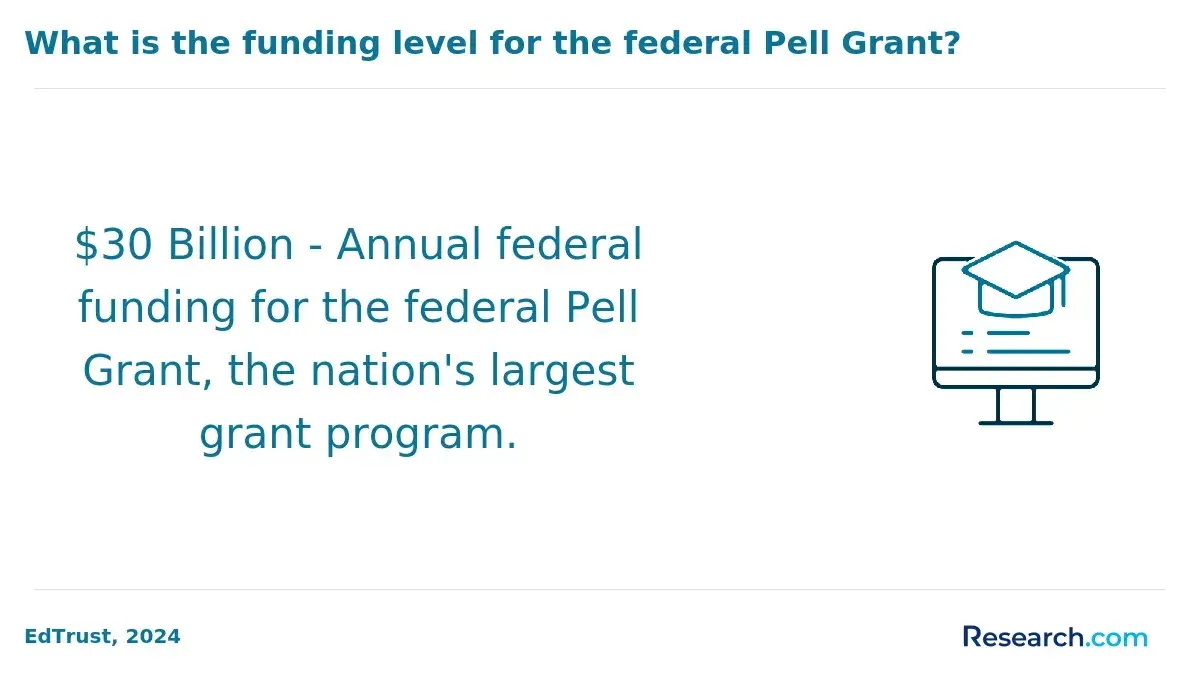
Financial aid timing is another major risk. The 2024-25 maximum Federal Pell Grant is $7,395, but eligibility depends on federal rules, enrollment status, cost of attendance, and institutional packaging. Students who transfer midyear should ask how aid already used at the previous school affects remaining eligibility at the new school.
Students comparing low-cost options should look beyond advertised tuition and examine the full cost of completion. A guide to the cheapest online college options can be useful, but the best financial choice is the one that lets your accepted credits count toward a recognized credential with minimal extra time.
The table below shows common cost categories that transfer students should compare before accepting an offer. The goal is to understand the full financial commitment, not just the sticker price.
| Cost factor | Why transfer students overlook it | How it can affect the decision |
| Lost credits | Students see credits accepted but not applied to the degree | Extra semesters can outweigh a lower tuition rate |
| Residency requirement | Students transfer close to graduation without checking in-house credit minimums | The new school may require more courses than expected |
| Housing and commuting | Students compare tuition but not daily living costs | A cheaper school farther away may cost more overall |
| Aid renewal rules | Students assume scholarships follow them automatically | Institutional aid may not transfer between schools |
| Enrollment intensity | Students switch to part time without checking aid thresholds | Grant, loan, housing, and scholarship eligibility may change |
Before committing, ask each school for a net price estimate, a transfer credit evaluation, and a semester-by-semester completion plan. Those three documents together give a clearer picture of affordability than tuition alone.
How do transfer students mismanage online vs campus program choices during the transfer process?
Online, hybrid, and campus programs can all be good transfer choices, but they solve different problems. A common mistake is choosing format based only on convenience. Transfer students also need to consider course sequencing, lab access, internship requirements, exam proctoring, time zones, state authorization, technology expectations, and how quickly advisors respond in the chosen format.
Self-paced options can help disciplined students move efficiently, especially when they are balancing work or family responsibilities. However, students comparing online college classes at your own pace should confirm whether self-paced courses are accepted by the receiving institution and whether they fit financial aid enrollment rules.
The table below compares online and campus transfer considerations. It is most useful when you already know your major and need to decide which format supports completion with the least friction.
| Program format | Best fit | Main transfer risk |
| Fully online | Working students, caregivers, military learners, students far from campus | Some majors still require in-person labs, clinicals, or field placements |
| Hybrid | Students who need flexibility but benefit from some campus access | Campus meeting times may conflict with work or commuting limits |
| On campus | Students who need labs, studios, research, athletics, residential life, or frequent faculty contact | Higher living and transportation costs may offset academic benefits |
| Self-paced or competency-based | Highly organized students with prior knowledge or strong independent study skills | Not every credit model transfers cleanly into traditional programs |
Students should be honest about their study habits. Online programs require strong time management, written communication, and comfort with digital platforms; campus programs require schedule flexibility, transportation reliability, and regular in-person availability.
What orientation, advising, and support resources do transfer students fail to use effectively?
Transfer students often skip orientation because they assume they already know how college works. That is a costly assumption. The new institution has different registration systems, advising rules, degree audits, tutoring processes, financial aid offices, academic calendars, and departmental expectations.
Advising is especially important because transfer students enter with mixed credits and less time to recover from a wrong course choice. Even a strong student can be delayed if they register before the transfer evaluation is complete or miss a prerequisite that controls access to upper-division classes.
The most useful support resources are the ones that directly reduce transfer friction. Prioritize them early, ideally before the first registration period.
- Transfer orientation, because it explains policies that differ from first-year student rules.
- Major advising, because department advisors understand prerequisite chains and course rotation.
- Registrar or transfer credit office, because they control official credit evaluation and degree audit updates.
- Financial aid advising, because aid can change after transfer, part-time enrollment, or midyear movement.
- Career services, because transfer students have fewer semesters to build internships, resumes, and employer contacts.
- Tutoring and writing centers, because upper-division coursework may be more demanding than previous classes.
A practical rule is to schedule advising before registration, after credit evaluation, and again after the first major exam or project. This keeps academic, financial, and support decisions connected instead of reactive.
How do transfer students underestimate the social and emotional challenges of starting over at a new college?
Starting over can be harder than transfer students expect. Many arrive after friend groups, study circles, club leadership, research teams, and internship pipelines are already formed. Students who commute, work long hours, or enroll online may feel even more disconnected because they spend less informal time around classmates and faculty.
The emotional challenge is not a sign that transfer was the wrong choice. It is a transition cost that needs planning. Students who treat belonging as optional may struggle to ask for help, participate in class, or build the professional relationships that support internships and recommendations.
Transfer students can reduce the social shock by choosing a few high-value connection points rather than trying to join everything at once. The goal is to build belonging around academics and career direction.
- Join one major-related club, honor society, lab, studio group, or professional association.
- Introduce yourself to at least one faculty member during office hours in the first month.
- Find transfer-specific events instead of relying only on first-year programming.
- Create or join a study group in the most difficult required course.
- Use counseling, wellness, disability, or basic-needs services early if stress affects sleep, attendance, or concentration.
Students should also prepare for identity shifts. Moving from a small college to a large university, from online to campus, or from a familiar peer group to a competitive major can affect confidence. Planning for support is part of academic success, not separate from it.
What career planning and major-selection mistakes derail transfer students' long-term job prospects?
Transfer is not only an academic move; it is a career decision. One of the most damaging mistakes is choosing a major because credits transfer easily, without checking whether the program connects to realistic job paths, licensure requirements, graduate study, or employer expectations.
BLS 2024 data shows median usual weekly earnings of $1,543 for workers with a bachelor's degree and $1,099 for workers with an associate degree, but those figures are broad labor-market medians, not promises for any major or school. They show why credential level can matter, while also reminding students to examine field-specific outcomes, local demand, internships, and skills.
Students who may pursue graduate school should plan backward from the next credential, not just the bachelor's degree. Comparing resources such as easiest master's can help with long-term exploration, but transfer students should first confirm prerequisites, GPA expectations, accreditation, and professional experience requirements for the field they actually want.
Career-related transfer mistakes usually come from making the major decision too narrowly. Before declaring or changing a major, examine these factors together.
- Required credentials for the target role, including whether a bachelor's degree is enough or graduate school is common.
- Licensure or certification rules, especially in teaching, nursing, counseling, accounting, engineering, and social work.
- Internship, clinical, practicum, portfolio, research, or fieldwork opportunities available to transfer students.
- Skills employers request in job postings, including software, writing, data analysis, communication, project management, and industry tools.
- Career services access for transfers, including resume reviews, job fairs, alumni mentoring, and employer partnerships.
The safest major choice is one that aligns credits, interests, academic strength, cost, and a credible employment or graduate-school pathway. If one of those pieces is missing, pause before transferring and ask whether a different major, certificate, school, or timeline would produce a better return.
Other Things You Should Know About
Some do, but credit loss is not automatic. The risk is highest when courses do not match the new school's degree requirements, the student changes majors, credits are too old, grades are below the required minimum, or the receiving department does not approve equivalency.
Talk to a transfer advisor before you apply, before you register for your next term, and after your official credit evaluation is complete. Waiting until after admission can leave you with fewer course options and less time to fix credit problems.
It depends on the state, school, and major. Finishing an associate degree can help when there is an articulation agreement or transfer pathway, but it may add unnecessary courses if the bachelor's program requires a different sequence. Compare both routes with a degree audit.
Check how your credits apply to the exact major you plan to complete. An admission offer is valuable, but the real decision should be based on accepted credits, remaining requirements, total cost, aid package, and expected graduation timeline.
References
- 3 Mistakes of Transfer Applications | SupertutorTV https://supertutortv.com/college/3-mistakes-of-transfer-applications/
- Championing transfer studentsâ journeys through early awareness https://www.commonapp.org/blog/championing-transfer-students-journeys-through-early-awareness/
- Top 5 Career Planning Mistakes Students Should Avoid https://svastrino.com/top-5-career-planning-mistakes-students-should-avoid/
- What are the Stumbling Blocks Inhibiting College Transfer Student Guidance? https://academyone.com/blog/what-are-the-stumbling-blocks-inhibiting-college-transfer-student-guidance
- Deciding to Transfer: A Study of College to University Choice Updated for Internal Transfer https://collegequarterly.ca/2019-vol22-num01-winter/deciding-to-transfer.html
- Supporting the Health and Well-Being of Transfer College Students - TimelyCare https://timelycare.com/blog/supporting-the-health-and-well-being-of-transfer-college-students/
- Why Students Who Transfer Usually Take Longer to Graduate - Your College-Bound Kid https://yourcollegeboundkid.com/2022/11/07/why-students-who-transfer-usually-take-longer-to-graduate/
- 10 Common Pitfalls for Transfer Students and How to Avoid Them https://learn.neumann.edu/neudirections/10-common-pitfalls-for-transfer-students-and-how-to-avoid-them
- How College Credit Transfer Really Works: A Practical Guide https://www.straighterline.com/blog/transfer-how-college-credit-transfer-really-works-a-practical-guide
- How Do I Handle the Mental Health Effects of Transitioning to College? https://www.bettermind.com/well-being/mental-health-effects-of-transitioning-to-college/