2027 When Is the Right Time to Transfer Colleges?

Co-Founder and Chief Data Scientist
Transferring colleges can save time and money, but the timing can also delay graduation if credits do not apply. The decision is especially relevant as the National Student Clearinghouse Research Center reported in 2024 that undergraduate transfer enrollment rose 5.3% in fall 2023, signaling renewed student mobility. This guide is for community college students, four-year students, online learners, and adults reconsidering their path. You will learn when transferring makes sense, what to compare, how deadlines work, and how to protect your credits, aid, and career goals.
Key Things You Should Know
- The best time to transfer is usually after completing 24 to 60 transferable semester credits, because many colleges can evaluate college-level work more heavily than high school records while still leaving enough major requirements to complete on time.
- Cost should be part of the timing decision: College Board's 2024 data lists average published 2024-25 tuition and fees at $11,610 for in-state public four-year colleges and $43,350 for private nonprofit four-year colleges, before aid.
- Transferring works best when your new school is regionally accredited, your major requirements are mapped before applying, and your financial aid package is confirmed before you commit.
When is the right time to transfer colleges based on credits, major, and graduation goals?
The right time to transfer colleges depends on how many credits you have, whether your current courses fit the new major, and how much time you are willing to add to your degree. A transfer student is generally someone who has earned college credit after high school and applies to a different institution to continue a degree. The strongest transfer timing is not always "as soon as possible"; it is the point when moving schools improves your academic fit without wasting completed coursework.
For many students, the practical transfer window falls between the end of the first college year and the completion of an associate degree. Transferring too early may mean your high school GPA and test history still carry more weight. Transferring too late may mean the new college accepts credits as electives instead of major requirements, which can increase time to graduation.
This comparison shows how timing often affects admissions review, credit usefulness, and graduation planning. Use it as a starting point, then verify policies with each target college because requirements vary by institution and major.
| Transfer timing | When it may make sense | Main risk | Best fit |
| After 1 semester | Your current school is clearly the wrong academic, financial, or personal fit | Limited college record, so high school performance may still matter heavily | Students correcting a poor match quickly |
| After 24 to 30 credits | You have enough college work to show readiness and want to enter a better-fit program early | Some prerequisites may not align with the new major | Students changing institutions before upper-division coursework |
| After 45 to 60 credits | You are completing general education or an associate degree before moving to a bachelor's program | Credits may not all apply if there is no articulation agreement | Community college students and cost-conscious students |
| After 75 or more credits | You have a compelling reason, such as program closure, relocation, or a major change | Higher chance of excess credits, residency requirements, and delayed graduation | Students who have confirmed a degree-completion plan in writing |
If your goal is to change majors, timing becomes even more important. A student moving from psychology to business may be able to transfer many general education courses, while a student moving into engineering, nursing, architecture, or education may need tightly sequenced prerequisites. Before applying, compare your completed courses against the destination school's degree audit or transfer equivalency database.
A good rule is to transfer when the new college can answer three questions clearly: which credits transfer, which credits apply to the major, and how many terms remain. If the answer is vague, delay committing until you receive an official or written preliminary evaluation.
How do you decide whether transferring colleges is the right choice for your academic and career path?
Transferring is the right choice when the new college improves your path enough to justify the application effort, possible credit loss, relocation, cost change, or social reset. It is not automatically better because a school has a stronger brand, a larger campus, or a higher ranking. The decision should connect directly to your academic plan and career target.
Start by identifying the problem you are trying to solve. The right transfer decision is different for a student who needs a lower-cost bachelor's pathway, a student whose major is unavailable, and a student who wants stronger internships or employer pipelines.
- Transfer for academic fit if your current college does not offer your intended major, required concentration, clinical placement, lab access, licensure pathway, or upper-division coursework.
- Transfer for financial fit if the new school lowers total cost after grants, scholarships, housing, transportation, and expected time to degree are counted.
- Transfer for career fit if the destination has stronger internships, alumni networks, employer partnerships, research opportunities, career services, or location advantages in your field.
- Be cautious about transferring mainly for prestige if the move increases debt, delays graduation, or does not improve access to the roles you want.
If you are still undecided about your major, transferring may be premature unless the new school gives you broader options without raising costs significantly. Students comparing majors with strong long-term demand can use resources on top degrees for the future to connect academic choices with career direction before changing schools.
Common red flags include choosing a transfer school because friends are going there, assuming "all credits transfer," ignoring major prerequisites, or comparing tuition without housing and fees. A stronger decision is based on a written degree map, a realistic budget, and a clear reason the new institution is better for your next two to three years.
What transfer application timelines, deadlines, and requirements do most U.S. colleges use?
Most U.S. colleges use separate transfer application cycles for fall and spring entry, though some also offer summer or rolling admission. Fall transfer is usually the most flexible because more seats, scholarships, housing options, and course sections are available. Spring transfer can work well if you have a clear credit plan and do not need a highly sequenced cohort program.
Deadlines vary widely, but transfer applicants commonly need to submit more documentation than first-year applicants because colleges must evaluate college-level work. Selective programs may also have earlier deadlines than the university's general transfer application.
The table below summarizes common transfer timeline patterns. Always check the department-level deadline, not just the central admissions page, because programs such as nursing, engineering, business, education, and social work may have extra steps.
| Entry term | Common application window | Typical use case | What to verify early |
| Fall | Late winter to spring | Most traditional transfers and community college-to-university transfers | Priority scholarship, housing, and major deadlines |
| Spring | Late summer to fall | Students ready to move after completing fall coursework | Course availability and whether the major admits spring transfers |
| Summer | Winter to spring | Students using summer to catch up, relocate, or start online | Financial aid eligibility and accelerated course load |
| Rolling admission | Varies by school | Adult learners, online programs, and less selective institutions | Start dates, refund dates, and transfer credit evaluation timing |
To avoid missed deadlines, build your application around the earliest requirement, not the final posted deadline. A department deadline, scholarship deadline, or transcript processing delay can matter more than the general admission date.
- List every target school and intended major in one tracker.
- Record the general transfer deadline, major-specific deadline, financial aid priority date, and scholarship deadline.
- Request official transcripts from every college attended, including dual-enrollment institutions.
- Ask whether in-progress courses can be evaluated before final grades post.
- Confirm whether recommendation letters, essays, portfolios, auditions, or prerequisite forms are required.
- Submit financial aid materials before the school's priority date, even if you are still waiting for an admission decision.
How does transferring colleges affect credit transfer, time to degree, and graduation prospects?
Transferring can affect three separate credit outcomes: whether credits are accepted, whether they apply to your degree, and whether they shorten your time to graduation. These are not the same. A college may accept 60 credits but apply only 42 toward your specific major, leaving the rest as electives.
Time to degree is often the biggest hidden cost of transferring. If one extra semester is needed, the cost is not only tuition; it may also include fees, books, housing, transportation, and delayed full-time earnings. This is why the right time to transfer is usually before you accumulate many upper-division credits that may not match the new curriculum.
The table below explains the credit categories that matter most during transfer evaluation. Understanding these terms can help you ask better questions and avoid assuming that every accepted course moves you closer to graduation.
| Credit category | What it means | Why it matters |
| Transferable credits | Courses the new college accepts from your prior institution | They may count toward total credits but not necessarily your major |
| Applicable credits | Courses that satisfy general education, major, minor, or elective requirements | These are the credits that actually reduce remaining degree requirements |
| Residency credits | Credits you must complete at the new institution | They can limit how close to graduation you can be when transferring |
| Upper-division credits | Advanced coursework often required for bachelor's degree completion | Some colleges require a minimum number after transfer |
| Prerequisite credits | Courses required before entering a major or taking advanced classes | Missing one prerequisite can delay a course sequence by a term or more |
Students trying to finish quickly should compare transfer-friendly degree-completion options, including fast track college programs, but speed should not override accreditation, support quality, or whether the program fits the intended career.
Before accepting an offer, ask for a degree audit that shows remaining requirements by term. If the school cannot provide one before enrollment, request at least a preliminary evaluation in writing. This is especially important for students entering selective majors, licensure-track programs, or programs with clinical, practicum, or internship requirements.
What factors should you compare when choosing between online and campus-based transfer options?
Online and campus-based transfer options can both be strong choices, but they solve different problems. Online transfer programs often help students who work, have family responsibilities, live far from campus, or need flexible pacing. Campus-based programs may offer stronger access to labs, studios, clinical placements, residential life, and in-person recruiting.
The right format depends on your major, learning style, schedule, budget, and career goals. The table below compares common decision factors so you can identify which format fits your situation rather than assuming one is universally better.
| Factor | Online transfer option | Campus-based transfer option |
| Schedule flexibility | Often better for working adults and caregivers | Usually fixed around class meeting times |
| Hands-on requirements | Best when the major can be completed through virtual coursework or local placements | Often better for labs, studios, clinics, and performance-based fields |
| Networking | Depends on virtual career services, discussion quality, and employer access | May offer more informal peer, faculty, and employer interaction |
| Cost structure | Can reduce relocation and commuting costs | May include housing, transportation, and campus fees |
| Self-management | Requires strong time management and comfort with learning platforms | Provides more physical structure and routine |
Online education has become a mainstream transfer pathway, especially for students completing general education, business, technology, healthcare administration, or liberal arts degrees. Some students begin with an online associates degree to build transferable credit before entering a bachelor's program.
However, online is not automatically easier or faster. Watch for programs that lack clear transfer policies, require in-person components you cannot attend, or do not support licensure in your state. Campus programs have their own risks, including higher living costs, limited course availability, and social adjustment challenges.
A good comparison includes academics and logistics. Ask whether courses are asynchronous or live, whether transfer students receive dedicated advising, how exams are proctored, whether internships can be completed locally, and how often required courses are offered.
How do accreditation and transfer credit policies impact where and when you can transfer?
Accreditation is one of the most important factors in where and when you can transfer. In the United States, accreditation is a quality-review process used to evaluate institutions and programs. Colleges typically accept transfer credit more readily from institutions accredited by agencies recognized by the U.S. Department of Education or the Council for Higher Education Accreditation, though each school sets its own policies.
Institutional accreditation affects whether credits may transfer at all. Programmatic accreditation affects whether a degree meets standards for certain fields, such as nursing, teaching, engineering technology, counseling, social work, or business. If your career requires licensure or certification, programmatic accreditation can be as important as institutional accreditation.
The table below summarizes accreditation-related transfer issues that can affect your timing. These are not minor details; they can determine whether transferring now helps or hurts your degree plan.
| Accreditation or policy issue | Why it matters for transfer | What to check |
| Institutional accreditation | Many colleges limit transfer credit from non-accredited or differently accredited institutions | Accreditor recognition and current institutional status |
| Programmatic accreditation | Some majors and licensure pathways require field-specific approval | Whether the program meets standards for your intended occupation or state |
| Articulation agreement | Formal agreements can make credit transfer more predictable | Covered majors, minimum grades, expiration dates, and course lists |
| Transfer equivalency database | Shows how prior courses have transferred in the past | Whether equivalencies apply to your catalog year and major |
| Credit age limits | Some technical, science, or professional courses may expire after a set period | Policies for older coursework, especially in STEM and healthcare |
Do not assume accreditation alone guarantees credit acceptance. A course may come from an accredited college but still fail to satisfy a requirement because the content, credit hours, lab component, or course level does not match. This is why timing matters: the earlier you check equivalencies, the easier it is to adjust your schedule before completing courses that may not apply.
Avoid schools that are unclear about accreditation, pressure you to enroll before evaluating credits, or refuse to explain how prior coursework applies. A reputable institution should be able to point you to its catalog, transfer credit policy, accreditor information, and appeal process.
What GPA, coursework, and documentation do colleges typically require from transfer applicants?
Transfer admissions requirements vary, but most colleges evaluate your college GPA, completed coursework, credits earned, academic standing, and fit for the intended major. Some schools become less concerned with high school records once you have completed enough college credits, while others still request high school transcripts to verify graduation, prerequisites, or foreign language preparation.
GPA expectations depend heavily on selectivity and major. A general liberal arts program may consider students with a moderate college GPA, while nursing, engineering, computer science, business, architecture, and education programs may require stronger grades and specific prerequisite performance. Minimum GPA does not always mean competitive GPA.
The table below outlines documents and academic evidence commonly required from transfer applicants. Use it to prepare early, because missing records are one of the easiest ways to delay a decision.
| Requirement | Why colleges request it | Common caution |
| Official college transcripts | To verify credits, grades, academic standing, and course history | Every college attended is usually required, even if you withdrew |
| High school transcript | To confirm graduation and review early academic preparation | Often still required for students with fewer college credits |
| College GPA | To assess readiness for upper-level work | Major-specific GPA expectations may be higher than general admission minimums |
| Prerequisite coursework | To determine eligibility for the intended major | Missing prerequisites can lead to admission as pre-major or undeclared |
| Personal statement | To understand goals, reasons for transfer, and academic direction | It should explain fit, not simply criticize the current school |
| Recommendation letters | To add context on academic ability or professional readiness | Some colleges require them only for selective programs or scholarships |
If your GPA is below the target range, transferring may still be possible, but timing matters. It may be smarter to complete another term with strong grades, retake a key prerequisite if allowed, or finish an associate degree under a transfer pathway. Admissions committees often look for upward academic trends, especially when earlier grades were affected by work, illness, family responsibilities, or adjustment challenges.
Your application should make a coherent case. Explain why the new school's curriculum, format, location, or support services match your goals. Avoid blaming your current college without showing what you have learned and how you plan to succeed after transferring.
How does transferring colleges change your financial aid, scholarships, and overall education costs?
Transferring can change your financial aid, scholarships, tuition rate, housing costs, and total education cost. Your current aid package does not simply move with you. You must list the new school on the FAFSA, review its aid offer, and understand how institutional grants, transfer scholarships, state aid, and satisfactory academic progress rules apply.
Cost differences can be substantial. College Board's 2024 Trends in College Pricing reports average published 2024-25 tuition and fees of $4,050 at public two-year colleges and $11,610 for in-state students at public four-year colleges. For a transfer student, this means completing lower-division credits at a community college can reduce tuition exposure, but only if those credits apply efficiently to the bachelor's degree.
The table below shows cost factors that often change after transfer. The real comparison is not sticker price; it is net cost through graduation.
| Cost factor | How transferring can change it | Question to ask |
| Tuition and fees | You may move from community college to university rates or from private to public pricing | What is my net tuition after grants and scholarships? |
| Institutional aid | Merit grants and scholarships may not carry over from the current school | Are transfer students eligible for the same aid as first-year students? |
| Housing and transportation | Relocation, commuting, parking, or campus housing can change total cost | What will I spend outside tuition? |
| Extra semesters | Lost or elective-only credits can increase time enrolled | How many terms remain after transfer credits are applied? |
| Loan eligibility | Federal loan limits and satisfactory academic progress still apply | Will my completed and attempted credits affect aid eligibility? |
Students seeking lower total costs should compare accredited online and public options carefully. Lists of cheap online colleges can be useful, but affordability should be judged by net price, credit acceptance, graduation timeline, and support services rather than tuition alone.
Before committing, compare aid offers side by side and calculate the total remaining cost. Include tuition, mandatory fees, books, technology, housing, food, transportation, health insurance, childcare, and potential lost income if you reduce work hours. A transfer that looks cheaper per credit can become more expensive if it adds semesters or requires relocation.
How might transferring colleges influence your career outcomes, job prospects, and earning potential?
Transferring can influence career outcomes when it improves access to the right major, internships, faculty mentorship, research, clinical placements, employer recruiting, or geographic labor market. It can also have little career benefit if the new school does not improve the pathway to your target role. The strongest career-focused transfer decisions connect the college change to specific opportunities.
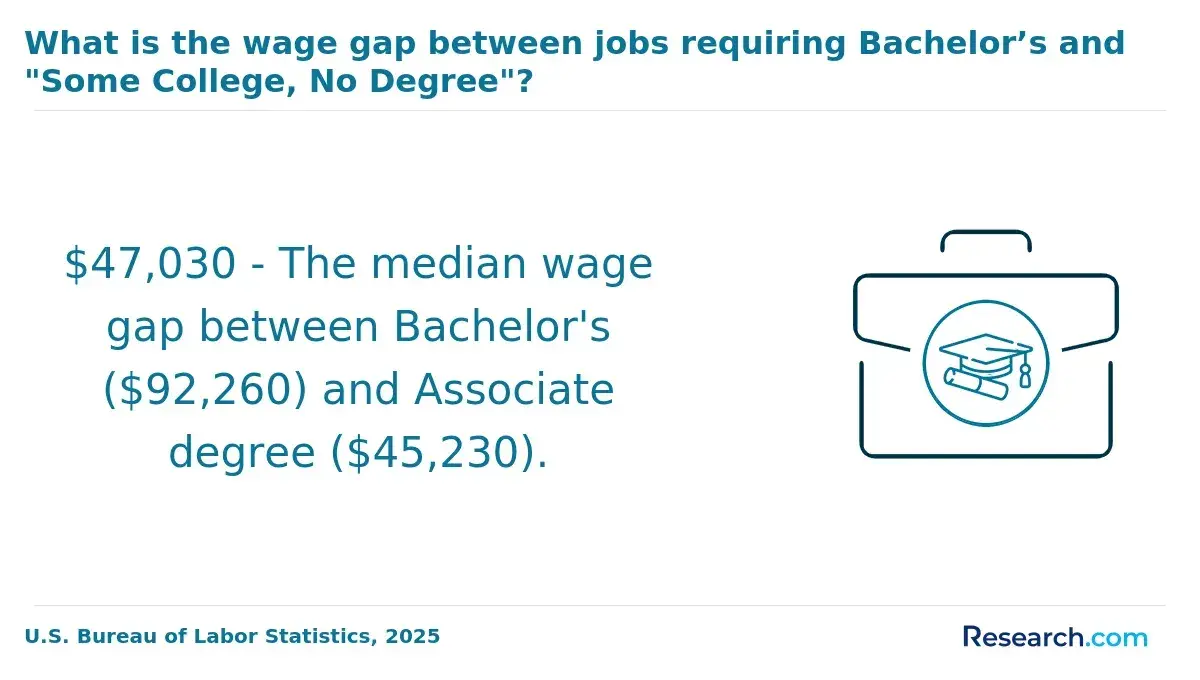
Education level continues to matter in the U.S. labor market, but outcomes vary by field, location, skills, experience, and employer. The U.S. Bureau of Labor Statistics reported in 2024 that workers age 25 and older with a bachelor's degree had median weekly earnings of $1,543 in 2023, compared with $1,099 for those with an associate degree. This does not mean every student should transfer to a bachelor's program, but it shows why degree completion and field selection can affect long-term earning potential.
The table below connects transfer goals with career-related benefits and trade-offs.
| Career goal | Transfer advantage to look for | Potential trade-off |
| Enter a licensed profession | Approved program, clinical placements, exam preparation, and state eligibility | Strict prerequisite sequences may extend time to degree |
| Move into technology or analytics | Updated curriculum, projects, internships, and employer-recognized skills | Competitive majors may require strong math or programming prerequisites |
| Build a business or management path | Internships, alumni networks, career fairs, and experiential learning | Brand value varies by region and employer connections |
| Prepare for remote-friendly work | Digital collaboration, writing, data, communication, and self-management skills | Online format still needs strong career support and portfolio development |
| Prepare for graduate school | Research access, faculty recommendations, and advanced coursework | GPA preservation and prerequisite fit may matter more than prestige |
Current hiring trends make skills and experience increasingly important alongside the degree. Students interested in flexible career paths may want to compare majors aligned with degrees for remote work, especially if they plan to transfer into an online or hybrid program.
Do not assume a transfer school's name alone will improve job prospects. Ask for career outcomes by major, internship participation, employer partners, licensure exam pass rates where relevant, graduate school placement, and career services access for transfer students. A less famous school with strong local employer ties may be better than a more selective college that does not support your field.
What steps should you follow to plan, apply, and successfully transition as a transfer student?
A successful transfer is planned backward from graduation. Instead of asking only "Can I get admitted?", ask "Can I graduate on time, afford the remaining cost, and reach my next academic or career step?" This approach prevents the most common transfer mistakes: losing credits, missing deadlines, entering the wrong major track, and accepting an unaffordable aid package.
Use the following steps to move from exploration to enrollment. The order matters because each step reduces uncertainty before you commit.
- Define your reason for transferring in one sentence, such as lower cost, better major fit, online flexibility, relocation, or stronger career access.
- Choose a target major before comparing schools, because transfer credit depends on degree requirements, not just institutional admission.
- Check accreditation for the institution and, if relevant, the specific program tied to licensure or certification.
- Collect unofficial transcripts and compare completed courses with each school's transfer equivalency tools.
- Ask admissions or advising which credits will apply to general education, major requirements, electives, and prerequisites.
- Request a written degree plan showing remaining courses, expected graduation term, and any residency requirement.
- Build a full cost estimate that includes net tuition, fees, books, housing, transportation, technology, and extra semesters.
- Submit applications before priority deadlines for admission, scholarships, housing, and financial aid.
- Keep earning strong grades at your current school because final transcripts can affect admission, scholarships, and prerequisite clearance.
- After admission, compare offers using credit applied, remaining time, net cost, academic support, and career fit before depositing.
Once you enroll, treat the first term as a transition period. Meet your advisor early, confirm that your transfer credits posted correctly, register for required courses as soon as possible, and connect with career services before your junior year is underway. Transfer students who wait until graduation to seek internships or references may miss the biggest benefits of the new institution.
If something looks wrong in your credit evaluation, appeal quickly and professionally. Provide syllabi, course descriptions, graded work, or catalog pages when requested. Many credit decisions are reviewable, but appeals usually take time and are stronger when supported by documentation.
Other Things You Should Know About
Sophomore year is often a strong time to transfer because you may have enough college credits for a meaningful admissions review while still having time to complete major requirements at the new school. It is not best for every student, especially in majors with strict course sequences.
Yes, many colleges allow students to apply after one semester, but your high school record may still matter more because you have limited college grades. This can be reasonable if your current school is clearly unaffordable, unsafe, or academically wrong for your goals.
Not necessarily. Credits may be accepted as transfer credit, applied to general education, counted as electives, or rejected. Always ask how credits apply to your specific major and request a degree audit before enrolling.
It can change your aid, but it does not automatically hurt it. Federal aid eligibility can continue if you meet requirements, but institutional scholarships and grants vary by school. Compare the new aid offer and total remaining cost before committing.
References
- How does a college degree improve graduates’ employment and earnings potential? - APLU https://www.aplu.org/our-work/4-policy-and-advocacy/publicuvalues/employment-earnings/
- Will Transfer Credits Impact your College Graduation Date? | Blog https://waves.portagelearning.edu/blog/will-transferring-college-credits-impact-your-graduation-date
- Should I Transfer Colleges? 6 Reasons You Should https://www.edvisorly.com/student-guides/should-i-transfer-colleges
- Transfer Success Checklist https://alabamatransfers.com/students/transfer-checklist
- Five Benefits of Transferring Colleges| University of Bridgeport https://www.bridgeport.edu/news/benefits-of-transferring-colleges/
- Benefits of a College Degree on Salary & Earning Potential | UMass Global https://www.umassglobal.edu/blog-news/how-college-impacts-salary-and-future-earning-potential
- My College-going Journey as a Transfer Student - ACT's Center for Impact and Learning https://impactandlearning.act.org/equity-in-action/my-college-going-journey-as-a-transfer-student/
- Transferring After First Semester: Best Tips & Deadlines | Ivy Coach https://www.ivycoach.com/the-ivy-coach-blog/transfer-students/transferring-after-first-semester/
- Transfer of Credit - ACCSC https://www.accsc.org/student-center/transfer-of-credit/
- Applying as a Transfer Student - GECP https://www.gecollegeprep.com/post/applying-as-a-transfer-student