2027 Transfer Application Fees and Other Costs Explained

Co-Founder and Chief Data Scientist
Transfer applications can look inexpensive until transcript fees, deposits, credit evaluations, housing changes, and lost credits enter the picture. College Board's 2024 pricing data shows published tuition and fees averaging $11,610 for in-state students at public four-year colleges and $43,350 at private nonprofit four-year colleges, so even small transfer decisions can affect total cost.
This guide is for community college, four-year, online, and returning students who want to budget realistically, compare schools, use fee waivers, and choose a transfer path that protects both credits and career goals.
Key Things You Should Know
- Transfer application fees commonly range from $0 to about $90 per school, but the larger financial risk is often paying for applications to colleges that will not accept enough of your credits.
- Beyond application fees, transfer students should budget for official transcripts, financial aid forms, enrollment deposits, orientation, housing changes, technology, transportation, and possible course retakes.
- College Board reported average published 2024-25 tuition and fees of $4,050 at public two-year colleges, $11,610 for in-state public four-year colleges, and $43,350 at private nonprofit four-year colleges, making transfer-credit fit more important than the application fee alone.
What are typical transfer application fees at U.S. colleges and universities?
Transfer application fees are the nonrefundable charges colleges use to process an admission application from a student who has already earned college credit after high school. These fees are separate from tuition, enrollment deposits, transcript charges, housing deposits, and financial aid forms. For most U.S. transfer applicants, the practical question is not just "How much is the fee?" but "Is this school likely to accept enough of my prior credits to make the fee worth paying?"
Application fees vary widely by institution, state system, and application platform. The ranges below reflect common U.S. transfer application pricing patterns that students typically encounter when comparing public universities, community colleges, private nonprofit institutions, and selective schools.
| Institution or application type | Typical transfer application fee pattern | What it means for applicants |
| Community colleges | Often $0 to modest fees | Good for cost-conscious students, but confirm whether program-specific fees apply for nursing, allied health, or limited-entry programs. |
| Public four-year universities | Commonly mid-range fees | Usually affordable per school, but costs rise quickly if you apply across multiple state systems. |
| Private nonprofit colleges | Often similar to or higher than public universities | Some waive fees to encourage transfer applicants, especially when applying directly through the institution. |
| Highly selective colleges | Frequently at the higher end | Applicants should check transfer acceptance rates, credit limits, and financial aid policies before paying. |
| Online and adult-focused programs | Often $0 or promotional waivers | The application may be inexpensive, but students should examine tuition, fees, accreditation, and credit-transfer rules carefully. |
A single $50 or $75 fee may not seem decisive, but applying to six or eight schools can turn application charges into a meaningful upfront expense. The smarter approach is to create a balanced transfer list: one or two likely-credit-match schools, one or two strong academic-fit schools, and only a limited number of reach options where the total cost and credit policy still make sense.
If you are comparing transfer-friendly remote programs, research broad institutional quality and accreditation before focusing on the fee itself. A starting point is reviewing reputable directories of online colleges, then checking each school's transfer-credit calculator, tuition schedule, and student support model.
What other costs should transfer students budget for beyond application fees?
Application fees are only the visible part of the transfer budget. The larger cost comes from the steps required to prove prior coursework, secure a place in the class, move into the right learning format, and complete any credits that do not transfer.
The table below summarizes common cost categories that transfer students should review before submitting applications. Amounts vary by college, state, vendor, and program, so students should confirm current charges on each school's official admissions, registrar, and financial aid pages.
| Cost category | Why it matters | How to evaluate it |
| Official transcripts | Most colleges require transcripts from every institution attended, even if credits were not completed. | Count every prior school and ask whether electronic delivery is accepted. |
| Credit evaluation | Some institutions charge for international, military, professional, or portfolio-based credit evaluation. | Ask whether the fee is required before admission or only after enrollment. |
| Enrollment deposit | This holds your seat after admission and may or may not be refundable. | Check the refund deadline before paying multiple deposits. |
| Orientation and student fees | Transfer students may pay new-student, technology, activity, or advising fees. | Review the full cost-of-attendance page, not just tuition. |
| Housing and relocation | Campus transfers can create rent, deposit, transportation, and meal-plan costs. | Compare commuter, residential, and online options side by side. |
| Lost or excess credits | Credits that transfer as electives may not reduce time to degree. | Request a degree audit before committing when possible. |
| Program-specific expenses | Healthcare, education, design, aviation, and lab-heavy programs may require background checks, uniforms, kits, insurance, or clinical fees. | Ask the department for a complete program cost sheet. |
The most expensive transfer mistake is assuming that "accepted credits" and "credits that count toward the major" mean the same thing. A college may accept 60 credits in total but apply only 42 toward your degree plan, leaving you with extra semesters to finance. Before enrolling, ask for a written estimate of how many credits apply to general education, major requirements, electives, and residency requirements.
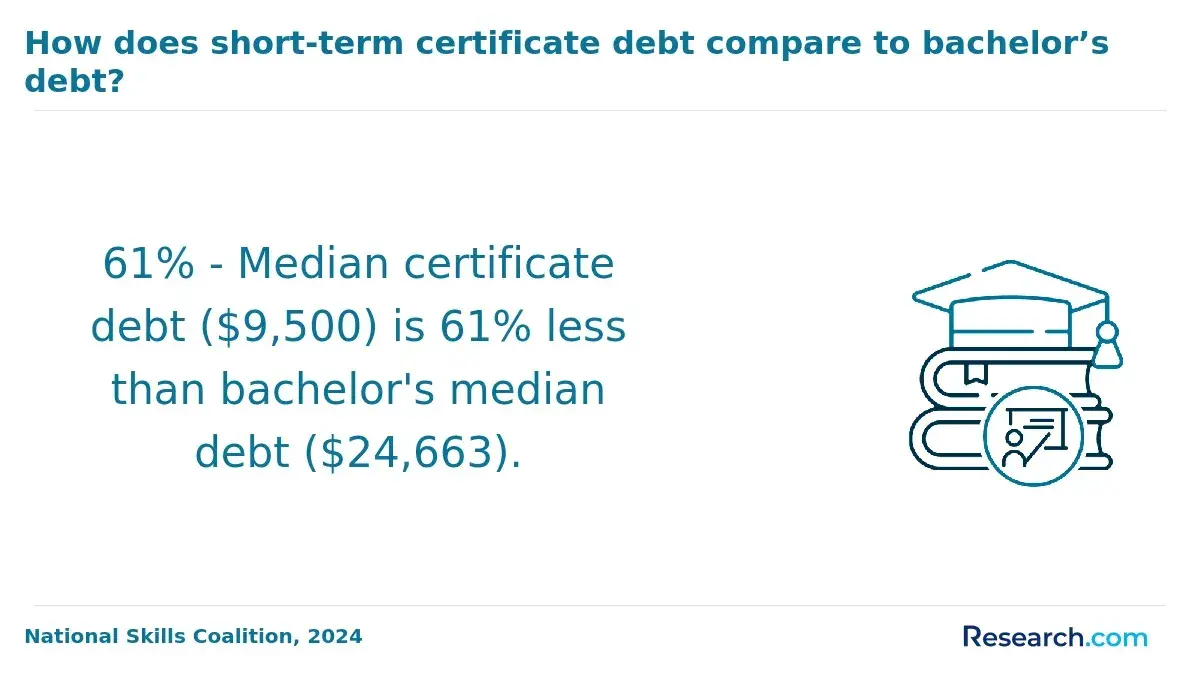
Students planning to continue beyond a bachelor's degree should also think ahead. For example, those comparing graduate routes later may benefit from understanding how affordability differs across advanced programs, including most affordable doctoral programs, because undergraduate borrowing can limit future flexibility.
How can transfer applicants qualify for and use fee waivers?
Fee waivers can reduce or eliminate application costs for eligible transfer students. They are especially important for students applying to multiple colleges, adult learners returning with limited income, veterans, first-generation students, and community college students moving into a bachelor's program.
Eligibility rules differ, but most colleges use a few common indicators. Review each school's policy before applying, because some waivers must be requested before payment and are difficult to apply retroactively.
- Financial need: Students may qualify through Pell Grant eligibility, participation in need-based aid programs, low household income, or documentation from a counselor or advisor.
- Transfer partnership: Community colleges and universities sometimes waive fees for students in articulation agreements, honors pathways, guaranteed-admission programs, or state transfer initiatives.
- Military affiliation: Veterans, active-duty service members, reservists, and dependents may qualify for institutional waivers or special admissions processing.
- Campus event or direct outreach: Some colleges provide waiver codes after transfer fairs, virtual open houses, admissions appointments, or targeted recruitment events.
- Institutional equity programs: First-generation, foster youth, TRIO, EOPS, opportunity program, or other college-access participants may be eligible depending on the school.
To use a waiver correctly, follow a simple sequence. First, find the transfer admissions fee-waiver page or contact admissions before submitting the application. Second, gather documentation such as a financial aid award, counselor form, military documentation, or partner-program confirmation. Third, enter the waiver code or upload the required form before the payment screen. Finally, save a screenshot or confirmation email in case the system later shows a balance.
A common mistake is paying first and asking for a waiver later. Some colleges may refund, but many do not. Another mistake is assuming a Common App, Coalition, or institutional fee waiver automatically covers transcript fees, test score reporting, portfolio submissions, or department-level charges. Treat each cost as separate until the college confirms otherwise.
Do transfer application fees differ for online, hybrid, and campus programs?
Transfer application fees may differ by delivery format, but the difference is usually less important than tuition structure, residency rules, and credit acceptance. Online programs may advertise $0 applications more often, while campus programs may charge standard institutional fees. Hybrid programs can fall anywhere in between because they may be priced like campus programs but still require online technology fees.
The comparison below helps clarify which costs are more likely to matter by learning format. It is not a ranking; the best option depends on your schedule, major, location, transfer credits, and career requirements.
| Format | Application fee pattern | Cost trade-off to watch | Best fit |
| Fully online | Often low or waived | Technology fees, proctoring fees, and limited access to campus-based services may affect value. | Working adults, caregivers, military students, and students who cannot relocate. |
| Hybrid | Usually similar to the institution's standard fee | Students may pay for commuting and online tools. | Students who need flexibility but still benefit from labs, clinicals, studios, or in-person advising. |
| Campus-based | Often standard institutional fee | Housing, transportation, meal plans, and relocation can exceed application costs by a wide margin. | Students who need campus facilities, residential life, in-person networking, or place-based licensure preparation. |
Online study can be cost-effective when it prevents relocation or allows continued employment, but students should not choose an online transfer program only because the application is free. Check whether online students pay the same tuition as campus students, whether out-of-state tuition applies, and whether internships, labs, practicums, or licensure placements are available in your state.
Students comparing flexible study options for career mobility may also want to look at work from home degrees, especially if the goal is to preserve income while completing a bachelor's program.
How do transfer application costs vary by institution type and selectivity?
Institution type and selectivity affect transfer costs in two ways: the upfront application cost and the downstream cost of completing the degree. A low application fee at a school with weak credit transfer may be more expensive than a higher application fee at a school that accepts more major-applicable credits.
College Board's 2024-25 published-price data gives useful context for why institution type matters. The application fee is small compared with tuition, but it is the first filter in a decision that may involve tens of thousands of dollars in future costs.
| Institution type | Published tuition and fees context | Transfer-cost implication |
| Public two-year college | College Board reported an average of $4,050 for in-district students in 2024-25. | Often the most affordable starting point, but students need a clear bachelor's transfer plan. |
| Public four-year college, in-state | College Board reported an average of $11,610 in 2024-25. | Usually a strong value when credits transfer cleanly into a major. |
| Public four-year college, out-of-state | College Board reported an average of $30,780 in 2024-25. | May make sense for a specialized program, but residency and aid rules matter. |
| Private nonprofit four-year college | College Board reported an average of $43,350 in 2024-25. | Sticker price is high, but institutional aid can change the net price significantly. |
Selectivity also matters. Highly selective colleges may accept fewer transfer students, limit transferable credits, or require more detailed materials such as syllabi, portfolios, auditions, or midterm reports. Less selective colleges may have simpler processes and more predictable credit acceptance, but students should still verify graduation rates, student support, net price, and program outcomes.
Do not treat public, private nonprofit, and private for-profit labels as shortcuts for quality or affordability. A private nonprofit college may offer a strong grant package, while a public out-of-state option may be costly. The right comparison is net price, accepted degree-applicable credits, time to graduation, accreditation, and career fit.
What documents and admission requirements affect the overall cost of transferring?
Transfer applications often cost more when schools require extra documents, evaluations, or program-specific materials. The more colleges you attended and the more specialized your major, the more important it becomes to map requirements before applying.
Most transfer applicants should expect to manage several document categories. Use this checklist to prevent missed deadlines and avoid paying for materials a school does not require.
- List every college attended, including dual-enrollment, summer, withdrawn, and failed courses, because omitting a transcript can delay or jeopardize admission.
- Check whether the school requires high school transcripts, especially if you have fewer than a specified number of completed college credits.
- Confirm whether standardized test scores are optional, required, or irrelevant for transfer admission, since many colleges have different rules for first-year and transfer applicants.
- Ask whether syllabi are needed for major credit evaluation, particularly for science, engineering, business, education, nursing, computer science, and international coursework.
- Review department-level requirements such as portfolios, auditions, prerequisites, interviews, background checks, or minimum grades in gateway courses.
- Request a preliminary degree audit or transfer-credit estimate before depositing whenever the college offers one.
Some costs are indirect. For example, if a business program requires a prerequisite statistics course that your prior school taught under a different title, you may need to provide a syllabus or retake the course. If a nursing or teacher education program requires minimum grades in specific prerequisites, credits may transfer to the university but not satisfy admission to the major.
Career outcomes should also shape the document effort. If your goal is a field with strong bachelor's-level earnings potential, it may be worth spending more time comparing degree maps before paying application fees. Students still deciding on a major can review examples of college degrees that pay well and then ask each transfer school how accepted credits apply to those programs.
How do accreditation and licensing considerations impact transfer-related expenses?
Accreditation affects whether credits transfer, whether financial aid is available, and whether a degree is recognized by employers, graduate schools, and licensing boards. For transfer students, the key issue is not just whether the new college is accredited, but whether the program's accreditation fits the intended career.
Institutional accreditation is the baseline. It indicates that a college has been reviewed by a recognized accrediting agency. Programmatic accreditation is separate and may be required or strongly preferred in fields such as nursing, education, social work, counseling, engineering, architecture, public health, and some business programs. Licensing boards may also set state-specific course, clinical, exam, or supervised-experience rules.
Before applying to programs tied to licensure, take these practical steps. They can prevent paying application and enrollment costs for a program that does not lead to your intended credential.
- Identify the state where you plan to work, because licensing rules are often state-specific.
- Check the licensing board's education requirements before relying on an admissions advisor's general statement.
- Confirm whether online, hybrid, or out-of-state coursework is accepted for the license you want.
- Ask whether transferred credits can satisfy accredited-program requirements or whether certain courses must be completed at the new institution.
- Request written confirmation about clinical placements, student teaching, practicums, internships, or supervised fieldwork availability in your location.
A major red flag is a school that advertises fast transfer completion but cannot clearly explain accreditation, licensure alignment, practicum placement, or credit applicability. Another red flag is pressure to enroll before receiving a transfer-credit review. In regulated fields, a delayed or missing requirement can cost more than the application fee because it may add semesters, exams, or supervised hours later.
Students who prefer remote programs but want a mission-driven or public-service-oriented institution may find it useful to compare a non profit online university option against public and private alternatives, while still checking programmatic accreditation and licensing fit.
How do transfer application costs compare with first-year application expenses?
Transfer application costs can be lower than first-year application costs because transfer students often apply to fewer schools and may qualify for partner waivers. However, transfer applicants can face document costs that first-year applicants do not, especially if they attended multiple colleges or need detailed credit evaluations.
The table below compares the two application types from a budgeting perspective. It highlights where transfer students may save money and where they may face extra complexity.
| Cost or requirement | First-year applicants | Transfer applicants |
| Application fees | May apply to many colleges, especially during broad college searches. | Often apply to fewer colleges, but fees still add up across systems. |
| Transcripts | Usually high school transcript and possibly dual-enrollment records. | Must usually submit transcripts from every college attended. |
| Test scores | More likely to encounter test-optional or test-required policies depending on school. | Often less test-focused after sufficient college credit, but rules vary. |
| Credit evaluation | Usually limited to AP, IB, CLEP, or dual enrollment. | Central to the decision because credit applicability affects time to degree. |
| Enrollment deposits | Common after admission. | Also common, but transfer students should wait for credit information when possible. |
| Housing costs | Often part of the initial college decision. | May be complicated by lease timing, family responsibilities, or commuter status. |
Transfer applicants should also think differently about fit. First-year applicants often compare campus culture, major options, and financial aid. Transfer applicants need those factors too, but they must add credit loss, prerequisite sequencing, residency requirements, and graduation timeline. A school that looks slightly more expensive upfront may be cheaper if it saves a semester.
For budgeting, build two totals for each school: the cost to apply and the cost to complete. The first includes application fees, transcripts, forms, and travel. The second includes net tuition, fees, living costs, required materials, and the number of remaining terms. The second number should drive the decision.
What strategies help minimize transfer application and enrollment costs?
Reducing transfer costs is not about applying to the cheapest school at any cost. It is about avoiding unnecessary fees, protecting credits, and choosing a program that supports your goal without adding avoidable semesters.
Use the steps below before submitting applications. They are especially helpful if you are applying to multiple colleges or transferring from a community college to a four-year institution.
- Start with a degree map: Compare your completed courses with each school's major requirements, not just general transfer eligibility.
- Prioritize articulation agreements: Statewide transfer pathways and community college partnerships can reduce uncertainty and application risk.
- Ask for fee waivers early: Contact admissions before payment and ask whether need-based, event-based, military, partner, or direct-application waivers are available.
- Limit reach applications: Apply to selective or expensive options only when the credit policy, aid potential, and career payoff justify the upfront cost.
- Request unofficial credit feedback: Some schools offer preliminary transcript reviews before admission or deposit.
- Compare net price, not sticker price: Use each college's net price calculator and ask whether transfer students receive institutional grants or merit aid.
- Avoid duplicate deposits: Pay only after reviewing refund rules, credit evaluation timing, and financial aid details.
- Check residency requirements: Some schools require a minimum number of credits completed at the institution, which can limit how much transfer credit helps.
- Time the transfer carefully: Transferring before finishing a transferable associate degree or prerequisite sequence can create extra courses later.
Common mistakes include applying before researching credit policies, ignoring program admission requirements, assuming a free application means a low-cost degree, and choosing a school because it accepts many credits without checking whether those credits apply to the major. A better strategy is to create a spreadsheet with five columns: application cost, credits accepted, credits applying to the major, estimated remaining semesters, and net price after aid.
If a school cannot answer basic questions about transfer credits, total cost, accreditation, or program requirements, pause before paying. The best transfer destination is not always the one with the lowest application fee; it is the one that gives you the clearest and most affordable path to completion.
How should students factor transfer application costs into long-term career planning?
Transfer application costs should be viewed as part of a longer career investment. A small application fee can be worthwhile if the program shortens time to degree, improves access to internships, supports licensure, or connects to a realistic career path. The same fee is wasteful if the program adds debt without improving completion odds or career fit.
BLS 2024 annual data reported median weekly earnings of $1,543 for workers with a bachelor's degree and $1,099 for workers with an associate degree. This does not mean every student should pursue a bachelor's degree or that earnings are guaranteed, but it shows why many transfer students evaluate whether the additional cost of a four-year credential may support long-term income mobility.
Use career planning to narrow your transfer list. If your target field requires a bachelor's degree, licensure, supervised experience, or graduate school, prioritize programs that align with those requirements. If your field rewards experience, certifications, portfolios, or technical skills, consider whether a lower-cost institution, online format, employer tuition assistance, or part-time enrollment would produce a better risk-adjusted outcome.
Students should ask three career-centered questions before paying application fees. First, does this program lead to the credential typically expected in my field? Second, will the school accept enough credits to keep my graduation timeline reasonable? Third, can I afford the remaining cost without undermining future plans such as graduate school, relocation, certification, or unpaid internships?
The best transfer decision balances cost, credit fit, academic quality, career relevance, and personal constraints. Application fees are only the entry point; the real decision is whether the transfer path helps you finish efficiently and move toward work you actually want.
Other Things You Should Know About
Usually no. Most colleges treat application fees as nonrefundable processing charges. If you qualify for a waiver, request it before submitting payment.
Many students can build a strong list with three to five schools: at least one affordable likely option, one strong academic and credit-fit option, and one selective or specialized option if the cost is justified.
Yes, in some cases. Community colleges, online programs, partner universities, and colleges offering need-based or event-based waivers may charge no fee or provide a waiver code.
The biggest hidden cost is often lost credit. If prior courses transfer only as electives or do not meet major requirements, you may need extra semesters, which can cost far more than the application fee.
References
- College Application Fee Waivers: Who Qualifies and How to Get Them | College Essay Guy https://www.collegeessayguy.com/blog/college-application-fee-waiver
- Choosing an Online School as a Transfer Student | OEDb.org https://www.oedb.org/advice/choosing-an-online-school-for-transfer-students/
- Smarter Enrollment Strategies for Transfer Students https://www.tads.com/blog/smarter-enrollment-strategies-for-transfer-students/
- Transfers Between Colleges: The Complete Guide to Switching Schools Successfully https://orieladmissions.com/transfers-between-colleges/
- Member Support https://membersupport.commonapp.org/membersupport/s/article/Can-transfer-applicants-use-the-fee-waiver
- Online and hybrid college programs explained. Flexibility, risk, and the real value equation | CG https://collegegrind.org/posts/online-and-hybrid-college-programs-explained/
- Beyond Transfer Intent: Why Some Students Don’t Make It to the Next Level https://www.nists.org/post/beyond-transfer-intent
- Understanding License Agreement comparability - RoyaltyRange https://www.royaltyrange.com/news/understanding-license-agreement-comparability/
- uAspire https://www.uaspire.org/news-events/who-pays-for-food,-tech-and-gas-during-college-how-to-set-a-budget-beyond-tuition
- A Guide to Post-Secondary Education Expenses - Embark https://www.embark.ca/learning-centre/post-secondary-education-expenses