2027 How to Transfer Into Computer Science Programs

Co-Founder and Chief Data Scientist
Transferring into computer science can save money, shorten your path to a high-demand degree, or help you pivot from another major-but only if your credits, prerequisites, and GPA line up. The stakes are real: the U.S. Bureau of Labor Statistics reported a May 2024 median annual wage of $105,990 for computer and information technology occupations.
This guide is for community college students, current undergraduates, returning adults, and online learners who want a practical transfer plan, realistic admissions expectations, and a clearer view of costs, timelines, and career payoff.
Key Things You Should Know
- Most computer science transfer applicants need completed college-level programming, calculus, and often data structures before entering upper-division coursework.
- Competitive programs commonly expect strong grades in technical prerequisites; a 3.0 GPA may meet minimum screening at some schools, while selective or impacted programs often require substantially stronger academic records.
- Cost and format vary widely: College Board's 2024 pricing shows average published tuition and fees of $4,050 at public two-year colleges, $11,610 for in-state public four-year colleges, and $43,350 at private nonprofit four-year colleges.
What are the typical admission requirements to transfer into a computer science major?
Typical transfer admission into a computer science major is more specific than general university transfer admission. You are not only trying to enter the institution; you are often trying to enter a capacity-limited major with strict course sequencing.
Most schools evaluate whether you can begin junior-level computer science coursework without repeating foundational classes. That means admissions offices and CS departments usually look at several academic and administrative factors together.
| Requirement area | What schools usually review | Why it matters for transfer students |
| College credits | Minimum transferable credits, often enough to qualify as a sophomore or junior transfer | Too few credits may put you in freshman admission; too many credits may create excess-credit or aid issues |
| Technical GPA | Grades in programming, math, and science courses | CS departments often care more about prerequisite performance than your overall GPA alone |
| Prerequisite completion | Intro programming, calculus, discrete math, and data structures when required | Missing courses can delay graduation or make you ineligible for direct admission to the major |
| General education | Writing, communication, humanities, social science, and lab science requirements | Completed general education can free up your schedule for upper-division CS courses |
| Application materials | Transcripts, essays, resume, portfolio, recommendation letters, or supplemental major forms | Selective programs may use these to distinguish applicants with similar grades |
| Good standing | Academic and disciplinary standing at prior institutions | Schools may deny admission or restrict enrollment if you are not eligible to return to your current college |
The most important practical step is to check both the university transfer page and the computer science department page. A student can meet the university's transfer minimum but still be denied entry to the CS major if required technical courses are missing or grades are below the department's threshold.
Common mistakes include applying to the university without confirming major admission, assuming every programming course transfers as a CS requirement, and waiting until the final term to ask for transcript evaluations. A safer approach is to request a written transfer plan from both your current advisor and the destination school before you apply.
Which prerequisite courses do you need before transferring into computer science programs?
Computer science transfer prerequisites are designed to prove that you are ready for algorithmic thinking, mathematical reasoning, and software development at the upper-division level. Exact requirements vary, but most programs build around a similar academic core.
The table below summarizes common prerequisite categories and how they usually affect transfer readiness. Use it as a planning checklist, not as a substitute for your target school's official articulation guide.
| Prerequisite area | Common courses | Transfer planning note |
| Programming sequence | Introduction to programming, object-oriented programming, programming in Java, Python, C++, or C | Language matters less than course equivalency, but some schools require a specific sequence |
| Data structures | Data structures and algorithms, abstract data types, recursion, searching, sorting | This is often the gateway course for upper-division CS admission |
| Mathematics | Calculus I, Calculus II, discrete mathematics, linear algebra, probability or statistics | Math gaps are one of the most common reasons transfers need extra semesters |
| Computer systems | Computer organization, assembly language, systems programming, architecture basics | Some programs require this before operating systems or architecture courses |
| Science and engineering support | Physics, lab science, engineering fundamentals, or technical electives | Requirements are stricter in engineering-based CS programs than in liberal arts-based programs |
| General education | College writing, oral communication, humanities, social sciences, ethics | Completing these early can make the post-transfer schedule more manageable |
If you are still choosing your first college pathway, compare CS prerequisites against your strengths in math, logic, and independent problem-solving. Students who want a less technical two-year path before transferring may also want to review easy associate degrees, but they should do so carefully because easier programs may not include the calculus and programming sequence needed for CS transfer.
Before enrolling in any prerequisite, take these steps to reduce the risk of lost credits:
- Find the articulation agreement or transfer equivalency database for each target university.
- Confirm whether the CS department requires minimum grades in individual prerequisites, not just an overall GPA.
- Ask whether AP, IB, CLEP, military, or prior learning credits satisfy major requirements or only general electives.
- Save syllabi for programming and math courses in case the destination school requests a manual review.
- Prioritize sequenced courses early, especially calculus and programming, because missing one can delay several later courses.
How competitive are computer science transfer admissions and what GPA do you need?
Computer science transfer admission can be highly competitive because demand for the major often exceeds department capacity. This is especially true at large public universities, selective private institutions, and campuses located near technology hubs.
There is no single national GPA cutoff for transferring into computer science. Minimums, admitted-student profiles, and prerequisite rules vary by school, campus, and sometimes by term. The table below shows how GPA ranges are commonly interpreted in CS transfer planning.
| Academic profile | How it is commonly viewed | Planning implication |
| Below 3.0 overall or weak technical grades | May be below minimum screening for many direct-admit CS programs | Consider retaking key prerequisites, applying to less selective programs, or starting in a related major with a clear change-of-major policy |
| Around 3.0 with completed prerequisites | May meet minimums at some institutions but may not be competitive at impacted programs | Apply broadly and verify whether admission is to the university, the college, or the CS major |
| 3.3 to 3.6 with strong math and programming grades | Often a more realistic profile for moderately selective CS transfer options | Strengthen the application with completed data structures, projects, and clear academic goals |
| 3.7 or higher with excellent technical coursework | More competitive for selective programs, though not a guarantee | Still check capacity limits, prerequisite grade rules, and whether the school caps transfer seats |
For competitive programs, the most persuasive academic evidence is usually a pattern of high grades in calculus, programming, discrete math, and data structures. An A in a rigorous data structures course may matter more than a high grade in an unrelated elective because it predicts readiness for the CS major's core sequence.
Admissions committees may also consider application essays, work experience, military experience, research, open-source contributions, hackathons, and personal projects, but these usually supplement rather than replace prerequisite performance. If your GPA is uneven, use the application to explain improvement trends, not excuses. A clear upward trajectory in technical courses can be more compelling than a broad statement about being interested in technology.
What are the main transfer pathways into computer science from community colleges and other majors?
There are several viable transfer pathways into computer science, and the best one depends on your current credits, budget, math readiness, and target school. The safest path is the one that preserves the most applicable credits while keeping you eligible for the CS major, not merely the university.
The comparison below shows how common transfer routes differ. It can help you decide whether to start at a community college, move from another major, or use an online-first pathway.
| Transfer pathway | Best fit | Main advantage | Main risk |
| Community college to public university | Students seeking a lower-cost start and clear articulation agreements | Often the most affordable and predictable route when course equivalencies are strong | Missing one required math or CS course can delay junior-level entry |
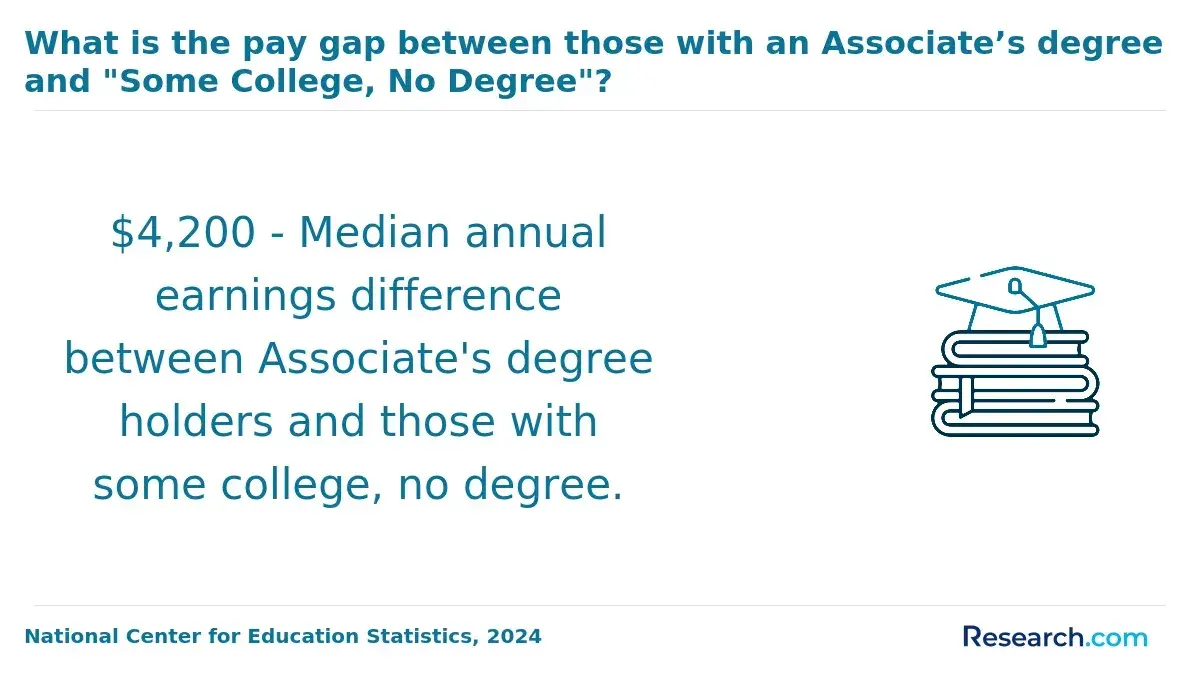
| Associate degree to bachelor's completion | Students who want a structured two-year credential before transfer | Can bundle general education and lower-division prerequisites | Some associate degrees are not designed for CS transfer, especially terminal applied programs |
| Internal major change | Students already enrolled at a four-year college in another major | No institutional transfer process if the school allows internal change | CS departments may restrict changes of major because of capacity |
| Four-year to four-year transfer | Students whose current school lacks the CS specialization, cost, or location they need | May provide access to stronger labs, internships, or employer networks | Credits may transfer as electives rather than major requirements |
| Online bachelor's completion | Working adults, caregivers, military students, and geographically constrained learners | Greater scheduling flexibility and often more start-date options | Requires careful verification of accreditation, course rigor, and career support |
Students starting at a community college should distinguish between an associate of science transfer plan and a career-focused associate of applied science. If you want a flexible online starting point, an associate degree online can be useful, but only if the credits align with your target CS bachelor's program.
A practical transfer strategy is to build a shortlist of three to six schools: one reach program, two realistic programs, and at least one transfer-friendly option with transparent credit policies. Then compare each school's major admission rules, not just tuition or rankings. Red flags include vague credit-transfer answers, no published CS prerequisite map, and advisors who cannot explain whether you will enter as a pre-major or full CS major.
How do online computer science programs compare with campus-based options for transfer students?
Online and campus-based computer science programs can both work for transfer students, but they serve different needs. The better option depends on how you learn, how much schedule flexibility you need, and whether your target career depends on local internships, research labs, or in-person recruiting.
The table below compares factors that usually matter most for transfer students choosing between online and campus-based CS programs.
| Factor | Online CS program | Campus-based CS program |
| Schedule flexibility | Often better for working adults and students with family responsibilities | Usually more structured, with fixed class times and in-person labs |
| Transfer credit evaluation | May be streamlined in completion-focused programs | May be more department-specific, especially for selective CS colleges |
| Networking | Depends heavily on virtual career services, online clubs, and employer partnerships | Often stronger for in-person career fairs, student organizations, and local internships |
| Learning format | Requires self-discipline, time management, and comfort with remote collaboration | Offers more face-to-face support and spontaneous peer interaction |
| Cost structure | May reduce commuting or housing costs, but technology and proctoring fees can apply | May involve higher living costs, especially for residential programs |
| Program validation | Accreditation, faculty quality, and outcomes data are especially important to verify | Reputation may be easier to assess through campus resources and employer presence |
Accreditation should be nonnegotiable. Look first for institutional accreditation recognized by the U.S. Department of Education, and then check whether programmatic accreditation such as ABET matters for your target employers or graduate school plans. Students comparing online schools can use lists of non profit universities in USA as a starting point, while remembering that public, private nonprofit, and for-profit status should not be the only basis for judging quality.
Choose online if you need flexibility and can build projects independently. Choose campus-based study if you benefit from structured support, want in-person research opportunities, or plan to use regional employer networks. A hybrid program can be a strong middle option if it combines online lectures with in-person labs, advising, or recruiting events.
How long does it usually take to finish a computer science degree after transferring?
The time needed to finish after transferring depends less on the number of credits you bring and more on how many of those credits apply to the CS major. A student with 70 credits but missing data structures and calculus may take longer than a student with 55 well-mapped credits.
The table below summarizes common post-transfer timelines. These are planning ranges because course availability, prerequisite chains, internship terms, and part-time enrollment can change the actual timeline.
| Transfer status | Typical remaining time | Why the timeline changes |
| Junior transfer with all lower-division CS and math prerequisites completed | About two academic years of full-time study | Student can usually start upper-division CS core immediately |
| Transfer with general education complete but missing one or two technical prerequisites | About two and a half to three years | Prerequisite sequencing may delay operating systems, algorithms, or software engineering |
| Transfer from another major with limited CS coursework | About three years or more | Student may need to complete most of the lower-division CS and math sequence first |
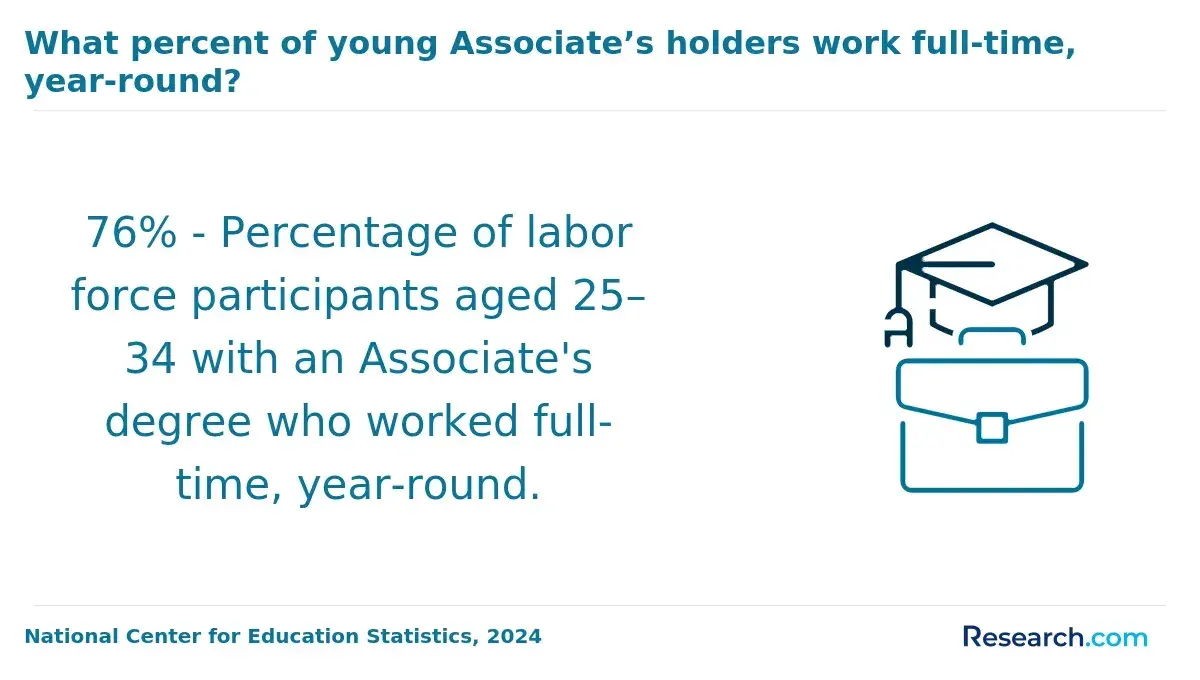
| Part-time online or working adult transfer | Often three to five years | Course load is lighter, and some advanced CS courses may not run every term |
| Accelerated or year-round pathway | Potentially shorter than the traditional calendar | Requires strong preparation, careful advising, and summer or intensive terms |
If speed is your priority, evaluate programs by course sequencing rather than marketing language. Some fast degrees online can help students finish sooner, but CS is difficult to compress if calculus, data structures, systems, and algorithms must be taken in order.
To avoid extending your timeline, ask admissions advisors these questions before committing:
- How many of my credits apply directly to the CS major, not just to elective totals?
- Will I enter the CS major directly, or must I complete additional courses as a pre-major?
- Are upper-division CS courses offered every semester, once per year, or only when staffing allows?
- Can I take summer courses to stay on track, and are they available online?
- Does the program require a capstone, internship, senior project, or residency that could affect graduation timing?
What computer science coursework and skills will you complete after you transfer?
After transferring, your coursework usually shifts from foundational programming to advanced theory, systems, software design, and specialization. This is where transfer students begin building the portfolio and technical depth employers expect from CS graduates.
Most computer science bachelor's programs include a combination of core requirements and electives. The exact balance depends on whether the program is housed in an engineering school, arts and sciences college, or computing-focused department.
| Coursework area | Common topics | Career relevance |
| Algorithms and theory | Algorithm design, complexity, graph algorithms, computational theory | Supports technical interviews and performance-conscious software design |
| Systems | Operating systems, computer architecture, networks, distributed systems | Important for backend, infrastructure, cloud, and embedded roles |
| Software engineering | Testing, design patterns, version control, agile methods, team projects | Builds workplace-ready habits for collaborative development |
| Databases and data | Relational databases, SQL, data modeling, data management | Useful across software, analytics, business systems, and product roles |
| Security | Secure coding, cryptography basics, network security, risk analysis | Increasingly relevant as employers prioritize secure software and compliance |
| Artificial intelligence and machine learning | Machine learning, data mining, natural language processing, AI ethics | Helps students understand AI systems and their limits, not just use AI tools |
| Capstone or project | Team-based product, research project, or applied client project | Can become a portfolio centerpiece for internships and entry-level jobs |
Current employer expectations are shifting because AI coding assistants can speed up routine programming but do not replace the need for debugging, systems thinking, security judgment, and problem decomposition. Transfer students should treat AI tools as productivity aids while still learning how code works, why it fails, and how to test it responsibly.
By graduation, a strong CS transfer student should be able to demonstrate several practical skills:
- Write readable code in at least one widely used programming language and understand the trade-offs of others.
- Use Git, issue tracking, testing frameworks, and documentation in a team setting.
- Analyze algorithm efficiency and choose appropriate data structures.
- Build and deploy a complete project, such as a web app, mobile app, data tool, or systems component.
- Explain technical decisions clearly to both technical and nontechnical audiences.
What are the typical tuition, fees, and financial aid options for computer science transfer students?
For many transfer students, the financial goal is to pay lower-division prices for lower-division courses and reserve four-year tuition for upper-division CS work. This can be a smart strategy, but only if the credits transfer cleanly and do not extend time to graduation.
College Board's 2024 data shows a large published-price gap among institution types. These figures are tuition and fees averages, so they do not include the full cost of housing, transportation, books, equipment, or lost work time.
- Public two-year in-district tuition and fees averaged $4,050 for 2024-25.
- Public four-year in-state tuition and fees averaged $11,610 for 2024-25.
- Private nonprofit four-year tuition and fees averaged $43,350 for 2024-25.
The table below shows the main cost categories transfer students should compare before choosing a program. The lowest tuition option is not always the lowest total-cost option if it adds semesters or requires relocation.
| Cost factor | What to check | Why it affects ROI |
| Transfer credit acceptance | How many credits apply to major, general education, and electives | Lost credits can add tuition, fees, and time |
| Residency rules | Minimum credits that must be completed at the destination school | Even generous transfer schools usually require a set number of in-house credits |
| Course fees | Technology, lab, online learning, proctoring, or software fees | CS programs can carry extra costs beyond base tuition |
| Equipment | Laptop specifications, software, cloud credits, peripherals | Students may need reliable hardware for programming and remote collaboration |
| Living costs | Housing, food, commuting, parking, and local cost of living | Campus location can change total cost more than tuition differences |
| Opportunity cost | Reduced work hours, internship timing, or delayed graduation | A longer timeline can reduce short-term income and increase borrowing |
Financial aid can include federal grants, state grants, institutional scholarships, employer tuition assistance, military benefits, work-study, and federal student loans. The maximum Federal Pell Grant for the 2024-25 award year is $7,395, which can materially reduce costs for eligible students but may not cover the full cost of attendance.
Before enrolling, ask for a degree audit and a financial aid estimate based on your actual transfer credits. A common mistake is comparing sticker prices without comparing remaining credits. The better question is not "Which school is cheapest per credit?" but "Which accredited program gets me to a completed CS degree at the lowest total cost and acceptable career fit?"
What computer science careers, job roles, and industries can transfers pursue after graduation?
Computer science transfer graduates can pursue many of the same roles as students who started at a four-year institution, especially if they complete strong projects, internships, and upper-division coursework. Employers generally care about demonstrated skills, degree completion, experience, and interview performance more than whether the first two years were completed elsewhere.
The table below summarizes common career directions for CS graduates and the kind of work each role typically involves.
| Career path | Typical responsibilities | Industries that hire |
| Software developer | Design, build, test, and maintain applications, services, and platforms | Technology, finance, healthcare, retail, government, education |
| Web or full-stack developer | Create front-end interfaces, backend services, APIs, and database connections | Software companies, agencies, media, ecommerce, startups |
| Data engineer or data analyst | Build data pipelines, clean data, create reports, and support analytics systems | Finance, insurance, healthcare, logistics, marketing, public sector |
| Cybersecurity analyst | Monitor systems, investigate incidents, assess vulnerabilities, and improve defenses | Government, defense, banking, healthcare, cloud services |
| Systems or cloud engineer | Support infrastructure, automation, deployment, networking, and reliability | Cloud providers, enterprise IT, SaaS companies, telecommunications |
| QA automation engineer | Create automated tests, identify defects, and improve software quality processes | Software, gaming, financial technology, medical technology |
| Product-focused technical role | Connect technical teams with user needs, documentation, or implementation | Technology vendors, consulting, enterprise software, health tech |
Entry-level hiring has become more skills-based in many technology teams. A degree still matters for many employers, but candidates often need a portfolio, internship, GitHub activity, technical interview preparation, and evidence that they can work on real projects. AI is also changing expectations: employers may value candidates who can use AI tools responsibly while still understanding software design, security, and testing fundamentals.
Advanced degrees are not required for most entry-level CS jobs, but they may help in research-heavy fields such as machine learning, human-computer interaction, scientific computing, or academic leadership. Students exploring long-term graduate education can compare options such as master's programs and, later, doctoral programs without dissertation, though those are usually relevant after substantial academic or professional experience.
What are the salary expectations and job outlook for computer science graduates who transferred?
Salary expectations for computer science graduates vary by role, region, employer, internship history, and technical specialization. Transfer status itself is usually less important than degree completion, skill level, project quality, and the ability to pass technical interviews.
BLS reported a May 2024 median annual wage of $105,990 for computer and information technology occupations, while software developers had a May 2024 median annual wage of $133,080. These are medians across workers at different experience levels, not starting-salary promises for new graduates.
The job outlook is also favorable but not uniform. BLS projects software developer, quality assurance analyst, and tester employment to grow 17% from 2023 to 2033, much faster than the average for all occupations. For transfer students, this means the labor market can reward strong CS preparation, but competition for desirable entry-level roles can still be intense.
The table below shows how different factors can influence salary and job-search outcomes. Use it to evaluate your own readiness rather than assuming a degree alone will determine your earnings.
| Factor | How it can affect outcomes | What transfer students can do |
| Internship or co-op experience | Can improve interview opportunities and provide practical references | Apply early, including during the first semester after transfer |
| Location | High-cost technology hubs may offer higher pay but also higher living expenses | Compare salary with cost of living and remote-work availability |
| Specialization | Security, cloud, data, and AI-adjacent skills may open different role types | Choose electives aligned with target jobs, not just the easiest schedule |
| Portfolio quality | Projects can demonstrate ability when professional experience is limited | Build complete, documented, tested projects that solve real problems |
| Interview preparation | Technical screens often determine whether candidates advance | Practice data structures, algorithms, system basics, and behavioral explanations |
| School career support | Employer access varies by institution and format | Ask about career fairs, alumni networks, internship placement, and transfer-student outcomes |
A realistic ROI calculation should include total remaining cost, time to graduation, expected borrowing, local job opportunities, and your willingness to build experience outside class. The degree can be a strong investment for students who complete the technical core and actively pursue projects and internships; it may be a poor fit for students who dislike math-heavy problem-solving or need a faster credential for a nontechnical role.
Other Things You Should Know About
It is possible at some schools, but it may extend your timeline. Many CS programs expect at least one or two programming courses before transfer, and selective programs may require data structures before direct admission to the major.
It can be better if the associate degree is designed for CS transfer and includes the required math and programming sequence. It may not help if the degree is applied, career-focused, or filled with electives that do not apply to the bachelor's program.
Not automatically. Employers are more likely to care about accreditation, skills, projects, internships, and interview performance. An online CS degree from an accredited institution can be credible, but students should verify career support and course rigor before enrolling.
The biggest mistake is assuming that transferable credits equal applicable major credits. Always confirm whether each course satisfies a specific CS, math, science, or general education requirement at the destination school.
References
- Computer Science Degree Cost: 2026 Financial Guide https://www.computerdegreesonline.org/computer-science-degree-cost/
- Navigating Financial Aid as a Transfer Student | Coalition for College https://www.coalitionforcollegeaccess.org/mycoalition-counselor-all/navigating-fa-as-a-transfer-student
- A smoother transfer path for computer science https://www.ccdaily.com/2017/10/smoother-transfer-path-computer-science/
- Computer Science (AST) Transfer https://catalog.oregoncoastcc.org/computer-science/computer-science-ast-transfer
- Columbus State Community College https://www.cscc.edu/academics/transfer/degrees.shtml
- Computer Science | TN Transfer Pathway https://www.tntransferpathway.org/majors/computer-science
- Top Careers in Computer Science | Careers, Salaries, and Resources https://www.computerscience.org/careers/
- Community college pathways to a four-year computer science degree https://blog.google/products-and-platforms/products/education/community-college-pathways-four-year-computer-science-degree/
- Choosing an Online School as a Transfer Student | OEDb.org https://www.oedb.org/advice/choosing-an-online-school-for-transfer-students/
- Best Online Computer Science Degrees for Non-Traditional Students https://www.collegetransitions.com/blog/best-online-computer-science-degrees-for-non-traditional-students/