2027 How to Budget for Transferring Colleges

Co-Founder and Chief Data Scientist
Transferring colleges can lower your long-term education cost, but only if you budget beyond tuition. College Board reported average published tuition and fees of $11,610 for in-state public four-year students and $30,780 for out-of-state students in 2024-25, showing how one transfer decision can change your bill dramatically.
This guide is for community college students, current undergraduates, returning adults, and families comparing transfer options. You will learn how to estimate total cost, protect credits, find aid, compare formats, and decide whether a transfer improves your academic and career return.
Key Things You Should Know
- Published tuition varies widely by transfer destination: College Board's 2024-25 figures list $4,050 for public two-year in-district tuition and fees, $11,610 for in-state public four-year, $30,780 for out-of-state public four-year, and $43,350 for private nonprofit four-year institutions.
- The biggest transfer budget risk is lost credit; even one extra semester can add tuition, fees, books, housing, transportation, and delayed full-time earnings.
- The 2024-25 maximum Federal Pell Grant is $7,395, but transfer students should also check state aid, institutional transfer scholarships, Phi Theta Kappa awards, employer tuition benefits, and department-level grants.
How much does it really cost to transfer colleges, and what expenses should I expect?
The real cost to transfer colleges is the total amount you pay to complete your degree after leaving your current school, not just the new school's tuition. A transfer budget should include direct school charges, one-time transition costs, living costs, and the cost of any credits that do not apply to your new degree.
Use the table below to separate expenses that appear on a school bill from costs you may have to pay on your own. This matters because financial aid may cover billed charges first, while housing deposits, moving costs, or transportation may require cash before aid is refunded.
| Cost category | What it may include | Why it matters for transfer students |
| Tuition and mandatory fees | Per-credit tuition, campus fees, technology fees, program fees, lab fees | Your price may change if you move from community college to a four-year school, switch residency status, or enter a high-fee major. |
| Application and enrollment costs | Application fees, transcript fees, enrollment deposits, placement testing, orientation fees | These costs often arrive before your new aid package is finalized. |
| Books, supplies, and equipment | Textbooks, software, art supplies, clinical equipment, laptop requirements | Major-specific supplies can make two schools with similar tuition feel very different in total cost. |
| Housing and meals | Dorms, rent, utilities, meal plan, groceries, renters insurance | Campus location can outweigh tuition savings if rent or commuting costs are high. |
| Transportation and relocation | Gas, parking, transit pass, flights, moving truck, storage, vehicle registration | Transfers often underestimate one-time relocation costs and recurring commuting costs. |
| Lost or excess credits | Courses accepted as electives, repeated prerequisites, credits above degree limit | Credits that do not count toward your degree can extend time to graduation and raise total cost. |
A practical first estimate is to calculate the cost of attendance at each target school, then subtract confirmed grants, scholarships, employer benefits, and savings. Treat loans as financing, not as a discount, because they still affect your future budget.
How do I build a realistic college transfer budget that covers all related costs?
A realistic college transfer budget starts with your graduation plan, not with a school's advertised tuition. The key question is: "What will it cost me to finish the remaining credits I actually need?"
Follow this sequence before committing to a transfer offer. It helps you avoid comparing schools on incomplete or misleading numbers.
- List every school you are seriously considering and record its estimated cost of attendance for your intended enrollment status, such as full-time, part-time, online, campus-based, in-state, or out-of-state.
- Ask each school for a written transfer credit evaluation showing which courses apply to general education, major requirements, electives, prerequisites, and total graduation credits.
- Build a remaining-degree map that shows how many semesters or terms you need after transfer, including any sequenced courses that cannot be taken out of order.
- Add one-time transfer expenses, including applications, transcripts, deposits, placement tests, moving costs, housing deposits, and technology purchases.
- Estimate monthly living costs for the new location, including rent, utilities, food, transportation, insurance, childcare, and emergency savings.
- Subtract gift aid first, including grants and scholarships, then compare the remaining gap using savings, work income, payment plans, federal loans, and other financing options.
- Create a risk line in your budget for one delayed class, one summer course, or one unexpected fee so your plan does not collapse if your schedule changes.
Common budgeting mistakes include using only the first-year net price, ignoring summer classes, assuming part-time work will cover a full aid gap, and forgetting that some scholarships require full-time enrollment. A safer budget uses conservative income assumptions and confirms whether aid renews after the first year.
How will my existing credits transfer, and how does that impact my total cost?
Transfer credit is the bridge between your old school and your new degree plan. A course may be accepted by the university but still fail to count toward your major, which means it may not save you time or money.
The most important distinction is between accepted credits and applicable credits. Accepted credits appear on your transcript at the new institution, while applicable credits reduce the specific requirements needed for your degree. If your long-term academic path may include graduate study, reviewing accelerated options such as 1-year PhD programs online can also help you think about prerequisites, sequencing, and how today's undergraduate choices may affect future timelines.
Before enrolling, ask the receiving school to clarify these credit outcomes. The answers will show whether the transfer is financially efficient or just academically possible.
- Which credits count toward general education requirements?
- Which credits count directly toward my intended major?
- Which credits transfer only as free electives?
- Will any credits be excluded because of age, grade, accreditation, course level, or maximum transfer limits?
- Will changing majors after transfer cause accepted credits to stop applying?
- Do I need to repeat prerequisites for GPA, licensure, clinical placement, or accreditation reasons?
Lost credits can be expensive because they add both direct and indirect costs. If a transfer requires one extra semester, you may pay another term of tuition and fees while also postponing full-time work, internships, graduate school, or career advancement.
What financial aid, scholarships, and grants are available specifically for transfer students?
Transfer students may qualify for the same broad aid categories as first-time students, but the best awards often depend on timing, GPA, residency, major, and whether the school has transfer-specific funding. The 2024-25 maximum Federal Pell Grant is $7,395, but your actual award depends on eligibility, enrollment intensity, and the school's cost of attendance.
Look for funding in layers rather than relying on one source. This makes your budget more resilient if one award is smaller than expected or does not renew.
- Federal aid: File the FAFSA to be considered for Pell Grants, federal student loans, work-study, and some campus-administered aid.
- State aid: Check whether your state offers transfer grants, need-based awards, tuition promise programs, or incentives for moving from community college to an in-state public university.
- Institutional transfer scholarships: Many colleges offer awards based on transfer GPA, completed associate degree, honors participation, or membership in groups such as Phi Theta Kappa.
- Department scholarships: Your major may have grants for students entering high-demand fields, research programs, clinical tracks, teacher preparation, STEM programs, or public service careers.
- Employer tuition assistance: Working adults should ask whether their employer reimburses tuition, pays schools directly, or partners with specific online or local institutions.
- Private scholarships: Local foundations, professional associations, unions, civic groups, and community organizations may fund students who are continuing after community college.
If your funding gap remains too large, pause before borrowing heavily. Depending on your career goal, lower-cost skill-building options such as easy certifications to get online may help you earn, qualify for better part-time work, or test a field before committing to a more expensive transfer path.
How do tuition and fees compare when transferring to public, private, online, or out-of-state schools?
Tuition and fees can change sharply when you transfer because your institution type, residency status, and program format may change at the same time. The cheapest posted tuition is not always the cheapest path if it causes credit loss, delayed graduation, or higher living costs.
The table below uses College Board's 2024-25 published tuition and fee averages to show why transfer students should compare institution type before choosing a destination. These are sticker prices before grants and scholarships, so your net price may be lower.
| School type | Average published tuition and fees | Budget implication for transfer students |
| Public two-year, in-district | $4,050 | Often the lowest-cost place to complete lower-division credits before transferring, especially with an articulation pathway. |
| Public four-year, in-state | $11,610 | Usually a strong value for students who keep residency status and transfer most credits into the major. |
| Public four-year, out-of-state | $30,780 | Can make sense for a specialized program, but the price gap requires careful ROI analysis and scholarship review. |
| Private nonprofit four-year | $43,350 | May offer larger institutional scholarships, but students should compare net price rather than sticker price alone. |
Online programs can reduce commuting or relocation costs, but they may still charge technology fees, proctoring fees, or separate online tuition rates. Private colleges are not automatically more expensive after aid, and public colleges are not automatically the best value if you lose credits or cannot access required courses on time.
What admissions and financial aid deadlines matter most when planning a college transfer?
Transfer deadlines matter because admissions, scholarships, housing, registration, and financial aid often operate on separate calendars. Missing one deadline may not block admission, but it can reduce your aid, limit course access, or leave you with expensive housing choices.
Build a transfer calendar at least two terms before you want to enroll. Include these deadlines because they directly affect both cost and feasibility.
- Admissions priority deadline: Priority applicants may receive earlier credit evaluations, scholarship consideration, and registration access.
- Program-specific deadline: Nursing, engineering, education, business, social work, and other selective majors may have earlier or separate applications.
- FAFSA and state aid deadlines: The FAFSA is central to federal aid, but many state and school funds run out earlier or require separate forms.
- Scholarship deadline: Transfer scholarships may require essays, recommendation letters, proof of associate degree completion, or a minimum transfer GPA.
- Transcript deadline: Schools usually need official transcripts from every college attended, including dual-enrollment or summer coursework.
- Housing deadline: Campus housing deposits, roommate selection, and off-campus leases can close before final aid packages arrive.
- Course registration date: Late registration can force you into extra semesters if required courses are full or offered only once per year.
A common red flag is a school that encourages you to enroll before providing a clear credit evaluation or aid estimate. You may still choose that school, but you should treat the decision as financially uncertain until those documents are in writing.
How do online and campus-based programs differ in cost, flexibility, and long-term value for transfers?
Online and campus-based programs can both be good transfer options, but they solve different problems. Online study often helps working adults, caregivers, military students, and commuters reduce opportunity costs, while campus programs may offer labs, clinical placements, residence life, research access, and in-person recruiting.
The table below compares common cost and value differences. Use it to identify which format fits your schedule, learning style, major, and budget risk.
| Factor | Online transfer program | Campus-based transfer program |
| Direct school costs | May charge per-credit online tuition plus technology fees | May include campus fees, facility fees, lab fees, or activity fees |
| Living costs | Can reduce relocation, parking, and meal plan costs | May require rent, dorm costs, commuting, parking, or meal plans |
| Flexibility | Often better for students balancing work and family responsibilities | Often better for students who need structured schedules and in-person support |
| Major fit | Strong for many business, IT, psychology, liberal arts, and completion programs | Often necessary for lab-heavy, studio-based, clinical, or field-placement programs |
| Career access | Can work well if the program offers virtual internships, career coaching, and employer partnerships | May provide easier access to campus recruiting, labs, faculty networking, and local internships |
Online education is also part of a larger lifelong-learning trend. If you expect to continue after your bachelor's degree, comparing affordable online masters programs can help you avoid overpaying now in a way that limits your ability to fund graduate study later.
How can articulation agreements and transfer pathways help me save money and time to degree?
Articulation agreements are formal transfer agreements between schools that explain how credits move from one institution to another. Transfer pathways are structured course plans that show which classes to take before transfer so you enter the new school with maximum applicable credit.
These agreements can save money because they reduce uncertainty. Instead of hoping courses transfer, you follow a preapproved path tied to a degree program, often from a community college to a public university.
When reviewing an articulation agreement, confirm the practical details before assuming it guarantees junior standing. The most useful agreements are current, major-specific, and honored by the department that controls your degree.
- Check whether the agreement is for your exact major, concentration, and catalog year.
- Confirm the minimum grade required for each course to transfer into the major.
- Ask whether completing an associate degree satisfies lower-division general education requirements.
- Verify whether there is a maximum number of transferable credits.
- Ask whether the pathway guarantees admission to the university, the major, or only credit consideration.
- Review whether required courses are available online, in summer, or in the term you need them.
The main mistake to avoid is following a general transfer guide when your intended major has stricter requirements. A biology, engineering, accounting, education, or nursing pathway may require specific prerequisites that general electives will not replace.
How should I estimate living, relocation, and hidden costs when transferring colleges?
Living and relocation costs can determine whether a transfer is affordable even when tuition looks manageable. Housing, food, transportation, childcare, and emergency expenses are also the costs most likely to vary from student to student.
Build this part of your budget monthly, then multiply by the number of months you will be enrolled, including summer if your program requires year-round study. Include the following categories so you do not mistake a tuition plan for a full financial plan.
- Housing: Rent, dorm charges, deposits, utilities, internet, furniture, renters insurance, and lease break fees.
- Food: Meal plan, groceries, campus dining, higher food costs in a new city, and food during commuting days.
- Transportation: Gas, car insurance, parking permits, public transit, flights, train fare, bike costs, and rideshare use during late classes or internships.
- Relocation: Moving truck, storage, application fees for apartments, security deposits, travel to orientation, and temporary housing.
- Technology: Laptop, software, webcam, calculator, proctoring tools, internet upgrades, and repair or replacement costs.
- Personal responsibilities: Childcare, eldercare, healthcare, prescriptions, professional clothing, licensing exams, and unpaid internship costs.
- Emergency buffer: A small reserve for delayed aid refunds, schedule changes, medical bills, car repairs, or temporary work-hour reductions.
If relocation would require large borrowing, consider a staged option: finish more credits locally, choose a hybrid program, transfer online, work for a term, or use short-term career training. For some students, comparing certificate programs can create a lower-cost bridge while they prepare for a future transfer.
How will transferring colleges affect my career prospects, salary potential, and return on investment?
A college transfer is financially worthwhile when it improves your path to graduation, career access, licensure eligibility, or long-term earnings enough to justify the additional cost. It is less attractive when it adds debt without improving program quality, credit applicability, internships, employer access, or completion odds.
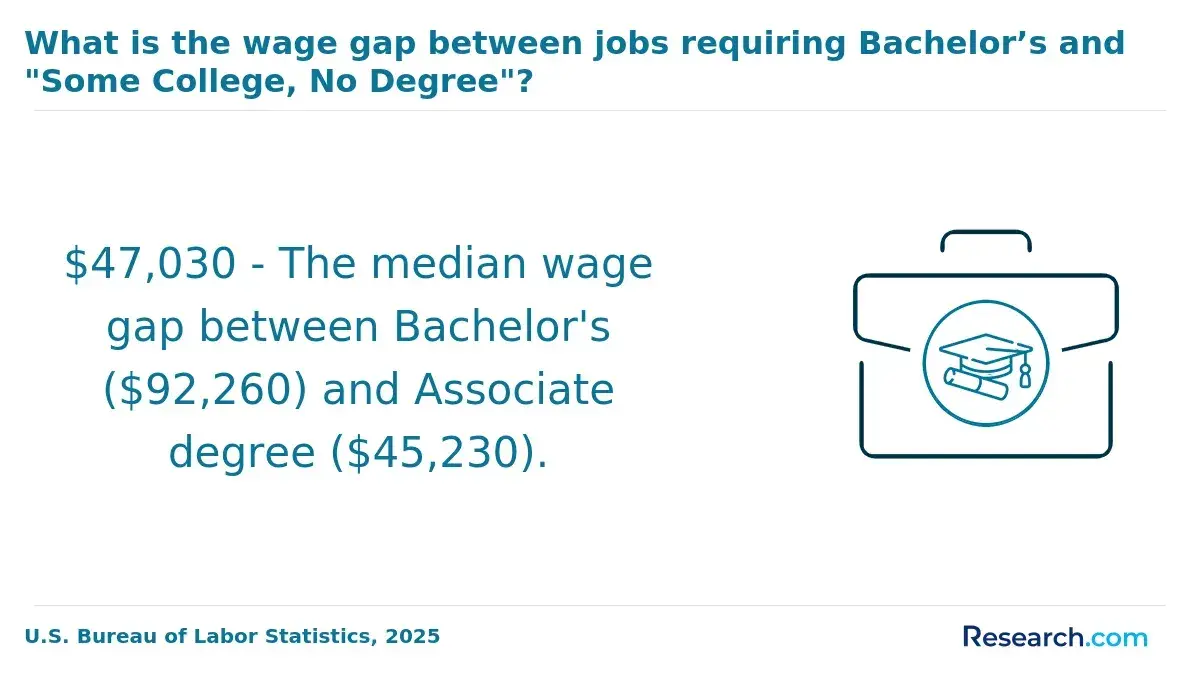
Use salary data carefully. BLS reported that workers age 25 and older with a bachelor's degree had median weekly earnings of $1,543 in 2024, compared with $1,004 for those with some college but no degree. This gap does not mean every transfer will pay off, but it shows why finishing a well-matched bachelor's degree can matter in the labor market.
To estimate transfer ROI, compare your remaining cost against realistic outcomes for your major, location, and career target. Focus on evidence the school can provide, not broad promises.
- Graduation fit: Will the transfer shorten or lengthen your time to degree?
- Career alignment: Does the program match the job, license, graduate school, or industry you want?
- Employer access: Does the school offer internships, clinical placements, co-ops, portfolio support, alumni networks, or recruiting in your field?
- Debt load: Will your expected monthly loan payment be manageable for entry-level salaries in your target occupation?
- Program reputation: Is the program accredited when accreditation matters for licensure, graduate study, or employer recognition?
- Personal fit: Does the format support how you study, work, commute, communicate, and build professional relationships?
Career fit is personal as well as financial. A student choosing between majors, campus cultures, or work environments may benefit from researching paths aligned with temperament and work style, including resources on the best jobs for introverts.
Other Things You Should Know About
It can be cheaper if more credits apply, tuition is lower, aid is strong, and living costs are manageable. It can be more expensive if you lose credits, move to a higher-cost area, pay out-of-state tuition, or need extra semesters.
Many students transfer after 24 to 60 credits, but the best number depends on your target school and major. Ask the receiving school which courses apply directly to your degree before adding more credits at your current institution.
Yes. Many colleges offer transfer scholarships based on GPA, associate degree completion, honors participation, major, residency, or financial need. Apply early because some awards are tied to priority admissions or FAFSA deadlines.
The biggest mistake is choosing a school before confirming how credits apply to the new degree. A low tuition rate can become expensive if the transfer adds a semester or forces you to repeat major requirements.
References
- Client Challenge https://www.khanacademy.org/college-careers-more/financial-literacy/xa6995ea67a8e9fdd:careers-and-education/xa6995ea67a8e9fdd:college-post-secondary-education-and-training/a/how-to-estimate-your-educational-costs
- Financial Aid for Transfer Students | DeVry University https://www.devry.edu/blog/financial-aid-for-transfer-students.html
- 8 Keys to Unlock Transfer Student Financial Aid https://www.collegexpress.com/interests/transfer/articles/transfer-financial-aid/keys-unlocking-financial-aid-transfer/
- Transfers Between Colleges: The Complete Guide to Switching Schools Successfully https://orieladmissions.com/transfers-between-colleges/
- Budgeting for College Reality Check: Estimating Costs BEYOND Tuition https://www.cirkledin.com/library/scholarships-and-financial-aid/real-cost-college-budgeting-beyond-tuition/
- Will Your Credits Actually Transfer? What Articulation Agreements Really Mean for You https://www.straighterline.com/blog/transfer-will-your-credits-transfer-what-articulation-agreements-mean
- Asynchronous Education vs Fixed Schedule Online Classes: Which Works for Working Professionals https://puie.ac/asynchronous-education-vs-fixed-schedule-online-classes-which-works-for-working-professionals/
- Five Benefits of Transferring Colleges| University of Bridgeport https://www.bridgeport.edu/news/benefits-of-transferring-colleges/
- Does College Pay Off? A Comprehensive Return On Investment Analysis - FREOPP https://freopp.org/whitepapers/does-college-pay-off-a-comprehensive-return-on-investment-analysis/
- Average Private vs Public College Tuition [2025]: Data Analysis https://educationdata.org/private-vs-public-college-tuition