2027 Do Online College Credits Transfer?

Co-Founder and Chief Data Scientist
Online college credits can save time and tuition, but only if another school accepts them. This matters because NCES reported in 2024 that more than half of U.S. undergraduates took at least one distance education course in fall 2022.
This guide is for students comparing online colleges, community college pathways, certificate programs, or degree completion options. You'll learn what usually transfers, what gets rejected, and how to choose courses now so you have better options later.
Key Things You Should Know
- Yes, online college credits often transfer when they come from an accredited institution, match the receiving school's course requirements, and meet minimum grade rules, commonly a C or higher.
- A bachelor's degree usually requires about 120 credits and an associate degree about 60 credits, but many schools limit how many transfer credits can count toward the final credential.
- College Board's 2024 data lists average published tuition and fees at $4,050 for public two-year colleges versus $11,610 for in-state public four-year colleges.
Do online college credits transfer to traditional universities and other online schools?
Yes. Online college credits can transfer to traditional universities, community colleges, and other online schools. The delivery format is usually less important than the institution's accreditation, the course content, the grade earned, and whether the credits fit the degree plan at the receiving school.
The key term is transfer credit, which is credit earned at one institution that another institution agrees to apply toward a certificate, associate degree, bachelor's degree, or prerequisite requirement. A school may accept a course as an exact equivalent, as a general education requirement, as elective credit, or not at all.
The table below summarizes how common transfer scenarios usually work. It can help you estimate your level of risk before you spend money on an online course or program.
| Transfer situation | How it is usually evaluated | Typical transfer outlook |
| Online course from a regionally accredited public university | Reviewed by transcript, syllabus, credit hours, grade, and course match | Often strong if the course fits the new degree plan |
| Online course from an accredited community college | Compared with lower-division general education or prerequisite courses | Often strong, especially within the same state system |
| Online course from a nationally accredited career school | Reviewed against institutional policy and academic department standards | Mixed; some regionally accredited colleges may limit acceptance |
| Massive open online course or noncredit training | Usually reviewed only if it carries college credit through an approved partner | Limited unless converted to transcripted college credit |
| Prior learning, military training, or industry certification | Evaluated through ACE, institutional portfolio review, or departmental approval | Varies widely by school and major |
For the safest path, ask the receiving school for a written transfer evaluation before you enroll or before you assume a course will count toward graduation. Verbal answers from admissions staff can be helpful, but the registrar, transfer credit office, or academic department usually makes the official decision.
What factors determine whether my online credits will be accepted by another college?
Transfer approval is not automatic. Even when an online course is legitimate, the receiving college can reject it if it does not match the new program's curriculum, credit-hour expectations, grade threshold, or residency requirements.
These are the factors that most often determine whether online credits transfer. Use them as a checklist when comparing schools or requesting a pre-transfer review.
| Factor | Why it matters | What to verify |
| Accreditation | Schools usually prefer credits from recognized accredited institutions | Institutional accreditation and, for some majors, programmatic accreditation |
| Course equivalency | The course must be similar enough in content, level, and learning outcomes | Course description, syllabus, textbooks, lab hours, and outcomes |
| Grade earned | Many colleges require a minimum grade for transfer | Whether C, C-, B, or another threshold applies |
| Credit hours | A three-credit course may not fully satisfy a four-credit lab science requirement | Semester credits, quarter credits, clinical hours, and lab contact hours |
| Degree applicability | Accepted credits may still count only as electives if they do not fit the major | Whether the credit applies to general education, major, prerequisite, or elective categories |
| Residency rule | Most colleges require students to complete a minimum number of credits at the graduating institution | Final-credit, major-credit, and campus residency requirements |
Students with uneven academic records should pay extra attention to grade minimums because transfer-friendly admission is not the same as transfer-credit approval. If your GPA is a concern, comparing online colleges that accept low GPA can help you identify schools that may review applicants more holistically while still applying separate course-by-course transfer rules.
How does accreditation affect the transferability of online college credits?
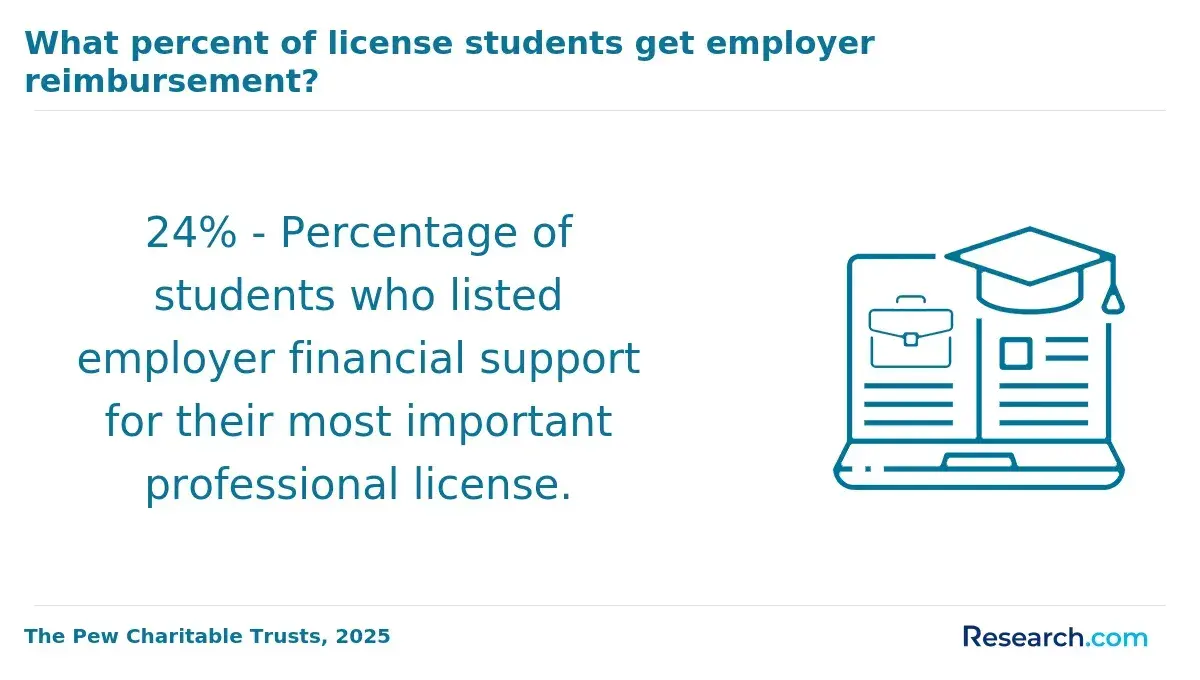
Accreditation is one of the most important transfer factors because it signals that a college has been reviewed by a recognized accrediting agency. In the U.S., institutional accreditation is commonly required for federal financial aid eligibility, graduate school consideration, employer tuition reimbursement, and smoother credit transfer.
The practical rule is simple: credits from accredited institutions are more portable than credits from unaccredited providers. However, accreditation does not force another college to accept every course. A university may recognize your prior school and still reject credits that do not match its curriculum or professional standards.
There are two accreditation layers to understand. Institutional accreditation applies to the college or university as a whole. Programmatic accreditation applies to specific programs such as nursing, engineering, business, social work, or teacher education. Programmatic accreditation can matter when credits are tied to licensure, clinical placement, certification exams, or specialized professional requirements.
If you are comparing online options, start with online universities that are accredited and then confirm whether your intended major has any additional accreditation expectations. This is especially important if you may transfer into healthcare, education, counseling, accounting, engineering technology, or another regulated field.
Common accreditation-related mistakes include enrolling in a low-cost provider without checking recognition, assuming national and regional accreditation are treated identically by every school, and ignoring program-specific accreditation. To avoid those problems, verify the school in the U.S. Department of Education or CHEA-recognized accreditation directories, ask the receiving school how it treats that accreditor, and request the policy in writing.
Do online credits from community colleges and certificate programs transfer into bachelor's degrees?
Online credits from community colleges often transfer well into bachelor's programs, especially when the courses are part of a state transfer pathway, articulation agreement, or associate degree designed for transfer. Community colleges are commonly used for lower-division general education because they can be more affordable and flexible than starting at a four-year institution.
Cost is a major reason students consider this route. College Board's 2024 Trends in College Pricing data lists average published tuition and fees at $4,050 for public two-year colleges for 2024-25. That lower starting cost can make sense if the credits are planned carefully, but it can backfire if a student takes courses that transfer only as unused electives.
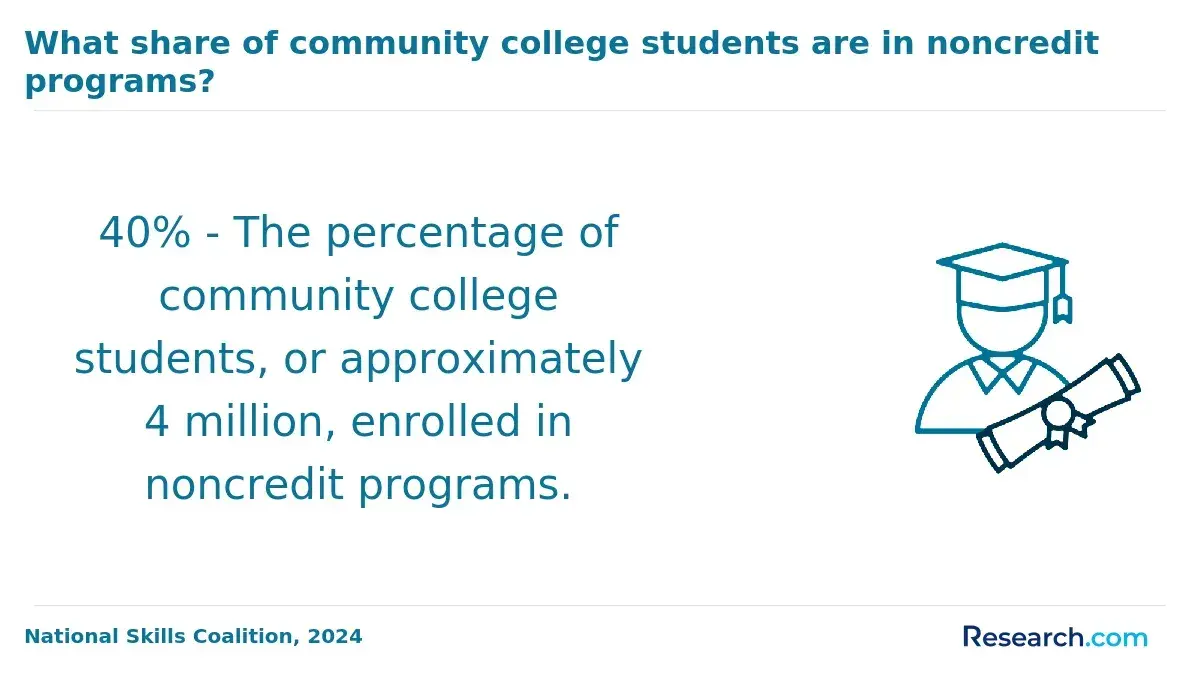
Certificate program credits are less predictable. A for-credit certificate from an accredited college is more likely to transfer than a noncredit workforce certificate. Career and technical credits may apply smoothly to applied associate or bachelor's programs but may not satisfy liberal arts, science, or pre-professional degree requirements.
Before using online certificates as a stepping stone, separate them into three categories:
- College-credit certificates: These appear on an accredited college transcript and may transfer if the receiving school accepts the courses.
- Noncredit workforce certificates: These may help with employment but usually do not transfer unless the college awards credit through prior learning assessment.
- Industry certifications: These may be considered for credit when a school has an approved equivalency, ACE recommendation, or portfolio process.
The best strategy is to choose a certificate only after checking how it maps into the next degree. Ask whether credits apply to the major, whether they expire, and whether completing the certificate changes your admission status or financial aid eligibility.
How many online credits can typically transfer toward an associate or bachelor's degree?
The number of online credits that can transfer depends on the receiving school and degree level. Many associate degrees require about 60 credits, and many bachelor's degrees require about 120 credits, but schools usually set limits on how many credits may come from outside institutions.
The table below shows common transfer-credit patterns. These are not universal rules, but they reflect the kinds of limits students often encounter when moving credits into a new program.
| Credential goal | Common total credits required | Common transfer-credit pattern | Decision point |
| Certificate | Varies widely | Often limited because certificates are short and sequenced | Confirm whether any outside credits can replace required courses |
| Associate degree | About 60 credits | Some schools may accept a large share, but require a minimum number in residence | Check whether transferred credits satisfy the core program, not just electives |
| Bachelor's degree | About 120 credits | Many institutions cap transfer credits, often with separate limits for lower-division and upper-division work | Ask how many credits can count toward the major and how many must be completed at the school |
| Second bachelor's degree | Varies by prior degree and major | General education may be waived or reduced, but major requirements remain | Confirm whether a degree-completion or post-baccalaureate path is faster |
If your goal is to finish as quickly as possible, do not focus only on the largest advertised transfer allowance. A program that accepts 90 credits but leaves you with a rigid two-year major sequence may take longer than a program that accepts fewer credits but offers year-round courses, flexible start dates, or better course availability.
Students looking for a faster completion route may also compare options labeled as the easiest bachelor's degree, but "easy" should mean well-aligned with prior credits and strengths, not academically weak.
Can online general education and prerequisite courses transfer more easily than major-specific classes?
General education and prerequisite courses usually transfer more easily than major-specific classes because they are more standardized. English composition, college algebra, introductory psychology, U.S. history, public speaking, and basic science courses often have clear equivalents across institutions.
Major-specific courses are more complicated. A business statistics course may not satisfy a psychology statistics requirement. An introductory programming course may use a different language than the receiving program expects.
A nursing anatomy course without the required lab may not meet a health program prerequisite. In these cases, the issue is not whether the course was online; it is whether the course has the right content, rigor, and learning outcomes.
Here is a practical way to estimate transfer risk before enrolling in an online course:
- Lower risk: Broad general education courses that appear in statewide transfer guides or common course-numbering systems.
- Moderate risk: Prerequisites for selective majors, especially science, math, business, and technology courses that may require specific labs or software.
- Higher risk: Upper-division major courses, clinical courses, student teaching, capstones, internships, and courses tied to licensure standards.
If you are taking online credits before choosing a major, prioritize transferable general education and widely required prerequisites. If you already know your major, ask the target department, not just admissions, whether the course will satisfy the requirement you need.
What steps should I follow to transfer my online college credits successfully?
A successful transfer starts before you enroll, not after you finish the class. The goal is to create a paper trail that shows the receiving school exactly what you took, where you took it, and how it fits your intended degree.
Follow these steps to improve your odds of having online credits accepted and applied correctly:
- Choose a target school or shortlist of schools before taking additional online courses.
- Check institutional accreditation and any programmatic accreditation required for your intended field.
- Review the target school's transfer-credit policy, grade minimums, residency rules, and maximum transfer limits.
- Use transfer equivalency databases, state articulation agreements, or common course-numbering systems when available.
- Ask for written pre-approval for any course that is not clearly listed as equivalent.
- Save syllabi, catalog descriptions, assignments, lab details, and proof of credit hours.
- Send official transcripts directly from every institution attended, including schools where you completed only one course.
- Review the official transfer evaluation and appeal quickly if a course was misclassified or assigned elective credit incorrectly.
One common mistake is assuming that acceptance to a college means all prior credits will count toward the degree. Admission and transfer evaluation are separate decisions. Another mistake is taking inexpensive online courses without confirming that they apply to the program map; cheap credits can become expensive if they delay graduation.
Do grades, course level, and the age of my online credits impact transfer approval?
Grades, course level, and course age can all affect transfer approval. Most colleges require a minimum grade for transferred courses, and some majors set higher standards than the general university policy. For example, a school might accept a C for elective credit but require a B or higher for a nursing, engineering, education, or business prerequisite.
Course level matters because lower-division credits do not always replace upper-division major requirements. A 200-level online management course may transfer into a university, but it may not satisfy a 300-level organizational leadership requirement. This distinction is especially important for students entering bachelor's completion programs.
Course age is another issue. Many general education credits remain usable for a long time, but technology, science, healthcare, accounting, and licensure-related courses may have freshness limits. A computer networking class from many years ago may not reflect current tools, security practices, or cloud systems. A science prerequisite may need to be recent for admission into a health program.
If graduate school is part of your long-term plan, transfer choices can affect prerequisites, GPA review, and academic preparation. Students planning beyond the bachelor's level may want to compare admission expectations early, including resources on the easiest master's programs to get into, while remembering that easier admission does not remove prerequisite or accreditation requirements.
When in doubt, ask three separate questions: Will the course transfer? Will it satisfy a specific requirement? Will it be considered current enough for my major, certification, or graduate program?
How do online vs. campus-based programs compare in transfer policies and flexibility?
Online and campus-based programs often use the same transfer policies when they belong to the same institution. A public university may evaluate an online course the same way it evaluates a campus course if both appear on an accredited college transcript. The bigger differences usually involve flexibility, advising access, course scheduling, and how quickly transfer evaluations are completed.
Transfer activity is also rising. The National Student Clearinghouse Research Center reported in 2024 that undergraduate transfer enrollment grew in spring 2024. For students, that means colleges are serving more mobile learners, but it also means transfer offices may be strict about documentation and degree applicability.
The table below compares online and campus-based programs from a transfer-planning perspective. Use it to decide which format fits your schedule, risk tolerance, and support needs.
| Feature | Online programs | Campus-based programs |
| Schedule flexibility | Often stronger, with asynchronous or accelerated options | Often tied to fixed meeting times and campus availability |
| Transfer evaluation | May be centralized and document-based | May involve registrar plus department review |
| Lab, clinical, or fieldwork requirements | May require local placements, intensives, or approved sites | Often easier to coordinate through campus facilities |
| Peer and faculty access | Depends heavily on advising design and course format | May offer more informal in-person contact |
| Best fit | Working adults, military students, caregivers, and degree completers | Students who want campus life, in-person labs, or local networking |
Online can be better if you need flexibility and already have credits to apply. Campus-based can be better if your major requires frequent labs, studio work, clinical supervision, or face-to-face networking. The right choice is the one that accepts the right credits and offers the required courses when you need them.
How can I choose online programs now that will maximize future transfer and career options?
To maximize future transfer and career options, choose online programs the way a transfer evaluator would review them: accreditation first, curriculum fit second, documentation third, and cost after you know the credits are usable. A low tuition price is valuable only when the credits move you closer to the credential you actually need.
Use these questions before enrolling in any online course, certificate, or degree program:
- Is the institution accredited by a recognized accreditor, and is the program accredited if my field requires it?
- Does the target school publish transfer equivalencies, articulation agreements, or degree maps?
- Will this course satisfy a named requirement or only count as elective credit?
- What minimum grade is required, and does my intended major require a higher grade?
- Are there limits on the age of credits, especially for science, technology, healthcare, accounting, or licensure courses?
- How many credits must I complete at the school that will award my degree?
- Will the program prepare me for employment, certification, graduate school, or licensure in the state where I plan to work?
Career alignment matters because not all credits have the same long-term value. If you are undecided, compare majors by transfer flexibility, prerequisite burden, and labor-market fit; resources on the most profitable college majors can help you think beyond completion speed and consider potential return on investment.
The best online credits are not simply the cheapest or fastest. They are credits from a credible institution, matched to a realistic degree plan, supported by documentation, and useful for the career or graduate pathway you may want next.
Other Things You Should Know About Transferring
Usually no. Many colleges list the course, grade, term, and credits without marking whether the class was online. Transfer reviewers focus more on accreditation, course content, level, credits, and grade.
Yes. You can often transfer individual completed courses even if you did not finish the original program. You will need official transcripts from every college attended.
Not always. Some schools accept an associate degree as a block of general education credit, especially under articulation agreements, but major prerequisites and upper-division requirements may still remain.
Ask for the reason in writing, gather syllabi and course descriptions, and file an appeal by the school's deadline. If the credit still does not apply, ask whether it can count as an elective or prerequisite substitute.
References
- How to Earn College Credits with StraighterLine’s Transferable Online Courses https://www.straighterline.com/how-it-works/how-to-earn-college-credits/
- How to Transfer Credits from One College to Another: A Comprehensive Guide - NEIT https://www.neit.edu/blog/how-to-transfer-credits-from-one-college-to-another
- Top Online Schools That Accept Transfer Credits https://www.edvisorly.com/student-guides/online-schools-that-accept-transfer-credits
- The Era of Flexible Education Has Arrived—Is Your Institution Ready? https://moderncampus.com/blog/the-era-of-flexible-education-has-arrived.html
- The Importance of Understanding Transfer Credit Policies https://www.sophia.org/blog/higher-education/understanding-transfer-credit-policies/
- How to Transfer College Credit in 5 Steps https://www.pearsonaccelerated.com/blog/transfer-college-credit.html
- Colleges are accepting transfer credits from online platforms that aren’t schools https://www.detroitnews.com/story/news/nation/2026/06/23/colleges-accepting-transfer-credits-online-platforms-arent-schools/90657258007/
- Top Online Degree Paths for Career Switchers in 2025 https://dsuonline.com/resources/blogs/top-online-degree-paths-for-career-switchers-in-2025/