2027 From Peer Support Specialist to Healthcare Administration

Co-Founder and Chief Data Scientist
Peer support specialists understand how people experience behavioral health services— knowledge that can improve how those services are run. Moving into healthcare administration, however, usually requires new skills in budgeting, supervision, operations, and compliance.
This guide is for peer workers considering that transition. It compares degree paths, explains where your experience has the most value, and shows how to evaluate programs and jobs without assuming an MBA or another degree will automatically lead to a management role.
Key Things You Should Know
- A practical first move is often a peer program coordinator or operations role, where lived-experience expertise can be paired with budgeting, reporting, and staff supervision.
- An MBA is one option, not a universal requirement: a healthcare administration degree may offer more sector-specific preparation, while a certificate or employer training may be enough for an initial step.
- The median annual wage for all U.S. management occupations was $126,520 in May 2025. It is not a starting salary or an earnings estimate for former peer support specialists.
What Is the Path From Peer Support Specialist to Healthcare Administration?
Healthcare administration is the management of services, staff, budgets, information, and operations in healthcare organizations. For a peer support specialist, the closest transition is often within a behavioral health agency, health system, community program, or recovery organization that already values peer services.
A plausible progression is peer specialist to lead peer or program coordinator, then to program manager or operations manager as responsibilities expand.
The important bridge is documented administrative experience: scheduling staff, improving referral processes, tracking service measures, training colleagues, or helping manage a program budget. A promotion depends on the employer's requirements and available openings, not on a degree alone.
Keep the destination clear. Health information management emphasizes the governance and use of health records, while healthcare administration has a broader organizational focus. A comparison of HIM and healthcare administration educational pathways can help if data and records work appeals to you more than program leadership.
What Education Do Peer Support Specialists Need for Healthcare Administration Roles?
There is no single degree required for every healthcare administration job. Employers may accept relevant experience for a coordinator position but expect a bachelor's degree for other roles. Senior or specialized management positions may call for a graduate degree and substantial experience. Read several local job postings before choosing an educational goal.
If you do not have a bachelor's degree, that is usually the first decision to address before considering an MBA or master's in healthcare administration. You can compare accredited U.S. universities offering healthcare administration bachelor's degrees, then confirm each school's current accreditation, transfer-credit rules, and program requirements directly.
If you already hold a bachelor's degree in another field, you need not assume you must earn a second one. Your peer work may provide valuable context; accounting, finance, data analysis, and management may be the more important gaps to close.
Which Healthcare Administration Degree Pathway Fits Your Career Goals?
The best pathway depends on your current education and the job you want next, not the most advanced credential you could pursue. This comparison separates a first administrative move from longer-term leadership goals.
| Pathway | Potential fit | Main limitation |
| Targeted courses or certificate | Building skills for a coordinator role while staying employed | May not meet an employer's degree requirement |
| Bachelor's in healthcare administration | Completing an undergraduate degree for broader administrative eligibility | Requires a larger commitment than targeted training |
| Master's in healthcare administration or management | Developing healthcare-specific operations and policy knowledge | May be premature without an attainable management path |
| MBA, with or without healthcare coursework | Building broad finance, strategy, and leadership skills, particularly for cross-sector roles | Healthcare depth varies; an elective is not necessarily a formal concentration |
For someone aiming to manage behavioral health programs, an MHA or healthcare-focused management degree may be more directly relevant than a general MBA. An MBA may fit better if you want broader business mobility or your employer values its management core.
Compare actual curricula and total costs rather than degree titles alone. Guides to graduate healthcare administration degree costs and options can provide a starting point.
Online study can make it easier to remain employed in peer support, but "online" does not necessarily mean self-paced. Live classes, team projects, internships, and campus visits can still affect your schedule. Campus programs may make in-person collaboration easier, but commuting or relocating can increase costs.
Ask each program when classes meet, whether attendance is required, how fieldwork is arranged, and whether you can complete an applied project at your current employer. Also check whether online students receive the career services and networking opportunities you expect.
If price is a major constraint, use cost-conscious choices for a healthcare administration degree to identify options for closer review, not as a substitute for checking current fees and scheduling rules.
Healthcare administration programs commonly address healthcare finance, organizational leadership, policy, operations, quality improvement, and the use of data in decisions.
An MBA generally begins with a broader management core, such as accounting, finance, strategy, and organizational behavior, then may add healthcare electives or a formal concentration. An MHA usually places healthcare organizations closer to the center of the curriculum.
For a peer specialist, the most useful assignment may be one that turns frontline insight into an operational proposal: improving access to peer services while accounting for staffing, funding, privacy, and measurable results.
If your interest is specifically in health records, coding systems, or information governance, examine online degree options in CAHIIM-accredited health information management instead. That is a different educational focus from general administration.
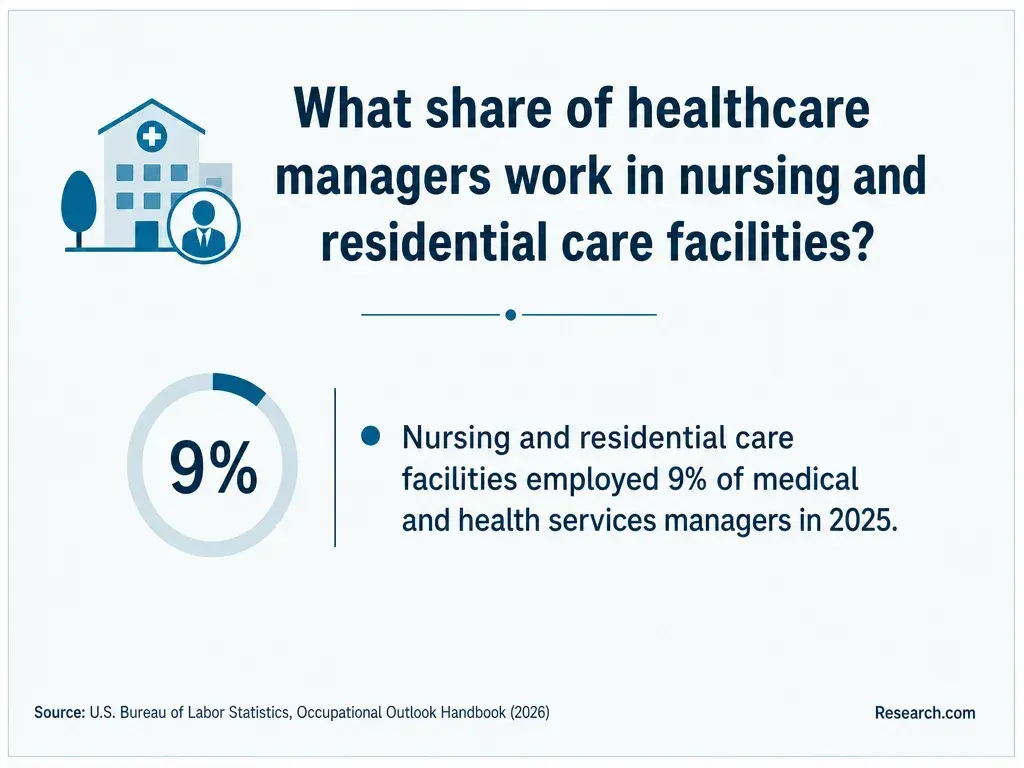
Requirements vary by school and degree level. Bachelor's applicants should check prior-credit and transfer policies. Graduate applicants generally need a bachelor's degree, while programs set their own rules for grades, professional experience, recommendations, essays, and any test or prerequisite courses. A nonbusiness degree does not automatically prevent admission to an MBA or MHA.
Before applying, compare the published requirements with your record. If you have led peer training, coordinated services, or improved a workflow, describe the scope and results accurately on your résumé; do not label informal leadership as formal staff management. Ask whether introductory finance or statistics preparation would help you succeed, even when it is not required.
Doctoral admission is a separate, later decision that may involve graduate education and substantial professional experience. If that is your eventual goal, information on accelerated healthcare leadership study beyond the master's level may help you plan ahead; a doctorate is not a prerequisite for beginning an administrative career.
Completion time depends on transferred credits, enrollment pace, required coursework, and whether a program permits breaks. A bachelor's degree commonly takes several academic years without substantial transfer credit; graduate timelines vary considerably by program and course load. A shorter advertised schedule may be difficult to maintain alongside full-time peer work.
Compare the total amount you would pay, not tuition alone: include mandatory fees, books or software, required travel, and financing costs. Then account for grants, employer tuition assistance, and any reduction in earnings caused by studying.
If speed matters, compare shorter online MBA options in healthcare management against their workload and full price. An accelerated MBA is not automatically the least expensive or most relevant route to your first administrative role.
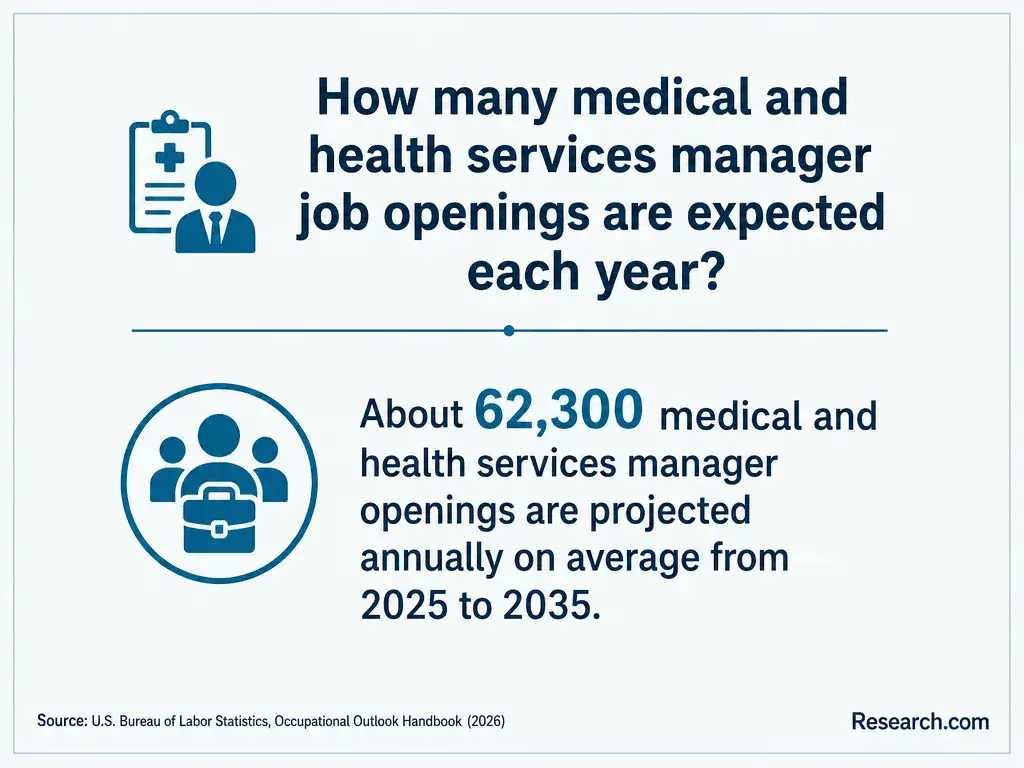
Your strongest initial applications may be for peer program coordinator, behavioral health program coordinator, patient experience coordinator, or operations specialist roles.
These can build evidence that you can organize services and work across teams, rather than only deliver support directly. Program manager and broader operations manager roles become more realistic as you gain responsibility for staff, budgets, performance, or compliance.
Some healthcare administration titles cover very different work. A hospital department manager may need experience with complex staffing and budgets; a behavioral health peer program manager may place greater weight on peer-service knowledge.
Use job descriptions, not titles alone, to identify the gap between your experience and the position. For a broader view, explore potential career destinations for healthcare administration students while treating senior roles as possible long-term goals, not immediate outcomes.
The U.S. Bureau of Labor Statistics reports a median annual wage of $126,520 for management occupations overall in May 2025. That figure spans many industries and levels of responsibility; it does not describe the pay for entry-level healthcare coordinators, all healthcare administrators, or people who earn an MBA.
BLS projects management occupations overall to grow faster than the average for all occupations from 2025 to 2035, but that broad outlook cannot predict openings in a particular behavioral health organization.
For a useful personal comparison, collect pay ranges for the specific local roles you could qualify for now and after gaining administrative experience. Compare any likely increase with the full cost of study and your current earnings.
If a master's degree is necessary for your target roles, online graduate pathways with shorter healthcare management schedules may reduce time in school, but speed alone does not establish a financial return.
What Certifications and Licenses Apply to Healthcare Administration Careers?
Most general healthcare administration roles do not have one universal professional license. Requirements can change with the position and state: a licensed clinician who directs clinical care, for example, has different obligations from a nonclinical program administrator.
Your peer support certification is valuable evidence of your practice background, but it does not replace a clinical license or automatically qualify you to manage an organization.
Optional professional credentials may help demonstrate knowledge in a specific area, such as project management or health information, when employers value them. Verify eligibility, renewal requirements, and job-posting language before paying for one.
A doctorate is an academic credential rather than an administrator's license; discussions of healthcare administration professional doctorate and PhD timelines are most relevant if you later pursue advanced leadership, research, or teaching.
Other Things You Should Know About Healthcare Administration Programs
Check your state's renewal rules and your employer's expectations. Maintaining it may be useful if you supervise peer services or want the option to return to direct work.
Emphasize what it helped you accomplish professionally, such as improving engagement or identifying service barriers. You do not have to disclose personal health information.
Possibly. Ask the school and employer about approval, supervision, confidentiality, and access to organizational data before relying on that option.
Confirm eligible programs, payment timing, grade rules, and whether you must repay assistance if you leave the organization.
- Ways to Approach the Quality Improvement Process | Agency for Healthcare Research and Quality https://www.ahrq.gov/cahps/quality-improvement/improvement-guide/4-approach-qi-process/index.html
- Healthcare Administration Salary Guide & Career Outlook | SIUE https://online.siue.edu/degrees/business/mba/healthcare-administration/hospital-administrator-salary/
- Career Outlook: Top Jobs in Healthcare Administration for 2025 | Boston College https://onlinemha.bc.edu/top-healthcare-administration-jobs-2025/
- What Can I Do with a Degree in Healthcare Management? | Herzing University https://www.herzing.edu/degree/healthcare-management
- Peer support: Research and reports | Mental Health America https://mhanational.org/peer-support-research-and-reports/
- How to Become a Healthcare Administrator and Job Duties | Public Health Degrees https://www.publichealthdegrees.org/careers/healthcare-administrator/
- Advancing the Work of Peer Support Specialists in Behavioral Health-Criminal Justice Programming | CSG Justice Center https://csgjusticecenter.org/publications/advancing-the-work-of-peer-support-specialists-in-behavioral-health-criminal-justice-programming/