2027 FNP Preparation for a Clinical Nurse Specialist: Prior Coursework, Gap Analysis, and Clinical Training
Audited and Verified:
Our Editorial and Data Verification Process
Research.com uses government datasets, official education statistics and primary institutional information to support its career and degree guides. Our review process checks factual accuracy, occupational definitions, source dates and the requirements associated with the credentials discussed.
How This Article Was Fact-Checked
Our editorial team verifies salary estimates, employment projections, education requirements and program information against original data providers and official organizations. Salary figures are checked against the relevant occupational definitions and reporting periods. Information about licensure, accreditation and required in-person training is reviewed separately.
Fact-checked and verified on:

Co-Founder and Chief Data Scientist
A clinical nurse specialist (CNS) who wants to become a family nurse practitioner (FNP) is changing advanced practice roles, not simply adding a credential. Prior graduate courses may shorten the path, but CNS experience alone does not establish FNP competency or certification eligibility. This guide explains how post-master's programs evaluate coursework, identify gaps, arrange family-focused clinical training, and prepare graduates for certification and state authorization. It will help you compare programs against your existing preparation before committing time, money, or a clinical placement.
Key Things You Should Know
- Expect a program-specific review of your CNS transcript, syllabi, and supervised clinical records; no fixed number of CNS credits automatically transfers into FNP preparation.
- Advanced pathophysiology, pharmacology, and health assessment - the "three Ps" - may be reusable, but FNP population-focus coursework and supervised family practice must still meet the receiving program's requirements.
- National FNP certification pathways commonly specify at least 500 faculty-supervised clinical hours; the program, certifier, and state may impose additional or more specific requirements.
What Is FNP Preparation for Clinical Nurse Specialist Graduates?
FNP preparation is graduate education for the nurse practitioner role and the family/individual-across-the-lifespan population focus. It develops competencies in primary care assessment, diagnosis, treatment planning, prevention, and follow-up across age groups. A CNS's expertise in consultation, complex care, and systems improvement is valuable, but a CNS credential does not authorize practice as an FNP.
For a CNS with a nursing master's or doctorate, the usual option is a post-master's FNP certificate or an appropriately designed doctoral FNP track. Compare the actual award and clinical curriculum, not the word "bridge" in an advertisement. FNP certificate routes for changing advanced practice focus can be a starting point for comparison, but each school must evaluate your individual record.
If your goal is better CNS practice rather than primary care as an NP, targeted continuing education or employer training may be more direct. An additional FNP credential makes sense when the intended job requires NP preparation, certification, and state authorization.
What Prior Coursework Do Clinical Nurse Specialists Need for FNP Programs?
Programs commonly examine graduate-level advanced pathophysiology, advanced pharmacology, and advanced health assessment first. They also review course age, credits, grades, syllabi, assessment skills taught, and whether the work meets their current NP curriculum. A course with a similar title is not necessarily equivalent.
FNP-specific study generally addresses primary care across the lifespan, including pediatric, adult, and older-adult care; health promotion; diagnostic reasoning; and management of common acute and chronic conditions. A CNS whose prior preparation centered on one population or an acute-care setting should expect closer scrutiny of those gaps. Prior supervised clinical records matter separately from classroom credit.
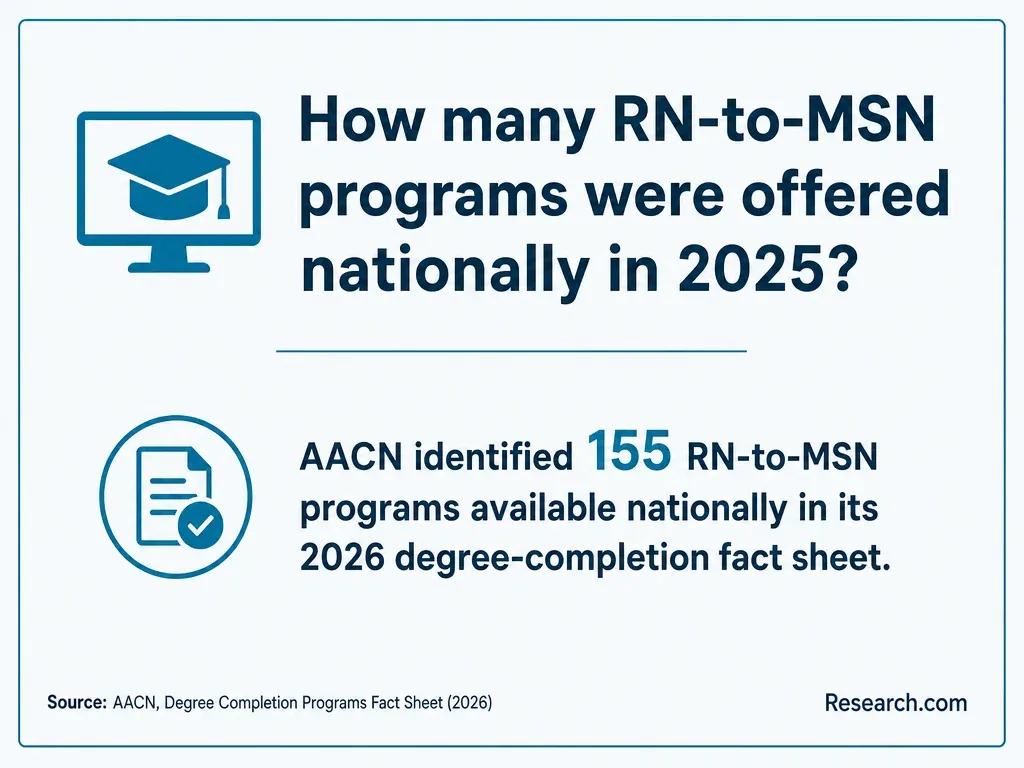
Undergraduate completion routes serve a different purpose. For example, online RN-to-BSN programs with applied assignments do not replace graduate FNP population-focus courses or supervised NP clinical training. Ask the FNP program to identify required courses in writing rather than assuming any earlier nursing degree satisfies them.
How Does a Gap Analysis Determine Required FNP Coursework?
A gap analysis is the receiving program's documented comparison of your completed graduate education and clinical preparation with its FNP curriculum and applicable certification expectations. It should produce an individual plan - not a general promise that APRNs receive advanced standing.
Prepare a record the faculty can actually evaluate:
- Request official transcripts and detailed syllabi for graduate courses you hope to apply.
- Obtain clinical-hour records showing dates, settings, patient populations, supervisors, and evaluated competencies where available.
- Ask the program which courses and hours it accepts, which FNP experiences remain, and whether any accepted work has recency limits.
- Confirm that the resulting plan is intended to satisfy the FNP certification pathway you will use and requirements in your practice state.
Hours spent working as a CNS can demonstrate experience without becoming approved student clinical hours. The same principle applies across population-focus changes: PMHNP certificate admissions and timelines, for example, involve a different specialty review and cannot establish what an FNP program will waive. Obtain the final plan from the school before relying on an advertised completion time.
Post-master's FNP applicants typically need an active RN license and an acceptable graduate nursing degree. A school may also request transcripts, a résumé, professional recommendations, a statement of purpose, and proof of current CNS or other APRN credentials if applicable. Minimum GPA, clinical experience, residence, and prerequisite policies vary.
Admission to the university is not the same as acceptance into the FNP track or approval to begin clinical work. Before applying, ask whether the program admits CNS graduates with your specific degree and population focus, whether your license state is eligible for enrollment and placement, and when the faculty completes its gap analysis. Clinical sites may separately require background screening, immunizations, or other onboarding.
Listings of nursing programs with broader admission pathways address a different question: general nursing admission flexibility does not establish post-master's FNP eligibility. The specialty-track admissions office is the authority for your application.
FNP students need faculty-supervised clinical experiences that develop and evaluate NP care across the lifespan, generally in appropriate primary care settings. National FNP certification pathways commonly cite a minimum of 500 faculty-supervised clinical hours, but an individual program may require more hours or particular patient-population experiences. Ask how the school applies current requirements to post-master's students rather than treating 500 as a promised personal total.
The placement plan should identify approved sites, qualified preceptors, faculty oversight, patient and case exposure, scheduling, and how competencies are assessed. A CNS job, a familiar physician's office, simulation, or previously completed clinical hours count only if the responsible program accepts them for the specified requirement. Programs differ in how much placement work they handle; family NP programs with clinical placement assistance are worth examining if securing a suitable preceptor would be a barrier.
Ask for a written explanation of who finds sites, who signs affiliation agreements, what happens if a placement falls through, and whether required experiences are available near your home or workplace.
Online FNP coursework can reduce commuting, but it does not eliminate supervised, in-person patient care. Some programs also require live classes, skills assessments, simulation, or campus visits. Campus-based study may offer more face-to-face instruction and local clinical connections, though neither format guarantees a placement.
Compare the weekly class schedule, clinical-day requirements, travel, faculty access, and placement responsibility - not just the delivery label. This is especially important if you intend to continue working as a CNS: primary care sites may not offer hours that match your existing shifts.
"Online" also describes very different nursing pathways. Comparing fast LPN-to-RN nursing programs will not tell an already-licensed CNS whether an FNP program offers flexible graduate clinical scheduling. Request the FNP program's sample term-by-term schedule instead.
There is no dependable universal length for a CNS-to-FNP "bridge." Completion depends on the gap analysis, course sequencing, clinical availability, enrollment pace, and whether required courses are offered every term. A shorter published certificate timeline may assume that all advanced core courses are accepted and placements are ready on schedule.
Calculate cost from your written course plan. For illustration only, 24 required credits at $800 per credit would produce $19,200 in tuition before fees; those figures are not a quoted program price. Add university and clinical fees, books, travel, campus visits, screening, certification and licensing expenses, and any income lost to clinical scheduling. Compare total cost and time away from work, not tuition per credit alone.
Budget planning for BSN-to-MSN study can suggest expense categories to investigate, but a BSN-to-MSN price is not a valid estimate for a CNS's individualized post-master's FNP plan. Ask each school for a term-by-term cost estimate based on its gap analysis and for any employer-reimbursement conditions.
Check three distinct matters before enrolling: the institution's accreditation, the nursing program's applicable accreditation, and whether the specific FNP pathway will meet certification and state APRN education requirements. CCNE and ACEN are nursing accreditors, but an institution's accredited status alone does not answer whether its particular post-graduate FNP certificate falls within the relevant accreditation scope.
Ask the school to identify the exact accredited program or certificate, its current status, and the states in which it can enroll and place students. Then confirm the intended FNP certifier's education criteria and your state board's APRN requirements. State authorization to enroll, educational accreditation, and permission to practice are separate decisions.
Likewise, admission-focused nursing practice doctorate comparisons may help evaluate entry policies, but easier admission says nothing by itself about a track's FNP accreditation scope or certification fit.
Completing an FNP program or earning a post-master's certificate does not itself grant an NP license. Graduates generally seek national FNP certification through the American Nurses Credentialing Center, which awards FNP-BC, or the American Academy of Nurse Practitioners Certification Board, which awards FNP-C. They must meet the chosen certifier's current eligibility rules and pass its examination.
Next, apply for APRN licensure or recognition in the state where you will practice and meet that board's requirements. Maintain the underlying RN license as required, and verify state rules governing NP practice, prescribing, and any additional registrations. An existing CNS authorization does not automatically convert to FNP authorization; an employer may also require credentialing and onboarding.
Choose certification for the population focus you intend to practice. Exploring affordable PMHNP education pathways concerns psychiatric-mental health preparation, not an alternate route to FNP certification or licensure.
What Career Paths, Salaries, and Job Outlook Can FNP Graduates Expect?
After obtaining the required credentials and state authorization, an FNP may pursue roles in family medicine, community health, outpatient clinics, and other settings serving patients across the lifespan. The transition can build on a CNS's consultation and care-coordination strengths, while requiring demonstrated competence in primary care decision-making and the new employer's workflows.
The U.S. Bureau of Labor Statistics reports nurse practitioner wages and employment projections at the occupation level, not specifically for former CNSs or FNP certificate graduates. Use its latest nurse practitioner median wage and projection as broad labor-market context, then compare actual local offers by specialty, setting, schedule, benefits, and state practice rules. Neither an occupation-wide median nor projected growth guarantees a salary or a position.
If your goal is systems leadership rather than an NP patient-care role, leadership DNP education after a nursing master's may be a more relevant comparison. Before choosing either path, review several target job postings: the required credential and daily duties should determine whether additional FNP clinical training is worth the investment.
Other Things You Should Know About Nursing
Usually, if you maintain your current credentials and can meet both work and program schedules. Your CNS practice remains subject to its existing scope; FNP student status does not expand it.
Possibly. The school must approve the site, preceptor, learning experiences, and any separation between paid duties and student clinical work before hours begin.
No. They are distinct credentials with separate renewal rules. Decide whether to maintain both based on your practice, employer requirements, and each certifier's policies.
Contact the school before moving. Enrollment authorization, clinical placement, and eventual APRN eligibility may differ in the new state, even if your coursework remains online.
- Advanced Practice Registered Nurse (APRN) | Virginia Board of Nursing https://www.dhp.virginia.gov/Boards/Nursing/PractitionerResources/AdvancedPracticeRegisteredNurse/
- South Carolina Board of Nursing - SCLLR https://llr.sc.gov/nurse/Online/APRNLEAD.aspx
- APRN Practice FAQ - Texas Board of Nursing https://www.bon.texas.gov/faq_practice_aprn.asp.html
- 2025-2026 Bill 3580: Advanced Practice Registered Nurse practice authority - South Carolina Legislature Online https://www.scstatehouse.gov/sess126_2025-2026/bills/3580.htm
- Nurse Practitioner - California Board of Registered Nursing https://www.rn.ca.gov/practice/np.shtml
- Advanced Practice Registered Nurse Roles - StatPearls - NCBI https://www.ncbi.nlm.nih.gov/books/NBK589698/
- Pages - Advanced Practice Nurse Certification https://www.njconsumeraffairs.gov/nur/Pages/APN-Certification.aspx
- What's the Difference Between FNP-C and FNP-BC? | Rockhurst University https://onlinedegrees.rockhurst.edu/blog/board-certified-family-nurse-practitioner-fnpc-fnpbc
- The Difference Between a Clinical Nurse Specialist (CNS) vs. Nurse Practitioner (NP) | Nebraska Methodist College https://blog.methodistcollege.edu/difference-between-cns-vs-np
- What to Study Before NP School: Pre-Enrollment Guide | RegisteredNursing.org https://www.registerednursing.org/articles/preparing-for-np-school/