2027 Does an Online Communication Disorders Degree Qualify You for Licensure?

Co-Founder and Chief Data Scientist

Reviewed by Rhea Paul, PhD
SLP Education & Research Expert
The key question is not whether a communication disorders degree is online, but whether the program satisfies the education, clinical training, accreditation, examination, and state approval rules required for licensure. Online programs can be legitimate licensure pathways, but only when they are built to meet the same professional standards as campus-based programs.
This decision matters because communication disorders careers are tightly regulated. Licensing boards typically require accredited coursework, supervised clinical hours, and a passing score on a national examination. Recent data show that employment in speech-language pathology is projected to grow by 17% through 2035, making the field attractive to students who want a stable clinical career. At the same time, demand does not reduce the need to choose a program carefully.
This guide explains when an online communication disorders degree can qualify for licensure, which careers require licensing, what accreditation to check, how state rules differ, what coursework and internships are usually required, and how to verify a program before you enroll.
Key Things to Know About Online Communication Disorders Degree Licensure Qualifications
- Accreditation by the Council on Academic Accreditation (CAA) or equivalent is essential for online communication disorders degrees to meet licensure educational standards.
- Licensure requirements vary by state, so graduates must verify their online program aligns with their state's specific mandates for eligibility.
- Completion of clinical, practicum, or supervised professional experience hours is typically required to qualify for licensure, ensuring practical skill development alongside academic study.
Does an Online Communication Disorders Degree Qualify You for Licensure?
Yes, an online communication disorders degree can qualify you for licensure if the program meets the licensing standards for the state and profession you plan to enter. Licensing boards generally focus on accreditation, curriculum, supervised clinical experience, and exam eligibility—not simply whether classes were delivered online or on campus.
Online education has become more common in regulated fields, including healthcare and education. Enrollment in online degree programs related to these areas has grown significantly, with some studies reporting nearly 80% growth in online course participation over recent years. That growth has made online learning more accepted, but it has also made verification more important for students pursuing licensed careers.
Before enrolling, confirm three things: the institution is properly accredited, the program’s curriculum matches licensure requirements, and the program provides or supports the required clinical placements. A program may be academically legitimate but still fail to meet one state’s licensing rules.
- Accreditation: The school and, when required, the specific program must hold accreditation recognized by licensing boards.
- Clinical training: Communication disorders licensure normally requires supervised, in-person clinical experience, even if academic coursework is online.
- State authorization: The program should disclose whether it meets educational requirements in the state where you intend to seek licensure.
- Exam eligibility: Graduates should be eligible to sit for the required professional or national licensing examination.
Students comparing online healthcare pathways should not assume every field treats clinical requirements the same way. For example, RN to BSN online programs may offer flexibility without clinical components, while communication disorders programs commonly require supervised practicum or internship experience.
Which Communication Disorders Careers Require Professional Licensure?
Many communication disorders careers require professional licensure because practitioners evaluate, diagnose, or treat conditions that affect speech, language, hearing, swallowing, and communication. Licensure is designed to protect clients by ensuring that professionals meet education, supervision, ethical, and competency standards.
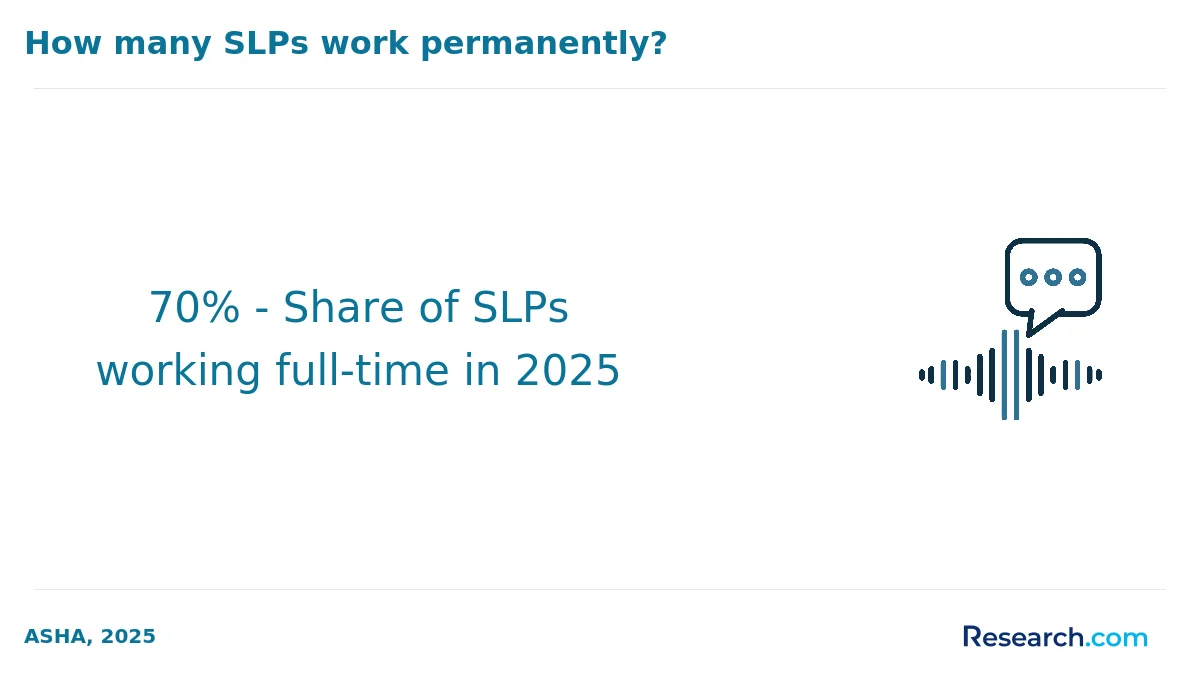
With approximately 70% of U.S. occupations requiring licensure or certification, students should treat licensing as a central part of career planning rather than a final administrative step. The required credential depends on the role, work setting, and state.
- Speech-Language Pathologist: Speech-language pathologists assess and treat speech, language, voice, fluency, communication, and swallowing disorders. This career commonly requires graduate-level education, supervised clinical experience, a licensing exam, and state licensure.
- Audiologist: Audiologists diagnose and manage hearing and balance disorders. Because they provide clinical services and may work with medical referrals, licensure is typically mandatory.
- Occupational Therapist: Occupational therapists are licensed professionals. When their work includes communication-related or swallowing-related interventions, they still practice under occupational therapy licensing standards and scope-of-practice rules.
- Hearing Aid Specialist: Hearing aid specialists fit and dispense hearing aids. States commonly regulate this role through licensure or certification to ensure safe testing, fitting, and consumer protection practices.
A communication disorders degree may also support non-licensed roles, such as assistant, aide, research, advocacy, or education-related positions. However, students who want independent clinical practice should verify the exact credential required for their target role before choosing a program.
What Accreditation Is Required for Communication Disorders Licensure?
Accreditation is one of the most important licensure checkpoints for communication disorders students. It signals that a program or institution has been reviewed against defined quality standards and that its coursework, faculty qualifications, student supports, and clinical preparation are appropriate for professional training.
According to ASHA, more than 90% of students graduating from accredited programs pass their national certification exams on the first try, highlighting the practical value of choosing a properly accredited pathway.
- American Speech-Language-Hearing Association (ASHA) CAA: The Council on Academic Accreditation under ASHA is a central accreditor for speech-language pathology and audiology programs. For students pursuing licensure in these fields, CAA accreditation is often a critical requirement or strongly preferred standard.
- Accreditation Commission for Audiology Education (ACAE): ACAE focuses on audiology education. Students pursuing audiology licensure should check whether their target state recognizes or requires this type of programmatic accreditation.
- Council for Higher Education Accreditation (CHEA): CHEA recognizes accrediting organizations and helps students identify legitimate accrediting bodies. While CHEA does not license practitioners, recognition can help confirm whether an accreditor is credible.
- Commission on Collegiate Nursing Education (CCNE): CCNE primarily accredits nursing programs. It may be relevant in interdisciplinary healthcare contexts, but communication disorders students should not treat CCNE accreditation as a substitute for communication disorders-specific accreditation when licensure requires it.
Do not rely only on a school’s general reputation. Ask the admissions office for the exact accreditation status of the program, the accrediting body’s name, and whether the program meets educational requirements for your intended state and profession.
Do Licensure Requirements Vary by State for Communication Disorders Careers?
Yes. Licensure requirements for communication disorders careers vary by state, and those differences can affect whether an online degree qualifies you to practice. Over 40 states have distinct licensing prerequisites that may address coursework, clinical hours, accreditation, examinations, background checks, and documentation.
State variation is especially important for online students because they may enroll in a program based in one state while completing clinical training or seeking licensure in another. A program may meet the requirements where the university is located but not automatically satisfy the rules where the student lives or plans to work.
- Coursework rules: Some states specify required subject areas or minimum academic preparation standards.
- Clinical placement rules: States may require supervised hours in approved settings or under approved supervisors.
- Accreditation rules: Licensing boards may require regional institutional accreditation, programmatic accreditation, or both.
- Location restrictions: Some states may place limits on where clinical experiences can occur or how they must be documented.
- Mobility issues: A license in one state may not guarantee immediate eligibility in another state without additional review.
Before enrolling, contact the licensing board in the state where you want to practice and ask whether the program meets educational requirements. Keep written documentation of the answer. Students comparing advanced healthcare programs, such as DNP FNP programs, will see similar state-by-state licensing complexity across regulated professions.
What Online Courses Are Required for Communication Disorders Licensure?
Online communication disorders programs typically include the same core academic areas as campus-based programs when they are designed for licensure preparation. Approximately 40% of graduate students in speech-language pathology have engaged in online or blended courses, reflecting the field’s broader use of virtual learning for didactic coursework.
The exact course list depends on the degree level and profession. A bachelor’s degree in communication disorders may prepare students for graduate study or assistant-level roles, while licensure as a speech-language pathologist commonly requires more advanced professional preparation. Students should compare each course plan against state and professional requirements.
- Foundational Theory: Courses often cover anatomy and physiology of speech and hearing, phonetics, speech science, hearing science, language development, and communication across the lifespan.
- Applied Practice: Students study assessment and intervention methods for speech sound disorders, language disorders, voice and resonance, fluency, swallowing, and related clinical concerns.
- Ethics and Professional Standards: Licensure-track programs should teach ethical decision-making, scope of practice, confidentiality, documentation, cultural responsiveness, and professional responsibility.
- Research Methods: Students learn how to evaluate evidence, interpret data, apply research to clinical decisions, and use evidence-based practice.
The strongest online programs make the relationship between coursework and licensure transparent. Look for a curriculum map, state licensure disclosures, clinical handbook, and exam preparation information. If a program cannot clearly explain how its courses support licensure eligibility, treat that as a warning sign.
Do Online Communication Disorders Programs Require Internships for Licensure?
Yes, most licensure-focused online communication disorders programs require supervised clinical experiences, practicums, internships, or similar field placements. These experiences are usually completed in person, even when academic courses are delivered online.
Research shows that about 85% of online and hybrid communication disorders programs mandate a clinical internship or practicum. This requirement reflects the nature of the profession: students must demonstrate clinical judgment, client interaction skills, documentation ability, ethical conduct, and treatment planning under supervision.
Programs differ in how they arrange placements. Some have formal placement teams that help students identify approved sites. Others expect students to locate possible sites and then submit them for program approval. Either way, students should ask detailed questions before enrolling.
- Who finds the placement? Ask whether the university guarantees assistance or only provides guidance.
- Where can placements occur? Confirm whether sites must be in specific states, settings, or approved networks.
- Who can supervise? Licensing boards and programs may require supervisors with specific credentials.
- How are hours documented? Accurate records are essential for licensure applications.
- What happens if no local site is available? Understand whether relocation, travel, or delayed progression could be required.
Students comparing graduate-level options should review clinical placement policies carefully when evaluating online masters in speech pathology programs, because affordability and flexibility matter only if the program can support licensure preparation.
Employer Confidence in Online vs. In-Person Degree Skills, Global 2024

How Do Licensing Exams Work for Online Communication Disorders Graduates?
Online communication disorders graduates generally take the same licensing or certification exams as graduates from campus-based programs. The exam process is based on whether the candidate meets educational and clinical eligibility requirements, not on whether coursework was completed online.
About 85% of candidates pass the Praxis Speech-Language Pathology test on their first attempt, showing that the exam is a major but achievable step for prepared graduates. Students should confirm which exam their profession and state require, because exam requirements can differ by role and jurisdiction.
- Eligibility: Candidates usually must complete an accredited master’s or doctoral program in communication disorders, whether online or on campus, before qualifying for exams such as the Praxis.
- Exam Content: Licensing exams commonly assess areas such as speech sound production, language comprehension and expression, voice and resonance, fluency, and swallowing disorders.
- Preparation Expectations: Online graduates often use course materials, clinical case review, practice exams, faculty guidance, and structured study plans, much like campus-based students.
- Testing Administration: Exams may be offered at authorized physical testing centers and through secure online proctoring, depending on the exam provider and current testing policies.
- Consistency and Standards: The licensing exam is designed to evaluate professional readiness using a common standard, regardless of delivery format.
A strong online program should publish exam pass-rate information when available, explain when students become eligible to test, and provide advising on the sequence from graduation to exam registration to state licensure application.
How Do You Verify an Online Communication Disorders Program's Licensure Status?
Verifying licensure status is one of the most important steps before enrolling in an online communication disorders program. Research indicates that nearly 20% of students unknowingly enroll in programs that fail to meet state licensure requirements, which can lead to additional coursework, delayed licensing, or wasted tuition.
Do not rely on broad claims such as “licensure-track,” “career-ready,” or “meets professional standards” without checking the details. Use a documented verification process.
- Read the program’s licensure disclosures. Accredited institutions often publish state-by-state professional licensure disclosures. Check whether the program states that it meets, does not meet, or has not determined requirements for your state.
- Confirm institutional accreditation. Verify that the college or university is accredited by a recognized institutional accreditor.
- Confirm programmatic accreditation. If your target credential requires program-specific accreditation, verify it directly with the accrediting organization.
- Contact the state licensing board. Ask whether graduates of the program are eligible for licensure in your state. Save the response.
- Review clinical placement policies. Confirm that the program can support required supervised hours in approved settings.
- Ask for outcomes data. Request information on exam pass rates, graduation rates, placement support, and licensure outcomes when available.
Students searching for lower-cost or low-barrier admissions options, such as online colleges with free application options, should still make licensure alignment the deciding factor. A convenient application process does not guarantee that a program will qualify you for a regulated profession.
What Challenges Do Online Communication Disorders Students Face With Licensure?
Online communication disorders students can qualify for licensure, but they may face additional planning challenges. Approximately 30% of online graduates in health-related fields report delays or complications in credentialing compared to on-campus peers. These issues are often preventable when students verify requirements early and maintain complete records.
- State-by-State Differences: Licensing boards may define coursework, clinical hours, supervision, and documentation differently. A program that fits one state may not fully satisfy another.
- Clinical Placement Logistics: Online students may need to secure local sites, coordinate schedules, meet supervisor credential rules, and ensure the placement is approved before hours begin.
- Documentation Burden: Licensing applications often require transcripts, clinical hour logs, supervisor attestations, exam scores, background checks, and program verification forms.
- Unclear Program Disclosures: Some programs do not clearly explain whether they meet requirements in every state. Students should press for direct written answers.
- Timing Delays: Licensure may take longer if transcripts, exam results, supervisor forms, or state board reviews are incomplete or delayed.
The best way to reduce risk is to create a licensure checklist before enrollment and update it each term. Students evaluating other regulated or health-adjacent online fields, including online master’s in nutrition programs, should use the same approach: verify accreditation, supervised practice requirements, and state rules before committing.
Are Online Communication Disorders Degrees Respected in Licensed Professions?
Online communication disorders degrees can be respected in licensed professions when they come from accredited, rigorous programs that meet the same standards as campus-based options. Employers and licensing boards are generally more concerned with program quality, clinical competence, accreditation, and licensure status than with the physical location of coursework.
A 2023 survey by the Online Learning Consortium reported that about 70% of employers now regard degrees earned primarily online as on par with campus-based degrees, assuming the program adheres to rigorous standards. That assumption is important: respect depends on quality, transparency, and outcomes.
For licensed communication disorders roles, credibility usually comes from the full professional package:
- Accredited education: The degree should meet recognized academic and professional standards.
- Documented clinical training: Graduates should be able to show supervised experience in appropriate settings.
- Licensure or certification: Holding the required credential often matters more than the course delivery format.
- Professional performance: Employers value communication skills, clinical reasoning, ethical judgment, and readiness to serve clients.
Students considering nontraditional healthcare pathways, including options such as the RN to NP pathway, should apply the same standard: online learning can be credible, but only when the program is properly accredited, clinically sound, and aligned with licensure expectations.
What Graduates Say About Online Communication Disorders Degree Licensure Qualifications
- : "Choosing an online communication disorders degree was first about flexibility, but I quickly learned that licensure alignment mattered even more. The online format did not remove the rigor or the clinical requirements. Once I became licensed, I felt prepared to work in schools and private practice with confidence. — Linda"
- : "Earning the degree online was demanding, especially while balancing work and study, but the program was structured around the academic standards required for professional certification. Licensure expanded my career options and gave employers and clients a clear signal that I had met the required professional benchmarks. — Cecil"
- : "My licensure process was manageable because I chose the program carefully and checked state board criteria before enrolling. The curriculum was comparable to what I expected from an in-person program, and the clinical requirements helped me build practical confidence. Becoming licensed increased client trust and widened the settings where I could practice. — Armando"
Other Things You Should Know About Communication Disorders Degrees
Yes, many online communication disorders degree programs include supervised clinical practicum experiences that meet licensure requirements. Students should verify that these experiences comply with state licensing boards' standards for hours and supervision. Not all online programs offer clinical opportunities within the state of residence, so confirming the location and approval of placements is essential.
Licensing boards generally accept coursework from online communication disorders programs if the program is accredited and meets all academic criteria. The delivery method-online versus on-campus-is less important than the program's accreditation status and curriculum content. Prospective students should confirm acceptance with their state's licensing authority before enrolling.
Beyond degree completion and clinical hours, some states require passing national or state licensure exams specific to communication disorders. Online students must ensure they meet all exam eligibility criteria, which may include supervised practicum components. Maintaining licensure may also require ongoing continuing education credits after initial certification.
References
- U.S. Bureau of Labor Statistics - Speech-Language Pathologists https://www.bls.gov/ooh/healthcare/speech-language-pathologists.htm
- ASHA EdFind - Accredited Speech-Language Pathology Programs https://find.asha.org/ed/
- Audiology and Speech-Language Pathology Interstate Compact https://aslpcompact.com/compact-map/
- Pepperdine University - Master of Science in Speech-Language Pathology https://healthscience.pepperdine.edu/online-masters-in-speech-language-pathology/
- Maryville University - Master of Science in Speech-Language Pathology https://www.maryville.edu/masters/speech-language-pathology/
- Pennsylvania Western University - Master of Science in Speech-Language Pathology https://online.pennwest.edu/programs/speech-language-pathology-grad/index.php
- Idaho State University - Master of Science in Speech-Language Pathology (Online/Distance Education) https://www.isu.edu/slp/programs-offered/slp-graduate-program/
- Nova Southeastern University - SLP Program - Master of Science in Speech-Language Pathology https://osteopathic.nova.edu/degrees/masters/speech-language-pathology/index.html