2027 Does a Communication Disorders Program Require In-Person Clinical Training?

Co-Founder and Chief Data Scientist

Reviewed by Rhea Paul, PhD
SLP Education & Research Expert
Prospective communication disorders students often choose between convenience and clinical reality. Many programs now advertise online or hybrid coursework, but the supervised clinical training needed for graduation, certification, and state licensure usually still happens in person at approved sites. That requirement can shape where you enroll, how much you can work, whether you need to travel, and how long it takes to finish.
This guide explains what in-person clinical training means in communication disorders programs, why it matters for licensure-bound students, how many hours are typically required, what can and cannot be completed virtually, and how placement logistics work. It is especially useful for working adults, online learners, rural students, career changers, and anyone comparing programs before committing tuition and time. The stakes are practical: speech-language pathologists with completed clinical training report a median annual salary of $97,870, but students must complete the required supervised experience before they can move toward many professional roles.
Key Things to Know About the Communication Disorders Programs That Require In-Person Clinical Training
- Accreditation mandates require students to complete supervised in-person clinical training hours to meet national standards, ensuring eligibility for certification examinations post-graduation.
- Most programs mandate 400-500 clock hours of direct client interaction-often necessitating flexible scheduling and extensive planning for students balancing work or family commitments.
- Placement logistics can challenge students due to geographic constraints-clinics may be limited in rural areas, requiring travel or relocation to fulfill mandatory clinical practicum requirements.
What Is In-Person Clinical Training in the Context of a Communication Disorders Program, and Why Does It Matter for Prospective Students?
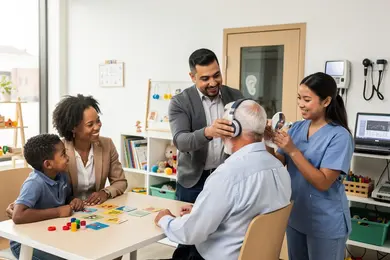
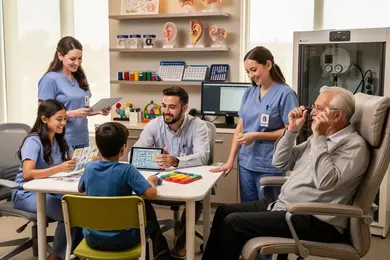
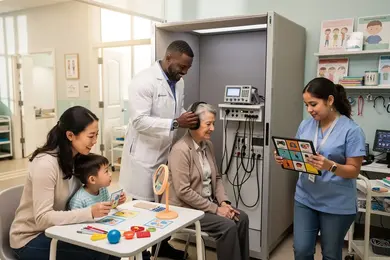
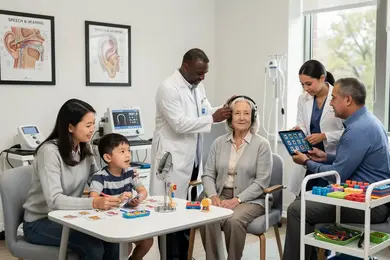
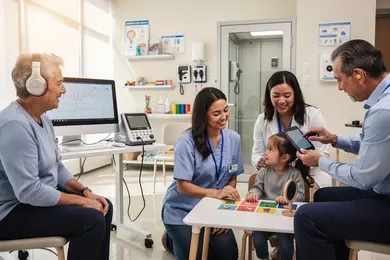
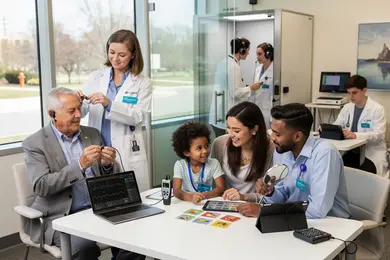
In-person clinical training is the supervised, hands-on portion of a communication disorders program in which students work directly with clients or patients in approved professional settings. These settings may include schools, hospitals, rehabilitation centers, university clinics, private practices, community agencies, or other sites where speech-language pathology or audiology services are delivered under qualified supervision.
This training is different from lectures, online coursework, role-play, simulation labs, or case-study assignments. Those activities can build knowledge and confidence, but they usually do not replace the direct client contact required by accreditation standards, certification expectations, and state licensing rules. The Council on Academic Accreditation in Audiology and Speech-Language Pathology (CAA) treats real-world clinical preparation as central to professional competence because students must demonstrate assessment, intervention, documentation, communication, ethical decision-making, and professional judgment with actual clients.
For prospective students, the main issue is not simply whether a program is online, hybrid, or campus-based. The more important question is whether the program can help you complete approved clinical hours in a way that fits your location, schedule, and licensure goals.
Why this requirement should affect your program choice
- Location can determine feasibility: Students must be able to reach approved clinical sites. Rural students or those far from clinical partners may face limited options.
- Clinical schedules are rarely fully flexible: Many sites operate during weekday business hours, which can conflict with full-time employment or caregiving duties.
- Online coursework does not mean online clinical training: A program may deliver classes remotely while still requiring in-person practicum, internship, or externship hours.
- Licensure depends on proper documentation: Hours must be supervised, recorded, and approved in the format required by the program, accreditor, and state licensing board.
- Incomplete hours can delay graduation: If a placement falls through or does not meet requirements, students may need an additional term or a new site.
Before enrolling, ask the program how placements are secured, how far students typically travel, what happens if a local site is unavailable, and whether the program has experience placing students in your state. Students comparing communication disorders with other health programs can also review related clinical education models, such as a 1 year DNP program online, while remembering that speech-language pathology and audiology requirements must be verified separately.
Is In-Person Clinical Training Legally or Professionally Required to Earn a Communication Disorders Degree?
For students seeking professional licensure or certification, supervised clinical training is not optional. Communication disorders programs are designed around professional preparation, and in-person clinical experience is typically required by a combination of accreditation standards, state licensing rules, certification expectations, and individual program policies.
The CAA establishes programmatic accreditation standards for speech-language pathology and audiology programs. These standards require supervised clinical practicum with direct client contact so students can demonstrate required competencies. State licensing boards may add their own requirements, including specific clinical hour rules, approved supervision standards, documentation procedures, and eligibility conditions for applicants who trained in another state.
This means a student can complete academic courses successfully but still be unable to graduate, qualify for certification, or pursue licensure if clinical requirements are not satisfied. In-person training is especially important because licensing boards and employers need assurance that graduates have worked with real clients under professional supervision, not only studied clinical concepts.
The three documents students should check
- Accreditation standards: Review the CAA requirements that apply to the program and degree level.
- State licensing board rules: Confirm the clinical training, supervision, and documentation rules in the state where you plan to practice.
- Program handbook: Read the school’s policies on clinical placements, background checks, health clearance, liability insurance, remediation, failed placements, and hour logging.
Do not rely only on admissions marketing language such as “fully online” or “flexible.” Ask whether the phrase applies only to coursework or also to clinical education. Also ask whether the program is authorized to place students in your state and whether graduates from your state have previously completed clinical training without relocation.
Students comparing admissions and compliance requirements across allied health fields may find it useful to review how prerequisites work in other programs, including resources that discuss do all nursing schools require the TEAS. However, communication disorders licensure and clinical training rules should always be confirmed with the relevant program and licensing board.
How Many Hours of In-Person Clinical Training Does a Typical Communication Disorders Program Require?
Clinical hour requirements vary by program, degree level, accreditor expectations, certification pathway, and state licensing rules. As a practical planning baseline, the CAA mandates a minimum of approximately 400 direct client contact hours for certification eligibility. National surveys indicate most programs require between 500 and 600 hours when practicum, internship, and related supervised experiences are combined. More intensive curricula may require upwards of 700 to 750 hours.
Students should treat these numbers as a workload issue, not just a graduation checklist. Clinical hours are usually scheduled alongside academic assignments, supervision meetings, documentation, evaluations, commuting, and site-specific training. A 600-hour requirement often translates to about 15-20 hours weekly on-site over two semesters, which can be difficult for students who plan to keep full-time employment.
How programs usually structure the hours
- Practicum: This early stage may include roughly 150-250 hours of supervised observation, guided participation, and limited direct service as students build foundational skills.
- Internship or residency: This later stage usually involves more direct client responsibility, more complex caseloads, and a larger share of the total required hours.
- Specialty exposure: Programs may require experience across age groups, communication disorders, service settings, or assessment and intervention categories.
What higher or lower hour totals may mean
- Lower-hour programs may be easier to schedule: A program closer to the minimum can reduce weekly placement demands, though students should confirm it still meets their certification and state licensure goals.
- Higher-hour programs may build broader readiness: More extensive placements can expose students to more settings and cases, but they may also increase commuting, unpaid time, and schedule pressure.
- State rules can change the calculation: A program’s requirement may satisfy one state but require additional documentation or experience for another.
One graduate described the experience this way: “Balancing 20 hours a week onsite with full-time classes and family obligations required strict time management. Some weeks felt overwhelming, especially during internship when autonomy increased but supervision time decreased. Logging every clinical hour and meeting each site’s compliance standards was critical but stressful. Despite these challenges, that hands-on experience made me confident and prepared for licensure exams and real-world practice.”
The takeaway is simple: ask for a term-by-term clinical schedule before enrolling. Knowing the total number of hours is useful, but knowing when and where those hours occur is what determines whether the program is realistic.
Can Any Part of the Communication Disorders Clinical Training Requirement Be Completed Online or Virtually?
Some clinical education activities may be completed online, but students should not assume that virtual participation can replace required in-person clinical hours. Communication disorders training includes direct assessment, intervention, counseling, documentation, collaboration, and professional decision-making with real clients. Many of those competencies must be observed by a qualified supervisor in an approved setting.
Programs may allow limited virtual components, such as supervision meetings, case conferences, documentation review, telehealth observation, or certain simulated learning activities. However, simulation labs and online exercises often support clinical preparation rather than count as full substitutes for required field-based experience.
What may be virtual versus what usually must be in person
- Often possible online: Faculty supervision meetings, case discussions, charting review, training modules, reflective assignments, and some telepractice-related learning.
- Often limited or site-dependent: Telehealth service delivery, remote observation, and simulated clinical scenarios.
- Usually not replaceable: Required supervised direct client contact when accreditation, certification, program, or state licensing rules specify in-person or approved real-world clinical experience.
During the COVID-19 pandemic, emergency allowances temporarily expanded telehealth training hours, but most of these exceptions were rolled back by 2022. Since policies continue to evolve, students should verify current rules rather than relying on pandemic-era examples, older student forums, or general statements about online learning.
Before enrolling in an online or hybrid program, ask the clinical coordinator four direct questions: how many required hours may be completed through telepractice, whether those hours are accepted in your intended state, who supervises them, and how they are documented. If the answer is vague, request the policy in writing.
Students researching broader online health education trends may also compare how remote doctoral study works in fields such as an online PhD nursing program, while recognizing that clinical licensure pathways in communication disorders remain governed by their own standards.
Who Is Responsible for Arranging Clinical Placements in a Communication Disorders Program - the Student or the School?
Responsibility for clinical placements depends on the program model. Some schools arrange placements through established site agreements and assign students to approved locations. Others require students, especially online students, to identify potential sites near their home and then submit those sites for program approval. Many programs use a shared model: the school provides rules, paperwork, and approval, while the student helps locate local opportunities.
This distinction is one of the most important questions to ask before enrollment. A program can be academically strong but still difficult to complete if it does not have placement infrastructure where you live.
School-arranged placements
- Advantages: The program usually has existing affiliation agreements, clearer vetting procedures, and better control over supervision quality.
- Risks: Available sites may be concentrated near campus or in major metro areas, and students may have limited choice over setting or schedule.
- Best for: Students who can commute to partner sites, relocate temporarily, or prioritize administrative support over location control.
Student-arranged placements
- Advantages: Students may be able to train closer to home and target settings aligned with career goals.
- Risks: Finding a qualified supervisor, completing affiliation agreements, and securing approval can take months. Rural students and students without professional networks may face more obstacles.
- Best for: Students who are organized, proactive, well-connected locally, and comfortable contacting clinics, schools, and agencies.
During admissions, ask whether the school has active clinical partners in your region, how many students have been placed there recently, what happens if no site is available, and whether you are allowed to use your current workplace. Also ask how the program verifies supervisor credentials and how long affiliation agreements usually take.
One graduate who completed student-arranged placements said, “I began contacting potential supervisors almost half a year before the placement window. It was overwhelming at times, balancing coursework while verifying supervisor credentials and securing approvals. Without a strong network in my area, every yes felt like a small victory.” Her experience shows why placement responsibility should be treated as a program-selection factor, not an afterthought.
How Do Accreditation Standards Shape the In-Person Clinical Training Requirements of Communication Disorders Programs?
Accreditation standards define the minimum quality expectations for clinical preparation. In communication disorders, programmatic accreditation is especially important because it connects academic coursework, supervised clinical training, certification eligibility, and state licensure readiness. Regional accreditation applies to the institution as a whole, while programmatic accreditation evaluates whether the specific communication disorders program prepares students for professional practice.
The CAA’s standards influence how many hours students complete, who may supervise them, what types of clients they must serve, how competencies are evaluated, and how records are maintained. Programs that fail to meet these expectations can put students at risk of delayed graduation, certification problems, or licensure barriers.
Key accreditation-related requirements students should understand
- Clinical hour expectations: Programs must document supervised clinical experiences, usually over 400 hours, with direct client interaction forming a central part of training.
- Supervisor credentials: Supervisors are expected to hold appropriate state licensure and commonly ASHA certification or an equivalent credential recognized by the program and relevant regulators.
- Supervision quality: Programs must ensure students receive meaningful oversight, feedback, and evaluation rather than simply counting time at a site.
- Supervision ratios: Programs may maintain low ratios, often around one supervisor per three students, to support individualized guidance.
- Setting and population diversity: Students generally need exposure to different service environments, client ages, disorders, and clinical tasks.
- Documentation standards: Hours, competencies, supervisor approvals, evaluations, and site details must be recorded accurately.
- Enforcement: Noncompliance can threaten programmatic accreditation, which may affect graduates’ ability to pursue national certification exams and state licensure.
Prospective students should verify accreditation status through the appropriate directory, ask whether the program has any current accreditation warnings or conditions, and confirm that the program’s clinical model is accepted by the state where they plan to practice. This is especially important for online students completing placements outside the state where the university is located.
What Types of Clinical Settings Are Accepted for Communication Disorders Clinical Training Hours?
Accepted clinical settings are those that provide supervised, relevant, direct experience with individuals who have communication, speech, language, swallowing, hearing, cognitive-communication, or related needs. The setting must be approved by the program, meet supervision requirements, and allow the student to complete and document appropriate clinical activities.
Commonly accepted settings
- Healthcare systems: Hospitals, rehabilitation centers, outpatient clinics, specialty medical sites, and integrated care settings.
- Schools: Public and private K-12 schools where licensed professionals provide speech and language services.
- Private practices: Individual or group practices operated by qualified speech-language pathologists or audiologists.
- University clinics: Campus-based clinics that serve community clients while providing structured supervision for students.
- Government agencies: Department of Veterans Affairs sites, state-funded early intervention programs, and other public service settings.
- Community mental health centers: Facilities serving clients whose communication needs may overlap with developmental, neurological, or behavioral health conditions.
- Nonprofit organizations: Community clinics or service organizations focused on underserved populations or specialized needs.
- Specialized care centers: Sites serving populations such as clients with autism, traumatic brain injury, developmental disabilities, or complex medical needs.
- Telepractice environments: These may be accepted only when program, accreditation, supervision, and state licensing rules allow the experience to count.
The setting alone is not enough. The supervisor must be properly credentialed, available for required supervision, willing to complete evaluations, and approved by the program before the student begins. Hours completed before approval may not count.
How to evaluate a potential site
- Check supervisor eligibility: Confirm licensure, certification, experience, and willingness to meet supervision requirements.
- Confirm client access: The site should offer enough appropriate client contact to help you complete required hours on schedule.
- Review setting fit: Choose sites that support your career goals while still satisfying required breadth across populations and disorders.
- Ask about compliance steps: Hospitals, schools, and government agencies may require different background checks, health records, training modules, or onboarding timelines.
- Get program approval early: Do not begin logging hours until the program confirms the site and supervisor are approved.
Students in smaller markets should create a ranked list of possible sites early and discuss it with the clinical coordinator. A broad site policy can improve placement flexibility, while a narrow approved-site list may increase the chance of delay.
How Does In-Person Clinical Training in a Communication Disorders Program Affect Students Who Work Full-Time?
In-person clinical training can be the hardest part of a communication disorders program for students who work full-time. Most clinical sites operate during standard weekday business hours, typically 8 a.m. to 5 p.m. Evening and weekend placements may exist, but they are not guaranteed and may not offer enough client contact or qualified supervision to satisfy program requirements.
The challenge is not only the number of hours. Students must also account for commuting, preparation, documentation, supervision meetings, site orientations, background checks, and unpredictable schedule changes. Data from the NACE First-Destination Survey and research on adult learner completion rates highlight these common challenges.
Common conflicts for full-time workers
- Work hours overlap with clinic hours: A traditional workday may conflict directly with school, hospital, or clinic schedules.
- Paid leave may run out: Clinical placements often require sustained weekly availability rather than a short absence from work.
- Employer support varies: Some employers allow flexible schedules, while others cannot accommodate repeated daytime absences.
- Clinical intensity may increase over time: Later internships or residencies can require more hours and more responsibility than early practicum experiences.
- Delays can be expensive: If work prevents completion of required hours, students may need to extend enrollment.
Program features that can help working adults
- Extended timelines: Some programs allow students to spread clinical hours over additional semesters.
- Flexible placement options: A program with evening, weekend, or varied-site partners may better support employed students.
- Employer-partnered placements: In some cases, students may complete hours at a current workplace if supervision, role boundaries, and program approval requirements are met.
- Leave-of-absence policies: Clear policies can help students pause or sequence coursework around intensive clinical phases.
- Strong clinical advising: Early planning with a clinical coordinator can prevent conflicts from becoming graduation delays.
Before enrolling, ask what percentage of students complete clinical training while working full-time, whether placements are available outside standard weekday hours, and whether the program has a recommended employment limit during clinical semesters. Students comparing career pathways in other healthcare fields may also review clinical-transition resources such as a CCMA to LPN bridge program, but communication disorders students should base their decision on the specific placement demands of their program.
Do Hybrid or Online Communication Disorders Programs Still Require In-Person Clinical Training?
Yes. Hybrid and online communication disorders programs still generally require in-person clinical training. Online delivery can make academic coursework more accessible, but it does not remove the need for supervised, real-world clinical experience required for professional preparation, certification eligibility, and state licensure.
Most online programs use a distributed clinical training model. Students complete lectures, discussions, exams, and some advising remotely, then complete clinical hours at approved sites near their residence or within the program’s placement network. A qualified local supervisor observes and evaluates the student, while the university tracks approval, compliance, competencies, and documentation.
What online students should verify before enrolling
- Placement responsibility: Find out whether the school secures sites, expects students to find them, or uses a shared process.
- State authorization: Confirm that the program can support students in your state and that its clinical model aligns with your intended licensing board.
- Local site history: Ask whether students in your region have recently completed placements successfully.
- Supervisor vetting: Review how the program checks credentials, supervision availability, and site quality.
- Travel expectations: Determine whether you may need to travel, commute long distances, or attend campus-based intensive sessions.
- Documentation systems: Ask how hours are logged, approved, audited, and corrected if a discrepancy occurs.
The advantage of online programs is flexibility in where and how students complete academic coursework. The trade-off is that clinical placement quality can vary by region, and students may need to be more proactive about local logistics. If affordability is a major factor in choosing an online pathway, compare tuition and placement support together when reviewing the cheapest online slp programs.
Students evaluating distance education in other health professions can also review resources such as best online registered dietitian programs for examples of programs that combine online coursework with supervised experiential requirements. Still, every communication disorders student should confirm the exact clinical rules that apply to their degree, state, and career goal.
How Far in Advance Do Communication Disorders Students Typically Need to Secure Their Clinical Placement Sites?
Communication disorders students should usually begin preparing for clinical placement at least six to nine months before the clinical semester begins. This timeline gives students and programs enough time to identify sites, confirm supervisor eligibility, complete affiliation agreements, finish compliance requirements, and resolve problems before hours are scheduled to start.
Starting late can create serious consequences. Placement slots may already be filled, background checks may not clear in time, affiliation agreements may stall, or required health documentation may be missing. Any of these issues can delay a placement and extend the time to graduation.
A practical backward-planning timeline
- 8-9 months ahead: Identify possible sites, review program rules, discuss geographic constraints, and contact the clinical placement office.
- 6-7 months ahead: Complete site applications, interviews, and initial supervisor conversations.
- About 5 months ahead: Finalize supervisor agreements, affiliation paperwork, liability insurance steps, and program approvals.
- 3-4 months ahead: Complete background checks, health clearances, immunization documentation, drug testing if required, and site-specific onboarding.
- Before the start date: Confirm the schedule, supervision plan, documentation system, emergency procedures, and the exact date when hours may begin counting.
Students in rural areas, competitive metro areas, or states where the program has fewer established partners should start even earlier. The same is true for students who need evening or weekend hours, plan to use a workplace as a site, or require accommodations that must be approved before placement.
What Background Check, Health, and Liability Requirements Must Communication Disorders Students Meet Before Starting Clinical Training?
Before starting clinical training, communication disorders students usually must complete several compliance steps required by the program, clinical site, or state. These requirements protect clients, students, supervisors, and institutions. They can also take longer than expected, so students should begin as soon as the program allows.
Common pre-clinical requirements
- Background checks: These screen for criminal history and help determine whether a student may work with vulnerable populations. Processing can require two to eight weeks.
- Fingerprinting: School placements, government agencies, or certain healthcare sites may require state-specific fingerprinting.
- Health clearance: Students may need documentation from a healthcare provider confirming they meet site health requirements.
- Immunization records: Sites may require proof of MMR, varicella, hepatitis B, and seasonal flu shots.
- TB screening: Many healthcare and school sites require tuberculosis screening before client contact.
- Drug testing: Hospitals and some clinical agencies may require drug screening before onboarding.
- N95 respirator fit testing: Certain healthcare settings may require fit testing based on infection control policies.
- Professional liability insurance: Students may need malpractice coverage before they can enter a clinical setting.
- HIPAA training: Students must understand privacy obligations before accessing protected health information.
- Site orientation: Individual sites may require training on safety, documentation systems, emergency procedures, mandated reporting, or infection control.
Requirements can differ sharply by setting. A hospital may require drug testing, flu vaccination, and respirator fit testing, while a school may require child abuse clearances, fingerprinting, or district-specific training. Students should not assume that meeting the university’s minimum requirements is enough for every site.
Keep digital and paper copies of all records, track expiration dates, and budget for compliance costs. Most importantly, do not wait until a placement is confirmed to look for childhood immunization records or schedule health appointments. Missing paperwork can prevent a student from starting on time even when the site and supervisor are approved.
What Graduates Say About the Communication Disorders Programs That Require In-Person Clinical Training
- : "“One aspect that truly stood out to me was the strict accreditation mandates requiring specific in-person clinical training hours before graduation. Navigating these requirements was initially overwhelming, but it ultimately ensured that I was well-prepared for real-world scenarios. The hands-on experience made all the difference when pursuing my licensure, something I deeply appreciate now.” — Patrice"
- : "“Reflecting on my time in the online communication disorders program, the required clock hours for clinical training were not just a formality. They were essential milestones that shaped my skill set. Coordinating placement logistics across different cities was challenging, yet it taught me resilience and adaptability. These experiences collectively boosted my confidence going into professional certification exams.” — Celine"
- : "“One practical challenge I faced involved geographic constraints tied to my clinical placement. Finding an approved site close enough was critical to complying with program standards. This limitation underscored for me how important the in-person training component is, especially since it directly impacts licensure eligibility. Ultimately, the program’s structure equipped me with both knowledge and an appreciation for the profession’s rigorous demands.” — Jan"
Other Things You Should Know About Communication Disorders Degrees
The geographic location of a communication disorders program plays a significant role in the accessibility and quality of clinical training sites. Urban areas tend to offer a broader range of clinical placements, including hospitals, schools, and private practices, which provide diverse client populations and treatment settings. In contrast, rural or remote locations may have fewer available sites, limiting students' opportunities to encounter varied cases and potentially prolonging their time to complete required hours.
In 2027, students unable to complete in-person clinical hours may have alternatives such as virtual simulations or temporary waivers. However, these are typically subject to program-specific policies and accreditation requirements. Students should discuss options with academic advisors to ensure compliance with graduation and licensure standards.
Completion of in-person clinical training is a mandatory benchmark for eligibility to sit for national certification exams, such as those administered by the American Speech-Language-Hearing Association, and for obtaining state licensure. Documentation of supervised clinical hours-commonly 400 clock hours-is required to demonstrate competency. Failure to complete these hours in person can delay or prevent licensure, restricting graduates from practicing professionally in most settings.
Prospective students should inquire about the number, variety, and locations of clinical training sites affiliated with the program. It is important to assess whether these sites meet accreditation guidelines and provide opportunities to work with diverse client populations. Additionally, students should confirm whether the program offers support for logistical concerns such as background checks, transportation, and hour documentation to ensure smooth completion of clinical requirements. Reviewing past student placement success and retention data can also provide valuable insights.
References
- U.S. Bureau of Labor Statistics - Speech-Language Pathologists https://www.bls.gov/ooh/healthcare/speech-language-pathologists.htm
- ASHA EdFind - Accredited Speech-Language Pathology Programs https://find.asha.org/ed/
- Audiology and Speech-Language Pathology Interstate Compact https://aslpcompact.com/compact-map/
- Pennsylvania Western University - Master of Science in Speech-Language Pathology https://online.pennwest.edu/programs/speech-language-pathology-grad/index.php
- Baylor University - Master of Science in Speech-Language Pathology (Online) https://csd.robbins.baylor.edu/graduate/online-csd-graduate-program
- Abilene Christian University - Master of Science in Speech-Language Pathology (Online) https://acu.edu/academics/graduate/master-of-science-in-speech-language-pathology/
- Nova Southeastern University - SLP Program - Master of Science in Speech-Language Pathology https://osteopathic.nova.edu/degrees/masters/speech-language-pathology/index.html
- Pepperdine University - Master of Science in Speech-Language Pathology https://healthscience.pepperdine.edu/online-masters-in-speech-language-pathology/