2027 Does a Communication Disorders Degree Require Internships or Clinical Hours?

Co-Founder and Chief Data Scientist

Reviewed by Rhea Paul, PhD
SLP Education & Research Expert
Choosing a communication disorders degree means planning for more than lectures, exams, and research papers. If your goal is to become a speech-language pathologist, audiologist, or another clinical communication professional, supervised practice is usually part of the path. These experiences affect your schedule, tuition planning, work availability, graduation timeline, and readiness for licensure or certification.
According to the American Speech-Language-Hearing Association, over 90% of accredited programs require supervised clinical experience to ensure graduates meet professional competency standards. The demand for qualified speech-language pathologists is growing at 21% annually, which makes practical preparation especially important for students entering the field.
This guide explains when internships or clinical hours are required in communication disorders programs, how requirements differ by degree level and format, whether placements are paid, and what students should ask before enrolling.
Key Things to Know About Communication Disorders Degree Internships or Clinical Hours
- Most communication disorders degrees require completion of clinical hours or internships to ensure hands-on experience essential for certification and licensure in speech-language pathology or audiology.
- Online programs typically coordinate local clinical placements, while campus-based courses integrate supervised on-site experiences, both adhering to strict hour and competency standards.
- Practical requirements often extend program duration but significantly improve career readiness, with over 90% of graduates reporting positive employment outcomes within a year post-completion.
Does a Communication Disorders Degree Require Internships or Clinical Hours?
Yes, a communication disorders degree usually requires supervised clinical hours, especially at the graduate level and especially for students preparing for speech-language pathology or audiology licensure. In many programs, clinical training is not an optional add-on; it is built into the degree plan because students must demonstrate that they can assess, diagnose, document, and treat real clients under qualified supervision.
For students pursuing the Certificate of Clinical Competence (CCC), graduate training commonly includes a minimum of 400 supervised clinical clock hours. These hours combine observation and direct client contact, and they help satisfy the communication disorders degree clinical hours requirement used by many accredited programs and professional pathways.
Clinical hours usually begin after students complete foundational coursework in areas such as language development, phonetics, speech and hearing science, anatomy, assessment methods, and intervention planning. Programs may place students in university clinics first, then move them into external settings such as schools, hospitals, outpatient clinics, rehabilitation centers, and community agencies.
Students comparing programs should look beyond whether clinical hours are required and ask how those hours are arranged. Important questions include:
- Who secures placements? Some programs assign sites, while others expect students to help identify approved local options.
- When do clinical hours begin? Earlier placements may build confidence, but they can also increase workload sooner.
- What settings are available? A wider range of placements can help students clarify whether they prefer pediatric, adult, medical, school-based, or rehabilitative practice.
- How is supervision handled? Students should confirm that supervisors meet program, accreditation, and licensing expectations.
Students who need geographic flexibility can also compare campus-based programs with fully online slp master's programs that still require approved in-person clinical experiences.
Are Internships Paid or Unpaid in Communication Disorders Programs?
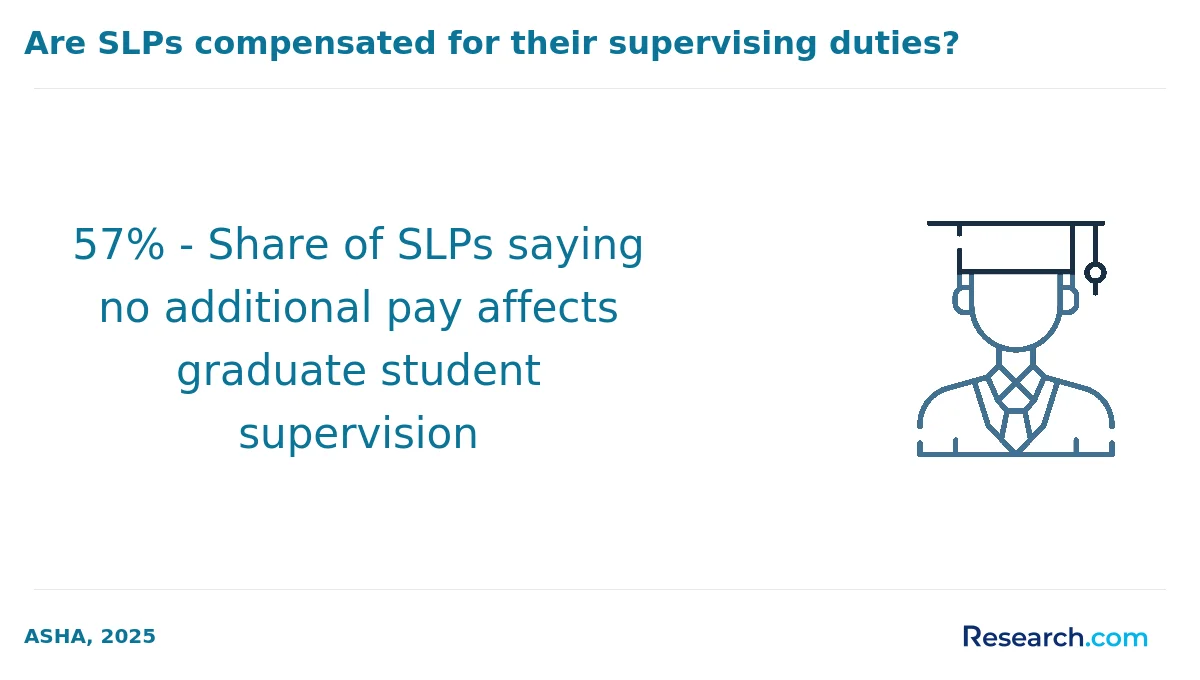
Communication disorders internships and clinical placements are typically unpaid because they are treated as supervised academic training rather than employment. This is an important budgeting issue: even when a placement does not charge a separate fee, students may need to reduce work hours, travel to a site, pay for background checks or immunizations, and buy professional clothing or materials.
Only about 20% of communication disorders internships provide financial compensation. Paid opportunities are more likely to appear when a placement is grant-funded, tied to a specific workforce initiative, or structured as an assistant-level role that meets both employer and academic requirements. Even then, students should not assume pay will be available.
When evaluating paid vs unpaid internships in communication disorders, consider the full cost of the experience:
- Lost wages: A placement may be unpaid and scheduled during regular work hours, which can affect students who rely on employment income.
- Transportation and location: Rural placements, medical sites, and school districts may require commuting or temporary schedule changes.
- Required clearances: Some sites require background checks, drug screening, health records, fingerprinting, or liability coverage.
- Academic credit: Unpaid placements may still be required for degree completion, certification preparation, and clinical competency development.
- Stipends: A stipend is not the same as a wage. Students should ask whether it is guaranteed, how it is paid, and whether it depends on site funding.
Students should ask admissions or clinical placement staff for a clear list of expected out-of-pocket costs before enrolling. For broader cost comparisons across online education options, Research.com also provides resources on online business colleges.
What Is the Difference Between Internships or Clinical Hours in Communication Disorders Degree Levels?
The role of internships and clinical hours changes significantly by degree level. A bachelor’s program often introduces students to the field, while graduate and doctoral programs usually carry the heavier clinical responsibility needed for professional practice.
| Degree level | Typical clinical focus | What students should expect |
| Bachelor's | Observation and field exposure | Students may observe professionals, complete service-learning activities, assist with non-clinical tasks, or learn how communication disorders services are delivered. Direct independent clinical practice is usually limited. |
| Master's | Supervised assessment and intervention | Clinical hours become central to the program. Students work directly with clients under supervision and build skills in documentation, treatment planning, diagnostics, and ethical decision-making. |
| Doctoral | Advanced practice, specialization, leadership, or research | Clinical experiences may involve complex cases, advanced diagnostics, specialty populations, supervision, research integration, or preparation for senior clinical and academic roles. |
At the bachelor’s level, communication disorders coursework can help students decide whether they want to pursue graduate study in speech-language pathology, audiology, or a related field. However, students should not assume a bachelor’s degree alone will meet clinical practice requirements for licensed roles.
At the master’s level, supervised clinical hours are typically one of the most important parts of the program. Students may rotate through multiple settings so they can work with different ages, diagnoses, service models, and documentation systems.
At the doctoral level, clinical expectations depend on the degree type and professional goal. Some students pursue advanced clinical specialization, while others focus on research, teaching, program leadership, or a combination of clinical and scholarly work.
Students comparing career pathways outside communication sciences may also review Research.com’s guide to a library science degree.
How Do Accelerated Communication Disorders Programs Handle Internships or Clinical Hours?
Accelerated communication disorders programs usually do not reduce clinical expectations. Instead, they compress coursework and supervised practice into a shorter schedule. Students may begin clinical experiences earlier, take heavier course loads, attend summer terms, or complete rotations in concentrated blocks.
About 30% of U.S. communication disorders programs offer accelerated tracks that integrate clinical hours. These options can appeal to students who want to enter the workforce sooner, but the faster timeline can make planning more difficult. A shorter program may leave less room for illness, family responsibilities, part-time employment, or placement delays.
Common features of accelerated clinical scheduling include:
- Earlier clinical entry: Students may start observation or supervised practice sooner than they would in a traditional track.
- Block scheduling: Programs may assign intensive clinical days or weeks to help students accumulate hours efficiently.
- Overlap with exams and coursework: Students may need to manage client sessions, documentation, readings, and major assessments at the same time.
- Less schedule flexibility: Missing a placement window can be harder to recover in a compressed calendar.
- More advising support: Strong programs often provide close advising to help students avoid falling behind on both coursework and clinical milestones.
A graduate from an accelerated communication disorders program described the overlap of coursework and clinical commitments as “challenging but rewarding.” He said the most difficult weeks occurred when intensive clinical hours coincided with major exams. “I had to become very disciplined with my schedule,” he recalled, “but having advisors who understood the program's pace made a big difference.” His experience reflects a common trade-off: accelerated programs can shorten time to completion, but they require strong organization and dependable support.
Are Internship Requirements the Same for Online and On-Campus Communication Disorders Degrees?
In most cases, online and on-campus communication disorders programs follow the same clinical standards when they prepare students for the same professional pathway. Course delivery may differ, but supervised clinical practice still must occur in approved real-world or clinic-based settings. Students in both formats should expect hundreds of supervised hours, direct client interaction, and formal evaluation of their clinical skills.
Online enrollment in health-related fields, including communication disorders, has increased by over 60% in recent years. That growth has made remote coursework more common, but it has not removed the need for in-person clinical training. Communication disorders is a practice-based field, and students must learn how to interact with clients, caregivers, teachers, medical teams, and supervisors in professional settings.
The main difference is logistics. Online students may complete placements near their homes, which can make the degree more accessible for students who cannot relocate. However, online learners should ask how much placement support the school provides, whether local sites are already approved, and what happens if a nearby placement cannot be found.
On-campus students may have easier access to university clinics, faculty supervisors, and established local partnerships. The trade-off is that placements may be tied to the school’s region, which can limit flexibility for students who live far from campus or need a specific setting.
| Program format | Clinical requirement | Common advantage | Common challenge |
| Online | Generally equivalent to on-campus requirements for the same credential goal | Potential to complete placements near home | Student may need to coordinate with the program to secure approved sites |
| On-campus | Generally equivalent to online requirements for the same credential goal | Access to campus clinics and local institutional partnerships | Less geographic flexibility if placements are concentrated near campus |
How Do Communication Disorders Degree Specialization Choices Affect Internship Requirements?
Specialization can strongly shape where students complete internships, what populations they serve, and how their clinical hours are distributed. A student focused on speech-language pathology may need experience across schools, medical settings, pediatric services, adult rehabilitation, or outpatient care. A student focused on audiology may complete more specialized placements in hearing clinics, diagnostic centers, cochlear implant programs, or research-oriented environments.
Over 75% of communication disorders students choose speech-language pathology. That concentration often leads programs to build structured clinical pathways around speech and language assessment, treatment planning, school-based services, swallowing-related exposure where applicable, and lifespan communication needs.
Students should choose a specialization with clinical requirements in mind, not just course titles. The right placement mix can help a student become more competitive for a preferred role, while a poor fit can make the program feel disconnected from the student’s career goals.
Key specialization-related questions include:
- Which client populations will I serve? Programs may emphasize children, adults, medical populations, school-based services, or mixed caseloads.
- Will I rotate through multiple settings? Diverse placements can help students build adaptable skills and confirm career preferences.
- Are specialty sites available? Students interested in areas such as hearing services, rehabilitation, fluency, voice, or neurogenic disorders should ask about placement access before enrolling.
- How competitive are placements? High-demand settings may have limited openings or additional requirements.
- Will the experience support certification or licensure goals? Students should confirm that specialization requirements align with the credential they plan to pursue.
Students comparing long-term financial outcomes across undergraduate majors can also review Research.com’s data on the highest paying bachelor degrees.
Can Work Experience Replace Internship Requirements in a Communication Disorders Degree?
Prior work experience may help a student prepare for clinical training, but it usually does not fully replace required internships or supervised clinical hours in a communication disorders degree. Programs tied to licensure, certification, or accreditation generally require documented clinical learning under approved supervision, even when a student already has related employment experience.
Some programs may consider relevant work experience for limited credit, placement planning, prerequisite review, or competency assessment. This is more likely when the experience is recent, clearly documented, directly related to communication disorders, and supervised by qualified professionals. Examples may include work as a speech-language pathology assistant, audiology technician, classroom aide in a communication-focused setting, or rehabilitation support worker.
Students should not rely on assumptions. Before enrolling, ask the program for its written policy on prior experience and clinical substitutions. Important documentation may include job descriptions, supervisor letters, employment dates, client population details, training records, and evidence of supervised duties.
Even when work experience is accepted in some form, students may still need to complete formal clinical hours to satisfy program, accreditation, or licensing expectations. This can feel frustrating for experienced workers, but formal placements often expose students to new populations, documentation standards, ethical requirements, and evaluation methods that may not be part of their current job.
One graduate described the process as both demanding and useful. She had years of relevant work but still needed to document her experience and complete additional clinical hours. “It felt like proving myself all over again,” she reflected, “but the structure helped me build confidence in areas I hadn't fully explored on the job.”
How Long Do Internships or Clinical Rotations Last in a Communication Disorders Degree?
Internships and clinical rotations in communication disorders programs typically require students to complete between 400 and 450 hours, often over 8 to 16 weeks. About 75% of accredited programs mandate a minimum of 400 clinical hours. The exact timeline depends on the degree level, program calendar, placement setting, specialization, and whether the rotation is part-time or full-time.
Common clinical rotation formats include:
- Semester-long rotations: These usually last 12 to 16 weeks and allow students to build hours gradually while managing coursework. They are common in traditional academic calendars.
- Short-term rotations: These often last 4 to 6 weeks and may focus on a specific population, setting, or skill area. They can be intensive and may require more concentrated availability.
- Extended clinical placements: These may span an entire academic year and combine multiple experiences or specialties. They can provide deeper continuity with clients and supervisors.
Students should ask whether hours are scheduled weekly, in blocks, during business hours, in evenings, or across multiple sites. A program that looks manageable on paper may be difficult if clinical hours conflict with work, caregiving, commuting, or other obligations.
Before committing to a program, clarify these timing details:
- Minimum and expected hours: Ask whether most students finish at the minimum or need additional hours to meet competencies.
- Placement calendar: Confirm whether clinical work continues during summer, breaks, or condensed terms.
- Travel expectations: Some students may need to commute to multiple locations.
- Make-up policies: Illness, site closures, and supervisor availability can affect completion timelines.
- Graduation impact: Delayed clinical hours can delay degree completion even if coursework is finished.
Does Completing Internships Improve Job Placement After a Communication Disorders Degree?
Yes, internships and clinical hours can improve job placement after a communication disorders degree because they give employers evidence that a graduate can perform in real service settings. A study by the National Association of Colleges and Employers (NACE) found that 60% of employers prefer candidates with relevant internship experience.
In communication disorders, clinical experience is especially important because employers often need graduates who can work with clients, document services, collaborate with teams, follow ethical standards, and respond professionally to feedback. Coursework shows knowledge; clinical training shows how that knowledge is applied.
Internships and clinical placements can support job outcomes in several ways:
- They build a practical resume: Students can describe the settings, populations, and clinical tasks they completed instead of relying only on classroom achievements.
- They create professional references: Supervisors can speak directly to a student’s reliability, communication skills, clinical growth, and readiness for entry-level work.
- They clarify career direction: A student may discover a preference for schools, hospitals, outpatient clinics, early intervention, adult rehabilitation, or another setting.
- They reduce employer uncertainty: Documented hands-on experience can reassure employers that a new graduate understands real workplace expectations.
- They may lead to offers: Some placements become employment pipelines when sites hire students who have already trained with them.
Students should evaluate a program’s clinical network as carefully as its curriculum. Strong placement support, varied sites, and responsive supervision can make the difference between simply completing hours and building a job-ready professional profile.
Students who need flexible academic options while planning for clinical training may also review Research.com’s guide to online degree programs.
Do Employers Pay More for Communication Disorders Graduates With Hands-On Experience?
Graduates with hands-on experience in communication disorders often earn higher starting salaries, with studies showing about a 10% increase compared to those without clinical or internship exposure. The reason is practical: employers tend to value candidates who need less basic onboarding, understand client-facing work, and can show documented experience in supervised settings.
That said, clinical hours do not automatically guarantee higher pay. Salary can also depend on degree level, license eligibility, setting, geographic area, specialization, union or district pay scales, employer budget, and whether the role is in speech-language pathology, audiology, education, healthcare, or another related area.
Hands-on experience may influence compensation in several ways:
- Employer confidence: Clinical experience signals that a graduate has practiced assessment, intervention, documentation, and professional communication under supervision.
- Stronger interviews: Students with clinical placements can give concrete examples of client interactions, problem-solving, teamwork, and ethical decision-making.
- Negotiation support: Documented experience may help a candidate explain why they are prepared for a role, although many entry-level salaries still follow fixed pay structures.
- Specialized exposure: Experience with pediatric, medical, neurological, hearing-related, or school-based populations may align with employer needs.
- Reduced training burden: Employers may see experienced graduates as easier to integrate into active caseloads.
Students should treat clinical hours as both a credential requirement and a career-building opportunity. Keeping a record of placement settings, client populations, supervisor feedback, competencies, and completed projects can make it easier to present that experience during applications and interviews.
What Graduates Say About Their Communication Disorders Degree Internships or Clinical Hours
- Loren: "Completing my internship online as part of the communication disorders degree was surprisingly seamless and affordable, especially compared to traditional programs. The average cost of attendance was reasonable, which made it accessible without sacrificing quality. This hands-on experience was invaluable, directly enhancing my confidence and skills as a speech-language pathologist."
- Massimo: "The internship component of my online communication disorders program was a game-changer, offering real-world practice that justified the moderate expenses involved. Reflecting back, the investment of time and money was well worth it given the professional growth I experienced. It truly bridged academic knowledge with practical application in my daily work with clients."
- Angelique: "From a professional standpoint, the internship requirement in my communication disorders degree program provided a critical foundation that couldn't be gained through coursework alone. While the cost was somewhat higher than I anticipated, it was an essential step that propelled my career forward and opened up numerous job opportunities. I'm grateful for the flexibility of completing it online without compromising on quality."
Other Things You Should Know About Communication Disorders Degrees
Yes, in 2027, licensure requirements for communication disorders graduates vary by state and often include passing specific exams. Additionally, states may mandate continuing education and background checks. It's important for graduates to review the specific requirements of the state where they intend to practice to ensure compliance.
During clinical hours, students receive direct supervision from licensed professionals, often certified speech-language pathologists or audiologists. This supervision ensures that students apply theoretical knowledge correctly while developing practical skills. Supervisors also provide feedback to refine assessment and treatment techniques crucial for professional competence.
A typical Communication Disorders degree program includes coursework in speech-language pathology and audiology, clinical practicum experiences, internships, and sometimes a capstone project. Clinical hours often take place in diverse settings such as schools, hospitals, and private practices to provide comprehensive training.
References
- U.S. Bureau of Labor Statistics - Speech-Language Pathologists https://www.bls.gov/ooh/healthcare/speech-language-pathologists.htm
- ASHA EdFind - Accredited Speech-Language Pathology Programs https://find.asha.org/ed/
- ETS Praxis - Speech-Language Pathology (5331) https://praxis.ets.org/test/speech-language-pathology-5331.html
- Pennsylvania Western University - Master of Science in Speech-Language Pathology https://online.pennwest.edu/programs/speech-language-pathology-grad/index.php
- Abilene Christian University - Master of Science in Speech-Language Pathology (Online) https://acu.edu/academics/graduate/master-of-science-in-speech-language-pathology/
- Auburn University, Montgomery - Master of Science in Speech-Language Pathology https://www.aum.edu/degree/ms-speech-language-pathology/
- University of Nebraska at Kearney - Speech-Language Pathology, Master of Science in Education (Online Track) https://www.unk.edu/online/degrees-programs/speech-language-pathology-online.php
- New York University - Online MS, Communicative Sciences and Disorders (Speech@NYU) https://steinhardt.nyu.edu/degree/online-ms-communicative-sciences-and-disorders