
2027 How to Compare Communication Disorders Degree Programs Effectively

Co-Founder and Chief Data Scientist

Reviewed by Rhea Paul, PhD
SLP Education & Research Expert
Comparing communication disorders degree programs is not just about finding a school with the right major. The better question is whether a program can prepare you for the career you want, meet accreditation and licensure expectations, fit your schedule, and justify its total cost. This matters because communication disorders programs can differ sharply in clinical training, faculty focus, research opportunities, online flexibility, and graduate outcomes.
For students considering speech-language pathology, audiology, school-based services, healthcare roles, or future graduate study, these differences can affect admission chances, clinical readiness, certification eligibility, and long-term return on investment. According to the American Speech-Language-Hearing Association, employment in this field is projected to grow 17% from 2025 to 2035, which makes program selection especially important for students entering a competitive but expanding professional area.
This guide explains how to compare communication disorders degree programs using the factors that matter most: accreditation, specialization options, curriculum quality, scheduling formats, online versus campus trade-offs, GPA expectations, tuition, licensure alignment, career placement, salary outcomes, and graduate perspectives.
Key Benefits of Comparing Communication Disorders Degree Programs Effectively
- Verify program accreditation by the Council on Academic Accreditation to ensure graduates meet licensure and certification requirements in speech-language pathology or audiology fields.
- Assess curriculum relevance, focusing on specialization options like pediatric or adult speech disorders, reflecting your career goals and current industry demands.
- Consider cost versus return on investment, noting that employment rates for communication disorders graduates exceed 85% within a year of completion.
What Types of Accreditation Should a Communication Disorders Degree Program Have?
A communication disorders program should be backed by the right institutional and, when applicable, programmatic accreditation. Accreditation is one of the clearest signals that a school meets recognized academic standards and that its coursework, faculty qualifications, student support, and clinical preparation have been externally reviewed. More than 85% of employers prefer candidates who graduate from accredited programs, which makes this a practical screening factor rather than a formality.
Key accreditation types to check
- CAA Programmatic Accreditation: The Council on Academic Accreditation in Audiology and Speech-Language Pathology (CAA) reviews graduate programs in audiology and speech-language pathology. For students pursuing professional licensure or certification, CAA accreditation is especially important because it can affect eligibility for clinical credentials, state licensing pathways, and employer confidence.
- Regional Accreditation: Regional accreditation applies to the college or university as a whole. It matters for credit transfer, access to federal financial aid, graduate school admission, and employer recognition. A communication disorders program at a non-regionally accredited institution may create problems later, even if the program description sounds strong.
- Licensure Readiness and Employer Trust: Accreditation does not automatically guarantee licensure in every state, but it is often a major part of the eligibility pathway. Students should verify that the program’s curriculum and supervised clinical experiences match the requirements in the state where they plan to work.
Before applying, review the school’s accreditation page, confirm the accreditor directly through the accrediting agency, and ask the department whether graduates meet requirements for the credential or license you intend to pursue. Students comparing adjacent or related fields, including BCBA master's programs online, should use the same approach: verify accreditation first, then compare cost, format, and outcomes.
What Specializations Are Offered in Communication Disorders Degree Programs?
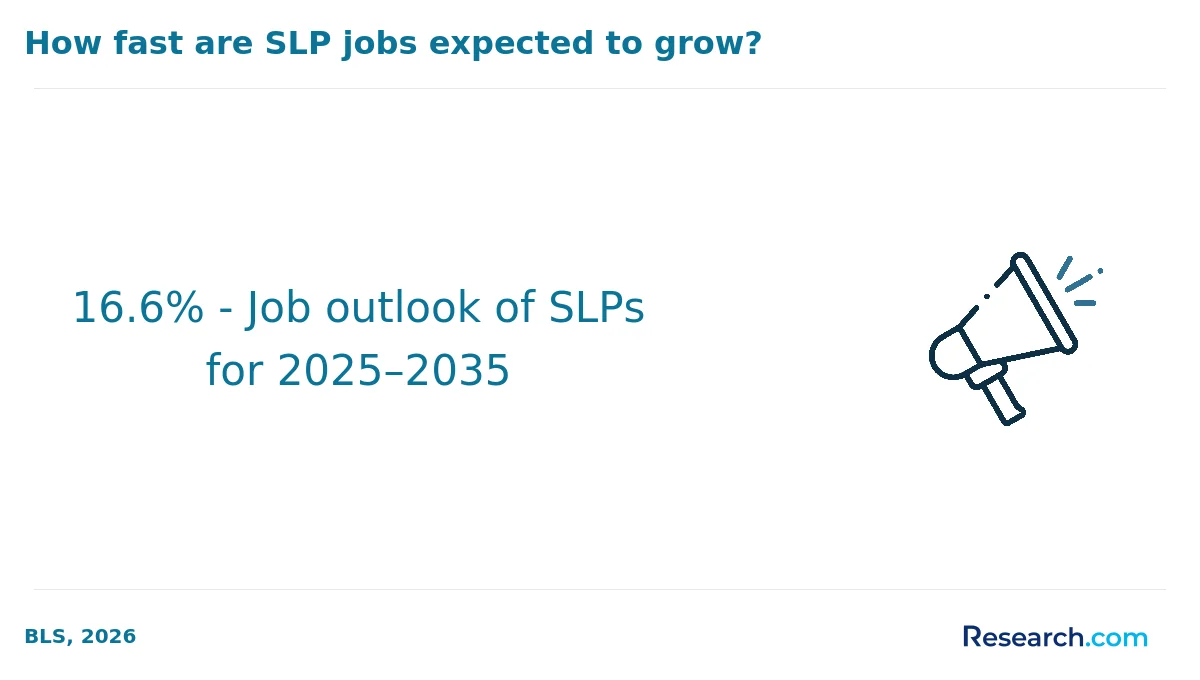
Communication disorders degree programs may offer broad foundational training or more focused academic tracks tied to specific populations, disorders, or career settings. Choosing a specialization helps you connect coursework and clinical experiences to a realistic career goal. Employment of speech-language pathologists, one of the most common career outcomes in this field, is projected to grow by 17% from 2025 to 2035.
Common specialization areas
- Speech-Language Pathology: This track focuses on speech, language, communication, cognition, and swallowing disorders. Students typically study assessment, intervention planning, language development, speech sound disorders, fluency, and clinical documentation. It is often the most relevant pathway for students who want to work in schools, hospitals, rehabilitation centers, private clinics, or early intervention programs.
- Audiology: Audiology-focused study centers on hearing, balance, auditory processing, amplification, and rehabilitation. Students interested in this direction should look closely at whether the program prepares them for further graduate study, clinical experiences, or audiology-related prerequisites.
- Voice Disorders: This area examines voice production, vocal health, resonance, and therapy approaches for clients with voice concerns. It can be useful for students interested in medical speech-language pathology, professional voice users, or work with clients affected by neurological or structural voice conditions.
How to choose the right track
- Match the specialization to your intended work setting. School-based careers, medical settings, pediatric clinics, and adult rehabilitation can require different preparation.
- Check whether the specialization includes supervised practice. A concentration listed in a catalog is less valuable if it does not include relevant practicum, simulation, lab, or fieldwork opportunities.
- Look at faculty expertise. Faculty research and clinical backgrounds can indicate whether the program has depth in your area of interest.
- Consider interdisciplinary goals carefully. Students interested in counseling, behavioral support, or social services may also compare related options such as 1 year MSW programs online no BSW, but they should understand that these lead to different professional roles.
How Can You Compare Courses Across Communication Disorders Degree Programs?
To compare courses effectively, look beyond course titles. Two programs may both list “language disorders” or “phonetics,” but the depth, assignments, clinical application, and assessment methods can vary widely. Programs with thorough curricula often report up to a 90% course completion rate, which can suggest strong academic structure and student engagement when considered alongside other outcomes.
What to review in the curriculum
- Core subject coverage: A strong curriculum should address speech and language development, anatomy and physiology of speech and hearing, phonetics, audiology foundations, speech sound disorders, language disorders, research methods, assessment, and intervention planning.
- Curriculum Depth: Review catalog descriptions and, when available, syllabi. Look for readings, applied projects, clinical decision-making exercises, and assignments that connect theory to client care.
- Credit Hours and Workload: Compare total credits, term length, practicum expectations, and weekly workload. A lower-credit program is not automatically weaker, but you should understand what is included and what may be expected outside formal coursework.
- Skill Development Opportunities: Prioritize courses that include case studies, simulations, observation hours, clinical labs, research participation, or supervised practice. These experiences help students move from academic knowledge to professional judgment.
- Certification Alignment: If your goal is licensure or certification, confirm that the curriculum addresses required competencies and prepares students for any required exams or supervised experience.
- Student Outcomes: Course quality should be evaluated alongside graduation rates, licensure pass rates where available, employment outcomes, and student support services.
Common course-comparison mistake
Do not assume that a longer course list automatically means a better program. A well-designed curriculum should have clear sequencing, strong advising, relevant clinical integration, and transparent expectations. Students who want broader preparation in human behavior or mental health may also explore online degrees in psychology, but those programs serve different academic and professional purposes.
What Scheduling Options Are Available in Communication Disorders Degree Programs?
Scheduling can determine whether a communication disorders program is realistic for your life. Before applying, compare not only whether a program is full time, part time, online, or hybrid, but also when classes meet, how clinical requirements are arranged, and whether the program expects daytime availability.
- Full-Time On-Campus: This format usually offers the most structured experience, with regular class meetings, easier access to faculty, and stronger peer interaction. It can be a good fit for students who can dedicate standard weekday hours to school and want an immersive academic environment.
- Part-Time Enrollment: Part-time study can reduce weekly workload and make the degree more manageable for working adults, caregivers, or students with financial constraints. The trade-off is a longer time to completion, which may delay entry into graduate study or the workforce.
- Evening and Weekend Classes: Evening or weekend schedules can help students maintain employment while completing coursework. However, clinical observations, labs, or practicum experiences may still occur during standard business hours, so students should confirm the full schedule before enrolling.
- Hybrid Learning: Hybrid programs combine online coursework with required campus sessions, labs, or clinical activities. This can offer a practical balance for students who want flexibility but still value in-person training and faculty access.
- Fully Online Programs: Online programs may offer asynchronous courses that students complete from any location. This can be helpful for students far from campus or managing unpredictable schedules. Students should still ask how observations, practicums, labs, and any state-specific requirements are handled.
If you are comparing graduate pathways in speech-language pathology, make sure any slp online masters program you consider explains how supervised clinical requirements are completed in your location.
What Are the Pros and Cons of Online vs Campus-Based Communication Disorders Degrees?
The choice between online and campus-based communication disorders degrees depends on how you learn best, how much flexibility you need, and how the program manages clinical preparation. In 2023, nearly 40% of health-related students pursued some form of online learning, showing that online formats are now common, but they still require careful evaluation in a clinically oriented field.
Online programs
- Flexibility: Online coursework can be easier to fit around work, caregiving, military service, or geographic limitations. Asynchronous classes are especially useful for students with irregular schedules.
- Accessibility: Students may be able to enroll in programs outside their region without relocating, which can expand options for those who live far from a campus offering communication disorders coursework.
- Self-management demands: Online learning requires strong organization, consistent study habits, and comfort communicating with faculty and classmates virtually.
- Networking Limitations: Students may need to be more intentional about building relationships through discussion boards, virtual office hours, professional associations, and local clinical connections.
- Hands-On Experience Challenges: Clinical observation and supervised practice may require local placements or scheduled intensives. Students should ask who arranges placements and what happens if a local site is not available.
Campus-based programs
- Direct Interaction: In-person programs make it easier to ask questions in real time, participate in labs, receive immediate feedback, and build peer relationships.
- Structured Environment: Fixed class times and campus routines can help students stay accountable and engaged.
- Clinical Training: Campus programs may provide access to on-site clinics, simulation spaces, faculty-supervised labs, and established local practicum relationships.
- Less Flexibility: Commuting, daytime classes, and fixed schedules can be difficult for students who work, care for family members, or live far from campus.
- Location Constraints: A strong local campus program can be convenient, but students in areas with limited options may have fewer choices unless they relocate.
A graduate who completed an online communication disorders degree described the decision as a trade-off rather than a shortcut. “I had to balance a full-time job and family, so flexibility was crucial,” he explained. He also noted that online study felt isolating at first: “It was tough not meeting classmates face-to-face, which made networking harder.” He used virtual study groups and contacted local clinics to gain practical exposure. Looking back, he said, “Comparing programs, I prioritized what fit my life while ensuring I met clinical requirements; it wasn't easy, but persistence paid off.”
How Do GPA Requirements Vary Among Communication Disorders Degree Programs?
GPA requirements vary by school, degree level, and applicant pool. Many programs publish a minimum GPA, but the real level of competitiveness may be higher than the stated cutoff. For applicants, GPA should be viewed as one admissions factor alongside prerequisites, recommendations, experience, essays, interviews, and evidence of readiness for clinical or research-based study.
- Minimum Thresholds: Many programs require a baseline GPA, often around 3.0 on a 4.0 scale. This requirement helps schools screen for academic readiness, but it may not guarantee admission.
- Flexibility in Review: Some programs consider applicants below the stated minimum if they show strength in other areas, such as relevant work experience, strong prerequisite grades, upward academic trends, or compelling personal statements.
- Holistic Admissions: Admissions committees may review letters of recommendation, observation hours, internships, volunteer experience, research involvement, communication skills, and fit with the program’s mission.
- Prerequisite Emphasis: Some programs weigh grades in communication sciences and disorders, statistics, anatomy, psychology, biology, or related prerequisites more heavily than overall GPA.
How to strengthen your application if your GPA is lower
- Complete missing prerequisites with strong grades before applying.
- Use your statement of purpose to explain academic improvement without making excuses.
- Choose recommenders who can speak directly to your academic discipline, professionalism, and readiness.
- Ask admissions staff whether the program considers recent coursework, post-baccalaureate study, or prerequisite GPA separately.
How Can You Compare Tuition Across Communication Disorders Degree Programs?
To compare tuition accurately, calculate the full cost of attendance rather than relying on the advertised per-credit rate. Graduate tuition in the U.S. has risen more than 25% in the last decade, so small differences in fees, credit requirements, and clinical expenses can meaningfully affect total debt.
- Total Program Cost: Add tuition, mandatory university fees, program fees, books, supplies, clinical materials, background checks, immunizations, travel, parking, technology costs, and graduation fees.
- Cost Per Credit: Per-credit pricing is useful, especially for part-time students or transfer students, but it must be multiplied by the number of credits required to graduate.
- Additional Fees: Communication disorders programs may include lab, clinic, simulation, technology, or practicum-related fees. Ask for a written estimate rather than relying only on the tuition page.
- Financial Aid Options: Scholarships, assistantships, grants, tuition discounts, and loans vary by institution. Confirm whether aid is renewable and whether part-time students qualify.
- Employer Tuition Benefits: Working students should check reimbursement policies, service commitments, grade requirements, and annual benefit limits.
- Long-Term Value: Compare cost against completion rates, licensure preparation, placement support, and likely employment settings. The cheapest program is not always the best value if it lacks clinical access or career support.
One recent graduate said tuition comparison became clearer only after she asked each program for a complete cost breakdown. “It wasn't just the tuition per credit that mattered,” she said, “but the hidden costs like clinical fees and books added up quickly.” She found that contacting program coordinators directly revealed financial aid options she had not noticed at first. Taking time to compare all expenses helped her avoid unexpected debt and focus more fully on her studies.
Does a Communication Disorders Degree Meet Licensure Requirements?
A communication disorders degree may help meet licensure requirements, but students should never assume that every program qualifies them for practice in every state. Licensure rules vary, especially for speech-language pathology and audiology pathways. Nearly 14% of U.S. occupations require licensure or certification, which makes early verification essential for students entering regulated professions.
- Curriculum Alignment: Check whether required courses match the educational standards of your intended credential and state licensing board. Pay attention to required content areas, not just total credits.
- Program Accreditation: Accreditation by bodies like the Council on Academic Accreditation can support eligibility for certification exams and demonstrate that the program follows recognized professional standards.
- State Licensure Variations: Requirements differ by state. Some states may require specific coursework, supervised clinical hours, background checks, jurisprudence exams, or exams such as the Praxis.
- Supervised Clinical Experience: Clinical hours are often central to licensure preparation. Ask how placements are assigned, who supervises them, whether telepractice is allowed, and whether the program tracks hour requirements for students.
- Exam Eligibility: Confirm in writing whether the degree path prepares graduates to sit for required licensure or certification exams. This is especially important for online students who plan to work outside the state where the school is located.
Questions to ask before enrolling
- Does the program meet licensure requirements in the state where I plan to work?
- Where can I find the program’s licensure disclosure statement?
- What percentage of graduates pass required exams?
- Who is responsible for securing clinical placements?
- What happens if I move to another state during or after the program?
Which Communication Disorders Programs Have the Best Career Placement Rates?
The best career placement rates are typically found in communication disorders programs with strong clinical networks, employer relationships, licensure support, and transparent graduate outcome reporting. Some top-ranked communication disorders programs for employment outcomes report graduate employment rates exceeding 90% within six months of graduation, but students should examine how each school defines and verifies placement.
- Internship Opportunities: Programs with structured internships, clinical rotations, school placements, or healthcare partnerships can help students gain relevant experience before graduation. These experiences may also lead directly to job offers.
- Employer Partnerships: Strong relationships with hospitals, school districts, rehabilitation centers, early intervention agencies, and private practices can expand access to job openings and professional references.
- Alumni Outcomes: Review where graduates work, what titles they hold, and whether they enter the settings you are targeting. Alumni outcomes are often more useful than broad placement percentages alone.
- Support Services: Career counseling, resume review, interview preparation, job fairs, licensure exam guidance, and alumni mentoring can improve a graduate’s transition into employment.
How to interpret placement data
Ask whether placement rates include only full-time roles, whether jobs must be related to the field, how many graduates responded to the survey, and whether the data reflects employment after six months or another time frame. A high placement rate is most meaningful when it is based on a strong response rate and field-relevant employment.
Students interested in communication disorders programs with strong career outcomes should compare placement data against their own goals, preferred work setting, location, and licensure plans. Strong employment support can help turn academic preparation into stable career entry, especially for students comparing health-related fields and other degrees that pay well.
How Do Salaries Compare Across Communication Disorders Degree Program Graduates?
Salary outcomes for communication disorders graduates vary by role, degree level, location, work setting, licensure status, and experience. Graduates' median wages generally range from around $97,870 to above $85,000 annually, depending on career path and location. Salary should be considered alongside tuition, debt, job availability, benefits, schedule, and long-term advancement opportunities.
- Job Role: Speech-language pathologists typically earn median annual wages near $79,000, while audiologists often earn higher median salaries, exceeding $85,000. These differences reflect role requirements, training pathways, and work settings.
- Industry Setting: Hospitals and specialized medical facilities may offer higher pay than some educational or community-based settings. However, schools may provide predictable schedules, pension systems, or other benefits that matter to some graduates.
- Geographic Location: Salaries can vary significantly by state and metropolitan area. Higher pay in urban regions may reflect higher cost of living, staffing shortages, or local demand.
- Experience and Specialization: Entry-level professionals usually earn less than experienced practitioners. Advanced certifications, specialized clinical skills, supervisory roles, and high-demand populations can affect earnings over time.
- Program Duration: Time to completion can influence opportunity cost. Some students compare flexible options such as 1 year graduate programs to understand whether a faster pathway could reduce time away from the workforce.
When comparing salary outcomes, ask programs for employment data by role and setting rather than a single average. A program that sends many graduates into school-based roles may report different salary patterns than one with stronger hospital or medical placement pipelines.
What Graduates Say About Comparing Communication Disorders Degree Programs Effectively
- Raffy: "Reflecting on my decision, I weighed the return on investment carefully since tuition costs were a significant concern. Communication disorders programs tend to be more cost-effective compared to other health sciences, which influenced my choice. Professionally, the degree enhanced my understanding and ability to support diverse clients, enabling me to grow steadily in the field."
- Agnes: "Choosing to pursue a communication disorders degree was a strategic decision influenced largely by cost and career impact. The program's tuition was lower than I expected, especially when considering the comprehensive training it included. Now, as a licensed professional, I see how pivotal that education was in shaping both my skills and my career trajectory."
- Damien: "Before choosing a communication disorders degree, I was torn between several health-related fields, but the affordability of the program really stood out to me. Considering the average cost of attendance, I found that this path offered a practical investment in my future. Completing the degree has truly opened doors in clinical settings and gave me the confidence to specialize in speech therapy."
Other Things You Should Know About Communication Disorders Degrees
To assess the reputation of communication disorders programs in 2027, consider the university's accreditation status, faculty expertise, research output, and resources. Additionally, examine graduate employment rates and alumni success to determine program quality and impact in the field.
Clinical practicum placements are essential components of communication disorders degrees, providing hands-on experience with diverse client populations. When comparing programs, consider the variety and depth of clinical settings offered, such as hospitals, schools, or private practices. Programs with strong partnerships for supervised clinical hours often better prepare students for real-world application.
Admission competitiveness depends on factors like program capacity, applicant volume, and the strength of your academic record. Letters of recommendation, relevant volunteer or work experience, and personal statements also influence acceptance chances. Researching admission statistics for each program provides insight into your likelihood of acceptance.
References
- U.S. Bureau of Labor Statistics - Speech-Language Pathologists https://www.bls.gov/ooh/healthcare/speech-language-pathologists.htm
- ASHA EdFind - Accredited Speech-Language Pathology Programs https://find.asha.org/ed/
- Audiology and Speech-Language Pathology Interstate Compact https://aslpcompact.com/compact-map/
- Auburn University, Montgomery - Master of Science in Speech-Language Pathology https://www.aum.edu/degree/ms-speech-language-pathology/
- Maryville University - Master of Science in Speech-Language Pathology https://www.maryville.edu/masters/speech-language-pathology/
- Abilene Christian University - Master of Science in Speech-Language Pathology (Online) https://acu.edu/academics/graduate/master-of-science-in-speech-language-pathology/
- California State University-East Bay - Online Master of Science in Speech-Language Pathology https://ce.csueastbay.edu/programs/speech-language-pathology/
- Ithaca College - Online Master of Science in Speech-Language Pathology https://slponline.ithaca.edu/programs/masters-speech-language-pathology-online





