2027 Best Communication Disorders Degrees for Working Adults

Co-Founder and Chief Data Scientist

Reviewed by Rhea Paul, PhD
SLP Education & Research Expert
Choosing a communication disorders degree as a working adult is a practical career decision: you need a program that fits your schedule, protects your income while you study, and leads to credentials employers and licensing boards will recognize. The challenge is that communication sciences and disorders programs often include clinical, lab, or practicum requirements, so flexibility has to be evaluated carefully—not assumed from the word “online.”
Approximately 25% of speech-language pathologists in the U. S. entered the field after changing careers, which shows that this path is not limited to recent college graduates. Adults with backgrounds in education, healthcare, psychology, social services, and childcare may find communication disorders especially relevant because the field combines science, clinical judgment, and direct service to people with speech, language, swallowing, hearing, or communication needs.
This guide explains how working adults can compare communication disorders degree options, including online and part-time formats, admissions expectations, coursework, cost, financial aid, accreditation, salary potential, and career outcomes. It is designed to help you identify programs that are flexible enough for adult learners while still meeting the academic and professional standards required in this field.
Key Things to Know About Communication Disorders Degrees for Working Adults
- Many programs offer flexible scheduling and asynchronous online courses, accommodating working adults balancing careers and education, with some institutions reporting 40% enrollment of part-time professionals.
- Hybrid formats combining online learning with local clinical practica allow students to gain essential hands-on experience without relocating, supporting employed learners' geographic constraints.
- Accelerated programs and dedicated support services, such as career advising and technology help, improve completion rates and align curricula with evolving employer needs in speech-language pathology and audiology.
What Are the Best Communication Disorders Degrees for Working Adults?
The best communication disorders degree for a working adult depends on the student’s starting point. A career changer with no background in the field may need a bachelor’s completion or prerequisite pathway, while a professional already working in education or healthcare may be ready for graduate study. The strongest programs combine flexible delivery with clear clinical preparation, transparent practicum expectations, and support for licensure or certification goals where applicable.
Working adults should look beyond whether a program is labeled “online.” In communication disorders, the more important questions are whether classes are asynchronous or scheduled live, whether clinical placements can be arranged near the student’s location, how many campus visits are required, and whether part-time enrollment is allowed without delaying progression unnecessarily.
- Speech-Language Pathology Master's: This is often the key graduate pathway for students who want to pursue professional practice in speech-language pathology. Online or part-time formats can help working adults continue employment, but students should confirm clinical practicum requirements, state licensure alignment, and whether the program supports certification preparation.
- Communication Sciences and Disorders Bachelor's Completion: This option is useful for adults who already have college credits or an associate degree and need the undergraduate foundation for graduate study. It can also help career changers test their interest in the field before committing to a longer professional pathway.
- Augmentative and Alternative Communication Specialization: This focus is valuable for students interested in supporting people who use communication devices, symbols, or other nontraditional communication methods. It can fit professionals working with children, adults with disabilities, or clients with complex communication needs.
- Rehabilitation Counseling with Communication Disorders Focus: This interdisciplinary route may appeal to adults interested in broader support roles in rehabilitation, disability services, or client advocacy. It is not the same as a clinical speech-language pathology degree, so students should verify the career outcomes carefully.
For adults comparing graduate-level speech-language pathology pathways, reviewing accredited and affordable slp online programs can help narrow options that better fit work schedules and long-term career plans.
What Are the Admission Requirements for Working Adults in Communication Disorders Degree Programs?
Admission requirements vary by degree level, but working adults should expect communication disorders programs to evaluate both academic readiness and professional fit. Recent data shows that nearly 40% of graduate students enroll part-time, so many schools are familiar with applicants who are balancing work, family responsibilities, and a return to structured study.
Graduate programs are usually more selective than bachelor’s completion programs because they may lead toward clinical preparation. Applicants should check whether they need prerequisite coursework in areas such as speech and language development, anatomy, hearing science, statistics, or psychology before they can begin the core curriculum.
- Relevant Prior Work Experience: Experience in healthcare, education, early childhood services, disability support, counseling, or related fields can strengthen an application. It may show that the applicant understands client-facing work and has realistic expectations about the profession.
- Minimum GPA Expectations: A typical threshold is around a 3.0 GPA, although policies differ by school. Some programs review applicants holistically and may give additional weight to recent coursework, professional experience, or strong recommendations.
- Standardized Test Waivers: Some schools waive tests like the GRE, especially for applicants with substantial professional experience or strong academic records. A waiver does not mean the program is less rigorous; it means the admissions committee uses other evidence to judge readiness.
- Professional Recommendations: Letters from supervisors, faculty members, or colleagues can be especially useful for adult learners. The best letters describe reliability, communication skills, ethical judgment, and readiness for graduate-level work.
- Flexible Enrollment Options: Online coursework, evening classes, hybrid schedules, and part-time plans can make enrollment realistic for adults who cannot pause employment. Applicants should ask whether flexibility extends to clinical placements, not just lectures.
Adults who are still exploring adjacent fields may also compare communication disorders with a fast track psychology degree, especially if they are interested in human development, behavior, counseling, or support services.
What Coursework Is Required in Communication Disorders Degree Programs for Working Adults?
Communication disorders coursework is designed to build scientific knowledge, clinical reasoning, and ethical decision-making. Recent data shows that about 45% of those enrolled are adult learners focused on career advancement or transition opportunities, so many programs now organize coursework in formats that better support part-time students and employed professionals.
Students should expect a mix of foundational science, assessment methods, intervention planning, and professional practice. In programs that prepare students for clinical roles, coursework is usually paired with supervised observation, practicum, or field-based learning. Working adults should ask when those experiences occur, how many hours are required, and whether placements can fit around employment.
- Speech and Language Development: Students study typical and atypical communication development across age groups. This course helps future practitioners recognize developmental patterns and understand when evaluation or intervention may be needed.
- Assessment and Diagnosis: This area focuses on evaluating speech, language, hearing, fluency, voice, and related communication concerns. Students learn how to interpret results, document findings, and use evidence to guide recommendations.
- Intervention Techniques: Coursework in intervention introduces therapy planning, goal setting, treatment strategies, progress monitoring, and collaboration with families or care teams. It connects theory to direct support for clients.
- Neuroanatomy and Physiology: Students learn how the brain, nervous system, and related structures support speech, language, swallowing, and hearing. This foundation is important for understanding disorders linked to injury, disease, or developmental differences.
- Professional Ethics and Counseling: Ethics courses address confidentiality, professional boundaries, cultural responsiveness, documentation, and client-centered communication. Counseling content helps students communicate clearly with clients, families, educators, and healthcare teams.
Adults interested in broader communication, counseling, and family systems work may also review accredited marriage and family therapy programs online, although those programs lead to different professional pathways and should not be treated as substitutes for communication disorders clinical preparation.
Breakdown of All 2-Year Online Title IV Institutions

How Long Does It Take to Complete a Communication Disorders Degree While Working?
Completion time depends on degree level, enrollment status, transfer credits, prerequisite needs, and clinical requirements. Studies indicate that part-time students often take roughly twice as long to finish their degree compared to full-time students, with typical completion ranging from three to six years.
For working adults, the fastest route is not always the best route. A heavier course load may reduce time to graduation, but it can also increase the risk of burnout, lower grades, and scheduling conflicts during practicum or fieldwork. A realistic timeline should account for work peaks, family obligations, commuting, clinical placement hours, and exam preparation.
- Program format: Online and hybrid programs can reduce commuting time and make weekly scheduling easier. However, synchronous class meetings, campus intensives, or in-person clinical requirements may still affect availability.
- Course load: Taking fewer courses per term can make the program sustainable while working. The trade-off is a longer timeline and potentially more terms of fees or administrative costs.
- Prior credits: Transfer credits or previously completed prerequisites can shorten the path. Adult learners should request a formal transcript evaluation before estimating time to completion.
- Work demands: Jobs with rotating shifts, travel, overtime, or school-year cycles can affect academic pacing. Students should choose programs with advising support that can help adjust schedules before problems compound.
- Accelerated tracks: Some programs use condensed courses or year-round schedules. These can help motivated students finish sooner, but they require strong time management and may leave less room for unexpected work or family demands.
When I spoke with a professional who completed an online communication disorders degree while maintaining full-time employment, he described the experience as both rewarding and demanding. “Balancing work deadlines with coursework was tough-there were moments I questioned if I could keep up,” he shared. He valued the program’s flexibility, which allowed him to study late at night or on weekends, but emphasized the need for strong self-discipline. “The flexibility was a double-edged sword; it’s easy to procrastinate, so staying organized was critical.” Despite the challenges, he felt completing the degree while working gave him a unique perspective on time management and resilience that continues to benefit his career growth.
How Much Does a Communication Disorders Degree Cost for Working Adults?
The cost of a communication disorders degree depends on tuition, fees, enrollment pace, course delivery, and whether the student must complete additional prerequisites. Around 70% of these students choose part-time study, which can make each term more affordable but may extend the total time spent paying fees and related expenses.
Working adults should calculate the full cost of attendance, not only tuition. A program that appears inexpensive per credit may become less affordable if it requires travel, unpaid daytime clinical hours, repeated campus visits, or additional prerequisite courses. Likewise, a higher-tuition program may be more workable if it offers stronger placement support, predictable scheduling, or employer reimbursement eligibility.
- Tuition per Credit: Tuition rates vary widely among public, private, and online programs. Students should multiply the per-credit rate by the required credits and ask whether prerequisite courses are billed separately.
- Program Length: Part-time enrollment can spread costs over more terms. It may also delay the point at which the student can qualify for higher-level roles, so cost should be weighed against career timing.
- Additional Fees: Registration, technology, clinical placement, background check, textbooks, software, and graduation fees can add several hundred to thousands of dollars annually. These should be included in the budget before enrollment.
- Learning Format: Online study may reduce commuting and some campus-based expenses. However, students should confirm whether online programs require travel for intensives, labs, exams, or clinical experiences.
- Financial Support: Employer tuition reimbursement, scholarships, grants, and payment plans can reduce out-of-pocket costs. Adult learners should ask whether part-time status affects eligibility.
What Financial Aid Options Are Available for Working Adults in Communication Disorders Degree Programs?
Financial aid can determine whether a working adult can start and finish a communication disorders program. Because many adult learners are paying for school while covering housing, childcare, transportation, and existing debt, the best plan usually combines several funding sources rather than relying on one option.
Before enrolling, students should confirm that the school participates in federal aid programs, that the specific degree is eligible, and that part-time enrollment meets minimum credit requirements. They should also compare aid by net cost rather than the size of the award alone.
- Federal Financial Aid: Aid such as Pell Grants and subsidized loans offer funding based on financial need. Prospective students must submit the FAFSA to determine their eligibility for these government-backed resources.
- Employer Tuition Assistance: Many employers offer tuition reimbursement or education benefits for workers pursuing job-related credentials. Students should check grade requirements, annual limits, repayment obligations, and whether the degree must relate directly to their current role.
- Scholarships for Adult Learners: Scholarships for nontraditional students can help reduce borrowing. Some awards consider academic merit, financial need, career goals, community service, or demographic background.
- Grants: Grants do not require repayment and may be awarded based on financial need, enrollment level, program type, or adult learner status. Students should ask financial aid offices about institutional grants as well as state and federal options.
- Payment Plans and Tax Credits: Payment plans can spread tuition across several months, which may help students avoid larger upfront balances. Education-related tax credits may also reduce federal tax liability for eligible expenses.
When I spoke with a professional who completed a communication disorders degree while working full time, she emphasized how overwhelming it was at first to juggle everything. “I was constantly worried about covering tuition alongside my bills,” she shared. Applying for employer tuition assistance became a turning point, as it greatly offset costs and motivated her to keep going. Although navigating the FAFSA and scholarship applications felt complicated, the financial relief provided a crucial boost. She recalled, “Being able to focus more on my studies and less on money stress made all the difference.” Her experience reflects the importance of exploring a variety of financial support systems to persist through the challenges of adult education.
What Support Services Help Working Adults Succeed in a Communication Disorders Program?
Support services are especially important in communication disorders programs because students must manage demanding academic content, possible clinical requirements, and professional responsibilities at the same time. A flexible program should offer more than online lectures; it should provide advising, placement guidance, technical help, and timely faculty access.
- Academic Advising: Strong advising helps students sequence courses correctly, avoid missed prerequisites, and plan around work obligations. Adult learners should ask whether advisors understand part-time progression and licensure-related requirements.
- Flexible Scheduling: Evening, weekend, hybrid, and asynchronous options can make coursework more manageable. Students should verify how often required courses are offered, since limited course availability can delay graduation.
- Online Learning Support: Virtual tutoring, library access, writing support, technology help, and learning platform assistance can prevent small problems from becoming major setbacks. This is especially important for students returning to school after several years away.
- Mental Health Resources: Counseling, wellness resources, and stress management services can help students handle the pressure of work, school, and personal responsibilities. These services are useful not only during crises but also for maintaining long-term persistence.
- Cohort-Based Learning: A cohort model can provide accountability, peer support, and professional networking. For working adults, a strong peer group can reduce isolation and make online or part-time study feel more structured.
Students should also ask about faculty office hours, clinical placement coordination, career services, disability accommodations, and access to alumni networks. These supports can make the difference between simply enrolling and actually completing the degree.
Are Communication Disorders Degrees for Working Adults Accredited?
Accreditation is one of the most important factors to verify before enrolling in a communication disorders program. It signals that a school or program has been reviewed against established standards for curriculum, faculty qualifications, student support, and educational quality. For working adults, accreditation also affects whether credits may transfer, whether federal financial aid may be available, and whether employers are likely to recognize the credential.
Recent data shows that nearly 40% of graduate students are adult learners, and flexible programs increasingly serve students who cannot attend a traditional full-time campus schedule. Flexibility, however, should never replace accreditation. A convenient program that does not meet the relevant standards may limit future options, especially for students who plan to pursue licensure, certification, or graduate study.
Students should verify both institutional accreditation and, when relevant, programmatic accreditation. In fields such as speech-language pathology or audiology, state licensure and professional certification pathways may require graduation from an accredited program or a program that meets specific professional standards. Requirements vary by state and career goal, so students should confirm expectations with the program, the state licensing board, and any relevant certification body before committing.
The safest approach is to treat accreditation as a nonnegotiable screening factor. If a school is unclear about accreditation, clinical eligibility, or licensure outcomes, working adults should request written documentation before applying or paying deposits.
Does a Communication Disorders Degree Increase Salary for Working Adults?
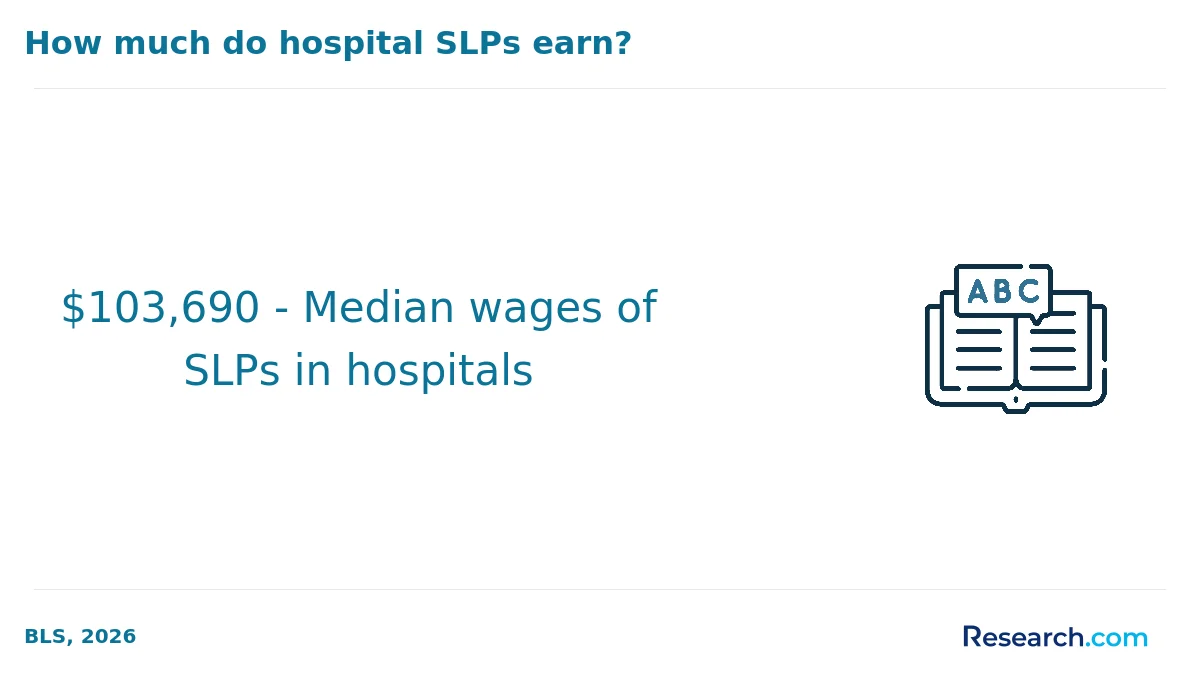
A communication disorders degree can increase salary potential when it helps a working adult qualify for more specialized, licensed, supervisory, or clinical roles. In the U.S., median salaries for roles such as speech-language pathologists and audiologists generally range from approximately $65,000 to $90,000 annually, depending on experience and location.
The degree itself does not guarantee a raise. Salary outcomes depend on the role, employer, state requirements, credentials earned, setting, and local demand. Adults should compare the cost of the program with the jobs it can realistically unlock and the timeline for meeting any licensure or certification requirements.
- Industry demand: Healthcare and education employers often need qualified communication specialists. Demand can support stronger compensation, but pay still varies by region, setting, and funding structure.
- Role advancement: A communication disorders degree may support movement into clinical, supervisory, specialized, or administrative positions. Higher pay is usually tied to greater responsibility and verified credentials.
- Employer policies: Some employers use structured pay scales, credential-based raises, or tuition reimbursement. Workers should review internal policies before enrolling to understand how the degree may affect compensation.
- Years of experience: Professionals who combine relevant experience with a communication disorders credential may be more competitive for advancement. Experience can also help students choose a specialization that fits employer needs.
- Specialization: Areas such as pediatric speech therapy, neurogenic disorders, or augmentative and alternative communication may open specialized opportunities. Salary impact depends on demand, setting, and required credentials.
Some readers compare communication disorders with broader lists of easiest college majors with high pay, but the better question is whether the program leads to a credentialed role the student actually wants and can qualify for. For working adults, the return on investment is strongest when the degree aligns with licensure requirements, employer needs, and a realistic plan for completing clinical training.
What Jobs Can Working adults Get With a Communication Disorders Degree?
Jobs available with a communication disorders degree depend heavily on the degree level and credentials earned. A bachelor’s degree may support assistant, support, or preparation roles, while graduate-level training is often required for independent clinical practice in speech-language pathology or audiology. Working adults should match the degree to the exact job title they want before enrolling.
For experienced professionals, a communication disorders degree can support upward mobility into specialized service, supervision, consulting, research, or administrative roles. The following examples show common directions, but licensing and certification requirements should always be verified by state and employer.
- Speech-Language Pathologist Supervisor: This role involves leading therapy teams, supporting treatment quality, mentoring clinicians, and helping coordinate services. It generally requires strong clinical experience and the appropriate professional credentials.
- Clinical Program Director: Clinical program directors manage services, staffing, compliance, budgets, and program outcomes in clinics, schools, hospitals, or rehabilitation settings. Communication disorders training can strengthen decision-making in programs serving clients with speech, language, swallowing, or hearing needs.
- Educational Consultant: Educational consultants may help schools design intervention plans, support inclusive practices, train staff, or improve services for students with communication needs. This path may fit professionals with teaching, special education, or school-based experience.
- Research Specialist in Communication Sciences: Research specialists contribute to studies on speech, language, hearing, swallowing, and communication interventions. These roles may involve data collection, literature review, participant coordination, or support for evidence-based practice.
- Healthcare Administrator: Administrators with communication disorders knowledge may oversee rehabilitation departments, outpatient programs, community health initiatives, or interdisciplinary service teams. This route is often strongest when paired with management experience.
Adults who are earlier in their education journey may compare entry points such as an easiest associate degree, but they should understand that associate-level study alone is not usually enough for advanced communication disorders roles. Career changers should map the full pathway from current education level to target job, including prerequisite courses, graduate admission, supervised clinical hours, licensure, and any required exams.
What Graduates Say About Their Communication Disorders Degrees for Working Adults
- Aries: "Choosing an online communication disorders degree while working full-time was definitely challenging, but the flexibility made it possible. Considering the average cost is around $20,000 to $30,000, it was a significant investment, yet incredibly worthwhile as I've advanced to a lead therapist role. The program truly opened doors I didn't think were possible."
- Massimo: "Balancing work with a part-time communication disorders program required a lot of discipline, but the affordable tuition options, often ranging under $25,000, made it manageable. Reflecting back, the knowledge and credentials I gained have substantially improved my clinical skills and professional confidence. It was a purposeful decision that positively shaped my career trajectory."
- Angel: "Completing a communication disorders degree online while maintaining my job was no small feat, especially given the costs around $22,000 on average. Still, this pathway has transformed my career by allowing me to take on more specialized roles and increase my impact on clients' lives. I recommend this option to any working professional serious about growth."
Other Things You Should Know About Communication Disorders Degrees
In 2027, top communication disorders programs for working adults often offer flexible online courses complemented by asynchronous learning modules. This approach accommodates demanding work schedules while maintaining rigorous academic standards. Many programs also provide virtual lab components and interactive tools, enhancing the online learning experience.
Yes, many programs are designed to accommodate career changers by offering foundational courses and flexible pacing. These degrees allow adults from diverse backgrounds to gain specialized knowledge in communication disorders without needing prior related experience. Support services, such as advising and tutoring, often help transition students into the field successfully.
References
- U.S. Bureau of Labor Statistics - Speech-Language Pathologists https://www.bls.gov/ooh/healthcare/speech-language-pathologists.htm
- ASHA EdFind - Accredited Speech-Language Pathology Programs https://find.asha.org/ed/
- O*NET OnLine - Speech-Language Pathologists https://www.onetonline.org/link/summary/29-1127.00
- California State University-San Marcos - Online MS in Speech-Language Pathology https://www.csusm.edu/slp/programs/mastersonline/index.html
- Idaho State University - Master of Science in Speech-Language Pathology (Online/Distance Education) https://www.isu.edu/slp/programs-offered/slp-graduate-program/
- Pennsylvania Western University - Master of Science in Speech-Language Pathology https://online.pennwest.edu/programs/speech-language-pathology-grad/index.php
- New York University - Online MS, Communicative Sciences and Disorders (Speech@NYU) https://steinhardt.nyu.edu/degree/online-ms-communicative-sciences-and-disorders
- Auburn University, Montgomery - Master of Science in Speech-Language Pathology https://www.aum.edu/degree/ms-speech-language-pathology/