
2027 Highest Level of Communication Disorders Degree You Can Achieve: Academic Progression Explained

Co-Founder and Chief Data Scientist

Reviewed by Rhea Paul, PhD
SLP Education & Research Expert
Choosing the highest communication disorders degree is really a decision about the kind of career you want: licensed clinical practice, audiology, university teaching, research, administration, or policy leadership. The field includes speech, language, swallowing, hearing, cognition, and related communication needs across the lifespan, so the right degree depends on whether you want to provide services, lead programs, produce research, or train future clinicians.
Available employment projections show strong demand: speech-language pathology and audiology employment is projected to grow 21% from 2021 to 2031, faster than the average for all occupations. That growth makes graduate education important, but it also makes degree planning more complicated. A bachelor’s degree can prepare you for support roles or graduate study, a master’s degree is commonly tied to speech-language pathology licensure, and doctoral degrees support advanced clinical, academic, research, and leadership paths.
This guide explains the full pathway from undergraduate preparation to terminal study. It covers the highest degrees available, admission requirements, core subjects, time to completion, skills, certifications, career options, salary expectations, and how to decide whether a doctoral-level communication disorders degree is worth the investment.
Key Benefits of the Highest Level of Communication Disorders Degree
- Attaining the highest degree in communication disorders equips professionals with advanced clinical skills, enabling diagnosis and treatment of complex speech and language impairments.
- Graduates often secure leadership roles or academic positions, influencing policy and training future clinicians while contributing to evidence-based practice development.
- Doctoral-level candidates engage in innovative research, increasing earning potential by approximately 20% compared to master's holders and expanding career flexibility across healthcare and academia.
What is the Highest Level of Communication Disorders Degree You Can Earn?
The highest level of communication disorders degree is generally a doctoral degree. Depending on your career goal, that may be a Doctor of Audiology (AuD), a PhD in communication sciences and disorders, an EdD with a communication disorders or related education focus, or another advanced clinical doctorate. These programs represent the terminal level of preparation in speech, language, hearing, and communication sciences.
The best doctoral option depends on what you want to do after graduation. An AuD is designed for audiology practice. A PhD is usually the strongest fit for research, university faculty roles, and scholarship. An EdD may suit professionals focused on education leadership, program administration, training, or applied research. For speech-language pathology, the master’s degree is often the key professional entry point, while doctoral study is more commonly pursued for advanced specialization, leadership, teaching, or research.
The usual academic sequence is a bachelor’s degree, then a graduate degree focused on professional preparation, followed by doctoral study for those who want the highest credential. Approximately 20% of clinical directors hold a doctoral degree, which shows that advanced education can be valuable for leadership but is not the only route into management.
If your goal is to become a speech-language pathologist first, compare accredited master’s options before committing to a doctorate; an affordable master's in speech pathology online can be a practical starting point for entering the profession.
In short, the highest credential is doctoral, but the “right” highest degree is the one aligned with your target role. A future researcher, audiologist, clinical director, professor, and policy specialist may all need different doctoral pathways.
What Are the Admission Requirements to the Highest Level of Communication Disorders Degree?
Admission to doctoral-level communication disorders programs is selective because these degrees require advanced academic ability, research readiness, clinical maturity, or some combination of all three. Nearly 70% of doctoral program applicants hold a master's degree prior to entry, which reflects how common it is for candidates to build graduate-level preparation before applying.
Requirements vary by degree type. A PhD program may emphasize research fit and faculty mentorship, while an AuD or other clinical doctorate may place more weight on clinical readiness, prerequisite coursework, and professional goals. Before applying, review each program’s admission page carefully because policies for prerequisites, GRE scores, interviews, and prior clinical experience are not identical across institutions.
- Relevant prior degree: Most programs expect a master’s degree in communication disorders or a closely related field, especially for research-focused or post-professional doctoral study. A strong academic record is important, and programs commonly cite a minimum GPA of 3.0.
- Prerequisite coursework: Applicants may need prior study in speech and language development, anatomy and physiology of speech and hearing, audiology, phonetics, neuroscience, statistics, or research methods. Missing prerequisites can delay admission or require leveling courses.
- Research or clinical experience: PhD applicants should show evidence of research potential, such as assistantships, presentations, writing samples, or a clear research interest. Clinical doctorate applicants may need documented practice experience, observation hours, or supervised clinical preparation.
- Standardized tests: Some programs may require GRE scores, while others make them optional or do not consider them. Always verify the current policy for each program rather than assuming one rule applies everywhere.
- Statement of purpose: A strong statement explains why the degree is necessary for your goals, what population or topic you want to study, and how your interests match the program’s faculty, labs, clinics, or clinical model.
- Letters of recommendation: Programs typically ask for academic or professional references who can evaluate your writing, research ability, clinical judgment, communication skills, and readiness for advanced study.
- Interview: Interviews often assess fit, motivation, ethical reasoning, communication style, and whether the program can support your academic or clinical objectives.
A common mistake is applying only because a doctorate sounds prestigious. Competitive applicants can explain why they need doctoral training for a specific next step, whether that is a research agenda, advanced clinical specialization, university teaching, program leadership, or audiology practice.
What Core Subjects Are Studied in the Highest Level of Communication Disorders Degree?
Doctoral-level communication disorders study goes beyond learning how to identify and treat communication needs. At this level, students learn to evaluate evidence, design studies, lead clinical or educational systems, supervise others, and address complex cases that may involve neurological, developmental, cultural, medical, or behavioral factors.
The curriculum depends on whether the degree is clinical, research-focused, or education-focused, but most advanced programs include a combination of theory, applied practice, research design, ethics, and leadership.
- Advanced Research Methods: Students study experimental design, qualitative and quantitative methods, statistical analysis, evidence appraisal, and responsible research practices. This preparation is essential for dissertation work, scholarly publication, and evidence-based clinical decision-making.
- Neurogenic Communication Disorders: Coursework may cover aphasia, dysarthria, apraxia, cognitive-communication disorders, traumatic brain injury, dementia-related communication changes, and other neurologically based conditions. Students learn how assessment and intervention connect to brain function and patient context.
- Speech and Language Development and Disorders: Advanced study examines typical and atypical development, developmental language disorders, speech sound disorders, literacy connections, autism-related communication needs, and the interaction of genetic, cognitive, social, and environmental factors.
- Professional Issues and Leadership: Doctoral students examine ethics, supervision, advocacy, interprofessional collaboration, health and education policy, service delivery models, cultural responsiveness, and program evaluation.
- Advanced Clinical Practicum: Clinical tracks may include supervised work with complex cases, specialty populations, interdisciplinary teams, diagnostic procedures, treatment planning, and outcome measurement.
Students comparing communication disorders with adjacent helping professions may also review options such as the cheapest online MFT programs, but the curriculum focus is different: communication disorders centers on speech, language, swallowing, hearing, and related communication systems, while marriage and family therapy focuses on relational and mental health treatment.
How Long Does It Take to Complete the Highest Level of Communication Disorders Degree?
Doctoral study in communication disorders is a long-term commitment, so timeline planning matters. Doctoral degrees in communication disorders, such as PhDs or clinical doctorates, generally require four to seven years beyond a bachelor's degree. That time may include advanced coursework, clinical practica, qualifying or comprehensive exams, research training, dissertation work, a capstone project, or supervised professional experiences.
Clinical doctorates aimed at professional practice typically take about four years. Research-focused PhDs may take five or more years, especially when students conduct original research, collect data, publish, teach, or work as research assistants.
Several factors can lengthen or shorten the timeline:
- Entry point: Students entering with a relevant master’s degree may move more quickly than students who need foundational or leveling coursework.
- Enrollment status: Full-time students usually finish faster. Part-time students may need more calendar years because they are balancing employment, clinical work, caregiving, or other responsibilities.
- Research scope: A dissertation involving human subjects, longitudinal data, specialized populations, or complex analysis can take longer than a narrower project.
- Clinical requirements: Programs with extensive practicum, externship, or residency expectations may require careful scheduling around site availability.
- Funding and mentorship: Assistantships, grants, advisor availability, and committee feedback can affect progress. Strong faculty fit often makes the process more efficient.
Before enrolling, ask programs for actual completion ranges, not only the advertised minimum. Also ask how many students finish on time, how dissertation advising works, and whether part-time enrollment is realistic.
What Skills Do You Gain at the Highest Level of Communication Disorders Degree?
At the highest level of communication disorders education, students move from competent practice or foundational scholarship toward independent expertise. The goal is not only to know more content; it is to make better decisions in complex clinical, research, educational, and organizational settings.
- Advanced analytical thinking: Students learn to interpret complex assessment results, evaluate competing explanations, synthesize research findings, and make defensible recommendations when cases are not straightforward.
- Research and problem-solving: Doctoral training strengthens the ability to ask original questions, design studies, analyze data, identify limitations, and translate findings into improved assessment or intervention.
- Strategic decision-making: Graduates develop the judgment needed for program planning, clinical leadership, policy input, supervision, and resource allocation.
- Leadership and communication: Advanced students often teach, supervise, present research, collaborate with physicians or educators, mentor clinicians, and communicate findings to both expert and non-expert audiences.
- Ethical judgment: Doctoral work requires careful thinking about consent, confidentiality, cultural and linguistic diversity, disability rights, clinical boundaries, research integrity, and patient-centered care.
One graduate described the experience as demanding but formative. Managing a complex research project required constant adjustment when results did not match early assumptions. The process strengthened his resilience, helped him trust his analytical skills, and taught him to communicate more clearly with professionals outside his discipline.
He also noted that advanced training made ethical decision-making more concrete. Questions about cultural respect, patient priorities, and access to services were not abstract topics; they shaped real clinical and research choices. For him, the degree built expertise, but it also strengthened empathy and leadership.
What Certifications Can You Get With the Highest Level of Communication Disorders Degree?
Certifications and licensure are important because a doctoral degree alone does not automatically authorize every form of practice. Requirements depend on the profession, state, employer, and setting. Students should distinguish between academic degrees, professional certification, and state licensure before choosing a program.
- Certificate of Clinical Competence in Speech-Language Pathology (CCC-SLP): Offered by the American Speech-Language-Hearing Association (ASHA), the CCC-SLP is a widely recognized credential for speech-language pathologists. It can support employment mobility and professional recognition, but candidates must meet ASHA’s education, clinical, examination, and fellowship requirements.
- Certificate of Clinical Competence in Audiology (CCC-A): Also offered by ASHA, the CCC-A is designed for audiologists who meet specified professional standards. It can complement doctoral-level audiology preparation and may be valued by employers in healthcare, private practice, and educational settings.
- State Licensure: Many states require licensure to practice legally as a speech-language pathologist or audiologist. Licensure rules can include degree requirements, supervised experience, examinations, continuing education, background checks, and renewal requirements. Because state rules differ, students should check the state where they intend to work.
These credentials can work together, but they are not interchangeable. A program may prepare you academically, certification may demonstrate national professional competence, and licensure may determine whether you can legally practice in a specific state.
Workforce data from the U.S. Bureau of Labor Statistics are often reviewed alongside certification and licensure requirements because legal eligibility, employer preferences, and work setting can affect employment options and pay. Students considering education leadership as part of their long-term plan may also compare related doctoral pathways, including the cheapest EdD programs, while confirming that any degree they choose aligns with communication disorders career requirements.
The safest approach is to start with your target role, then work backward: identify the required degree, required accreditation if applicable, required certification, required state license, and any supervised experience needed after graduation.
What Careers Are Available for Graduates With the Highest Level of Communication Disorders Degree?
A doctoral degree in communication disorders can expand career options beyond standard clinical practice, particularly for professionals who want to lead, teach, research, consult, or influence systems of care. Demand for specialists is strong, with speech-language pathology occupations expected to grow by 17% from 2025 to 2035, reflecting the increasing need for advanced professionals.
Common career directions include:
- Clinical Leadership: Graduates may become program directors, department leaders, clinic administrators, or supervisors in hospitals, rehabilitation centers, school systems, universities, private practices, or community agencies. These roles often require both clinical credibility and management skill.
- Research Scientist: Research-focused graduates may study assessment tools, treatment outcomes, neurogenic communication disorders, developmental language needs, hearing science, assistive technology, or service delivery. Their work can shape evidence-based practice.
- Academic Faculty: Doctoral graduates may teach undergraduate or graduate courses, mentor students, supervise research, publish scholarship, and help prepare future speech-language pathologists, audiologists, and researchers.
- Policy Advisor: Experienced professionals may contribute to disability policy, education policy, healthcare access, reimbursement discussions, early intervention systems, or public health initiatives related to communication needs.
- Consultant in Diagnostic and Intervention Development: Specialists may advise clinics, schools, health systems, publishers, technology companies, or research teams developing tools for assessment, therapy, training, or communication access.
One doctoral graduate explained that the degree changed both her responsibilities and her professional identity. Balancing rigorous coursework with hands-on research was difficult, but it gave her a deeper understanding of the field than clinical practice alone could provide.
She said the doctorate opened leadership opportunities in clinical settings and gave her a stronger voice in policy discussions involving communication disabilities. Her advice to prospective students was direct: pursue the highest degree if it clearly supports the kind of impact you want to have, not simply because it is the next academic step.
What Is the Average Salary for Graduates of the Highest Level of Communication Disorders Degree?
Salary is one of the biggest practical considerations because doctoral education can require years of study, tuition costs, and possible reduced earnings while enrolled. The payoff depends on the degree type, occupation, employer, location, experience, licensure, certification, and whether the graduate moves into leadership, research, faculty, or specialized clinical work.
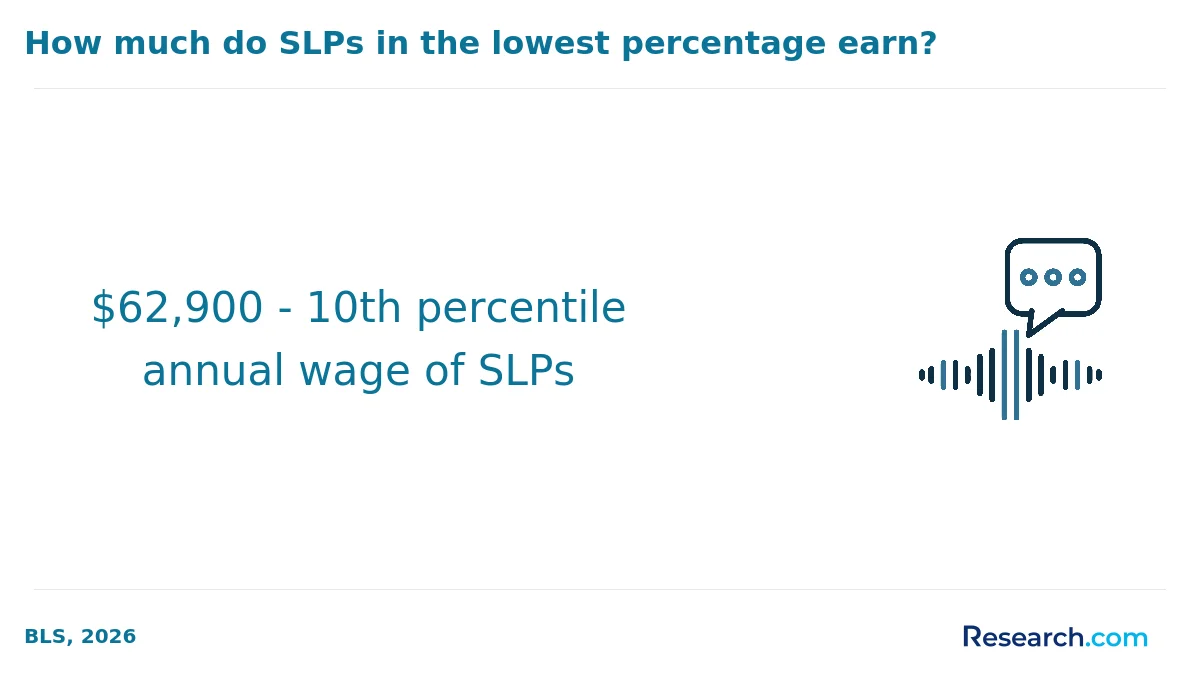
- Early-career earnings: Graduates starting out with a doctorate in communication disorders typically earn around $62,900 annually. This figure is more likely to reflect entry-level or early post-degree roles where professionals are still building experience.
- Long-term earning potential: With experience, specialization, and leadership responsibility, salaries can rise to $95,000 or more. The strongest earnings are often tied to advanced responsibility rather than the degree alone.
- Industry variation: Pay can differ across private healthcare, academic institutions, public schools, community health organizations, hospitals, research settings, and private practice. Benefits, workload, contract length, and advancement opportunities also matter.
- Leadership and specialization: A terminal degree may help graduates qualify for director roles, faculty positions, research appointments, consulting work, or specialized clinical leadership that can improve long-term compensation.
Students comparing communication disorders with other online options should be careful not to choose based only on convenience. Resources about the easiest degree to get online may be useful for broad exploration, but communication disorders careers often involve strict graduate training, supervised practice, certification, and licensure requirements.
The clearest way to evaluate salary potential is to compare the total cost of the degree with the specific role you want. A doctorate may be financially worthwhile for leadership, research, academia, audiology, or specialized practice, but it may not be necessary for every clinical speech-language pathology career path.
How Do You Decide If the Highest Level of Communication Disorders Degree Is Right for You?
The highest communication disorders degree is right for you if it directly supports a career goal that a lower degree cannot reasonably achieve. Studies show that individuals with doctoral credentials often secure leadership roles or specialized research positions more frequently than those with lower-level degrees, but the degree still requires a serious commitment of time, money, and focus.
Use these questions to evaluate the fit:
- What role do you want? If you want to be a university professor, principal investigator, audiologist, senior clinical leader, policy specialist, or program director, doctoral study may be appropriate. If your main goal is standard speech-language pathology practice, a master’s degree may be the more direct route.
- Do you want to conduct research? A PhD requires sustained interest in original inquiry, literature review, data analysis, writing, and publication. If research does not interest you, a clinical or leadership-focused doctorate may fit better.
- Can you manage the financial and time investment? Doctoral education can affect income, family responsibilities, relocation, and workload for several years. Compare tuition, funding, assistantships, expected debt, and realistic salary outcomes.
- Is your academic preparation strong enough? Advanced programs expect strong writing, critical thinking, research literacy, and discipline-specific knowledge. If you have gaps, ask whether prerequisite or bridge coursework is available.
- Will the degree change your professional options? The degree should create access to roles, credentials, authority, or expertise that matter to you. If it only adds a title without changing your career path, the return may be limited.
A practical decision rule: choose the highest degree only when you can name the job functions, credentials, populations, or leadership responsibilities it will help you reach.
Is Pursuing the Highest Level of Communication Disorders Degree Worth It?
Pursuing the highest level of communication disorders degree can be worth it for professionals who want advanced clinical authority, audiology practice, university teaching, original research, policy influence, or senior leadership. Professionals holding the highest degree in communication disorders, such as a Ph.D. or Au.D., often experience greater career advancement, increased earning potential, and roles that influence the future of the field.
Data from the American Speech-Language-Hearing Association (ASHA) indicate that doctoral-level clinicians and faculty frequently command higher salaries compared to those with master's degrees and tend to occupy leadership and academic positions, shaping research and clinical practice standards. That said, the value of the degree depends heavily on career direction. A doctorate can be powerful when it leads to a role that requires or strongly rewards doctoral-level preparation.
The benefits include deeper specialization, broader professional credibility, access to academic and research careers, stronger leadership preparation, and greater ability to work on complex clinical or systems-level problems. Graduates may also gain flexibility to move between practice, teaching, administration, consulting, and scholarship.
The drawbacks are real. Pursuing this path demands a substantial commitment of time-often three to six years beyond a master's degree-and financial resources, including tuition and potential wage loss. The curriculum can be intense, especially for students completing research, clinical work, teaching, comprehensive exams, dissertations, or capstones while managing other responsibilities.
For many students, the degree is worth it only when it is tied to a clear professional outcome. If you want advanced practice, research, academia, or leadership, the investment may make sense. If you primarily want to provide clinical services as efficiently as possible, a master’s degree or required clinical doctorate for your chosen profession may be sufficient.
What Graduates Say About Their Highest Level of Communication Disorders Degree
- : "Completing my doctorate in communication disorders was a major investment, with average costs around $40,000, but it gave me the confidence to lead therapy teams and contribute to research. The strongest value was not just the credential; it was the way the program sharpened my diagnostic reasoning and deepened my understanding of speech and language pathology. — Liam"
- : "The financial commitment to the highest level of communication disorders education was significant, approximately $35,000, but the program gave me a stronger foundation in research methodologies and evidence-based clinical practice. I became better prepared to advocate for patients with diverse communication needs and to make decisions under complex clinical conditions. — Marshall"
- : "With tuition near $45,000, I was hesitant at first, but the advanced therapeutic techniques and interdisciplinary collaboration skills I gained changed my career options. The degree helped me move more confidently between private practice and academic roles, and it expanded the kind of work I could do. — Jack"
Other Things You Should Know About Communication Disorders Degrees
Research experience is crucial when pursuing a doctoral degree in communication disorders. It enhances your understanding of the field, aids in developing new insights, and is often a requirement for graduation. Engaging in research projects can also provide valuable networking opportunities and help you contribute to evidence-based practices in communication disorders.
After earning a Ph.D. in communication disorders, you can pursue postdoctoral research fellowships, which allow for specialized study and advanced research. Opportunities exist in both academic settings and industry, focusing on innovative therapeutic methods, speech pathology, and audiology advancements.
Doctoral candidates usually must complete an original dissertation based on supervised research, then defend it before a faculty committee. Programs often require prior approval of the proposal, ethical review through an institutional review board, and final submission that meets graduate school formatting rules before the degree is awarded.
References
- U.S. Bureau of Labor Statistics - Speech-Language Pathologists https://www.bls.gov/ooh/healthcare/speech-language-pathologists.htm
- ASHA EdFind - Accredited Speech-Language Pathology Programs https://find.asha.org/ed/
- ETS Praxis - Speech-Language Pathology (5331) https://praxis.ets.org/test/speech-language-pathology-5331.html
- Nova Southeastern University - SLP Program - Master of Science in Speech-Language Pathology https://osteopathic.nova.edu/degrees/masters/speech-language-pathology/index.html
- California State University-San Marcos - Online MS in Speech-Language Pathology https://www.csusm.edu/slp/programs/mastersonline/index.html
- University of Wisconsin-Eau Claire - Master of Science in Speech-Language Pathology (Online) https://www.uwec.edu/speech-language-and-hearing-sciences-department/graduate-program/speech-language-pathology-online
- California State University-East Bay - Online Master of Science in Speech-Language Pathology https://ce.csueastbay.edu/programs/speech-language-pathology/
- Auburn University, Montgomery - Master of Science in Speech-Language Pathology https://www.aum.edu/degree/ms-speech-language-pathology/


