2027 Can You Complete Communication Disorders Clinicals Locally?

Co-Founder and Chief Data Scientist

Reviewed by Rhea Paul, PhD
SLP Education & Research Expert
For communication disorders students, the clinical placement question often determines whether a program is workable in real life. Coursework may be online, hybrid, or campus-based, but supervised clinical hours still require approved settings, qualified supervisors, reliable scheduling, and careful documentation.
Completing clinicals near home can make a degree more manageable. It may reduce relocation pressure, shorten commutes, help students keep part-time jobs, and make it easier to balance caregiving or family responsibilities. Still, local placement is not automatic. Programs must follow accreditation expectations, state authorization rules, site agreements, supervision standards, and capacity limits. Recent data shows that nearly 70% of communication disorders students express concern over the availability of clinical sites near home, which makes placement planning one of the most important parts of choosing a program.
This guide explains when local communication disorders clinicals are possible, how placements are approved, what online students should verify, which facilities may qualify, what costs can arise, and how local training can support career goals after graduation.
Key Things to Know About Completing Communication Disorders Clinicals Locally
- Programs generally coordinate local clinical placements through established partnerships with nearby healthcare facilities or schools to ensure students meet supervised hour requirements.
- Completing clinicals locally offers flexibility, reduces travel costs, and supports work-life balance, especially critical given 375+ required clinical hours per ASHA standards.
- Students must confirm state licensure rules, site approvals, and program policies on local placements before enrollment to avoid delays or unmet requirements.
Can you complete communication disorders clinicals near your home or hometown?
Yes, it is often possible to complete communication disorders clinicals near your home or hometown, but it depends on program approval, site availability, supervisor qualifications, and state rules. Local placement should be treated as a possibility to verify, not a promise to assume. A recent ASHA report found that nearly 40% of students secured at least one local clinical placement, which shows that nearby clinical training is achievable for many students but not guaranteed for everyone.
Your chances are stronger if you live near several eligible settings, such as schools, hospitals, outpatient clinics, rehabilitation centers, or private practices, and if your program already has relationships in your area. Students in rural locations, highly competitive metropolitan areas, or states with stricter authorization rules may need to plan for a longer commute, a less preferred site, or a rotation outside their immediate community.
What makes a local clinical placement possible?
- Approved program partnerships: Many programs use established affiliation agreements with clinical sites. If your school already works with facilities near you, placement may move faster. If not, a new agreement may be required before you can begin.
- Qualified supervision: A site cannot host you unless an appropriate supervisor is available. In many cases, that means a licensed speech-language pathologist or audiologist who meets the program’s experience, credential, and availability requirements.
- Clinical fit: The placement must match the experiences you need. A nearby site may be convenient but still unsuitable if it does not provide the required population, service type, documentation process, or level of supervision.
- State authorization and professional rules: If your school is located in another state, the program must be allowed to place students where you live. State board requirements can also affect whether the hours support future licensure or certification goals.
- Capacity and timing: Approved sites may accept only a small number of students. A site that was available one semester may be full the next, especially in areas with several competing programs.
Questions to ask before you commit to a program
- Does the program guarantee local placement, or does it only help students search for sites?
- Has the program placed students in my state, county, or metro area before?
- Who contacts potential sites: the school, the student, or both?
- What commute radius should I plan for if my first-choice location is unavailable?
- How does the program handle failed placements, site cancellations, or delayed approvals?
- Will I need different types of placements that may not all be available near home?
Students comparing clinical requirements across healthcare degrees may also find it useful to review how supervised training is handled in fields such as cheapest online DNP programs, while remembering that communication disorders programs have distinct supervision and accreditation expectations.
How do communication disorders clinical placements work?
Communication disorders clinical placements are supervised learning experiences where students apply classroom knowledge with clients or patients in approved settings. These placements are not informal volunteer opportunities. They must be structured, supervised, documented, and evaluated according to the program’s academic requirements. Over 90% of communication disorders students fulfill their required clinical hours through local placements, making placement access a central part of program planning.
Most programs coordinate placements through a clinical education office. Some schools assign sites directly, while others allow or require students to suggest local options for review. Either way, the program must confirm that the site, supervisor, caseload, services, and evaluation process meet its standards before hours can count.
Typical placement sequence
- Requirement review: The program identifies what experience you need next, such as pediatric services, adult services, school-based practice, medical practice, diagnostics, treatment, or rehabilitation.
- Site matching or site search: The clinical placement team considers location, learning goals, site capacity, schedule, and supervisor availability. If students may recommend sites, the program reviews those options before approval.
- Affiliation agreement: If the site is new to the program, the school and facility may need a formal agreement covering supervision, liability, student conduct, documentation, confidentiality, and compliance.
- Supervisor verification: The program checks whether the clinical supervisor meets the required professional and academic qualifications.
- Onboarding: Students may complete background checks, immunization records, drug screening, training modules, health documentation, technology access, and site orientation.
- Clinical participation and evaluation: Students provide services under supervision, receive feedback, track hours, complete documentation, and submit evaluations required by the program.
What programs evaluate before approving a placement
| Placement factor | Why it matters | What to ask |
| Client population | Students may need experience with different ages, diagnoses, communication needs, and care models. | Can this site satisfy the specific experience category I still need? |
| Supervisor qualifications | Hours may not count if the supervisor does not meet program standards. | Who verifies supervisor credentials, and how long does approval take? |
| Site capacity | Facilities may limit how many students they can supervise during a term. | When are placement requests submitted, and how often do sites fill up? |
| Schedule and commute | Clinical work often happens during weekday daytime hours and may require repeated travel. | What weekly schedule and commute range should I realistically expect? |
Students who want to understand how administrative planning affects healthcare education may compare placement logistics with resources such as healthcare administration courses online. For communication disorders students, however, the priority is confirming that clinical hours will be approved, supervised, and properly documented.
What state authorization and licensing rules affect local clinicals?
State authorization and licensing rules can determine whether you may complete a clinical placement in a specific state. These rules matter most for online students, students enrolled in out-of-state institutions, and students who plan to move while enrolled. Around 30% of states participate in interstate licensure compacts to facilitate cross-state clinical education, but compact participation does not automatically eliminate all school authorization, placement approval, or supervision requirements.
The main question is whether your institution is permitted to place students in your state and whether the placement will support your future professional goals. A willing clinic, school, or hospital is not enough if the program cannot legally or academically approve the site.
Rules that can affect local clinicals
- State authorization: Schools may need permission to offer educational activities, including supervised clinical placements, outside their home state. If the program is not authorized where you live, local clinicals may not be available.
- Licensing board expectations: State boards may have rules for acceptable hours, supervision, practice settings, and documentation. These rules can influence whether your experience supports future licensure eligibility.
- Interstate restrictions: Some states require additional approvals for out-of-state programs or impose limits on clinical education arrangements. These steps can delay or prevent placement approval.
- Affiliation agreements: Programs usually need written agreements with clinical sites. These agreements define legal responsibilities, supervision expectations, student conduct, privacy requirements, and compliance standards.
- Relocation during enrollment: Moving to another state can change your placement eligibility. Students should ask about this before relocating, not after they have already moved.
How to avoid authorization problems
- Ask admissions whether the program is authorized to place students in your state.
- Ask the clinical education office whether students in your state have completed local placements successfully.
- Confirm whether authorization applies to your specific program and clinical level, not just the university as a whole.
- Request written guidance if you plan to move before or during clinical training.
- Keep copies of placement approvals, site approvals, supervisor approvals, and state-related communications.
- Do not begin clinical hours until the program confirms that the placement is approved.
A communication disorders degree graduate described the approval process as stressful and time-consuming. “I had to coordinate with several offices to confirm site eligibility and supervision qualifications,” he explained. The process required persistence, but it also strengthened his communication, documentation, and problem-solving skills.
Can online communication disorders programs arrange local clinical placements?
Yes, many online communication disorders programs can help students arrange local clinical placements, but support varies significantly by institution. Some programs coordinate placements through established networks. Others expect students to identify potential sites, then submit them for review. A 2023 survey showed nearly 78% of online speech-language pathology students had access to local clinical experiences arranged by their schools.
Before enrolling in an online program, look beyond course flexibility and examine the placement process in detail. Online classes may reduce campus travel, but clinical training still depends on in-person or otherwise approved supervised experiences, available sites, qualified supervisors, and state authorization. When comparing online speech pathology programs masters, ask how the program supports placements in your state, what responsibilities fall on you, and what backup plan exists if a local site is unavailable.
Common online placement models
| Placement model | How it works | Key trade-off |
| Program-arranged placements | The school identifies, coordinates, and approves clinical sites for students. | This can reduce student burden, but you may have limited control over the exact site or schedule. |
| Student-identified placements | The student finds potential local sites, and the program reviews them for eligibility. | This offers more local initiative but can take longer if the site lacks an agreement or approved supervisor. |
| Shared responsibility | The student helps search while the program manages formal approval and compliance. | This can work well if expectations, deadlines, and communication channels are clear. |
What to verify in an online program
- Placement responsibility: Ask whether the school finds sites for you or expects you to provide leads.
- State authorization: Confirm that the program can place students where you live before you enroll.
- Existing site network: Ask whether the program already has approved sites near your area or has placed students there before.
- Approval timeline: New agreements, supervisor reviews, and onboarding can take weeks or months.
- Escalation plan: Strong programs explain what happens if a site cancels, a supervisor leaves, or no local placement is available.
- Clinical variety: Make sure local sites can cover the populations and competencies you need, not just provide any available hours.
Students exploring flexible academic routes may also review options such as a fast track bachelor degree. In communication disorders, however, clinical placement support is not a side benefit; it is a core measure of whether the program can actually get you to graduation.
What types of facilities can you use for communication disorders clinicals?
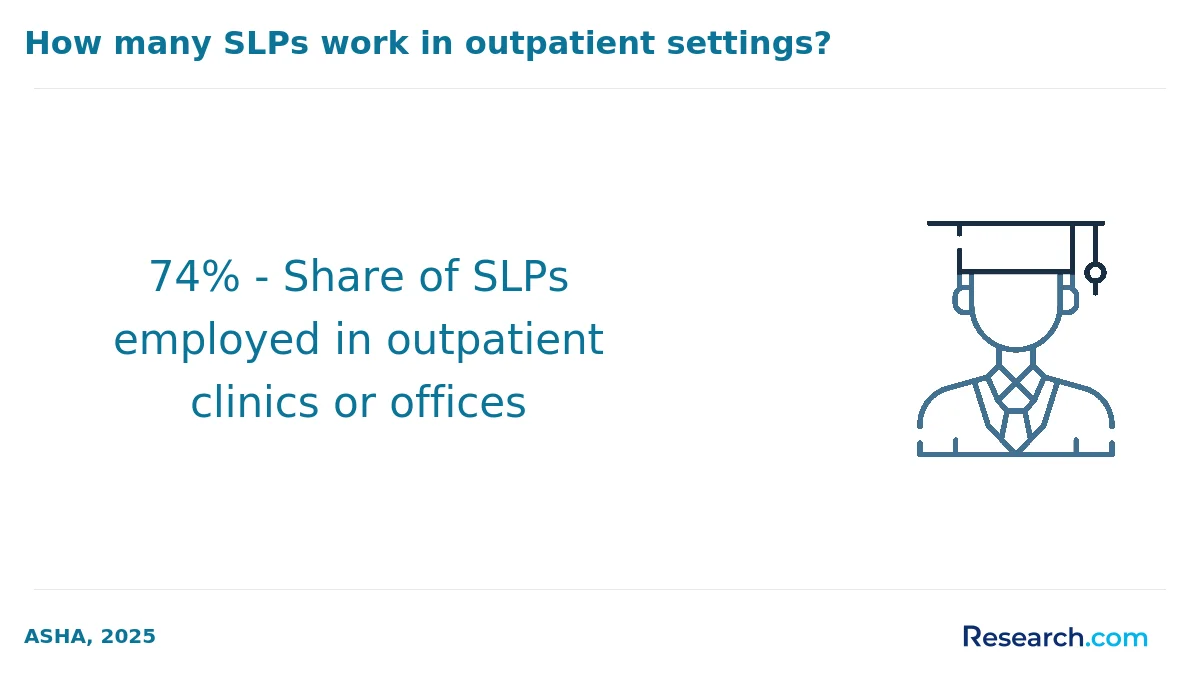
Communication disorders clinicals can take place in several types of approved facilities, depending on your program requirements and the competencies you still need to complete. Nearly 70% of students complete at least part of their clinical hours in nearby healthcare or community-based facilities. However, not every local setting provides the same client populations, service models, documentation systems, or supervision opportunities.
A strong clinical plan usually includes varied experience. For example, a student may need pediatric and adult exposure, evaluation and treatment experience, or both school-based and medical perspectives. The best site is not always the closest one; it is the site that satisfies program requirements while providing meaningful supervised practice.
Common clinical settings
- Hospitals: Hospital placements may include acute care, interdisciplinary collaboration, medically complex patients, and communication or swallowing-related services. These settings can be fast-paced and documentation-heavy.
- Outpatient clinics: Outpatient settings often allow students to work with clients over multiple sessions, observe progress, and develop treatment plans. Depending on the clinic, students may work with children, adults, or both.
- Rehabilitation centers: Rehabilitation facilities often serve people recovering from neurological injuries such as strokes. Students may gain experience with functional goals, care teams, patient education, and continuity of care.
- Long-term care facilities: These placements may involve older adults with chronic, progressive, or complex communication and swallowing needs. Students learn to coordinate with caregivers, nurses, and other professionals.
- Schools and educational settings: When approved by the program, schools can provide experience with children, educational teams, individualized service planning, and communication support in learning environments.
- Private practices and community clinics: These settings may offer focused experience with specific populations or services, but students should confirm that caseload variety and supervision meet program standards.
How to judge whether a local facility is a good fit
| Question to ask | Why it matters |
| Does the site serve the population I need for my program requirements? | A convenient site may not satisfy the clinical competencies you still need. |
| Is an approved supervisor available during the hours I can attend? | Clinical hours depend on qualified supervision, not just physical access to a facility. |
| Will the site provide enough client contact and learning variety? | Low caseloads or narrow services can limit the value of the placement. |
| Does my program already have an affiliation agreement with the site? | Existing agreements can reduce approval delays and administrative uncertainty. |
| Does the site use documentation, privacy, and compliance systems students can access? | Students must be able to complete required records and follow site policies correctly. |
A professional with a Communication Disorders degree recalled feeling overwhelmed at first by the need to balance academic requirements with facility expectations, especially in rehabilitation centers where patient needs changed quickly. Over time, supervisor feedback and exposure to varied cases helped build confidence. “Each setting challenged me differently,” she noted, “but the hands-on experience was invaluable in preparing me for independent practice.”
How flexible are communication disorders clinical schedules and locations?
Communication disorders clinical schedules may offer some flexibility, but they are usually less flexible than online coursework. More than 60% of healthcare education programs now employ flexible or hybrid clinical formats, yet students still must work within supervisor availability, client schedules, site hours, documentation requirements, and program deadlines.
Location flexibility also varies by rotation. You may be able to complete one placement near home but need to travel farther for another experience if your local area lacks the required setting or client population. Students should plan for flexibility, but they should not assume that evening, weekend, remote, or fully local options will be available for every requirement.
Where flexibility may exist
- Proximity-based placement efforts: Some programs try to match students with approved sites near their homes when capacity allows. This can reduce travel and make clinical training more realistic for students with work or family obligations.
- Evening or weekend services: Some clinics offer extended hours, which may help working students. These options are not universal and may not provide all required clinical experiences.
- Multiple site types: Programs with broad partnerships may offer more options across schools, clinics, hospitals, rehabilitation centers, and community settings.
- Hybrid components: Some experiences may include telepractice, virtual supervision, remote documentation, or case preparation. Students should verify which activities count toward required hours and how supervision is recorded.
Where students often misjudge flexibility
- Assuming clinical hours can be completed entirely at night or on weekends.
- Believing online enrollment guarantees clinical placement near home.
- Waiting until the clinical term to disclose work, transportation, or caregiving limits.
- Choosing the closest site before confirming that it meets program requirements.
- Expecting a program to create a new placement quickly in any location.
- Assuming one local site can satisfy every required experience category.
The best strategy is to be direct with the program early. If you cannot relocate, can only commute within a certain range, or must keep a job during clinical training, ask how the program has handled similar constraints for previous students and whether those constraints could delay your graduation.
How do preceptors and clinical site approvals work?
Preceptor and clinical site approvals are safeguards that ensure students receive appropriate supervision and clients receive responsible care. Nearly 70% of healthcare training programs report difficulty securing enough preceptors to meet student demand, so preceptor availability should be treated as a major planning issue.
In communication disorders clinical education, the supervisor or preceptor must be qualified to oversee student practice, provide feedback, verify hours, and evaluate performance. The site itself must also be able to support the learning experience your program requires.
What approval usually includes
- Preceptor credential review: Programs typically verify that the supervisor is an appropriately licensed speech-language pathologist or audiologist with relevant experience and the ability to supervise students.
- Affiliation agreement: The school and site usually sign a formal agreement before the placement begins. This document may address supervision, liability, confidentiality, compliance, communication, and student responsibilities.
- Site evaluation: The program may review the facility’s client population, service offerings, documentation systems, safety procedures, and capacity for meaningful student learning.
- Supervision plan: Supervisors provide observation, feedback, performance evaluation, and hour verification. The supervision structure must align with program and professional expectations.
- Compliance checks: Students may need background checks, immunizations, drug screening, privacy training, site orientation, liability coverage, or technology access before starting.
- Timeline management: New site and preceptor approvals can take several weeks to months, especially when legal agreements or credential reviews are required.
Approval checklist for students
- Ask whether the site already has an affiliation agreement with your school.
- Clarify who contacts the site and who contacts the supervisor.
- Confirm how the program verifies supervisor credentials.
- Ask how long new site approval typically takes.
- Complete compliance paperwork as soon as it is assigned.
- Save written confirmation of approval before reporting to the site.
- Do not count or submit clinical hours until the program confirms the placement is valid.
What costs should you expect when completing communication disorders clinicals locally?
Local clinicals may help students avoid relocation, but they still come with costs. Commuting, parking, compliance requirements, professional clothing, supplies, liability coverage, and technology can add up, especially when clinical hours reduce the time available for paid work.
The safest approach is to build a clinical budget before your first placement term. Ask your program for required and optional expenses, then estimate recurring costs by week or month rather than treating them as one-time fees.
Common expenses for local clinicals
- Transportation and fuel: Regular commuting can create recurring costs for gas, public transportation, rideshare use, or vehicle maintenance, which can range from $50 to $150 per month depending on distance and frequency.
- Parking: Some hospitals and medical campuses charge parking fees, typically between $3 and $10 per day. Ask whether student parking, passes, or discounted lots are available.
- Uniforms and supplies: Programs or sites may require scrubs, lab coats, professional clothing, assessment materials, therapy tools, or ID badges. These items can cost anywhere from $50 to $200 based on program requirements and site regulations.
- Immunizations and screenings: Students may need immunization records, TB tests, background checks, drug screening, or other onboarding documentation. These costs usually range from $75 to $150 collectively.
- Liability insurance and technology: Some programs require student liability insurance, with typical annual costs between $20 and $50. Students may also need secure software, documentation access, or devices for telepractice-related tasks.
Clinical budgeting tips
- Ask for a clinical cost estimate before placement begins.
- Find out whether payments go to the school, the site, or third-party vendors.
- Budget for income loss if clinical hours reduce your work availability.
- Ask whether approved education-related expenses can be included in financial aid planning.
- Compare commute time as well as mileage when evaluating site options.
- Keep receipts for expenses that may be needed for program, aid, or personal budgeting records.
Students comparing costs across health-related programs may review how fieldwork expenses differ in options such as a nutritional science degree online. For communication disorders students, the most reliable information will come from the program’s clinical education office and current placement requirements.
What challenges can students face with local clinical placements?
Local clinical placements can make a communication disorders degree more practical, but they can also create complications when site availability, supervisor capacity, scheduling, and approval timelines do not align. Nearly 40% of clinical training programs report difficulty securing enough preceptors to meet student demand, which helps explain why local options may be limited even for well-prepared students.
The main risk is assuming that a nearby facility can automatically become an approved placement. A valid clinical site must be available, properly supervised, legally approved, academically appropriate, and able to provide the experience you need. If one part of that process fails, students may need to commute farther, adjust work schedules, delay a rotation, or consider temporary relocation.
Common placement challenges
- Limited local sites: Some communities have few schools, clinics, hospitals, or rehabilitation facilities that can support communication disorders students.
- Competition for placements: Sites may receive requests from multiple colleges and universities, especially in areas with several healthcare or education programs.
- Geographic and authorization restrictions: State regulations affecting communication disorders clinicals near home can determine whether an out-of-state program may place a student in a specific location.
- Schedule conflicts: Many clinical sites operate during weekday business hours, which can be difficult for students with jobs, caregiving responsibilities, or transportation limits.
- Preceptor shortages: A facility may be interested in hosting students but unable to provide a qualified supervisor with enough time for observation and feedback.
- Approval delays: New affiliation agreements, credential checks, compliance documentation, and site onboarding can take longer than expected.
- Requirement mismatch: A convenient local site may not offer the population, service type, or clinical intensity required for your next rotation.
How to reduce placement risk
- Ask for a realistic placement timeline before you enroll.
- Find out how many backup sites the program typically considers.
- Identify how far you could commute if your preferred site is unavailable.
- Keep your schedule as open as possible during clinical terms.
- Respond quickly to requests for documents, signatures, screenings, and training.
- Ask how placement delays could affect tuition, graduation timing, and financial aid.
Students comparing healthcare programs may see similar placement barriers in fields such as accelerated nursing programs. Across clinical fields, the lesson is the same: evaluate placement support before enrollment, not after you have already completed most of your coursework.
Can local communication disorders clinicals help you get a job after graduation?
Local communication disorders clinicals can help with employment, especially if you hope to work in the same region after graduation. About 60% of healthcare employers prefer candidates who have gained clinical experience within regional or local facilities, which suggests that local references, familiarity with community needs, and experience in nearby systems can strengthen a candidate’s profile.
Local clinicals do not guarantee a job. Employers still consider licensure eligibility, credentials, clinical competence, interview performance, references, professionalism, and organizational fit. But a strong local placement can help you become a known candidate rather than an unfamiliar applicant.
Career benefits of local clinical experience
- Professional relationships: Students can build connections with speech-language pathologists, audiologists, teachers, administrators, rehabilitation teams, and other local professionals.
- Regional knowledge: Local placements expose students to community needs, referral patterns, school systems, healthcare workflows, and patient populations in the area where they may work.
- Employer visibility: Supervisors and staff can observe your reliability, communication skills, adaptability, clinical judgment, and professionalism over time.
- Stronger references: A local supervisor who has directly observed your growth may be able to speak credibly about your readiness for entry-level practice.
- Better job targeting: Training locally can help you understand which settings, populations, and service gaps match your interests.
How to turn a placement into a career advantage
- Treat every clinical placement like a professional audition.
- Arrive prepared, communicate clearly, and follow through on documentation.
- Ask for feedback early enough to improve during the rotation.
- Track the populations, assessments, interventions, tools, and settings you experienced.
- Request permission before listing supervisors as references.
- Stay connected professionally after the placement ends without assuming employment is owed.
What Students Say About Completing Communication Disorders Clinicals Locally
- Mordechai: "Completing my clinical hours locally has been an exciting journey because I have not had to relocate. The program’s structured partnerships with nearby healthcare facilities helped ensure that supervision and communication disorders placement requirements were clear and aligned with my academic goals. Applying what I learn with patients from my own community has strengthened my confidence and made the training feel directly connected to my future career."
- Casen: "Coordinating local clinical placements has brought real challenges, especially with limited availability in smaller towns. The process takes persistence, early planning, and frequent communication with clinics and program staff to secure hours that meet program standards. I value being close to home, but I also understand that relocation or a longer commute may be necessary if local sites cannot provide all required experiences."
- Walker: "Completing clinical hours in my local area has helped me better understand the population I hope to serve. Hands-on work at nearby healthcare centers sharpened my client interaction skills and made me feel more career-ready. It also showed me how important cultural awareness, community context, and tailored interventions are in communication disorders practice."
Other Things You Should Know About Communication Disorders Degrees
Yes, local clinicals must meet the supervision standards set by accredited bodies such as the American Speech-Language-Hearing Association (ASHA). Students typically require supervision from certified speech-language pathologists or audiologists who hold appropriate credentials. Facilities chosen locally must have qualified supervisors available to provide direct oversight during clinical practice hours.
It is possible but not guaranteed that all clinical hours can be completed at a single local site. Some programs or accrediting bodies require diverse clinical experiences across different client populations or settings. Students may need to use multiple local facilities to fulfill all requirements, depending on the availability of varied case types and clinical opportunities.
In 2027, local clinical placements can limit the diversity of experiences if the site does not offer a wide range of communication disorders cases. Students should seek diverse settings or supplemental opportunities to ensure comprehensive clinical exposure.
Students must usually provide up-to-date health records, background checks, and proof of immunizations before starting clinicals locally. Additionally, agreements between the educational institution and the local clinical site must be established to formalize the placement. Students should check specific requirements early to avoid delays in beginning their clinical hours.
References
- U.S. Bureau of Labor Statistics - Speech-Language Pathologists https://www.bls.gov/ooh/healthcare/speech-language-pathologists.htm
- ASHA EdFind - Accredited Speech-Language Pathology Programs https://find.asha.org/ed/
- ETS Praxis - Speech-Language Pathology (5331) https://praxis.ets.org/test/speech-language-pathology-5331.html
- Abilene Christian University - Master of Science in Speech-Language Pathology (Online) https://acu.edu/academics/graduate/master-of-science-in-speech-language-pathology/
- Baylor University - Master of Science in Speech-Language Pathology (Online) https://csd.robbins.baylor.edu/graduate/online-csd-graduate-program
- Auburn University, Montgomery - Master of Science in Speech-Language Pathology https://www.aum.edu/degree/ms-speech-language-pathology/
- James Madison University - Master of Science (M.S.) in Speech-Language Pathology (Distance Education / Online) https://www.jmu.edu/chbs/csd/online_ms/index.shtml
- Emerson College - Master of Science (M.S.) in Communication Disorders (Speech@Emerson, online) https://speech.emerson.edu/