2027 Comparing Nursing Offers Across Cities: Housing, Commute, Hours, and Benefits
Audited and Verified:
Our Editorial and Data Verification Process
Research.com uses government datasets, official education statistics and primary institutional information to support its career and degree guides. Our review process checks factual accuracy, occupational definitions, source dates and the requirements associated with the credentials discussed.
How This Article Was Fact-Checked
Our editorial team verifies salary estimates, employment projections, education requirements and program information against original data providers and official organizations. Salary figures are checked against the relevant occupational definitions and reporting periods. Information about licensure, accreditation and required in-person training is reviewed separately.
Fact-checked and verified on:

Co-Founder and Chief Data Scientist
A higher-paying nursing offer can leave you with less money, less time, or less support once you move. That matters especially when one job involves three long shifts, another requires five commutes, and each city has different housing costs. Whether you are a new graduate choosing a first RN position or an experienced nurse considering relocation, this guide shows how to compare offers on a common basis. You will build a realistic budget, examine working conditions, and identify the licensing and employer details to verify before accepting.
Key Things You Should Know
- Compare guaranteed pay for the same scheduled hours; three 12-hour shifts total 36 hours a week, while five eight-hour shifts total 40.
- A $500 monthly housing-cost difference equals $6,000 a year before accounting for taxes, commuting, or benefits.
- Verify shift commitments, benefit eligibility, orientation, staffing, and authorization to practice before treating either offer as final.
What factors should you compare when evaluating nursing offers across cities?
Start with the role you are qualified to perform. An RN offer, an LPN/LVN offer, and an advanced practice offer are not interchangeable, even when their job titles sound similar. For comparable positions, put each employer's written terms beside a budget for the neighborhood where you would realistically live.
The following comparison separates reliable offer terms from amounts that depend on your choices or future shifts.
| Factor | What to compare | Why it can change the decision |
| Guaranteed compensation | Base rate, contracted hours, and guaranteed differentials | Provides a sounder starting point than advertised earning potential |
| Living and travel costs | Housing, utilities, parking, transit, and commute time | Determines what remains from pay and how much time work consumes |
| Working conditions | Unit, patient acuity, staffing support, orientation, and schedule | Affects safety, learning, fatigue, and retention |
| Benefits and restrictions | Insurance, retirement, leave, education assistance, and repayment clauses | Can materially alter total compensation and flexibility |
Ask each recruiter for the actual job description, pay schedule, benefits summary, and proposed start date. If you have not yet qualified for the advertised role, keep a job offer separate from an education plan: online coursework options for aspiring nurses still need to be checked for required in-person clinical preparation and eventual licensure eligibility.
How do housing costs affect the value of nursing offers in different cities?
Compare the cost of housing you could actually obtain, not a citywide average. A rental near a hospital may cost more but eliminate a car or shorten a late-night trip home. A cheaper home farther away may require parking fees, tolls, and more travel time. Include deposits and moving expenses in your first-year calculation; do not treat them as recurring annual rent.
Use comparable homes for each city: the same household size, reasonable safety and accessibility needs, and a lease term that fits the job. Check current listings and utility estimates alongside local rent benchmarks, then test whether the budget still works if a shift differential disappears. For nurses planning further education, housing affordability also affects how much tuition they can carry; affordable online nurse practitioner programs are relevant only if the intended advanced practice role and its clinical-placement requirements fit that plan.
How do commute times and transportation costs compare between nursing jobs?
Measure the commute for the hours you would actually travel. A daytime drive-time estimate can be misleading for a nurse arriving before shift change, leaving after a delayed handoff, or traveling when transit service is limited. Ask about employee parking availability, parking charges, transit subsidies, and whether the assigned campus can change.
Count round-trip time per scheduled shift as well as cash costs. A 30-minute difference each way adds an hour per shift; across three shifts a week, that is three hours before considering delays. Compare the total burden for the job's scheduled days rather than assuming the shortest one-way route wins. If you also plan to study while working, a guide to RN-to-BSN programs with no clinicals may help you assess additional travel commitments, but confirm each program's on-site requirements yourself.
Convert every offer to an annual guaranteed-hours baseline: hourly base rate multiplied by paid hours per week and weeks worked, with unpaid leave accounted for separately. Do not compare a 36-hour base schedule with a 40-hour one as though the same hourly rate produced the same annual pay. Confirm whether meal breaks are paid, whether a posted "12-hour shift" means 12 paid hours, and when overtime begins under applicable law and employer policy.
Ask whether days or nights are guaranteed, how often weekends and holidays rotate, whether shifts are self-scheduled, and how frequently nurses are floated or placed on call. Separate dependable differentials from earnings that require extra shifts. For a new graduate, a strong orientation and accessible charge nurse may matter more than overtime opportunities; for an experienced RN, predictable scheduling may make a move feasible. If a specialty transition involves study alongside employment, comparing online PMHNP certificate schedules can help reveal clinical and live-session commitments that an offer's work schedule must accommodate.
Benefits have different values depending on your household and how long you expect to stay. Compare your expected annual premiums, deductibles, out-of-pocket limits, and provider access - not merely whether each employer offers health insurance. For retirement, distinguish an automatic contribution from a match you receive only after contributing or meeting a vesting requirement.
Paid leave, sick time, disability coverage, parental leave, childcare assistance, and predictable time off may be especially valuable when a move affects family support. Ask when coverage starts and whether part-time status changes eligibility. Tuition assistance can support a defined career goal, but check annual caps, eligible programs, grade requirements, and repayment obligations before counting it as cash compensation. Nurses considering graduate study can use cost-focused MSN pathways for bachelor's-prepared nurses to frame the education-cost question, then apply each employer's actual benefit rules.
Cost-of-living-adjusted pay is an estimate of purchasing power, not a replacement for a household budget. Start with guaranteed annual gross pay, estimate taxes and employee benefit costs, and subtract realistic annual housing and commuting expenses. Compare what remains, while keeping savings goals and one-time moving costs visible.
This hypothetical comparison shows why a higher salary need not produce a proportionately better result. The figures are examples, not city wage or rent estimates.
| Annual comparison | Offer A | Offer B |
| Guaranteed gross pay | $90,000 | $105,000 |
| Monthly housing and utilities | $1,700 | $2,600 |
| Annual gross pay minus housing and utilities | $69,600 | $73,800 |
Offer B's $15,000 pay advantage narrows to $4,200 after the illustrated housing difference, before taxes, insurance, transportation, or other expenses. Use current local listings and both offer letters to make your own version. U.S. Bureau of Labor Statistics metropolitan wage estimates can provide market context for the correct occupation, but they do not predict your offer or adjust it for your household's costs. If future psychiatric NP education is part of the budget, cost-focused online psychiatric NP options are a separate expense decision, not a reason to assume higher future earnings will cover today's rent.
Check the credential specified in each posting before comparing pay. Prelicensure ADN/ASN and BSN programs can prepare graduates to seek RN licensure after meeting state requirements and passing the NCLEX-RN; graduation alone does not authorize RN practice. An RN-to-BSN program is for an already-licensed RN and is not an initial-licensure route. LPN/LVN education leads toward a different license and scope of practice.
Employers may accept either an ADN-prepared or BSN-prepared RN for a position, prefer a BSN, or require progress toward one; verify the specific posting and any written completion deadline. An LPN/LVN considering RN jobs must first establish an eligible RN education and licensure path. Accelerated LPN-to-RN admission planning can inform that separate decision, but a program's advertised length does not guarantee admission, clinical availability, or RN eligibility. Specialty jobs may also require experience and employer-validated competencies beyond a degree.
Before relocating, identify where you will practice and which license or privilege that jurisdiction requires. An eligible RN or LPN/LVN whose legal primary residence is in a Nurse Licensure Compact state may qualify for a multistate license, but a compact license is not universal authorization. Moving your primary residence can change the home-state license you need; practice in a noncompact state generally requires that state's authorization.
Check the destination board of nursing's endorsement process, license verification, application timing, and any temporary authorization before agreeing to a start date. APRN authorization is a separate state-specific question: an RN compact privilege does not by itself authorize nurse practitioner practice. If an advanced practice offer depends on completing a program, one-year family nursing advanced practice options should be evaluated against the required population-focus preparation, certification eligibility, and destination-state rules - not just their advertised duration.
Verify that the employer and specific worksite hold the licenses or approvals applicable to their services through the relevant state regulator. Accreditation and quality reports can add context, but neither establishes what staffing or support will look like on your assigned unit. During interviews, ask the manager and a potential peer about typical assignments by shift, support staff, break coverage, float expectations, escalation routes, and turnover. Request details of orientation length, preceptor continuity, and how readiness is assessed.
Compare answers across recruiters, managers, and written policies; ask for clarification when they differ. If an employer offers a school partnership to help you qualify for a future role, evaluate that school independently. A guide to nursing schools with easier entry requirements does not replace checking the particular program's state approval, accreditation where relevant, clinical arrangements, and eligibility for the license you need.
What career growth and job outlook can nurses expect in different cities?
The best city for career growth depends on the positions available to you, not simply the number of hospitals nearby. Look for employers with supported transitions into your target unit, specialty orientation, preceptors, internal postings, and advancement criteria. A new graduate may gain more from a well-supported first year than from immediate access to a preferred specialty without adequate onboarding. An experienced RN may place greater weight on specialty openings or leadership opportunities.
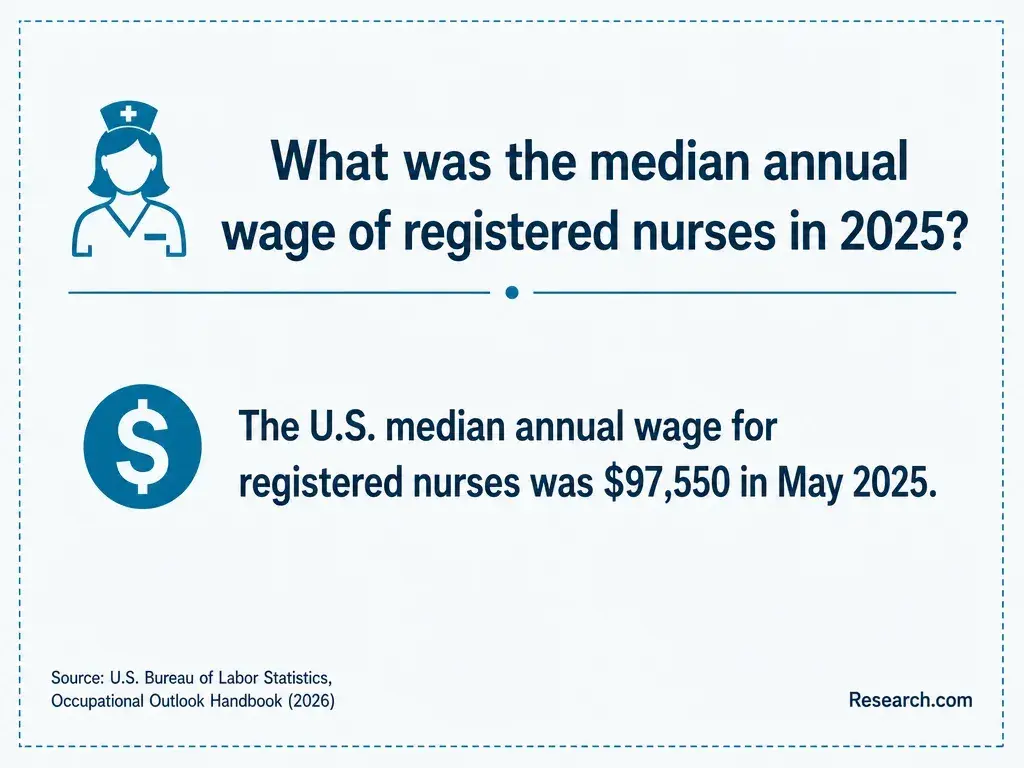
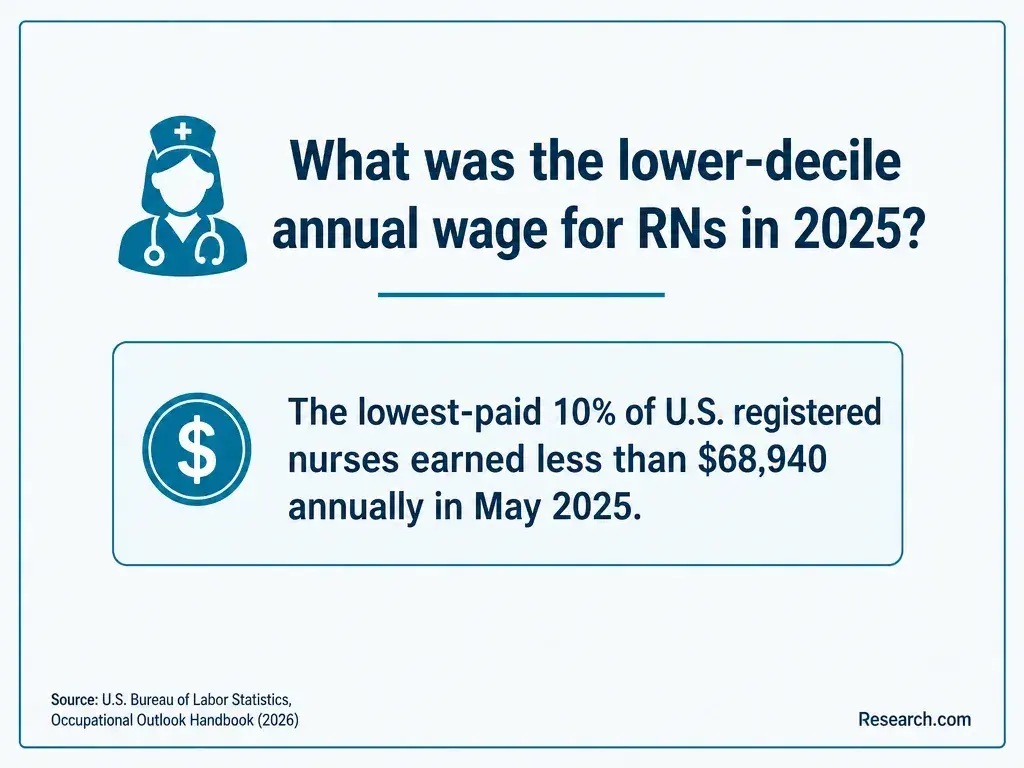
For labor-market context, compare the U.S. Bureau of Labor Statistics' occupation-specific employment projections and metropolitan wage estimates with current postings for your license and experience level. National RN outlook figures do not establish growth in a particular city, and advertised pay does not guarantee an offer. If a future leadership or advanced practice goal requires doctoral education, shorter routes to a DNP degree may be worth examining; a DNP alone does not qualify someone for an APRN role. Choose the current job for its documented conditions and credible next steps, not a promotion that has not been offered.
Other Things You Should Know About Nursing
No. Treat it as one-time compensation. Read the payment schedule, tax treatment, and repayment terms if you leave early.
Often, yes. Ask whether base pay, differential, relocation support, start date, or orientation terms are flexible, and get any agreed changes in writing.
Request a reasonable extension and a virtual unit conversation. If you cannot verify essential housing, worksite, or licensing details in time, recognize that uncertainty as part of the decision.
Yes, if the move affects household income. Build a second budget that assumes a realistic period before your partner finds work, rather than relying on an unconfirmed salary.
- Alternative Work Schedules | U.S. Office of Personnel Management https://www.opm.gov/policy-data-oversight/pay-leave/reference-materials/handbooks/alternative-work-schedules/
- What You Should Know About Your Retirement Plan | dol.gov https://www.dol.gov/node/63395
- Vesting schedules for matching contributions | Internal Revenue Service https://www.irs.gov/retirement-plans/issue-snapshot-vesting-schedules-for-matching-contributions
- Health Benefits | Current Employees - UF Human Resources https://hr.ufl.edu/benefits/health/
- Employer-Sponsored Health Insurance 101 | KFF https://www.kff.org/health-costs/health-policy-101-employer-sponsored-health-insurance/
- Understanding Shift Differential Pay | BambooHR https://www.bamboohr.com/resources/hr-glossary/shift-differential
- Shift Differential | What it Means and How to Calculate It https://www.adp.com/resources/articles-and-insights/articles/s/shift-differential.aspx
- Commuting, Costs, and Timing: A Fed's Guide to Moving Smart | Serving Those Who Serve | Serving Those Who Serve https://www.stwserve.com/commuting-costs-and-timing-a-feds-guide-to-moving-smart/
- Overtime, Shift Differentials, and Incentive Pay | affiliatedhrpayroll.com https://blog.affiliatedhrpayroll.com/overtime-shift-differentials-and-incentive-pay
- What Percentage of Income Should Go to Rent and Utilities? | sofi.com https://www.sofi.com/learn/content/percentage-of-income-to-rent/