2027 Choosing an Online Data Science Master's for a Career in Forestry

Co-Founder and Chief Data Scientist
An online data science master's can help forestry professionals analyze satellite imagery, forest inventories, wildfire risk, and other complex environmental data - but a general-purpose degree may leave important gaps in geospatial methods and forest science.
If you work in forestry or want to enter the field, the choice is not simply whether to study data science online. It is whether a program gives you the technical training, relevant projects, and domain support needed for the forestry role you want.
Key Things You Should Know
- Prioritize programs that combine statistics and machine learning with substantial geospatial work and room for a forestry-focused project; a course title alone does not establish that depth.
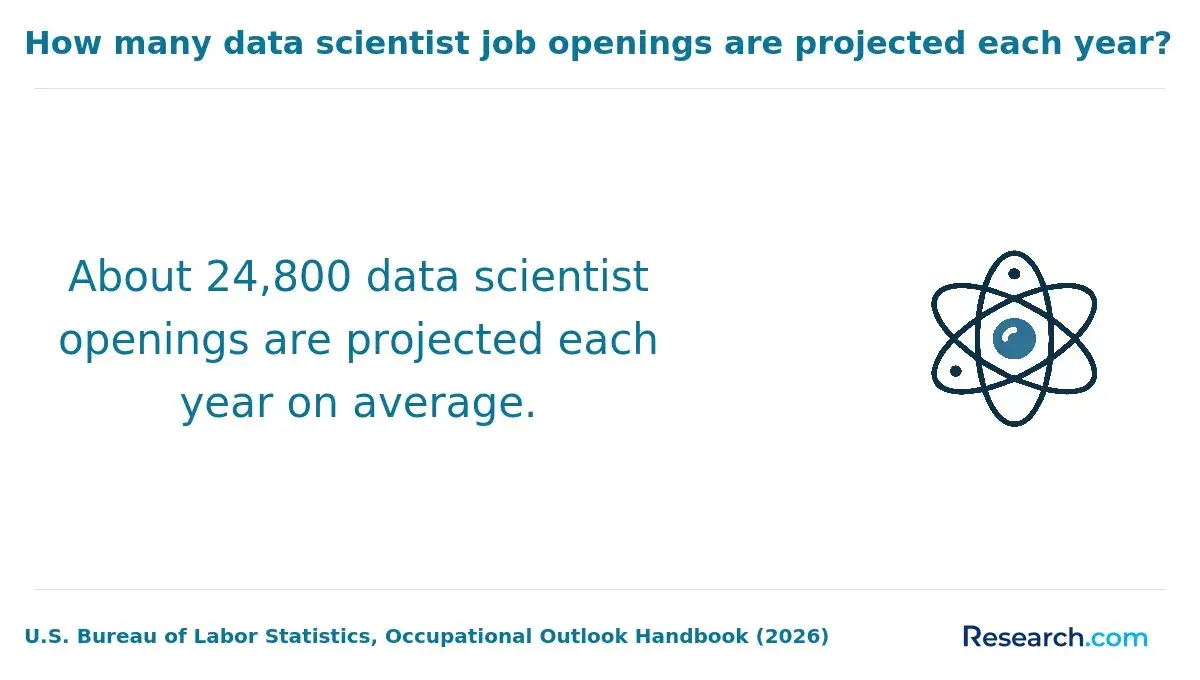
- For salary context, the U.S. Bureau of Labor Statistics reports a $120,230 median annual wage for data scientists in May 2025 - not a forestry-specific salary or a predicted graduate outcome.
- Before enrolling, verify institutional accreditation, your state's online enrollment eligibility, the full program cost, and whether you can use forest data in a capstone or portfolio project.
What Is Data Science in Forestry?
Data science in forestry means turning observations of forests into evidence for decisions about management, conservation, fire, timber, and carbon. The data may come from field plots, aerial or satellite imagery, lidar, weather records, and geographic information systems (GIS). A useful analysis connects those sources to a defined question - for example, where a forest condition appears to be changing - and states how uncertain the answer is.
Forestry data create challenges that a generic business dataset may not. Measurements can represent different geographic areas and dates; field plots cover limited locations; imagery may be affected by clouds or seasonal changes. A model that performs well on nearby observations might perform poorly in a different forest. Look for a program that teaches students to test results across locations and time, not just to report an overall accuracy score.
How Can an Online Data Science Master's Prepare You for Forestry Careers?
An online master's can build the programming, statistical, and data-engineering skills needed to work with large forest datasets. Its value for forestry depends on whether you can apply those skills to spatial data and receive feedback from people who understand environmental questions. A forestry professional may need more advanced computation; a software professional may need more grounding in forest measurement and management. The same curriculum will not close both gaps equally well.
Before applying, ask whether the program permits an independent project using forestry data, offers geospatial or remote-sensing electives, and allows collaboration with an outside forestry organization.
Ask who can supervise such a project. Career connections also matter: when reviewing networking opportunities through AI master's alumni, look for actual connections to environmental agencies, research groups, or natural-resource employers rather than assuming a large alumni network serves every industry.
What Jobs Can You Get With a Data Science Master's in Forestry?
Possible targets include geospatial data analyst, remote-sensing analyst, forest-inventory analyst, environmental data scientist, and research data specialist. Job titles vary by employer, and some positions emphasize GIS or ecology more than machine learning. Read postings for the work itself: producing maps for operational decisions differs from developing predictive models or maintaining data pipelines.
A master's is most useful when it closes a documented skills gap for your target role. An experienced forester seeking a more analytical position might first compare job postings with their current skills; a candidate aiming at research-heavy modeling may benefit more from graduate statistics and a substantial project.
If your preferred work is instead clinical technology, graduate AI training for healthcare innovation careers is a different specialization to evaluate, not a substitute for forestry preparation.
Which Accreditation Should an Online Data Science Master's Have?
Check that the university holds institutional accreditation recognized by the U.S. Department of Education. Verify its current status through the accreditor or the Department's accreditation database rather than relying on a program advertisement. Institutional accreditation matters when assessing a credential and potential eligibility for federal student aid, but it does not establish that the data science curriculum is strong in forestry.
Do not confuse accreditation with permission to enroll online from your state. Before paying an application or enrollment fee, confirm that the institution can enroll a student where you live. If a program includes an internship, field placement, or professional credential pathway, ask whether any additional location-specific rules apply.
What Do You Learn in an Online Data Science Master's for Forestry?
A strong curriculum for this goal starts with statistical inference, programming, databases, machine learning, and reproducible analysis. It should then give students a meaningful way to work with GIS, remote sensing, or other spatial methods. A catalog mention of "geospatial applications" is weaker evidence than a dedicated course with assignments; a forestry-focused capstone provides stronger evidence of applied depth.
The table connects common forestry questions to the methods a student might need. It describes possible academic preparation, not a promise that any particular program offers it.
| Forestry question | Relevant data | Useful methods |
| Where is forest condition changing? | Imagery and field observations across dates | Image analysis, change detection, and spatial validation |
| How should forest inventory be estimated? | Field plots and mapped forest characteristics | Sampling, uncertainty estimation, and spatial statistics |
| Where might fire-related conditions warrant closer review? | Vegetation, terrain, and weather data | Predictive modeling, model calibration, and clear risk communication |
For a capstone, prefer a specific decision and an evaluation plan over a visually impressive map alone. For example, a project estimating change in forest cover should document data dates, compare predictions with observations withheld from training, identify where errors cluster, and explain what a manager should not conclude from the results.
What Are the Admission Requirements for Online Data Science Master's Programs?
Admissions requirements vary. Programs may ask for a bachelor's degree, transcripts, evidence of quantitative preparation, programming experience, recommendations, or a statement of purpose. Do not assume that a forestry degree either satisfies or fails a program's prerequisites: compare your actual coursework and experience with its published requirements, then ask admissions staff how any gaps can be addressed.
A forestry applicant can demonstrate readiness through statistics coursework, Python or R work, GIS analysis, or a reproducible project. A computing applicant can show forestry fit through relevant work or a well-defined project proposal. If writing an admissions essay is a barrier, online machine learning master's degrees with no application essay provide a comparison point, but confirm each program's current requirements and forestry-project flexibility before treating it as a viable option.
How Long Does an Online Data Science Master's Take and Cost?
There is no reliable single price or completion time for online data science master's programs. Credit requirements, tuition policies, fees, course availability, and a student's pace vary by school. Request a written estimate based on your residency and intended schedule, including mandatory fees, software or equipment, and any travel or project expenses. Check whether taking fewer courses changes per-credit charges or access to aid.
Compare the cost with the preparation you will actually receive. Inexpensive online artificial intelligence programs may be worth reviewing if price is decisive, but a lower advertised tuition figure is not a better value if the curriculum lacks the spatial analysis or project support your forestry target role needs. Employer tuition assistance and the income you may forgo while studying can also change the calculation; neither should be assumed without checking your circumstances.
How Do Online and Campus Data Science Master's Programs Compare?
Online study can suit a working forester who wants to keep a job and use workplace questions for projects. Campus study may offer easier access to field researchers, labs, or in-person collaborators. Neither format is inherently better for forestry: compare the faculty and project access you would actually have, including whether an online student can work with a geospatial researcher.
Ask about live-session times, group-project scheduling, access to computing and GIS software, and any required campus visits. Online graduate AI programs with accelerated timelines may appeal to students seeking a faster path, but pace is a trade-off if it leaves little time to acquire forestry domain knowledge or complete a credible spatial project. Choose an accelerated format only if its workload and course sequence fit your existing preparation.
What Salaries and Job Outlook Can Forestry Data Scientists Expect?
The U.S. Bureau of Labor Statistics projects data scientist employment to grow 35% from 2025 to 2035. That national projection signals demand for the occupation overall; it does not forecast forestry-specific openings, hiring in your region, or the return on a particular degree. Forestry-focused candidates may also compete for roles classified under other occupational titles, so one data scientist figure cannot describe the whole market.
Use the national data scientist median wage noted earlier as context, not as a salary expectation. To judge a program's likely value for you, examine current postings for your intended role and location, note the skills and experience they request, and compare those requirements with the courses and projects you could complete. Treat any school-reported graduate salary carefully unless it identifies the surveyed population, response rate, time period, and prior experience.
Do Forestry Data Science Careers Require Licenses or Certifications?
A data science master's does not, by itself, grant a forestry license or professional certification. Requirements depend on the duties, employer, credential, and state. This distinction matters if you want a position that involves professional forestry responsibilities rather than a supporting analytics role: confirm the applicable rules with the relevant state board or employer before choosing a degree.
Optional GIS, cloud, or other technical certifications may help demonstrate tool proficiency, but they are not interchangeable with a graduate project that shows sound analysis of forest data. Avoid paying for a credential because a job title sounds licensed; check the actual posting and the governing requirements first.
Other Things You Should Know About Data Science
Yes. Public forest-inventory and satellite-imagery datasets can support a project. Check their documentation, geographic coverage, and use terms, and choose a question you can evaluate with available observations.
Not necessarily. A narrower project on vegetation change or conditions associated with fire risk may be more defensible. Define what the model predicts and avoid presenting a risk estimate as a certain event.
No. An academic estimate is not the same as verification under a carbon-credit program's rules. It can demonstrate measurement and uncertainty analysis without claiming that credits have been validated.
Not always. Precise locations can raise concerns for sensitive species, private land, or restricted data. Review dataset permissions and publish a less precise view when exact coordinates are unnecessary to explain your work.
References
- Remote Sensing - Forest Service Research and Development https://research.fs.usda.gov/inventory/remotesensing
- Post-Secondary Employment Outcomes Tool Shows What You Might Earn Depending on the College You Attend | Census.gov https://www.census.gov/library/stories/2022/06/job-and-earnings-prospects-by-college-and-degree.html
- DAPIP | Homepage - Office of Postsecondary Education (OPE) https://ope.ed.gov/dapip/
- Forestry Education | Ohio Department of Natural Resources https://ohiodnr.gov/wps/portal/gov/odnr/discover-and-learn/safety-conservation/about-ODNR/forestry/careers-education/education
- How to Become an Environmental Data Scientist | Michigan Technological University https://www.mtu.edu/forest/undergraduate/environmental-data-science/how/
- Geospatial Data Sciences | umich.edu https://seas.umich.edu/academics/master-science/geospatial-data-sciences
- Master of Forestry - MF - Yale School of the Environment https://environment.yale.edu/academics/masters/mf
- What You Can Do with a Master's in Data Science and Artificial Intelligence | Harvard Extension School https://extension.harvard.edu/blog/what-you-can-do-with-a-masters-in-data-science-and-artificial-intelligence/
- MS Admissions & Requirements | Artificial Intelligence | American University https://www.american.edu/cas/ai/masters/ms-requirements.cfm
- Application of LiDAR in Forest Management | Alabama Cooperative Extension System https://www.aces.edu/blog/topics/forestry/application-of-lidar-in-forest-management/