
2027 Data Science Master's Admissions Interviews: Questions to Prepare For

Co-Founder and Chief Data Scientist
A data science master's admissions interview is your chance to show how you reason, learn, and connect the degree to a credible goal - not just recite technical terms. If you have an interview coming up, preparation should start with the program's stated expectations and your own application.
This guide covers questions worth practicing, ways to explain your work honestly, and signs that a program fits the skills and career direction you want to develop.
Key Things You Should Know
- Prepare specific examples of technical reasoning, collaboration, and program fit; an interviewer may explore any of these, but the format varies by school. For technical questions, explain your assumptions, method, validation, and limitations.
- Clear reasoning is more useful than naming an advanced model without justifying it.
- The U.S. Bureau of Labor Statistics projects 35% employment growth for data scientists from 2025 to 2035; use that outlook as career context, not as a promise of a job after graduation.
What questions are common in data science master's admissions interviews?
Interview questions typically test whether your interests, preparation, and expectations match the program. Not every school interviews applicants, and a conversation with faculty may differ from one with an admissions representative. Check your invitation for the format, participants, and any requested presentation or exercise.
Practice answering questions in these groups, using the actual program and your own work rather than a memorized script:
- Motivation and fit: Why this degree now? Why this program rather than a statistics, computer science, or AI program? Which courses or projects support your goal?
- Project ownership: Describe a project from problem definition through results. What did you personally do, what failed, and what would you change?
- Technical judgment: How would you handle missing data, prevent data leakage, choose an evaluation metric, or decide whether a simple model is sufficient?
- Collaboration and ethics: Tell us about a disagreement, an ambiguous request, or a time you had to explain a model's limitations to a nontechnical audience.
- Readiness: Which mathematical or programming skills are strongest, and how will you address a gap before graduate coursework begins?
A strong answer to "Why this program?" identifies a feature you have verified - such as a required course, project format, or scheduling policy - and explains why it matters to your goals. A generic answer about the university's reputation does not establish that fit.
How should you answer technical data science interview questions?
Make your reasoning visible. If asked how you would predict customer churn, first clarify when the prediction must be made, what data exists at that point, and what decision the prediction will support. Then describe a defensible baseline, a way to split the data, an appropriate metric, and the risks of leakage or biased data. You do not need to pretend there is one universally correct model.
Use this sequence when practicing an unfamiliar technical prompt:
- Define the task: State the target, unit of analysis, available inputs, and any missing information you would ask for.
- Choose a starting approach: Explain a simple baseline before proposing a more complex method.
- Validate the result: Describe a split that reflects how the model would be used, then choose a metric tied to the decision.
- Discuss limitations: Identify possible leakage, data quality issues, fairness concerns, or changes in the underlying process.
Review fundamentals that appear in your application: probability, statistical inference, linear algebra, programming, SQL, and model evaluation, as relevant to your experience. If you have not used a method, say so and explain how you would investigate it. Claiming expertise you cannot defend is a more serious mistake than acknowledging a learnable gap.
How can you prepare for behavioral data science interview questions?
Choose a few real experiences that show different strengths: working through uncertainty, collaborating across roles, recovering from an error, and communicating a result. For each, briefly establish the situation, your responsibility, the action you took, and what happened. Distinguish your contribution from the team's; an interviewer may ask follow-up questions about either.
For example, if you describe a model that performed poorly, explain how you discovered the problem, what you changed, and what you learned about evaluation. An honest account of a failed approach can demonstrate more judgment than an unsupported claim of success. If your background is outside data science, a research, business, or engineering example can still show relevant problem-solving - just be clear about which technical skills you have and have not practiced.
Rehearse aloud and keep an example of explaining a technical result to a nontechnical stakeholder. Avoid answers that blame teammates, imply a model was useful solely because its score improved, or omit the decision the work was meant to inform.
What are the admission requirements for a data science master's program?
Requirements vary by institution and program. A program may request a bachelor's degree, transcripts, recommendations, a statement of purpose, a résumé, and evidence of quantitative or programming preparation. Test, language-proficiency, portfolio, and interview policies also vary. Treat the current admissions page for your intended entry term as authoritative; do not assume an interview is required or that receiving one signals admission.
Before the conversation, compare your application with the published criteria. Be ready to explain an unusual transcript, a change of field, or a period away from school without presenting an explanation as a substitute for a stated prerequisite. If you are unsure whether work experience or a noncredit course satisfies a requirement, ask admissions for a determination rather than guessing.
What prerequisite skills and coursework do data science master's programs expect?
Many data science curricula build on programming, statistics, and mathematical reasoning, but the required level - and whether coursework must appear on a transcript - depends on the program. Your interview preparation should separate formal eligibility from readiness to succeed: self-study can strengthen your explanations without necessarily fulfilling a required college course.
Map each published prerequisite to evidence you can discuss: a transcript for formal coursework, a project for applied skill, or work experience for a specific task you performed. If you lack preparation, identify the gap and a realistic plan to address it. Applicants considering a more specialized route can also examine budget-friendly ML master's programs under $20,000, while checking whether their prerequisites match their background.
How do online and on-campus data science master's programs compare?
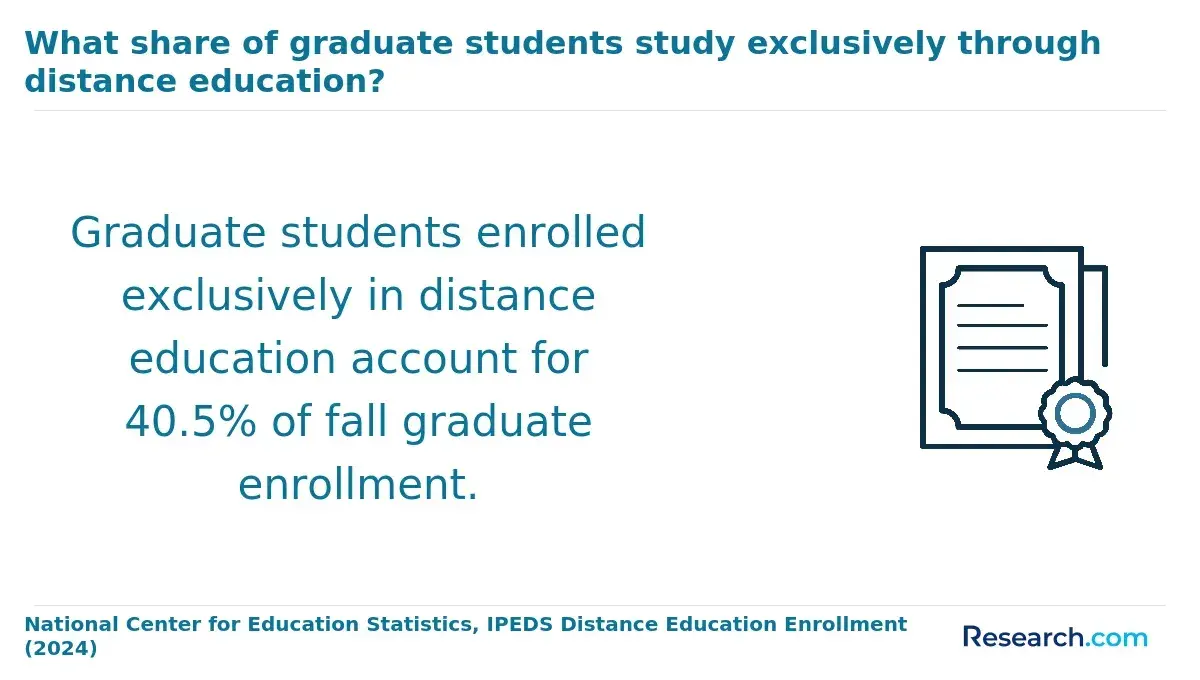
Format matters in an interview because it affects how you will participate in group work, seek help, and complete projects. Neither format is inherently less rigorous; assess the specific program's courses and expectations. This comparison highlights practical differences to investigate rather than rules that apply to every school.
| Consideration | Online program | On-campus program |
| Class participation | May be asynchronous, scheduled live, or a mix | Usually includes scheduled in-person meetings |
| Collaboration | May require remote group coordination across schedules | May offer more opportunities for in-person collaboration |
| Location | May allow study without relocating, subject to enrollment policies | Usually requires regular access to campus |
Ask whether live attendance, campus visits, or fixed-time exams are required. If professional connections matter to you, ask how students meet faculty, peers, and graduates; do not assume that delivery format alone determines access. You can also compare AI master's options with professional alumni networks if that alternative better matches your goals.
What do you learn in a data science master's program?
Curricula differ, but relevant subjects may include statistical modeling, machine learning, programming, data management, visualization, and responsible use of data. For interview purposes, the key is not to name every topic: explain which skills you need, what you already know, and how specific courses or projects would close the gap.
Read beyond course titles. A program that mentions data engineering in an overview may provide different depth from one with dedicated coursework and a substantial pipeline project. If building and maintaining data pipelines is central to your goal, compare the curriculum with artificial intelligence master's options covering data pipelines. In an interview, asking how students apply those skills is more revealing than asking whether the program "covers AI."
How long does a data science master's degree take and cost?
Completion time and total cost depend on credit requirements, course availability, enrollment pace, tuition policy, and fees. Published tuition alone may exclude required fees, materials, travel, or the cost of extending your studies. Confirm the current figures for your intended term directly with the institution before making a financial commitment.
If interviewers ask why you chose a particular pace, connect your answer to the time you can actually devote to coursework and projects. Ask whether required courses are offered often enough to support your plan. If you are comparing related degrees on price, compare tuition for online AI degrees using the same cost components; a lower advertised tuition figure is not necessarily a lower total cost.
What careers and salaries can a data science master's degree lead to?
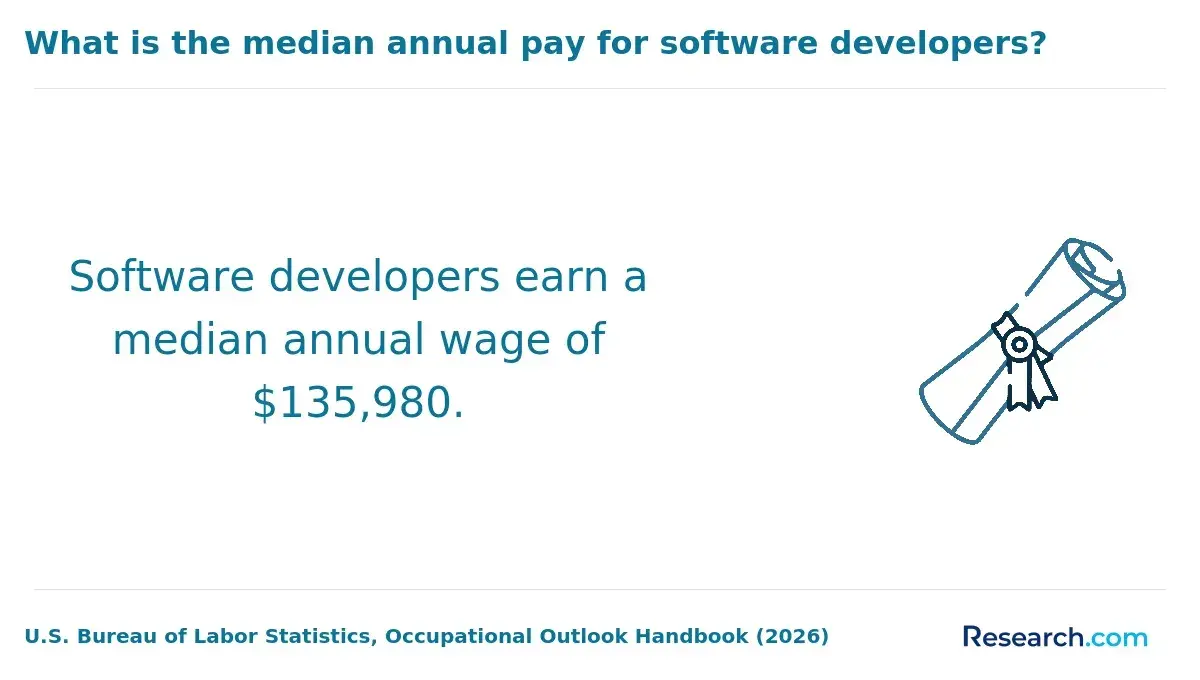
Depending on your prior experience and the curriculum, a master's may support a move toward data scientist, machine learning, analytics, or data-focused engineering roles. Job titles overlap, so investigate the skills required in roles you actually want. The U.S. Bureau of Labor Statistics reports a $120,230 median annual wage for data scientists in May 2025. That is a figure for workers in the occupation, not a starting salary or an outcome attributable to a master's degree.
In an interview, make your target role specific: name the problems you want to solve and the skills you need to develop, without treating a labor-market forecast as a personal guarantee. If speed of completion is a priority, examine shorter data science master's programs and career considerations alongside curriculum depth and your available study time.
How can you choose an accredited data science master's program?
Verify the institution's current accreditation through the accreditor or an official institutional listing, and check that the program and delivery format meet your needs. Institutional accreditation does not, by itself, establish that a particular curriculum is the best fit for your career goal. If you plan to study online from another state, confirm that the institution can enroll students where you live.
Use the admissions interview as a two-way evaluation. Ask who teaches the courses most relevant to you, how students receive feedback on projects, and whether your intended course sequence is feasible. Afterward, compare the answers with the catalog and published policies. A vague response to a question that materially affects your enrollment is a reason to seek clarification before accepting an offer.
Other Things You Should Know About Data Science
Usually, brief notes can help you remember questions for the interviewer, but follow any instructions in your invitation. Avoid reading prepared answers word for word; it makes follow-up discussion harder.
Ask the interviewer to repeat or clarify it. For a technical prompt, state your interpretation and any assumptions before answering.
Ask about an unresolved decision factor, such as access to project supervision or how students with your background prepare for the first term. Choose questions whose answers you could not readily find in published materials.
A brief thank-you is appropriate if you have a contact address and the program has not requested otherwise. Mention one useful point from the conversation and keep any substantive follow-up question concise.
References
- Behavioral Interviewing - CalHR Website - CA.gov https://www.calhr.ca.gov/about-calhr/divisions-programs/personnel-management/performance-management/behavioral-interviewing/
- Interview Tips | dol.gov https://www.dol.gov/general/jobs/interview-tips
- Explain a gap in employment | Get careers information and advice | National Careers Service https://nationalcareers.service.gov.uk/careers-advice/explain-gaps-in-work-history
- Structured Interviews | U.S. Office of Personnel Management https://www.opm.gov/policy-data-oversight/assessment-and-selection/structured-interviews/
- Best Practices for Reducing Bias in the Interview Process - PMC https://pmc.ncbi.nlm.nih.gov/articles/PMC9553626/
- Interviewing - Mignone Center for Career Success | Harvard FAS https://careerservices.fas.harvard.edu/resources/interviewing/
- Application Tips | ITS Internship Program https://internship.its.umich.edu/application-tips
- 12 Data Science Skills (+10 Hard-Won Career Lessons) | Syracuse University https://ischool.syracuse.edu/data-science-skills/
- 6 Questions to Ask Before Pursuing a Master's Degree in Data Science | UW Online Collaboratives https://uwex.wisconsin.edu/stories-news/6-questions-to-ask-before-pursuing-a-masters-degree-in-data-science/
- Episode 3. Competency: What does it mean for medical school applicants? | Academic Advising https://advising.stanford.edu/beyond-undergrad/graduate-considerations/pre-prof-podcast/episode-3-competency-what-does-it-mean


