2027 Cheapest Accredited Online Public Policy Master's Programs With No Out-of-State Tuition Surcharge

Co-Founder and Chief Data Scientist
An online public policy master's can be substantially more expensive for nonresidents when a public university applies its standard out-of-state rate. For context, NCES reported average graduate tuition and required fees at public institutions of $12,596 for in-state students and $22,782 for out-of-state students in 2022-23.
This guide helps working professionals and career changers identify residency-neutral online options, verify accreditation, estimate the full cost, and decide whether a lower-priced MPP, MPA, MA, or MS fits their policy career goals.
Key Things You Should Know
- A true no-out-of-state-surcharge online program charges the same published tuition to eligible students regardless of where they live, but it is not automatically the lowest-total-cost option after fees, required travel, and credit requirements.
- Institutional accreditation is essential. NASPAA accreditation can be an additional quality signal for MPA and MPP programs, although it is not required for every credible public policy master's degree.
- Compare required credits multiplied by the online tuition rate, then subtract grants, scholarships, employer support, and eligible transfer credit savings. Federal Direct Unsubsidized Loans for graduate students have an annual borrowing limit of $20,500.
What Does No Out-Of-State Tuition Surcharge Mean for an Online Public Policy Master's Program?
No out-of-state tuition surcharge means an institution does not add a higher nonresident tuition rate solely because an online student lives outside the state. The school may describe this as "one online tuition rate," "flat online tuition," "distance-learning tuition," or tuition available to all domestic students.
This policy is different from receiving traditional in-state tuition. A residency-neutral rate may be lower than the university's out-of-state campus rate but higher than its resident campus rate. It also may apply only to designated online programs, not every graduate degree offered by the university.
The practical comparison is between the school's published online program price and its total charges, rather than between labels. The following distinctions help prevent a costly misunderstanding.
| Tuition model | What an out-of-state online student pays | Best fit | Key caution |
| Residency-neutral online tuition | The same stated rate as other eligible online students | Professionals who do not plan to relocate | Fees and exclusions may still differ by course or program |
| Traditional resident and nonresident rates | A higher rate unless eligible for residency or a waiver | Current residents or students with a documented waiver | Residency rules can be stricter than expected |
| Temporary nonresident waiver | Reduced rate under specified conditions | Students who clearly meet the waiver criteria | The award can expire or exclude online enrollment |
| Private nonprofit flat tuition | Usually one rate regardless of residence | Students comparing total price and format options | A flat rate is not necessarily inexpensive |
Before treating a rate as residency-neutral, ask admissions to confirm in writing that it applies to the exact online MPP, MPA, MA, or MS pathway, your intended start term, and your state of residence. Students considering broader interdisciplinary policy work may also compare curriculum flexibility with the most affordable online interdisciplinary studies programs, but should confirm that the degree includes policy analysis, economics, statistics, and public management coursework needed for their goals.
How Can Students Verify Accreditation for an Affordable Online Public Policy Master's Program?
Accreditation is the first nonnegotiable check in an affordable online public policy master's search. Institutional accreditation evaluates the university as a whole and affects federal aid eligibility, employer recognition, and the transferability of graduate credit.
Verify the institution in the U.S. Department of Education's Database of Accredited Postsecondary Institutions and Programs and confirm that the accreditor is currently recognized.
Programmatic accreditation is a separate question. The Network of Schools of Public Policy, Affairs, and Administration, commonly called NASPAA, accredits eligible public-service programs, including many MPA and MPP degrees. NASPAA accreditation can indicate that a program has completed peer review against field-specific standards, but its absence does not by itself prove that a program is poor or ineligible for a policy career.
Use this verification sequence before paying an application fee:
- Locate the university's institutional accreditation statement and identify the accrediting organization.
- Confirm the institution and accreditor in the federal accreditation database.
- Search NASPAA's program directory if field-specific accreditation matters to your employer, fellowship, or doctoral plans.
- Read the online program page to confirm that the degree title, delivery format, and campus location match the listing.
- Ask whether the online curriculum, faculty access, capstone, and transcript are the same as or meaningfully equivalent to the university's established program.
A common mistake is assuming that a university's accreditation automatically means a particular online specialization has the same professional standing as an on-campus degree. Another is treating programmatic accreditation as a licensing requirement. Public policy roles generally do not have a universal professional license, so the relevant test is whether the curriculum and credential match the employer or career path you want.
Students exploring people-centered public-service work can also evaluate a counseling degree online, although counseling programs commonly have separate practicum, licensure, and accreditation considerations that do not apply to most policy degrees.
How Much Does the Cheapest Online Public Policy Master's Program Cost in Total?
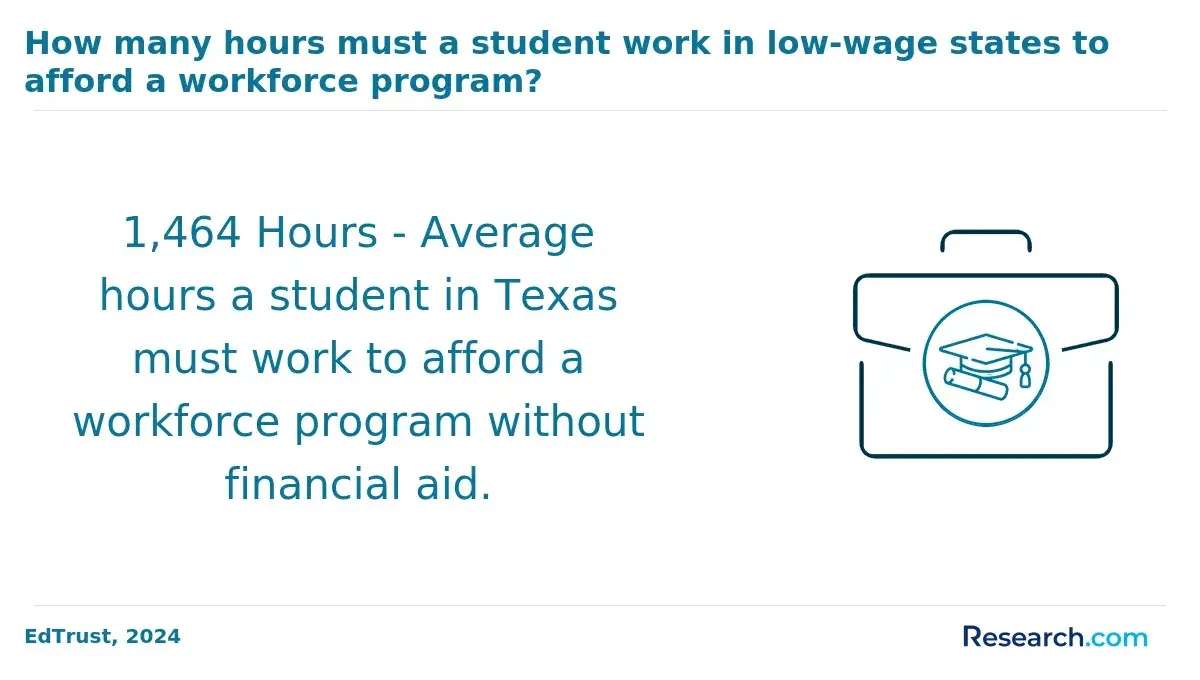
The cheapest advertised per-credit rate is not necessarily the cheapest degree. Total tuition depends on the number of credits required after any approved transfer credit, while total cost also includes mandatory fees, books, software, travel, and any required in-person activity.
Calculate a comparable pre-aid estimate with this formula: required billable credits × tuition per credit + mandatory program fees + unavoidable travel or residency costs. The example below is illustrative, not a quote from a specific university; it shows why the credit count matters as much as the tuition rate.
| Illustrative cost component | Example calculation | Estimated amount |
| Tuition | 36 credits × $450 per credit | $16,200 |
| Required graduate or distance-learning fees | School-specific annual or term charges | Verify separately |
| Books, databases, and software | Depends on course design | Verify separately |
| Required campus visit or capstone travel | Transportation, lodging, and meals if applicable | Verify separately |
| Estimated tuition before fees | $16,200 | $16,200 |
Request a term-by-term estimate rather than relying on a marketing page that says "starting at" a certain amount. Ask whether tuition can change after enrollment, whether different courses carry different rates, and whether the quoted figure includes the university's mandatory technology, distance-learning, student-service, graduation, or course fees.
A 30-credit program at a somewhat higher per-credit price can cost less than a 42-credit program with a lower rate. Conversely, a program that looks inexpensive in tuition may become less competitive if it requires several campus residencies or a paid internship that reduces work hours. Compare each program using the same credit, fee, and travel assumptions.
Do Online Public Policy Master's Students Have to Establish Residency to Receive the Lowest Tuition Rate?
If an online public policy master's has a published residency-neutral tuition model, students normally do not need to establish state residency to receive that online rate. They should still review eligibility language carefully because some schools limit the rate to domestic students, specific online sections, or students enrolled in particular degree plans.
Residency matters when a school uses its traditional public-university tuition schedule or offers a conditional waiver. Establishing residency can involve domicile, physical-presence, financial-independence, tax, employment, or time-in-state requirements. Moving shortly before enrollment does not necessarily create in-state eligibility.
Get precise answers from both admissions and the bursar's or registrar's office. The questions below identify policies that can alter the price after you enroll:
- Is the quoted online tuition identical for residents and nonresidents in this exact public policy master's program?
- Does the rate apply for every term needed to finish, including summer sessions?
- Are online students charged separate distance-learning, campus, course, or college fees?
- Does changing from part-time to full-time enrollment affect tuition or fees?
- Will a move to another state, an internship placement, or a required residency change the billed rate?
- Can the university provide the answer and the current cost sheet in writing?
Do not spend time or money attempting to establish residency unless the expected savings are documented and the eligibility requirements are realistic. For many working adults, a guaranteed flat online rate is more predictable than a lower resident price that depends on a residency determination.
How Do Public and Private Universities Compare on the Cost of an Online Public Policy Master's Degree?
Public universities can offer strong value when they extend one online rate to all students, but private nonprofit universities also commonly charge the same tuition regardless of residence. The better choice is the program with the lower net cost and stronger fit for your professional goals, not simply the one labeled public or private.
This comparison shows the cost questions that matter more than institutional category.
| Comparison factor | Public university with flat online tuition | Private nonprofit university | How to use it |
| Residency pricing | May be flat for online programs or may retain resident and nonresident rates | Usually one tuition rate | Confirm the exact program's policy |
| Base tuition | Can be lower, especially when state-supported pricing extends online | Can be higher or competitive depending on the program | Multiply the rate by required credits |
| Fees | May include university or online-service fees | May bundle or separately charge program fees | Request a complete billable-cost estimate |
| Scholarships | May vary by department, residency, or enrollment level | May use institutional merit awards | Compare written aid offers, not advertised awards |
| Format and support | Varies by program | Varies by program | Evaluate faculty access, advising, career support, and required travel |
Private nonprofit status does not make a degree automatically better or worse, and public status does not guarantee a lower bill. A private nonprofit program can be the better buy when it accepts more applicable transfer credit, provides a reliable scholarship, includes required services in tuition, or lets a working student finish sooner without campus travel.
Applicants weighing different human-services graduate paths should recognize that degrees have different professional requirements. For example, an MFT online option may involve supervised clinical training and state licensure rules, costs that make it unsuitable as a direct substitute for a policy degree even if its tuition appears competitive.
Can Financial Aid Reduce the Cost of a Cheap Online Public Policy Master's Program?
Financial aid can reduce what you pay, but it does not change the program's sticker price or eliminate the need to compare total cost.
Online graduate students at eligible accredited institutions may generally be considered for federal Direct Unsubsidized Loans and Graduate PLUS Loans after filing the FAFSA. For graduate and professional students, the annual Direct Unsubsidized Loan limit is $20,500; borrowing capacity is not the same as affordability.
Start with aid that does not need to be repaid, then evaluate the remaining balance and repayment risk. A written aid package should make these sources easier to compare. Consider the following:
- University or department scholarships for public administration, public affairs, nonprofit management, policy analysis, or related fields
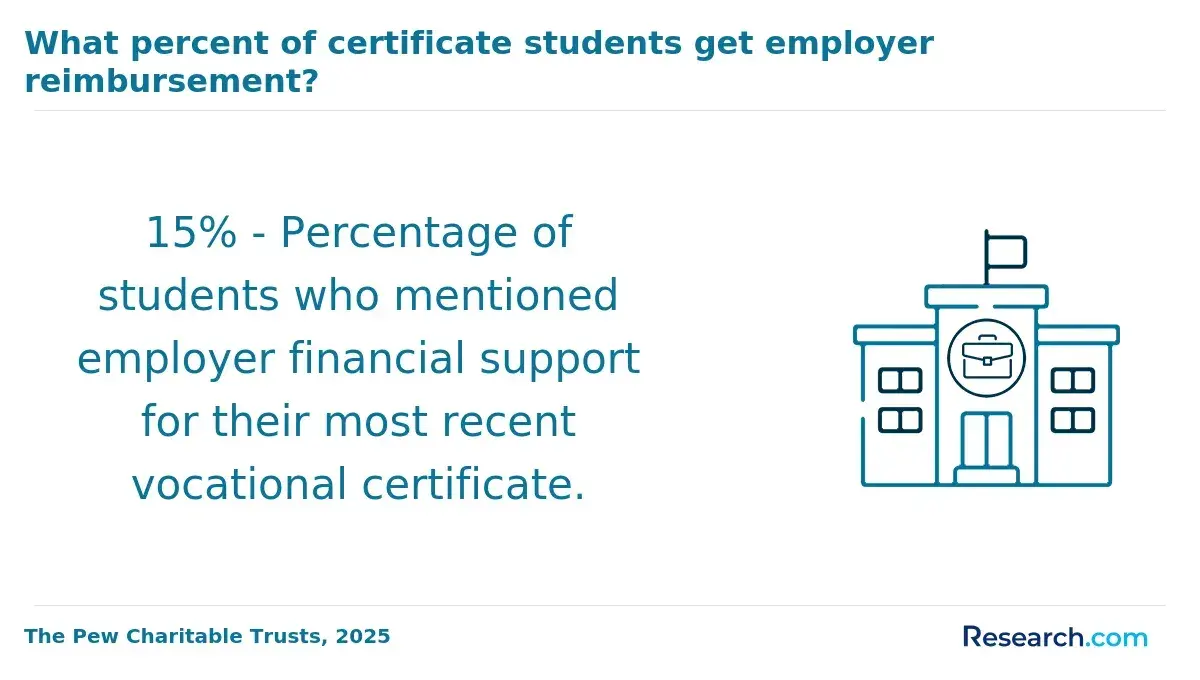
- Employer tuition assistance or reimbursement, including grade, course-approval, service-commitment, and annual-cap requirements
- Federal or state grants when available to eligible students
- Paid fellowships, assistantships, or research opportunities, noting that many are limited for fully online students
- Federal Direct Unsubsidized Loans and, if necessary, Graduate PLUS Loans after reviewing interest, fees, and repayment obligations
Calculate net cost as total estimated educational cost minus confirmed grants, scholarships, employer funds, and other nonrepayable support. Treat loans as financing rather than aid that makes a program cheaper. If an employer pays only after course completion, confirm whether you can cover tuition upfront and whether the employer will reimburse mandatory fees and books.
A common error is selecting a program based on a scholarship headline before confirming renewal standards, enrollment requirements, and whether the award applies to online students. Compare aid letters using the same number of enrolled terms and the same expected completion date.
How Do Program Format and Completion Time Affect the Cost of an Online Public Policy Master's Degree?
Program design affects both direct charges and the indirect cost of time away from work. Most online public policy master's degrees require roughly 30 to 48 credits, although exact requirements vary.
A professional MPP or MPA often emphasizes applied analysis, budgeting, management, implementation, and a capstone, while an MA or MS may be more research-oriented and may offer a thesis option.
Fully online asynchronous programs often suit working professionals because students can complete weekly work around a job. Hybrid programs can provide networking and live instruction, but required campus visits may add transportation, lodging, meals, and lost-work-time costs.
A capstone can be less expensive than a thesis if it avoids extra research enrollment, but the right choice depends on whether you expect to pursue doctoral study or research-intensive policy work.
Use the format comparison below to connect academic design with the costs you will actually incur.
| Format or pace | Potential cost advantage | Potential cost risk | Best fit |
| Fully online asynchronous | May avoid relocation and scheduled campus travel | Requires strong time management and may still include fees | Working professionals needing schedule flexibility |
| Fully online synchronous | Can provide real-time faculty and peer interaction | Fixed meeting times can conflict with work obligations | Students who benefit from structured live sessions |
| Hybrid or low-residency | In-person networking may add value | Travel costs can materially increase total cost | Students able to budget for required visits |
| Accelerated | May reduce time-related expenses and reach completion sooner | Heavy course loads can reduce work capacity or increase withdrawals | Students with sufficient time and academic preparation |
| Part-time traditional pace | Can spread payments over more terms | May increase exposure to future tuition increases and prolong fees | Students balancing employment or caregiving |
Faster is not always cheaper. An accelerated plan can reduce the number of terms and help you apply skills sooner, but it can be financially counterproductive if the pace forces you to reduce paid work or repeat a course. The same timing trade-off appears in a cyber security fast track program: speed has value only when course intensity, support, and total cost fit the student's situation.
How Much Can Transfer Credits Reduce the Cost of an Online Public Policy Master's Degree?
Transfer credit can reduce total tuition only when a university accepts prior graduate-level work that fits its curriculum and remains within its transfer limits. Many master's programs restrict the number of transfer credits, require a minimum grade, limit how old the credit can be, and require that coursework come from an accredited institution.
Some students may also qualify for advanced standing based on prior graduate study, a completed related degree, or specific professional preparation. Do not assume that work experience, certificates, military training, or undergraduate courses will replace graduate credits unless the program explicitly says so.
Estimate the possible savings only after learning how many credits the school will accept. If a program costs $500 per credit and accepts 6 applicable credits, the tuition reduction would be $3,000 before considering any separate transfer-evaluation fee. That calculation is useful for comparison, but it is not a promise that credits will transfer.
Submit official transcripts early and ask for a preliminary evaluation before making an enrollment decision. Request written answers on whether transferred courses satisfy core requirements or only electives, whether transfer credits affect concentration options, and whether they shorten the time to graduation. A program with a slightly higher tuition rate can cost less overall if it accepts more high-quality, applicable graduate credit.
The main red flag is a school that gives only a vague assurance that credits "may transfer." Base your financial comparison on approved or clearly documented eligible credits, not on an optimistic assumption.
Is a Cheap Online Public Policy Master's Degree Worth the Cost for Career Advancement?
A cheap online public policy master's can be worthwhile when it develops skills that match the role you want and keeps borrowing manageable. The degree is especially relevant for policy analyst, program analyst, legislative staff, government relations, nonprofit management, research, community-development, and public-administration roles. Employers may value the credential differently depending on the sector, job level, prior experience, local hiring market, and the program's curriculum.
Public policy coursework commonly builds policy research, quantitative and qualitative analysis, program evaluation, budgeting, economics, ethics, stakeholder communication, and evidence-based writing skills. Strong programs connect these skills to applied projects, data tools, internships, client-based capstones, or policy memos rather than relying only on general discussion courses.
Labor-market data should be used as context rather than as a salary promise. The U.S. Bureau of Labor Statistics reported a 2024 median annual wage of $101,190 for management analysts, an occupation that can overlap with program and policy analysis but does not require a public policy master's for every position. Your likely return depends on the specific job you can pursue, your location, your experience, and the debt required to earn the degree.
Before enrolling, connect the degree to a concrete advancement path:
- Identify three target job postings and note the education, analytical, data, writing, and sector-specific requirements.
- Match those requirements to required courses, concentrations, capstone projects, and experiential learning in each program.
- Ask the program for career-support details, employer relationships, internship expectations, and outcomes it can document.
- Estimate the added earnings or advancement opportunity conservatively, then compare it with your expected out-of-pocket cost and borrowing.
- Choose the least expensive program that still supplies the curriculum, flexibility, reputation, network, and support your target role requires.
Paying more can be sensible when a program offers a needed specialization, credible regional employer connections, meaningful quantitative training, or an accessible network in the government or nonprofit sector where you plan to work. Paying more is less defensible when the additional cost produces no clear improvement in fit, completion likelihood, or career access.
How Should Students Compare the Cheapest Accredited Online Public Policy Master's Programs?
To compare the cheapest accredited online public policy master's programs fairly, create one worksheet for every school using the same assumptions: the same start term, the same expected number of credits, the same transfer-credit estimate, and the same living and travel needs. This prevents a low per-credit figure from obscuring a larger final bill.
The following evaluation framework prioritizes total value rather than advertised tuition alone.
| Decision criterion | What to verify | Why it matters |
| Accreditation | Current institutional accreditation; NASPAA status if relevant | Supports aid eligibility, employer confidence, and credit mobility |
| Residency-neutral rate | Written confirmation for the exact online degree and start term | Prevents unexpected nonresident billing |
| Total tuition | Required credits × published rate after approved transfer credit | Shows the real academic charge |
| Mandatory costs | Technology, course, graduation, residency, books, and travel costs | Identifies expenses excluded from tuition headlines |
| Net cost | Confirmed scholarships and employer funding minus total cost | Supports a realistic borrowing decision |
| Curriculum | Economics, statistics, policy analysis, management, evaluation, and specialization options | Determines career relevance |
| Delivery and timeline | Asynchronous or live classes, pace, campus visits, capstone, and completion window | Determines whether you can finish while working |
| Career fit | Career advising, alumni access, local networks, and project opportunities | Helps translate coursework into advancement |
Ask each school for the current tuition sheet, degree plan, transfer policy, required-residency schedule, accreditation information, and a net-price discussion before making a deposit. Keep copies of email confirmations, especially when a representative confirms that nonresidents receive the same online tuition rate.
Finally, compare alternatives only when they genuinely serve the same professional objective. Someone moving into behavioral services may find BCBA certification programs online more aligned with that goal, while public policy remains the stronger match for work centered on government, nonprofit systems, policy research, or program administration.
Other Things You Should Know About Public Policy Programs
An MPP typically emphasizes policy analysis, economics, research methods, and evaluating policy choices. An MPA generally focuses more on managing public and nonprofit organizations, including budgeting, leadership, and implementation. Many programs overlap, so compare required courses rather than relying on the degree title alone.
Requirements vary by university. Many online programs have made the GRE optional or do not require it, while others may request scores in some circumstances. Review the admissions page for your intended term and ask whether professional experience, quantitative coursework, or other materials can strengthen an application.
Many online programs are designed for working adults, particularly those with asynchronous coursework or part-time enrollment. Review weekly workload expectations, live-session requirements, group projects, capstone deadlines, and any required travel before committing to a course load.
No. Government agencies hire candidates with many educational backgrounds, and requirements vary by role and level. A public policy master's can be useful for positions involving analysis, program evaluation, budgeting, leadership, or advancement, but relevant experience and demonstrated skills also matter.
References
- Best Online Master's in Public Administration (MPA) Programs https://www.onlinemastersdegrees.org/best-programs/public-administration-mpa/
- Policy master's: Cost and funding (Part 4) - Emerging Technology Policy Careers https://emergingtechpolicy.org/pathways/graduate-school/policy-masters/4-cost-and-funding/
- Master of Public Policy (MPP) https://online.cudenver.edu/programs/graduate/online-master-public-policy-mpp
- Find Your Graduate Degree for Public Service https://www.naspaa.org/schools-search
- Best 73 Online MPA Programs for 2024-2025 Academic Year https://www.mastersofpublicadministration.org/top-online-mpa-programs
- Top Scholarships for Out of State Students to Apply for in September 2026 https://bold.org/scholarships/by-type/scholarships-for-out-of-state-students/
- 2025 Most Affordable Online Master's Programs https://www.onlineu.com/most-affordable-colleges/masters-degrees