2027 Online Public Policy Master's Programs With University Scholarships: Awards, Eligibility & Tuition After Aid

Co-Founder and Chief Data Scientist
Graduate tuition can make an online public policy master's difficult to budget for before admissions decisions arrive. College Board's 2024-25 data puts average published tuition and fees at $12,596 for public four-year graduate programs, before living costs and program-specific fees. University scholarships, grants, federal aid, and employer support can reduce that price, but online eligibility varies.
This guide helps prospective MPP and MPA students compare aid opportunities, estimate tuition after awards, prepare stronger applications, and choose a program based on both policy fit and realistic net cost.
Key Things to Know About Public Policy Master's Programs with Scholarships
- Online public policy, public administration, and public affairs master's students may qualify for institutional scholarships, but awards often have separate applications, early deadlines, enrollment rules, and limited funds.
- College Board reported average published tuition and fees of $12,596 for public four-year graduate programs in 2024-25; an award's value should be measured against total program tuition, required fees, and any reduction caused by part-time enrollment.
- The strongest funding strategy usually combines university aid with FAFSA-based federal loans or grants where eligible, employer tuition benefits, and external awards, while confirming that combined aid does not exceed the school's cost-of-attendance limit.
What online Public Policy master's programs offer university scholarships?
Online programs may offer scholarships through the university, graduate school, public affairs school, alumni association, or an affiliated policy center. The important distinction is that a university may make scholarships available to online students without reserving a particular award exclusively for the online MPP or MPA. Applicants should request written confirmation that their delivery format and enrollment level qualify.
The programs below are examples of online or distance-accessible public-service graduate options where students should investigate institutional aid. Availability, award amounts, and residency restrictions can change by admission cycle, so use the table as a screening tool rather than a promise of funding.
| University and program area | Online study option | University-aid question to ask | Best fit for applicants seeking aid |
| University of Southern California Price School | Online Master of Public Administration | Whether Price School scholarships and university graduate aid include online students | Applicants who can compare institutional aid with employer sponsorship |
| Syracuse University Maxwell School | Online Executive MPA pathway | Whether executive-format students qualify for school-based scholarships or only federal aid | Experienced professionals needing a schedule compatible with work |
| Indiana University O'Neill School | Online public affairs and policy-related graduate study | Which O'Neill, campus, or donor awards apply to distance students | Applicants interested in public-sector management and policy analysis |
| University of Illinois Springfield | Online Master of Public Administration | Whether campus scholarships require a separate application or Illinois residency | Applicants comparing public-university tuition and flexible enrollment |
Do not eliminate a program simply because its website does not label an award "online." Ask the financial aid office and program admissions team whether online students can compete for institutional scholarships, whether the award is renewable, and whether a minimum credit load applies.
Public policy is interdisciplinary, so applicants whose interests bridge education, behavioral health, technology, or social services may also compare adjacent fields. For example, funding research for the most affordable online interdisciplinary studies programs can help a student assess whether a broader curriculum would create more scholarship or employer-support options.
What is the average tuition for Public Policy master's programs before aid?
Tuition before aid is the school's published charge for instruction and required academic fees before scholarships, grants, loans, or employer payments are applied. It is not the amount every student ultimately pays, and it excludes many personal costs such as housing, transportation, technology, books, and lost work time.
College Board's 2024-25 Trends in College Pricing report lists average tuition and fees of $12,596 at public four-year graduate institutions. That national figure is useful as a broad benchmark, but it is not a reliable quote for a specific online public policy program because tuition may be charged per credit, by term, or at a flat program rate.
This comparison shows how to turn a tuition quote into a decision-ready estimate without assuming that every award will renew.
| Cost item | What to verify | Why it changes affordability |
| Per-credit or total-program tuition | Total credits required and the current rate for online students | A lower per-credit price can still produce a higher total if the program requires more credits |
| Mandatory fees | Technology, student-service, graduation, residency, and course fees | Scholarships may apply to tuition but not every fee |
| Scholarships and grants | Amount, disbursement schedule, renewal terms, and eligible charges | An annual award may cover only part of a multiyear program |
| Loans and employer benefits | Eligibility, repayment obligation, service requirements, and payment timing | These can close a cash-flow gap but are not equivalent to a grant |
Request a written cost-of-attendance estimate for your expected pace: full time, part time, or accelerated. Working students should also compare employer funding with alternatives such as a cyber security fast track program only when considering a genuine career pivot; a lower-priced program in another field is not automatically a better investment than a policy degree aligned with your goals.
What types of financial aid and scholarships are available for Public Policy master's programs?
Financial aid for a public policy master's can include gift aid, borrowing, employment-based support, and service-linked funding. Scholarships and grants generally do not require repayment if the recipient meets the terms; loans do. Students should evaluate each source by its restrictions, not just its advertised amount.
The most common funding categories are outlined below. A student may be eligible for more than one category, but each program sets its own rules.
- Merit scholarships: University or school awards based on academic record, professional leadership, policy experience, essays, or admission strength; financial need may not be required.
- Need-based grants: Funding based on demonstrated financial need, often evaluated through the FAFSA and sometimes an institutional aid application.
- Named donor and mission awards: Scholarships for public service, nonprofit work, government employment, geographic ties, underrepresented communities, policy concentration, or career goals.
- Graduate assistantships and fellowships: Compensation, tuition support, or stipends connected to research, teaching, or administrative work; these are less common in fully online formats.
- Federal Direct Unsubsidized and Graduate PLUS Loans: Federal borrowing options for eligible students who complete the FAFSA; interest and repayment terms apply.
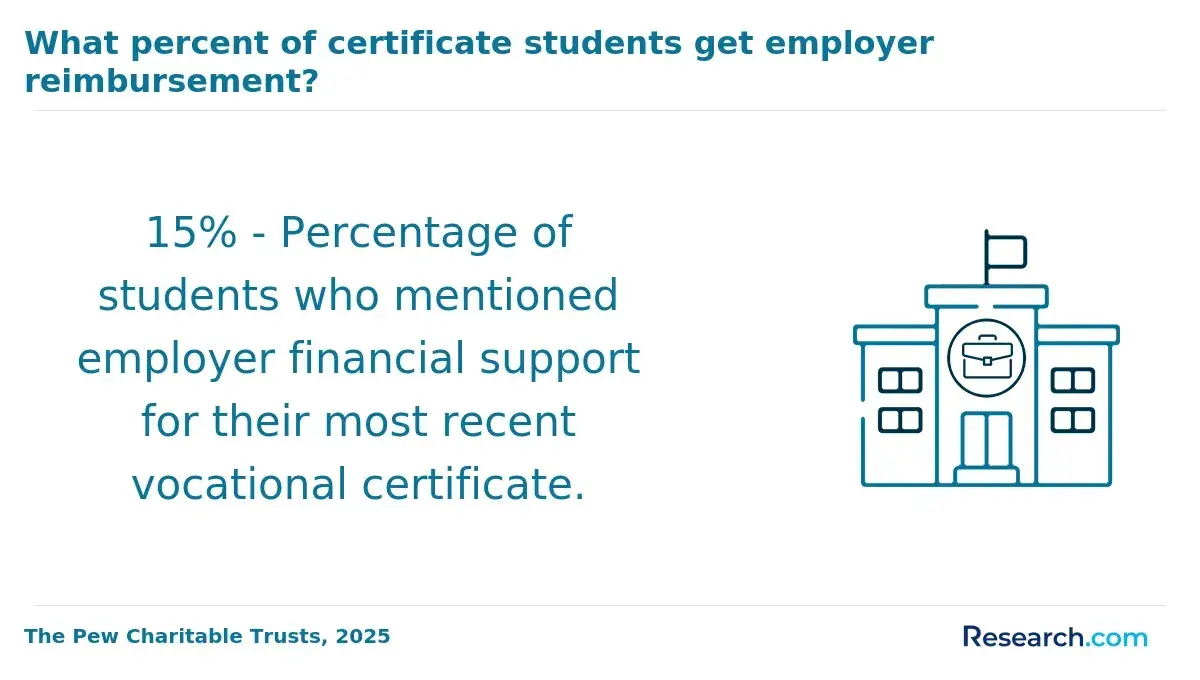
- Employer tuition assistance: Workplace reimbursement or direct payment, sometimes subject to grade, annual caps, continued employment, or repayment if the employee leaves.
Merit aid is usually the best first target for applicants with a strong academic and public-service profile, while need-based aid matters most for students whose FAFSA information demonstrates limited resources. Professionals should ask human resources about tuition benefits before accepting an admission offer because employer assistance can affect how much additional aid is needed.
Students exploring policy work in human services may also find that career goals lead them toward related credentials. Comparing the cost structure of a counseling degree online can be useful when counseling practice, rather than policy analysis or administration, is the intended career outcome.
How much do Public Policy master's scholarships typically cover?
Public policy master's scholarships can range from a one-time contribution toward tuition to a multiyear award covering a substantial share of eligible charges. There is no dependable national "typical" amount for online MPP or MPA scholarships because schools publish different award structures and may not disclose every recipient's amount.
Instead of comparing award labels, calculate the coverage rate: divide the scholarship amount that applies in a year by that year's tuition and required fees. Then repeat the calculation for the full program, including whether the award is guaranteed to renew.
This framework makes the trade-off clearer when one school offers a larger scholarship but charges significantly more tuition.
| Award structure | What it may cover | Decision consideration |
| Fixed one-time scholarship | A stated amount in the first term or first year | Helpful for upfront costs, but calculate remaining tuition for later terms |
| Annual renewable award | A stated amount each academic year if conditions are met | Often more valuable than a larger one-time award when the program lasts multiple years |
| Tuition percentage award | A portion of eligible tuition charges | Confirm whether required fees and future tuition increases are excluded |
| Full-tuition scholarship | Eligible tuition, sometimes excluding fees and living expenses | Verify the exact definition of "full," duration, and minimum enrollment requirements |
A full-tuition award can be attractive, but it is not necessarily the lowest-cost choice if it excludes high fees or requires full-time enrollment that prevents you from working. A smaller renewable scholarship at a lower-tuition public institution may yield a better net-cost outcome.
Who is eligible for Public Policy master's scholarships?
Eligibility depends on the individual award, not simply admission to an online public policy master's program. Some scholarships are automatically considered during admission; others require a separate form, FAFSA information, a recommendation, proof of employment, or a statement tied to the donor's purpose.
Applicants commonly need to document one or more of the following qualifications.
- Admission to an eligible MPP, MPA, public affairs, or closely related graduate program.
- Minimum academic standing, often measured by undergraduate GPA or satisfactory graduate progress.
- Full-time or minimum-credit enrollment, which can exclude students taking one course at a time.
- US citizenship, eligible noncitizen status, state residency, or other requirements for certain institutional and federal awards.
- Demonstrated financial need for need-based grants.
- Relevant public-service employment, leadership, volunteer experience, policy specialization, or membership in a specified community for named awards.
Online students should pay special attention to residency and modality language. "Campus-based," "residential," "in person," or "degree-seeking full time" can signal a restriction, while "all enrolled graduate students" may be broader but still needs confirmation.
Applicants evaluating multiple helping-profession paths should not assume eligibility transfers across disciplines. For instance, a student researching MFT online options should separately verify programmatic accreditation, licensure requirements, and scholarship terms because those differ from public policy funding rules.
What is the application process for Public Policy master's scholarships?
The scholarship process usually begins before enrollment, often alongside the graduate admission application. Applying early matters because many institutional awards are allocated from finite budgets, and a later admission deadline may not match the scholarship deadline.
Use the following sequence to avoid missing funding that requires separate action.
- Build a list of each program's admissions deadline, scholarship deadline, FAFSA deadline, and employer-benefit submission deadline.
- Ask admissions whether all admitted online students receive automatic scholarship consideration and request a list of awards requiring separate applications.
- Submit the FAFSA if you may use federal aid or need-based institutional aid, even if you expect to receive a merit scholarship.
- Prepare a policy-focused résumé, transcripts, recommendation contacts, and a concise statement connecting your public-service experience to the award's mission.
- Submit applications before priority dates and retain confirmation records, copies of essays, and the award terms.
- Compare aid offers using total program cost, renewal conditions, and out-of-pocket cash timing rather than the largest headline scholarship.
- Appeal or request reconsideration only after documenting changed finances, a competing offer, or material information not reflected in the original review.
A common mistake is submitting only the admission application and assuming that it activates every award. Another is accepting an offer without asking whether the scholarship is split across terms, reduced for part-time attendance, or replaced by a different award in future years.
Do online Public Policy students qualify for the same aid as on-campus students?
Online public policy students can qualify for many of the same federal financial aid options as on-campus students when they attend an eligible institution and program, meet federal student-aid requirements, and enroll at the required level. University scholarships are different: each donor fund or school policy may limit eligibility by format, campus, credit load, residency, or participation in campus activities.
Students should expect equal treatment only when the university's written terms say online or distance students are eligible. A program that is primarily online may have fewer assistantship opportunities because teaching and research positions are often tied to campus operations, but it may still provide merit awards, need-based aid, and federal loan access.
Before enrolling, obtain answers to these questions in writing.
- Are fully online MPP or MPA students eligible for each institutional scholarship listed?
- Does part-time enrollment change eligibility, award amount, or disbursement timing?
- Are distance learners eligible for graduate assistantships, fellowships, or work-study positions?
- Which tuition charges and fees can the award pay?
- Can a student receive the award while living outside the university's home state?
If a school cannot clearly answer these questions, treat the scholarship as uncertain in your budget. Choose based on the amount confirmed in the official aid offer, not an informal expectation from a promotional page.
Can Public Policy master's students combine multiple scholarships and grants?
In many cases, public policy master's students can combine university scholarships, outside scholarships, grants, employer payments, and loans. The financial aid office must coordinate the package, however, and may adjust one source if total aid exceeds the school's cost of attendance or if an award's donor terms prohibit duplication.
Combining aid is often sensible when no single award covers the full program, but students should understand the practical trade-offs.
| Combination approach | Potential benefit | Potential limitation |
| University merit scholarship plus external scholarship | Reduces remaining tuition without adding debt | The school may revise other need-based aid after receiving the external award |
| University grant plus employer reimbursement | Can reduce personal cash expense while preserving borrowing capacity | Employer reimbursement may arrive after the student pays tuition and may include employment conditions |
| Scholarship plus federal loans | Helps finance remaining eligible costs | Loans create repayment obligations and should not be treated as free aid |
| Multiple small mission-based awards | Can be more attainable than a highly competitive full award | Separate applications and reporting requirements increase administrative work |
Report outside funding promptly and ask which aid category would change if additional money arrives. Do not decline a small scholarship merely because it might trigger an adjustment; ask for a revised calculation first, because the school may reduce loans before reducing gift aid.
Students considering a specialized behavioral credential alongside policy work should budget each path separately. The costs and aid rules for BCBA certification programs online are distinct from those for an MPP or MPA, even when both support public-sector service careers.
What are the requirements to maintain scholarship status in Public Policy master's programs?
Maintaining a scholarship usually requires satisfactory academic progress, continued enrollment in an eligible program, and compliance with the award letter. Renewal is never automatic unless the written terms say it is; some scholarships require students to reapply each year or submit updated financial information.
Common renewal conditions include maintaining a stated GPA, completing a minimum number of credits, enrolling continuously, remaining in good academic and conduct standing, and using funds within a defined period. Need-based awards may also require a new FAFSA each year, while donor-funded awards can require a short report, thank-you letter, or evidence of continued public-service involvement.
To protect your award, review the terms before changing your course load, taking leave, withdrawing from a course, or switching from an eligible degree to a certificate. These changes can affect both scholarship status and federal-aid eligibility. Keep a personal record of renewal deadlines and contact the financial aid office before making an enrollment decision that could put the award at risk.
What tips can help Public Policy master's students secure more scholarship funding?
Competitive scholarship applications are stronger when they show both readiness for graduate study and a credible connection between public policy training and public impact. Strong grades matter, but policy schools also often value service, leadership, analytical ability, and clear career direction.
These practices can improve the quality and reach of your funding search.
- Apply by priority scholarship deadlines, not only the final admission deadline.
- Target awards whose mission genuinely matches your experience in government, nonprofit service, advocacy, community work, data analysis, or public-sector leadership.
- Tailor each essay to show a specific policy problem you want to address, the skills the program provides, and the public benefit you intend to create.
- Ask recommenders for examples of your analytical judgment, collaboration, leadership, and service rather than a generic character reference.
- Compare award letters by renewable net cost, required enrollment, fees not covered, and borrowing needed across the entire program.
- Ask your employer about tuition reimbursement, professional-development budgets, union education benefits, and any post-payment work commitment before borrowing.
- Maintain a deadline tracker for university, community-foundation, professional-association, and employer awards.
Prioritize university awards first when they are renewable and clearly compatible with online enrollment. Prioritize employer reimbursement when it has favorable terms and you expect to remain with the organization; avoid it as your only plan if the repayment clause would be difficult to meet after a job change.
Funding research should support, not replace, career-fit analysis. Applicants interested in policy technology, privacy, or government cyber roles may compare curriculum and cost with a cyber security fast track program, but they should select the credential that matches the role they want rather than pursuing a scholarship alone.
Other Things You Should Know About Public Policy
Apply when you can obtain a clear cost estimate and understand the funding timeline. Admission may be necessary for institutional scholarship consideration, but do not commit until you have reviewed the official aid offer, estimated remaining costs, and renewal conditions.
You can request reconsideration, especially after a material financial change or a comparable competing offer. Be professional, provide documentation, and ask whether additional institutional awards are available. A school is not required to increase an award.
No. FAFSA information helps determine eligibility for federal student aid and some need-based institutional funding. Merit scholarships may use a separate review, and graduate students are often offered loans rather than grant aid.
Notify the financial aid office promptly and ask for a revised aid calculation. The school must coordinate the award with your financial aid package, and it may adjust loans or other aid to remain within applicable limits.
References
- Apply https://www.truman.gov/apply
- Full Scholarships and Fully Funded Master's Programs in the U.S. and Abroad | ProFellow https://www.profellow.com/fellowships/full-scholarships-and-fully-funded-masters-programs-in-the-u-s-and-abroad/
- Master of Public Policy https://arts-sciences.catholic.edu/academics/interdisciplinary/master-of-public-policy/index.html
- Scholarships and Grants for MPA Students https://teach.com/online-ed/government-degrees/online-masters-public-administration/scholarships/
- Scholarships for Online Grad School | OEDb.org https://www.oedb.org/graduate-scholarship/
- A Guide to Graduate School Scholarships https://www.collegeessayguy.com/blog/graduate-school-scholarships
- Policy master's: Cost and funding (Part 4) - Emerging Technology Policy Careers https://emergingtechpolicy.org/pathways/graduate-school/policy-masters/4-cost-and-funding/
- Why, when, and how to get a US policy master's degree https://80000hours.org/career-reviews/us-policy-masters-degrees/
- Average Cost of a Master's Degree: 2025 Analysis https://educationdata.org/average-cost-of-a-masters-degree
- Best Graduate Scholarships for 2026: Apply Now to Fund Your Degree https://www.fastweb.com/college-search/articles/the-latest-and-greatest-for-grad-students