2027 Online Public Policy Master's Programs With No Personal Statement or Admissions Essay Required

Co-Founder and Chief Data Scientist
Applying to graduate school can feel unnecessarily complicated when a personal statement is the main barrier between you and an application deadline. This guide examines online Public Policy master's programs that may waive a traditional admissions essay, what they require instead, and how to verify each policy. It is designed for working professionals and career changers seeking streamlined admissions without overlooking quality. Public policy skills remain relevant across government and nonprofit work: the U.S. Bureau of Labor Statistics reports a $101,190 median annual wage for political scientists in 2024, although that occupation typically requires specialized preparation and is not the outcome of every policy degree.
Key Things You Should Know
- "No personal statement" usually means no long-form narrative essay; applicants may still need transcripts, a resume, short-answer responses, recommendations, prerequisite coursework, or an interview.
- No-essay and no-GRE policies are separate: many online Public Policy or closely related Master of Public Administration programs still set GPA minimums, commonly around a 2.5 to 3.0 undergraduate GPA, and may review professional experience.
- Verify the current online program page, graduate application checklist, institutional accreditation, total tuition, and whether the degree is an MPP, MPA, or related policy program before submitting fees.
What Does "No Personal Statement or Admissions Essay Required" Mean for Online Public Policy Master's Programs?
A no-essay online Public Policy master's program does not require the conventional multi-page personal statement or admissions essay as part of its standard application. A personal statement typically explains an applicant's background, motivations, and goals. A statement of purpose is similar but usually emphasizes academic interests, policy areas, research preparation, and career plans.
That label does not mean the application contains no writing. Schools can replace a formal essay with shorter prompts, an employment-history explanation, a goals statement, a writing sample, or responses triggered by a low GPA or prior academic issue. Requirements can also differ for domestic, international, transfer, nondegree, and conditional applicants.
The distinctions below help applicants read admissions pages precisely rather than relying on a marketing phrase.
| Requirement label | What it usually means | What to verify |
| No personal statement | No traditional autobiographical narrative is listed. | Whether a goals statement or supplemental prompt remains. |
| No admissions essay | No standalone essay may be required for standard admission. | Whether a writing sample is required for some applicants. |
| No GRE | Standardized test scores are not required or are waived. | Whether the policy applies to every GPA and degree background. |
| Streamlined application | The school has reduced some application materials. | Transcript, recommendation, resume, interview, and prerequisite rules. |
Applicants who have a clear work history but do not want to write a lengthy narrative may value this route. Applicants seeking competitive scholarships, research assistantships, policy fellowships, or selective cohort programs may prefer an application that permits a stronger written case for their goals.
Which Online Public Policy Master's Programs Do Not Require a Personal Statement or Admissions Essay?
Fully online degrees titled Master of Public Policy are less common than online Master of Public Administration, public affairs, public service, nonprofit management, and public policy administration programs. Because admissions pages and application platforms change frequently, there is no dependable permanent national list of no-essay MPP programs. The most responsible approach is to treat any "no essay" claim as a current, program-specific policy that must be confirmed before applying.
Start by searching both MPP and adjacent degree titles. An MPA often emphasizes public-sector management and implementation, while an MPP often emphasizes policy analysis, economics, statistics, evaluation, and policy design. Either may support policy-oriented careers, but curriculum fit matters more than the absence of an essay.
This comparison shows where streamlined admissions are most likely to appear and what applicants should inspect before treating an option as no-essay.
| Program type | Typical focus | No-essay verification point |
| Online Master of Public Policy | Policy analysis, economics, evaluation, and quantitative methods | Check the department checklist, not only the graduate school page. |
| Online Master of Public Administration | Government management, budgeting, leadership, and public service | Confirm whether a professional-goals statement is required. |
| Public affairs or public service master's | Public leadership, civic organizations, and administration | Review concentration-specific application materials. |
| Nonprofit or social-impact master's | Mission-driven management, fundraising, and program delivery | Determine whether it meets your policy-analysis goal. |
Applicants comparing interdisciplinary career pathways may also consider most affordable online interdisciplinary studies programs when their objective is broader public-sector leadership rather than technical policy analysis. That alternative is not automatically equivalent to an MPP or MPA, so compare required economics, statistics, budgeting, and evaluation coursework.
A school should be removed from your shortlist if it says "no essay" in an advertisement but its application portal later requires a statement of purpose. Save a dated copy of the requirements page and ask admissions to confirm the policy in writing if the wording is unclear.
What Admission Requirements Do Online Public Policy Master's Programs Use Instead of an Essay?
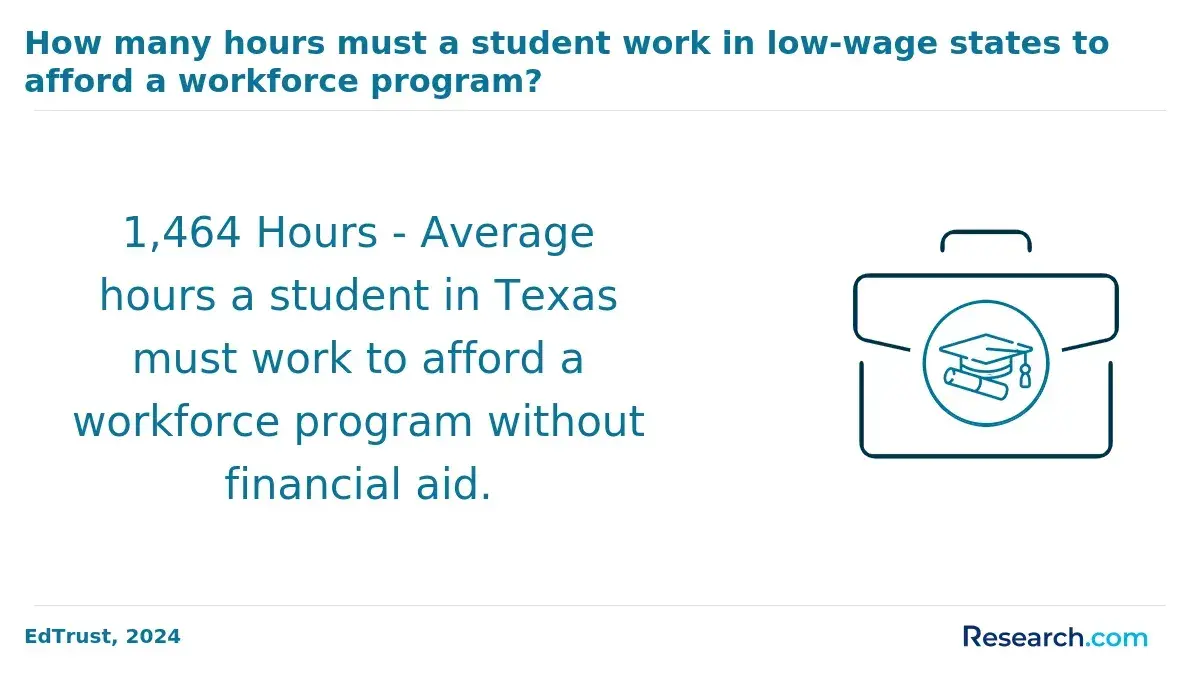
When an essay is absent, admissions teams still need evidence that an applicant can complete graduate-level reading, writing, analysis, and quantitative work. They commonly place greater weight on the academic record, relevant employment, and evidence of readiness for the program's methods courses.
These are the most common substitutes for a traditional essay and the reason each matters.
- Official undergraduate transcripts show cumulative GPA, degree completion, academic trends, and preparation in economics, statistics, political science, management, or related coursework.
- A resume or curriculum vitae helps reviewers assess government, nonprofit, military, advocacy, policy, research, budgeting, or supervisory experience.
- Letters of recommendation can provide third-party evidence of writing ability, judgment, leadership, and readiness for graduate study.
- Short-answer questions may ask about career goals, public-service interests, or prior quantitative coursework even when no formal essay is required.
- Prerequisite review may identify gaps in statistics, microeconomics, research methods, or college-level writing.
- An interview, especially for cohort-based or leadership-focused programs, can assess professional fit and communication skills.
Do not interpret fewer written materials as permission to submit an incomplete application. Use a polished, targeted resume and ensure recommenders understand the degree's focus. If you are changing fields, list transferable work such as data reporting, compliance, stakeholder engagement, grant administration, program operations, or community outreach.
Students considering public-facing helping professions should recognize that admissions and career requirements differ substantially from policy programs. A counseling degree online may involve practicum, licensure, and clinical requirements that an online policy degree does not.
Can You Get Into an Online Public Policy Master's Program With No Essay, No GRE, or a Low GPA?
Yes, it may be possible to find programs combining no-essay and no-GRE policies, but neither policy erases academic review. "No GRE" means the test is not required; it does not mean every applicant is admitted. Schools may use GPA, upper-division grades, prerequisites, professional experience, recommendations, or conditional-admission rules to make decisions.
A low GPA is usually evaluated in context. A stronger recent academic record, documented public-service experience, completed quantitative coursework, or an explanation requested by the school can help demonstrate readiness. However, applicants should not assume every program offers conditional admission or accepts applicants below its posted minimum.
Use the following comparison to decide which flexibility matters most in your situation.
| Applicant situation | Most relevant policy to check | Useful evidence |
| Strong GPA, limited time to apply | No-essay application | Accurate transcripts and concise professional resume |
| Test scores are a barrier | No-GRE or test-optional policy | Strong coursework and work record |
| Below the GPA minimum | Conditional or holistic-review policy | Recent grades, prerequisites, recommendations, and required explanation |
| Career changer | Prerequisite and experience review | Transferable analytical, administrative, or community-engagement work |
Ask admissions whether a GPA minimum is cumulative, calculated from the last 60 undergraduate credits, or applied differently to applicants with graduate coursework. Also ask whether missing prerequisites can be completed before enrollment, alongside early coursework, or only through a separate application.
Are Online Public Policy Master's Programs With No Personal Statement Easier to Get Into?
Not necessarily. A waived personal statement reduces one application task; it does not reliably reveal acceptance rates, academic rigor, faculty access, or employer reputation. A program can use strict GPA thresholds, prerequisite screening, limited cohort capacity, interviews, or work-experience expectations while requiring no essay.
Simplified admissions can be a good fit when you already meet the published standards and need a practical application process. A more selective application may be better when you need to explain an unconventional academic record, demonstrate a strong policy interest, or compete for scholarships and assistantships.
These trade-offs are more useful than treating no-essay admission as a quality signal.
| Potential benefit | Potential trade-off | How to evaluate it |
| Faster application completion | Less room to explain context | Ask whether supplemental information is accepted. |
| Fewer administrative barriers | Greater emphasis on GPA and transcripts | Compare your record with published minimums. |
| No GRE requirement | Quantitative readiness may still be reviewed | Inspect statistics and economics prerequisites. |
| Accessible online format | Different networking and experiential opportunities | Review live sessions, faculty access, internships, and alumni outcomes. |
A common mistake is choosing the easiest-looking application instead of the best curriculum. Compare core courses in policy analysis, research methods, budgeting, economics, data analysis, ethics, and program evaluation. Those learning outcomes are more relevant to long-term value than whether an essay was required.
How Can You Tell Whether a No-Essay Online Public Policy Master's Program Is Accredited and Reputable?
Start with institutional accreditation. In the United States, recognized institutional accreditation matters for federal financial aid eligibility, credit transfer, employer confidence, and the legitimacy of the degree. Verify the institution through the U.S. Department of Education or the Council for Higher Education Accreditation rather than relying only on a school's marketing language.
For public administration and public affairs programs, specialized accreditation may also be relevant. The Network of Schools of Public Policy, Affairs, and Administration accredits qualifying programs, but not every credible online policy degree holds that specialized accreditation. If a program is not specially accredited, examine its institutional accreditation, curriculum, faculty credentials, student support, and transparent outcome information more closely.
Use this checklist before paying an application fee.
- Confirm that the university holds recognized institutional accreditation and that the exact online degree is awarded by that institution.
- Check whether the program has specialized public-service accreditation or clearly explain why it does not.
- Review faculty biographies for relevant policy, government, nonprofit, research, or public-administration expertise.
- Compare required courses with your target job, especially statistics, public finance, policy analysis, and program evaluation.
- Ask how online students access advising, career services, networking, internships, and live instruction.
- Verify the no-essay rule on the current application checklist and ask whether exceptions apply to your applicant category.
Be cautious when a school makes broad career claims but does not clearly identify accreditation, curriculum, faculty, tuition, or the university issuing the degree. Reputation is built through transparent academic standards and support, not simply through frictionless admissions.
Professional degrees with regulated practice components require an additional level of scrutiny. For example, students looking at MFT online options should verify state licensure alignment, supervised clinical training, and placement requirements rather than applying policy-program accreditation standards.
How Much Do Online Public Policy Master's Programs With No Admissions Essay Cost, and What Financial Aid Is Available?
No-essay admissions do not inherently make a degree cheaper. Total cost depends on credits required, per-credit tuition, mandatory fees, residency rules, technology charges, transfer-credit policies, and whether the school charges the same rate to online students regardless of location. Compare the full program cost, not only the advertised per-credit rate.
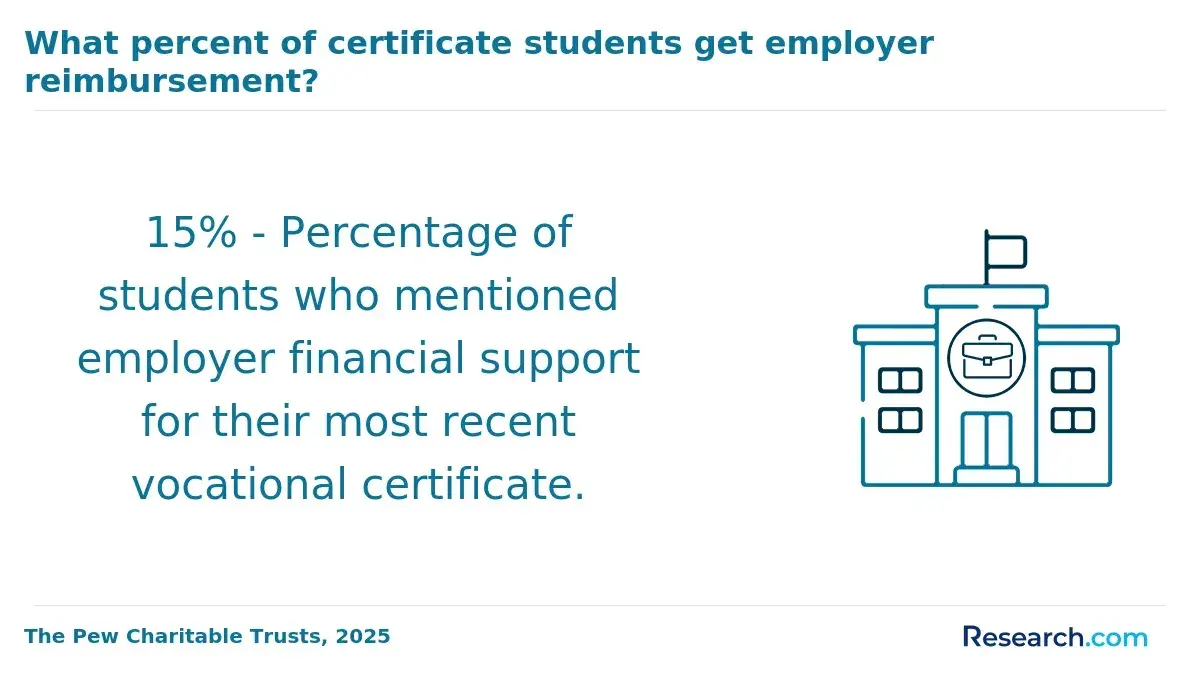
Federal financial aid may be available to eligible students enrolled in accredited graduate programs. The Free Application for Federal Student Aid can help determine eligibility for federal Direct Unsubsidized Loans and Graduate PLUS Loans. Employer tuition assistance, public-sector workforce benefits, military education benefits, university scholarships, and payment plans may also reduce out-of-pocket costs, although availability varies.
Review these cost questions side by side when comparing offers.
| Cost factor | Why it changes total cost | Question to ask |
| Required credits | More credits generally mean more tuition. | How many credits are required after transfer credit? |
| Tuition rate | Online, in-state, and out-of-state rates may differ. | Is the published rate guaranteed for the full program? |
| Mandatory fees | Technology, graduation, distance-learning, and course fees add up. | What fees apply each term and at graduation? |
| Time to completion | Longer enrollment can increase fees and delay career mobility. | Can working students maintain the recommended pace? |
| Employer support | Reimbursement may offset a portion of tuition. | Are there grade, repayment, or continued-employment conditions? |
Borrow conservatively and evaluate the degree against the roles you realistically plan to pursue. The U.S. Department of Education's College Scorecard and a university's required disclosures can be useful starting points, but program-specific online outcomes may not always be available. Request a written estimate that includes every expected institutional charge.
Career changers comparing technology-oriented pathways may find a cyber security fast track program relevant, but it serves a different labor market and should not be used as a substitute for policy-analysis training.
How Do You Apply to an Online Public Policy Master's Program With No Personal Statement Required?
Apply only after confirming that the no-personal-statement policy applies to the exact online program, start term, and applicant type. Graduate school and departmental admissions pages can conflict, particularly when a university uses one central application for many programs.
These steps reduce the chance of an incomplete application or an unpleasant surprise after you pay the fee.
- Identify whether the degree is an MPP, MPA, public affairs, or related program and match the curriculum to your career goal.
- Open the current department-level admissions checklist and note every required item, including conditional materials.
- Confirm the essay policy with admissions if the page uses ambiguous terms such as "supplemental statement" or "professional goals."
- Request official transcripts early and check whether prerequisite courses are required.
- Prepare a current resume that highlights relevant analytical, budgeting, leadership, policy, research, nonprofit, or government work.
- Submit recommendations only if required, and give recommenders enough time to respond.
- Review tuition, fees, aid deadlines, enrollment deposit rules, and course schedule before accepting admission.
Do not wait until the application portal opens to discover a transcript hold, missing degree verification, or prerequisite. Also avoid sending an unsolicited essay unless the program explicitly allows supplemental materials; an unrequested document may not be reviewed.
If your long-term goal involves behavior analysis rather than public policy, compare degree and certification requirements carefully. BCBA certification programs online address a distinct professional pathway with separate coursework, supervised-fieldwork, and certification expectations.
How Long Does an Online Public Policy Master's Program With No Admissions Essay Take to Complete?
Most online public policy and public administration master's programs are designed around approximately 30 to 48 graduate credits. Depending on course load, transfer credit, prerequisite needs, capstone structure, and summer availability, many students finish in roughly 18 months to three years. An accelerated schedule can be shorter, but it may be difficult to sustain while working full time.
The admissions process and the academic timeline are separate. A no-essay application may save time before enrollment, but it does not reduce required credits, research-methods courses, capstone projects, internships, or practicum expectations.
Use the program calendar to assess whether the pace matches your work and family responsibilities.
| Enrollment pace | Typical fit | Planning consideration |
| Full time | Students able to prioritize coursework | May support faster completion but requires substantial weekly study time. |
| Part time | Working professionals and caregivers | Often offers a more sustainable workload but can extend total enrollment. |
| Accelerated terms | Students comfortable with intensive schedules | Confirm reading, group-project, and capstone demands before enrolling. |
| Flexible asynchronous format | Students needing schedule flexibility | Check for live sessions, deadlines, team assignments, and exam windows. |
Ask whether capstones are completed individually or in teams, whether they require a local client or internship, and whether courses are offered in a fixed sequence. Those details often determine the real completion timeline more than the advertised format.
Is an Online Public Policy Master's Degree With No Admissions Essay Worth It for Your Career?
An online Public Policy master's degree can be worthwhile when it builds skills required for your target role and comes from a reputable institution at a manageable cost. The lack of an essay does not diminish the credential's value. Employers are more likely to care about the issuing institution, relevant coursework, analytical capability, writing and communication skills, professional experience, and your ability to apply policy tools to real problems.
Common career directions include policy analyst, program analyst, legislative aide, government relations specialist, nonprofit program manager, budget analyst, community-development professional, public affairs coordinator, and research associate. Responsibilities may include analyzing legislation, preparing briefings, evaluating programs, interpreting data, managing stakeholders, developing budgets, and recommending implementation strategies.
Labor-market results vary widely by location, employer, experience, and job title. The U.S. Bureau of Labor Statistics projects 7% employment growth for political scientists from 2024 to 2034, but that small occupation is not a proxy for all public-policy careers and often requires strong research preparation. Use occupational data as context, then search actual job postings in your preferred region to identify requested skills.
The degree is most likely to fit if you want to move into policy analysis or public-sector leadership, can complete quantitative and writing-intensive coursework, and have a clear plan for networking or gaining applied experience. It may be a weaker fit if you need professional licensure, primarily want clinical practice training, or expect the credential alone to replace relevant work experience.
Before enrolling, compare the program's capstone, electives, faculty connections, career support, total borrowing, and alumni access with your intended job path. A streamlined application is a convenience; curriculum quality, affordability, and professional fit determine whether the degree supports your next move.
Other Things You Should Know About Public Policy
Yes. Short answers about career goals, prior coursework, disciplinary history, or professional experience may still be required. Read every question in the application portal before assuming there is no writing component.
Usually. A personal statement often focuses on personal background and motivation, while a statement of purpose focuses more directly on academic interests, policy goals, and professional plans. Schools sometimes use the terms interchangeably, so follow the exact application instructions.
Look for regional accreditation from the school’s institutional accreditor and, when available, programmatic accreditation such as NASPAA for public affairs. Most accredited online public policy master’s programs require about 36 to 48 credits, and the no-essay rule does not replace standard transcript and resume review.
There is overlap, but the degrees often emphasize different preparation. An MPP generally centers on analysis and policy design, while an MPA commonly emphasizes management and implementation. Compare course requirements with the skills listed in your target job postings.
References
- 3 Successful Graduate School Personal Statement Examples • Pr https://www.prepscholar.com/gre/blog/graduate-school-personal-statement-examples/
- Which policy master's programs should you apply to? (Part 2) - Emerging Technology Policy Careers https://emergingtechpolicy.org/pathways/graduate-school/policy-masters/2-where-to-apply/
- Find Your Graduate Degree for Public Service https://www.naspaa.org/schools-search
- Online MPA Programs No GRE Required - Master of Public Administration https://www.onlinempaprograms.com/faqs/online-mpa-programs-no-gre-required