
Careers After an Online MBA in Information Systems for Career Changers

Co-Founder and Chief Data Scientist
An online MBA in Information Systems can help you move toward work that connects business decisions with technology. But the right next job depends heavily on what you already do: a finance professional, operations manager, and aspiring software engineer face different hiring barriers. This guide maps realistic career paths for changers, explains where an MBA helps and where technical experience matters more, and puts salary, cost, and program features in context. Use it to decide whether to pursue the degree - and which experience to build alongside it.
Key Things You Should Know
- The most accessible pivots usually build on your existing function: an operations professional might target systems analysis or technology implementation before seeking IT management.
- An Information Systems MBA develops business and technology-management judgment; it does not, by itself, qualify someone for software engineering or senior IT leadership.
- The May 2025 median annual wage for the broad US management-occupations group was $126,520, but that is not an expected salary for a new MBA graduate or career changer.
What careers can you pursue after an online MBA in Information Systems?
An Information Systems MBA combines general management study with courses on how organizations select, use, and govern technology. For career changers, the strongest target is often a business-technology bridge role: one that values knowledge of an existing industry or function while requiring growing fluency in systems and data.
The paths below differ in how much prior technical or managerial experience employers are likely to expect. Job titles vary by organization, so compare actual responsibilities rather than relying on the title alone.
| Career path | Work involved | Potential bridge from a previous career |
| Business or systems analyst | Documenting requirements, mapping workflows, and helping teams improve systems | Operations, finance, or customer-service experience plus process and data skills |
| Technology project or implementation manager | Coordinating budgets, vendors, schedules, users, and system rollouts | Existing project, change-management, or cross-functional leadership experience |
| IT business relationship or product manager | Prioritizing technology needs and connecting stakeholders with delivery teams | Deep knowledge of customers, products, or an industry |
| Information systems manager | Overseeing technology teams, resources, and organizational systems | Typically a later move after relevant IT or technology-delivery experience |
For example, someone who has led inventory improvements may be well positioned to help implement an enterprise resource planning system.
That experience is a more persuasive starting point than applying immediately for a role managing an IT department. Software development, network engineering, and hands-on security positions generally call for more specialized technical preparation than an MBA concentration provides.
Is an online MBA in Information Systems good for career changers?
It can be, particularly for an adjacent change. If you already manage projects, interpret business data, improve processes, or work with technology vendors, the MBA can help you formalize those skills and compete for broader business-technology responsibilities. A substantial change - from a nontechnical role directly into technical engineering or senior IT management - usually requires another bridge.
Test the transition against actual job postings before enrolling. Look for recurring requirements you can demonstrate through work projects, such as writing system requirements, leading an implementation, building dashboards, or managing stakeholders.
Ask prospective programs whether online students can complete relevant applied projects, access career coaching, and meet employers recruiting for the roles you want. Do not assume those opportunities match the campus MBA's.
If you can gain the target experience through an internal transfer, employer training, or a focused course, try that route before committing to a full degree. An accelerated MBA may reduce time in school, but it can leave less room to develop a portfolio or network; compare online MBA programs with shorter timelines against the time you need to make a credible switch.
What qualifications do employers expect from MBA information systems graduates?
Employers hire for the role, not the concentration label. Analyst and implementation positions may emphasize requirements gathering, process mapping, data interpretation, and communication with technical teams.
Management positions commonly add evidence of budget ownership, vendor oversight, team leadership, and successful technology delivery. Requirements vary by employer and industry.
A useful way to assess your readiness is to separate transferable evidence from missing functional experience. A former operations manager may already have led change and measured results but need experience with databases, software delivery, or IT controls.
A technical specialist may know the systems but need to demonstrate financial decision-making and stakeholder leadership. In either case, a completed project with a clear business result can be more informative to an employer than a course title alone.
Read postings for your intended role and location before choosing electives. If they consistently require hands-on programming, infrastructure administration, or years managing IT teams, an MBA will not remove those requirements. A specialized technical master's degree, targeted training, or an intermediate role may be a more direct route.
Curricula differ by school. The MBA core usually develops management capabilities - such as accounting, finance, operations, strategy, and leadership - while an Information Systems concentration or elective group applies business decisions to technology. An elective in information systems does not necessarily mean the degree offers a formal concentration.
Relevant courses may cover business analytics, information systems strategy, database concepts for managers, technology project management, cybersecurity governance, or digital transformation.
Check the catalog for the required concentration courses, not just an attractive elective list. A course on managing data-driven decisions is useful for a product or analyst pivot, but it should not be mistaken for advanced training in database engineering or data science.
When comparing online MBA programs, verify that the listed school offers the specific Information Systems coursework you need and that any location-focused comparison is relevant to your job search. An applied project tied to your intended role may be more valuable than a concentration name with little opportunity to demonstrate your work.
An online format may let you keep earning and build relevant experience while studying. That can be a considerable advantage for a career changer whose current employer offers technology projects or an internal transfer path. Online does not automatically mean self-paced: live classes, group meetings, and occasional travel may still be required.
A campus-based MBA may make more sense if you need an intensive recruiting reset, can leave work, and have verified that its internship and employer access suit your target role.
An online MBA may be the better fit if preserving income and applying lessons at work outweigh those benefits. Ask each school specifically which career events, internships, alumni contacts, and employer introductions are available to online students.
If affordability while employed is a priority, MBA degree options for working adults can be a starting point. Compare the complete program cost and scheduling requirements before deciding that a lower advertised price represents a better career-change opportunity.
Requirements are program-specific, but applicants commonly need a bachelor's degree and may be asked for transcripts, a résumé, essays, recommendations, or an interview. Schools differ on work-experience expectations, GMAT or GRE policies, minimum grades, and foundation coursework. A nontechnical or nonbusiness bachelor's degree does not automatically rule you out.
As a career changer, use your application to explain the connection between your previous work and your intended information systems role. Examples of improving a workflow, introducing a tool, analyzing results, or coordinating a cross-functional team make that connection concrete.
If your undergraduate record is a concern, examine schools' published policies rather than assuming admission is impossible; these MBA application options for experienced professionals online MBA programs for low-GPA applicants may help frame your search. Confirm current requirements directly with each school.
Completion time depends on required credits, term structure, prior coursework, and whether you enroll full- or part-time. Cost depends on tuition pricing, mandatory fees, materials, any required travel, and financing. Because programs vary substantially, a single timeline or price would be misleading.
For a career change, also count the cost of not building experience. A faster program may be attractive, but a slower pace could give you time to lead a systems project at work.
Request each school's full degree plan and fee schedule, then use an online MBA tuition and total cost guide to check which expenses an advertised figure excludes. Compare the amount you would personally pay after any employer support with the roles you can realistically pursue - not with a senior manager's salary.
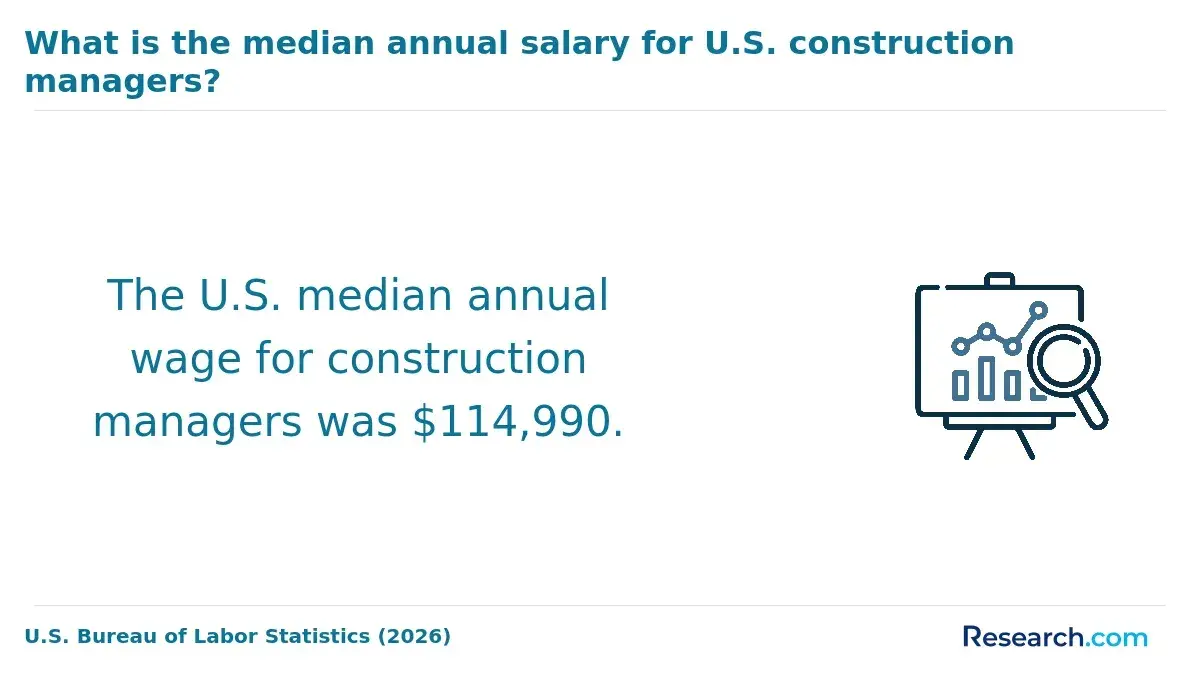
Pay varies markedly between analyst, project, product, and IT management roles, as well as by location, industry, responsibility, and prior experience. The US Bureau of Labor Statistics reports a $126,520 median annual wage for management occupations in May 2025. That figure covers a broad occupational group; it is neither specific to information systems nor a measure of MBA graduates' earnings.
For a useful personal estimate, compare pay ranges in local postings for the first role you could plausibly obtain, then separate that from the compensation of a possible later management role. If the immediate pivot is likely to be lateral in pay, evaluate whether the degree's cost and time still make sense. Do not use an experienced IT manager's wage to calculate a new entrant's expected return.
Demand for business-technology work does not translate into equal prospects for every title or applicant. As broad context, BLS projects management occupations overall to grow faster than the average for all occupations from 2025 to 2035. That projection is not specific to information systems and does not establish that an MBA will improve an individual's hiring chances.
For your target occupation, look beyond a broad growth forecast. Check whether nearby employers seek analysts who understand a particular industry, implementation leaders familiar with their software, or managers with a record of supervising IT teams. Those details tell you which experience to build now - and whether the entry point is an analyst or project role rather than management.
Which certifications complement an MBA in Information Systems?
A certification is most useful when it addresses a specific gap in your target job postings. Project-management credentials can support an implementation path; cloud-platform training may help you work with a particular vendor ecosystem; and security-governance credentials may be relevant to risk-focused roles. Eligibility, exams, and experience requirements vary, so verify them with the credential issuer before budgeting for one.
Choose the sequence based on your goal. If you need practical familiarity with a platform to qualify for an intermediate job, focused training may come before - or replace - the MBA. If you already deliver technology projects and need broader financial and organizational leadership skills, the MBA may add more. Neither a certification nor the degree substitutes for evidence that you can do the work.
Other Things You Should Know About MBA
That depends on the school. Ask for its diploma and transcript policies if the distinction matters to you.
Often, but get your employer's permission first. Remove confidential information and explain your own contribution and the business problem clearly.
Most do not. Some government and contractor positions require one; the job posting should state that condition.
Many business, systems, and implementation roles do not require clinical licensure. Roles involving regulated clinical practice do, and healthcare employers may still prefer relevant industry experience.
- Online MBA vs Full-Time MBA: ROI, Cost and Career Outcomes | Jenkins MBA https://mba.ncsu.edu/2026/04/27/choosing-between-an-online-mba-and-full-time-mba/
- How to Plan for Online MBA Costs | Colorado Technical University https://www.coloradotech.edu/degrees/studies/business/articles/online-mba-cost-planning-guide
- Business School Internships: Gaining Practical Experience | Pepperdine Graziadio Business School https://bschool.pepperdine.edu/personal-growth/article/business-school-internships-gaining-practical-experience.htm
- Online MBA vs. traditional MBA for working professionals | Capella University https://www.capella.edu/blog/business/online-mba-vs-traditional-mba/
- Information Technology MBA vs. MS: Comparing Degrees | CU Online https://online.campbellsville.edu/business/it-management-degree-vs-ms-it/
- How a Technology-Focused MBA Prepares Graduates for Management Jobs | Stevens Online https://online.stevens.edu/blog/tech-management-jobs/
- MBA ROI: Is an MBA Worth the Investment? | Notre Dame de Namur University https://www.ndnu.edu/articles/business-management/mba-roi-is-an-mba-worth-the-investment.html
- Why Earn an MBA Focused on MIS? | SIUE https://online.siue.edu/degrees/business/mba/management-information-systems/mba-focused-on-mis/
- Can an MBA help if I'm looking to switch careers? - The Advisor | Tippie College of Business https://tippie.uiowa.edu/about/who-we-are/advisor/mba/can-mba-help-switch-careers
- How Much Does an Online MBA Cost? | Howard University Online MBA https://onlinemba.howard.edu/blog/online-mba-cost-guide/


