Careers After an Online MBA in Human Resources for Working Parents

Co-Founder and Chief Data Scientist
An online MBA in human resources can help a working parent pursue broader people-management responsibilities without leaving a job. But the degree's value depends on the career you already have, the role you want next, and whether coursework fits around caregiving - not simply on its online format. This guide compares realistic HR career paths, explains salary and hiring data, and shows how to assess program cost, scheduling, and credentials. Use it to decide whether an HR-focused MBA is the right next step or whether a more targeted option would get you there sooner.
Key Things You Should Know
- An HR-focused MBA is most directly useful for experienced HR professionals seeking broader business responsibility; it does not, by itself, qualify a newcomer for senior HR leadership.
- The U.S. median annual wage for management occupations was $126,520 in May 2025, according to the Bureau of Labor Statistics (BLS). That is not an expected salary for HR MBA graduates.
- For working parents, required live classes, group meetings, campus visits, and leave policies can matter more than whether a program is advertised as online.
What careers can you pursue after an online MBA in human resources?
An online MBA with an HR concentration combines general business education with courses focused on managing a workforce. It can support advancement, but employers also weigh HR experience, industry knowledge, and evidence that you can handle sensitive decisions. The most realistic next role usually builds on work you have already done.
The paths below distinguish near-term possibilities from roles that typically require a longer record of responsibility.
| Career path | Typical responsibilities | Most plausible starting point |
| HR business partner or HR manager | Advise leaders on staffing, employee relations, and workforce plans | Experienced HR generalist or specialist with growing advisory responsibility |
| Talent acquisition or learning and development manager | Lead recruiting or employee-development programs and measure results | Professional with experience in the relevant HR function |
| Compensation and benefits manager | Oversee pay or benefits programs, budgets, and vendor relationships | HR professional with substantial rewards or benefits experience |
| People operations or workforce-planning leader | Connect staffing processes, workforce data, and business goals | HR or operations professional with cross-functional project experience |
For a parent already working in HR, an MBA may strengthen a case for moving from specialist work into budgeting, strategy, or management. Someone coming from operations, recruiting, or people management may be able to move into an adjacent HR role, but should expect to build knowledge of employment practices and HR systems.
A first HR job may be a more realistic target than HR director. Executive roles generally require extensive leadership experience beyond the degree.
Start with job postings for your intended role and location: note the experience and systems employers actually request, then compare those requirements with your résumé. If your interests center on brand or customer strategy rather than workforce strategy, marketing-focused online MBA options may be a better match than an HR concentration.
How much can you earn with an online MBA in human resources?
There is no reliable single salary for "online HR MBA graduates." The BLS reports that the median annual wage across all U.S. management occupations was $126,520 in May 2025. That broad figure includes many jobs outside HR and workers without MBAs; it should provide occupational context, not a forecast of your post-degree pay.
Compensation varies by role, location, employer, industry, and prior experience. A move from HR specialist to manager may change your earnings, while earning an MBA without changing responsibilities may not.
For a useful personal estimate, compare local postings for roles you could credibly obtain after graduation with your current total compensation, including benefits and any schedule flexibility you would give up. Do not treat the full advertised pay range as an expected offer.
What is the job outlook for human resources MBA graduates?
The BLS projects about 1.1 million openings per year, on average, across U.S. management occupations from 2025 to 2035. Those openings reflect both growth and replacement needs across many fields; they are not a count of HR openings or positions reserved for MBA holders.
For your target career, examine demand for the specific HR function rather than relying on a broad management outlook. A compensation role, an employee-relations role, and a recruiting role call for different experience.
Employers may also expect familiarity with HR information systems, workforce data, and applicable employment practices. An MBA can help you connect those activities to business decisions, but demonstrated work remains central to hiring.
The MBA core typically covers areas such as accounting, finance, operations, strategy, and organizational behavior. An HR concentration adds management-level study of topics that may include talent strategy, employee development, compensation, workforce analytics, and organizational change.
Course names and the number of HR courses vary by school; an HR elective alone does not necessarily constitute a formal concentration. This distinction matters for career goals. A parent seeking to advise executives on hiring plans and budgets may benefit from the broad MBA core.
Someone who needs deep preparation in a particular HR practice may find a specialized graduate degree, professional certification, or focused course more direct. Check whether projects let you solve realistic workforce problems without disclosing confidential employee information.
Choose the subject before shopping by price: if the work you want is healthcare administration rather than HR leadership, comparing lower-cost graduate business programs programs online in healthcare management can help you avoid paying for the wrong concentration.
Completion time depends on required credits, course sequence, term length, and how many courses you take at once. An accelerated schedule can shorten the calendar time but concentrate deadlines; part-time study can spread the work around a job and caregiving. Ask each school for a sample plan at the pace you can actually maintain, including when HR courses are offered.
For parents, the fastest advertised timeline is not necessarily the quickest workable route to graduation. A missed prerequisite or a term off may delay a tightly sequenced program.
Compare an accelerated plan with a realistic part-time plan, and confirm the maximum time allowed to finish. A MBA completion time comparison MBA programs can help frame the trade-off, but use each school's current course schedule to test feasibility.
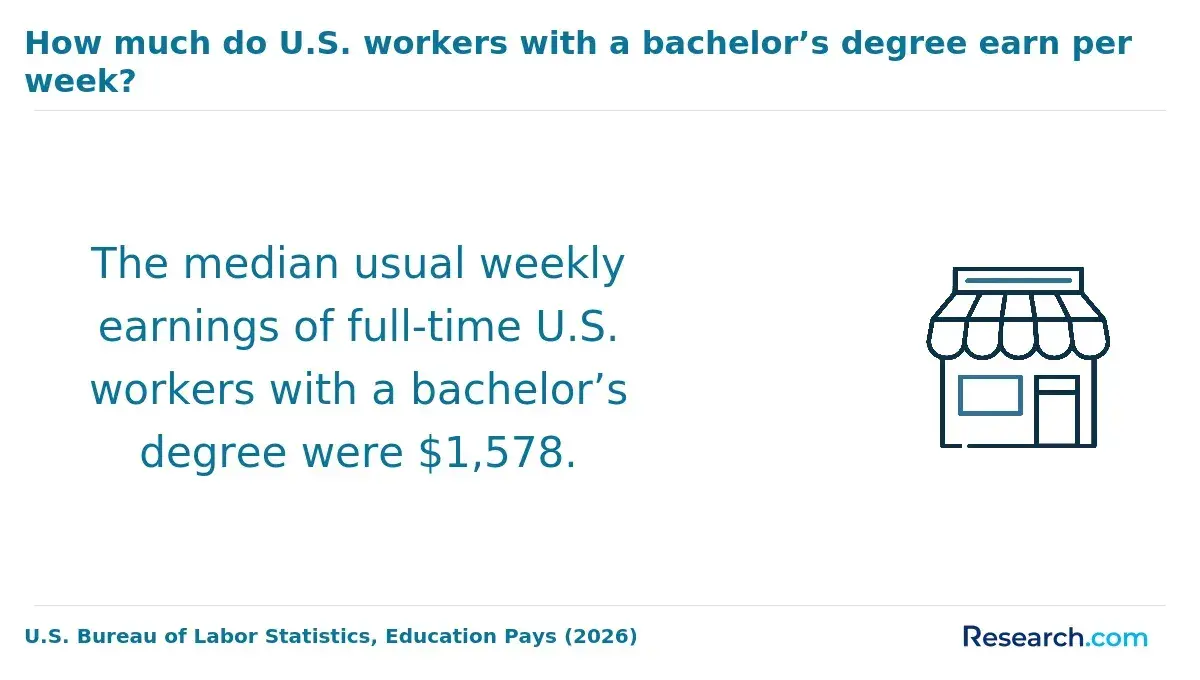
There is no standard price for an online HR MBA. Published tuition may be charged per credit, course, or term, and the advertised amount may exclude mandatory fees, materials, technology, or travel for required in-person activities. Ask for a written estimate based on your planned pace, not just a tuition headline.
Household affordability also depends on when bills are due and whether employer education assistance pays upfront or reimburses you after a course. Confirm eligibility, grade requirements, annual limits, and any obligation to remain with your employer.
If borrowing, include interest in your decision; if reducing work hours, count the income you would forgo. An online MBA cost guide affordable AACSB-accredited online MBA programs can help identify options to investigate, but verify each program's current total charges directly.
Before committing, compare that total with the cost of the smallest credential that would address your career gap. If your employer wants experience in compensation rather than broader management education, a targeted course plus a relevant project may be the more economical first step.
Requirements vary by university. Applicants generally need a bachelor's degree and may be asked for transcripts, a résumé, a statement of purpose, recommendations, or an interview. Schools differ on minimum grades, work experience, and GMAT or GRE policies; do not assume that online delivery means open admission or that an HR background is required.
If your bachelor's degree is outside business, check for foundation coursework or recommended preparation in accounting and quantitative subjects.
Working parents should also ask whether admissions deadlines align with employer reimbursement cycles and whether they can defer a start date if family circumstances change. Present examples of leadership, process improvement, or employee-facing work in your application, while following the school's stated requirements.
It can be, but "online" describes where you learn, not when you must be available. Asynchronous lessons may permit study after children are asleep; live discussions, timed exams, and group projects may still require fixed evening or weekend hours. A residency can add travel and childcare costs even when most coursework is remote.
Before enrolling, ask an advisor for a recent syllabus and a sample part-time schedule. The answers to these questions will show whether the program fits your household rather than an idealized calendar:
- Which classes, exams, and group meetings require attendance at a set time?
- Are campus visits required, and how much advance notice is given?
- Can you take one course at a time, pause enrollment, or change pace without losing your place in the sequence?
- When are faculty, advising, and career services available to students who work standard business hours?
Map one demanding course onto a normal family week, including commuting, caregiving, and backup coverage. If the plan depends on every evening going smoothly, a slower pace - or postponing enrollment - may be the sounder choice.
An HR MBA itself does not require a professional HR certification or a general HR license. Employers may nevertheless prefer credentials for particular roles. Certifications and the MBA serve different purposes: certification generally assesses defined HR knowledge or experience, while the MBA teaches broader business and management decision-making.
Check the eligibility rules of any certification you are considering; an MBA concentration does not automatically satisfy experience requirements or award a certification. For work involving employment law, an HR professional should know when to involve qualified counsel rather than treat MBA coursework as legal training.
How do you choose an accredited online MBA in human resources?
First verify that the university has recognized institutional accreditation, then check whether its business school holds a separate accreditation such as AACSB, ACBSP, or IACBE if that matters to you. Institutional and business-school accreditation are not the same thing. Confirm the status through the accreditor and the school rather than assuming that a ranking or program advertisement settles it.
Next, verify that the online MBA actually offers a formally designated HR concentration and identify its required courses. Compare the program's schedule, full cost, career support for employed students, and access to HR-relevant projects.
Ask career services what support is available to part-time online students seeking an internal promotion versus a first HR role; those are different searches.
Use MBA options by total cost MBA programs as a starting point for price comparisons, not proof of HR-concentration availability. The strongest choice is the affordable, workable program that closes a specific gap between your experience and your target job. If that gap is primarily hands-on HR experience, seek that experience before paying for another degree.
Other Things You Should Know About MBA
Diploma and transcript wording varies by university. Ask the registrar for a sample or written policy if the distinction matters to you.
It may strengthen relevant skills, but it does not make a role remote. Check postings for location rules, required on-site duties, and the experience expected of remote candidates.
Briefly state the dates and circumstances when relevant, then focus on current skills and evidence of readiness. Projects, recent coursework, or relevant volunteer work can provide useful examples without pretending they replace paid HR experience.
Ask your employer and instructor first. Use approved, de-identified information or a hypothetical case when employee data, pay information, or internal plans must remain confidential.
- The Impact of Motherhood on Women's Career Progression | nih.gov https://pmc.ncbi.nlm.nih.gov/articles/PMC11047346/
- What Is the ROI of an Online MBA? | Pittsburg State University https://degree.pittstate.edu/online-programs/mba/general/what-is-the-roi-of-online-mba/
- What Employers Actually Think When They See an Online Degree on a Resume - University of Pittsburgh Online https://www.online.pitt.edu/2026/05/05/what-employers-actually-think-when-they-see-an-online-degree-on-a-resume/
- Which HR Certification Is Best? PHR, SHRM & More Compared (2026) | Bryan University Online© https://bryanuniversity.edu/faq/hr-certifications-how-to-choose-the-best-ones/
- Do companies care where you get your MBA? - The Advisor | Tippie College of Business https://tippie.uiowa.edu/about/who-we-are/advisor/mba/do-companies-care-where-you-get-your-mba
- Career Advice: What Can You Do With An MBA In Human Resources | YSU https://online.ysu.edu/degrees/business/mba/human-resources/career-options/
- 25 Transferable Skills Employers Look For | Business Career Center https://careerconnections.smeal.psu.edu/blog/2022/10/28/25-transferable-skills-employers-look-for/
- What is the career outlook for jobs in human resources? | FIU College of Business https://business.fiu.edu/academics/graduate/insights/posts/what-is-the-career-outlook-for-jobs-in-human-resources.html
- MBA ROI: Is an MBA Worth the Investment? | Notre Dame de Namur University https://www.ndnu.edu/articles/business-management/mba-roi-is-an-mba-worth-the-investment.html
- MBA in HR Management Career Paths and Salary Expectations | UWF Online https://getonline.uwf.edu/business-programs/mba/human-resource-management/careers-and-salary-expectations/