
2027 Business Communications Degree vs. Certificate: Which Should You Choose?

Co-Founder and Chief Data Scientist
Choosing between a business communications degree and a certificate is mainly a decision about scope, time, cost, and career direction. A degree is usually the better fit if you want a broad academic foundation, access to more roles, and stronger long-term advancement potential. A certificate is often the better fit if you already have work experience, need a specific skill quickly, or want a lower-cost credential that can improve your current job performance.
Business communication skills matter across marketing, public relations, management, sales, customer experience, human resources, and digital media. Employers consistently value professionals who can write clearly, present ideas, manage messaging, and adapt communication to different audiences. With nearly 70% of employers valuing communication skills highly, the right credential can help you turn those strengths into career opportunities.
This guide compares business communications degrees and certificates by curriculum, completion time, online availability, admissions, credits, tuition, transfer options, accreditation, career outcomes, and starting salary. Use it to decide which path fits your goals, schedule, budget, and current level of experience.
Key Points About Business Communications Degree vs. Certificate Programs
- Business communications degrees offer comprehensive skill development and higher average salaries, with graduates earning about 20% more than certificate holders.
- Certificate programs focus on practical, specialized skills, providing faster completion and affordability but may limit long-term career advancement.
- Degrees often open broader professional growth opportunities, while certificates suit working professionals seeking targeted expertise without full-time study commitments.
What Are the Differences Between Business Communications Degree and Certificate Programs?
The main difference is breadth versus focus. A business communications degree provides a wider education in communication theory, business strategy, writing, media, marketing, leadership, and general education. A certificate concentrates on a narrower set of job-ready skills, such as professional writing, workplace communication, public relations basics, digital messaging, or presentation skills.
A degree is usually designed for students who want a full academic credential and a foundation for long-term career growth. A certificate is usually designed for working adults, career changers, or students who want targeted training without committing to a full degree program.
Key differences to consider
- Credential level: A degree is a formal academic credential, such as an associate or bachelor’s degree. A certificate is a shorter credential that verifies completion of a focused set of courses.
- Career use: Degrees may be preferred for roles that involve strategy, supervision, writing-intensive work, campaign planning, or advancement into management. Certificates are useful for building specific skills that can be applied immediately in a current job or entry-level role.
- Depth of learning: Degree programs usually include theory, research, business context, ethics, communication strategy, and broader electives. Certificates are more practical and condensed, often emphasizing tools, techniques, and workplace application.
- Time commitment: Degree programs require more courses and usually take longer. Certificates require fewer courses and can often be completed much faster.
- Cost: Degrees usually cost more because they require more credits. Certificates tend to be less expensive, though the value depends on whether the certificate is recognized by employers and whether credits can later transfer.
- Best fit: A degree is generally stronger for students seeking long-term career mobility. A certificate is generally stronger for professionals who need a targeted skill upgrade, a résumé boost, or a low-risk way to explore the field.
One common mistake is choosing the faster option without considering hiring requirements. If job postings in your target field frequently list a bachelor’s degree, a certificate alone may not be enough. If you already have a degree or relevant experience, however, a certificate can be a practical way to strengthen your communication profile without starting over academically.
How Long Does It Take to Complete a Business Communications Degree vs. a Certificate Program?
A business communications degree usually takes much longer than a certificate because it includes general education, major requirements, electives, and sometimes capstone projects or internships. A certificate is shorter because it focuses only on selected communication skills or professional competencies.
- Typical degree timeline: A bachelor’s degree generally takes about four years of full-time study. An associate degree generally takes around two years when pursued full-time.
- Typical certificate timeline: Business communications certificate completion time can range from a few months up to two years, depending on the number of courses, pacing, and whether the program is undergraduate, graduate, or continuing education.
- Fastest options: Some certificate programs can be completed in as little as four weeks to several months, especially when they are self-paced, accelerated, or designed for working professionals.
- Online and part-time pacing: Certificate programs often offer more flexibility through part-time, online, or accelerated formats. Degree programs increasingly offer online and part-time options as well, but they typically follow a more structured academic calendar.
- Transfer credits: Students with prior college credits may shorten a degree timeline. Certificate timelines may also be shortened if the school allows course waivers or recognizes prior learning, though policies vary.
If you need a credential quickly for a promotion, current job responsibilities, or a career pivot, a certificate may be the more realistic short-term choice. If your goal is to qualify for a wider range of communications, marketing, public relations, or management roles, the longer degree timeline may be justified.
Students comparing short, career-oriented credentials may also review resources on certifications that pay the most while evaluating how much time they can realistically commit.
Can You Complete a Business Communications Degree or Certificate Entirely Online?
Yes. Many business communications degrees and certificates can be completed entirely online, especially programs designed for adult learners and working professionals. Online study can be a strong fit for students who need schedule flexibility, live far from campus, or want to continue working while earning a credential.
Accredited universities such as Arizona State University, Western Governors University, and Purdue Global offer fully online bachelor’s degrees in this field, allowing students to complete coursework remotely without on-campus attendance. Many colleges also offer fully online business communications certificates, which are often shorter and more flexible than bachelor’s programs.
Still, “online” does not always mean identical. Some programs are fully asynchronous, meaning students complete assignments on their own schedule within deadlines. Others include live class meetings, group projects, presentations, or scheduled exams. Some programs may be hybrid or may occasionally require limited in-person components, although many reputable online business communications degree programs are designed to be completed 100% online.
What to check before enrolling online
- Accreditation: Confirm that the institution is accredited by a recognized accreditor, especially if you plan to use financial aid or transfer credits later.
- Course format: Ask whether classes are asynchronous, synchronous, accelerated, or self-paced.
- Practical work: Look for projects that build writing samples, campaign plans, presentations, social media content, or communication portfolios.
- Internships: Some programs include optional internships that may be completed locally or remotely. Others rely on applied class projects instead.
- Technology requirements: Check whether the program requires specific software, webcam use, presentation tools, or collaboration platforms.
- Student support: Online learners should look for advising, tutoring, career services, library access, and technical support.
Students aiming for practical experience should prioritize programs that include real-world projects or portfolio development. For an overview of related online degree options that emphasize accessibility, explore what is the easiest bachelor's degree to get online.
Breakdown of Private Fully Online Nonprofit Schools

What Are the Admission Requirements for a Business Communications Degree vs. a Certificate Program?
Business communications degree programs usually have more formal admissions requirements than certificate programs. The reason is simple: a degree is a longer academic pathway with general education, major requirements, and institutional graduation standards. Certificates are often more accessible, especially when designed for professional development or workforce training.
Admission Requirements for Business Communications Degree Programs
- Educational background: Most bachelor’s degree programs require a high school diploma or equivalent, such as a GED.
- GPA requirements: Applicants usually need a minimum cumulative GPA ranging from 2.0 to 3.0. For example, Arizona State University requires a 3.0 GPA for transfer students, whereas Western Governors University accepts a 2.0 GPA.
- Transcripts: Students typically must submit official transcripts from all previous schools attended. Transfer applicants should expect the school to review completed coursework for possible credit.
- Standardized tests: Many institutions, including WGU, do not require SAT or ACT scores for admission to these programs.
- Prerequisite courses: Some universities require introductory college courses, such as math or communications, before admission or before declaring the major.
- Language proficiency: International students or applicants whose prior education was not in English may need to provide proof of English proficiency. Some degree tracks may also include foreign language coursework for graduation.
Admission Requirements for Business Communications Certificate Programs
- Educational background: Most certificate programs require at least a high school diploma. Some advanced certificates require an associate or bachelor’s degree.
- Undergraduate degree for graduate certificates: Certain post-baccalaureate certificates, such as those at Walsh College, require completion of an accredited undergraduate degree.
- Transcripts: Applicants are usually asked to submit transcripts to verify eligibility, although GPA cutoffs are often lower or not enforced as strictly as degree admissions.
- Work experience: Some certificate programs prefer or require relevant work experience, especially those built for professionals who already work in business, marketing, administration, or communications.
- Language proficiency: Non-native English speakers may need to demonstrate English proficiency through standardized tests or other documentation.
Before applying, compare the program’s requirements with your current academic record. If your GPA or transcript history makes degree admission difficult, a certificate may be a practical first step. If you already meet degree admissions standards and your target jobs commonly require a bachelor’s degree, applying directly to a degree program may save time in the long run.
For students thinking beyond entry-level credentials, exploring affordable master's degrees online may also help with long-term education planning after completing a degree or certificate.
How Many Credits Do You Need to Complete a Business Communications Degree vs. a Certificate?
Credit requirements show how much coursework you must complete before earning the credential. In general, a business communications degree requires far more credits than a certificate because it includes general education, electives, and a broader major curriculum.
- Business communications degree: A bachelor’s degree usually requires about 120 credit hours. These credits typically include general education courses, business or communications core courses, major electives, and sometimes a capstone or applied project.
- Business communications certificate: A certificate typically involves 12 to 18 credit hours focused on core business communication skills. Because certificates usually exclude general education courses, they are shorter and more targeted.
The credit difference matters for cost, time, workload, and transfer planning. A 120-credit degree is a major academic commitment, but it may provide broader eligibility for jobs and graduate study. A 12 to 18 credit certificate is more manageable for students who want specific training in writing, presentations, workplace communication, or digital messaging.
Students who may eventually pursue a degree should ask whether certificate courses are credit-bearing and whether those credits apply to a related business communications program. Not every certificate course transfers, even when offered by a college or university.
What Is the Average Tuition for a Business Communications Degree vs. a Certificate?
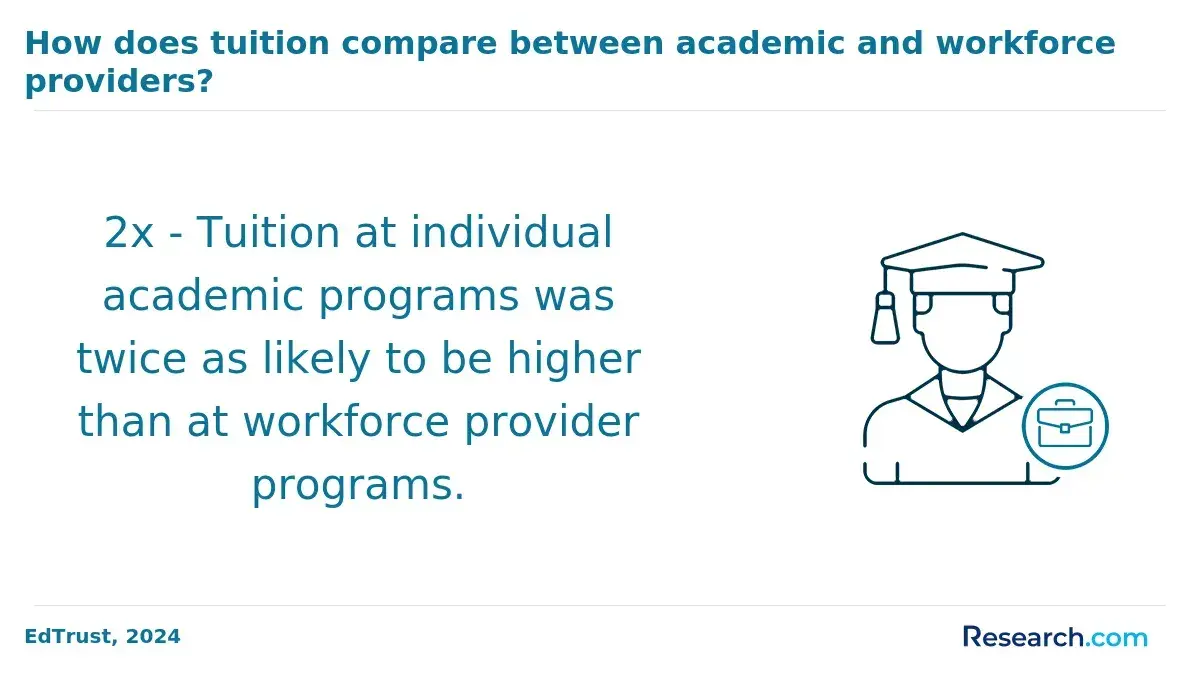
A business communications degree usually requires a larger financial investment than a certificate because it takes more credits and more time to complete. However, the lower price of a certificate does not automatically make it the better value. The right choice depends on whether the credential supports your career goal, whether credits can transfer, and whether employers in your target field recognize it.
Average Tuition for Business Communications Degree Programs
- Public in-state tuition: Annual in-state tuition typically ranges from $8,200 to $12,400 per year at public universities.
- Public out-of-state tuition: Out-of-state students usually pay more, with tuition costs ranging between $16,600 and $30,100 per year.
- Private university tuition: Private institutions often average $26,600 to $35,800 per year, and tuition can exceed $40,000 at highly selective universities.
- Online program tuition: Online degree options at nonprofit schools generally cost less, averaging between $10,000 and $12,000 annually, though prices vary by institution, residency policy, and program format.
- Total program cost: Because most bachelor’s degrees last four years, total tuition can range from about $32,000 at public universities to over $140,000 at elite private institutions.
Average Tuition for Business Communications Certificate Programs
- Certificate tuition range: Business communications certificate program costs are considerably lower, typically ranging from $1,000 to $5,000 for the entire program at community colleges or public universities.
- Per-credit or course cost: Many certificate programs charge by credit, with rates between $50 and $400 per credit, usually requiring 12 to 24 credits total.
- Online certificate costs: Online certificates often offer cost savings, with tuition usually between $1,500 and $3,500 at public institutions, although private providers tend to charge more.
- Program length impact: Certificate programs are shorter, often completed in less than a year, which reduces total tuition and some related expenses.
- Additional fees: Some schools add fees for digital resources, technology access, or online learning platforms. These are usually smaller than tuition but should still be included in your budget.
When comparing costs, look beyond tuition. Include application fees, books, technology fees, transfer-credit evaluation fees, and lost income if you reduce work hours. Also compare financial aid eligibility, since accredited degree programs are more likely to qualify for federal financial aid than short non-degree certificates.
If you are comparing communications programs with broader business options, reviewing the best online business schools can help you benchmark affordability, format, and institutional credibility. For those exploring ways to lower upfront costs, it can also be helpful to apply to accredited online schools no fee required.
Can You Transfer Certificate Credits Toward a Business Communications Degree Later On?
Yes, certificate credits can often be transferred toward a business communications degree, but transfer is never automatic. Each institution decides which credits it will accept, how many credits may apply, and whether the courses match the degree curriculum.
Many universities, such as Purdue, provide pathways for integrating specific certificate credits into degree programs, sometimes allowing up to 12 credits to count toward a master’s or bachelor’s degree. Transfer is more likely when the certificate was completed at a regionally accredited school or when the courses are recognized by entities like ACE or NCCRS. Courses also need to align closely with the receiving program’s curriculum.
What affects certificate credit transfer?
- Accreditation: Credits from accredited institutions are generally more portable than credits from unaccredited providers.
- Course match: A business writing course may transfer into a communications curriculum more easily than a general professional development seminar.
- Credit type: Academic credits usually transfer more easily than Continuing Education Units or noncredit training.
- Grade earned: Schools commonly require a minimum grade of C or above for transfer eligibility.
- Credit limits: Many programs cap how many outside credits can apply. Graduate programs commonly cap transferable credits at around 9 to 12 credits.
- Time limits: Some schools may not accept older credits if the content is considered outdated.
Before enrolling in a certificate, ask the school for a written explanation of transfer policies. If you already know which degree you may pursue later, contact that institution before starting the certificate. This can prevent the common and costly mistake of earning credits that do not apply to your future degree.
Are Certificate Programs Accredited the Same Way as Business Communications Degrees?
Certificate programs are generally not accredited in the same way as associate, bachelor’s, or master’s degree programs. Degree programs are usually offered by institutions that hold regional or national accreditation recognized by the U.S. Department of Education or the Council for Higher Education Accreditation (CHEA). Accreditation reviews institutional quality, academic standards, faculty qualifications, student support, and other core areas.
Certificates are more varied. Some are credit-bearing academic certificates offered by accredited colleges or universities. Others are noncredit professional development programs offered through continuing education divisions, private providers, or professional organizations. Some certificates award Continuing Education Units instead of academic credits, which can affect transferability, financial aid eligibility, and employer recognition.
Why accreditation matters
- Quality assurance: Accreditation helps verify that the school meets recognized educational standards.
- Credit transfer: Credits from accredited institutions are more likely to be considered by other colleges, though transfer is still not guaranteed.
- Financial aid: Federal financial aid is available mainly through eligible programs at accredited institutions, and many short certificate programs do not qualify.
- Employer confidence: Employers may view credentials from accredited colleges more favorably than credentials from unknown providers.
- Future education: If you plan to pursue a degree later, accreditation becomes especially important.
When evaluating a certificate, do not rely only on the program title. Confirm whether it is credit-bearing, who awards it, whether the institution is accredited, whether credits can transfer, and whether the curriculum matches your career goals. Also review faculty qualifications, student outcomes, portfolio opportunities, and employer relevance.
What Jobs Can You Get with a Business Communications Degree vs. a Certificate?
Both credentials can support careers in communication-heavy business roles, but they often lead to different levels of responsibility. A degree may qualify graduates for roles involving strategy, writing, brand messaging, campaign planning, and leadership. A certificate is more likely to support entry-level roles, support positions, or advancement within a current job.
Jobs You Can Get with a Business Communications Degree
- Communications manager: Oversees organizational messaging, internal communication, public-facing content, campaigns, and communication teams.
- Public relations specialist: Builds and manages an organization’s public image through media outreach, press releases, statements, and stakeholder communication.
- Social media manager: Develops content strategies, manages brand voice across platforms, tracks engagement, and coordinates campaigns.
- Marketing coordinator: Supports campaign planning, event promotion, content scheduling, research, and cross-department communication.
- Director of communication: Leads high-level communication strategy, ensures consistent messaging, and aligns communication efforts with business goals.
Jobs You Can Get with a Business Communications Certificate
- Communications assistant: Supports communication teams with writing, editing, scheduling, research, documentation, and content coordination.
- Customer service representative: Uses written and verbal communication skills to answer questions, resolve concerns, and support customer relationships.
- Administrative assistant: Manages correspondence, scheduling, records, office communication, and daily operational support.
- Social media coordinator: Helps publish content, monitor engagement, draft posts, and support campaigns under the direction of a manager.
- Marketing assistant: Assists with research, campaign logistics, email communication, project tracking, and promotional materials.
The degree path is usually stronger if you want to compete for roles with titles such as manager, specialist, strategist, or director. The certificate path can be useful if you are entering the field, adding communication skills to another role, or strengthening your résumé while working.
What Is the Average Starting Salary for a Certificate vs. Business Communications Degree Graduates?
Starting salary is one of the clearest differences between a business communications degree and a certificate. Degree graduates generally qualify for a wider range of roles and often start at higher salaries. Certificate holders may enter the workforce faster and with less debt, but their early roles may be more limited unless they already have relevant experience.
- Typical salary range: Degree holders start at an average of $43,355 annually, with median salaries rising to $62,297 across the field. Certificate graduates often begin between $28,000 and $40,000.
- Average starting salary for business communications degree holders: Graduates with a business communications degree generally have stronger starting salary potential and may reach around $59,081 within five years.
- Certificate vs degree salary comparison: Certificates can support quicker workforce entry and lower upfront education costs. Degree holders, however, tend to qualify for management positions earning $100,000 or more, which can improve long-term earning potential.
- Salary factors: Earnings vary by years of experience, geographic location, industry sector, company size, and specialized digital or analytical skills.
- Career outlook: The 2025 projection indicates starting salaries in communications may decline slightly to about $60,353, which suggests a competitive market where experience, portfolio quality, and technical skills may matter more.
Salary should not be judged only by the first job after graduation. A certificate may be the better return on investment if it helps you earn a promotion quickly or improve performance in a current role. A degree may offer stronger value over time if it helps you qualify for positions with advancement, leadership responsibility, or higher salary ceilings.
For students trying to control costs while pursuing a full credential, researching a cheapest online bachelor's degree in business communications may be a practical way to balance affordability with long-term career growth.
Here's What Graduates of Business Communications Programs Say About Their Degree or Certificate
- Valentino: "Choosing the business communications certificate program was perfect for me because I wanted a faster pace and a more focused learning experience without the higher cost of a full degree. The certificate only took a few months, and I immediately applied new skills at work, which boosted my confidence and efficiency. For anyone balancing work and studies, it's a great way to gain practical knowledge without a heavy financial commitment."
- Zev: "When I pursued my business communications degree, the depth of study and comprehensive curriculum really helped me develop critical thinking and advanced communication strategies. Although it took longer and was more expensive than a certificate program, I felt the investment was worthwhile for my long-term career growth and leadership opportunities. It's important to weigh how much time and money you're prepared to invest when deciding between a degree and a certificate."
- Grayson: "Having completed both the business communications certificate and degree, I truly appreciate the distinct benefits of each. The certificate offered a rapid, cost-effective introduction to key concepts, while the degree expanded my expertise with a richer learning environment and networking opportunities. For me, combining both routes maximized my career advancement and personal development, but for others, it depends on their goals, budget, and timeline."
Other Things You Should Know About Business Communications Degrees
Networking opportunities in certificate programs can be limited compared to degree programs, which often offer larger alumni networks and longer durations for relationship-building. However, some certificate programs do provide seminars or workshops where students can engage with industry professionals, facilitating potential connections in the field.
A business communications degree or certificate should come from a school accredited by a recognized agency, such as a regional accreditor in the United States. For specialized programs, accreditation from AACSB is more common for business schools, while communications credentials are usually checked through the institution’s overall accreditation.
References
- Degrees vs. Certificate Programs: What's the Difference? https://www.snhu.edu/about-us/newsroom/education/certificates-vs-degrees
- What Is the Average Salary for Communication Majors? https://degree.lamar.edu/online-programs/undergraduate/bachelor-science/communication/average-salary-for-communication-majors/
- Degree vs. Certificate Programs: What's the Difference? | CCU Online https://www.ccu.edu/blogs/cags/2021/04/degree-vs-certification/
- General Catalog https://catalog.registrar.uiowa.edu/tippie-business/master-of-business-administration/business-communication-certificate/
- How to Choose Between MBA Degree vs. Certificate | University of Phoenix https://www.phoenix.edu/articles/business/how-to-choose-between-mba-degree-vs-certificate-programs.html
- Certificate vs. Degree: Pros, Cons, and Career Outcomes | National University https://www.nu.edu/blog/certificate-vs-degree/
- Accreditation vs Certification: What's the difference? | UKAS https://www.ukas.com/accreditation/about/accreditation-vs-certification/
- Top 10 Highest Paying Jobs with a Communications Degree 2026 | Nexford University https://www.nexford.edu/insights/highest-paying-jobs-with-communications-degree
- Choosing a Career Path: Communication vs. Business Degree https://online.maryville.edu/blog/communication-vs-business-degree/


