2027 BS in Business Administration Curriculum: How to Evaluate Preparation in Business Statistics
Audited and Verified:
Our Editorial and Data Verification Process
Research.com uses government datasets, official education statistics and primary institutional information to support its career and degree guides. Our review process checks factual accuracy, occupational definitions, source dates and the requirements associated with the credentials discussed.
How This Article Was Fact-Checked
Our editorial team verifies salary estimates, employment projections, education requirements and program information against original data providers and official organizations. Salary figures are checked against the relevant occupational definitions and reporting periods. Information about licensure, accreditation and required in-person training is reviewed separately.
Fact-checked and verified on:

Co-Founder and Chief Data Scientist
A business statistics requirement can be either a useful foundation for making decisions with data or a course that ends before students apply what they learn. If you are comparing BS in Business Administration programs, the difference matters: employers may expect you to interpret reports, question forecasts, and explain uncertainty, not merely calculate an answer.
This guide shows what to look for in syllabi and assignments, how to judge online and campus courses, and when additional analytics coursework is worth the time and cost.
Key Things You Should Know
- Look for assignments that move from cleaning business data to selecting a method, interpreting uncertainty, and recommending a decision - not just passing calculation-based exams.
- Check whether statistics is a required core course, a prerequisite for later analytics courses, or an elective; a course title alone does not establish how much practice students receive.
- The U.S. median annual wage for market research analysts was $78,760 in May 2025, but that occupation-wide figure is not a starting salary or an outcome promised by a business statistics course.
What Is Business Statistics in a BS in Business Administration?
Business statistics is the use of data, probability, and statistical methods to inform organizational decisions. In a BS in Business Administration, it commonly connects quantitative reasoning to questions about customers, costs, staffing, inventory, or performance. Its purpose is not simply to produce a number: students should learn what the number measures, how the data was collected, and whether the conclusion is justified.
Course names and placement vary. A program might require business statistics in its core, teach similar material in quantitative methods, or make statistics a prerequisite for business analytics. A BS designation does not guarantee more statistical depth than a BBA. Compare the required courses and their assignments rather than relying on the degree title; a national guide to ranked online business colleges can help you identify programs to investigate, but each school's catalog and syllabus should settle the curriculum question.
How Does Business Statistics Prepare Students for Business Careers?
Statistics is most useful when it changes how a student approaches a decision. A marketing team may compare customer groups, an operations team may examine delivery variation, and a project coordinator may track whether a process is meeting its target. In each case, the graduate needs to define a measure, check the underlying data, explain a finding to colleagues, and avoid claiming that a pattern proves its cause.
That preparation is broader than operating software but narrower than professional expertise in data science. An early-career employee who can explain why a small or unrepresentative sample weakens a recommendation may be more useful than one who can produce an elaborate chart without context.
Students aiming specifically at project coordination can compare statistics assignments with the scheduling, budgeting, and risk work taught through affordable online study routes in project management. The better route depends on the tasks in the target role, not on which course sounds more technical.
What Does a Strong Business Statistics Curriculum Include?
A strong course connects methods to a defensible business recommendation. The table separates foundational topics from the evidence of learning worth seeking in a syllabus or sample assignment.
| Curriculum element | What students should be able to demonstrate |
| Data preparation and description | Identify units, missing values, outliers, and misleading summaries before presenting a chart or average. |
| Sampling and uncertainty | Explain who the data represents and what a sample cannot establish. |
| Statistical inference | Interpret an estimate or test in plain language without confusing statistical significance with business importance. |
| Relationships and forecasting | Assess model assumptions, distinguish correlation from causation, and describe forecast limitations. |
| Applied communication | Show calculations or reproducible analysis and make a recommendation that accounts for costs, stakeholders, and uncertainty. |
Ask which spreadsheet or statistical tools students actually use, whether they work with imperfect datasets, and how much of the grade rests on a written interpretation. Then check the prerequisite chain: an introductory course may be adequate for general business decisions but insufficient preparation for an analytics or finance concentration without further coursework.
Students comparing a more specialized operations route can examine supply chain bachelor's programs with compressed schedules, while verifying that any faster format still offers the quantitative courses they need.
Delivery format matters less than access to feedback and time to practice. An online course may offer recorded demonstrations and repeatable exercises, while a campus course may make it easier to ask questions in real time. Neither format guarantees those features. Request a current syllabus and sample weekly schedule for the actual section you would take.
Check whether instruction is live or asynchronous, how quickly an instructor responds to questions, what tutoring is available, and whether exams require proctoring or specific software. Ask how group analyses are scheduled and whether students can revise work after feedback. For a working student, a course with flexible lectures but fixed daytime presentations may be difficult to complete. Compare those obligations - not just the "online" label - when reviewing online business administration programs with work-compatible schedules.
First, confirm that the institution holds accreditation from an agency recognized by the U.S. Department of Education or the Council for Higher Education Accreditation. Then check whether the business school or program has separate accreditation from AACSB, ACBSP, or IACBE, if that distinction matters to you. Do not assume a school-level accreditation claim covers the exact BS program or delivery location under consideration.
Accreditation is a screening tool, not evidence that a particular statistics course includes applied analysis. After checking status and scope with the accreditor and institution, inspect the curriculum and ask for outcomes or examples of assessed work. This is especially important when comparing tuition through lists of budget-friendly colleges for business administration online: a lower price is useful only if the program meets your academic needs and the credential is appropriate for your plans.
Admission requirements depend on the institution and on whether you enter as a first-year or transfer student. Schools may review prior transcripts and academic standing; some also set separate requirements for entry to the business major. Algebra, statistics, accounting, or economics may be admission prerequisites, courses completed after enrollment, or recommended preparation rather than formal barriers.
If you have prior college work, ask for a written evaluation showing both accepted credits and which requirements they satisfy. A transferred statistics course might count toward the business core, an elective, or neither, depending on its content and the school's rules. Applicants with an associate degree who are also considering HR can compare online human resources programs for associate degree holders, but should obtain a separate degree audit for each option. The receiving institution decides equivalencies and whether further quantitative study is required.
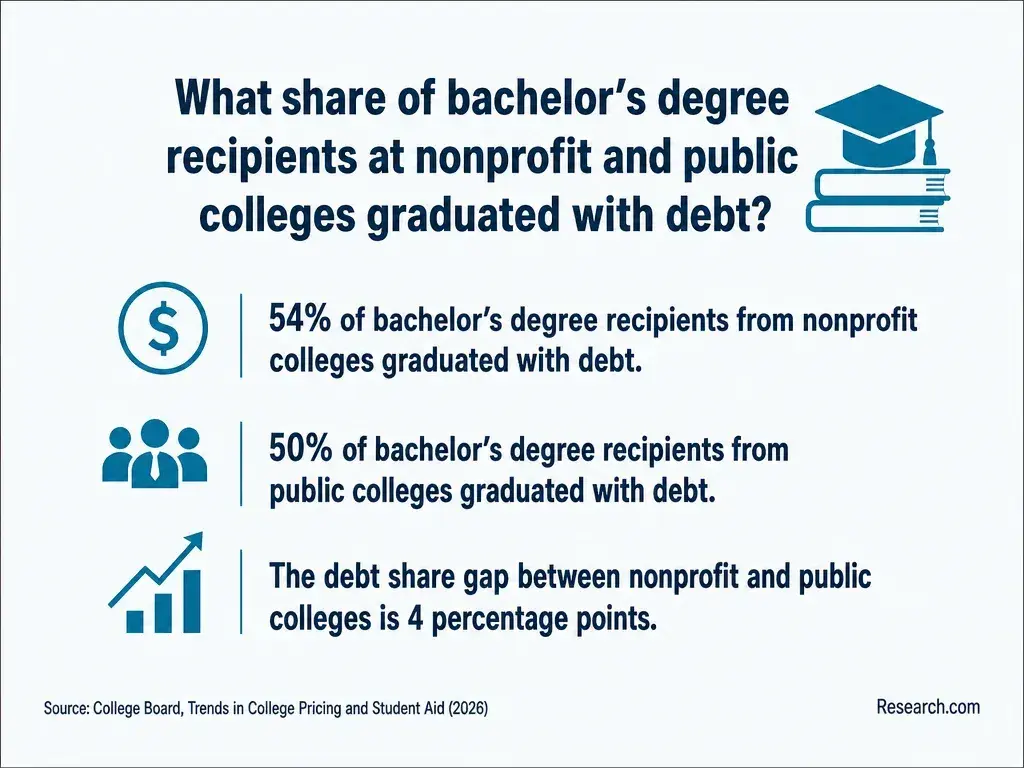
Completion time and total cost depend on the credits that apply to the degree, required course sequencing, enrollment pace, and tuition and fees at the chosen school. Statistics can affect the schedule if it must be completed before analytics, finance, or another required course. A student who transfers many credits may still face a delay if a prerequisite or later course is offered infrequently.
Request an individualized degree audit and a term-by-term plan before comparing prices. Include required software, books, proctoring, and any campus travel alongside tuition; also check whether part-time attendance changes aid eligibility or employer reimbursement. Use business administration degree return and completion planning as a starting point for comparing routes, then calculate remaining costs from each institution's written evaluation. An advertised short program is not necessarily the shortest or least expensive path for your credits.
Market research analysts examine consumers and markets; logisticians evaluate supply chains; and operations or project coordinators may monitor costs, timelines, and process measures. Entry into these roles depends on the employer's requirements and evidence of relevant work, not simply on completing a statistics course. Internships, supervised projects, and work samples can show how a student handled data and explained a decision.
The U.S. Bureau of Labor Statistics projects logistician employment to grow 18% from 2025 to 2035. That outlook signals demand for the occupation nationally, not guaranteed openings for new business graduates in a particular area. If supply chain work is the goal, compare the general business curriculum with specialized coursework and the supply chain degree duration and salary considerations relevant to your route. Seek experience with inventory, purchasing, or operations data rather than treating statistics alone as job qualification.
There is no reliable single salary for "business graduates with statistics skills." Pay depends on the occupation, location, industry, responsibilities, and experience. The U.S. Bureau of Labor Statistics reports a May 2025 median annual wage of $78,760 for market research analysts. That is the median across people employed in the occupation - not an entry-level offer or a wage attributable to a BS in Business Administration.
Use occupation-specific figures only after identifying the work you want to do. A role centered on projects may value different coursework and experience from a market research role; project management degrees with prior-credit pathways offer one comparison for students considering that direction. For a realistic personal estimate, review local postings for your target entry-level title and compare their required skills with the assignments and experience you can document.
Do Business Administration Graduates Need Statistics Certifications or Licenses?
General business statistics work does not require a statistics license. A BS in Business Administration and its statistics course also do not award a professional certification. Employers may value evidence that you can use spreadsheets, interpret results, and communicate findings; a relevant project can sometimes demonstrate those abilities more directly than an unrelated certificate.
Specialized occupations can have separate credential or licensing rules, so check the requirements of the role rather than assuming the business degree covers them. Before paying for additional training, compare its assessed skills and cost with your target job postings and the gaps in your existing work. For employees primarily seeking supervisory development rather than quantitative specialization, completion times for organizational leadership degrees may be a useful alternative comparison; neither pathway replaces the experience employers expect for management responsibility.
Other Things You Should Know About Business Administration
Review equations, ratios, percentages, and graphs before the course starts. Ask the department about its math support or preparatory options; you do not need to assume that difficulty with algebra rules out a business degree.
Yes. Public or instructor-provided datasets can support a useful analysis. State where the data came from, what it represents, and what decisions it cannot support.
Follow the instructor's policy. If a tool is permitted, verify its calculations and explanations yourself, disclose its use when required, and do not upload confidential or personal business data without authorization.
Check the data definitions, time period, sample, and calculations before dismissing either source. Explain the discrepancy and what additional evidence would help resolve it; a result is more useful when its limitations are visible.
- Analytics Modules for Business Students - Springer Nature https://link.springer.com/article/10.1007/s43069-023-00216-5
- What Skills Will Future Business Graduates Need? | AACSB https://www.aacsb.edu/insights/articles/2025/08/what-skills-will-future-business-graduates-need
- General Business | B.S. in Business Administration | University of Baltimore https://www.ubalt.edu/schools-and-colleges/merrick-school-of-business/academics/explore-all-programs/bsba-general-business/index.cfm
- Bachelor of Business Administration Concentration in Business Statistics - Southern California State University https://www2.scsuniversity.edu/bachelor-of-business-administration-concentration-in-business-statistics/
- Measuring student learning | Center for Teaching Innovation https://teaching.cornell.edu/teaching-resources/assessment-evaluation/measuring-student-learning
- What Can You Do with a Business Analytics Degree? | American Military University https://www.amu.apus.edu/area-of-study/business-administration-and-management/resources/what-can-you-do-with-a-business-analytics-degree/
- Beyond Memorization: The Power of Authentic Assessments in STEM Learning | Land-Grant Press https://lgpress.clemson.edu/publication/beyond-memorization-the-power-of-authentic-assessments-in-stem-learning/
- Assessing Student Learning Outcomes | Bronx Community College https://www.bcc.cuny.edu/academics/oie/five-step-assessment-process/assessing-student-learning-outcomes/
- Top Skills Business School Grads Need in 2025 and Beyond | UC Davis Graduate School of Management https://gsm.ucdavis.edu/blog/what-employers-really-want-top-skills-business-school-grads-need-2025-and-beyond
- College of Business Administration - Academic Catalog https://catalog.uic.edu/ucat/colleges-depts/business-administration/