
2027 Can a BS in Business Administration Prepare You for a Billing Operations Manager Role? Skills and Entry Requirements
Audited and Verified:
Our Editorial and Data Verification Process
Research.com uses government datasets, official education statistics and primary institutional information to support its career and degree guides. Our review process checks factual accuracy, occupational definitions, source dates and the requirements associated with the credentials discussed.
How This Article Was Fact-Checked
Our editorial team verifies salary estimates, employment projections, education requirements and program information against original data providers and official organizations. Salary figures are checked against the relevant occupational definitions and reporting periods. Information about licensure, accreditation and required in-person training is reviewed separately.
Fact-checked and verified on:

Co-Founder and Chief Data Scientist
A billing operations manager needs more than a general understanding of business: employers also need someone who can keep invoices accurate, resolve disputes, improve processes, and lead a team. If you are considering a BS in Business Administration, the decision is whether its coursework will strengthen the experience you have - or help you build experience you still need.
This guide connects the degree to billing work, explains common entry requirements and salary limitations, and shows how to choose a program without mistaking graduation for a management qualification.
Key Things You Should Know
- A BS in Business Administration can support billing operations management, but it rarely replaces billing experience. Employers generally need evidence that you can manage exceptions, controls, systems, and people.
- Prioritize accounting, operations, analytics, and information systems. Pair coursework with supervised billing work or an approved project using data you are permitted to access.
- here is no reliable national median for this exact job title. The broader administrative services manager occupation had a May 2025 median annual wage of $114,130, which should not be treated as a billing manager offer or a new graduate's salary.
What does a billing operations manager do, and how does business administration help?
A billing operations manager oversees how an organization turns completed work, subscriptions, or delivered products into accurate customer invoices and timely payments. Responsibilities may include supervising billing specialists, investigating errors and disputes, coordinating with sales and accounting, monitoring overdue accounts, maintaining controls, and improving billing software workflows. The scope varies: a healthcare employer may emphasize claims and payer rules, while a subscription business may emphasize recurring charges and system integrations.
Business administration provides a foundation for decisions that cross departments. Accounting helps a manager understand receivables and reconciliations; operations courses help identify bottlenecks; management courses support coaching and workload planning. Billing is not the same as payroll, accounts payable, or general bookkeeping, even though some tools and controls overlap.
System changes illustrate the value of combining business knowledge with practice. A manager introducing a new invoice review process must coordinate users, test exceptions, and confirm who can approve changes. If that work is your main career interest, economical project management education online may offer a more focused comparison than another general business course.
Can a BS in Business Administration qualify you for billing operations management?
Yes, as an educational qualification at employers that accept a business bachelor's degree - but not necessarily as a complete hiring qualification. A BS in Business Administration can meet a degree preference and develop relevant analytical and management knowledge. Hiring decisions also depend on the billing environment, demonstrated responsibility, software fluency, and experience directing people or processes. Some employers may accept equivalent experience instead of a bachelor's degree.
For an experienced billing specialist or team lead, completing the BS may address an education requirement for promotion. For someone entering business from another field, the more realistic first step is often billing specialist, accounts receivable specialist, or billing analyst. Experience with customer service or financial records helps, but it does not by itself establish readiness to own a billing operation.
Before enrolling, compare the degree requirements with the jobs you intend to pursue. If you need to finish a bachelor's degree, check prerequisites before applying to business administration programs; admission requirements and the credits that count toward graduation are separate questions.
What skills do billing operations managers need to succeed?
The strongest candidates can show how they detect errors, determine their cause, and prevent a repeat - not merely that they can send invoices. The following skill areas connect directly to common management responsibilities:
- Billing and accounting controls: Understand invoice accuracy, credits, receivables, reconciliations, approval authority, and audit trails.
- Data and systems: Use spreadsheets and billing or enterprise systems to examine exceptions, aging, rework, and workload without confusing a dashboard with proof of improvement.
- Process leadership: Document procedures, assign work, train staff, and coordinate changes with accounting, sales, customer support, and IT.
- Judgment and communication: Resolve disputed charges, explain findings clearly, protect customer information, and escalate issues outside your authority.
Industry context determines which skills matter most. In a product business, fulfillment and invoice mismatches may make supply chain knowledge useful; affordable supply chain programs and salary outlook are worth comparing only if that operational side - not billing leadership - is your primary goal.
Look beyond the degree title to required courses, available electives, and assignments. A general business core can be useful, but it may offer limited practice with billing systems or industry-specific rules. This table shows what to look for in a curriculum and what you would still need to demonstrate at work.
| Course area | Relevance to billing operations | Important limitation |
| Financial and managerial accounting | Receivables, adjustments, reconciliations, and financial controls | Coursework does not replace responsibility for a real billing cycle. |
| Operations and process improvement | Workflow mapping, error reduction, and capacity planning | A classroom proposal is not a verified workplace improvement. |
| Business analytics or information systems | Spreadsheets, reporting, data quality, and system requirements | Tools and access differ by employer. |
| Management and business communication | Coaching, escalation, documentation, and cross-team decisions | Supervisory ability still needs workplace evidence. |
An accounting, operations, or information systems concentration may add depth if the school officially offers it and the courses fit your goal. An elective cluster is not automatically a formal concentration. Ask whether a capstone can examine an authorized billing problem using anonymized information; do not assume employment grants access to customer records or approval to publish results. Also check when required courses run: explore US business bachelor's fast-track rankings as a starting point, then verify whether the actual course sequence lets you finish on that schedule.
There is no universal number of required years. Employers commonly look for progression from processing transactions to owning outcomes: resolving complex exceptions, reviewing others' work, improving controls, coordinating a system change, or supervising a team. A title alone is less persuasive than specific responsibilities and results you can explain.
For an early-career applicant, billing specialist or accounts receivable work provides direct exposure to invoice lifecycles and disputes. A billing analyst role may add reporting and system-testing experience. An experienced employee should document the scale of their work, decisions they were authorized to make, and how they verified accuracy - without disclosing customer or employer-confidential data.
Background matters when choosing a degree. Payroll or HR administration experience may demonstrate controls and discretion, but customer billing has different transactions and stakeholders. If you are deciding between building on that background and moving into billing, compare credit acceptance at online HR schools before abandoning an HR-oriented completion path. The school must determine which accepted credits actually satisfy degree requirements.
General billing operations management does not have a single nationwide occupational license. A business bachelor's degree also does not award a professional certification. Employers may prefer training in their billing platform, accounting controls, collections practices, or a sector-specific process; any credential should be evaluated against the actual job description and the issuing organization's eligibility rules.
Specialized settings can change the answer. Healthcare revenue-cycle work, for example, may call for knowledge of coding, claims, and payer requirements that a general business curriculum does not provide. Payroll credentials address employee pay rather than customer invoicing. If you are weighing that employee-facing path, review HR degree coursework and entry requirements rather than assuming billing and payroll qualifications are interchangeable.
Yes, if the program offers relevant coursework and a workable way to build practical evidence. An online format can let a billing employee continue gaining experience while studying. It does not, on its own, provide access to billing software, an internship, a supervisor, or confidential workplace data.
Check whether classes have live meetings, fixed deadlines, proctored exams, group presentations, or required visits. Ask how online students complete projects and obtain career support. An accelerated option may shorten the calendar but increase the weekly workload; flexible fast-track routes in business education should be judged against your work schedule and required course sequence, not the advertised completion time alone.
A bachelor's degree is commonly planned around four years of full-time undergraduate study, but a transfer student's timeline depends on the official degree audit, remaining major courses, residency rules, and course availability. Part-time study may take longer; accelerated terms do not necessarily reduce the total work.
There is no responsible single price for a BS in Business Administration without a named school and an evaluation of your remaining credits. Compare tuition with mandatory fees, books and software, possible travel or proctoring, financing costs, and earnings affected by study time. If an employer offers tuition assistance, verify eligibility, reimbursement timing, grade conditions, and what happens if you leave the job.
For a realistic comparison, ask schools for an estimated remaining-course plan and charges under the same enrollment pace. You can then compare business administration tuition and completion time without assuming that the lowest advertised tuition produces the lowest completion cost.
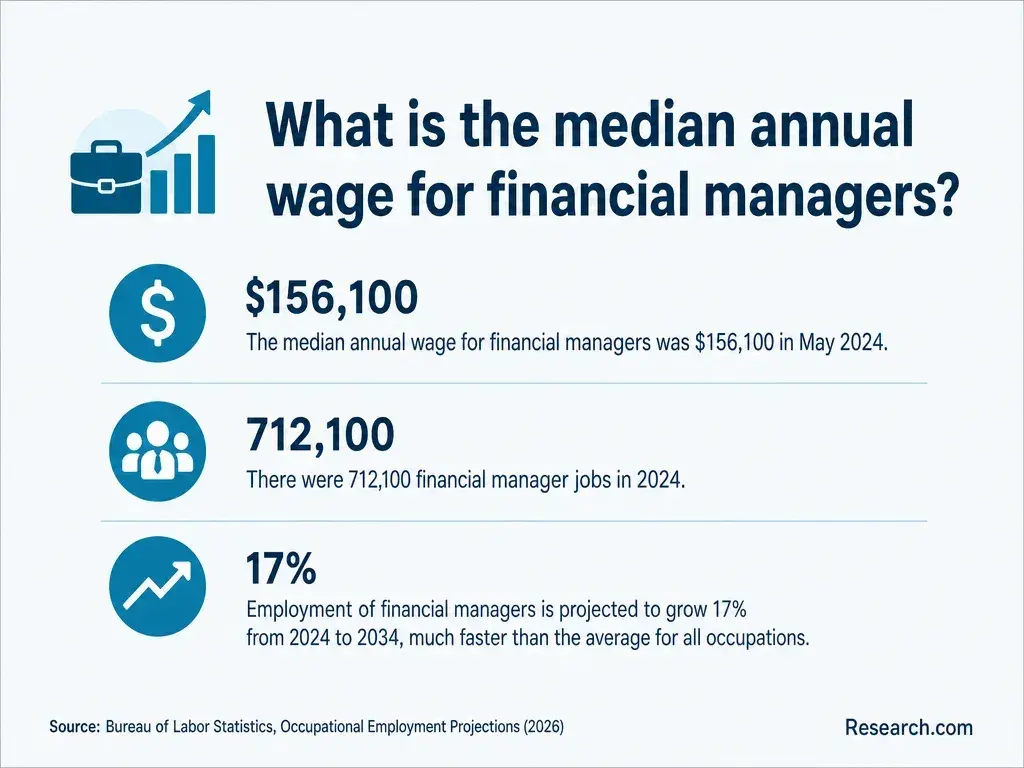
The US Bureau of Labor Statistics does not publish a national wage median specifically for the title billing operations manager. As broad context, administrative services managers had a median annual wage of $114,130 in May 2025, with employment projected to grow 5% from 2025 to 2035. That occupation covers more than billing, so neither figure predicts a billing manager's pay, a new graduate's earnings, or openings for this particular title.
Pay depends on industry, location, team size, systems responsibility, and the applicant's experience. Compare local postings with similar duties and required qualifications, not just matching titles. If completing a degree is mainly a financial decision, weigh those opportunities against remaining education costs; business administration degrees for limited tuition budgets are a starting point, not evidence that a particular program will pay for itself.
How can you choose an accredited business administration program for this career?
Start with recognized institutional accreditation, then check whether a school claims additional business-school or program accreditation through AACSB, ACBSP, or IACBE - and whether the specific program is within its scope. Accreditation establishes an educational quality framework; it does not verify that graduates obtain billing manager jobs.
Use target job postings to identify the billing, accounting, systems, and supervisory gaps you need to close. Then request the current curriculum, an official transfer evaluation if applicable, course schedules, total remaining costs, and details of any internship or capstone approval process. Ask career services whether it supports students seeking billing, receivables, or revenue operations positions rather than assuming general business recruiting will cover them.
Application expense is one small part of the comparison. You can find online colleges with free admissions applications, but choose among eligible programs based on the complete degree plan and its fit with your experience.
Other Things You Should Know About Business Administration
No. Accounts payable concerns money the organization owes; customer billing generally concerns charges and money owed to the organization. Payables experience can demonstrate controls and reconciliation skills, but you may still need direct exposure to invoices, disputes, and receivables.
Some employers may offer remote or hybrid work, but the arrangement depends on systems access, data-security rules, team supervision, and company policy. Confirm the work location in each posting rather than assuming billing work is remote.
Describe your responsibilities and methods, and use a fictional or properly authorized, anonymized work sample. Obtain employer permission before using internal documents, customer information, or system screenshots in a portfolio.
It depends on your existing education and the jobs you want. An MBA is a graduate degree that generally requires a bachelor's for admission; it is not a substitute for unfinished undergraduate study. If you already hold a bachelor's, compare the MBA's cost and curriculum with targeted training and the requirements for your next role.
- Revenue Cycle Management: The Art and the Science - PMC https://pmc.ncbi.nlm.nih.gov/articles/PMC11219169/
- Conflict Management in Healthcare - StatPearls - NCBI - NIH https://www.ncbi.nlm.nih.gov/books/NBK470432/
- Career Path for Business Operations Managers in the USA | Edgewood College https://online.edgewood.edu/blog/business-operations-manager-career-path-in-the-usa/
- What is a BBA degree and how will it jumpstart my career? | hc.edu https://hc.edu/articles/what-is-a-bba-degree/
- How to Become an Operations Manager | Western Governors University https://www.wgu.edu/career-guide/business/operations-manager-career.html
- Types of Business Degrees: Your Complete Guide | UWA Online https://online.uwa.edu/news/types-business-degrees/
- Entry-Level Jobs With a Business Administration Degree | Warner Pacific University http://www.warnerpacific.edu/blog/top-entry-level-jobs-ba-business-administration/
- Business Analytics and Information Systems (Bachelor's Degree) - Business Career Center | Smeal College of Business https://careerconnections.smeal.psu.edu/channels/business-analytics/
- What Can You Do With a Business Administration Degree? | snhu.edu https://www.snhu.edu/about-us/newsroom/business/what-can-you-do-with-a-business-administration-degree
- Business Operations Manager Career Guide: Key Insights | American College of Education https://ace.edu/student-success/career-guides/business-operations-manager/


