2027 Best Online Human Services Doctorate Programs for Career Advancement Beyond a Master's Degree

Co-Founder and Chief Data Scientist
A master's degree can open many human services roles, but senior leadership, policy, teaching, and advanced practice positions often demand stronger evidence of research, strategy, and systems-level expertise. The decision is timely: BLS data shows social and community service managers had a May 2024 median salary of $78,240, making advancement planning financially significant.
This guide is for working professionals comparing online doctorate options after a master's. You'll learn which programs support specific career goals, how employers evaluate doctoral credentials, and how to judge whether the cost, time, and opportunity trade-offs make sense.
Key Things You Should Know
- An online human services doctorate is usually most valuable when it supports a defined goal such as executive leadership, program evaluation, university teaching, policy work, or advanced clinical-social services leadership; it is less useful when pursued only for general promotion hopes.
- Career value varies by role: BLS reports a May 2024 median salary of $78,240 for social and community service managers and $117,960 for medical and health services managers, but a doctorate may be preferred rather than required depending on employer and sector.
- Most working professionals should compare professional doctorates, PhD-style research doctorates, dissertation requirements, total tuition, employer tuition support, and whether the program builds leadership evidence they can use before graduation.
Which Online Human Services Doctorate Programs Best Support Career Advancement Beyond a Master's Degree?
The best online human services doctorate for career advancement is not always the most famous or fastest option. It is the program whose curriculum, final project, faculty expertise, and professional network match the role you want after your master's degree.
In human services, "doctorate" can refer to several related paths: a PhD in Human Services or a closely aligned field, a Doctor of Human Services, a Doctor of Social Work, an EdD with community leadership emphasis, or a public health, nonprofit leadership, counseling education, or organizational leadership doctorate with a human services focus. These programs prepare professionals to lead agencies, evaluate programs, influence policy, teach, supervise teams, or design interventions for vulnerable populations.
The table below compares common doctorate types by career purpose. Use it to narrow your search before comparing tuition, admissions, and format.
| Doctorate type | Best fit after a master's degree | Typical career advancement use | Potential limitation |
| PhD in Human Services or related field | Professionals who want research, policy analysis, university teaching, or evaluation roles | Research director, policy analyst, tenure-track or research faculty pathway, evaluation consultant | Often requires a dissertation and may be less practice-focused than some working professionals prefer |
| Doctor of Human Services or applied doctorate | Experienced practitioners seeking executive, administrative, or systems-level leadership | Agency director, senior program administrator, community services executive, consultant | May not carry the same research identity as a PhD for some academic roles |
| Doctor of Social Work | Licensed or master's-prepared social work professionals pursuing advanced practice or leadership | Clinical director, social work administrator, practice leader, educator in practice-focused programs | Licensure rules still depend on state boards and prior MSW preparation |
| EdD in community care, leadership, or counseling education | Professionals moving into training, workforce development, higher education, or organizational leadership | Training director, faculty role, student services leader, leadership development consultant | May be less targeted if the curriculum lacks human services content |
| Public health or health administration doctorate | Human services professionals working in behavioral health, community health, aging, disability, or integrated care | Population health leader, community health executive, health services administrator | May require stronger statistics, health policy, or management preparation |
A professional doctorate generally fits readers who want to advance inside agencies, nonprofits, healthcare systems, government programs, or consulting. A PhD is usually a better match for professionals who want to publish research, teach in research-oriented settings, compete for research grants, or move into policy analysis.
Online delivery matters most when it helps you keep your job while completing doctoral work. A strong online program should offer live or structured faculty interaction, doctoral advising, research support, career-relevant projects, and access to internships, residencies, or applied fieldwork when needed. If you are still filling foundational gaps before doctoral study, an accelerated human services degree online can also help you understand the undergraduate-to-graduate pathway, although doctorate applicants typically already hold a relevant master's degree.
Common mistake to avoid: choosing only by modality. "Online" tells you how the program is delivered, not whether it is respected, rigorous, aligned with your career goal, or designed for working professionals.
Which Career Paths Become More Accessible With an Online Human Services Doctorate?
An online human services doctorate can make certain roles more accessible, especially when advancement depends on strategic leadership, research literacy, program evaluation, or the ability to manage complex systems. It does not automatically replace licensure, supervised experience, or sector-specific credentials.
The table below separates roles where a doctorate is commonly useful from roles where a master's degree may already be enough. This distinction is important because the best education decision depends on the job you are actually targeting.
| Career path | Doctorate value | Typical responsibilities | Master's-level alternative |
| Human services executive director | Often preferred for competitive senior roles | Agency strategy, budgets, compliance, staff leadership, board reporting, funder relationships | Program director or operations manager with strong experience |
| Social and community service manager | Useful for advancement in large systems or policy-heavy organizations | Program planning, outcomes reporting, staff supervision, community partnerships | Managerial role after an MSW, MPA, counseling, or human services master's |
| Program evaluation director | Strong value if the doctorate builds research methods and data analysis skills | Evaluation design, performance metrics, grant reporting, outcome measurement | Evaluation specialist with graduate statistics or certificate training |
| Clinical or behavioral health administrator | Useful when paired with required licensure and leadership experience | Service line management, quality improvement, risk management, interdisciplinary supervision | Clinical supervisor, licensed therapist, or social work manager |
| Higher education instructor or faculty member | Often required or strongly preferred, especially for full-time faculty roles | Teaching, curriculum development, student mentoring, research or applied scholarship | Adjunct teaching in some practice-based programs |
| Policy analyst or advocacy director | Useful when research, writing, and systems analysis are central | Policy briefs, legislative analysis, coalition building, public testimony, research translation | Advocacy manager or policy associate with a master's and experience |
Career paths become more accessible when the doctorate adds something your master's did not: senior-level management practice, advanced research methods, grant and funding strategy, program evaluation, policy design, or teaching experience. If your target job mostly rewards licensure hours, direct service expertise, or local agency experience, another credential may provide better value than a doctorate.
Professionals with social work backgrounds should also compare whether an MSW remains the more important credential for their goal. For example, readers evaluating clinical or macro-practice foundations may find it useful to compare best online MSW programs before assuming a doctorate is the next logical step.
How Does an Online Human Services Doctorate Increase Earning Potential After a Master's Degree?
An online human services doctorate can increase earning potential indirectly by helping professionals compete for higher-responsibility roles. The degree itself is rarely the only factor; salary depends on employer type, leadership scope, licensure, geography, budget authority, and years of experience.
BLS May 2024 wage data gives useful context: the median annual wage for social and community service managers was $78,240, while medical and health services managers had a median of $117,960. For a human services professional, that gap shows why moving from direct program management into broader health, behavioral health, or integrated service administration can matter as much as the degree title.
The table below shows how doctoral education may connect to salary-relevant responsibilities rather than guaranteeing a specific salary.
| Advancement lever | How a doctorate may help | Salary-related interpretation |
| Managing larger budgets | Builds executive planning, compliance, and evaluation skills | Higher compensation is more likely in roles with broader financial responsibility |
| Leading multi-site programs | Signals readiness for systems-level leadership | Large agencies and healthcare systems may pay more than small nonprofits |
| Specializing in evaluation or data | Strengthens research methods and outcomes measurement | Data-driven roles can support advancement when funders require evidence of impact |
| Teaching or training professionals | May meet doctoral credential expectations for faculty or director roles | Income may come from full-time academic work, consulting, or adjunct teaching |
| Moving into healthcare administration | Can support leadership in integrated behavioral health or community health settings | Healthcare management roles often have stronger wage ceilings than some nonprofit roles |
The most realistic way to estimate salary growth is to compare current compensation with posted salaries for your target roles, then check whether those postings require, prefer, or ignore doctoral preparation. If postings emphasize licensure, supervisory history, grant management, or bilingual service delivery more than a doctorate, the degree may not produce a strong salary return by itself.
A useful rule: pursue the doctorate when it helps you qualify for a job category with higher responsibility, not simply because doctoral initials may look impressive. Employers usually pay for responsibility, measurable leadership, and scarce expertise.
Human services leadership requires more than compassion and field experience. Senior roles often require budget planning, workforce management, compliance oversight, grant accountability, stakeholder communication, and the ability to use evidence when defending program decisions.
An online doctorate can help professionals qualify for leadership roles by turning practice experience into documented executive capability. Strong programs usually require students to analyze real organizational problems, conduct applied research, interpret policy, and present findings to professional audiences.
When comparing programs, look for learning outcomes that match the leadership duties you want to perform. The most career-relevant programs usually help students build evidence in the following areas:
- Strategic planning: the ability to set goals, allocate resources, and align services with community needs.
- Program evaluation: the ability to measure outcomes, interpret data, and improve services based on evidence.
- Policy and advocacy: the ability to understand regulations, funding systems, and legislative priorities affecting clients and agencies.
- Financial and grant management: the ability to manage budgets, prepare funding narratives, and report outcomes to funders.
- Supervision and workforce development: the ability to train staff, reduce turnover risk, and manage interdisciplinary teams.
- Ethical leadership: the ability to make decisions involving confidentiality, equity, mandated reporting, and client safety.
AI and automation are also changing what leadership looks like. Human services agencies increasingly use case management platforms, analytics dashboards, telehealth tools, and automated reporting systems. Doctoral-level leaders do not need to become software engineers, but they do need to understand data governance, bias, privacy, and how technology affects service access.
A doctorate is especially useful when the program lets you produce portfolio-ready work: a strategic plan, evaluation report, grant proposal, policy brief, training model, or applied capstone that can be discussed in interviews. That evidence can be more persuasive than the credential alone.
The strongest specialization is the one that connects your existing master's background to a higher-level labor market. Choosing a specialization that simply repeats your master's concentration can limit the value of doctoral study.
The table below summarizes specializations that often provide stronger career advancement potential because they match leadership needs in agencies, healthcare organizations, government programs, and higher education.
| Specialization | Best for | Career advancement potential | Watch-out |
| Nonprofit and human services leadership | Program managers, directors, and administrators | Executive director, chief program officer, regional services leader | Should include finance, governance, and outcomes assessment, not only leadership theory |
| Program evaluation and applied research | Professionals who like data, grants, and measurable impact | Evaluation director, research manager, grant compliance leader | Requires comfort with statistics, research design, and reporting |
| Behavioral health administration | Counseling, social work, addiction services, and mental health professionals | Clinical operations leader, behavioral health director, integrated care administrator | Does not replace state licensure where clinical authority is required |
| Gerontology and aging services | Professionals serving older adults, caregivers, long-term care, or disability populations | Aging services executive, policy advocate, program innovator | Career value depends on local demand and employer setting |
| Public policy and advocacy | Professionals moving toward government, think tanks, or advocacy coalitions | Policy director, legislative analyst, advocacy executive | Writing, coalition-building, and public communication matter as much as coursework |
| Higher education and workforce development | Professionals who want to teach, train, or lead professional education | Faculty, training director, curriculum leader | Academic hiring standards vary widely by institution and field |
For many professionals, the best specialization adds a second layer of marketable expertise. A counselor might add program evaluation, a social worker might add policy leadership, and a nonprofit manager might add data analytics or healthcare administration.
Professionals still early in the education pathway can also compare adjacent social science preparation. For example, best online bachelors in sociology programs may be useful for readers exploring the broader academic foundation behind human behavior, social systems, inequality, and community research before graduate study.
Employers generally value an online human services doctorate when it comes from an accredited institution, aligns with the role, and is supported by relevant experience. The online format itself is usually less important than program quality, institutional recognition, applied learning, and whether the graduate can solve organizational problems.
Employer response varies by sector. Universities may care about research output and terminal credentials. Government agencies may care about policy expertise, compliance, and public-sector experience. Nonprofits may value grant writing, budget leadership, and measurable community impact. Healthcare systems may prioritize regulatory knowledge, operations experience, and interprofessional leadership.
The table below shows how different employers may interpret an online doctorate for advancement purposes.
| Employer setting | What the doctorate may signal | What employers may still require |
| Nonprofit human services agencies | Strategic leadership, grant accountability, program evaluation skills | Budget experience, fundraising ability, staff management, community trust |
| Government and public agencies | Policy literacy, research skills, systems thinking | Civil service requirements, public-sector experience, regulatory knowledge |
| Healthcare and behavioral health organizations | Quality improvement, integrated care leadership, administrative readiness | Licensure where applicable, compliance expertise, operations experience |
| Colleges and universities | Terminal academic preparation and teaching potential | Teaching record, scholarship, professional publications, discipline fit |
| Consulting and evaluation firms | Research credibility and specialized expertise | Portfolio of projects, client management, data tools, communication skills |
Red flags include programs without recognized accreditation, vague dissertation or capstone expectations, limited faculty engagement, weak student support, and marketing claims that imply guaranteed promotions. Employer value is strongest when the degree helps you demonstrate competence before you ask for a new title.
Before enrolling, ask current or target employers how they view the credential. Some agencies reward doctoral study through salary bands or leadership eligibility, while others base promotion almost entirely on experience, licensure, and internal performance.
Most online human services doctorates take several years after a master's degree, especially for working professionals. Timeline depends on course load, dissertation or capstone design, transfer credit, residency requirements, and whether the student studies full time or part time.
The table below gives a practical timeline comparison. Exact timelines vary by school, but these patterns help professionals estimate workload and career disruption.
| Study format | Typical fit | Time-to-completion pattern | Main trade-off |
| Part-time online doctorate | Full-time professionals balancing work and family | Often the most manageable route, but completion may extend if dissertation progress slows | Lower short-term disruption, longer commitment |
| Full-time online doctorate | Professionals with flexible work, funding support, or a planned career transition | Can shorten the academic timeline when courses and research are taken continuously | Higher workload and possible income pressure |
| Accelerated or intensive format | Experienced students with strong writing, research, and clear project direction | May reduce calendar time if milestones are tightly structured | Less flexibility and little room for delays |
| Dissertation-based program | Research, policy, faculty, or evaluation-focused professionals | Timeline depends heavily on proposal approval, data collection, and committee review | Stronger research identity, but higher risk of delay |
| Capstone or applied-project program | Practice-focused leaders solving a workplace or community problem | Can be more predictable when project scope is clear | May be less suitable for research-intensive academic careers |
Applicants with a master's degree should ask whether prior graduate credits can transfer or waive prerequisites. Some programs accept a limited number of credits, but doctoral coursework usually must meet the school's curriculum, recency, and grade standards.
Professionals can reduce timeline risk by taking the following steps before enrolling:
- Define the role you want after graduation and identify the skills or credential gaps between your current position and that role.
- Choose a dissertation or capstone topic connected to your current work so the project advances your career while you study.
- Ask programs for milestone expectations, including proposal deadlines, committee processes, residency requirements, and average completion patterns.
- Confirm weekly workload expectations with current students or alumni, not only admissions staff.
- Discuss flexible scheduling with your employer before the first term, especially if you supervise teams or manage crisis-response services.
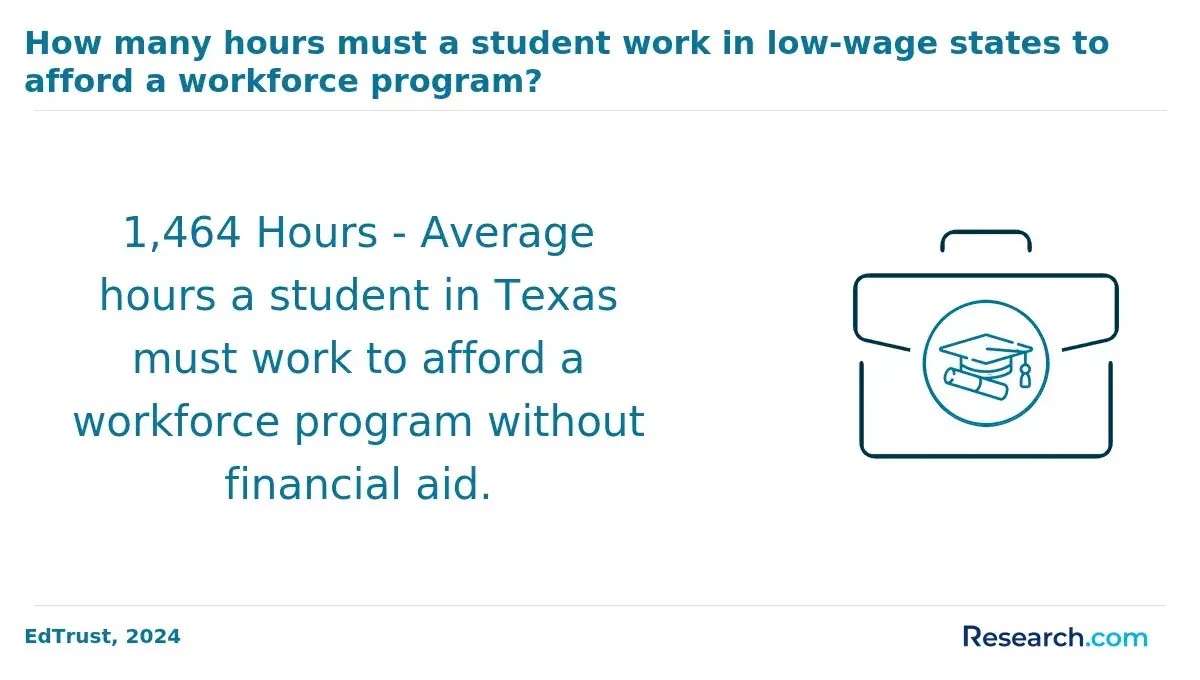
The ROI of an online human services doctorate depends on whether the degree helps you reach a higher-paying or more secure role without creating unsustainable debt or opportunity cost. ROI should be measured in money, time, career mobility, professional credibility, and personal mission fit.
A key cost reality is that graduate borrowing can add up quickly. Federal Student Aid lists the annual Direct Unsubsidized Loan limit for most graduate and professional students at $20,500, which means many doctoral students who rely heavily on loans may need additional financing if tuition and living costs exceed that amount.
The table below outlines the main ROI factors to compare before enrolling. It is not a promise of financial return; it is a framework for evaluating whether the investment fits your career plan.
| ROI factor | Why it matters | How to evaluate it |
| Total tuition and fees | Tuition is only one part of cost, but it is the easiest to compare | Request a full program cost estimate, including technology, residency, and dissertation fees |
| Opportunity cost | Doctoral study may reduce overtime, consulting, or promotion availability during enrollment | Estimate how study time affects income, family responsibilities, and professional commitments |
| Employer support | Tuition assistance can substantially improve ROI | Ask about reimbursement, paid study time, promotion pathways, and leadership development support |
| Target-role salary range | ROI depends on the role you can realistically pursue, not the highest salary in the field | Compare job postings in your region and sector for doctorate preferences and salary bands |
| Credential requirement | A doctorate has stronger ROI when it is required or strongly preferred | Review postings, talk to hiring managers, and compare peer credentials in target roles |
| Portfolio value | Applied projects can create immediate career evidence | Look for capstones, dissertations, internships, publications, or consulting projects tied to employer needs |
A doctorate may be worth it if it helps you move into executive leadership, higher education, specialized consulting, research, policy, or healthcare administration. It may not be worth it if your target role has no doctoral preference, your employer will not recognize the credential, or a lower-cost certificate would fill the same skill gap.
One common mistake is comparing tuition only. A lower-priced program can still have weak ROI if advising is poor, completion is delayed, or the curriculum does not support your target role. Likewise, a higher-priced program may be a stronger investment if it provides employer-recognized training, research support, and career-relevant networks.
The professionals who benefit most from an online human services doctorate already have meaningful field experience, a relevant master's degree, and a clear advancement target. The degree is not designed to replace early-career experience; it works best when it builds on it.
An online doctorate may be a strong fit for the following professionals because their next roles often require strategic judgment, advanced communication, and evidence-based decision-making:
- Program directors who want to move into executive leadership, regional administration, or chief program roles.
- Licensed social workers, counselors, or behavioral health professionals who want to lead clinical programs, train practitioners, or shape service models.
- Nonprofit leaders who need stronger skills in outcomes measurement, funding strategy, governance, and policy communication.
- Government or public-sector professionals who want to move into policy, planning, compliance, or interagency leadership.
- Higher education professionals who want to teach human services, social work, counseling, nonprofit management, or community leadership subjects.
- Consultants and evaluators who need stronger research credentials to compete for contracts or lead complex evaluation projects.
A doctorate may be a poor fit for professionals who are unsure about their career direction, already qualify for their target role with a master's and experience, or primarily need licensure hours rather than advanced academic preparation. It may also be premature for professionals who have not yet supervised staff, managed budgets, or led programs.
For social work professionals specifically, the decision often comes down to whether a doctoral credential supports leadership or practice goals beyond the MSW. Comparing DSW programs can help clarify whether a practice-focused doctorate aligns better than a broader human services or PhD pathway.
How Should Professionals Choose an Online Human Services Doctorate for Career Advancement?
Professionals should choose an online human services doctorate by starting with the job outcome, then working backward to the credential, curriculum, cost, and format. A program that is excellent for policy research may be a weak match for clinical administration, and a practice-focused doctorate may not be ideal for research faculty roles.
Use the following steps to compare programs in a way that protects your time, money, and career momentum:
- Identify three target job titles and collect recent postings from your preferred region or remote market.
- Mark whether each posting requires, prefers, or does not mention a doctorate.
- Compare whether the program's specialization, faculty expertise, dissertation or capstone model, and internship options match those postings.
- Confirm institutional accreditation and any program-level accreditation or licensure relevance that applies to your field.
- Ask whether prior master's credits can transfer, reduce prerequisites, or shorten the curriculum.
- Request a full cost estimate and compare it with employer tuition support, loan needs, and realistic salary movement.
- Ask for examples of student dissertations, capstones, publications, leadership projects, or alumni roles.
- Evaluate online support services, including library access, statistics help, writing support, advising, career services, and faculty responsiveness.
- Speak with current students or alumni about workload, faculty availability, milestone delays, and how the degree affected their careers.
Ask schools direct questions about outcomes rather than relying on broad marketing language. Useful questions include: What roles do graduates commonly pursue? How many students finish the dissertation or capstone on time? Are projects tied to current workplaces? Do faculty have human services leadership experience? Does the program support publication, conference presentations, or consulting portfolios?
Also compare doctorate study with alternatives. A graduate certificate in nonprofit leadership, healthcare administration, data analytics, grant writing, or public policy may be enough if your goal is a specific skill rather than a terminal credential. Staying at the master's level can be the smarter move when promotion depends more on licensure, internal leadership performance, or specialized certifications.
The smartest choice is the program that helps you prove readiness for your next role while keeping debt and workload manageable. Prestige can help in some settings, but fit, accreditation, applied learning, faculty support, and career evidence usually matter more for working human services professionals.
Other Things You Should Know About Human Services
Yes, many online doctorates are designed for working professionals. The key is to confirm weekly workload, synchronous meeting times, residency requirements, and dissertation or capstone expectations before enrolling.
Some do and some do not. Programs may require short residencies, research intensives, internships, or oral defenses, so applicants should ask whether any in-person components add travel costs or scheduling challenges.
No. Human services doctorates usually focus on leadership, program design, policy, community systems, and applied research. Counseling or psychology doctorates may involve clinical training and licensure pathways that are governed by separate professional rules.
Usually not by itself. Licensure depends on state boards, degree type, supervised experience, exams, and professional regulations. Always verify requirements with the relevant licensing board before assuming a doctorate will expand clinical authority.
- Health and Human Services: Campus & Online Degrees and Careers https://www.publichealthonline.org/human-services/online-degree-programs/
- PhDs in Human Services Online: View & Compare Programs https://www.edumed.org/online-schools/human-services-degrees/phd/
- Funding your Degree https://gradsense.org/funding-your-degree/
- Financial Aid https://www.ceu.edu/admissions/financial-aid
- Doctorate in Social Work (DSW) Programs Online https://www.onlinemswprograms.com/online-social-work-degrees/online-dsw/
- Educational Funding https://phdproject.org/educational-funding/
- 10 Best Online Human Services Master's Programs - Social Work Degree Center https://www.socialworkdegreecenter.com/best-online-human-services-masters/
- 2025 Most Affordable Online Human Services Degrees https://www.onlineu.com/most-affordable-colleges/human-services-degrees
- How Long Does It Take to Get a PhD? Complete Timeline Guide https://streamlinedai.app/blog/how-long-does-it-take-to-get-a-phd