
2027 PhD vs Professional Doctorate in Human Services: Key Differences, Careers, and Salary Outcomes

Co-Founder and Chief Data Scientist
Choosing between a PhD and a professional doctorate in Human Services is really a choice between producing research and leading applied change. The decision matters because doctoral education is expensive, time-intensive, and career-specific; NCES data released in 2024 shows graduate tuition varies widely by institution type, making fit and funding critical.
This guide is for human services, social work, nonprofit, public health, and policy professionals who want to compare curriculum, careers, salary context, time commitment, and long-term value before applying.
Key Things You Should Know
- A PhD in Human Services is usually best for research, college teaching, policy analysis, and evidence-building roles, while a professional doctorate is usually best for senior practice leadership, program improvement, consulting, and executive roles in agencies or systems.
- Salary differences depend more on job title, employer, industry, geography, and experience than on the doctorate name; 2024 BLS wage data places social and community service managers at a median annual wage of $77,030, while postsecondary teachers in social work are reported separately and vary by institution type.
- PhD programs are more likely to offer assistantships or tuition remission, especially for full-time students, while professional doctorates are commonly designed for working adults and may rely more on employer tuition benefits, loans, or self-funding.
What Is the Difference Between a PhD and a Professional Doctorate in Human Services?
A PhD in Human Services is a research doctorate. Its central purpose is to train scholars who can design studies, test theories, publish findings, teach at the college level, and contribute new knowledge about human service delivery, community systems, policy, behavioral health, nonprofit administration, and social inequality.
A professional doctorate in Human Services is an applied doctorate. Depending on the school, it may be called a Doctor of Human Services, Doctor of Social Work, Doctor of Health and Human Services, or a similar practice-oriented credential. Its purpose is to help experienced professionals solve complex organizational, clinical, administrative, or community problems using evidence-based practice.
The easiest way to compare them is to ask what the final product is supposed to do. In a PhD, the dissertation normally adds original research to the field. In a professional doctorate, the dissertation-in-practice, capstone, or applied project normally improves a real program, service model, policy, or organization.
The table below summarizes the practical differences most applicants should consider before choosing a path. It is especially useful if you are deciding whether your long-term goal is academic research or higher-level professional leadership.
| Comparison point | PhD in Human Services | Professional doctorate in Human Services |
| Primary focus | Original research, theory, scholarship, and teaching | Applied leadership, advanced practice, systems improvement, and program evaluation |
| Best fit | Future faculty members, researchers, policy scholars, and research directors | Agency leaders, senior practitioners, consultants, executives, and program innovators |
| Typical final requirement | Research dissertation based on original inquiry | Applied dissertation, capstone, or practice-based project |
| Common learning emphasis | Research design, statistics, theory, grant writing, academic publishing | Leadership, ethics, evidence-based practice, organizational change, applied evaluation |
| Work compatibility | Often more demanding for full-time research engagement, though formats vary | Often structured for working professionals, especially online or hybrid programs |
| Funding pattern | More likely to include assistantships in research-intensive universities | More likely to be self-funded, employer-funded, or loan-funded |
A common mistake is assuming a PhD is automatically "higher" or more respected. Employers generally care about fit: a university hiring committee may prefer a PhD for tenure-track research roles, while a human services agency may value a professional doctorate if the role requires executive leadership, implementation expertise, and measurable service improvement.
How Do PhD and Professional Doctorate Curricula, Research, and Capstone Requirements Differ in Human Services?
Curriculum is where the two paths start to feel very different. Both may cover ethics, leadership, diversity, policy, and human services systems, but a PhD normally asks, "What new knowledge can you produce?" while a professional doctorate asks, "What problem can you solve using advanced evidence?"
If you are still building your academic foundation before doctoral study, an accelerated human services degree online may help you understand the field's core service systems, populations, and administrative concepts before moving into graduate-level specialization.
The table below compares the academic work you are likely to encounter. Use it to evaluate whether you prefer theory-building and research methods or applied leadership and practice transformation.
| Program component | PhD pathway | Professional doctorate pathway |
| Research methods | Usually extensive, with quantitative, qualitative, mixed-methods, and advanced design courses | Usually applied, with emphasis on evaluation, evidence use, outcomes assessment, and practice inquiry |
| Theory | Deep engagement with social, behavioral, organizational, and policy theory | Applied use of theory to guide leadership decisions, interventions, and systems change |
| Statistics and analysis | Often more intensive, especially for students planning academic or research careers | Often focused on interpreting data for organizational decisions and program improvement |
| Residencies or seminars | May include research seminars, teaching preparation, and academic writing workshops | May include leadership residencies, practice intensives, consulting labs, or executive seminars |
| Final project | Dissertation that contributes original knowledge to the scholarly literature | Capstone or applied dissertation that addresses a real-world practice, policy, or organizational challenge |
For a PhD dissertation, you might study whether a trauma-informed case management model improves retention in community-based services. For a professional doctorate capstone, you might implement and evaluate a trauma-informed training protocol across a county human services agency. Both use evidence, but the audience and purpose differ.
When comparing programs, look beyond course titles. Ask schools for examples of recent dissertations or capstones, because those examples reveal what faculty actually support and what kind of doctoral identity the program develops.
Useful questions to ask include the following:
- Are doctoral students expected to publish in peer-reviewed journals, present at academic conferences, or participate in faculty research?
- Does the final project require original data collection, program evaluation, policy analysis, or implementation work?
- How much statistical training is required, and what software or analytical methods are taught?
- Are students supported by dissertation chairs whose expertise matches human services, social work, nonprofit leadership, behavioral health, or public policy?
- Can working professionals complete research activities at their current organization, or are separate field sites required?
A red flag is a program that describes itself as "research-based" but cannot clearly explain the dissertation model, committee process, data approval procedures, or timeline for completing the final project.
What Are the Admissions Requirements for a PhD vs Professional Doctorate in Human Services?
Admissions requirements vary by institution, but doctoral programs in Human Services usually evaluate academic readiness, professional experience, writing ability, research fit, and alignment with faculty or program strengths. The biggest difference is that PhD committees often emphasize research potential, while professional doctorate committees often emphasize applied leadership experience.
Many applicants come from social work, counseling, public administration, psychology, sociology, public health, criminal justice, nonprofit leadership, or human services backgrounds. If your interests are closer to community behavior, inequality, institutions, or social systems, reviewing best online bachelors in sociology programs can also help you understand a common undergraduate pathway into human services-related graduate study.
The table below shows typical admissions expectations. Always verify requirements directly with the school because some programs require a master's degree while others admit students after a bachelor's degree.
| Requirement | PhD in Human Services | Professional doctorate in Human Services |
| Prior degree | Often master's preferred or required; some programs admit bachelor's-prepared students | Usually master's required or strongly preferred, especially for advanced practice programs |
| Professional experience | Helpful, but research fit may matter more | Often important because coursework and capstones draw on professional practice |
| Writing sample | May require scholarly writing, research paper, or statement of research interests | May require professional writing, leadership statement, or problem-of-practice essay |
| GRE or standardized testing | Increasingly optional at many universities, but policies vary | Often not required, particularly in practitioner-oriented online programs |
| Letters of recommendation | Academic and research-focused references are especially useful | Supervisors, executives, faculty, or professional mentors may be useful |
| Interview | May assess research fit and faculty availability | May assess leadership readiness, project feasibility, and professional goals |
To strengthen an application, match your materials to the doctorate type. A PhD statement should identify a research problem, possible methods, and faculty whose scholarship aligns with your interests. A professional doctorate statement should identify a practice problem, the population or system affected, and how doctoral training would help you lead measurable change.
Applicants often weaken their chances by using the same essay for both degree types. A better approach is to tailor your application around the program's purpose:
- For a PhD, describe the knowledge gap you want to study and why it matters to Human Services.
- For a professional doctorate, describe the service, leadership, equity, policy, or organizational problem you want to improve.
- For either path, show that you understand the program's format, faculty expertise, final project expectations, and time demands.
Another common mistake is applying to a doctorate before confirming whether a master's degree in social work, counseling, public administration, or a related field would be more directly useful. In some career tracks, a master's plus licensure or management experience may produce a better return than a doctorate.
How Long Does a PhD vs Professional Doctorate in Human Services Take, and Can You Work While Studying?
Time-to-degree depends on enrollment status, dissertation progress, transfer credits, research design, and whether the program is built for full-time scholars or working professionals. PhD programs in Human Services commonly take several years because students complete advanced coursework, comprehensive exams, research training, and a dissertation. Professional doctorates may be more structured and cohort-based, but the applied project can still extend the timeline.
NCES graduate education data released in 2024 continues to show that many graduate students are enrolled part time, which matters because part-time study can make a doctorate more manageable but may delay the financial payoff. For working adults, the best timeline is not always the shortest one; it is the one you can complete without derailing employment, family responsibilities, or dissertation progress.
The table below compares typical pacing and work compatibility. Use it as a planning tool, not a guarantee, because individual programs vary substantially.
| Timeline factor | PhD in Human Services | Professional doctorate in Human Services |
| Common structure | Coursework, exams, dissertation proposal, data collection, dissertation defense | Coursework, applied research sequence, leadership seminars, capstone or applied dissertation |
| Full-time fit | Often strongest for students pursuing academic or funded research roles | Possible, but many programs are designed around part-time professional enrollment |
| Working while enrolled | Possible in some online or part-time programs, but research expectations may be intensive | Often more feasible because assignments may connect to the student's workplace |
| Biggest delay risk | Dissertation design, faculty fit, data access, and publication-level expectations | Capstone scope creep, workplace approval, leadership changes, or implementation barriers |
| Best pacing strategy | Choose a program with strong advising, clear milestones, and faculty in your topic area | Choose a program with structured project support and realistic expectations for working professionals |
If you plan to work while studying, clarify expectations before enrolling. Doctoral programs can look flexible on paper but still require synchronous seminars, residencies, statistics labs, research meetings, or field-based project hours.
Before committing, ask admissions advisors and current students about workload in practical terms:
- How many hours per week do students typically spend on coursework during the first year?
- Are classes asynchronous, synchronous, weekend-based, hybrid, or campus-based?
- How often are residencies required, and are travel costs included in tuition estimates?
- What percentage of students finish the dissertation or capstone after coursework ends?
- Can students use their current workplace as a research or capstone site, and what approvals are required?
A major red flag is a program that advertises a short completion time but gives vague answers about dissertation advising, institutional review board approval, faculty availability, or capstone scope.
How Much Does a PhD vs Professional Doctorate in Human Services Cost, and Which Offers Better Funding?
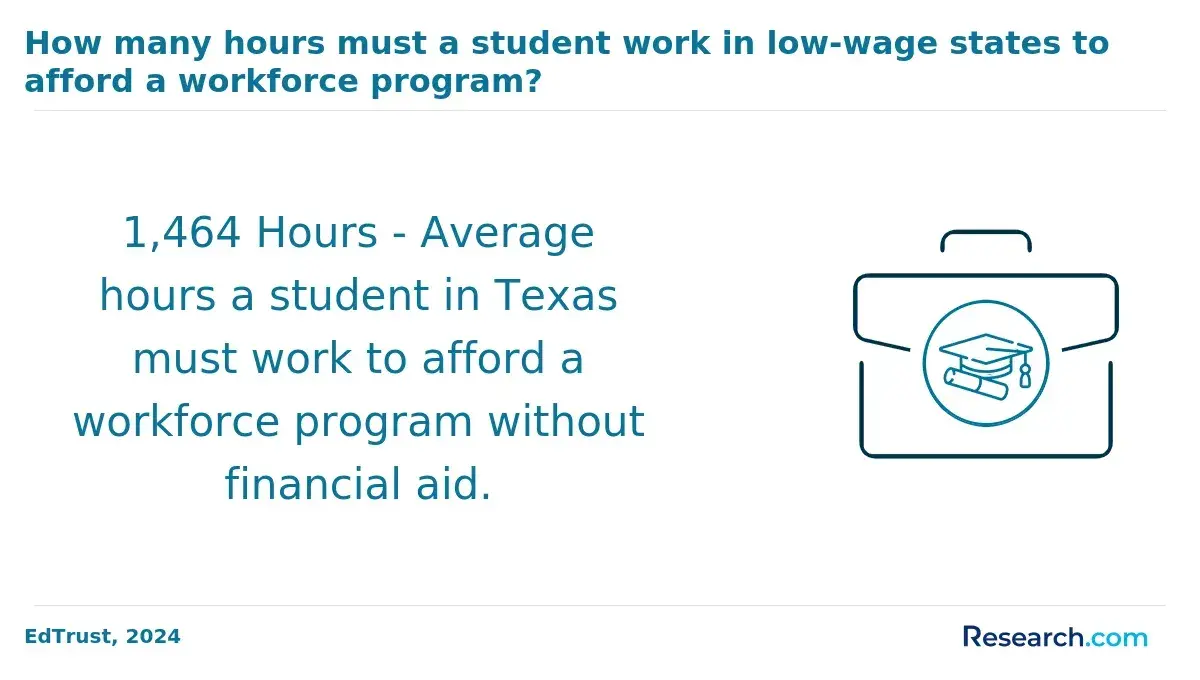
Cost is one of the biggest differences between a PhD and a professional doctorate in Human Services. A PhD may be more likely to offer assistantships, tuition remission, stipends, or research funding, but those opportunities are not universal. Professional doctorates are often marketed to working adults, so the financial model may rely more heavily on tuition payments, employer benefits, and federal graduate loans.
NCES data released in 2024 shows that graduate tuition and required fees differ sharply between public, private nonprofit, and private for-profit institutions. That means applicants should compare total cost of attendance, not just per-credit tuition, because fees, residencies, technology charges, books, travel, and dissertation continuation credits can meaningfully change the final price.
The table below outlines major cost and funding factors. It can help you compare real affordability instead of focusing only on the advertised tuition rate.
| Cost or funding factor | PhD in Human Services | Professional doctorate in Human Services |
| Tuition model | May be funded, partially funded, or tuition-based depending on university and enrollment status | Often tuition-based, with per-credit pricing common in online and part-time formats |
| Assistantships | More common in research universities, especially for full-time students | Less common, though some schools offer scholarships or limited fellowships |
| Employer tuition support | Possible but may be harder if the program requires full-time study | Often more realistic for students already employed in agencies, hospitals, universities, or nonprofits |
| Opportunity cost | Can be high if you reduce work hours to conduct research or teach | Can be lower if the program lets you remain employed full time |
| Loan risk | Lower if funded; higher if self-funded without a clear career plan | Potentially significant if tuition is high and employer support is limited |
| Hidden costs | Conference travel, research software, dissertation credits, data collection expenses | Residencies, travel, project implementation costs, continuation fees, technology fees |
Professional doctorate applicants interested in social work leadership often compare Human Services doctorates with DSW programs, because DSW pricing, format, and applied capstone expectations can be closer to what working practitioners need.
To evaluate return on investment, do not ask only, "Can I afford the tuition?" Ask whether the doctorate connects to a role that realistically requires or rewards doctoral-level training. A funded PhD can have strong financial value for a future professor or researcher, but it may not be efficient for someone who wants an executive agency role. A professional doctorate may support promotion into leadership, but the payoff depends on your employer, sector, region, and prior experience.
Use this checklist before borrowing for any doctoral program:
- Request the full estimated cost of attendance, including fees, residencies, dissertation or capstone credits, and travel.
- Ask whether tuition increases are expected during your enrollment period.
- Confirm whether assistantships, scholarships, employer benefits, or public service loan-related employment may apply to your situation.
- Compare the program's graduate outcomes with the specific roles you want, not with broad doctoral salary averages.
- Calculate how many years of expected salary increase would be needed to offset tuition, fees, loan interest, and reduced work hours.
A common mistake is choosing the lowest tuition without checking completion support. A cheaper program that leaves students stalled at the dissertation stage can become more expensive over time than a higher-priced program with strong advising and clear milestones.
What Careers Can You Pursue With a PhD vs Professional Doctorate in Human Services?
Both doctorates can lead to meaningful careers, but they point toward different kinds of work. A PhD is usually strongest for roles where research production, teaching, evaluation design, and scholarly credibility matter. A professional doctorate is usually strongest for roles where advanced practice leadership, program implementation, organizational strategy, and systems change matter.
Some applicants also compare Human Services doctorates with social work master's pathways, especially if licensure or direct practice is the goal. In those cases, exploring best online MSW programs can be useful because an MSW may be the more direct route to clinical licensure or social work roles than a non-licensure doctorate.
The table below connects doctorate type with common career directions. It does not mean one credential limits you to only these jobs; instead, it shows where each degree is usually most aligned.
| Career direction | Better-aligned doctorate | Typical responsibilities | Important salary context |
| University faculty or academic researcher | PhD | Teach, publish research, advise students, pursue grants, serve on academic committees | Pay varies by rank, institution type, tenure status, and discipline |
| Research director or policy analyst | PhD | Design studies, analyze data, evaluate policy, publish reports, guide evidence-based decisions | Higher pay is more likely in government, consulting, foundations, or large research organizations than in small nonprofits |
| Human services executive or agency director | Professional doctorate | Lead programs, manage budgets, supervise teams, improve service delivery, oversee compliance | Compensation depends heavily on organization size, funding source, and seniority |
| Program evaluation consultant | Either, depending on focus | Assess outcomes, build logic models, review data systems, recommend improvements | Consulting income can vary widely and may depend on business development skills |
| Clinical or social services leader | Professional doctorate, often alongside licensure where required | Improve practice models, supervise services, lead quality improvement, train staff | Licensure, scope of practice, and employer requirements may matter more than doctorate type |
| Nonprofit strategy or systems-change leader | Professional doctorate | Build partnerships, evaluate community needs, guide equity initiatives, implement change | Larger health systems, universities, and government-funded organizations may offer stronger pay than small community agencies |
The best career choice depends on the work you want to do every week. If you want to spend much of your time reading research, designing studies, writing articles, and teaching, the PhD is usually the clearer fit. If you want to lead programs, supervise service systems, manage organizational change, and apply research to practice, the professional doctorate may be more practical.
Skills that employers may value across both pathways include:
- Advanced program evaluation and outcomes measurement
- Grant writing, budgeting, and resource development
- Policy analysis and regulatory awareness
- Leadership across interdisciplinary teams
- Ethical decision-making with vulnerable populations
- Data-informed planning, including responsible use of AI and analytics tools
AI and automation are changing human services work by increasing demand for data governance, ethical technology use, outcome tracking, and privacy-aware decision-making. Doctoral graduates who can combine human-centered practice with evidence, technology literacy, and equity-focused leadership may be better positioned than those who rely only on traditional administrative experience.
Which Pays More: a PhD or Professional Doctorate in Human Services?
Neither a PhD nor a professional doctorate automatically pays more. Salary outcomes in Human Services are shaped by occupation, employer size, sector, location, licensure, years of experience, supervisory scope, and whether the role is academic, clinical, administrative, research-based, or executive.
According to 2024 BLS Occupational Employment and Wage Statistics, social and community service managers had a median annual wage of $77,030 in the United States. This figure is useful because many professional doctorate graduates pursue leadership roles in social service agencies, nonprofits, and community programs, but it should not be treated as a doctoral salary benchmark because many managers do not hold doctorates.
The table below gives a practical way to interpret salary potential by career track. It focuses on role alignment rather than implying that the degree itself determines earnings.
| Career track | Doctorate often associated with the track | How salary is usually determined | What to watch for |
| Tenure-track professor | PhD | Institution type, rank, discipline, publication record, grants, union or state salary structures | Academic jobs can be competitive, and adjunct roles may pay far less than full-time faculty roles |
| Research scientist or evaluator | PhD or research-heavy professional doctorate | Methodological expertise, grant funding, employer type, technical skills, project scale | Strong quantitative or mixed-methods skills can matter more than degree title alone |
| Agency executive or senior administrator | Professional doctorate or PhD with management experience | Budget authority, organization size, funding model, geographic region, executive experience | A doctorate may support credibility, but leadership record is usually decisive |
| Consultant | Either | Specialized expertise, client base, reputation, contracts, business model | Income may fluctuate and is not as predictable as salaried employment |
| Licensed clinical leader | Often professional doctorate plus required licensure | Licensure, payer systems, supervisory role, setting, state regulations | A Human Services doctorate may not replace a license required for clinical practice |
A PhD may lead to higher earnings when it opens doors to research-intensive faculty roles, senior evaluation positions, federal research work, or policy leadership. A professional doctorate may lead to higher earnings when it helps an experienced professional move into executive management, consulting, health system leadership, or large-agency administration.
To compare salary outcomes responsibly, use this process:
- Choose three target job titles, such as research director, nonprofit executive, program evaluator, professor, or human services administrator.
- Check current salary ranges for those titles in your state or metropolitan area, not only national medians.
- Review job postings to see whether employers request a PhD, professional doctorate, master's degree, license, or specific leadership experience.
- Ask programs for graduate outcomes by job title rather than broad claims about doctoral earnings.
- Estimate ROI using realistic salary movement, not the highest salary you can find online.
A common mistake is comparing "PhD salary" with "professional doctorate salary" as if they were single categories. The better comparison is professor versus executive director, research analyst versus program consultant, or policy researcher versus agency administrator.
What Is the Job Outlook for PhD and Professional Doctorate Graduates in Human Services?
The job outlook for doctoral graduates in Human Services depends on the career track. Demand is generally tied to social service needs, behavioral health access, aging populations, homelessness response, substance use services, child and family support, disability services, public benefits systems, and nonprofit accountability.
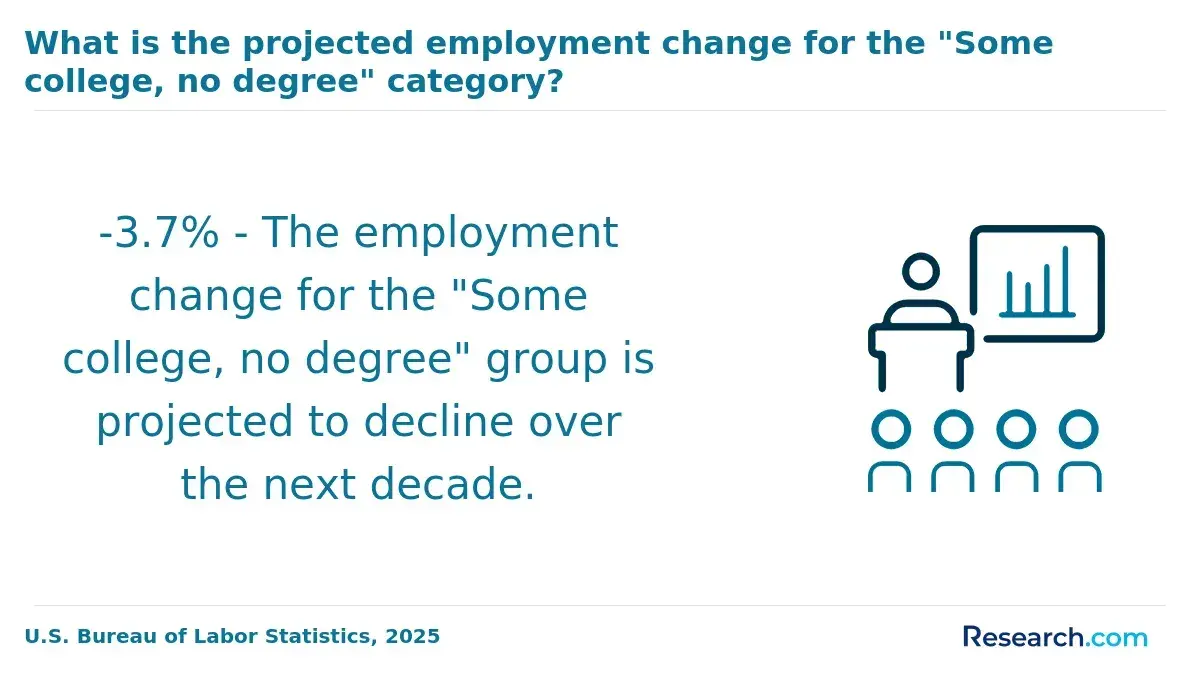
The BLS Occupational Outlook Handbook updated its projections using the 2023-2033 period, and many community and social service occupations are expected to grow as organizations respond to complex social and behavioral needs. For doctoral applicants, the key point is that broad service demand does not automatically mean every doctoral-level role will be abundant; academic and senior leadership positions can still be competitive.
The table below summarizes where demand may be strongest and where competition may be higher. Use it to align your doctorate with the labor market you actually plan to enter.
| Employment area | Outlook considerations | Doctorate fit |
| Community and social service management | Demand is influenced by public funding, nonprofit growth, health system partnerships, and compliance requirements | Professional doctorate is often practical; PhD can fit evaluation-heavy leadership roles |
| Higher education | Full-time faculty roles can be competitive and may depend on research agenda, publications, and teaching experience | PhD is typically the stronger fit for research universities and tenure-track roles |
| Program evaluation and outcomes research | Organizations increasingly need evidence of effectiveness, equity outcomes, and funder accountability | Either degree can fit if the graduate has strong methods and data skills |
| Public policy and government administration | Opportunities may depend on civil service systems, policy expertise, grant funding, and leadership experience | PhD fits research and policy analysis; professional doctorate fits implementation and systems leadership |
| Consulting and technical assistance | Demand may grow around evaluation, compliance, workforce development, and service redesign | Either degree can fit, but professional credibility and niche expertise are critical |
Current employer expectations are also changing. Many organizations want leaders who can interpret data, evaluate outcomes, manage interdisciplinary teams, understand compliance, and make ethical decisions about technology. This trend can benefit both PhD and professional doctorate graduates, but only if the program builds practical analytical and leadership skills.
To improve employability while enrolled, students should not wait until graduation to build a career profile. Useful steps include:
- Choose a dissertation or capstone topic connected to a real employer need, funder priority, or policy challenge.
- Build evidence of impact through publications, white papers, evaluation reports, conference presentations, or implementation results.
- Develop data skills that match your career goal, such as qualitative analysis, statistics, dashboards, or program evaluation.
- Maintain professional networks in agencies, universities, government offices, foundations, and consulting groups.
- Track job postings early to see which credentials, licenses, and skills employers actually request.
A red flag is choosing a narrow dissertation topic that interests you personally but has little connection to faculty expertise, employer demand, funder priorities, or community need.
How Do Accreditation, Licensure, and Employer Recognition Differ for PhD vs Professional Doctorate in Human Services?
Accreditation and licensure can affect whether a doctorate is respected, transferable, and useful for your career. At minimum, the institution should hold recognized institutional accreditation. Programmatic accreditation is less standardized in Human Services doctorates than in fields such as social work, counseling, psychology, nursing, or education, so applicants must verify what employers and licensing boards actually require.
A PhD from a regionally or institutionally accredited university may be well understood by academic employers, especially if the program has strong faculty, research output, and dissertation rigor. A professional doctorate may be highly valued by practice employers when it is clearly connected to leadership, advanced practice, evaluation, or organizational improvement. Recognition depends on the employer's needs, not just the letters after your name.
The table below explains the main credential checks to complete before enrolling. These checks are important because a doctorate that sounds impressive may not qualify you for the role, license, or promotion you want.
| Credential issue | Why it matters | What to verify |
| Institutional accreditation | Affects federal financial aid eligibility, employer recognition, and transferability | Confirm the school is accredited by an agency recognized by the U.S. Department of Education or CHEA |
| Programmatic accreditation | May matter in related fields such as social work, counseling, psychology, or public health | Check whether your target occupation requires a specific accredited degree type |
| Licensure | Human Services doctorates typically do not automatically qualify graduates for clinical licensure | Review state licensing board rules before assuming the doctorate meets requirements |
| Employer recognition | Some employers distinguish between research doctorates and applied doctorates | Review job postings and ask HR or hiring managers which credentials are accepted |
| Online format | Online doctorates can be legitimate, but quality and recognition vary | Confirm accreditation, faculty qualifications, residencies, student support, and dissertation expectations |
Licensure is especially important for applicants who want clinical authority. A doctorate in Human Services may strengthen leadership or academic credentials, but it usually does not replace the required supervised hours, exams, or accredited clinical degree required for licensed clinical social work, counseling, psychology, or marriage and family therapy.
Before applying, complete these verification steps:
- Search job postings for your target roles and note whether they require a PhD, professional doctorate, master's degree, license, or specific field of study.
- Check the school's institutional accreditation status through official accreditation databases.
- Contact the relevant state licensing board if your career goal involves clinical practice, supervision, diagnosis, or therapy.
- Ask the program for examples of where graduates work and whether graduates have entered roles similar to your goal.
- Confirm whether online, hybrid, or out-of-state enrollment affects fieldwork, research approvals, residency travel, or licensure planning.
A common mistake is assuming "doctorate" means "license-eligible." In Human Services, the degree may support leadership, research, or teaching, but licensure rules are occupation-specific and state-specific.
Is a PhD or Professional Doctorate in Human Services Worth It for Your Career Goals?
A PhD or professional doctorate in Human Services can be worth it when the degree is directly connected to a realistic career goal, a manageable cost structure, and a program format you can complete. It is less likely to be worth it if you are enrolling mainly for prestige, hoping the credential alone will raise your salary, or avoiding a clearer master's-level licensure or management pathway.
Choose a PhD if your strongest goal is to create knowledge. This path is usually more appropriate if you want to become a professor, publish research, lead studies, pursue grants, teach research methods, or influence policy through evidence. It is also a better fit if you enjoy long-term independent scholarship and can tolerate a dissertation process that may be uncertain and demanding.
Choose a professional doctorate if your strongest goal is to improve systems. This path is usually more appropriate if you already work in human services, social work, nonprofit administration, public agencies, healthcare-adjacent services, or community programs and want to move into executive leadership, advanced practice innovation, consulting, or program transformation.
The table below offers a decision guide based on career goals. Use it to identify the degree that best matches your desired work, not just the credential that sounds more prestigious.
| Your goal | Better choice | Why |
| Become a tenure-track professor or academic researcher | PhD | Academic employers often prioritize research training, publications, and dissertation rigor |
| Lead a human services agency or nonprofit division | Professional doctorate | Applied leadership, evaluation, and organizational change are central to the role |
| Work in policy research or think tanks | PhD | Advanced research methods and theory can be important for policy analysis |
| Improve programs inside your current organization | Professional doctorate | The capstone or applied dissertation can be tied to workplace problems |
| Enter licensed clinical practice | Often neither by itself | You may need an accredited licensure-eligible master's or doctoral clinical degree, depending on the profession and state |
| Increase salary quickly | Depends | Degree value depends on role, employer, promotion path, cost, and experience |
Students should avoid a PhD if they dislike research, do not want to write extensively, or are primarily seeking a practice promotion. Students should avoid a professional doctorate if they want a research-intensive faculty career at a university where a PhD is the expected credential.
Before you choose, work through these practical next steps:
- Write down your target job title five to ten years after graduation.
- Identify whether that job usually rewards research expertise, practice leadership, licensure, or executive experience.
- Compare at least three programs by total cost, funding, completion support, faculty fit, dissertation or capstone model, and graduate outcomes.
- Ask whether the program's final project could become a publication, evaluation report, promotion portfolio, consulting case study, or leadership deliverable.
- Choose the doctorate only if the credential, curriculum, and cost align with your long-term role.
The bottom line: a PhD is usually the better investment for research and academic careers, while a professional doctorate is usually the better investment for experienced practitioners seeking applied leadership. The right choice is the one that matches the work you want to do, the evidence you want to produce, and the financial risk you can responsibly take.
Other Things You Should Know About Human Services
Yes, a professional doctorate is a doctoral degree, so graduates may generally use the title "Doctor" in appropriate academic or professional contexts. In clinical or public-facing settings, use the title carefully so clients do not misunderstand your licensure, scope of practice, or medical qualifications.
It can be, if the university is properly accredited, the curriculum is rigorous, faculty are qualified, and the dissertation or capstone process is credible. Employers may focus less on delivery format and more on accreditation, skills, experience, and whether the degree fits the role.
Many programs prefer or require a master's degree, especially professional doctorates designed for experienced practitioners. Some PhD programs may admit bachelor's-prepared students, but they often include additional graduate coursework before dissertation-level study.
It can support a shift into research, teaching, consulting, policy, or leadership, but it is not always the fastest route. If the new career requires licensure or a specific professional degree, confirm those requirements before choosing a doctorate.
References
- Master's vs PhD/Doctorate Degrees - Key Differences - Wordvice https://wordvice.com/blog/masters-vs-phd-doctorate-degrees-key-differences/
- PhD Student Salary Guide (2026) https://www.applykite.com/blog/phd-student-salary
- DrPH vs. PhD — National Association for Doctors of Public Health https://nadrph.org/drphvsphd
- Differences in MD, PhD,. Professional Doctorate | University of Phoenix https://www.phoenix.edu/articles/online-college/differences-between-md-phd-and-professional-doctorate.html
- Doctor of Social Work Salary and Career Paths: 2026 Edition https://teach.com/online-ed/social-work-degrees/online-doctorate-social-work/salary-career-outlook/
- DSW vs. Ph.D. in Social Work https://socialworklicensemap.com/social-work-degrees/doctorate-in-social-work/dsw-vs-phd/


