2027 Online Human Services Doctorate vs Master's Degree: Cost, Salary, Career Outcomes, and ROI

Co-Founder and Chief Data Scientist
Choosing between an online human services doctorate and a master's degree is really a question of value: how much more time, tuition, and debt are worth it for your career goal? The stakes are real. BLS May 2024 data placed median pay for social and community service managers at $78,240, but many human services roles do not require a doctorate.
This guide is for working adults comparing cost, salary potential, career mobility, and ROI so they can decide whether to stop at the master's level or pursue doctoral study.
Key Things You Should Know
- A master's degree is usually the faster and lower-cost path, often fitting direct practice, program coordination, case management leadership, nonprofit administration, and licensure-focused goals better than a doctorate.
- A doctorate can improve access to executive leadership, policy, consulting, college teaching, research, and advanced program evaluation roles, but the salary premium depends heavily on role, employer, location, experience, and funding.
- ROI is strongest when the added doctoral cost is offset by employer funding, funded research study, promotion eligibility, or a clear move into higher-paying leadership; it is weaker when the doctorate is self-funded and the target job only requires a master's.
What Are the Key Differences Between an Online Human Services Doctorate and Master's Degree?
An online human services master's degree is generally a graduate credential for advanced practice, supervision, program administration, advocacy, and community service leadership.
An online doctorate is a terminal degree designed for people who want to lead systems, conduct applied or academic research, teach at the college level, influence policy, or evaluate complex service programs.
The most important difference is not prestige; it is fit. A master's may be enough if your goal is a licensed or management role, while a doctorate makes more sense when the role explicitly rewards advanced research, executive decision-making, or scholarly expertise.
Students comparing human services with social work should also review related options such as best online MSW programs, especially if clinical licensure is part of the plan.
This table summarizes the practical differences that affect cost, time, career access, and ROI:
| Comparison area | Online human services master's degree | Online human services doctorate |
| Main purpose | Advanced practice, supervision, nonprofit leadership, program coordination, advocacy, and preparation for some licensed or credentialed paths depending on field and state | Executive leadership, advanced research, policy influence, college teaching, consulting, and high-level program evaluation |
| Typical applicant | Bachelor's degree holder seeking career entry, advancement, specialization, or licensure-related preparation | Experienced professional with a master's degree and a defined leadership, academic, or research goal |
| Admissions emphasis | Undergraduate transcript, statement of purpose, references, resume, and sometimes human services or social science background | Master's transcript, professional experience, writing sample, research interests, interview, and fit with faculty or program specialization |
| Credential value | Often enough for many management and service-delivery leadership roles | Most valuable when the target job values terminal expertise, research ability, or executive-level authority |
| Licensure relevance | May align better with licensure pathways in counseling, social work, or related fields if the program meets state requirements | Usually not a substitute for required clinical licensure unless the program is specifically designed and approved for that purpose |
| ROI pattern | Usually lower upfront risk and faster entry into higher-level roles | Potentially higher ceiling but more sensitive to tuition, funding, time, and whether the job market rewards the doctorate |
A common mistake is assuming that "human services doctorate" and "clinical license" mean the same thing. They do not. If you need a state license, verify the exact degree title, accreditation, supervised-hour rules, and exam requirements with the state board before enrolling.
How Much Does an Online Human Services Doctorate Cost Compared With a Master's Degree?
The cost difference comes from credit load, tuition per credit, fees, residencies, dissertation or capstone registration, and the number of semesters you stay enrolled. A master's typically requires fewer credits than a doctorate, so even when tuition rates are similar, the doctorate often costs more in total.
Because online programs price credits differently, the cleanest comparison is to calculate total program cost rather than looking only at per-credit tuition. Use these illustrative calculations as a model, not as national averages:
- Master's example: 36 credits × $700 per credit = $25,200 in tuition before fees, books, technology charges, and travel.
- Doctorate example: 60 credits × $700 per credit = $42,000 in tuition before fees, books, technology charges, residencies, and dissertation continuation costs.
- Added doctorate cost in this example: $16,800 before considering the extra time required to complete the degree.
The table below shows the cost categories that most often change the real price of each degree:
| Cost factor | Why it matters for a master's degree | Why it matters for a doctorate |
| Credit requirements | Fewer credits usually reduce tuition and shorten time to completion | More credits, dissertation hours, and research courses can raise total cost |
| Online fees | Technology, course, and student-service fees can add up across terms | Longer enrollment means recurring fees may become more significant |
| Residency requirements | Some online programs have limited campus visits | Doctoral programs may require in-person residencies, intensives, or dissertation defenses |
| Books and software | Costs may include textbooks, assessment tools, and case-management platforms | Costs may also include research software, transcription, data tools, or dissertation editing |
| Continuation enrollment | Less common if the program is course-based and structured | Can increase cost if dissertation or capstone work extends beyond the planned timeline |
Before applying, ask each school for a total cost of attendance estimate, not just tuition. Also ask whether online students pay different fees, whether tuition is locked, whether transfer credits are accepted, and what happens financially if a dissertation takes longer than expected.
How Long Does a Human Services Doctorate Take Compared With a Master's Degree?
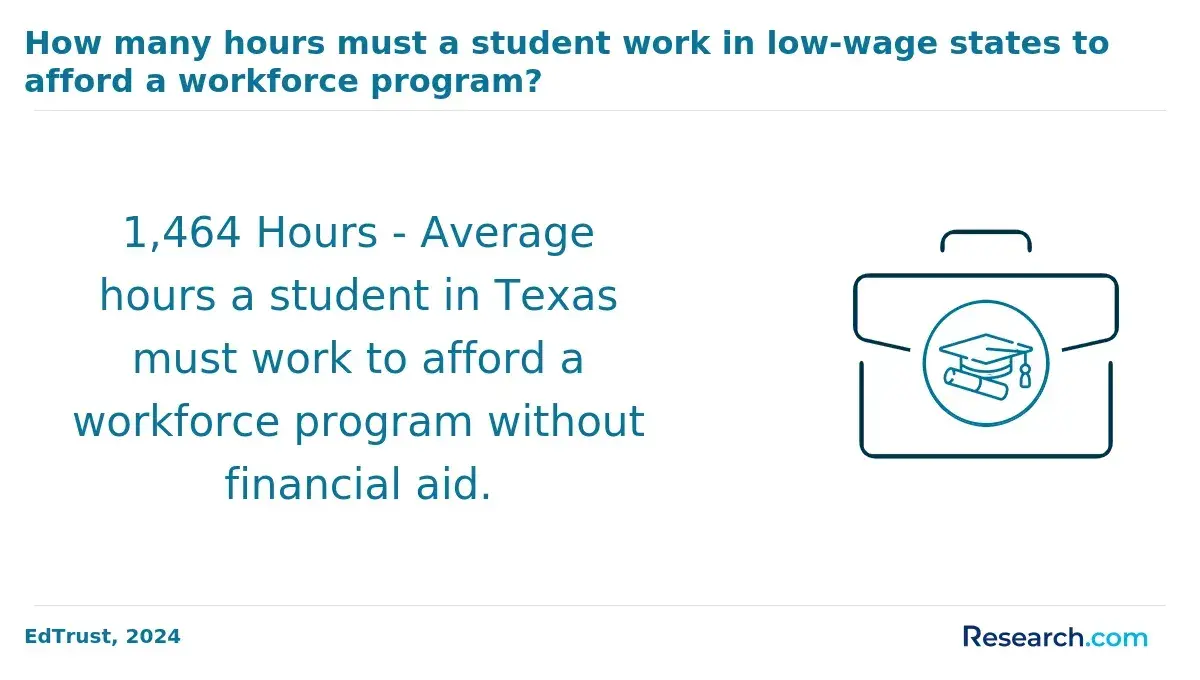
Time is one of the biggest hidden differences between a human services master's and doctorate. A master's is usually the faster path to advancement, while a doctorate requires a longer commitment because of advanced seminars, research design, comprehensive exams, capstone projects, or dissertations.
If speed is a priority, compare standard graduate programs with an accelerated human services degree online only after confirming accreditation, course intensity, and whether the faster format still fits your work schedule.
This table outlines how timeline differences affect working adults:
| Timeline factor | Master's degree | Doctorate |
| Program structure | Often course-based with practicum, internship, portfolio, or capstone requirements depending on the program | Often includes advanced coursework plus dissertation, applied doctoral project, or original research component |
| Full-time fit | May be manageable for students who can reduce work hours or use employer flexibility | Can be demanding because research and writing requirements continue beyond weekly coursework |
| Part-time fit | Common for working professionals and may reduce short-term stress | Common, but extending the timeline can increase fees and delay any salary benefit |
| Completion risk | Usually more predictable if courses are sequential and advising is strong | More vulnerable to delays during dissertation, data collection, committee review, or project approval |
The practical question is not only "How long is the program?" It is "How many months or years until this credential can change my income, job title, or mobility?" A master's often produces a faster career signal, while a doctorate may require patience before the payoff appears.
Salary comparisons are tricky because human services is a broad field. Employers often pay for responsibility, licensure, management scope, grant size, clinical authority, and years of experience more than for the degree title alone.
BLS May 2024 data reported median annual pay of $78,240 for social and community service managers. That figure is useful because many human services master's and doctoral graduates compete for management roles, but it does not mean a doctorate automatically moves someone above the median.
The table below shows how salary context differs by role type rather than by degree alone:
| Role category | Typical degree fit | Salary interpretation |
| Case management or service coordination leadership | Master's often sufficient; doctorate rarely required | Salary depends on agency size, funding source, population served, and supervisory responsibility |
| Social and community service management | Master's can be competitive; doctorate may help for senior executive or systems-level roles | The BLS median provides a midpoint for the occupation, not a credential-specific salary premium |
| Program evaluation and research leadership | Doctorate can be valuable, especially when advanced research methods are required | Pay may be higher in consulting, government contracting, universities, or large nonprofits, but varies widely |
| College teaching | Master's may qualify for some adjunct or community college roles; doctorate is often preferred or required for tenure-track roles | Income depends on institution type, full-time versus adjunct status, discipline, and research expectations |
| Clinical or licensed practice roles | Field-specific master's degrees are often the key credential if they meet state licensure rules | A doctorate may not raise pay if the employer's scale is tied to license level, union rules, or billable service category |
For salary ROI, compare the degree against your actual target role. If the job postings you want list "master's required, doctorate preferred," the doctorate may improve competitiveness but not necessarily pay. If they list "doctorate required," the doctorate may be essential for access.
A master's degree can open many advancement paths in human services, especially roles involving supervision, community programming, nonprofit operations, advocacy, and specialized service delivery.
A doctorate can unlock a different tier of opportunities where advanced evidence, systems thinking, policy leadership, or original research matter.
Career direction should guide the credential decision. Someone still exploring the broader social science field may benefit from comparing undergraduate foundations first, including the best online bachelors in sociology programs, before committing to graduate debt.
The table below compares common career outcomes by degree level:
| Career outcome | Master's-level access | Doctorate-level advantage |
| Program manager or director | Strong fit for many nonprofit, community, and agency roles | May help for executive director, regional director, or multi-site leadership roles |
| Grant-funded project leadership | Useful for managing teams, reporting outcomes, and coordinating services | Stronger fit when designing evaluations, leading research components, or advising funders |
| Policy and advocacy | Can support analyst, advocate, coalition, and community engagement roles | May improve credibility for senior policy research, testimony, consulting, or think-tank work |
| Higher education | May support adjunct teaching or student support roles depending on institution | Often better aligned with full-time faculty, doctoral supervision, research, and academic administration |
| Consulting | Possible with strong experience and niche expertise | Can strengthen authority in evaluation, organizational change, compliance, and evidence-based program design |
Current employer expectations are also changing. Human services organizations increasingly rely on data dashboards, outcomes reporting, compliance documentation, telehealth-adjacent service coordination, and AI-assisted administrative tools.
A doctorate can help when those responsibilities require research leadership, but a master's plus strong analytics and management skills may be enough for many operational roles.
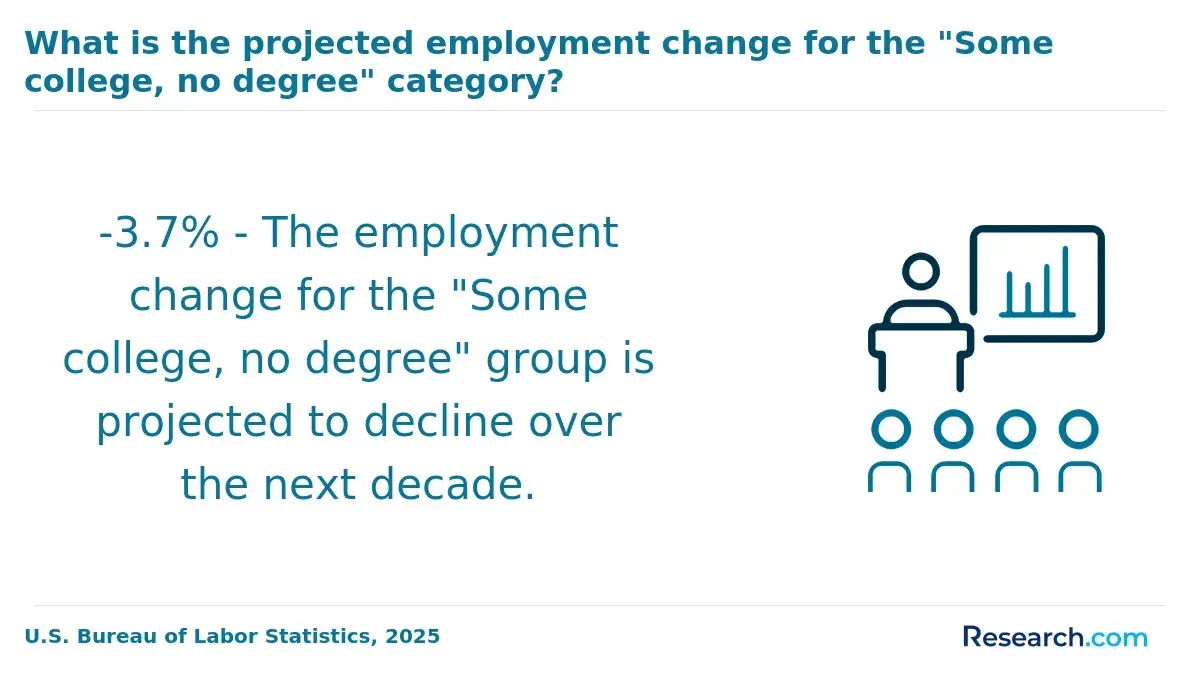
The better ROI is the degree that produces the strongest career benefit after subtracting tuition, fees, interest, time, and lost alternatives.
For many students, the master's has better near-term ROI because it costs less and can lead to advancement sooner. The doctorate has better long-term ROI only when it clearly changes career access or earning capacity.
A simple ROI comparison should include both hard costs and realistic benefits. Use the following steps before choosing the more expensive path:
- Identify three to five target job titles and collect real job postings from your region or preferred remote market.
- Record the minimum and preferred education listed for each role, separating "doctorate required" from "doctorate preferred."
- Estimate total degree cost, including tuition, fees, books, residencies, loan interest, and extended enrollment.
- Estimate conservative salary change based on roles you can realistically obtain, not the highest salary in the field.
- Calculate break-even time by dividing added degree cost by expected annual compensation increase before taxes.
For example, if a doctorate costs $35,000 more than a master's and plausibly increases annual compensation by $7,000, the simple payback period is five years before taxes and loan interest.
If the doctorate does not change your role or pay scale, the financial payback may be weak even if the intellectual value is high. The table below shows how ROI often differs by career goal:
| Goal | Likely stronger ROI | Reason |
| Move from frontline service into program management | Master's | Lower cost and faster completion may be enough for advancement |
| Become an executive director or senior systems leader | Depends | Experience, funding, management record, and employer expectations may matter as much as the doctorate |
| Teach full-time at a university | Doctorate | Many full-time faculty roles prefer or require a terminal degree |
| Lead applied research or evaluation | Doctorate | Advanced methods training can be directly relevant to the work |
| Qualify for clinical licensure | Usually field-specific master's | Licensure boards often require specific accredited master's-level preparation rather than a general doctorate |
Opportunity cost is the value of what you give up while earning the degree. It can include income from extra work hours, promotions delayed by school workload, time with family, relocation flexibility, and the mental energy required to complete graduate study.
For working adults, the doctorate's opportunity cost can be larger than its tuition difference. Even an online program can reduce availability for overtime, consulting, leadership projects, networking, and job searches. That matters because career growth in human services often depends on experience and responsibility, not only credentials.
Watch for these common mistakes when comparing opportunity cost:
- Comparing only tuition while ignoring the extra years of doctoral enrollment.
- Assuming online study has no time cost because there is no commute.
- Choosing a doctorate before confirming that target employers reward doctoral credentials.
- Ignoring dissertation risk, especially if the program charges continuation fees after coursework.
- Leaving a job with tuition assistance without calculating the value of lost employer support.
A practical way to evaluate opportunity cost is to create two timelines: one where you finish a master's and pursue promotions, and one where you continue into doctoral study. If the master's path gets you into the target role faster, the doctorate needs a clear additional benefit to justify the delay.
Financial aid can change the ROI calculation dramatically. A self-funded doctorate has a very different risk profile from a funded doctorate, an employer-sponsored doctorate, or a program with assistantships and tuition remission.
Graduate and professional students who qualify may borrow up to $20,500 per academic year through the federal Direct Unsubsidized Loan program, while Grad PLUS Loans may cover remaining eligible cost of attendance after other aid.
This matters because doctoral students can remain enrolled longer, increasing the chance of borrowing more and paying interest for more years.
Before enrolling, ask financial aid and admissions offices these questions:
- What is the total estimated cost of attendance for the full program, not just the first year?
- Are scholarships, assistantships, stipends, tuition discounts, or employer partnerships available to online students?
- Does funding continue during dissertation, capstone, or project-extension terms?
- What is the average debt level for recent graduates in this specific program, if the school discloses it?
- Do graduates commonly work in qualifying public service roles that may align with Public Service Loan Forgiveness rules?
- Are there tuition reimbursement repayment obligations if you leave your employer after using education benefits?
Debt does not automatically make a doctorate a poor choice, but it raises the required payoff. The safest doctoral ROI usually comes from reducing net cost first, then confirming that the credential is tied to a realistic promotion, teaching path, consulting niche, or leadership role.
Not all doctorates serve the same purpose. A professional doctorate is usually designed for applied leadership, practice innovation, organizational change, and program improvement. A research doctorate is usually designed for original scholarship, advanced methods, academic research, and theory development.
Students comparing human services with social work leadership pathways may also encounter DSW programs, which are professional doctorates focused on advanced social work practice, leadership, and applied expertise rather than the same training model as a traditional PhD.
The table below compares the three main options from a decision-making perspective:
| Credential type | Best fit | Compared with a master's degree |
| Master's degree | Professionals seeking advancement, specialization, supervision, or licensure-aligned preparation | Usually faster, less expensive, and more directly tied to many human services management roles |
| Professional doctorate | Experienced practitioners who want executive leadership, applied research, consulting, or advanced practice influence | Can be worth it when applied expertise changes job access or credibility |
| Research doctorate | Students aiming for academic research, tenure-track teaching, policy research, or advanced evaluation roles | Most valuable when the career requires original research training or a terminal academic credential |
The key is alignment. A professional doctorate may be the better doctoral choice for an agency leader, while a research doctorate may be better for someone pursuing university faculty or research institute work. A master's may still be the best choice if the goal is direct service leadership or licensure-related advancement.
When Is a Human Services Doctorate Worth It Instead of a Master's Degree?
A human services doctorate is worth considering when it solves a specific career problem that a master's degree cannot solve. It should not be chosen only because it is the highest credential available.
The doctorate is more likely to be worth it when several of the following conditions are true:
- Your target jobs require or strongly prefer a doctorate.
- You already have substantial human services experience and need a terminal credential for executive, academic, consulting, or research credibility.
- Your employer offers meaningful tuition assistance, promotion pathways, or salary adjustments for doctoral education.
- You want to teach full-time, lead research, publish, supervise doctoral work, or direct complex evaluations.
- You can complete the program without taking on debt that would limit your career flexibility.
A master's degree is usually the better stopping point when your target roles list a master's as sufficient, when licensure depends on a specific master's curriculum, when you need a faster promotion, or when the doctorate would require heavy borrowing without a clear pay increase.
Use this final decision test: if you removed the title "doctor" from the equation, would the program still give you skills, access, funding, and career options that justify the cost? If the answer is yes, the doctorate may be a smart investment. If the answer is no, the master's may offer the better ROI.
Other Things You Should Know About Human Services
Yes, many online doctoral programs are designed for working adults, but "online" does not mean light workload. Research courses, writing, residencies, and dissertation milestones can make full-time work challenging, especially near the end of the program.
Yes. At minimum, choose an institution with recognized institutional accreditation. If your goal involves licensure, counseling, social work, or a regulated credential, also confirm whether the specific program meets state or field-specific requirements.
Employers are more likely to respect an online degree from an accredited institution with strong outcomes, relevant curriculum, supervised practice or applied projects, and a credible reputation. Program quality matters more than the delivery format alone.
Usually, yes. Doctoral study is more valuable when you can connect coursework and research to real leadership, policy, practice, or evaluation problems. Experience also helps you choose a dissertation or applied project that supports your career goals.
- Master vs. PhD: Salary, Jobs & Time, The Big Differences https://www.applykite.com/blog/phd-guide-master-vs-phd
- Health and Human Services: Campus & Online Degrees and Careers https://www.publichealthonline.org/human-services/online-degree-programs/
- Is Grad School Worth It? A Comprehensive Return on Investment Analysis - FREOPP https://freopp.org/whitepapers/is-grad-school-worth-it-a-comprehensive-return-on-investment-analysis/
- 10 Best Online Human Services Master's Programs - Social Work Degree Center https://www.socialworkdegreecenter.com/best-online-human-services-masters/
- Doctorate of Social Work (DSW) Degree Programs Online https://socialworklicensemap.com/social-work-degrees/doctorate-in-social-work/
- Is College Worth it? | Return on Investment Analysis of College Degree https://educationdata.org/college-degree-roi
- 2025 Most Popular Online Master's in Human Services https://www.onlineu.com/degrees/masters-human-services
- Master's vs PhD/Doctorate Degrees - Key Differences - Wordvice https://wordvice.com/blog/masters-vs-phd-doctorate-degrees-key-differences/