2027 Nursing Assessment vs Reassessment: How the Terms Differ in Education and Documentation
Audited and Verified:
Our Editorial and Data Verification Process
Research.com uses government datasets, official education statistics and primary institutional information to support its career and degree guides. Our review process checks factual accuracy, occupational definitions, source dates and the requirements associated with the credentials discussed.
How This Article Was Fact-Checked
Our editorial team verifies salary estimates, employment projections, education requirements and program information against original data providers and official organizations. Salary figures are checked against the relevant occupational definitions and reporting periods. Information about licensure, accreditation and required in-person training is reviewed separately.
Fact-checked and verified on:

Co-Founder and Chief Data Scientist
"Assessment" and "reassessment" can look like interchangeable charting terms, but they answer different clinical questions. For nursing students and new nurses, the distinction matters when identifying a patient's baseline, evaluating a change, and documenting whether an intervention worked. This guide explains what each term means, when to use it, and what educators and clinical supervisors expect. It also helps prospective students judge whether a program offers the supervised practice needed to turn assessment knowledge into safe documentation.
Key Things You Should Know
- An assessment establishes or updates what is known about a patient; a reassessment checks the patient again after a change, intervention, or interval, using relevant earlier findings for comparison.
- Useful reassessment documentation records both the new finding and its context: what changed, when it changed, what was done, and whether further action was needed.
- Classroom and simulation work build the skill, but supervised clinical practice and employer competency checks determine how a student or new nurse applies it in a particular setting.
What is the difference between nursing assessment and reassessment?
A nursing assessment is the collection and interpretation of patient information to identify needs and guide care. An initial assessment establishes a starting point for a care episode. A reassessment is a subsequent assessment that checks a relevant condition again - often to detect change or evaluate a response. It may be focused rather than a repeat of every element in the initial assessment.
This comparison shows the different questions each activity answers. Neither term, by itself, specifies how extensive the examination must be.
| Activity | Primary question | Illustrative documentation |
| Initial assessment | What is the patient's condition and what needs attention? | Presenting concerns, relevant history, observations, measurements, risks, and baseline findings |
| Reassessment | What is the patient's condition now, compared with earlier findings or an expected response? | Current findings, comparison, response to care, and any follow-up or escalation |
For example, documenting a patient's pain before an intervention establishes a finding; checking pain afterward evaluates the response. Nurses in understanding clinical expectations in BSN completion should note that further academic study may refine this reasoning, but it does not replace unit-specific assessment and documentation policies.
When should nurses perform an initial assessment and reassessment?
An initial assessment typically occurs when a nurse begins caring for a patient, according to the setting's admission, encounter, or handoff process. Reassessment is appropriate when a condition changes, after an intervention that needs evaluation, and at intervals required by the patient's needs and applicable policy. A change in symptoms, vital signs, or level of consciousness may require prompt assessment and escalation rather than waiting for the next routine charting time.
There is no single reassessment schedule that fits every patient or setting. Students comparing online and hybrid LPN program comparisons should also recognize that assessment responsibilities depend on license type, state scope-of-practice rules, supervision, and employer policy. A program's pace does not change those clinical obligations.
What information should nurses document during assessment and reassessment?
Document findings that are relevant to the patient's condition and care: the time, the patient's reported symptoms, pertinent objective observations or measurements, and the nurse's actions. For reassessment, make the comparison clear. Record the response to an intervention or evolving concern, any notification or escalation, and the resulting plan or instructions as required by the record and workplace policy.
Specific observations are more useful than an unsupported phrase such as "doing better." Chart what was observed or reported, without copying forward a finding that was not checked. Students exploring shorter graduate-entry nursing programs should verify that a prelicensure route includes supervised opportunities to practice both assessment and accurate electronic health record documentation; a prior degree alone does not establish either competency.
Assessment findings help the nurse identify priorities, communicate concerns, and select or revise nursing interventions within the nurse's role and the care team's plan. Reassessment then tests whether the patient's status is stable, improving, or worsening. If findings differ from expectations, the nurse uses clinical judgment and applicable protocols to determine what needs further evaluation or escalation.
This is a cycle, not a one-time form: a plan based on an earlier baseline may need to change when new findings emerge. The same principle applies in advanced practice, though an NP's responsibilities differ from an RN's. Someone comparing affordable online nurse practitioner programs should verify the specific role preparation and supervised clinical requirements rather than assume RN assessment experience alone qualifies them to make advanced-practice decisions.
Prelicensure students generally learn to gather a health history, observe and measure patient findings, perform appropriate physical assessment, recognize meaningful changes, communicate concerns, and document them. Coursework connects these tasks to anatomy, physiology, and clinical judgment; labs, simulation, and supervised clinical experiences provide opportunities to practice and receive feedback. Programs and clinical sites determine how those skills are evaluated.
A strong learning exercise asks a student not just to record a second set of findings, but to explain what changed and whether a response requires follow-up. Specialty study builds on this foundation. For example, accelerated MSN preparation in psychiatric nursing is relevant to nurses pursuing that advanced role, not a substitute for basic supervised assessment instruction or RN licensure.
Prelicensure LPN/LVN, associate-degree RN, and BSN programs teach assessment and documentation appropriate to the license they prepare students to seek. An accelerated BSN may provide initial RN preparation for someone who already holds a non-nursing degree; an RN-to-BSN program instead builds on an existing RN license. Graduate programs may develop advanced assessment for a defined role, but not every MSN or DNP track prepares an advanced practice nurse.
If the goal is initial RN licensure, choose a program designed for that outcome - not a postlicensure completion track. When reviewing nursing school application options by selectivity, compare the actual nursing track, supervised assessment experiences, and eligibility rules as carefully as admission prospects. Getting admitted is not the same as becoming clinically competent or licensed.
Either format can use readings, demonstrations, case studies, and feedback on documentation. Assessment of real patients, however, requires hands-on learning arranged under the program's rules; online coursework does not make a prelicensure program entirely remote. Ask where skills labs, simulation, and supervised clinical experiences occur, who arranges placements, and how instructors observe performance.
For a student balancing work or caregiving, the decisive detail is the schedule of required on-site learning, not the word "online." Even guide to shorter DNP programs comparisons need that scrutiny when assessing advanced clinical study: a shorter academic schedule does not eliminate a track's required practice experiences or competency evaluation.
Before enrolling, confirm that the institution is appropriately accredited, that the specific nursing program holds any applicable nursing-program accreditation, and that its approval or recognition satisfies the relevant state board's requirements for the license sought. These are separate checks. Also verify clinical-site eligibility, placement responsibility, required in-person activities, supervision, and whether the program accepts students in your jurisdiction.
For an advanced practice goal, check the exact role and population-focus track as well as its supervised clinical expectations. A compressed schedule - such as one discussed in 12-month family NP study schedules - should prompt specific questions about placement timing and eligibility, not an assumption that required preparation has been waived. Obtain answers from the program and the relevant regulator before committing.
Graduation does not itself grant a nursing license. An applicant for initial RN or LPN/LVN licensure must meet the applicable state board's eligibility requirements, complete the required application steps, take the appropriate NCLEX examination, and receive the license before practicing in that licensed role. Requirements and the point at which a graduate may work under any limited authorization vary by jurisdiction.
Later specialty or advanced practice goals involve additional, distinct requirements. For instance, a nurse considering PMHNP certificate completion timelines must separately verify the education, certification, and state authorization needed for that role. Neither RN licensure nor a certificate title alone grants NP practice authority.
What career outcomes and salaries are available after nursing school?
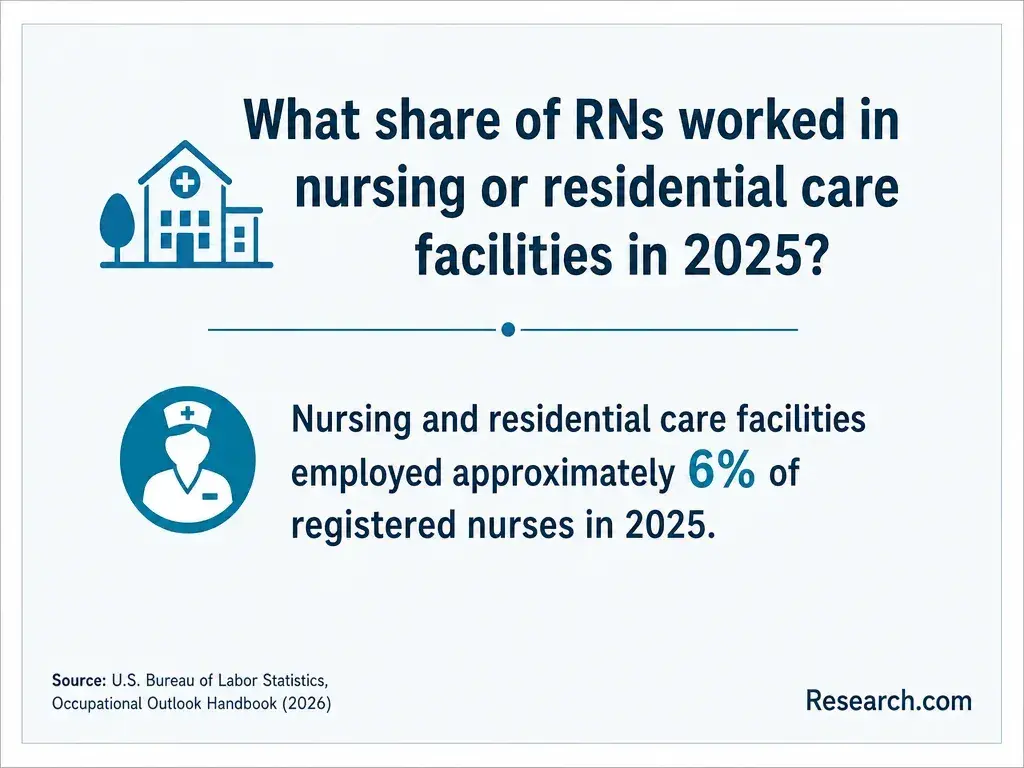
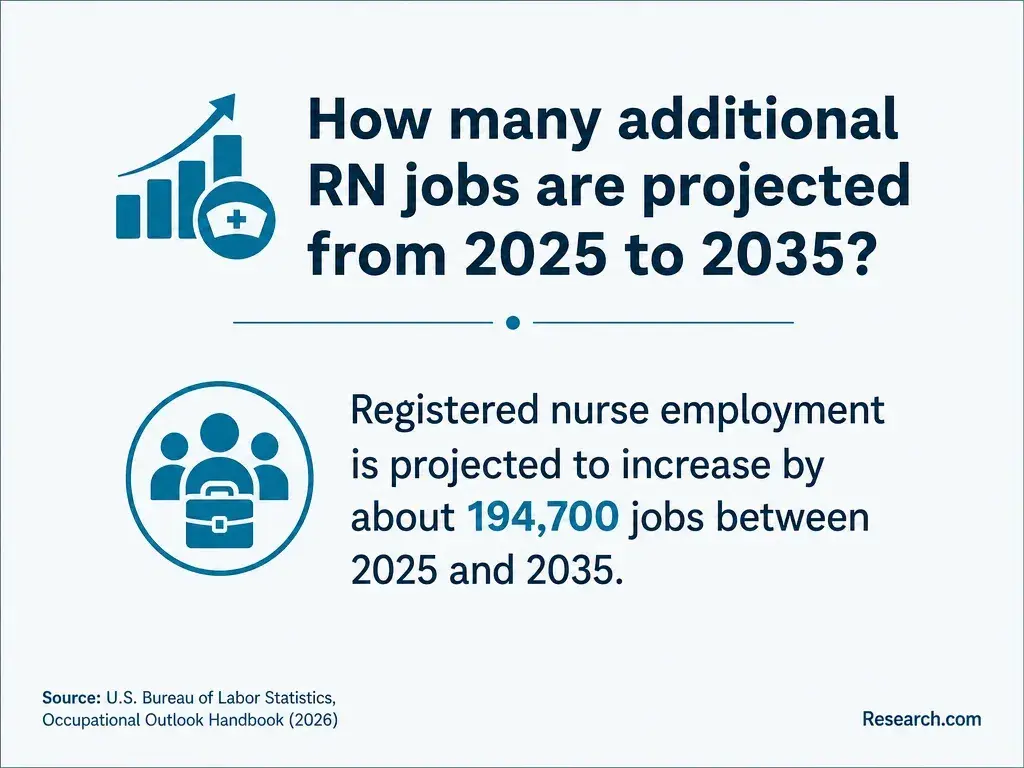
Assessment and reassessment are routine responsibilities across many nursing settings, but the role available to a graduate depends on the license obtained, demonstrated competencies, and employer hiring and orientation requirements. New RNs may enter hospital, ambulatory, long-term care, or community settings; their documentation workflows and support during orientation can differ substantially.
The U.S. Bureau of Labor Statistics reports occupation-wide wages for roles such as registered nurse and licensed practical or vocational nurse, not a guaranteed salary for graduates of a particular degree. Compare the latest figure for the actual occupation with local job postings, shift requirements, and education costs. That distinction matters even more when weighing graduate tuition: PMHNP programs compared by tuition can inform a cost comparison, but tuition and an occupation-wide wage cannot predict an individual return on investment.
Other Things You Should Know About Nursing
No. "Focused" describes the scope of what is examined; "reassessment" describes checking again. A reassessment can be focused, and an initial assessment can include focused elements.
Respect the patient's decision, document what was declined and any relevant explanation, and follow clinical and organizational guidance for addressing the resulting care concern.
An assistant may collect and report information within their assigned role, but that does not transfer the RN's responsibility for nursing assessment and clinical judgment. Follow state rules and employer delegation policy.
Follow the organization's late-entry or correction procedure. Document the actual care and its timing accurately; do not backdate an entry or record an assessment that was not performed.
- Recognising and Responding to Acute Deterioration Standard | safetyandquality.gov.au https://www.safetyandquality.gov.au/national-standards/nsqhs-standards/recognising-and-responding-acute-deterioration-standard
- Vital Sign Assessment - StatPearls - NCBI Bookshelf https://www.ncbi.nlm.nih.gov/books/NBK553213/
- Early warning systems and rapid response... - PMC - NIH https://pmc.ncbi.nlm.nih.gov/articles/PMC8608437/
- Reassessment - New York State Department of Health https://www.health.ny.gov/diseases/aids/providers/standards/casemanagement/reassessment.htm
- 12.2 Types of Assessment - Fundamentals of Nursing | OpenStax https://openstax.org/books/fundamentals-nursing/pages/12-2-types-of-assessment
- 4.3 Assessment - Nursing Fundamentals https://openwa.pressbooks.pub/nursingfundamentals/chapter/4-3-assessment/
- Nursing guidelines: Nursing assessment | rch.org.au https://www.rch.org.au/rchcpg/hospital_clinical_guideline_index/Nursing_assessment/
- Nursing Data Collection, Documentation, and Analysis | wolterskluwer.com https://assets.contenthub.wolterskluwer.com/api/public/content/06f2237898484301bee77af1c72169be
- Nursing Scope and Standards of Practice | ANA https://www.nursingworld.org/practice-policy/scope-of-practice/
- Documentation: Reexamination and Reevaluation | APTA https://www.apta.org/your-practice/documentation/defensible-documentation/elements-within-the-patientclient-management-model/reexamination-and-reevaluation