2027 Best Online College Programs With Full-Time Online Options

Co-Founder and Chief Data Scientist
A program can advertise online classes yet still require campus visits, clinical hours, or live meetings that make full-time enrollment difficult. That distinction matters when choosing among career-focused degrees.
The U.S. Bureau of Labor Statistics projects 15% employment growth for software developers, quality assurance analysts, and testers from 2024 to 2034, but demand alone does not make a program the right fit. This guide compares online program families, explains where hands-on requirements arise, and shows how to evaluate cost, accreditation, and career preparation before applying.
Key Things You Should Know
- The best full-time online option matches a specific career goal: business and computing programs often permit remote coursework, while nursing, teaching, and social work commonly require supervised work in person.
- "Online" does not mean asynchronous or entirely remote. Verify live-class schedules, required placements, campus visits, and whether every required course is available at a full-time pace.
- The BLS reports a $93,600 median annual wage for registered nurses in 2024; that is an occupational figure, not an expected salary for graduates of an online program.
Top 10 Best Online College Programs With Full-Time Online Options
Business Programs
Online MBA, accounting, finance, and management master's programs suit professionals seeking broader responsibilities or a specialized skill set. An MBA may emphasize strategy and leadership, while a master's in accounting is more directly aligned with advanced accounting study.
Compare full-time course sequencing, team projects, live sessions, and any residency. Applicants may need a bachelor's degree, prerequisite courses, or professional experience. An online accounting degree does not itself establish CPA eligibility; check the education rules of the state where you intend to seek licensure.
Healthcare Programs
Healthcare administration and public health master's programs can prepare students for organizational, policy, or population-health work without promising clinical eligibility. Coursework may be online, but a public health practicum or administrative internship can require an approved site.
Compare programs by the roles they prepare students to pursue: managing operations differs from providing patient care. If your goal is a licensed clinical occupation, confirm that the specific degree and any supervised training meet its separate requirements.
Information Technology Programs
Master's programs in information technology, cybersecurity, and information systems focus on applied systems, security, and organizational technology needs. They can suit experienced professionals seeking specialization, though a master's is not required for every IT job.
Look for substantial labs or projects, current technical coursework, and a full-time sequence that includes required electives. Online lab access does not necessarily mean self-paced study; team assignments, scheduled sessions, and capstones may still constrain the weekly schedule.
Computer Science Programs
An online master's in computer science typically emphasizes algorithms, software, data, or computing theory more than an applied IT degree. It may fit developers seeking deeper technical preparation, but applicants without a computing background may need foundation courses before starting graduate-level work.
Compare thesis and project options, prerequisite policies, access to computing resources, and whether specialized courses run often enough for full-time progress. A degree alone does not guarantee a software role or a particular salary.
Nursing Programs
Online MSN programs often serve licensed registered nurses pursuing advanced practice, education, or leadership. Admission commonly requires an RN license and a nursing degree; bridge pathways have separate eligibility rules. Even when classes are online, advanced-practice tracks require supervised clinical training, and some programs require campus skills sessions.
Check the program's approval, clinical-placement responsibilities, and eligibility in the state where you plan to practice. An MSN is not interchangeable with the certification or license required for a specific nursing role.
Psychology Programs
Online master's programs in psychology can support research, behavioral-science, or related career goals, but their titles do not establish eligibility for psychologist or counselor licensure. Programs designed for clinical practice may have different curricula and supervised-training requirements from general psychology degrees.
Before enrolling full time, check the intended occupation's state rules, required accreditation where applicable, and whether practicum sites are available locally. A research-oriented degree may be a better fit for doctoral preparation than for immediate clinical practice.
Education Programs
Online master's programs in curriculum, educational leadership, and teaching serve different audiences. Some are designed for already licensed educators; initial-licensure tracks may require student teaching and state-approved preparation.
Confirm the admission prerequisites, teaching placement, and whether the curriculum qualifies for the credential you want in your state. Full-time online coursework can still be difficult to combine with a daytime classroom placement, so compare the academic calendar with your work obligations.
Criminal Justice Programs
Online criminal justice master's programs commonly cover policy, administration, research, and justice systems. They may suit current public-service professionals seeking broader analytical skills, but many justice occupations hire through separate examinations, academies, or experience requirements.
Compare a program's research and practical components with your target role rather than assuming the graduate credential is required. If you work full time, ask whether internships or capstones can be completed through an approved local organization.
Engineering Programs
Online engineering master's programs generally serve students with substantial undergraduate preparation in engineering or a related quantitative field. Specializations, laboratory work, design projects, and thesis options vary.
A program with remote lectures may still require access to equipment or occasional campus attendance, so verify the requirements of the exact concentration. For professional engineer licensure, state boards assess education and other qualifications separately; a graduate degree is not a substitute for checking the applicable rules.
Social Work Programs
An online MSW combines academic study with supervised field education. Full-time coursework may be available online, but placements occur in person and can demand substantial daytime availability.
Applicants with a qualifying social work bachelor's degree may be eligible for a separately defined advanced-standing pathway; other applicants typically follow the standard curriculum. Verify Council on Social Work Education accreditation, field-placement support, and your state's clinical licensure rules. Earning an MSW alone does not confer a clinical license.
What Are the Best Fully Online College Programs for Career Preparation?
The best fully online college program for career preparation is the one whose credential, required experiences, and delivery schedule fit your target occupation. "Fully online" should describe the academic delivery accurately: a program with online classes may still require local professional practice. For fields that require it, that distinction is more useful than a blanket ranking.
This comparison shows where online study may align with career preparation and where you should expect to investigate hands-on requirements.
| Program family | Career preparation emphasis | Key delivery question |
| Business or IT | Organizational or technical projects | Are team meetings, labs, and capstones scheduled? |
| Computer science | Software and computing depth | Are prerequisites and desired electives available full time? |
| Nursing, education, or social work | Preparation connected to regulated practice | Where and when must supervised work occur? |
| Healthcare administration or criminal justice | Policy, operations, or analysis | Is an internship required for the chosen track? |
A working professional seeking advancement may prefer a project-based program that builds on existing experience. Someone entering a licensed profession should prioritize an approved pathway and feasible placements, even if it is less convenient.
How Do You Choose an Accredited Online College Program?
Start with the occupation, then verify the particular program - not just the college's reputation. Institutional accreditation matters for educational quality review and can affect federal aid eligibility. In regulated fields, applicable program approval or specialized accreditation may also matter for licensing. Neither kind of accreditation proves that every program is available entirely online.
Use these checks to compare shortlisted programs on the same terms before paying an enrollment deposit.
- Confirm the institution's current accreditation and any program approval required for your intended credential or state license.
- Ask for the full-time degree plan, including prerequisites, course rotations, live attendance, campus visits, and supervised placements.
- Request a written estimate of tuition and required fees, plus an evaluation showing how accepted transfer credits apply to your degree.
- Compare career-relevant coursework, advising, placement responsibilities, and published outcomes without treating support services as a job guarantee.
A common mistake is assuming that a school's online label applies to every concentration or that accreditation alone establishes licensure eligibility. Get confirmation for your exact program and state.
What Degrees and Certificates Can You Earn Fully Online?
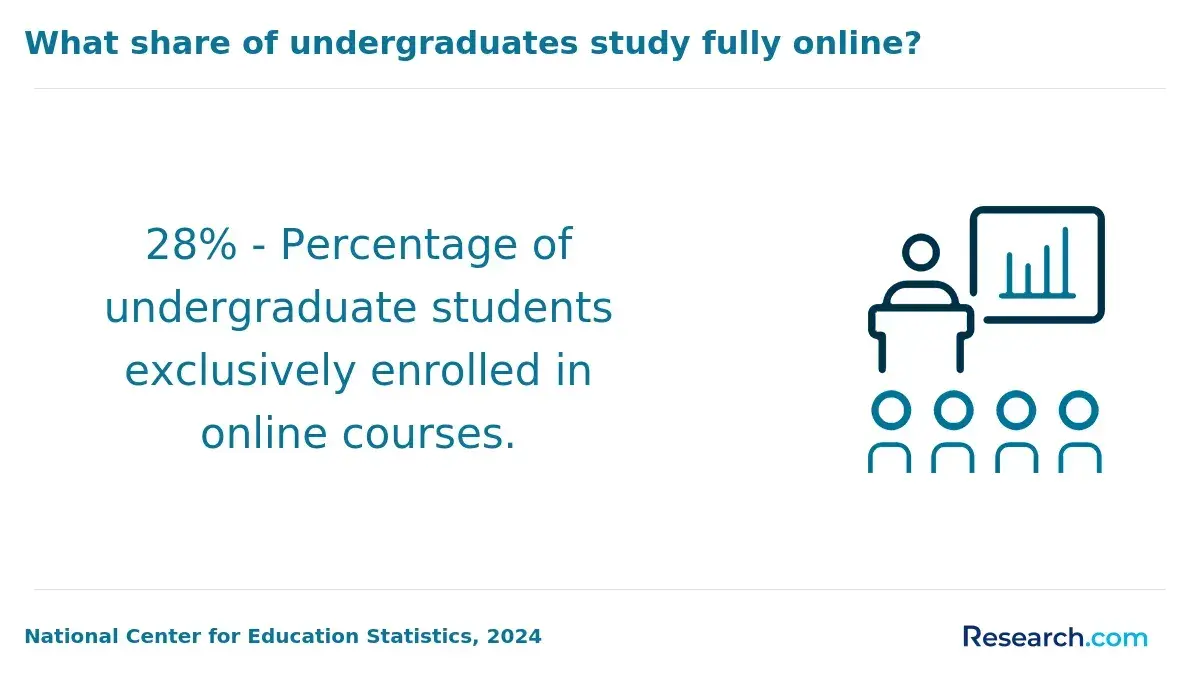
Depending on the field, online options include career certificates, associate degrees, bachelor's degrees, master's degrees, and doctorates. A certificate may build a focused skill without replacing the broader education of a degree. Associate programs can support entry-level preparation or transfer; bachelor's programs usually combine general education and a major; graduate programs generally assume prior college study.
"Fully online" describes delivery, not a universal promise of no in-person activity. An online degree with a clinical placement or student-teaching requirement is different from one completed remotely without a local placement. Doctoral programs also vary widely in research and residency requirements. If you are comparing doctoral routes, review the complete expenses behind lists of cheapest PhD programs, not tuition alone.
What Are the Admission Requirements for Online College Programs?
Undergraduate applicants generally need a high school diploma or equivalent; graduate applicants generally need a bachelor's degree. Individual programs may add prerequisite coursework, a minimum GPA, a portfolio, an interview, professional experience, or a current license. Testing policies differ by school and program, so an institution's general admission page may not answer a graduate applicant's question.
If your academic record is a concern, compare the specific eligibility rules behind lists of colleges that don't care about GPA; that phrase does not mean every major ignores grades. Ask whether conditional admission is available and whether foundation courses add time or cost. Selective nursing, teaching, and advanced-practice tracks may have requirements beyond general university admission.
How Long Do Full-Time Online College Programs Take to Complete?
Full-time enrollment describes a course load, not a guaranteed finish date. A bachelor's degree commonly requires about four academic years of full-time study from the beginning; many master's programs take about one to two years, but prerequisites, thesis work, course sequencing, and placements can extend either timeline. Certificate and doctoral timelines vary more widely.
Transfer credit can reduce remaining coursework only after the school determines which credits satisfy your specific requirements. An advanced-standing MSW, for example, requires a qualifying prior credential; it is not a faster version available to every applicant. If speed is your priority, compare the assumptions in a best accelerated bachelor's degree online option against your own evaluated credits and feasible full-time load. Short classes alone do not make the entire degree short.
How Much Do Online College Programs Cost?
Online program cost depends on the credits you must complete and the rate and fees attached to them. Compare an estimate for the remaining degree, not only the advertised price per credit. Technology or program fees, books, equipment, travel, and placement-related expenses can change which option costs less overall; an online student may also face different residency-based tuition rules.
Ask each school for an itemized estimate and a transfer evaluation before comparing offers. Check federal aid eligibility and any employer tuition benefit against the exact program. An application charge is a separate upfront expense: a university with free application fee may still have a higher total degree cost. Low sticker tuition is not the same as low net cost after applicable aid, nor does it account for earnings you may forgo while studying full time.
What Careers and Salaries Can Online College Programs Lead To?
Online study can prepare students for roles in business, technology, healthcare, education, and public service, but the degree-to-job relationship differs by occupation. Some roles require a specific license or prior experience; others accept several educational backgrounds. The BLS reports a 2024 median annual wage of $133,080 for software developers. That figure describes workers in the occupation - not new graduates, computer science degree holders as a group, or a return guaranteed by tuition spending.
For a realistic comparison, identify actual entry requirements in your target job postings, then weigh the program's total cost and time commitment against the skills or required credential it provides. A graduate degree may be valuable for a defined specialization but unnecessary for an entry-level role you can pursue with a bachelor's degree, portfolio, or relevant experience.
Which Online Programs Offer the Strongest Job Outlook?
Strong outlook depends on the occupation, not whether its coursework is online. The BLS projects 29% employment growth for information security analysts from 2024 to 2034. That makes cybersecurity worth investigating, but analyst jobs often call for related IT experience; an online degree alone does not remove that hurdle.
When comparing program families, distinguish growth in a field from access to a particular job. Software development may reward substantial project work, while nursing and social work have more explicit practice and licensing pathways. Review occupation-level BLS projections alongside local job requirements, and favor programs that let you build the experience employers or licensing bodies actually require.
Which Licenses and Certifications Require Approved Online Programs?
Regulated careers require more than a convenient online course schedule. Registered nursing, advanced-practice nursing, public-school teaching, clinical social work, and many counseling roles involve state-specific approval, examinations, and supervised experience. CPA and professional engineer pathways likewise have separate state requirements. Requirements can vary by credential and location, including where an online student completes a placement.
Before applying, identify the state in which you intend to work and confirm that the exact program is approved or appropriately accredited for your intended pathway. Ask who arranges placements, whether local sites are permitted, and what graduates must complete after the degree. The costly mistake is to discover after enrollment that an otherwise legitimate online program does not satisfy your state's requirements.
Other Things You Should Know About
Yes, if the program offers enough required courses in the terms you need and permits a full-time load. Confirm the course rotation and weekly attendance expectations before enrolling.
Not necessarily. Clinical training, fieldwork, student teaching, labs, or residencies may require in-person participation even when classes are online.
Delivery alone does not determine eligibility. The specific program, its approval or accreditation, and your state's education and supervised-practice rules matter.
Choose full time if you can meet its course and placement schedule without taking on unmanageable costs. Part time may be more workable if employment or caregiving limits your availability.
References
- Fast Facts: Tuition costs of colleges and universities (76) | ed.gov https://nces.ed.gov/fastfacts/display.asp
- Accreditation in the U.S. | ed.gov http://www.ed.gov/laws-and-policy/higher-education-laws-and-policy/college-accreditation/accreditation-in-the-us
- Pell Grant Enrollment Intensity and Cost of Attendance | ed.gov https://fsapartners.ed.gov/knowledge-center/fsa-handbook/2025-2026/vol7/ch3-pell-grant-enrollment-intensity-and-cost-attendance
- Types of Financial Aid: Grants, Work-Study, and Loans | studentaid.gov https://studentaid.gov/understand-aid/types
- What's the Difference Between Asynchronous and Synchronous Learning? | Ohio State Online https://online.osu.edu/content-hub/blogs/whats-the-difference-between-asynchronous-and-synchronous-learning/
- What is Asynchronous Learning? | snhu.edu https://www.snhu.edu/online-degrees/classes/asynchronous/learning
- Online Bachelor's Degrees and Programs | University of Florida Online https://ufonline.ufl.edu/
- Online Bachelor's Programs - OU Online Degrees https://online.ou.edu/programs/bachelors/
- Can You Get Financial Aid for Online College? Finding Out | beal.edu https://beal.edu/can-you-get-financial-aid-for-online-college/
- KU Online: Online Degrees from the University of Kansas https://online.ku.edu/