
2027 Best Online Behavioral Health Doctorate Programs for Private Sector and Corporate Careers

Co-Founder and Chief Data Scientist
Professionals choosing an online behavioral health doctorate often need a credential that translates beyond clinical practice into corporate wellness, healthcare strategy, workforce mental health, product leadership, and consulting. The timing is strong: BLS projects 29% growth for medical and health services managers through 2033, far above the average for all occupations.
This guide is for working professionals comparing applied and research-focused doctorates, evaluating online formats, and deciding which programs best support private sector goals, leadership mobility, and measurable return on investment.
Key Things to Know About Online Behavioral Health Doctorate Programs for Corporate Careers
- The strongest corporate-oriented behavioral health doctorates usually combine behavioral science, leadership, health systems, analytics, ethics, and change management rather than focusing only on clinical practice preparation.
- BLS May 2024 salary benchmarks show relevant private sector role families at meaningful levels, including $117,960 for medical and health services managers, $127,090 for training and development managers, and $140,030 for human resources managers.
- Applied doctorates such as DBH, DHA, EdD, and PsyD-style leadership tracks often fit corporate execution roles better, while PhD programs are stronger for research strategy, analytics, evidence generation, and thought leadership.
Will Behavioral Health doctorate programs benefit corporate professionals?
A behavioral health doctorate can benefit corporate professionals when the degree supports a clear move into leadership, strategy, analytics, workforce wellbeing, healthcare operations, consulting, or product development. It is less likely to pay off if the student wants a broad prestige credential without a specific role target, employer use case, or measurable career pathway.
In corporate settings, behavioral health refers to the intersection of mental health, substance use, behavior change, organizational culture, care delivery, employee wellbeing, and population health. A doctorate can help professionals move from service delivery or program management into roles where they design systems, evaluate outcomes, lead teams, influence executives, or advise employers on risk, productivity, burnout, and access to care.
The best candidates usually fall into a few practical categories. These groups are more likely to turn doctoral coursework and a dissertation or capstone into career capital because they already operate near behavioral health decision-making.
- Clinical leaders who want to move into payer, provider, digital health, employee assistance, or corporate wellness leadership roles.
- Human resources, benefits, and people analytics professionals who want deeper expertise in mental health, employee wellbeing, organizational behavior, and evidence-based interventions.
- Healthcare administrators and operations managers who need doctoral-level skills in integrated care, population health, quality improvement, and behavioral health program design.
- Consultants, coaches, and training leaders who want a stronger research base for advising organizations on resilience, performance, trauma-informed workplaces, or change management.
- Product, strategy, or innovation professionals in health technology who need to understand behavioral science, user behavior, clinical workflow, ethics, and outcomes measurement.
The trade-off is time, cost, and opportunity cost. A doctorate is usually most defensible when it helps the professional qualify for a higher-level role family, increases credibility with executives or clients, or supports a specific business problem the learner can solve. For readers still building core counseling or psychology credentials, earlier-stage options such as accelerated mental health counseling programs online may be more appropriate before committing to doctoral study.
What makes online Behavioral Health doctorate programs ideal for private sector or corporate careers?
An online behavioral health doctorate is ideal for private sector or corporate careers when it is flexible enough for working professionals and practical enough to produce evidence of business impact. The online label is not the main issue; the more important question is whether the curriculum, faculty expertise, projects, and student support align with the corporate role the student wants next.
Corporate-oriented programs tend to share several features. These features matter because private sector employers often evaluate whether a candidate can apply behavioral health expertise to measurable organizational outcomes, not simply whether the person completed advanced coursework.
- Applied curriculum: Courses should cover behavioral health leadership, integrated care, program evaluation, organizational systems, finance, ethics, health policy, and implementation science.
- Work-based projects: Capstones, dissertations in practice, or applied research projects should let students study real corporate, healthcare, or workforce problems.
- Analytics exposure: Strong programs teach students to interpret outcomes, evaluate interventions, communicate findings, and make decisions using evidence rather than intuition alone.
- Executive communication: Corporate roles require translating clinical and behavioral science concepts into business language for leaders, clients, boards, and cross-functional teams.
- Accreditation and institutional credibility: Employers are more likely to understand regionally accredited institutions and programs with transparent faculty, outcomes, and doctoral requirements.
- Flexible online design: Asynchronous coursework, limited residencies, predictable timelines, and strong advising are especially important for professionals who cannot pause their careers.
There are also cases where an online doctorate may not be the best fit. If a program is built almost entirely around licensure preparation, individual therapy, or academic research unrelated to workforce and organizational settings, it may be less useful for corporate advancement. If a reader is exploring specialty foundations before doctoral study, programs such as child psychology master's programs can be a better step for roles tied to youth, family, school, pediatric, or family-benefits work.
The following table summarizes the main program qualities employers and professionals should compare when judging corporate fit.
| Program quality | Why it matters for corporate careers | Stronger signal | Weaker signal |
| Degree focus | Determines whether coursework supports leadership, systems, research, or clinical practice. | Behavioral health leadership, integrated care, organizational psychology, health systems, or workforce wellbeing. | General psychology or counseling curriculum with little connection to organizations or healthcare operations. |
| Final project | Creates the student's strongest portfolio asset for employers or clients. | Applied dissertation, capstone, or research project connected to measurable workplace or health system outcomes. | Project topics limited to theory with no practical implementation pathway. |
| Faculty background | Shapes mentoring, networking, and the relevance of case examples. | Faculty with executive, consulting, healthcare, behavioral health administration, or applied research experience. | Faculty profiles that are hard to verify or unrelated to the student's career goals. |
| Online support | Working professionals need predictable progress and dissertation support. | Clear milestones, writing support, methods support, and proactive advising. | Vague timelines, unclear dissertation expectations, or limited access to mentors. |
| Employer relevance | Corporate value depends on whether learning transfers to business problems. | Projects tied to wellbeing strategy, quality improvement, benefits design, product outcomes, or population health. | Few examples of graduates or projects outside academia or traditional clinical roles. |
What are the best online Behavioral Health doctorate programs for private sector careers?
The best online behavioral health doctorate for a corporate career is usually not the same for every student. A healthcare administrator, an HR executive, a licensed clinician, and a digital health product leader may need different doctoral models, even if all work in the broader behavioral health sector.
The programs below are strong examples to investigate because their degree structures can connect behavioral health expertise with leadership, systems thinking, applied research, or organizational decision-making. Availability, curriculum, tuition, admission standards, and state authorization can change, so students should verify current details directly with each institution before applying.
| Program | Degree type | Best corporate fit | Why it may work for private sector goals | Important caution |
| Arizona State University Online | Doctor of Behavioral Health, Management concentration | Behavioral health operations, integrated care leadership, payer or provider management, healthcare innovation. | The DBH model is built around behavioral health integration, systems, management, and applied practice rather than traditional academic psychology alone. | Students seeking independent clinical licensure should confirm whether the program matches their state and profession requirements. |
| Cummings Graduate Institute for Behavioral Health Studies | Doctor of Behavioral Health | Integrated care consulting, population health, behavioral health program leadership, care model design. | The institution focuses specifically on behavioral health and integrated care, which can be useful for professionals targeting healthcare organizations and behavioral health companies. | Because it is specialized, students should evaluate employer familiarity, accreditation details, and networking reach in their target market. |
| Grand Canyon University | EdD in Organizational Leadership with a behavioral health emphasis | Corporate training, workforce wellbeing, leadership development, behavioral health administration. | The EdD format can fit professionals who want to apply behavioral health knowledge to organizational leadership, education, and change initiatives. | Students should compare the behavioral health depth with DBH or psychology-focused doctorates if they need stronger clinical or research specialization. |
| Liberty University | Doctoral-level counseling, community care, or behavioral health-related tracks offered online | Faith-based organizations, community care leadership, crisis response, employee support programs, nonprofit-private partnerships. | The online format and applied orientation may support professionals who want leadership roles involving trauma, community systems, or workforce support. | Students should assess fit with secular corporate employers, licensure needs, and whether the curriculum aligns with their industry. |
| Capella University | Doctoral psychology or human services pathways with organizational or health-related applications | Workforce behavior, organizational consulting, coaching, human services leadership, applied analytics. | Flexible online doctoral formats can work for employed professionals who need a structured path while building applied research around workplace or health services problems. | Students should confirm specialization availability, dissertation model, accreditation, and how closely the pathway matches behavioral health career goals. |
A practical shortlist should include no more than five programs at first. The goal is not to collect every possible online doctorate, but to identify programs whose curriculum, project model, faculty, and alumni outcomes match the next job the student actually wants.
Before ranking programs, professionals should ask admissions teams for concrete examples of recent doctoral projects. Strong answers might involve reducing appointment no-shows, improving employee mental health benefit utilization, designing a behavioral health integration model, evaluating a coaching intervention, or improving crisis-response protocols. Weak answers are vague, generic, or disconnected from employer problems.
An applied behavioral health doctorate is usually better for corporate professionals who want to lead programs, manage teams, improve systems, consult with employers, or implement evidence-based workplace strategies. A research-focused doctorate is usually better for professionals who want to conduct original research, lead analytics-heavy functions, influence product evidence, publish, teach, or build thought leadership around behavioral health innovation.
The distinction matters because doctoral titles can look similar while preparing students for different types of work. A PhD often emphasizes research design, theory, statistical methods, and scholarly contribution. Applied doctorates such as a DBH, EdD, DHA, or practice-oriented PsyD pathway typically emphasize implementation, leadership, professional practice, program evaluation, and solving organizational problems.
This comparison can help readers choose the model that better matches corporate goals.
| Decision point | Research-focused doctorate | Applied doctorate | Better fit if your goal is... |
| Primary purpose | Create new knowledge through original research. | Apply evidence to improve systems, programs, teams, or services. | Research for evidence strategy; applied study for leadership execution. |
| Common degree types | PhD in psychology, behavioral health, health services, public health, or related fields. | DBH, EdD, DHA, practice-oriented PsyD, or leadership-focused health services doctorate. | Choose by role target, not title prestige alone. |
| Typical final project | Traditional dissertation with extensive research contribution. | Applied dissertation, doctoral project, capstone, or practice-based intervention. | Research roles need methodological depth; corporate operators need implementation evidence. |
| Corporate advantage | Stronger for analytics, research leadership, outcomes science, and academic credibility. | Stronger for management, consulting, operations, and change management. | Match the project to the business problem you want to own. |
| Potential limitation | May be less directly tied to corporate execution if too theoretical. | May have less depth for research-intensive or academic roles. | Avoid programs that do not support your intended job family. |
A simple rule can help: choose research-focused study if your future value depends on generating evidence; choose applied study if your future value depends on implementing evidence. Professionals with forensic, legal, risk, compliance, or workplace violence-prevention interests may also compare doctoral pathways with earlier specialty preparation such as forensic psychology master's programs before deciding how specialized their doctorate should be.
One common mistake is assuming a PhD is always more respected in corporate settings. In many private sector roles, employers care less about the title and more about whether the candidate can solve a high-value problem, communicate with stakeholders, and show evidence of outcomes. Another mistake is choosing an applied doctorate with a weak research component, then discovering that evidence-based consulting or product leadership requires stronger analytic skills than expected.
Online behavioral health doctorate programs can build corporate skills that are difficult to develop through short courses alone because doctoral work requires sustained analysis, evidence review, stakeholder communication, and completion of a complex final project. The most valuable skills are those that connect behavioral science to business decisions.
NACE's 2024 employer research continues to show strong demand for durable skills such as problem-solving, communication, teamwork, and analytical ability. For behavioral health doctorate students, that matters because corporate value often comes from translating human behavior into practical decisions about care access, benefit design, productivity, retention, safety, and performance.
The table below shows how doctoral learning can translate into corporate capabilities. It is not a semester-by-semester guarantee, but it illustrates the skill progression students should look for when comparing curricula.
| Doctoral learning area | Corporate skill gained | Private sector use case | Evidence of mastery to build |
| Behavioral science and psychopathology | Ability to understand mental health needs, risk factors, and behavior change. | Designing employee wellbeing programs, care pathways, coaching products, or manager training. | Needs assessment, intervention logic model, or evidence review. |
| Research methods and evaluation | Ability to assess whether a program or intervention is working. | Evaluating EAP utilization, digital mental health engagement, coaching outcomes, or provider performance. | Program evaluation plan, dashboard, survey instrument, or outcomes report. |
| Leadership and change management | Ability to move organizations from insight to adoption. | Rolling out mental health benefits, trauma-informed training, integrated care workflows, or manager toolkits. | Implementation plan, stakeholder map, or change-readiness analysis. |
| Ethics, compliance, and policy | Ability to manage sensitive behavioral health decisions responsibly. | Handling privacy, disability accommodations, risk protocols, vendor selection, or clinical governance. | Policy review, ethics memo, or governance framework. |
| Health systems and finance | Ability to connect behavioral health strategy to cost, access, quality, and outcomes. | Building business cases for integrated care, benefits investments, or population health initiatives. | Executive brief, budget rationale, or value-based care proposal. |
Students should treat the doctorate as a portfolio-building process, not just a credential. A strong graduate can point to applied projects, research products, executive presentations, evaluation tools, or implementation plans that show how doctoral learning solves employer problems.
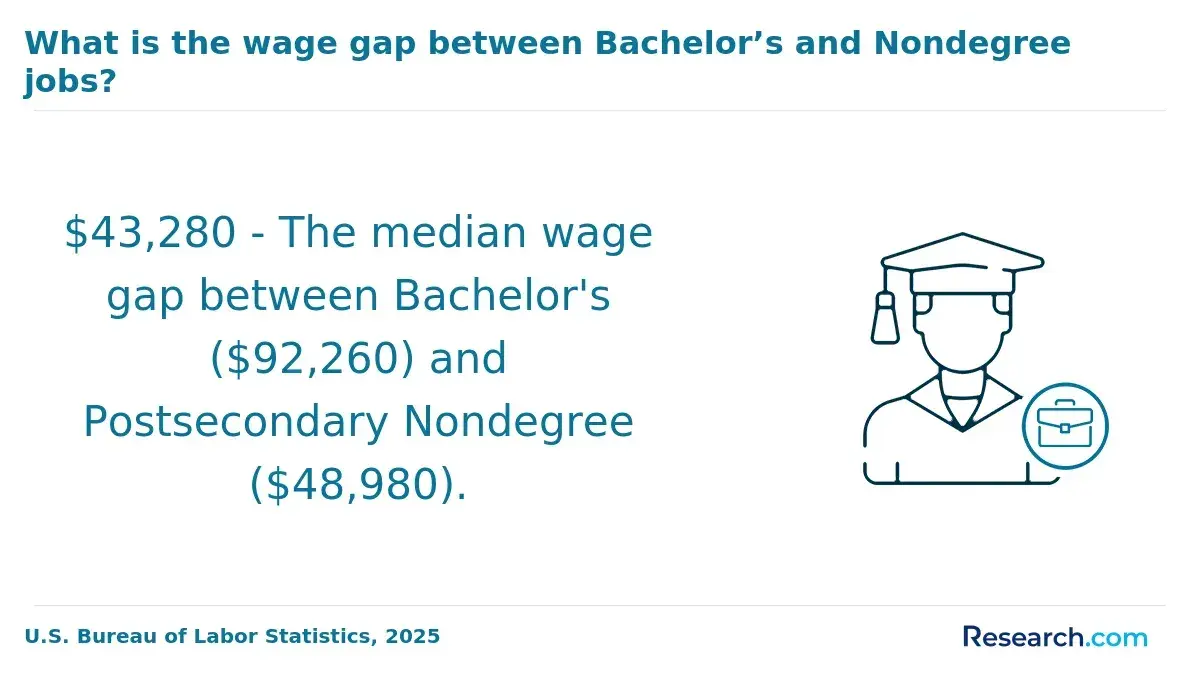
A behavioral health doctorate can support several private sector roles, especially when paired with prior experience in clinical services, HR, healthcare management, consulting, analytics, or technology. It does not automatically unlock executive roles, but it can strengthen credibility for positions that require advanced judgment, evidence-based strategy, and cross-functional leadership.
BLS projects 19% growth for substance abuse, behavioral disorder, and mental health counselors through 2033, which signals continued demand for behavioral health services. Corporate opportunity grows around that demand because employers, payers, providers, and technology companies need leaders who can scale access, evaluate programs, and manage behavioral health-related risk.
The following table connects doctorate-supported role families with the kind of prior experience that typically makes the credential more valuable.
| Corporate role family | How the doctorate can help | Helpful prior background | Typical private sector employers |
| Behavioral health director or vice president | Supports leadership over programs, clinical operations, quality, strategy, and interdisciplinary teams. | Clinical leadership, healthcare administration, operations, or managed care. | Health systems, behavioral health companies, payers, telehealth firms, integrated care organizations. |
| Employee wellbeing or mental health benefits leader | Provides expertise for benefit design, vendor evaluation, outcomes tracking, and workplace mental health strategy. | HR, benefits, occupational health, psychology, counseling, or organizational development. | Large employers, consulting firms, benefits platforms, insurers, employer coalitions. |
| Behavioral health consultant | Strengthens credibility when advising clients on interventions, culture, care models, or workforce risk. | Consulting, clinical practice, coaching, organizational development, or program management. | Consulting firms, independent practices, healthcare advisory firms, training companies. |
| Healthcare quality or population health leader | Builds skill in outcomes, care coordination, access, engagement, and integrated behavioral health models. | Quality improvement, nursing, social work, public health, analytics, or administration. | Payers, accountable care organizations, provider groups, digital health companies. |
| Behavioral health product or research strategy leader | Helps translate clinical and behavioral evidence into product features, user pathways, and outcomes studies. | Product management, UX research, data analytics, clinical operations, or health technology. | Digital therapeutics, telebehavioral health, EAP technology, wellness platforms, health startups. |
The most realistic path is often gradual. A professional may move from manager to director, from clinician to program lead, from HR specialist to wellbeing strategist, or from analyst to outcomes leader. The doctorate can provide leverage, but prior experience and demonstrated business impact usually determine how much leverage it creates.
Corporate partnerships can offer an advantage when they give students access to real projects, employer problems, mentors, data environments, internships, residencies, or applied research opportunities. They are less valuable when they are mainly marketing language with no clear student benefit.
In behavioral health, partnerships can be especially useful because many corporate challenges require collaboration across HR, legal, finance, clinical operations, product, and data teams. A program that exposes students to those settings can make doctoral work more relevant and easier to discuss in interviews.
Students should distinguish between meaningful partnerships and superficial affiliations. The table below explains the difference.
| Partnership feature | Real advantage | What to verify | Red flag |
| Employer-sponsored projects | Students can apply research to current business or healthcare problems. | Whether students can use workplace problems for capstones or dissertations with proper approvals. | The school mentions partnerships but cannot describe student project examples. |
| Industry mentors | Students get feedback from executives, consultants, or behavioral health leaders. | How mentors are matched and whether mentoring is guaranteed or optional. | Mentors are advertised but not formally integrated into the program. |
| Clinical or healthcare organization ties | Useful for integrated care, population health, and provider operations careers. | Whether partnerships support non-licensure leadership projects as well as clinical exposure. | All partnership activity is limited to traditional clinical placements. |
| Employer education benefits | Can reduce out-of-pocket cost and increase internal career alignment. | Tuition reimbursement rules, grade requirements, repayment obligations, and eligible programs. | The student enrolls before confirming reimbursement eligibility. |
| Advisory boards | Can help keep curriculum aligned with current employer needs. | Who sits on the board and whether curriculum changes reflect industry feedback. | Board names are outdated, vague, or not publicly documented. |
The trade-off is that traditional academic programs may offer stronger research depth, while partnership-heavy programs may offer stronger workplace relevance. The better choice depends on whether the student needs credibility as a researcher, operator, consultant, executive, or implementation leader.
Corporate employers generally perceive online behavioral health doctorates more favorably when the institution is accredited, the program is rigorous, and the candidate can explain how doctoral work produced practical results. The modality matters less when the applicant has strong experience, credible projects, relevant references, and a clear connection between the degree and the role.
Employer perception still varies. Some hiring managers are familiar with online doctoral education because many working professionals now complete graduate programs online. Others may scrutinize online credentials more closely, especially for leadership, consulting, or clinical governance roles. That makes transparency essential.
Professionals can strengthen employer confidence by preparing a concise explanation of the program. This explanation should be factual rather than defensive.
- State the institution's accreditation and the official degree title.
- Explain why the online format was appropriate for a working professional role.
- Describe the doctoral project, research methods, or applied capstone in business terms.
- Connect the degree to measurable outcomes, such as program evaluation, service redesign, employee wellbeing strategy, or quality improvement.
- Clarify licensure boundaries if the role involves clinical services, supervision, or patient-facing responsibilities.
One practical way to think about employer perception is this: the degree opens a conversation, but the portfolio carries the conversation. A doctoral credential without relevant experience may not outweigh an applicant who has already led behavioral health projects. A credible online doctorate plus years of relevant work, however, can be a strong combination.
Students comparing earlier clinical preparation with doctoral study should also consider how employers interpret the full education pathway. For example, an online clinical psychology master's may support foundational clinical or behavioral science knowledge, while a doctorate may be the step that signals advanced leadership, research, or systems expertise.
Salary outcomes for behavioral health doctorate holders in the private sector vary widely because the degree can lead to different role families. A doctorate by itself does not create a salary range; industry, function, management scope, geography, prior experience, licensure, and employer size all matter.
The most useful way to estimate earning potential is to look at BLS May 2024 benchmarks for role families that behavioral health doctorate holders may target. These figures are occupational medians, not guarantees for degree holders.
| Private sector role family | Relevant BLS benchmark | May 2024 median annual wage | Projected growth through 2033 | How to interpret it |
| Medical and health services management | Medical and health services managers | $117,960 | 29% | Relevant for behavioral health operations, integrated care, quality, and provider leadership roles. |
| Human resources leadership | Human resources managers | $140,030 | 6% | Relevant for workforce mental health, benefits strategy, wellbeing, and people operations leadership. |
| Learning, development, and organizational capability | Training and development managers | $127,090 | 7% | Relevant for corporate resilience training, manager education, culture change, and behavioral health learning programs. |
| Advisory and strategy consulting | Management analysts | $101,190 | 11% | Relevant for consultants who advise employers, payers, providers, or health technology companies. |
| Psychology-related professional roles | Psychologists | $94,310 | 7% | Relevant where doctoral behavioral science expertise is central, though licensure and specialization requirements vary. |
For many corporate-oriented students, the realistic salary target is not "doctorate holder" but the next role family: director, consultant, manager, vice president, product leader, outcomes lead, or health services executive. The doctorate may improve positioning for those roles, but salary growth usually depends on the student's ability to convert the degree into responsibilities with budget, strategy, staff, clients, or measurable outcomes.
ROI should include more than tuition. Students should calculate total program cost, employer tuition assistance, years to completion, lost time, dissertation support, potential promotion timing, and whether the program creates a portfolio that can be used immediately at work. A lower-cost program with weak corporate relevance may produce less value than a more expensive program with better alignment, but a high-cost program without clear outcomes is also risky.
How do you narrow down online Behavioral Health doctorate programs for corporate goals?
The best way to narrow down online behavioral health doctorate programs is to start with the job outcome and work backward. A program that is excellent for a clinical educator may be a poor fit for a benefits executive, and a strong research doctorate may be unnecessary for a professional who mainly wants to lead implementation.
Use the following process to build a practical shortlist. Each step is designed to prevent a common selection mistake.
- Define the target role family before comparing schools, such as behavioral health operations, corporate wellbeing, consulting, product leadership, people analytics, or integrated care strategy.
- Choose the doctoral model that matches the role: research-focused for evidence generation and applied for leadership, implementation, and organizational change.
- Verify institutional accreditation, state authorization, dissertation expectations, faculty expertise, and whether the degree is designed for working professionals.
- Compare curriculum against corporate skills, including analytics, program evaluation, leadership, ethics, finance, health systems, and executive communication.
- Ask for examples of recent student projects and judge whether they resemble the problems you want to solve in the private sector.
- Calculate total cost and time, including tuition, fees, residencies, travel, technology, employer reimbursement, and the opportunity cost of delayed promotion or workload strain.
- Interview admissions or faculty with specific career questions instead of relying only on rankings, advertisements, or degree titles.
Students should also watch for red flags. These do not always mean a program is poor, but they do mean the student should ask harder questions before enrolling.
- The program cannot clearly explain how graduates use the degree outside academia or traditional clinical practice.
- The curriculum has little coverage of analytics, systems, finance, organizational leadership, or program evaluation.
- The school markets executive outcomes but does not provide concrete examples of student projects, alumni roles, or employer relevance.
- The program implies salary increases or promotions that no degree can guarantee.
- The final project is poorly supported, vaguely described, or disconnected from workplace application.
- The student chooses based only on speed without considering dissertation quality, credibility, and career alignment.
Before applying, prepare a one-page decision brief for yourself. Include your target role, why a doctorate is necessary, the program type you need, the business problem you want to study, the budget you can justify, and the evidence you want to graduate with. If that brief is hard to complete, it may be wise to keep researching, strengthen a master's-level foundation, or gain more relevant experience first.
Other Things You Should Know About Behavioral Health
Many online doctorates take about three to five years, but timelines vary by transfer credits, dissertation or capstone pace, enrollment status, and program structure. Working professionals should ask about average completion time, not only minimum time.
Some may support licensure-related pathways, but many corporate-oriented doctorates do not lead directly to licensure. Always verify requirements with the school and the relevant state licensing board before enrolling.
Yes, many online programs are designed for employed professionals. The main challenge is not weekly coursework alone but sustaining progress through research, writing, approvals, and the final doctoral project.
Programs commonly expect a relevant master's degree, professional experience, transcripts, recommendations, a resume, and a statement of purpose. Some programs prefer applicants with healthcare, counseling, psychology, social work, HR, or leadership experience.
- What to Expect in a Doctoral Degree in Organizational Psychology Program https://www.tuw.edu/school-news/organizational-psychology-doctoral-degree/
- Types of Mental Health Professionals | NAMI https://www.nami.org/treatments-and-approaches/types-of-mental-health-professionals/
- Organizational Psychology (PsyD) (PsyD) https://www.cgu.edu/academics/program/doctor-of-psychology/
- How Behavioral Health Workforce Centers Leverage Partnerships to Address Workforce Education and Gaps - NASHP https://nashp.org/how-behavioral-health-workforce-centers-leverage-partnerships-to-address-workforce-education-and-gaps/
- Behavioral Health Workforce - Career Roadmap - Mayor's Office of Community Mental Health https://mentalhealth.cityofnewyork.us/workforce-career-roadmap
- Bridge Program https://fhu.edu/academics/graduate/graduate-studies-in-counseling/behavioral-health/
- Psychology Ph.D. & Psy.D.: Costs, Requirements, And Careers https://www.psychology.org/degrees/phd/
- Evolving Education: Which Behavioral Health PhD Is Right for You? https://www.socialworktoday.com/archive/Summer22p30.shtml
- FAQ: Doctor of Behavioral Health (DBH) Degree Program - Cummings Graduate Institute for Behavioral Health Studies https://cgi.edu/faq/dbh/
- Careers https://www.publichealthdegrees.org/careers/


