2027 Online Behavioral Health Doctorate Programs with Strong Student Support: Advising, Writing Help, and Career Services

Co-Founder and Chief Data Scientist
Choosing an online behavioral health doctorate is not just about curriculum or tuition; it is about whether you can get timely help when coursework, research, writing, and career planning become difficult. NCES enrollment tables released in 2024 reported about 3.2 million U. S. postbaccalaureate students, underscoring how important graduate-level support has become. This guide is for prospective doctoral students comparing online programs and explains how advising, dissertation help, faculty access, writing support, and career services can affect persistence, confidence, and long-term value.
Key Things You Should Know
- Strong online behavioral health doctorate programs usually combine faculty mentoring, dedicated academic advising, doctoral writing support, library and statistics help, accessible technology support, and career coaching designed for advanced clinical, research, leadership, or teaching goals.
- Support quality varies widely: a program with a named advisor, virtual appointments, documented response-time expectations, and online access to dissertation resources is usually easier to evaluate than one that only advertises "student support" in broad terms.
- Career context matters: BLS May 2024 wage data listed the median annual pay for substance abuse, behavioral disorder, and mental health counselors at $59,190, so students should compare program cost, licensure alignment, specialization, and doctoral career services before assuming a doctorate will produce a financial return.
What Student Support Services Should Strong Online Behavioral Health Doctorate Programs Provide?
Strong student support in an online behavioral health doctorate means more than access to a help desk. It includes coordinated academic, research, writing, technology, wellness, and career resources that are available to distance learners at the points when doctoral students are most likely to struggle: transition into doctoral work, research design, dissertation writing, practicum or applied projects, and career planning.
Behavioral health doctorate programs may include degrees such as a Doctor of Behavioral Health, PhD in psychology or counseling-related fields, PsyD programs with online components, counselor education doctorates, or leadership-focused health and human services doctorates. Some are clinically oriented, while others emphasize research, teaching, policy, administration, or integrated care leadership. Students coming from accelerated mental health counseling programs online may especially need to confirm that doctoral support helps them adjust from master's-level clinical training to independent scholarly work.
The table below summarizes the support categories that matter most when comparing online doctoral programs. Use it to separate basic availability from genuinely useful access.
| Support area | What strong support looks like | Why it matters for online doctoral students |
| Academic advising | Assigned advisor, degree plan reviews, registration guidance, milestone tracking, and proactive outreach | Helps students avoid course sequencing errors, missed deadlines, and delayed graduation |
| Faculty mentoring | Regular access to faculty with behavioral health, counseling, psychology, research, or leadership expertise | Supports scholarly identity, research focus, and professional direction |
| Writing and dissertation support | Doctoral writing center, dissertation templates, APA guidance, proposal review, and revision coaching | Reduces isolation during the most writing-intensive phase of the degree |
| Research and statistics help | Library consultations, database access, methodology support, and statistics tutoring or workshops | Improves the student's ability to design, evaluate, and complete doctoral-level research |
| Career services | Doctoral-level coaching, CV review, interview preparation, academic job search support, and leadership career planning | Connects the degree to postdoctoral goals instead of treating career support as a generic job board |
| Technology and accessibility | Reliable learning platform, 24/7 or extended tech support, disability accommodations, and accessible course design | Prevents online delivery from becoming a barrier to participation |
A common mistake is assuming that every service listed on a university website is equally available to online doctoral students. Before enrolling, ask whether each resource is included in tuition, available outside standard business hours, staffed by doctoral-level specialists, and accessible without traveling to campus.
How Does Academic Advising Work in Online Behavioral Health Doctorate Programs?
Academic advising in an online behavioral health doctorate should help students understand program requirements, choose the right course sequence, prepare for milestones, and recover quickly if they fall behind. In high-support programs, advising is not limited to registration; it is a structured relationship that follows the student from orientation through candidacy, dissertation, applied project, internship, or final defense.
Students with backgrounds in counseling, psychology, social work, public health, nursing, or human services may enter with different preparation levels. For example, applicants who previously completed child psychology master's programs may need advising that helps them connect developmental expertise to doctoral research, leadership, or clinical specialization requirements.
When comparing advising models, look for the actual advising structure, not just the word "advisor." The differences below can affect how quickly problems are identified and resolved.
| Advising model | Typical features | Best fit | Potential limitation |
| Dedicated academic advisor | One named advisor monitors progress, registration, policy questions, and milestones | Students who want continuity and proactive guidance | Quality depends heavily on advisor caseload and responsiveness |
| Faculty advisor | A faculty member guides academic development, research focus, and professional fit | Students pursuing research, teaching, or specialized behavioral health leadership | May not handle administrative issues quickly |
| General advising team | Students contact a shared advising office for course planning and policy help | Students who prefer fast transactional support | Less personalized if advisors do not know the student's goals |
| Milestone-based advising | Students receive required advising at admissions, candidacy, proposal, dissertation, and graduation checkpoints | Students who need structure around doctoral deadlines | May be reactive between milestones if outreach is not proactive |
Before choosing a program, ask direct questions about advising availability and escalation. Strong answers should include who your advisor will be, how often you will meet, what happens if your advisor changes, and how quickly the program normally responds to urgent academic issues.
- Ask whether online doctoral students receive a written degree map showing course order, residency requirements if any, research milestones, and expected dissertation timeline.
- Ask whether advising appointments are available by video, phone, and email, including evenings or flexible times for working professionals.
- Ask whether advisors track inactivity, failed courses, delayed proposals, or missed registration deadlines and contact students proactively.
- Ask whether the advising office can explain licensure-related limits clearly, especially if the doctorate is not designed to meet clinical licensure requirements in every state.
A red flag is an advising model where admissions staff provide detailed help before enrollment but the post-enrollment advising process is vague. The support that matters most is the support available after tuition is paid and doctoral expectations become more complex.
What Dissertation Mentoring and Committee Support Should Online Behavioral Health Doctoral Students Expect?
Dissertation and doctoral project support is one of the biggest differences between an adequate online program and a high-support one. Behavioral health doctoral students often work with human subjects, clinical populations, organizational data, community agencies, or integrated care settings, so they need timely guidance on research ethics, feasibility, methodology, and writing quality.
Not every online behavioral health doctorate requires a traditional dissertation. Some use applied doctoral projects, capstones, quality improvement studies, program evaluations, or practice-based research. Regardless of format, students should expect clear milestones, transparent committee expectations, and access to faculty who understand behavioral health research and professional practice.
The following list outlines the dissertation or doctoral project support features that are most worth verifying before enrollment. These details can determine whether students get stuck for months or move through the process with a realistic plan.
- Confirm when students are matched with a dissertation chair or project mentor and whether they can request faculty with relevant behavioral health expertise.
- Ask how committee members are selected, what qualifications they must have, and how conflicts or nonresponsive committee members are handled.
- Request a milestone map that identifies concept paper, proposal, institutional review board approval, data collection, analysis, final manuscript, and defense expectations.
- Ask whether the program provides sample dissertations or projects, rubrics, templates, and recorded workshops for online students.
- Find out whether dissertation courses include structured deliverables or simply charge continuation tuition while students work independently.
Students should also ask about time-to-completion transparency. A school does not need to promise completion, but it should be able to explain common delay points, how dissertation progress is monitored, and what support is available when a proposal is not approved.
A common mistake is choosing a program based on coursework support while overlooking the dissertation phase. Coursework can be structured week by week, but dissertation work requires self-direction, feedback cycles, and specialized mentoring. If those systems are weak, even strong students may experience long delays.
Doctoral writing support should help students move from professional writing to scholarly writing. In behavioral health fields, that often means learning how to synthesize research, write literature reviews, use APA style accurately, describe methods, interpret evidence cautiously, and revise based on committee feedback.
Good writing support is not the same as proofreading. Doctoral students need help with structure, argument, evidence, clarity, research integration, and discipline-specific expectations. The best programs provide both self-service resources and live support from people who understand graduate-level writing.
The table below shows how different writing-support formats compare. This can help you judge whether a program offers meaningful assistance or only a basic resource library.
| Writing support format | What it provides | How to evaluate quality |
| Doctoral writing center | Appointments for literature reviews, dissertation chapters, APA style, organization, and revision planning | Ask whether consultants regularly work with doctoral students and dissertation documents |
| Embedded course writing support | Writing milestones built into research, theory, or dissertation-preparation courses | Look for required drafts, rubrics, and faculty feedback rather than optional handouts only |
| Dissertation boot camps | Intensive writing sessions, accountability groups, and milestone planning | Ask whether online students can attend virtually and whether sessions are offered more than once a year |
| APA and formatting workshops | Guidance on citations, headings, tables, bias-free language, and manuscript formatting | Check whether resources reflect current APA expectations and dissertation template rules |
| Peer writing groups | Accountability and feedback from other doctoral students | Confirm whether groups are facilitated, optional, cohort-based, or student-run |
Students should be cautious about programs that describe writing help only as "access to the library" or "faculty feedback." Faculty feedback is essential, but writing centers and dissertation workshops provide a different kind of support: they help students learn how to revise, not just identify what is wrong.
- Ask whether writing support is free, fee-based, or limited to a certain number of appointments per term.
- Ask whether consultants review dissertation chapters, research proposals, and literature reviews, or only short course papers.
- Ask whether appointments are synchronous, asynchronous, or both, and how long the turnaround time is for written feedback.
- Ask whether writing support includes help with scholarly voice, synthesis, organization, and source integration, not just grammar and citation formatting.
Writing help can justify choosing a higher-support program if you know you need structure, accountability, or help translating professional experience into doctoral-level scholarship. It is less valuable if it is difficult to schedule, limited to generic grammar advice, or unavailable during the dissertation phase.
Online behavioral health doctoral students should have remote access to the same core research infrastructure available to campus-based students. That includes academic databases, research librarians, interlibrary loan, citation tools, methodology guidance, and support for quantitative, qualitative, or mixed-methods analysis.
Research support is especially important because behavioral health doctoral work often involves sensitive topics, protected populations, clinical settings, or organizational data. Students may need guidance on institutional review board procedures, informed consent, data privacy, recruitment feasibility, and ethical reporting.
The following support features are worth asking about because they directly affect the student's ability to complete rigorous doctoral work from a distance.
- Remote library consultations with librarians who can help refine search terms, identify peer-reviewed sources, and build a defensible literature search strategy.
- Access to behavioral health, psychology, counseling, medical, education, and social science databases needed for interdisciplinary research.
- Workshops or tutoring for statistics, qualitative coding, survey design, program evaluation, and research software used in doctoral projects.
- Institutional review board guidance that explains timelines, required training, consent forms, recruitment materials, and data-security expectations.
- Research-design support that helps students choose feasible questions, appropriate methods, and realistic data sources before the proposal stage.
Research support should be evaluated for timing as well as availability. A statistics workshop offered after students begin data analysis may be helpful, but support built into research-methods courses can prevent weak study designs before they become dissertation delays.
A common red flag is a program that expects students to find their own research sites, data sources, or participants without providing feasibility guidance. Behavioral health research can be difficult to conduct ethically and practically, so early support matters.
Career services for doctoral students should be more advanced than résumé templates and job-board access. Online behavioral health doctorate students may be preparing for clinical leadership, integrated care administration, behavioral health consulting, teaching, research, program evaluation, policy work, supervision, or senior roles in community health and human services.
Career planning should also reflect the student's prior credentials. For example, students coming from forensic psychology master's programs may need career support that connects doctoral study to correctional mental health, court-related consulting, victim services, policy, assessment, or academic pathways, depending on licensure and program design.
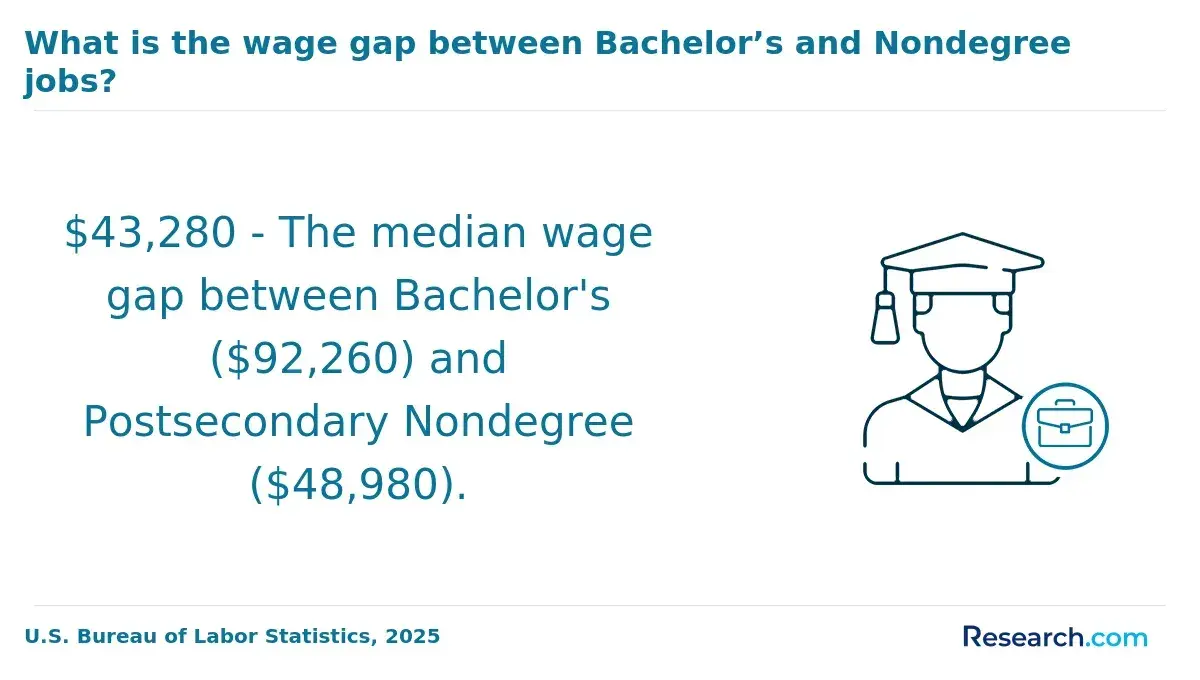
BLS May 2024 wage data listed the median annual pay for medical and health services managers at $117,960. This does not mean a behavioral health doctorate automatically leads to that salary, but it shows why leadership-oriented doctoral students should ask whether career services understand healthcare management, behavioral health systems, and executive-level job searches.
The table below connects common doctoral goals with the type of career support that is most useful. It can help you identify whether a program's career office is equipped for your intended path.
| Doctoral career goal | Useful career support | Questions to ask |
| Clinical or program leadership | Leadership coaching, executive résumé help, interview preparation, and healthcare administration networking | Does the career office work with experienced professionals seeking advancement rather than entry-level jobs? |
| Teaching or faculty roles | Academic CV review, teaching philosophy feedback, mock interviews, and guidance on adjunct or full-time faculty applications | Does the program provide teaching experience, mentorship, or higher education job search support? |
| Research or evaluation | Portfolio development, publication planning, grant-writing exposure, and program evaluation experience | Can students build evidence of research skills beyond the dissertation? |
| Consulting | Personal branding, proposal writing, networking strategy, and niche development | Does the program help students translate doctoral expertise into services employers or agencies understand? |
| Licensure-related advancement | State-specific guidance, supervision planning, and documentation support where applicable | Does the program clearly state what it does and does not satisfy for licensure? |
Doctoral students should ask whether career services are available to online learners, alumni, and students who are already employed. Many online doctoral students are mid-career professionals, so the most valuable career support often focuses on advancement, specialization, leadership transition, and professional visibility rather than first-job placement.
Faculty and staff accessibility is one of the clearest signs of whether an online doctoral program is designed around student success or simply delivered through an online platform. In a strong program, students know who to contact, how quickly to expect a response, and what to do when a concern is urgent.
Accessibility should include faculty, advisors, librarians, writing consultants, tech support, disability services, financial aid counselors, and career coaches. Online students often study after work or on weekends, so a program built only around weekday business hours may not match their actual needs.
Use the following checklist when speaking with admissions staff, program directors, or current students. These questions help reveal whether support is dependable in practice.
- What is the expected response time for faculty emails, advisor questions, dissertation feedback, and technical support requests?
- Are virtual office hours offered at times that work for students in multiple U.S. time zones?
- Can students schedule video meetings with faculty, advisors, writing consultants, librarians, and career coaches?
- Is there a documented escalation process if a faculty member, advisor, or committee member is not responding?
- Do online students have access to the same support offices as campus students, or are some services campus-only?
- Are support hours extended during registration, dissertation deadlines, practicum paperwork periods, or final defense preparation?
A practical way to test accessibility is to contact the program with a detailed question before applying and evaluate the response. A thoughtful, specific answer from the program office is not a guarantee of future support, but vague or delayed communication before enrollment can signal problems later.
Students should also distinguish between faculty presence and faculty access. Recorded lectures and discussion-board posts may show instructional presence, but doctoral mentoring requires individualized feedback, conversation, and guidance over time.
Peer and cohort support can reduce isolation, create accountability, and help online doctoral students learn from professionals in related behavioral health settings. This matters because many doctoral challenges are not purely academic; students also need motivation, belonging, role clarity, and examples of how others manage work, family, research, and professional responsibilities.
Online programs build community in different ways. Some use lockstep cohorts, while others allow flexible enrollment and optional networking. Neither model is automatically better, but students should understand how each affects connection, scheduling, and support.
The table below compares common community models in online doctoral programs. It can help you decide which structure fits your learning style and personal responsibilities.
| Community model | How it works | Strength | Trade-off |
| Lockstep cohort | Students move through most courses with the same group | Builds strong peer familiarity and accountability | Less flexibility if a student needs to pause or slow down |
| Flexible cohort | Students share some core courses but customize pace or electives | Balances connection with scheduling flexibility | Peer relationships may require more effort to maintain |
| Residency-supported online model | Online coursework is paired with short in-person or virtual residencies | Can strengthen faculty and peer relationships quickly | May add travel, time away from work, or additional costs if in person |
| Mentoring network | Students connect with faculty, alumni, advanced students, or professional mentors | Supports career direction and doctoral identity | Quality varies if mentoring is informal or not monitored |
When evaluating peer support, ask whether community-building is built into the program or left to students. Required research seminars, dissertation groups, virtual residencies, alumni panels, and faculty-led colloquia usually provide more structure than optional social media groups.
- Ask whether new online doctoral students receive orientation that introduces faculty, support offices, research expectations, and peer networking channels.
- Ask whether dissertation-stage students have writing groups, milestone groups, or cohort check-ins after coursework ends.
- Ask whether alumni participate in mentoring, career panels, guest lectures, or professional networking events.
- Ask whether the program supports professional association participation in counseling, psychology, behavioral health, public health, or healthcare leadership fields.
A common mistake is assuming flexibility and community are opposites. A well-designed online doctorate can offer both, but it must intentionally create spaces for doctoral students to interact beyond graded discussion posts.
Technology support affects more than convenience in an online doctorate. If the learning platform, video tools, library systems, or research software are difficult to use, students can lose time that should be spent reading, writing, analyzing data, or meeting with faculty.
Strong technology support usually includes onboarding, help-desk access, tutorials, mobile-friendly systems, secure document submission, and reliable access to virtual meetings. For dissertation-stage students, support may also involve software for citation management, qualitative coding, surveys, statistics, teleconferencing, and secure storage of research materials.
Accessibility and wellness support are equally important. Online doctoral students may be managing disability accommodations, caregiving, work stress, financial pressure, clinical responsibilities, or burnout. A strong program makes support visible before a crisis occurs.
The following areas are worth verifying because they affect day-to-day participation and long-term persistence.
- Technology support: availability of help-desk hours, response times, live chat or phone support, learning-management-system training, and backup processes during outages.
- Accessibility services: documented process for requesting accommodations, accessible course materials, captioned videos, screen-reader compatibility, and exam or assignment accommodations where appropriate.
- Online orientation: required training on doctoral expectations, academic integrity, library use, writing standards, advising contacts, and technology tools.
- Wellness support: counseling referrals, crisis resources, stress-management resources, student assistance programs, or wellness workshops available to distance learners.
- Financial support navigation: help understanding tuition, fees, federal aid, satisfactory academic progress rules, dissertation continuation costs, and leave-of-absence policies.
AI is also changing online doctoral study. Students may see AI-supported tutoring, library search tools, writing feedback, transcription, or productivity tools. Programs should provide clear academic-integrity rules that explain what AI use is allowed, what must be cited or disclosed, and what is prohibited in coursework, research, and dissertation writing.
A red flag is a program that relies heavily on online tools but does not provide training or clear policies. Technology should reduce friction, not shift the burden of troubleshooting onto students.
How Can You Compare Online Behavioral Health Doctorate Programs Based on Student Support Quality?
The best way to compare online behavioral health doctorate programs is to evaluate support as part of total value, not as a separate bonus. A lower-cost program may be attractive, but weak advising, limited dissertation support, or generic career services can increase frustration, delay completion, or reduce the practical value of the degree.
Applicants still exploring graduate-level preparation may also compare doctoral options with related master's pathways, such as online clinical psychology masters, especially if they are clarifying whether they need a doctorate for their goals. The right decision depends on licensure needs, career stage, research interests, leadership goals, and the amount of support required to succeed online.
Cost should be part of the support conversation. Eligible U.S. graduate students may borrow up to $20,500 per academic year through the Federal Direct Unsubsidized Loan program, with additional borrowing sometimes available through Grad PLUS loans. Because doctoral study can extend over several years, students should compare tuition, fees, residency travel, software, books, dissertation continuation tuition, and the availability of scholarships or employer assistance.
The table below provides a practical comparison framework. Use it when reviewing program websites, speaking with admissions staff, and interviewing current students or alumni.
| Comparison factor | Strong evidence | Weak evidence or red flag |
| Advising | Named advisor, documented meetings, degree map, milestone tracking, and clear escalation process | Only general claims such as "advisors are available" with no response-time expectations |
| Faculty access | Virtual office hours, dissertation mentoring, faculty profiles, and relevant research expertise | Faculty are difficult to identify or interact with before enrollment |
| Writing support | Doctoral writing center, dissertation workshops, APA help, and chapter-level feedback options | Writing help limited to grammar handouts or undergraduate tutoring |
| Research support | Library consultations, statistics help, IRB guidance, and methodology resources | Students are expected to navigate research design and approvals mostly alone |
| Career services | Doctoral CV review, leadership coaching, academic job search help, and alumni networking | Career support is limited to a job board or entry-level résumé template |
| Online access | Support available remotely, with flexible scheduling and services equal to campus access | Important services require campus visits or weekday-only availability |
| Transparency | Clear information on accreditation, licensure limits, outcomes, costs, and policies | Vague promises about advancement, completion, or employment |
After narrowing your options, take a structured approach before applying. This sequence helps you move from marketing claims to evidence.
- Identify your goal first: clinical leadership, licensure-related advancement, teaching, research, consulting, administration, or policy work.
- Confirm accreditation and licensure alignment, including whether the program meets requirements in your state and whether additional supervised experience or exams are required.
- Request written details about advising, dissertation support, writing help, career services, technology support, and accessibility services for fully online students.
- Ask to speak with a current student or recent graduate about faculty responsiveness, dissertation timelines, and support quality after coursework.
- Compare total cost against support quality, not tuition alone, including continuation fees, residencies, software, travel, and time away from work.
- Choose the program whose support model matches your risk points, such as writing confidence, research experience, schedule constraints, or need for career transition help.
The strongest choice is not always the most expensive or the most flexible. It is the program that offers credible academic structure, responsive human support, transparent policies, and career services aligned with what you actually plan to do after the doctorate.
Other Things You Should Know About Behavioral Health
No. Some doctoral programs are designed for licensure pathways, while others focus on leadership, research, education, administration, or integrated care. Always verify accreditation, practicum or internship requirements, supervised experience rules, and state licensing board requirements before enrolling.
Many online programs are designed for working adults, but feasibility depends on workload, dissertation expectations, practicum or residency requirements, and employer flexibility. Ask for sample weekly time commitments and speak with current students who have similar work and family responsibilities.
Choose a cohort model if you want structure, peer accountability, and a predictable schedule. Choose a more flexible model if you need to adjust your pace, but confirm that flexibility does not mean limited advising, weak mentoring, or isolation during the dissertation phase.
Ask who advises online doctoral students, how dissertation chairs are assigned, whether writing and statistics support are available remotely, what career services are offered to doctoral students, and whether the program's accreditation and curriculum match your career or licensure goals.
- Online DBH Programs – Online Doctor of Behavioral Health https://www.onlineeducation.com/healthcare/doctor-of-behavioral-health-programs
- Careers https://www.publichealthdegrees.org/careers/
- Best Online Counseling Psychology Ph.D. Programs https://www.psychology.org/rankings/best-counseling-psychology-doctorate-programs/
- Types of Mental Health Professionals | NAMI https://www.nami.org/treatments-and-approaches/types-of-mental-health-professionals/
- Best Online Ph.D. In Counseling Programs | Grad School Hub https://www.gradschoolhub.com/best/online-doctoral-programs-counseling/
- DBH vs. PhD - Counseling - Cummings Graduate Institute for Behavioral Health Studies https://cgi.edu/resources/dbh-comparisons/dbh-vs-phd-counseling/
- Student Mental Health and Education https://learningpolicyinstitute.org/product/student-mental-health-education-factsheet
- researchopenworld.com https://researchopenworld.com/career-outcomes-for-stem-social-and-behavioral-sciences-and-education-doctoral-alumni/
- Bridge Program https://fhu.edu/academics/graduate/graduate-studies-in-counseling/behavioral-health/
- Evolving Education: Which Behavioral Health PhD Is Right for You? https://www.socialworktoday.com/archive/Summer22p30.shtml