
2027 Online Behavioral Health Doctorate Accreditation Guide: Institutional, Programmatic, and Licensure Considerations

Co-Founder and Chief Data Scientist
Choosing an online behavioral health doctorate is not just an academic decision; it can affect financial aid, clinical training, licensure, and employer recognition. NC-SARA reported more than 2,400 participating institutions in recent 2024 distance education data, showing how common online enrollment has become.
This guide is for prospective doctoral students comparing accredited programs, especially those planning to become licensed psychologists, counselors, marriage and family therapists, social workers, or behavioral health leaders. You will learn what to verify before enrolling so you can avoid programs that may not meet accreditation or state licensure requirements.
Key Things You Should Know
- Institutional accreditation is the baseline check: The school should be accredited by an accreditor recognized by the U.S. Department of Education or CHEA; otherwise, federal aid, transfer credit, and employer acceptance may be at risk.
- Programmatic accreditation depends on the profession: APA matters for many health service psychology doctorates, CACREP may matter for counselor education doctorates, COAMFTE may matter for marriage and family therapy doctorates, while some DBH or DSW programs may not have a required doctoral-level programmatic accreditor.
- Licensure is state-specific: An online doctorate can be accredited and still fail to meet a particular state board's coursework, supervised hours, residency, internship, exam, or disclosure requirements.
Is an Online Behavioral Health Doctorate Accredited Differently From an On-Campus Program?
No. A legitimate online behavioral health doctorate is not accredited under a separate "online accreditation" system. Institutional and programmatic accreditors evaluate the institution or program against the same broad standards whether courses are delivered online, on campus, or in a hybrid format.
What changes is how the program documents student support, identity verification, online instruction quality, supervised field placement, and access to required clinical experiences.
This distinction matters because many students assume "online" means less recognized. In reality, the more important question is whether the institution and, when applicable, the specific doctoral program hold the accreditation needed for your goal.
A PsyD designed for psychology licensure, for example, faces a different accreditation and supervised training analysis than a Doctor of Behavioral Health aimed at integrated care leadership.
The table below shows how the accreditation question usually differs by delivery format. Use it to separate the delivery method from the quality-control systems that determine recognition:
| Issue | Online doctorate | On-campus doctorate | Why it matters |
| Institutional accreditation | Required for the school as a whole | Required for the school as a whole | Supports federal aid eligibility, transfer review, and baseline institutional legitimacy |
| Programmatic accreditation | May apply depending on discipline and licensure goal | May apply depending on discipline and licensure goal | Can be required or strongly preferred by state boards, internships, employers, or postdoctoral pathways |
| Clinical placement approval | Often completed near the student's state or region | Often arranged through campus-affiliated sites | State rules may affect whether a placement is accepted for licensure |
| Residency or intensive requirements | May require short in-person visits | Often embedded in campus attendance | Residency format can affect cost, travel, and state authorization questions |
A common mistake is asking only, "Is it online?" A better question is, "Is the institution recognized, is the program accredited where needed, and does the program's online format still satisfy the clinical and licensure rules in the state where I plan to practice?"
What Is the Difference Between Institutional and Programmatic Accreditation for an Online Behavioral Health Doctorate?
Institutional accreditation reviews the college or university as a whole, including governance, financial stability, student services, faculty qualifications, academic policies, and educational quality. Programmatic accreditation reviews a specific program or professional discipline, such as clinical psychology, counseling, or marriage and family therapy.
For online behavioral health doctorates, the distinction is crucial because institutional accreditation usually answers whether the school is legitimate, while programmatic accreditation may answer whether the degree aligns with a professional standard.
The following comparison summarizes the decision value of each type:
| Accreditation type | What it reviews | Examples relevant to behavioral health | Student decision impact |
| Institutional accreditation | The entire university or college | Accreditors recognized by the U.S. Department of Education, such as HLC, MSCHE, NECHE, NWCCU, SACSCOC, and WSCUC | Usually necessary for federal financial aid, credit transfer consideration, and general degree recognition |
| Programmatic accreditation | A specific professional program | APA Commission on Accreditation, CACREP, COAMFTE, and other discipline-specific accreditors where applicable | May affect licensure eligibility, internship access, certification, employment, and future academic pathways |
| State authorization | The institution's permission to enroll students in a state | Participation in SARA or separate state authorization processes | Determines whether the school may legally offer distance education to students in your location |
| Professional licensure approval | Whether education and training meet a licensing board's requirements | State psychology, counseling, social work, MFT, or addiction counseling boards | Determines whether the degree can support the license you want in a particular state |
The older "regional versus national accreditation" shorthand is less useful than it used to be because federal terminology now focuses on whether an accreditor is recognized for the institution or program it accredits. When comparing programs, look for the actual accreditor name, recognition status, scope of accreditation, and whether the doctoral program itself is included.
How Can You Verify That an Online Behavioral Health Doctorate and Its Accreditor Are Legitimate?
Verification should happen before you apply, not after you enroll. School marketing pages can be incomplete, outdated, or written broadly, so you should confirm accreditation through independent sources and then document what you found.
Use the following steps as a practical screening process. This sequence helps you identify both unaccredited schools and accredited schools whose specific doctoral program may not meet your professional goal:
- Find the institution's exact legal name, campus location, and doctoral program name on the school website and in the catalog.
- Search the U.S. Department of Education's Database of Accredited Postsecondary Institutions and Programs for the school and confirm the institutional accreditor, accreditation status, and dates.
- Check CHEA's recognized accreditor directory as a secondary confirmation source, especially if the school highlights accreditation language that seems vague.
- If programmatic accreditation is relevant, search the accreditor's own directory, such as APA, CACREP, or COAMFTE, instead of relying only on the university's claim.
- Confirm that the accreditation covers the specific doctoral program, degree level, campus or online modality, and state location you are considering.
- Review the state licensing board's education rules for the profession and state where you plan to practice.
- Ask the program for written professional licensure disclosures and keep copies of emails, catalog pages, and accreditation screenshots for your records.
Accreditation red flags include claims such as "fully accredited internationally" without naming a recognized accreditor, heavy pressure to enroll before documentation is provided, lack of a current academic catalog, or promises that the degree "qualifies you for licensure in every state." A legitimate school should be able to explain both what its accreditation covers and what it does not cover.
Sometimes yes, sometimes no. The answer depends on the exact doctorate, the intended professional role, and the licensing or certification rules that apply.
A behavioral health doctorate is an umbrella category, not a single standardized credential. It may refer to a PsyD, PhD, DBH, EdD, DSW, DMFT, or counselor education doctorate, and each has a different accreditation landscape.
Programmatic accreditation is most important when the doctorate is intended to prepare students for a licensed clinical profession or a highly regulated postdoctoral pathway. It may be less central for leadership, administration, teaching, research, or integrated care roles that do not require a new independent clinical license.
The table below summarizes how programmatic accreditation tends to matter across common behavioral health doctorate types. It is not a substitute for checking your state board, but it can help you know which questions to ask first:
| Doctorate type | Typical goal | Programmatic accreditation to investigate | Licensure caution |
| PsyD or PhD in clinical, counseling, or school psychology | Psychologist licensure, assessment, therapy, supervision, research | APA accreditation is often central for health service psychology | Some states or employers may require or strongly prefer APA-accredited doctoral education and accredited internships |
| PhD or EdD in counselor education and supervision | Counselor educator, supervisor, researcher, advanced counseling leadership | CACREP accreditation may be relevant | Doctoral accreditation may not replace master's-level counseling licensure education requirements |
| PhD or DMFT in marriage and family therapy | MFT education, supervision, research, advanced clinical leadership | COAMFTE accreditation may be relevant | State MFT boards may focus heavily on qualifying master's education and supervised experience |
| DSW or PhD in social work | Advanced practice leadership, teaching, policy, research | Doctoral social work programmatic accreditation is not the same as CSWE-accredited master's education | LCSW eligibility generally depends on MSW education and supervised clinical experience, not only a doctorate |
| Doctor of Behavioral Health | Integrated care, population health, behavioral health leadership | No single universal doctoral programmatic accreditor applies across all DBH programs | May not by itself qualify a student for a clinical license unless prior licensure and state rules support that path |
If you are still deciding whether to pursue a doctorate or build licensure preparation at the master's level first, compare prerequisites carefully. Many doctoral routes assume prior graduate training, and students exploring counseling pathways may also review accelerated mental health counseling programs online to understand how master's-level licensure preparation differs from doctoral specialization.
The accreditation that matters is the one your licensing board, certification body, internship site, employer, or postdoctoral pathway recognizes for your profession. Behavioral health licensure is not interchangeable: psychologist, counselor, social worker, marriage and family therapist, behavior analyst, addiction counselor, and school-based credentials can have different education rules.
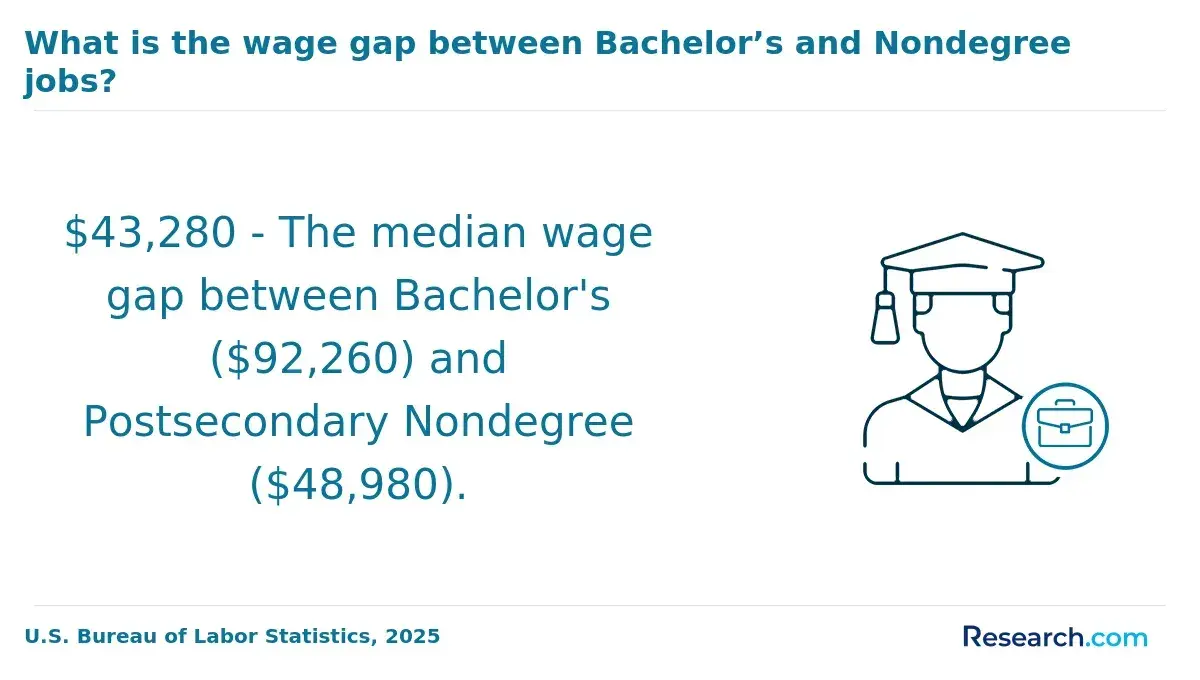
Recent labor data underscores why this matters. The U.S. Bureau of Labor Statistics lists a 2024 median pay of $94,310 for psychologists, while substance abuse, behavioral disorder, and mental health counselors are reported separately at a lower median pay level.
That gap does not mean one path is automatically better, but it shows why students should match the doctorate to the credential and scope of practice they actually want.
The table below connects common goals with accreditation questions to verify. It is designed to help you avoid assuming that one behavioral health doctorate opens every clinical pathway:
| Professional goal | Education issue to verify | Accreditation or approval commonly reviewed | What to ask before enrolling |
| Licensed psychologist | Doctoral education, internship, postdoctoral supervision, exams | APA accreditation may be required or preferred depending on state and setting | Does the program meet the psychology board's doctoral and internship requirements in my state? |
| Licensed professional counselor | Often master's-level counseling coursework plus supervised experience | CACREP may matter, especially for counseling education pathways | Does the doctorate add to my existing license path, or do I still need a qualifying counseling master's? |
| Marriage and family therapist | Qualifying MFT education, clinical hours, supervision, exams | COAMFTE may be relevant | Will this program's clinical training count under my state MFT board's rules? |
| Clinical social worker | Usually CSWE-accredited MSW plus supervised clinical experience | Doctoral accreditation may not be the controlling issue | Does the doctorate change my licensure eligibility, or is my MSW still the key credential? |
| Behavioral health administrator or integrated care leader | Leadership, healthcare systems, population health, quality improvement | Institutional accreditation may be the primary degree-recognition issue | Do target employers require a clinical license, a doctorate, or both? |
Students interested in developmental or youth-focused behavioral health should also distinguish licensure from specialization. For example, child psychology master's programs may support foundational study in child and adolescent development, but doctoral licensure requirements still depend on the state, profession, supervised training, and recognized degree type.
Possibly, but you should never assume it. Licensure requirements are set by state boards, and the same online doctorate may meet requirements in one state but not another. The program's accreditation, coursework, supervised clinical training, residency, internship, exams, background checks, and faculty qualifications can all become relevant.
Before enrolling, identify your intended license and state of practice. Then compare the program against the state board's written rules instead of relying only on admissions language. This is especially important if you live in one state, attend an online program based in another state, and complete clinical hours in a third state.
Use this checklist to evaluate state licensure fit. Each item should be confirmed in writing before you pay a deposit or begin coursework:
- Confirm the exact license title you want, such as licensed psychologist, LPC, LMFT, LCSW, licensed addiction counselor, or school psychologist.
- Read the state board's education requirements for degree level, discipline, accreditation, coursework, practicum, internship, and supervised experience.
- Ask the program whether it has determined that the doctorate meets, does not meet, or has not determined your state's licensure requirements.
- Verify whether online coursework, synchronous instruction, residency weekends, and local clinical placements are accepted by the state board.
- Ask whether the program has recent graduates who pursued the same license in your state, while understanding that past approval does not guarantee your future approval.
- Check whether moving during the program could change your eligibility, state authorization status, or clinical placement approval.
Interstate licensure compacts are an important trend, but they do not erase initial licensure requirements. PSYPACT, the Counseling Compact, and other profession-specific mobility efforts may help licensed professionals practice across participating jurisdictions, but students still need to qualify for a license first under the rules of their home or target state.
Employer Confidence in Online vs. In-Person Degree Skills, Global 2024

Yes. For many behavioral health professions, supervised training is just as important as classroom coursework. A doctorate may be institutionally accredited and academically rigorous, but if its practicum, internship, residency, or postdoctoral structure does not match state board rules, licensure eligibility can still be delayed or denied.
Online programs often handle clinical training through local placements, approved supervisors, telehealth-supported supervision, short campus residencies, or partnerships with agencies. That flexibility can benefit working adults, but it also creates verification work for the student.
Before choosing a program, ask specific questions about field training. Vague answers such as "students arrange local placements" are not enough for a licensure-focused doctorate:
- Who is responsible for finding and approving practicum, internship, or clinical sites?
- Does the program maintain placement agreements in my state or region?
- What qualifications must a site supervisor hold for hours to count toward licensure?
- Are telehealth services, remote supervision, or group supervision accepted by my state board?
- Does the program require in-person residencies, and are travel, lodging, and time off work included in the total cost estimate?
- Will the program provide documentation of hours, supervisor credentials, evaluations, and competencies in the format required by the licensing board?
Specialized interests can add another layer. A student considering behavioral health work in courts, correctional settings, or forensic assessment may benefit from reviewing forensic psychology master's programs as part of a broader pathway analysis, but forensic coursework alone does not replace licensure-required doctoral clinical training where a license is needed.
Accreditation affects more than licensure. It can influence whether you can use federal student aid, whether another university will evaluate transfer credit, whether an employer recognizes the degree, and whether you can pursue postdoctoral training, faculty roles, or additional certifications.
Financial aid is one of the clearest examples. In Federal Student Aid portfolio data released in 2024, U.S. borrowers collectively held more than $1.6 trillion in federal student loans. That scale makes accreditation verification a financial risk-control step: students should avoid taking on debt for a program that may not be recognized for their intended outcome.
The table below summarizes where accreditation can affect return on investment. It can help you compare programs beyond tuition price alone:
| Decision area | Why accreditation matters | Risk if not verified |
| Federal financial aid | Institutional accreditation is generally required for Title IV participation | You may be limited to private financing or personal funds |
| Transfer credits | Receiving schools often review the sending institution's accreditation and course comparability | Credits may not transfer if you change programs |
| Employer recognition | Healthcare, education, government, and nonprofit employers may require accredited degrees | The degree may not satisfy hiring, promotion, or salary-scale requirements |
| Internships and postdoctoral training | Some sites prefer or require specific programmatic accreditation | You may face fewer placement options or additional review |
| Further study | Universities may evaluate both institutional and programmatic accreditation for admissions | You may encounter barriers to certificates, fellowships, or another graduate program |
Students comparing doctoral and predoctoral options should also look backward at prerequisite degrees. For instance, online clinical psychology masters may help some learners explore clinical psychology coursework, but the licensure value of a later doctorate depends on doctoral accreditation, supervised training, and state board rules.
What Happens if an Online Behavioral Health Doctorate Loses Accreditation or Is Only in Candidacy?
Accreditation status is not permanent. Programs and institutions can be approved, placed on probation, denied, withdrawn, or closed. Some programs may also advertise candidacy, applicant, or preliminary status, which is not the same as full accreditation unless the accreditor explicitly says otherwise.
Candidacy can indicate that a program is progressing toward accreditation, but it is not a guarantee. For licensure-focused behavioral health doctorates, students should ask how the state board treats degrees earned during candidacy, probation, teach-out, or accreditation loss. Some boards may evaluate the status at the time of graduation; others may review enrollment date, internship status, or other factors.
If a program is in candidacy, on probation, or facing accreditation uncertainty, take the following steps before enrolling or continuing:
- Read the accreditor's public action notice to understand the exact status, reasons, and timeline.
- Ask the school for a written teach-out plan or student protection plan if accreditation is at risk.
- Contact your target licensing board and ask how it treats degrees from programs in candidacy, probation, or teach-out status.
- Confirm whether credits can transfer to another accredited program if the accreditation outcome changes.
- Ask whether tuition refunds, placement support, or alternate pathways are available if the program loses recognition.
The safest approach is not always to avoid every candidate program, especially in fields where new programs are developing to meet workforce demand. The safer approach is to understand the risk, get written answers, and avoid enrolling in any program whose accreditation status is unclear, unverifiable, or misrepresented.
Other Things You Should Know About Behavioral Health
It can be, especially when the institution is properly accredited and the program aligns with the role. Employers usually care less about the online format itself and more about accreditation, licensure eligibility, supervised experience, reputation, and job-relevant skills.
Yes. Some doctorates support leadership, consulting, teaching, research, program evaluation, integrated care administration, or policy work. If you do not need a clinical license, verify employer expectations and degree recognition rather than focusing only on licensure rules.
Not by itself. Accreditors review whether the program's culminating project fits the degree level and learning outcomes. A dissertation, applied project, or capstone may matter more for your career goals, such as academic research versus practice leadership.
Yes, if licensure is part of your goal. Ask the board whether the specific degree type, accreditor, coursework, practicum, internship, and supervision structure can satisfy requirements. Keep written responses because rules and interpretations can change.
- Understanding provider credentials, degrees, and professional licensure https://healthinfosource.com/blog/understanding-provider-credentials-degrees-and-professional-licensure
- FAQ: Doctor of Behavioral Health (DBH) Degree Program - Cummings Graduate Institute for Behavioral Health Studies https://cgi.edu/faq/dbh/
- Institutional vs Program Accreditation: What You Should Look For | Articles | Unimy https://www.unimy.com/article/institutional-vs-program-accreditation-what-you-should-look-for
- Online and Hybrid PhD & PsyD Programs in Psychology https://www.psychologist-license.com/phd/
- Accreditation Standards https://www.apbahome.net/accreditation-standards
- Why both institutional accreditation and programmatic accreditation are important? https://www.qahe.org/article/why-both-institutional-accreditation-and-programmatic-accreditation-are-important/
- Online Option for Trevecca’s Counseling Doctorate Receives Accreditation https://blog.trevecca.edu/news/online-option-for-treveccas-counseling-doctorate-receives-accreditation
- Complete Psychologist License Guide: Requirements by State https://www.directshifts.com/clinician-resources/complete-psychologist-license-guide-requirements-by-state
- Association for Behavior Analysis International Accreditation Board https://accreditation.abainternational.org/accredited-programs.aspx
- Top Accrediting Bodies For Counseling Degrees https://www.psychology.org/resources/accreditation-for-counseling-degrees/


