2027 Online Behavioral Health Doctorate Programs with One-on-One Faculty Mentorship

Co-Founder and Chief Data Scientist
Choosing an online behavioral health doctorate is not just about tuition or flexibility; it is about whether faculty will actively guide your research, clinical leadership goals, and career direction. The demand context is strong: the U. S. Bureau of Labor Statistics projects 19% growth for substance abuse, behavioral disorder, and mental health counselors from 2023 to 2033. This guide is for working professionals comparing doctoral programs and wondering whether one-on-one mentorship is worth prioritizing. You will learn how mentoring works, how to verify its quality, and how to weigh it against cost, timeline, accreditation, and outcomes.
Key Things You Should Know
- One-on-one faculty mentorship is most valuable when it is formal, recurring, and tied to dissertation, capstone, applied research, or career goals rather than limited to basic academic advising.
- BLS data published in 2024 lists a $59,190 median annual wage for substance abuse, behavioral disorder, and mental health counselors, while psychologists have a $94,310 median wage; doctoral value depends heavily on the role you are targeting.
- Graduate students can borrow up to $20,500 per academic year in federal Direct Unsubsidized Loans, so higher-tuition doctorate programs should be evaluated against total cost, mentor access, completion support, and career relevance.
How Does One-on-One Faculty Mentorship Work in Online Behavioral Health Doctorate Programs?
One-on-one faculty mentorship in an online behavioral health doctorate usually means a student has direct access to a faculty member who helps shape academic progress, research direction, professional identity, and sometimes publication or leadership goals. It is different from routine advising, which may focus mainly on course registration, policy questions, or graduation requirements.
Behavioral health doctorate programs can include Doctor of Behavioral Health, PhD in counselor education and supervision, PhD or PsyD programs with behavioral health relevance, EdD programs in counseling or community care, and applied doctoral programs focused on integrated care. Some are designed for licensed clinicians, while others serve administrators, educators, researchers, or behavioral health leaders. If you are still deciding whether a doctorate is the right next step, comparing master's pathways such as accelerated mental health counseling programs online can help clarify whether you need clinical licensure preparation before doctoral study.
In a strong mentorship model, faculty interaction is predictable rather than occasional. Students should know who their mentor is, how meetings happen, how often faculty respond, and whether the mentor has expertise related to the student's population, setting, method, or career goal.
The table below explains common forms of faculty support in online doctoral programs and how each one affects the student experience.
| Mentorship element | What it should mean in practice | Why it matters |
| Assigned faculty mentor | A named faculty member works with the student beyond registration or general advising. | Creates accountability and gives the student a clear point of contact. |
| Dissertation or capstone chair | A faculty member guides topic development, proposal approval, research design, and final defense or presentation. | Often determines whether research progress is steady or fragmented. |
| Subject-matter alignment | The mentor's experience matches the student's focus, such as integrated care, addiction treatment, trauma, child and family services, health equity, or clinical supervision. | Improves the quality of feedback and professional relevance of the project. |
| Synchronous meetings | Students meet by video, phone, or live platform on a scheduled basis. | Useful for complex decisions, research setbacks, and career planning. |
| Asynchronous feedback | Faculty provide written comments on drafts, proposals, reflections, or applied projects. | Helps working professionals move forward without waiting for live meetings. |
Typical admissions requirements vary by degree type, but many programs ask for a master's degree, graduate GPA, resume, professional statement, references, and sometimes licensure or field experience. Prospective students should also confirm accreditation because regional institutional accreditation affects federal financial aid and credit recognition, while specialized accreditation may matter for counseling, psychology, or professional practice pathways.
Which Online Behavioral Health Doctorate Programs Offer the Strongest Faculty Mentorship?
The strongest online behavioral health doctorate programs are not always the ones that use the most personalized language in marketing. They are the programs that can document mentor assignment, faculty expertise, dissertation or applied-project structure, communication expectations, and student access to faculty throughout the program.
Because schools update doctoral formats, faculty rosters, tuition, and residency expectations, students should treat any program list as a starting point rather than a final ranking. The table below highlights program types and institutions commonly reviewed by students seeking online or primarily online behavioral health doctoral study, along with the mentorship questions that matter most.
| Program or program type to review | Mentorship strength to verify | Best-fit student profile |
| Online Doctor of Behavioral Health programs, including integrated care-focused DBH options | Whether students receive individual guidance on applied practice improvement, population health, or integrated behavioral health projects. | Licensed or experienced professionals seeking leadership roles in primary care, behavioral health systems, or care coordination. |
| Online or hybrid PhD in Counselor Education and Supervision programs | Whether faculty mentorship covers research, teaching, supervision skills, and counselor educator identity. | Licensed counselors who want academic, supervisory, research, or advanced professional roles. |
| Online EdD programs in community care, counseling, or behavioral health leadership | Whether dissertation chairs and faculty mentors support applied leadership problems rather than purely theoretical topics. | Practitioners interested in program leadership, nonprofit administration, training, or community behavioral health improvement. |
| Online psychology doctoral programs with behavioral health concentrations | Whether mentor expertise aligns with the student's research area and whether the program supports or does not support licensure goals. | Students focused on behavioral science, research, consulting, teaching, or psychology-adjacent leadership roles. |
| Hybrid doctoral programs with residencies | Whether in-person sessions provide real faculty access, cohort development, research planning, and professional networking. | Students who want online flexibility but benefit from periodic intensive faculty interaction. |
A program is more likely to offer meaningful mentorship when it can answer specific questions before enrollment. Students should look for concrete details rather than broad claims.
- Ask when the faculty mentor, dissertation chair, or capstone supervisor is assigned.
- Ask whether students can request a mentor based on research interest, clinical population, or career goal.
- Ask how many doctoral students each mentor currently supervises.
- Ask how often one-on-one meetings occur during coursework and during dissertation or applied-project stages.
- Ask whether faculty are full-time, adjunct, practitioner-scholars, researchers, or a combination of these roles.
The best choice depends on fit. A student pursuing behavioral health systems leadership may need a mentor with integrated care and operations expertise, while a future counselor educator may need faculty with research, teaching, supervision, and CACREP-related experience.
How Does Faculty Mentorship Support Dissertation or Applied Research in an Online Behavioral Health Doctorate?
Faculty mentorship becomes especially important once an online doctoral student moves from structured coursework into dissertation, capstone, doctoral project, or applied research. This phase often requires the student to define a feasible problem, choose a method, obtain approvals, analyze evidence, revise drafts, and defend or present findings.
Strong dissertation or applied-project mentorship usually includes several layers of support. These steps show what students should expect as they move through the research process.
- Topic refinement: The mentor helps turn a broad behavioral health interest into a focused problem that can be studied within the program timeline.
- Method selection: The mentor guides the student toward qualitative, quantitative, mixed-methods, program evaluation, or quality-improvement approaches appropriate for the question.
- Ethics and approval preparation: The mentor helps the student understand institutional review expectations, participant protections, and data-use limits.
- Draft review: The mentor provides substantive feedback on proposal chapters, project plans, literature synthesis, and final manuscripts.
- Professional translation: The mentor helps the student connect findings to practice, leadership, publication, presentations, or organizational improvement.
The biggest red flag is a program that promises personal support but cannot explain who reviews research drafts, how long feedback typically takes, or what happens if a mentor's expertise does not match the student's topic. In doctoral work, vague support can quickly become stalled progress.
One-on-one mentorship can support progress by helping students make decisions faster, avoid unrealistic research plans, and stay connected during the less structured doctoral stages. However, mentorship does not guarantee faster completion. Program design, transfer credits, work schedule, family responsibilities, research approvals, writing habits, and financial pressures all affect timeline.
Most online behavioral health doctorates take several years to complete, with shorter timelines more common in professionally focused programs and longer timelines more common in research-intensive doctorates. Students should ask schools for actual time-to-completion ranges rather than relying only on minimum program length.
The 2024 BLS Occupational Outlook Handbook projects 19% growth for substance abuse, behavioral disorder, and mental health counselors from 2023 to 2033, which is much faster than the average for all occupations. That growth can make advanced preparation appealing, but the degree still needs to match the student's intended role; a doctorate aimed at leadership or education may not be necessary for every counseling position.
Mentorship improves value most when it reduces avoidable friction. Students should pay attention to these progress-related features before enrolling.
- Clear checkpoints for doctoral milestones, including proposal approval, research approval, data collection, final writing, and defense or presentation.
- Faculty feedback timelines that are stated in policy or consistently reported by current students.
- Writing, statistics, library, and research-methods support that complements faculty mentoring.
- Options for changing mentors if faculty expertise, availability, or communication style is not a good fit.
- Early alignment between coursework assignments and the eventual dissertation, capstone, or applied project.
A common mistake is assuming that a one-on-one mentor will keep the student on pace without the student actively scheduling meetings, submitting drafts, and clarifying expectations. Effective doctoral mentorship is interactive; students need to prepare questions, document advice, and follow through between meetings.
Online behavioral health doctorate programs use different support models. Some emphasize individualized faculty mentorship, some rely heavily on cohorts, and many combine faculty advising, dissertation committees, peer groups, residencies, and student-success staff. No single model is best for every student.
The table below compares common mentorship structures so students can decide which format best fits their learning style, schedule, and doctoral goals.
| Mentorship model | Main advantage | Main limitation | Best fit |
| Dedicated one-on-one faculty mentor | Personalized academic and professional guidance. | Quality depends heavily on mentor availability and fit. | Students with specific research interests or career goals. |
| Dissertation chair plus committee | Multiple faculty perspectives on research design and final work. | Feedback may be slower if roles are unclear. | Students completing dissertations or formal doctoral projects. |
| Cohort-based support | Peer accountability and shared pacing. | Less individualized attention if faculty access is limited. | Students who value structure and community. |
| Faculty-led residencies or intensives | Concentrated interaction, networking, and skill development. | Travel, time away from work, and added costs may be required. | Students who want online study with periodic in-person engagement. |
| Student-success advising model | Useful for logistics, deadlines, and administrative support. | May not provide research or professional mentorship. | Students who need help navigating policies and schedules. |
Students should not automatically reject cohort-based programs. A highly structured cohort with strong faculty involvement can be better than a loosely defined one-on-one model where faculty are difficult to reach. The key question is not whether the program uses the phrase "individualized mentorship," but whether students receive timely, expert, and relevant guidance when decisions matter.
Online education trends also matter. More doctoral programs now use learning platforms, video meetings, digital libraries, telehealth case examples, simulation tools, and asynchronous feedback systems. These tools can improve access, but they do not replace faculty expertise. Technology should make mentorship easier to schedule, document, and sustain.
Faculty mentorship can help behavioral health doctoral students turn academic work into professional opportunities. This may include refining a leadership niche, identifying conferences, co-authoring manuscripts, preparing for teaching, building supervision skills, or translating an applied project into a workplace initiative.
The career value of mentorship depends on the student's intended direction. A future faculty member needs different guidance than a clinic director, behavioral health consultant, policy advocate, or integrated care leader. Students interested in younger populations may also compare doctoral options with earlier-stage pathways such as child psychology master's programs if they still need population-specific preparation before doctoral study.
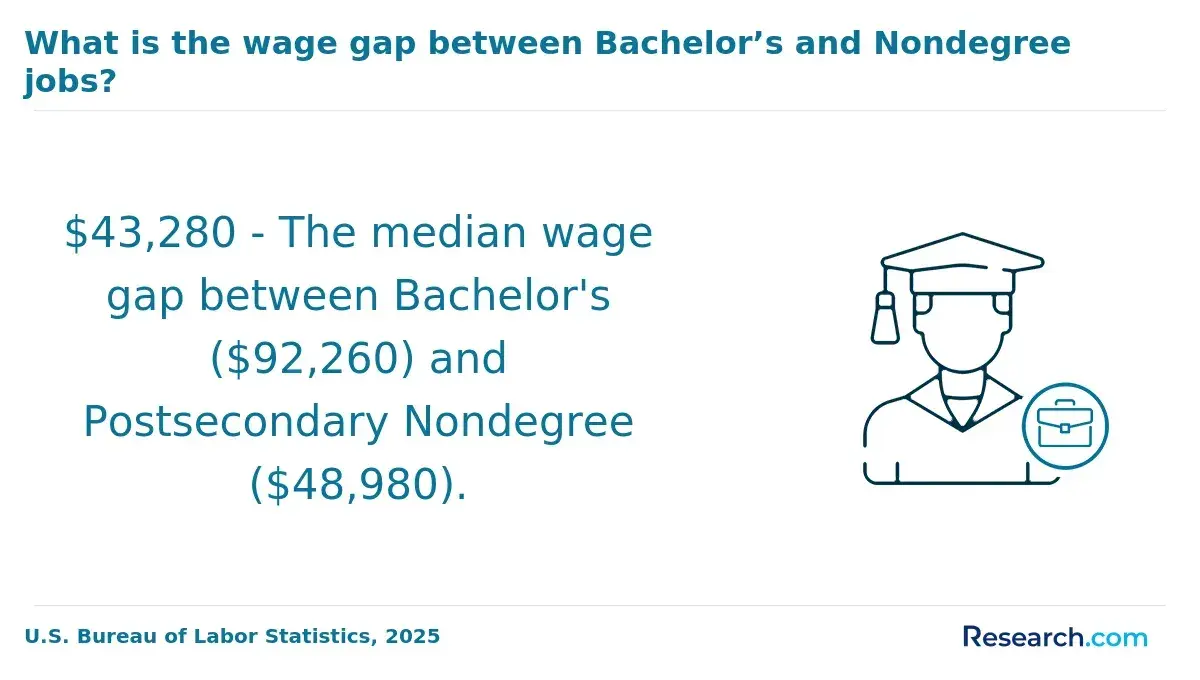
BLS data published in 2024 reports a $94,310 median annual wage for psychologists, but that figure includes multiple psychology roles and does not mean every behavioral health doctorate leads to psychologist employment. Many psychology roles also require state-specific licensure, supervised experience, and a qualifying doctoral program, so students should verify requirements before choosing an online doctorate.
Mentors can support career development in practical ways, especially when they understand the student's field setting. Students should ask whether faculty provide help in the following areas.
- Developing a research or leadership agenda that can be explained to employers, boards, funders, or academic search committees.
- Identifying publication, poster, conference, or professional association opportunities related to behavioral health.
- Preparing for roles in supervision, teaching, program evaluation, integrated care, workforce training, or administration.
- Connecting applied projects to measurable workplace problems such as access, retention, care coordination, or outcomes tracking.
- Clarifying whether the doctorate supports licensure, advancement, consulting, teaching, or organizational leadership rather than assuming it does all of these equally.
A useful mentor does not simply encourage the student; they help the student make strategic choices about specialization, evidence, professional visibility, and role alignment.
Online behavioral health doctorate mentors should have qualifications that match the program's purpose. In research doctorates, students should look for faculty with scholarly publications, methodological expertise, funded or applied research experience, and an active agenda in a relevant area. In professional doctorates, practitioner-scholar experience, leadership background, integrated care experience, supervision expertise, or program evaluation skills may be equally important.
Students should also distinguish between a mentor who is academically impressive and one who is appropriate for their specific goals. For example, a student focused on justice-involved populations may benefit from faculty who understand forensic systems; depending on career stage, related graduate options such as forensic psychology master's programs may also help clarify specialization before doctoral enrollment.
The table below summarizes mentor qualifications worth reviewing before choosing a program.
| Faculty qualification | Why it matters | How to verify it |
| Doctoral credential in a relevant field | Indicates advanced preparation aligned with doctoral-level supervision. | Review faculty profiles, CVs, dissertations, and professional biographies. |
| Active research or applied expertise | Supports stronger guidance on dissertation, capstone, or project design. | Look for recent publications, presentations, grants, program evaluations, or practice leadership. |
| Licensure or professional certification when relevant | Important for students pursuing clinical, supervisory, or practice-adjacent goals. | Check state licensing boards, faculty bios, and program disclosures. |
| Experience mentoring doctoral students | Helps students navigate milestones, feedback cycles, and committee expectations. | Ask admissions staff, program directors, current students, or alumni. |
| Fit with student population or setting | Improves relevance for projects involving addiction, trauma, child services, integrated care, rural health, or health equity. | Compare faculty interests with the student's proposed topic and career setting. |
Faculty turnover is a real risk in any doctoral program. Before enrolling, students should ask what happens if a mentor leaves, goes on sabbatical, changes workload, or no longer supervises doctoral projects. A strong program has a transition process rather than leaving students to restart their work informally.
One-on-one faculty mentorship can increase the value of an online behavioral health doctorate, but it may also be associated with higher tuition, residency costs, dissertation fees, or longer enrollment if progress stalls. Students should evaluate mentorship as part of total cost, not as a separate perk.
Federal Student Aid currently allows graduate and professional students to borrow up to $20,500 per academic year through Direct Unsubsidized Loans, with additional borrowing potentially available through Grad PLUS loans up to the school's cost of attendance. This matters because doctoral students can accumulate debt over multiple years, especially if the program charges per credit and requires continuous dissertation enrollment.
When comparing value, students should calculate the full cost picture. The following items are often more important than the advertised per-credit rate alone.
- Total required credits, including dissertation, capstone, internship, practicum, or project credits.
- Technology fees, residency fees, graduation fees, background checks, research software, and professional liability insurance if required.
- Travel and lodging for hybrid intensives, residencies, clinical training, or dissertation defenses.
- Continuous enrollment charges if dissertation or project work extends beyond the planned timeline.
- Employer tuition assistance, scholarships, military benefits, transfer credits, and payment plans.
The strongest financial case for a higher-cost program is not simply that it offers one-on-one mentorship. The case is stronger when mentorship is tied to timely feedback, strong faculty fit, relevant applied work, licensure or leadership alignment, and evidence that students receive support through the most difficult parts of the doctorate.
If cost, flexibility, and mentorship cannot all be maximized, students should prioritize based on risk. A student with a highly specialized dissertation topic may need faculty fit more than the lowest tuition. A student with limited borrowing capacity may need a lower-cost accredited program even if faculty interaction is less individualized. A student with unpredictable work hours may need asynchronous access and clear feedback timelines more than weekly live meetings.
One-on-one mentorship is most useful for students whose goals require sustained expert feedback. These include professionals pursuing dissertation research, applied systems change, academic teaching, counselor education, supervision, integrated care leadership, or niche behavioral health specialization.
Students who are still building the foundation for clinical practice may not need a doctorate yet. For example, those comparing licensure-oriented master's options may want to evaluate online clinical psychology masters and related counseling or psychology pathways before committing to doctoral-level study.
The students who tend to benefit most from individualized doctoral mentoring have complex goals that cannot be fully served by standard coursework. These profiles are especially likely to need strong faculty access.
- Working clinicians who want to become supervisors, faculty members, clinical leaders, or integrated care consultants.
- Behavioral health administrators who want to evaluate programs, improve service delivery, or lead system-level change.
- Students with a specific research topic that requires faculty expertise in a population, method, or care setting.
- Professionals seeking publication, conference, teaching, or policy opportunities connected to doctoral work.
- Students returning to school after several years who need help rebuilding academic writing, research, or statistical confidence.
Some students may be better served by a highly structured cohort-based program or a lower-cost program with solid advising. If your main goal is career advancement within a current employer and the employer does not require a dissertation-heavy doctorate, the best value may come from flexibility, accreditation, and affordability rather than intensive one-on-one mentorship.
How Should Students Evaluate Faculty Mentorship Before Choosing an Online Behavioral Health Doctorate?
Students should evaluate faculty mentorship before applying, not after enrollment. The goal is to verify whether mentoring is a formal part of the doctoral design or simply a marketing phrase used to describe general accessibility.
Use the following steps to test the substance of a program's mentorship model. These questions help reveal whether faculty support is timely, expert, and relevant.
- Identify your goal first: Decide whether you are pursuing licensure-related advancement, teaching, supervision, research, consulting, integrated care leadership, or organizational administration.
- Review faculty profiles: Look for mentors whose background matches your intended population, method, and professional setting.
- Ask when mentors are assigned: Clarify whether mentorship begins during coursework or only after dissertation or capstone enrollment.
- Confirm meeting expectations: Ask how often students meet individually with mentors and whether meetings are live, asynchronous, or both.
- Ask about response times: Request written expectations for draft review, email response, and dissertation feedback.
- Check advising capacity: Ask how many doctoral students each faculty member supervises and whether there are caps on mentor workload.
- Speak with current students or alumni: Ask whether faculty are accessible, whether feedback is substantive, and whether mentor changes are handled smoothly.
- Review accreditation and licensure disclosures: Confirm whether the program meets your state, employer, or professional requirements.
- Compare cost against support: Calculate total program cost and decide whether the mentoring model reduces enough academic and career risk to justify the investment.
Several red flags should slow down your decision. Avoid assuming that words like "personalized," "student-centered," or "faculty-supported" automatically mean regular one-on-one mentoring.
- The school cannot say when a mentor, chair, or supervisor is assigned.
- Admissions staff describe mentorship generally but cannot explain meeting frequency or feedback timelines.
- Faculty profiles are outdated, incomplete, or unrelated to the program's advertised specialties.
- The program does not explain what happens if a mentor leaves or becomes unavailable.
- Students are not allowed to speak with current students, alumni, or program faculty before enrolling.
- The program implies career or licensure outcomes without clear disclosures about state requirements and role limitations.
The best final test is simple: ask the program to describe what faculty mentorship looks like in a student's first term, midpoint, and dissertation or project stage. If the answer is specific and consistent across admissions staff, faculty, and students, the mentorship claim is more credible.
Other Things You Should Know About Behavioral Health
Not exactly. Mental health usually refers to psychological and emotional well-being, while behavioral health is broader and often includes mental health, substance use, health behaviors, care coordination, prevention, and integrated treatment models.
Only some programs are designed for licensure pathways. Licensure requirements vary by state and profession, so students should check the program's disclosures and contact the relevant state licensing board before enrolling.
Some are fully online, while others require residencies, intensives, internships, practicums, or in-person research activities. Students should confirm all travel and in-person requirements before comparing cost or feasibility.
Employer perception depends on accreditation, program reputation, field relevance, faculty expertise, and whether the degree fits the role. A regionally accredited online doctorate with a strong applied or research focus may be appropriate for many leadership, teaching, consulting, or administrative goals.
- Research mentorship for mental health research students https://riseglobaleducation.com/blogs/research-mentorship-for-mental-health-research-students
- Best Online Doctorate In Psychology 2025 | Psychology.org https://www.psychology.org/rankings/best-online-doctorate-degree-programs/
- The Benefits of Mentorship for Mental Well-being https://www.lucentpsych.com/post/the-benefits-of-mentorship-for-mental-well-being
- 2025 Most Affordable Online Colleges for a PhD in Psychology https://www.onlineu.com/most-affordable-colleges/psychology-doctoral-degrees
- Online and Hybrid PhD & PsyD Programs in Psychology https://www.psychologist-license.com/phd/
- Peer Mentor Program: 6 Key Benefits for Higher Education https://hellomongoose.com/blog/building-lasting-connections-6-benefits-of-a-peer-mentor-program/
- Faculty-Student Mentoring in Online Higher Education https://www.facultyfocus.com/articles/online-education/online-assessment-grading-and-feedback/faculty-student-mentoring-in-online-higher-education/
- 8 Recommendations for an Effective Online Faculty Mentorship Program https://www.quadc.io/blog/recommendations-for-an-effective-online-faculty-mentorship-program
- Bridge Program https://fhu.edu/academics/graduate/graduate-studies-in-counseling/behavioral-health/
- FAQ: Doctor of Behavioral Health (DBH) Degree Program - Cummings Graduate Institute for Behavioral Health Studies https://cgi.edu/faq/dbh/