2027 Highest-Paying Jobs with a Behavioral Health Doctorate: Salaries, Career Paths, and Growth Outlook

Co-Founder and Chief Data Scientist
A Behavioral Health doctorate can open doors to clinical leadership, advanced psychology practice, research, policy, and healthcare administration-but the payoff depends heavily on specialization and career target. BLS employment projections released in 2024 show 19% growth for substance abuse, behavioral disorder, and mental health counselors through 2033, signaling strong demand across the field. This guide is for prospective doctoral students, clinicians, and mid-career professionals comparing salary outcomes. You'll learn which roles pay the most, what skills employers value, and how to decide whether the doctorate aligns with your income and career goals.
Key Things to Know About High-Paying Jobs in Behavioral Health
- Highest-paying pathways usually combine doctoral-level behavioral health expertise with licensure, leadership, analytics, grant funding, or healthcare operations; medical and health services managers had a 2024 median wage of $117,960, according to BLS OEWS data.
- Doctorate holders often compete best for clinical psychologist, neuropsychology, behavioral health director, research scientist, faculty, consulting, and executive roles, but the doctorate alone rarely substitutes for supervised experience, state licensure, or measurable outcomes.
- ROI depends on program cost and the salary jump after graduation; NCES data released in 2024 shows average annual graduate tuition and fees were substantially different by institution type, so applicants should compare total cost, completion time, and placement outcomes before enrolling.
Is there high demand for Behavioral Health doctorate graduates?
Yes, demand is strong in several behavioral health labor markets, but it is not evenly distributed across every doctorate-level role. The strongest demand is in integrated care, addiction treatment, youth mental health, behavioral health operations, health services management, telebehavioral health, and outcomes-focused program leadership.
BLS projections published in 2024 estimate 19% employment growth for substance abuse, behavioral disorder, and mental health counselors from 2023 to 2033. Doctorate holders are not competing only for counseling jobs, but this number matters because it reflects a larger systemwide need for supervisors, clinical directors, program evaluators, faculty, and researchers who can train, manage, and improve behavioral health services.
The demand picture is especially favorable for doctorate holders who can connect clinical knowledge to broader healthcare priorities: reducing emergency department use, improving access, managing risk, supporting value-based care contracts, and documenting patient outcomes. Employers increasingly want leaders who understand evidence-based treatment, population health, compliance, and data-informed decision-making.
For readers still building the foundation for doctorate-level work, master's-level pathways can be a practical stepping stone. For example, accelerated mental health counseling programs online may help some students enter supervised clinical practice sooner before deciding whether a doctorate is necessary for their long-term salary goals.
The table below summarizes where demand is strongest and what it means for doctorate-level career planning. Use it to distinguish broad labor demand from the specific roles where a doctorate can add salary leverage.
| Demand area | Why employers need doctoral-level talent | Best-fit doctorate career paths |
| Integrated behavioral health | Primary care systems need clinicians and leaders who can coordinate mental health, substance use, and chronic disease care. | Clinical director, behavioral health consultant, integrated care psychologist |
| Addiction and co-occurring disorders | Providers need advanced supervision, program design, relapse prevention models, and outcomes measurement. | Addiction program director, clinical supervisor, research scientist |
| Youth and family behavioral health | Schools, hospitals, and community agencies need expertise in developmental disorders, trauma, family systems, and early intervention. | Child psychologist, pediatric behavioral health director, faculty researcher |
| Healthcare administration | Behavioral health organizations need leaders who can manage staffing, compliance, reimbursement, and quality metrics. | Behavioral health executive, service line director, operations leader |
| Data and outcomes research | Employers are under pressure to prove treatment effectiveness, manage costs, and use predictive analytics responsibly. | Behavioral scientist, evaluation director, health outcomes researcher |
Which Behavioral Health doctorate specializations lead to high-paying roles?
The highest-paying specializations usually sit at the intersection of clinical depth, organizational impact, and scarce expertise. A general Behavioral Health doctorate can be valuable, but niche training often produces stronger salary leverage when it matches a high-need employer problem.
Specializations matter because many top-paying roles are not labeled simply "behavioral health doctorate job." They may be posted as clinical psychologist, neuropsychologist, behavioral health director, addiction services executive, health outcomes researcher, forensic evaluator, or faculty investigator.
The table below compares specializations that commonly lead to stronger pay potential. It focuses on how each concentration translates into higher-value work rather than ranking programs by prestige.
| Specialization | High-paying roles it can support | Why it can increase salary potential |
| Clinical psychology | Licensed psychologist, clinical director, private practice owner, hospital psychologist | Licensure-based scope of practice, assessment authority, and advanced treatment expertise can support higher clinical and leadership compensation. |
| Neuropsychology | Clinical neuropsychologist, rehabilitation psychologist, hospital assessment specialist | Specialized testing and brain-behavior expertise are harder to replace and often valued in medical settings. |
| Addiction and co-occurring disorders | Addiction services director, treatment center executive, clinical supervisor | High demand for substance use and dual-diagnosis care creates leadership opportunities in treatment systems. |
| Child and adolescent behavioral health | Pediatric behavioral health specialist, child psychologist, youth program director | Demand is strong where developmental, school, family, and trauma-informed care expertise are needed. |
| Forensic behavioral health | Forensic evaluator, correctional behavioral health administrator, expert consultant | Legal, correctional, and public safety settings often pay for specialized assessment and risk expertise. |
| Behavioral health administration | Executive director, service line leader, chief behavioral health officer | Combines clinical credibility with budgeting, staffing, compliance, and system redesign responsibilities. |
| Health outcomes and implementation science | Research director, program evaluation lead, payer or health system consultant | Employers value professionals who can prove whether interventions work and scale programs efficiently. |
If your goal is the highest possible salary, choose a specialization by working backward from job postings, not by picking the topic that sounds most interesting in isolation. A focused niche makes the most sense when it is tied to licensure eligibility, reimbursable services, leadership roles, or funded research areas.
Students interested in youth-focused roles often start with earlier graduate preparation in developmental and family systems work. Comparing child psychology master's programs can help clarify whether a future doctorate should emphasize child clinical practice, school-based systems, pediatric care, or research.
How competitive are the applications for high-paying Behavioral Health jobs?
Applications for high-paying Behavioral Health jobs are moderately to highly competitive because the best roles usually require more than the doctorate. Employers often look for a combination of degree fit, licensure, supervised experience, leadership results, publication or grant history, payer knowledge, and evidence that the candidate can improve outcomes.
The competition is highest for tenure-track faculty jobs, hospital-based specialty psychology roles, neuropsychology positions, executive roles in major health systems, VA and federal roles, and consulting jobs with payers or digital health companies. Competition is lower in some community behavioral health leadership roles, rural or underserved areas, and fast-growing outpatient systems, but these jobs may still require state-specific credentials and management experience.
BLS projections released in 2024 show 7% growth for psychologists from 2023 to 2033, which is faster than the average for all occupations. For doctorate holders, that means opportunities are expanding, but top-paying posts still tend to favor candidates with a documented specialty, licensure readiness, and a record of measurable impact.
Applicants who want to be competitive should avoid treating the doctorate as a standalone credential. The strongest candidates usually prepare in the following ways:
- Match the doctorate type to the target role, such as PhD for research-heavy careers, PsyD for clinical practice, DBH for integrated care and systems work, or EdD for education and leadership roles.
- Confirm licensure rules before enrolling, because state boards may require specific accreditation, practicum hours, internship experiences, or supervised postdoctoral work.
- Build a focused portfolio with outcome reports, program evaluations, publications, presentations, supervision experience, or quality improvement projects.
- Use job postings to identify repeated requirements, especially assessment tools, EHR systems, grant writing, payer metrics, crisis systems, and leadership experience.
- Network before graduation with alumni, clinical training sites, professional associations, faculty mentors, and employers in the target setting.
Common mistakes include applying broadly to "behavioral health" jobs without a niche, underestimating how long licensure takes, ignoring internship quality, or choosing a doctorate that is not aligned with the credential required for the desired job. Candidates also limit their earning potential when they avoid management, analytics, or supervision responsibilities, since many higher-paying roles reward organizational impact rather than direct service alone.
Behavioral Health doctorate holders can earn very different salaries depending on whether they work in clinical practice, administration, academia, research, consulting, or executive leadership. The most reliable way to estimate earnings is to compare target roles using occupational wage data, then adjust for licensure, geography, setting, and years of experience.
BLS May 2024 OEWS data reported a median annual wage of $96,100 for clinical and counseling psychologists. This is a useful benchmark for doctorate-level clinical practice, but it should not be read as a guaranteed salary for every Behavioral Health doctorate holder because many jobs are affected by state licensure, employer type, and reimbursement model.
The table below gives practical salary benchmarks for roles that Behavioral Health doctorate graduates commonly pursue. Use the figures as occupational reference points rather than promises of individual earnings.
| Career category | Relevant 2024 wage benchmark | What it means for doctorate holders |
| Clinical and counseling psychologists | Median wage: $96,100 | A strong benchmark for licensed clinical practice, especially for graduates who complete required supervised training. |
| Psychologists, all other | Median wage: $117,580 | Relevant to specialized psychology roles, including some research, assessment, consulting, and applied behavioral science positions. |
| Medical and health services managers | Median wage: $117,960 | Useful for behavioral health directors and executives whose work includes budgets, staffing, compliance, and service line performance. |
| Psychology teachers, postsecondary | Median wage: $82,140 | Relevant for faculty careers, although tenure-track roles may also weigh publications, grants, and institutional type. |
| Substance abuse, behavioral disorder, and mental health counselors | Median wage: $59,190 | Shows why a doctorate may not automatically raise pay if the role remains a frontline counseling position without advanced scope or leadership duties. |
The key salary lesson is that the doctorate has the strongest earning effect when it changes the job you qualify for. If you earn a doctorate but remain in the same non-leadership counseling role, the pay increase may be limited. If the degree helps you move into licensed psychologist work, executive administration, specialty assessment, research leadership, or consulting, the salary upside can be much stronger.
Program cost also matters. NCES data released in 2024 shows average annual graduate tuition and fees varied widely by institution type, with public institutions generally lower than private nonprofit institutions. Since doctorate programs can take several years, applicants should estimate total tuition, fees, residency or internship costs, lost work time, and licensing expenses before assuming the degree will produce a positive financial return.
The highest-paying jobs for Behavioral Health doctorate holders generally fall into three categories: licensed specialty practice, healthcare leadership, and research or consulting roles with measurable financial or clinical impact. The best option depends on whether you want to treat patients, lead systems, teach, conduct research, or advise organizations.
The table below highlights strong salary pathways and the credentials that commonly matter. Salary references use national occupational benchmarks where available, so actual compensation can vary by state, employer, productivity model, and experience.
| High-paying job | Typical doctorate advantage | Relevant salary benchmark | Best fit for |
| Behavioral Health Director or Executive | Clinical credibility plus leadership training can support oversight of programs, staffing, compliance, quality, and budgets. | Medical and health services managers: 2024 median wage of $117,960 | Professionals who want management authority and system-level influence |
| Clinical or Counseling Psychologist | Doctoral education is commonly required for psychologist licensure, along with supervised clinical training. | Clinical and counseling psychologists: 2024 median wage of $96,100 | Students seeking advanced clinical practice, assessment, and therapy roles |
| Neuropsychologist | Specialized doctoral and postdoctoral training supports complex assessment and brain-behavior evaluation. | Often aligned with specialized psychologist wage categories | Clinicians interested in medical, rehabilitation, and cognitive assessment settings |
| Behavioral Health Research Scientist | Doctoral training in research design, statistics, grant writing, and intervention evaluation is highly relevant. | Often aligned with psychologist, social scientist, or academic research wage categories | Professionals who want to build evidence, publish, and evaluate programs |
| Forensic Behavioral Health Evaluator | Advanced assessment, ethics, report writing, and court-related expertise can command specialized opportunities. | Often aligned with specialized psychologist or consulting roles | Clinicians interested in legal, correctional, competency, or risk assessment work |
| Postsecondary Faculty or Program Chair | A doctorate is typically expected for full-time faculty, doctoral supervision, and academic leadership roles. | Psychology teachers, postsecondary: 2024 median wage of $82,140 | Professionals who want teaching, research, curriculum, and academic leadership |
| Behavioral Health Consultant | Doctoral expertise can support payer strategy, digital health design, implementation science, and outcomes evaluation. | Compensation varies widely by consulting model and client type | Experienced professionals with a clear niche and measurable results |
Forensic roles can be especially attractive for professionals who enjoy assessment, documentation, expert testimony, and work at the intersection of behavioral health and the legal system. Before pursuing that path, compare prerequisite training options such as forensic psychology master's programs to understand how the specialization develops before the doctoral level.
The best-paid roles tend to reward one of three things: legal scope of practice, responsibility for organizational performance, or rare expertise. If a job does not require any of these, a doctorate may improve credibility but may not substantially change compensation.
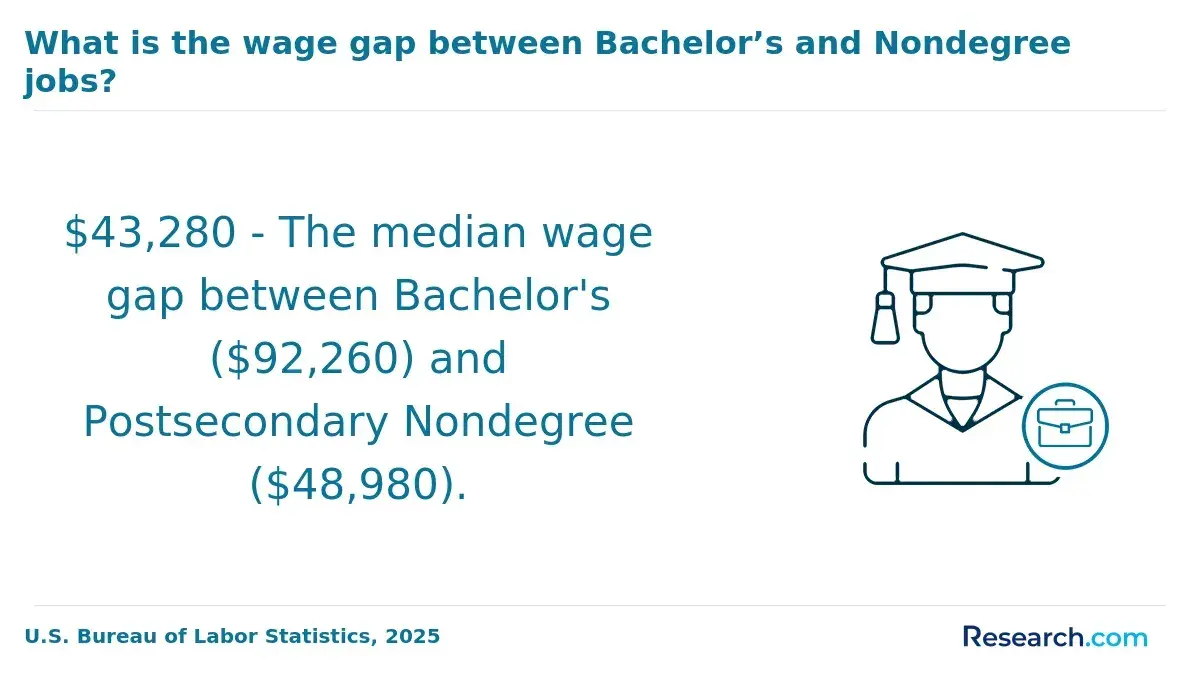
Your earning potential from high-paying Behavioral Health jobs depends less on the degree title and more on how the doctorate changes your labor market position. A doctorate is most likely to pay off financially when it qualifies you for licensure, promotion, executive responsibility, specialty assessment, funded research, or higher-value consulting.
One useful way to think about ROI is the "salary lift" question: how much more can you realistically earn compared with staying at your current degree level? If a master's-level clinician earns a raise after becoming a clinical director, licensed psychologist, or executive leader, the doctorate may contribute to a stronger return. If the person remains in the same role with the same reimbursement constraints, the financial return may be weaker.
The table below summarizes how earning potential often progresses across career stages. It is not a guaranteed timeline, but it shows how responsibility level usually affects compensation.
| Career stage | Common role type | Salary driver | Doctorate value |
| Early post-doctoral stage | Postdoctoral fellow, supervised clinician, junior researcher | Licensure progress, supervised hours, specialty training | Builds eligibility but may not immediately produce peak earnings |
| Licensed or specialized practitioner | Clinical psychologist, assessment specialist, private practice clinician | Licensure, caseload, testing expertise, payer mix | Can open roles unavailable at the master's level |
| Manager or program leader | Clinical supervisor, program director, behavioral health manager | Team size, compliance, outcomes, budget responsibility | Improves credibility for leadership over clinical services |
| Senior leader or expert | Executive director, consultant, research director, faculty chair | Strategic impact, grant funding, revenue responsibility, reputation | Can support top-tier compensation when paired with a strong track record |
To estimate whether the degree is worth it in your case, use a simple decision process before enrolling:
- Identify three target job titles you want after graduation and collect current postings in your state or preferred remote market.
- Check whether those jobs require a doctorate, prefer a doctorate, or simply value experience more than credentials.
- Compare current salary, likely post-degree salary, total program cost, lost income, loan interest, licensure costs, and the time needed to qualify for the higher-paying role.
- Ask programs for completion rates, internship placement, licensure pass outcomes, alumni job titles, and employer partnerships.
- Choose the lowest-cost accredited option that still protects your licensing, clinical training, research, or leadership goals.
An online Behavioral Health doctorate can be worth it for experienced professionals who need flexibility and are targeting leadership, integrated care, education, or applied research roles. It may be a poor fit if the program does not meet licensure rules, lacks strong practicum support, or does not connect to the specific high-paying job you want.
The industries that pay the most for Behavioral Health doctorate holders are usually those that can translate behavioral health expertise into revenue protection, risk management, patient outcomes, compliance, or workforce productivity. Hospitals, health systems, managed care organizations, government agencies, universities, consulting firms, and specialized private practices are among the most important markets.
BLS data released in 2024 projects 29% growth for medical and health services managers from 2023 to 2033. That projection is especially relevant for doctorate holders who want to move from individual clinical work into behavioral health operations, because leadership roles grow as healthcare organizations expand access, manage quality, and integrate mental health services into broader care delivery.
The table below compares major sectors by pay potential, stability, and career fit. Use it to decide where your specialization is most likely to be rewarded.
| Industry or sector | Pay potential for doctorate holders | Why employers pay for doctoral expertise | Trade-off to consider |
| Hospitals and health systems | High | They need advanced assessment, integrated care, crisis systems, quality metrics, and service line leadership. | Roles can require licensure, on-site work, productivity expectations, and complex compliance knowledge. |
| Managed care and insurance | High | Payers value utilization review, population health, outcomes analytics, and behavioral health strategy. | Work may be less patient-facing and more focused on policy, cost, and system design. |
| Specialty private practice | High but variable | Specialized assessment, neuropsychology, forensic work, and niche therapy services can support higher fees. | Income depends on referral networks, payer mix, business skills, and local demand. |
| Government and public agencies | Moderate to high | Agencies need program leadership, forensic services, crisis systems, veterans services, and public health planning. | Pay may be more structured, but benefits and stability can be strong. |
| Higher education | Moderate to high | Universities need faculty, researchers, supervisors, grant leaders, and program chairs. | Tenure-track roles are competitive and may require publications and external funding. |
| Consulting and digital health | High but less predictable | Companies need behavioral science, product design, implementation, AI governance, and outcomes validation. | Compensation can fluctuate with contracts, product cycles, and market funding. |
AI is also changing industry demand. Employers are not usually hiring behavioral health doctorate holders to "use AI" in a generic way; they are hiring them to evaluate clinical risk, protect ethics, reduce bias, interpret behavioral data, improve triage, and decide when automation is inappropriate. Doctorate holders with both clinical judgment and data literacy may be better positioned for emerging roles in digital behavioral health and payer strategy.
Students planning for clinical psychology leadership should make sure earlier graduate preparation supports the later doctoral goal. Reviewing online clinical psychology masters options can help clarify prerequisites, research exposure, and clinical interests before investing in a doctorate.
The most valuable skills for high-paying Behavioral Health doctorate jobs are the skills that help employers solve expensive, high-risk, or hard-to-staff problems. Clinical knowledge matters, but the highest compensation often comes when that knowledge is paired with leadership, analytics, assessment, reimbursement awareness, and communication.
Employers increasingly use skills-based hiring language, even for advanced roles. That means job postings may emphasize competencies such as supervision, crisis response, program evaluation, outcomes dashboards, grant writing, health equity, EHR documentation, and interdisciplinary collaboration rather than simply listing the doctorate as the deciding factor.
The table below connects specific doctorate-level skills to the roles where they tend to create salary leverage. Use it to identify gaps before choosing electives, practicum sites, research topics, or continuing education.
| Skill | Why it is valuable | Roles where it matters most |
| Advanced assessment and diagnosis | Specialized evaluation can affect treatment planning, disability decisions, legal questions, and medical care coordination. | Psychologist, neuropsychologist, forensic evaluator |
| Evidence-based treatment expertise | Employers need clinicians who can deliver and supervise interventions with documented effectiveness. | Clinical psychologist, program director, supervisor |
| Program evaluation | Organizations must prove outcomes to funders, payers, boards, and executives. | Research scientist, quality leader, grant-funded program director |
| Leadership and supervision | Higher-paying roles often involve managing teams, improving performance, and reducing turnover. | Behavioral health director, clinical supervisor, executive leader |
| Healthcare finance and reimbursement | Understanding billing, value-based care, and utilization helps leaders protect program sustainability. | Service line director, managed care leader, operations executive |
| Data literacy and AI governance | Behavioral health employers need professionals who can interpret data ethically and evaluate digital tools safely. | Consultant, outcomes researcher, digital health leader |
| Grant writing and publication | Funding and scholarly visibility can strengthen academic, research, and nonprofit leadership careers. | Faculty member, principal investigator, research director |
To build a stronger high-salary profile, focus on proof. Keep examples of dashboards, needs assessments, clinical protocols, supervision models, publications, training materials, and quality improvement projects. Employers are more likely to pay a premium when they can see evidence that your doctorate produced practical capability, not just academic knowledge.
Red flags include choosing only broad electives, graduating without a clear specialty, avoiding quantitative methods, ignoring licensure requirements, or failing to gain leadership experience. These mistakes can leave a doctorate holder overqualified for entry roles but underprepared for the jobs that pay more.
The most stable sectors for Behavioral Health doctorate holders are those with durable demand, public funding, regulatory requirements, and ongoing patient need. Stability does not always mean the highest salary, but it can reduce career risk and support long-term advancement.
Behavioral health need remains strong across the U.S., but funding models differ. Community agencies may have persistent demand but tighter salaries. Hospitals and government systems may offer stronger benefits and advancement ladders. Private practice may offer autonomy and income upside, but it can be less predictable.
The table below compares stability factors across common sectors. It is designed to help readers weigh income potential against job security and work environment.
| Sector | Career stability | Why it may be stable | Potential downside |
| Hospitals and integrated health systems | Strong | Behavioral health is increasingly tied to chronic disease care, crisis response, and care coordination. | High documentation, productivity, and interdisciplinary demands. |
| Federal, state, and local government | Strong | Public systems need behavioral health expertise in veterans services, corrections, public health, and community programs. | Hiring processes can be slow and salary bands may be less flexible. |
| Universities and academic medical centers | Moderate to strong | Teaching, research, training clinics, and grant-funded work create ongoing demand. | Tenure-track jobs are competitive and funding pressures can affect roles. |
| Community behavioral health organizations | Strong demand, variable pay | These agencies serve high-need populations and often need supervisors and program leaders. | Budgets, caseloads, and staff turnover can be challenging. |
| Private practice and group practice | Variable | Demand for therapy and assessment can be high, especially in specialty niches. | Income depends on referrals, payer mix, operations, and local competition. |
| Digital health and consulting | Variable | Growth areas include telehealth, AI governance, outcomes analytics, and behavioral product strategy. | Market funding, contracts, and business cycles can affect stability. |
For many doctorate holders, the strongest stability strategy is a hybrid career: maintain licensure, build leadership skills, and develop a niche that can transfer across settings. For example, a clinician with expertise in trauma, assessment, and program evaluation may be able to move between hospitals, public agencies, universities, and consulting more easily than someone trained for only one narrow job title.
What do employers of high-paying jobs look for when hiring Behavioral Health doctorate holders?
Employers hiring for high-paying Behavioral Health roles look for evidence that the candidate can handle responsibility beyond routine service delivery. They want advanced judgment, ethical reliability, measurable outcomes, and the ability to work across clinical, financial, legal, and operational boundaries.
For clinical roles, employers focus on licensure eligibility, supervised experience, assessment competence, treatment specialization, documentation quality, and risk management. For leadership roles, they look for budget ownership, staff supervision, compliance knowledge, quality improvement, and the ability to stabilize teams. For research and academic roles, they weigh publications, methods training, grants, teaching ability, and fit with institutional priorities.
The most competitive candidates usually show these signals in applications and interviews:
- A doctorate from a program that fits the target role and, when needed, meets state licensure and accreditation expectations.
- A specialty that is visible in practica, dissertation or capstone work, publications, presentations, certifications, and job experience.
- Evidence of measurable impact, such as improved access, reduced wait times, stronger retention, better clinical outcomes, or successful program launches.
- Strong interdisciplinary communication with physicians, nurses, social workers, school teams, courts, payers, executives, or community partners.
- Comfort with data, EHR documentation, compliance, privacy, ethics, and responsible use of digital behavioral health tools.
- Leadership readiness, including supervision, conflict resolution, hiring, training, and performance improvement experience.
If career advancement is the goal, shortlist doctorate programs based on outcomes rather than reputation alone. Ask where graduates work, how many complete required clinical training, whether alumni move into director-level roles, what employers recruit from the program, and how the curriculum supports licensure, research, or executive leadership.
Do not assume institution type alone determines ROI. A public, private nonprofit, or other institution may be a good or poor financial fit depending on total cost, accreditation, clinical placement quality, completion time, aid, employer tuition support, and the specific job outcome you are targeting.
A Behavioral Health doctorate is the right investment when it clearly connects to a role you cannot realistically reach at your current degree level. It is less compelling if your desired job values experience, certification, or management results more than doctoral credentials.
Other Things You Should Know About Behavioral Health
Often, but not always. Clinical psychologist and assessment-heavy roles typically require state licensure, while research, policy, consulting, faculty, and administrative roles may not. Requirements vary by state and employer, so check licensing board rules before enrolling.
It depends on the target role. A PhD often fits research and academic careers, a PsyD often fits clinical practice, a DBH often fits integrated care and systems work, and an EdD may fit education or leadership roles. The best choice is the one aligned with licensure and employer expectations.
Yes, if it expands your scope, credibility, referral base, or specialty services such as psychological testing, forensic evaluation, or neuropsychological assessment. Income still depends on business skills, location, payer mix, demand, and licensure.
Ask about licensure alignment, internship or practicum placement, completion rates, alumni job titles, employer partnerships, total cost, assistantships, and graduate outcomes. If the program cannot explain how graduates move into your target roles, be cautious.
- Do Higher Wages, Benefits, and Career Development Reduce Turnover in Behavioral Health? https://behavioralhealthnews.org/do-higher-wages-benefits-and-career-development-reduce-turnover-in-behavioral-health/
- Doctor of Social Work Salary and Career Paths: 2026 Edition https://teach.com/online-ed/social-work-degrees/online-doctorate-social-work/salary-career-outlook/
- Careers https://www.publichealthdegrees.org/careers/
- Fastest Growing Careers In Psychology | Psychology.org https://www.psychology.org/resources/fastest-growing-careers-in-psychology/
- Behavioral Health Career Descriptions | SAMHSA https://www.samhsa.gov/about/careers/behavioral-health-workforce/careers-by-state/descriptions
- Building a Future in Mental, Behavioral & Cognitive Healthcare https://www.lihealthcollab.org/healthy-resources/mental-health-career-guide
- Private Practice vs Academic Physician Jobs: Compensation Differences by Specialty https://www.physiciansidegigs.com/private-practice-vs-academic-physician-compensation-by-specialty
- Top 5 Highest-Paying Psychology Careers - Rivier Academics https://www.rivier.edu/academics/online/resources/program-resources/top-5-highest-paying-psychology-careers-rivier-university/
- Behavioral Health Specialist Salary and Job Description https://www.warnerpacific.edu/blog/behavioral-health-specialist/
- Mental health jobs to grow 3 times the rate of all US jobs over next decade | CNN https://www.cnn.com/2024/09/07/health/mental-health-jobs-projections-dg