2027 How to Choose an Online Behavioral Health Doctorate Program: Accreditation, Cost, Format, and Career Fit

Co-Founder and Chief Data Scientist
The hardest part of choosing an online behavioral health doctorate is knowing which differences actually affect your future options. Accreditation, cost, format, and curriculum can influence licensure eligibility, debt, schedule fit, and career mobility. The need is timely: the U. S. Bureau of Labor Statistics projects 19% growth for substance abuse, behavioral disorder, and mental health counselors from 2023 to 2033.
This guide is for working clinicians, counselors, administrators, and career changers who want a practical way to compare programs and choose one that fits their goals.
Key Things to Know About Choosing Behavioral Health Doctorate Programs
- Use accreditation as a first filter: your shortlist should include only institutionally accredited schools, and licensure-oriented paths may require specific programmatic accreditation rather than a general behavioral health doctorate.
- Budget beyond tuition: NCES graduate tuition benchmarks published in 2024 show average annual graduate tuition and required fees of $12,596 at public institutions and $29,931 at private nonprofit institutions for 2022-23, before books, residencies, technology, and clinical costs.
- Most online behavioral health doctorates fall into applied professional, research-focused, or licensure-oriented categories, and typical completion planning should account for roughly 3 to 7 years depending on credits, dissertation or capstone structure, practicum requirements, and pacing.
What criteria should you use to assess an online Behavioral Health doctorate program?
Start by identifying what the degree is meant to do for you. "Behavioral health doctorate" is an umbrella term that may include clinical psychology, counseling, counselor education, behavioral health leadership, health psychology, integrated care, addiction studies, or interdisciplinary human services programs. Some are designed for licensed clinicians seeking leadership roles, while others are research doctorates or applied practice degrees that may not lead to a new license.
A strong program comparison should separate must-have criteria from nice-to-have features. The table below summarizes the main decision factors and why each one matters before you apply.
| Criterion | What it tells you | Why it matters |
| Institutional accreditation | The college or university meets recognized quality standards | It affects federal financial aid, credit transfer, employer recognition, and basic credibility |
| Programmatic accreditation | A specialized accreditor has reviewed a specific professional program | It may affect licensure, internship eligibility, and professional credibility in fields such as psychology or counseling |
| Degree purpose | Whether the program is clinical, research, leadership, education, or policy oriented | It prevents you from choosing a doctorate that does not match your intended role |
| Format and pacing | How classes, residencies, and milestones are delivered | It determines whether the program is realistic alongside work, caregiving, and clinical practice |
| Total cost | Tuition, fees, travel, clinical expenses, and lost work time | It gives a more accurate view of affordability than tuition alone |
| Faculty and mentoring | Whether faculty expertise aligns with your interests | It can influence dissertation support, research opportunities, and professional networking |
After you understand the broad criteria, use a repeatable checklist so you do not compare programs based only on brand recognition or convenience. The strongest shortlist usually comes from answering these questions in order:
- Confirm whether you need a licensure-eligible doctorate, an advanced practice doctorate, a research doctorate, or a leadership doctorate.
- Check whether the school is institutionally accredited by an agency recognized by the U.S. Department of Education or CHEA.
- Determine whether the program has the programmatic accreditation expected for your target profession and state.
- Request a full cost-of-attendance estimate, not just the per-credit tuition rate.
- Compare synchronous class times, asynchronous coursework, residencies, practicum expectations, and dissertation or capstone requirements.
- Review faculty profiles, student support services, graduation requirements, and recent student outcomes where available.
If you are still earlier in your graduate planning, master's-level routes can help clarify whether you want clinical counseling, psychology, or a specialized behavioral health path before committing to a doctorate. For example, some students compare accelerated mental health counseling programs online before deciding whether doctoral study is the right next step.
How do you check if an online Behavioral Health doctorate program is accredited?
Accreditation verification should happen before you submit an application or pay an enrollment deposit. Institutional accreditation means the school has been reviewed as a whole, while programmatic accreditation means a specific degree or professional program has been evaluated by a field-specific accreditor. Both can matter, but they do different jobs.
Use official databases rather than relying only on a school's marketing page. The process below helps you confirm accreditation without guessing or depending on outdated claims.
- Search the institution in the U.S. Department of Education's Database of Accredited Postsecondary Institutions and Programs.
- Confirm the accreditor is currently recognized and that the school's accreditation status is active, not probationary, withdrawn, or pending.
- Check the school's own accreditation page and compare the name of the accreditor, campus, and degree level with the official database listing.
- For licensure-oriented programs, search the relevant professional accreditor's directory and verify that the exact doctoral program is listed.
- Contact your state licensing board if you plan to use the doctorate for psychologist, counselor, marriage and family therapist, or addiction credentialing.
- Save screenshots or PDFs of accreditation pages before enrolling, especially if licensure or employer reimbursement depends on the program's status.
One important limitation is that there is no single public federal dataset that publishes a reliable accreditation rate specifically for online behavioral health doctorate programs. Because of that, your safest approach is not to rely on a market-wide percentage; instead, require every program on your personal shortlist to pass institutional accreditation verification and any programmatic accreditation checks tied to your career goal.
What programmatic accreditations matter most for an online Behavioral Health doctorate?
The programmatic accreditation that matters most depends on the degree title and the career you want. A doctorate in behavioral health leadership may not need the same specialized accreditation as a clinical psychology doctorate intended for psychologist licensure. This distinction is especially important because "online" delivery does not override state licensure rules.
The table below shows common accreditation bodies or approval systems that may appear in behavioral health-related doctoral pathways. Use it to understand what each signal usually means, then verify requirements with your state board or employer.
| Accreditation or approval type | Commonly connected programs | What it may signal |
| APA Commission on Accreditation | Clinical, counseling, and school psychology doctoral programs | Often important for psychologist licensure pathways, internships, and professional recognition |
| CACREP | Counselor education and supervision doctoral programs | May support academic, supervisory, and counseling education roles, depending on state and employer expectations |
| COAMFTE | Marriage and family therapy doctoral programs | May matter for advanced MFT training, faculty roles, and professional credibility |
| NASP approval | School psychology pathways | Relevant for school psychology preparation, especially where state education credentials are involved |
| Institutional accreditation only | Behavioral health leadership, health administration, integrated care, or interdisciplinary doctorates | May be acceptable for non-licensure leadership roles but should not be assumed sufficient for clinical licensure |
Be cautious with clinical psychology doctorates advertised as fully online. APA accreditation standards involve substantial supervised training, and many licensure pathways require in-person practicum, internship, or residency experiences. If a program claims to be licensure-ready in all states, ask for written documentation showing how it meets the requirements in your state.
Students comparing doctoral psychology options often begin with master's-level preparation to understand field expectations and specialization fit. Reviewing online clinical psychology masters options can help you see how clinical training, research preparation, and licensure pathways differ before selecting a doctorate.
The right cost comparison starts with total cost of attendance, not the headline tuition rate. Online behavioral health doctorate programs may charge by credit, term, semester, dissertation continuation, residency, or clinical placement phase. That makes two programs with similar per-credit tuition very different in total price.
There is no current federal dataset that isolates average tuition for online behavioral health doctorates specifically. The most useful national benchmark is broader graduate tuition data: NCES figures published in 2024 show average annual graduate tuition and required fees of $12,596 at public institutions and $29,931 at private nonprofit institutions for 2022-23. Use those numbers as a baseline, then calculate your actual program cost from the school's published credit requirements and fee schedule.
The table below shows cost components that commonly affect online doctoral students in behavioral health fields. It can help you build a realistic budget before you compare financial aid packages.
| Cost component | Where it appears | Why it can change the total cost |
| Tuition | Per credit, per term, or flat-rate billing | Credit-heavy programs and dissertation extensions can raise the final cost |
| University fees | Technology, student services, library, graduation, or online learning fees | Fees may be charged every term even when course loads are lighter |
| Residency expenses | Required campus visits, intensives, labs, or orientations | Travel, lodging, meals, and missed work can add substantial out-of-pocket costs |
| Clinical or fieldwork costs | Practicum, internship, supervision, background checks, or liability insurance | These costs may not appear in tuition estimates but can be required for progression |
| Dissertation or capstone costs | Research software, transcription, data collection, editing, or continuation credits | Delayed completion can create additional enrollment charges |
| Books and materials | Courses, assessments, and research methods classes | Specialized texts and testing materials may vary by course |
Federal aid can help, but it should not be treated as free money. For current federal aid planning, graduate and professional students may generally borrow up to $20,500 per academic year in Direct Unsubsidized Loans, with Grad PLUS Loans potentially available up to the school-certified cost of attendance after other aid. Before borrowing, compare monthly repayment estimates against realistic post-degree roles rather than assuming the doctorate will automatically raise earnings.
Online behavioral health doctorate programs vary widely in how "online" they actually are. Some deliver nearly all coursework asynchronously, while others require live seminars, weekend intensives, short campus residencies, local clinical placements, or full-time internships.
The table below compares common formats so you can match delivery style with your work schedule, learning preferences, and clinical training needs.
| Format | How it usually works | Best fit | Potential drawback |
| Fully asynchronous online | Students complete coursework on their own weekly schedule | Working professionals with unpredictable hours | Less real-time discussion and less structure for students who need accountability |
| Synchronous online | Classes meet live by video at scheduled times | Students who want interaction and a classroom rhythm | Harder for shift workers or students across time zones |
| Hybrid or low-residency | Most coursework is online, with required campus or regional intensives | Students who want online flexibility with in-person mentoring | Travel costs and time away from work or family |
| Cohort-based | Students progress through courses with the same peer group | Students who value community and structured sequencing | Less flexibility if you need to pause or reduce course load |
| Self-paced or competency-based | Students move through material by demonstrating mastery | Experienced professionals who can work independently | May offer fewer traditional seminar or mentoring experiences |
| Clinical placement-based | Online coursework is combined with local practicum, internship, or supervised fieldwork | Licensure-oriented or practice-focused students | Placement availability can vary by state and region |
Current online doctoral formats are becoming more flexible, but flexibility is not the same as simplicity. Programs with clinical, supervision, or residency requirements may still require predictable daytime availability even when lectures are online.
Pacing determines how long you will be balancing school with work, family, clinical responsibilities, and research. Many online behavioral health doctorates are built for working adults, but the actual flexibility depends on course sequencing, credit load, dissertation milestones, and whether clinical hours must be completed within a set timeframe.
Catalogs commonly show behavioral health-related doctoral programs requiring about 54 to 90 credits, though licensure-oriented psychology pathways may involve more extensive supervised training than leadership or applied practice doctorates. A realistic completion window is often around 3 to 7 years, with the longer end more likely when students attend part time, change dissertation topics, need clinical placements, or pause enrollment.
Use the following questions to test whether a program's pacing is manageable for your life, not just theoretically flexible.
- Can you take one course at a time, or must you follow a fixed full-time sequence?
- Are courses offered every term, or will missing one course delay you by a full year?
- Does the program allow leaves of absence without forcing you to restart milestones?
- Are dissertation, capstone, practicum, or internship phases billed differently from coursework?
- Does the school publish maximum time-to-degree rules, and what happens if you exceed them?
- Are live classes, residencies, or supervision meetings offered outside standard work hours?
Students often overestimate how many credits they can handle while working full time. If you have a demanding clinical caseload or family responsibilities, a slightly slower path may be more sustainable than an accelerated plan that increases burnout risk or dissertation delays.
A strong curriculum should match the degree's stated purpose. A behavioral health leadership doctorate should emphasize systems, population health, ethics, policy, and organizational change. A clinical or counseling doctorate should include assessment, evidence-based intervention, supervision, ethics, multicultural practice, research, and supervised practice where required.
Review the curriculum in layers instead of scanning course titles. Course names can sound impressive while missing the competencies you need for your intended role.
- Compare required core courses against your target role's competencies, such as clinical supervision, integrated care, behavioral health administration, program evaluation, or advanced assessment.
- Check whether research methods include both quantitative and qualitative approaches, especially if the program requires a dissertation or doctoral project.
- Look for ethics, law, cultural responsiveness, and trauma-informed care across the curriculum rather than as a single isolated course.
- Review specialization options, electives, and practicum experiences to see whether they support your population of interest.
- Ask how students are matched with dissertation chairs, project mentors, clinical supervisors, or fieldwork sites.
- Confirm whether the program teaches current tools responsibly, including telebehavioral health, data privacy, quality improvement, and appropriate use of AI-supported administrative or research tools.
Specialization fit matters because behavioral health is broad. Someone focused on child and adolescent services may benefit from comparing child psychology master's programs earlier in the pathway, while another student may need doctoral coursework in addiction, integrated primary care, forensic settings, or health systems leadership.
The best program is not automatically the most prestigious, cheapest, fastest, or most flexible. It is the one that supports the specific credential, role, population, and work setting you want. A doctorate aimed at behavioral health administration may be excellent for leadership but inappropriate if your goal is independent psychologist licensure.
Before applying, define your desired outcome in practical terms. Then compare each program against that outcome using evidence, not assumptions.
- If your goal is clinical licensure, verify state board education rules before assuming an online doctorate will qualify.
- If your goal is academia, check faculty research activity, dissertation expectations, teaching opportunities, and graduate placement patterns.
- If your goal is supervision or counselor education, look for counseling-specific doctoral preparation and relevant programmatic accreditation.
- If your goal is executive leadership, prioritize health systems, finance, program evaluation, policy, quality improvement, and interprofessional collaboration.
- If your goal is forensic, correctional, or court-connected work, examine whether the curriculum includes assessment, ethics, risk, trauma, legal systems, and supervised experience with relevant populations.
- If your goal is integrated care, look for training in primary care collaboration, population health, substance use, chronic disease, telehealth, and team-based care.
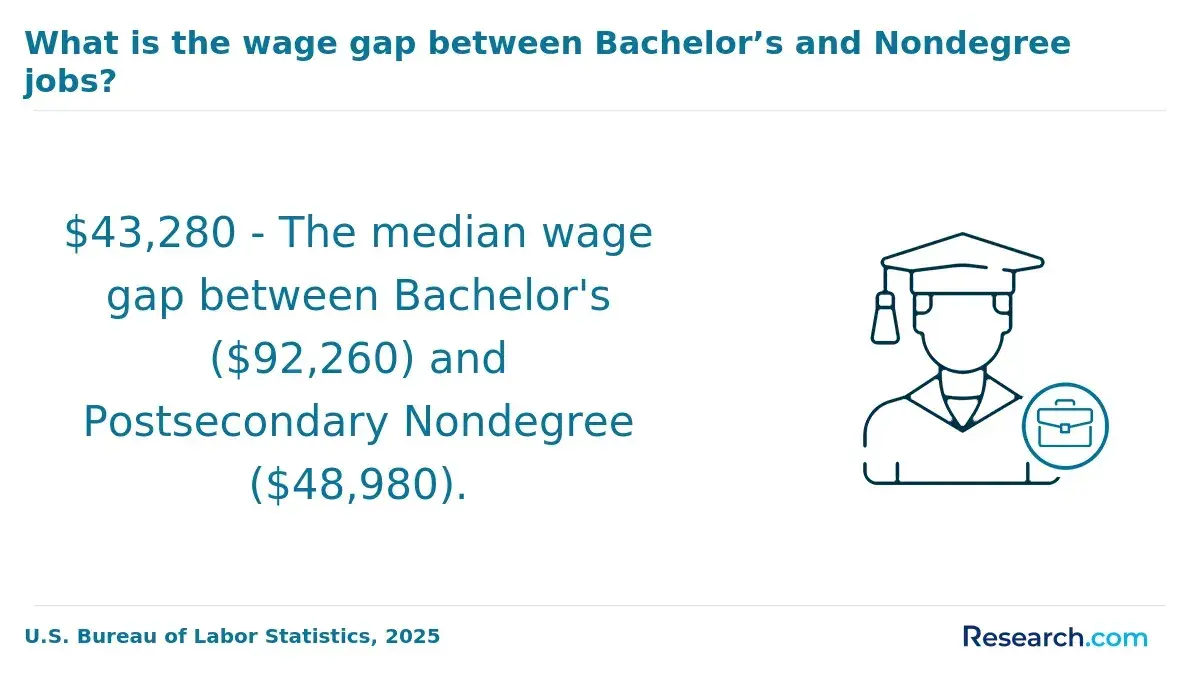
Career fit also depends on opportunity cost. The BLS reported a May 2024 median annual wage of $59,190 for substance abuse, behavioral disorder, and mental health counselors, but doctoral-level roles can vary widely by license, setting, location, leadership responsibility, and employer. Use salary data as context, not as a promise that the degree will pay for itself.
If you are interested in legal, correctional, or investigative settings, reviewing forensic psychology master's programs can help clarify whether a forensic specialization should be part of your doctoral search or whether a different graduate path fits better.
What red flags should I watch out for in an online Behavioral Health doctorate program?
Red flags do not always mean a program is fraudulent, but they do mean you should slow down and verify details before enrolling. This is especially important as online doctoral options expand and accreditation scrutiny increases.
The table below compares warning signs with more credible indicators. Use it as a final screening tool before you commit time, money, and professional plans to a program.
| Red flag | Stronger sign | What to do next |
| The school makes vague claims about being "recognized" but does not name its accreditor | The school lists current institutional accreditation that matches official databases | Verify the school in official accreditation databases |
| The program promises licensure in all states | The program provides state-by-state licensure disclosures | Contact your state licensing board directly |
| Admissions pressure focuses on speed, discounts, or immediate enrollment | Admissions staff answer detailed questions and encourage careful review | Request written policies before paying a deposit |
| No clear dissertation, capstone, practicum, or residency requirements are published | Program milestones and timelines are described in the catalog | Ask for the academic handbook and degree plan |
| Faculty credentials are hard to find | Faculty profiles show degrees, licenses, research, and practice experience | Review whether faculty expertise matches your interests |
| The total cost is unclear or only the lowest possible tuition is advertised | The school provides a full cost-of-attendance estimate | Ask financial aid to itemize tuition, fees, travel, and continuation costs |
Common mistakes include choosing the fastest program without checking accreditation, assuming all online formats are equally flexible, ignoring residency requirements, and selecting a curriculum that does not fit the intended career. A careful shortlist may take more time, but it can prevent expensive mismatches later.
Other Things You Should Know About Behavioral Health
Some do, but many online doctoral programs have moved to test-optional or no-GRE admissions. Always check the current admissions page because requirements can vary by degree type, GPA, prior graduate coursework, licensure status, and professional experience.
Many students do, especially in part-time or asynchronous programs. However, clinical placements, residencies, live seminars, and dissertation deadlines can create periods when full-time work becomes difficult, so ask for a sample term-by-term plan before enrolling.
No. Some programs require a traditional dissertation, while others use an applied doctoral project, capstone, portfolio, or practice improvement project. The best option depends on whether your goals are research, teaching, clinical leadership, program evaluation, or administration.
Yes. Current students and alumni can give practical insight into workload, faculty responsiveness, dissertation support, hidden costs, and whether the advertised flexibility matches the real student experience.
- Pros and Cons of Synchronous, Asynchronous, and Hybrid Learning | Class http://www.class.com/blog/the-benefits-and-drawbacks-of-synchronous-asynchronous-and-hybrid-online-learning/
- A Definitive Guide to Psychology Graduate Degrees and Trending Career Opportunities https://paloaltou.edu/resources/blog/definitive-guide-psychology-graduate-degrees-and-trending-career-opportunities
- Online DBH Programs – Online Doctor of Behavioral Health https://www.onlineeducation.com/healthcare/doctor-of-behavioral-health-programs
- Get Help Doing Good: 5 Scholarships for Counseling Students https://learn.neumann.edu/neuperspectives/get-help-doing-good-5-scholarships-for-counseling-students
- Psychology Ph.D. & Psy.D.: Costs, Requirements, And Careers https://www.psychology.org/degrees/phd/
- Login http://oiccpress.com/ttlt/article/download/15767/17323
- Counseling Degree Programs Online with Financial Aid https://www.edumed.org/online-schools/counseling-degrees/financial-aid/
- Society for the Teaching of Psychology https://teachpsych.org/E-xcellence-in-Teaching-Blog/12197763
- Average Cost of a Doctorate Degree [2026]: Ph.D., Psy.D. & More https://educationdata.org/average-cost-of-a-doctorate-degree
- What to Look For with Accreditation https://mastersinpsychologyguide.com/articles/masters-in-psychology-accreditation-what-to-look-for/