2027 Best Bachelor's Degree Programs With High Acceptance Rates

Co-Founder and Chief Data Scientist
Choosing a bachelor's program is harder when you want a realistic admissions chance without sacrificing quality. High-acceptance colleges can be strong options for working adults, transfer students, first-generation applicants, military learners, and students rebuilding their academic record. According to 2024 BLS education data, workers with a bachelor's degree had median weekly earnings of $1,543, showing why the credential still matters. This guide explains which degree areas often offer broader access, what to check before applying, and how to compare cost, accreditation, online delivery, and career outcomes.
Key Things You Should Know
- "High acceptance" usually means a college admits a large share of qualified applicants, but the safest choices still hold regional accreditation, publish outcomes, and set clear academic standards.
- Accessible bachelor's options are common in business, healthcare administration, IT, psychology, criminal justice, education, and some engineering technology fields; nursing and engineering may be more selective because of clinical or lab capacity.
- Cost can vary widely: College Board's 2024 pricing data lists average published tuition and fees at $11,610 for in-state public four-year colleges and $43,350 for private nonprofit four-year colleges, before grants and scholarships.
Top 10 Best Bachelor's Degree Programs With High Acceptance Rates
Business Degrees
Business is one of the strongest high-acceptance bachelor's options because many colleges offer multiple concentrations, online formats, and transfer pathways. Common majors include management, marketing, accounting, finance, human resources, and supply chain management. It fits students who want a flexible credential for corporate, nonprofit, government, or entrepreneurial roles. Look for institutional accreditation and, when available, business-specific accreditation. Applicants should compare internship access, career services, analytics coursework, and whether the curriculum includes AI, data visualization, and project management tools employers increasingly expect.
Healthcare Degrees
Healthcare bachelor's programs with higher acceptance rates are often in healthcare administration, health sciences, public health, or health information management rather than direct clinical licensure. These degrees can lead to roles in medical offices, insurance, compliance, care coordination, and community health. They suit students interested in healthcare systems but not necessarily bedside care. Check whether the program requires field experience, prepares students for certifications, or aligns with graduate pathways in public health, occupational therapy, physician assistant studies, or healthcare leadership.
Information Technology Degrees
Information technology programs are often more accessible than highly selective computer science programs because they focus on applied systems, networks, cloud platforms, databases, support, and enterprise technology. They fit students who want hands-on technical careers without a heavy theory or advanced math emphasis. Strong programs include labs, certifications, capstone projects, and current coursework in cloud computing, cybersecurity fundamentals, scripting, and AI-enabled tools. Compare whether courses prepare students for vendor credentials and whether online students receive access to virtual labs.
Computer Science Degrees
Computer science can be high-acceptance at broad-access public universities, online colleges, and regional institutions, though some flagship programs are very selective. The major fits students who enjoy programming, algorithms, software design, math, and problem solving. Because AI is reshaping software work, prioritize programs that teach data structures, databases, software engineering, machine learning fundamentals, version control, and portfolio development. Students who dislike math-heavy coursework may prefer information technology, software development, data analytics, or applied computing programs.
Cybersecurity Degrees
Cybersecurity bachelor's programs can have higher acceptance rates at institutions that built online or workforce-focused technology programs. Students study network defense, ethical hacking, digital forensics, risk management, governance, and incident response. This path fits detail-oriented learners who can keep up with changing threats and compliance rules. Look for hands-on labs, capture-the-flag exercises, security operations projects, and alignment with recognized certification topics. A degree alone is usually not enough; employers often value portfolios, internships, clearances, and certifications.
Psychology Degrees
Psychology is widely available and often less selective than capped professional majors, making it a common high-acceptance bachelor's choice. It fits students interested in human behavior, research, counseling pathways, social services, human resources, or user experience. A bachelor's degree alone may qualify graduates for support roles, but licensed counseling, school psychology, and clinical psychology require graduate education. Choose programs with research methods, statistics, applied experience, and advising that clearly explains the difference between bachelor-level jobs and licensed mental health careers.
Nursing Degrees
Nursing is not always high-acceptance, even at colleges with broad general admission, because clinical placements, labs, and state board requirements limit seats. Students should distinguish admission to the university from admission to the nursing major. Bachelor of Science in Nursing programs fit students prepared for science prerequisites, clinical schedules, background checks, and licensure exams. Applicants seeking access should compare traditional BSN, RN-to-BSN, transfer, and pre-nursing routes, and verify state board approval before enrolling.
Education Degrees
Education bachelor's programs may have accessible college admission but usually require benchmark checks before student teaching. These can include GPA minimums, background checks, field hours, subject exams, and state licensure requirements. The degree fits students who want classroom, early childhood, special education, or instructional support careers. Strong programs provide supervised fieldwork early, not only at the end. Because teacher licensure varies by state, students should confirm that the program meets requirements where they plan to work.
Criminal Justice Degrees
Criminal justice is commonly offered at broad-access colleges and online universities. Students study courts, corrections, policing, criminology, ethics, emergency management, and public policy. It fits learners interested in public service, investigations, victim advocacy, compliance, or security management. Applicants should check whether a desired role has separate age, fitness, citizenship, background, or academy requirements. A reputable program should explain these limits clearly and offer alternatives such as policy analysis, case management, fraud investigation, or homeland security.
Engineering Degrees
Engineering bachelor's programs are often more selective than general admission because of calculus, physics, lab, and accreditation requirements. However, some regional universities and engineering technology programs offer more accessible pathways. Students should distinguish engineering from engineering technology: both can be valuable, but they may lead to different licensing or design responsibilities. For maximum portability, look for ABET accreditation when professional engineering licensure or traditional engineering roles are goals. Preparedness in math is the biggest admissions and persistence factor.
What makes a bachelor's degree program "high acceptance" yet academically reputable?
A high-acceptance bachelor's program is academically reputable when it combines broad access with verifiable standards. Acceptance rate only tells you how many applicants are admitted; it does not prove whether students graduate, find work, pass licensure exams, or receive strong instruction. A better definition is a program that admits many qualified students while maintaining recognized accreditation, transparent curriculum requirements, credible faculty oversight, and measurable student outcomes.
The table below separates useful quality signals from weaker signals. Use it to avoid assuming that "easy to enter" means low value or that "selective" automatically means better fit.
| Quality factor | Why it matters | Red flag to avoid |
| Regional or institutional accreditation | Supports credit transfer, federal aid eligibility, and employer recognition | A school that cannot clearly identify its accreditor |
| Programmatic accreditation when relevant | Important for fields such as nursing, education, engineering, business, and health information | A licensure-focused program that does not meet state or field standards |
| Published outcomes | Graduation, retention, licensure pass rates, and employment data help estimate risk | Admissions pages that discuss convenience but not completion or outcomes |
| Academic support | Tutoring, advising, writing help, and career coaching matter for persistence | High enrollment with limited faculty access or unclear advising |
The smartest approach is to treat acceptance rate as an access metric, then judge quality using evidence. A high-acceptance program can be a strong choice when it has real academic expectations and supports students through them.
How do admission requirements differ for high-acceptance bachelor's programs?
High-acceptance bachelor's programs usually reduce unnecessary admissions barriers, but they still expect students to show college readiness. Requirements vary by school, major, and applicant type, especially for transfer, adult, international, and returning students.
Most applicants should expect admissions teams to review a practical mix of records rather than a single test score. Common requirements include the following:
- High school diploma, GED, or equivalent credential
- Official high school and college transcripts, including transfer credit evaluation when applicable
- Minimum GPA standards, often with conditional admission options for students below the preferred range
- Placement testing or prerequisite checks for math-heavy, writing-heavy, science, or clinical programs
- Major-specific requirements for nursing, education, engineering, social work, or other regulated fields
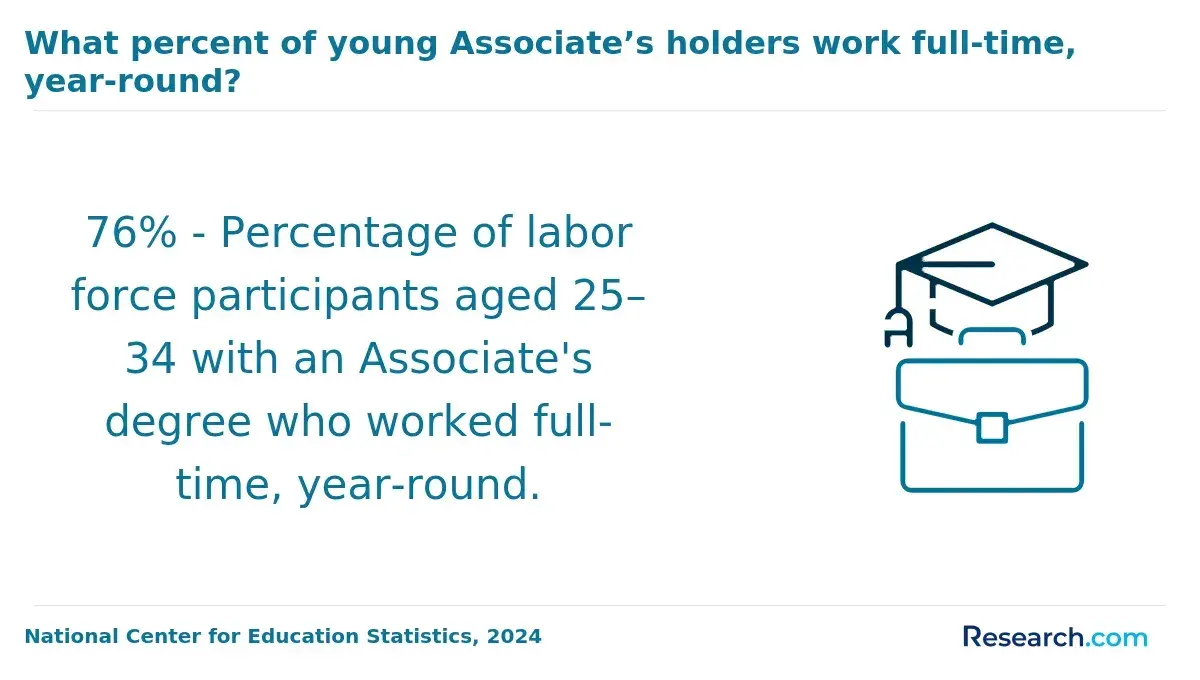
Test-optional admission remains common, so students with uneven SAT or ACT scores may still have viable options. Transfer students can also reduce risk by starting with an associate's degree online and then moving into a bachelor's completion pathway if credits apply cleanly.
Are there accredited online bachelor's programs with high acceptance rates?
Yes, many accredited online bachelor's programs have high acceptance rates, especially in business, IT, psychology, healthcare administration, criminal justice, and interdisciplinary studies. Online access is strongest when the institution is already accredited, publishes transfer policies, and provides equivalent academic support for remote students.
Online programs are not automatically easier; they are usually more flexible. The table below compares online and campus formats so readers can match the format to their schedule, learning style, and career requirements.
| Format | Best fit | Important limitation |
| Fully online | Working adults, caregivers, military learners, and students far from campus | May require strong self-management and reliable technology |
| Hybrid | Students who want flexibility but still need labs, fieldwork, or local networking | Campus visits can complicate scheduling |
| On campus | Students who benefit from in-person structure, labs, housing, athletics, or local recruiting | Less flexible for full-time workers or relocating students |
Military-connected students should pay special attention to deployment policies, credit for training, and tuition assistance rules; a guide to an online college for military learners can help narrow the search to schools built for mobility.
How can students compare acceptance rates across colleges and bachelor's majors?
Students can compare acceptance rates across colleges and majors by separating institutional admission from program admission. A university may admit most applicants overall while limiting entry into nursing, engineering, education, social work, architecture, or other capacity-controlled majors.
The table below shows what to compare before deciding whether a program is truly accessible and worth applying to.
| Comparison point | What to look for | Why it affects your decision |
| College acceptance rate | Overall admit rate for first-year or transfer applicants | Shows general admissions accessibility |
| Major admission rules | Separate GPA, prerequisites, auditions, portfolios, exams, or applications | Reveals whether your preferred major is harder to enter than the college |
| Transfer credit policy | Maximum accepted credits, course equivalencies, and residency requirements | Determines time to degree and total cost |
| Retention and graduation rates | How many students return and complete | Signals whether students receive enough support to finish |
| Outcome transparency | Licensure pass rates, job placement data, internship access, and alumni outcomes | Helps evaluate value beyond admission |
To compare effectively, create a shortlist of at least three schools and review the same metrics for each. Do not rely on rankings alone, because rankings may reward selectivity instead of affordability, flexibility, transfer friendliness, or career fit.
What types of bachelor's degrees commonly offer higher acceptance rates?
Bachelor's degrees with higher acceptance rates are often found in majors that have broad enrollment capacity, online scalability, and multiple career outcomes. These programs can still be academically demanding, but they may not be restricted by clinical seats, studio space, elite portfolio review, or limited lab capacity.
The following categories commonly offer broader access, though requirements vary by institution:
- Business and management: strong for flexible career pathways in operations, sales, finance support, HR, and entrepreneurship.
- Information technology and applied computing: strong for students who want technical work with practical labs and certification alignment.
- Psychology and social sciences: strong for students considering human services, research support, HR, UX, or graduate study.
- Healthcare administration and health sciences: strong for nonclinical healthcare operations, compliance, and care coordination roles.
- Criminal justice and public safety: strong for students interested in public service, security, policy, or corrections-related work.
- Liberal studies and interdisciplinary studies: strong for transfer students with mixed credits who need a degree-completion route.
Students should be more cautious with majors that sound accessible at the college level but have later admission gates. Nursing, teacher education, engineering, social work, and some allied health programs can require additional screening after enrollment.
How do tuition, financial aid, and overall costs compare for high-acceptance programs?
Costs for high-acceptance bachelor's programs depend more on institution type, residency status, transfer credit, aid, and time to completion than on acceptance rate itself. A high-acceptance public university can be affordable, while a high-acceptance private or for-profit option may be expensive if credits do not transfer or aid is limited.
College Board's 2024 pricing data gives a useful baseline for published tuition and fees before grants, scholarships, housing, books, and personal expenses. Use these figures as comparison anchors, not as your final net price.
| Institution type | Average published tuition and fees | Cost interpretation |
| Public four-year, in-state | $11,610 | Often the lowest sticker price for state residents |
| Public four-year, out-of-state | $30,780 | Can cost close to private options unless aid is strong |
| Private nonprofit four-year | $43,350 | Sticker price may be high, but institutional grants can reduce net cost |
To estimate real affordability, compare net price after grants, transfer credits, employer tuition benefits, military benefits, and the number of remaining credits. The 2024-25 maximum Pell Grant is $7,395, which can significantly reduce costs for eligible low-income students but rarely covers the full cost of attendance.
Before enrolling, ask schools for a written cost estimate. The most common mistake is comparing tuition per credit while ignoring fees, repeated courses, lost transfer credits, required residencies, and delayed graduation.
What career paths and entry-level jobs follow from high-acceptance bachelor's degrees?
Career paths from high-acceptance bachelor's degrees vary by major, experience, local labor markets, internships, and certifications. The best degree is the one that matches a realistic first job while still leaving room for advancement.
The table below summarizes common bachelor's degree pathways and the kinds of entry-level roles students may pursue. It is not a guarantee of employment, but it helps connect majors to practical outcomes.
| Degree area | Common entry-level roles | What strengthens employability |
| Business | Management trainee, sales analyst, HR assistant, marketing coordinator | Internships, Excel, analytics, CRM tools, project experience |
| Healthcare administration | Patient services coordinator, medical office manager, health data assistant | Healthcare compliance knowledge, internships, EHR familiarity |
| Information technology | Help desk analyst, systems support specialist, junior network technician | Labs, certifications, scripting, cloud projects |
| Psychology | Case aide, behavioral health technician, research assistant, HR assistant | Research methods, statistics, field experience, graduate planning |
| Criminal justice | Correctional officer, victim advocate, security specialist, probation support assistant | Background readiness, writing skills, public-sector internships |
Applicants with justice-system involvement should check background rules before choosing a field that requires licensing, firearms access, or security clearance. Some may benefit from comparing alternate reentry-friendly credentials, including best associate degrees for felons, before committing to a bachelor's pathway.
What salary ranges and advancement opportunities can graduates realistically expect?
Salary outcomes depend on major, occupation, geography, experience, internships, and industry. A bachelor's degree can improve labor-market options, but it does not produce the same return in every field. The most useful way to judge salary potential is to connect the degree to specific occupations rather than relying on a general average.
BLS 2024 wage data shows wide variation across bachelor-level occupations. The table below gives broad reference points for common paths associated with accessible bachelor's programs.
| Career area | Relevant salary context | Advancement route |
| Business and financial operations | BLS reported a 2024 median annual wage of $81,380 for this occupational group | Specialization in finance, analytics, operations, HR, or management |
| Computer and IT occupations | BLS reported a 2024 median annual wage of $105,990 for this occupational group | Certifications, portfolio projects, cloud, cybersecurity, or software specialization |
| Community and social service occupations | Bachelor's degrees may support entry roles, but licensed clinical paths usually require graduate education | Master's degree, supervised hours, and state licensure when required |
| Education occupations | Teacher pay varies substantially by state, district, subject, and union contract | Licensure, endorsements, graduate credits, leadership roles |
Advancement often requires more than the bachelor's degree. Some graduates add certifications, licenses, employer training, or graduate education; students who want a faster post-bachelor's credential can compare 1 year masters programs if the field rewards graduate-level specialization.
How can applicants evaluate program quality, accreditation, and long-term outcomes?
Applicants should evaluate high-acceptance programs the same way an employer, graduate school, or licensing board might evaluate the credential. The goal is to find a program that is accessible, affordable, and credible for the career you want.
Use this step-by-step checklist before applying or enrolling. It focuses on actions that reduce financial, academic, and career risk.
- Verify institutional accreditation through recognized accreditation databases or the school's official accreditation page.
- Check programmatic accreditation or state approval when the major leads to licensure, certification, clinical practice, teaching, engineering, or regulated work.
- Compare net price, not just tuition, including fees, books, housing, technology, lost transfer credits, and expected time to completion.
- Ask for a written transfer credit evaluation before committing if you have prior college, military, AP, IB, CLEP, or workplace learning credits.
- Review graduation, retention, licensure pass, internship, and job placement information where available.
- Confirm whether online students receive equal access to tutoring, advising, library services, faculty, disability services, and career support.
- Match the curriculum to job postings by checking whether required skills, software, labs, fieldwork, or certifications appear in the program.
- Ask what happens if you are not admitted into a competitive major after general admission to the college.
Common red flags include pressure to enroll immediately, vague accreditation claims, unclear refund policies, poor transfer transparency, and promises about jobs or salaries. A reputable school should be willing to answer detailed questions before you pay a deposit.
Other Things You Should Know About
There is no universal cutoff, but many students consider a college high-acceptance when it admits most qualified applicants. Always check whether the specific major has separate admission standards, because some programs are much more selective than the college overall.
Not necessarily. Quality depends on accreditation, curriculum, faculty support, graduation outcomes, licensure alignment, and employer recognition. Some reputable public, regional, and online institutions intentionally serve broad-access student populations.
Business, psychology, criminal justice, general studies, healthcare administration, and information technology are commonly available at accessible colleges. Nursing, engineering, and education may require additional screening even when general admission is less selective.
No. Choose the school that balances admission likelihood with affordability, accreditation, transfer credit, student support, and career fit. A slightly more selective program may be a better option if it has stronger outcomes and lower net cost.
References
- Ivy League & College Acceptance Rates https://toptieradmissions.com/resources/college-acceptance-rates/
- Admission Requirements | Undergraduate Admissions + Programs https://www.ualberta.ca/en/admissions/how-to-apply/admission-requirements/index.html
- The Top 50 US Colleges That Best Set Graduates Up ... | FirstPoint USA https://www.firstpointusa.com/blog/2025/08/thetop-50-us-colleges-that-best-set-graduates-up-for-long-term-success/
- 2025 Most Affordable Online Bachelor's Degrees https://www.onlineu.com/most-affordable-colleges/bachelors-degrees
- Schools Ranked by Graduation Rate | OEDB https://www.oedb.org/rankings/graduation-rate/
- Top Degrees in Demand for the Future: 2026 & Beyond https://skillifysolutions.com/blogs/career-growth/top-degrees-in-demand-for-the-future/
- 31 Affordable Universities in the USA for International Students https://www.wemakescholars.com/blog/cheapest-universities-in-usa-for-international-students
- 24 hardest universities to get into: 2026 acceptance rates https://studyinternational.com/news/hardest-universities-to-get-into/
- Entry requirements https://www.universityadmissions.se/en/support-centre/entry-requirements/
- How Much Does the Average Bachelor's Degree Cost? https://www.credible.com/student-loans/how-much-does-the-average-bachelors-degree-cost