2027 Most Affordable Bachelor's Degree Programs for Students Over 50

Co-Founder and Chief Data Scientist
Choosing a bachelor's degree after 50 is often about value: finishing efficiently, avoiding unnecessary debt, and preparing for work that fits your goals. Bureau of Labor Statistics labor force data show adults 55 and older remain a major part of the U. S. workforce, so degree decisions now affect both earning potential and long-term flexibility.
This guide explains affordable bachelor's options, online formats, accreditation, transfer credit, costs, timelines, and career outcomes so you can compare programs with more confidence.
Key Things You Should Know
- Affordable bachelor's degrees for students over 50 are usually lowest-cost when they combine in-state public tuition, online delivery, generous transfer credit, and credit for prior learning.
- College Board's 2024 pricing data placed average published in-state tuition and fees at public four-year colleges at $11,610, making residency and transfer policy major cost drivers.
- The best degree choice depends on career fit: healthcare, cybersecurity, nursing, education, accounting, and software-related paths can offer strong labor-market value, but licensure and accreditation must be checked before enrollment.
Top 10 Most Affordable Bachelor's Degree Programs for Students Over 50
Business Degrees
Business is one of the most practical bachelor's choices for adults over 50 because it connects prior work experience with management, accounting, human resources, marketing, and operations roles. Affordable online business programs often accept transfer credits and may offer concentrations that align with existing experience. Choose this path if you want broad career mobility rather than a narrowly licensed profession. Look for regional or national institutional accreditation and, when available, business-specific accreditation such as AACSB, ACBSP, or IACBE.
Healthcare Degrees
Healthcare bachelor's degrees can fit adults who want stable demand without necessarily becoming nurses. Options include health administration, public health, health information management, and healthcare management. These programs often prepare graduates for administrative, compliance, quality improvement, or patient-services roles. They are a better fit for students who prefer organization and problem-solving over bedside care. Before enrolling, confirm whether the program requires clinical placements, whether your state has role-specific requirements, and whether the curriculum includes healthcare finance, privacy, data systems, and leadership.
Information Technology Degrees
Information technology degrees are usually applied programs focused on networks, cloud systems, databases, technical support, project coordination, and systems administration. For students over 50, IT can be attractive because many roles value problem-solving, reliability, communication, and customer-facing experience. Affordable programs may embed industry certification preparation, which can help career changers show current skills. This path is often more hands-on than computer science and may be better if you want to manage systems rather than build software from scratch.
Computer Science Degrees
Computer science degrees emphasize programming, algorithms, software design, data structures, and computing theory. They can lead to software development, data, quality assurance, and technical analyst roles, but they require comfort with math and sustained coding practice. For adults over 50, the best programs provide strong tutoring, project portfolios, and flexible pacing. Consider this major if you enjoy building tools and solving abstract problems. If your goal is faster technical employment, compare it with applied IT or cybersecurity programs.
Cybersecurity Degrees
Cybersecurity degrees prepare students to protect systems, monitor threats, assess risk, and respond to incidents. This field can suit older learners who bring judgment, discipline, and compliance experience from previous careers. Strong programs cover networking, operating systems, cloud security, governance, incident response, and ethical hacking. Affordability matters, but do not choose on price alone: labs, certification alignment, and faculty industry experience are important. A cybersecurity degree is most useful when paired with hands-on practice and recognized certifications.
Psychology Degrees
A bachelor's in psychology can be valuable for adults interested in human behavior, counseling-related work, social services, training, research support, or people management. It is not, by itself, a license to practice as a psychologist or therapist. Students over 50 should choose this major if they understand the graduate-school requirements for clinical roles or if they plan to use psychology in business, nonprofit, education, or human-services settings. Look for programs with statistics, research methods, ethics, and applied internship options.
Nursing Degrees
Nursing can offer strong demand, but affordability depends heavily on your starting point. Current registered nurses often pursue RN-to-BSN programs, which are usually faster and cheaper than starting from zero. New nursing students must account for prerequisites, labs, clinical placements, background checks, and state board approval. Students over 50 should ask whether clinical schedules are flexible and whether the program meets licensure requirements in their state. Nursing is best for learners who can manage both academic intensity and physical workplace demands.
Education Degrees
Education bachelor's degrees can lead to teaching, instructional support, curriculum work, corporate training, or community education. For licensure-track teaching programs, state approval matters as much as institutional accreditation. Adults over 50 should confirm student-teaching requirements, background checks, testing rules, and reciprocity if they may move states. Non-licensure education programs can be useful for training or nonprofit work but may not qualify graduates for public school teaching. Choose this path if you enjoy mentoring, planning lessons, and working with learners consistently.
Criminal Justice Degrees
Criminal justice degrees cover law enforcement systems, courts, corrections, investigations, ethics, and public safety administration. They may fit adults with military, security, compliance, public service, or administrative experience. Over-50 students should compare physical requirements and age rules for sworn roles with civilian career options such as victim advocacy, compliance, emergency management, probation support, or policy work. The best affordable programs include writing, data analysis, legal foundations, and internship opportunities rather than relying only on broad survey courses.
Engineering Degrees
Engineering bachelor's degrees can lead to high-skill technical roles, but they are usually more structured than many online adult-completion programs. Coursework may include calculus, physics, labs, design projects, and sequence-dependent prerequisites. Adults over 50 should check ABET accreditation when seeking traditional engineering roles. Engineering technology may be a more applied and flexible alternative for students with hands-on technical experience. This path makes sense if you enjoy quantitative problem-solving and can commit to a rigorous, multi-term course sequence.
Which online bachelor's degrees are best for adult learners?
The best online bachelor's degrees for adult learners are usually flexible, transfer-friendly, career-aligned, and transparent about total cost. For students over 50, the right program is not always the fastest one; it is the one that helps you finish without repeating courses, missing licensure requirements, or taking on debt that does not match your goals.
Online bachelor's programs are often strongest for adults when they offer asynchronous classes, part-time pacing, prior learning assessment, competency-based options, and advising designed for returning students. If you already have work experience, ask whether military training, professional certifications, employer training, or exams such as CLEP can reduce the number of credits you still need.
Choose online study if you need schedule control, live far from campus, or want to keep working. Choose campus or hybrid study if your major requires labs, clinical placements, studio work, or face-to-face mentoring. If you may pursue graduate study later, compare bachelor's options with accelerated pathways and related online 1 year masters programs so your undergraduate credits support your longer-term plan.
What accreditation should you check before enrolling?
Accreditation is the quality check that affects financial aid, credit transfer, employer recognition, graduate admission, and licensure eligibility. For an affordable bachelor's degree, a low price is not a bargain if the credential is not recognized by employers, licensing boards, or other colleges.
The table below summarizes the main accreditation checks students over 50 should make before applying. Use it to separate legitimate savings from risky shortcuts.
| Accreditation check | Why it matters | Examples of when it is critical |
| Institutional accreditation | Supports federal financial aid eligibility and credit transfer | Any bachelor's degree, especially online programs |
| Programmatic accreditation | Shows the program meets field-specific standards | Nursing, education, engineering, business, health information management |
| State approval | Confirms the program meets state rules for regulated careers | Teacher licensure, nursing licensure, clinical placements |
| Professional recognition | May affect certification, exams, or employer preference | Cybersecurity, accounting, project management, engineering technology |
For regulated fields, verify requirements with the state board or agency before enrolling. Schools can explain their own approvals, but the final licensure decision often rests with a state licensing authority.
What admission requirements apply to students over 50?
Students over 50 usually follow the same bachelor's admission rules as other adult learners, but many schools evaluate returning students with more flexibility. Common requirements include a high school diploma or GED, official transcripts, an application, and sometimes a minimum GPA for transfer coursework.
Before applying, gather documents and ask admissions teams how prior college credits will be evaluated. This is one of the most important affordability steps because accepted transfer credits can reduce both tuition and time.
- Request official transcripts from every college you previously attended, even if you earned only a few credits.
- Ask for an unofficial transfer evaluation before committing to a program.
- Confirm whether old credits expire for your intended major, especially in technology, science, nursing, and education.
- Ask whether the school awards credit for military training, professional licenses, employer training, portfolios, or standardized exams.
- Check whether placement tests, prerequisites, or bridge courses are required before upper-division study.
A common mistake is applying to the cheapest advertised program without knowing how many credits will transfer. A slightly higher per-credit tuition can cost less overall if it accepts more of your completed coursework.
Which bachelor's degree majors offer strong career outcomes?
Strong career outcomes depend on the match between your major, local labor market, experience, and willingness to meet licensing or certification requirements. For adults over 50, the best majors often build on existing strengths rather than forcing a complete restart.
The table below compares bachelor's majors by practical career fit. It is not a salary guarantee; it is a decision guide for aligning a degree with realistic outcomes.
| Major area | Good fit for students who have | Typical outcome direction |
| Business or accounting | Administrative, supervisory, finance, sales, or operations experience | Management support, accounting, HR, operations, analyst roles |
| Healthcare administration | Healthcare, customer service, records, billing, or compliance experience | Clinic administration, quality, care coordination, health services management support |
| Information technology | Technical curiosity, troubleshooting ability, or systems experience | Support, network, cloud, database, and IT coordination roles |
| Cybersecurity | Risk, compliance, military, IT, or audit experience | Security analyst, governance, incident response, risk management support |
| Education | Mentoring, training, communication, or youth-program experience | Teaching, training, instructional support, curriculum roles |
If maximizing financial return is your main goal, compare your target major with broader lists of most profitable degrees, then adjust for your age, work history, regional employers, and tolerance for retraining.
How much do affordable bachelor's degrees cost?
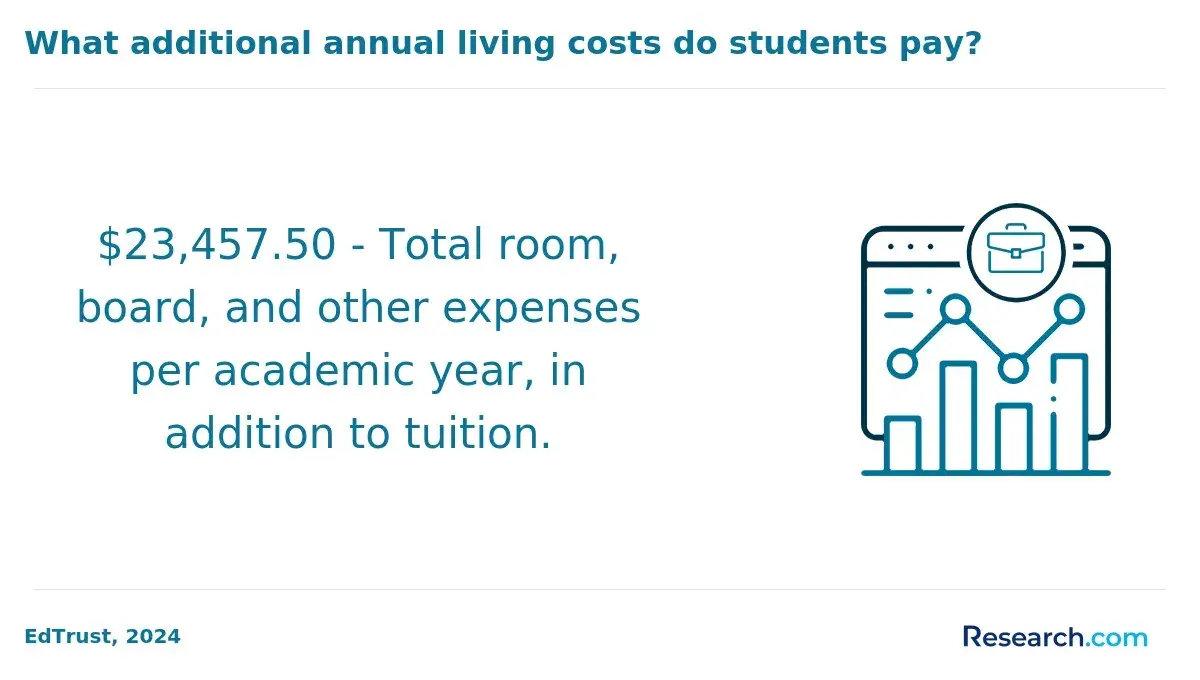
Affordable bachelor's degree costs vary widely because tuition is only one part of the total price. College Board's 2024-2025 data reported average published tuition and fees of $11,610 for in-state students at public four-year colleges, which makes public universities and transfer-friendly state systems especially important for cost-conscious adults.
These are useful benchmark prices to compare with any school's net price estimate, not the exact amount every student will pay.
- Average published in-state tuition and fees at public four-year colleges: $11,610
- Average published out-of-state tuition and fees at public four-year colleges: $30,780
- Average published tuition and fees at private nonprofit four-year colleges: $43,350
- Maximum federal Pell Grant for the 2024-2025 award year: $7,395
The table below shows cost factors that commonly affect older students. Use it to calculate total cost, not just the advertised per-credit rate.
| Cost factor | How it affects affordability | What to ask |
| Transfer credits | Fewer required credits can sharply reduce total tuition | How many credits will apply to my major, not just electives? |
| Online fees | Some schools add per-credit technology or distance-learning fees | Are online fees included in the tuition quote? |
| Books and materials | Open educational resources can lower recurring costs | Does the program use free or low-cost course materials? |
| Clinical, lab, or testing fees | Licensure programs may require extra expenses | What required costs are not included in tuition? |
| Time away from work | Rigid schedules can create hidden opportunity costs | Can I study part time without losing good academic standing? |
Students over 50 should also ask about senior tuition waivers, employer tuition benefits, military education benefits, payment plans, and scholarships for adult learners. Senior discounts vary by state and school, and some apply only to auditing courses rather than credit-bearing degree work.
How long does it take to finish a bachelor's degree?
A traditional bachelor's degree requires about 120 credits, but students over 50 rarely have the same timeline. Your completion speed depends on transfer credits, course load, program structure, prerequisite sequences, and whether you study year-round.
Most adult learners should compare three timing models before enrolling. Each model has a different trade-off between cost, speed, stress, and flexibility.
- Full-time study can finish faster but may be difficult if you are working, caregiving, or managing health needs.
- Part-time study spreads tuition and workload over more terms but may extend fees and delay career benefits.
- Competency-based or accelerated study can be efficient for experienced learners but requires strong self-direction and consistent weekly time.
If you have few or no prior credits, starting with an associate degree online at a low-cost community college can be a practical pathway, especially when the credits transfer cleanly into a public bachelor's completion program.
Which careers pay well after age 50?
Careers that pay well after 50 are not limited to physically demanding or high-stress roles. Many adults do best in positions that reward judgment, reliability, communication, leadership, compliance knowledge, and specialized technical skills.
Good options often include healthcare administration, accounting, project coordination, technical support management, cybersecurity governance, instructional design, human resources, business analysis, and quality assurance. These roles can use prior experience while adding a bachelor's credential to meet employer screening requirements.
For quieter work environments, remote-friendly roles, or jobs with less constant public interaction, compare degree outcomes with lists of careers for introverts. Fit matters because a higher-paying role may not be sustainable if the daily work conflicts with your energy, health, or preferred communication style.
What salary and job outlook can graduates expect?
Salary and job outlook depend on occupation, region, employer, prior experience, and credentials beyond the bachelor's degree. The Bureau of Labor Statistics' 2024 wage data is useful for comparing fields, but it should be treated as a labor-market benchmark rather than a promise.
The table below highlights selected bachelor's-connected occupations that may be relevant to affordable degree seekers over 50. Use the figures to compare career direction, not to predict a specific job offer.
| Career path | Relevant bachelor's area | 2024 median annual wage | Career notes |
| Accountants and auditors | Accounting or business | $81,680 | CPA eligibility varies by state and usually requires additional credits beyond a bachelor's degree. |
| Medical and health services managers | Healthcare administration | $117,960 | Experience in healthcare operations can matter as much as the degree title. |
| Registered nurses | Nursing | $93,600 | Licensure and state-approved clinical education are required for RN practice. |
| Information security analysts | Cybersecurity or IT | $124,910 | Hands-on labs, certifications, and prior IT experience can affect competitiveness. |
| Software developers | Computer science | $133,080 | Portfolio quality and current programming skills are important for career changers. |
Current trends favor programs that teach AI-aware workflows, data literacy, cybersecurity basics, cloud tools, and ethical technology use. Even nontechnical majors increasingly benefit from comfort with digital systems and analytics.
How do you choose a reputable program?
Choosing a reputable affordable program means looking beyond the sticker price. The best choice is the program that is recognized, finishable, relevant to your goal, and transparent about the full cost of attendance.
Use this process before you enroll or pay a deposit. It helps prevent the most common mistakes adult learners make when returning to college.
- Verify institutional accreditation through recognized accreditation information, then confirm programmatic accreditation when your field requires it.
- Request a written transfer-credit evaluation showing which credits apply to the major and which count only as electives.
- Compare total cost, including fees, books, exams, labs, technology, travel, background checks, and graduation fees.
- Ask whether the program meets licensure requirements in your state if you are pursuing nursing, teaching, counseling-related work, or engineering roles.
- Review course schedules to confirm that required classes are offered often enough for your planned timeline.
- Ask about adult-learner support, tutoring, career services, accessibility services, and technology help.
- Compare graduate outcomes carefully, and avoid schools that imply salary guarantees or pressure you to enroll immediately.
Red flags include unclear accreditation, vague transfer policies, high-pressure admissions calls, no state licensure disclosure, poor credit acceptance, hidden fees, and programs that advertise "fast" completion without explaining prerequisites. A reputable school should answer detailed questions in writing.
Other Things You Should Know About
It can be worth it if the degree helps you qualify for a specific role, finish a long-delayed credential, move into less physically demanding work, or increase career stability. It is less likely to pay off if the program is expensive, poorly matched to your goals, or not recognized by employers or licensing boards.
Yes. Age alone does not disqualify students from federal financial aid. Eligibility depends on factors such as enrollment status, citizenship or eligible noncitizen status, financial need for need-based aid, and whether the school participates in federal aid programs.
Online degrees from accredited colleges are widely accepted, especially when the transcript and diploma come from a recognized institution. Employer response depends more on accreditation, program reputation, skills, experience, and whether the degree meets role-specific requirements.
The cheapest route is usually to maximize transfer credits, choose an in-state public or low-cost online program, use employer or federal aid when eligible, avoid unnecessary electives, and confirm all fees before enrolling. Credit for prior learning can also reduce cost when available.
References
- Financial Aid - Code of Conduct https://amberton.edu/why-amberton/affordable-online-university-texas-working-adults/
- Average Cost per Credit Hour & College Class: 2026 Data https://educationdata.org/cost-of-a-college-class-or-credit-hour
- New Data on Completion Rates | HESA https://higheredstrategy.com/new-data-on-completion-rates/
- The University Courses With The Highest Return On Investment - Here Student Living https://herestudents.com/the-university-courses-with-the-highest-return-on-investment/
- Boomer Benefits Scholarship for Older Adults https://boomerbenefits.com/scholarship/
- 2025 Most Affordable Online Bachelor's Degrees https://www.onlineu.com/most-affordable-colleges/bachelors-degrees
- Top 10 Cheapest Online Colleges | National Student Services, Inc (NSSI) https://www.nssi.com/blog/top-10-cheapest-online-colleges
- Top Degrees in Demand for the Future: 2026 & Beyond https://skillifysolutions.com/blogs/career-growth/top-degrees-in-demand-for-the-future/
- Affordable College Tuition and Fees https://www.calsouthern.edu/admissions/affordable-tuition/
- Aid for Non-Traditional Students - Finaid https://finaid.org/otheraid/nontraditional/