2027 Best Bachelor's Degree Programs With 2.0 GPA Admission

Co-Founder and Chief Data Scientist
A 2.0 GPA can feel like a barrier, but it does not have to end your bachelor's degree plans. Many accredited colleges consider students with a 2.0 GPA, especially for transfer, online, adult learner, and degree-completion programs.
The decision matters because the Bureau of Labor Statistics reported that bachelor's degree holders had median weekly earnings of $1,543 in 2024, higher than workers with only a high school diploma. This guide helps students, transfers, and returning adults compare realistic majors, admissions paths, costs, and career outcomes.
Key Things You Should Know
- A 2.0 GPA is often the minimum for general admission, transfer admission, or degree-completion entry, but nursing, engineering, education licensure, and some STEM programs may require higher grades or prerequisite GPAs.
- Cost should be compared by total attendance, not tuition alone; College Board data for 2024-25 lists average published tuition and fees at $11,610 for in-state public four-year colleges and $43,350 for private nonprofit four-year colleges.
- Program choice matters for ROI: BLS May 2024 wage data shows stronger median pay in computer, IT, engineering, healthcare management, and business occupations than in many general-entry fields.
Top 10 Best Bachelor's Degree Programs With 2.0 GPA Admission
Business Degrees
Business is one of the most realistic bachelor's options for students with a 2.0 GPA because many programs use broad admission standards and offer flexible concentrations. Common tracks include management, marketing, accounting, finance, human resources, and business administration.
A 2.0 GPA may be enough for general business admission, but accounting, analytics, or finance tracks may expect stronger math performance. Choose business if you want versatile roles in operations, sales, administration, or management; avoid it if you want a highly technical career without building quantitative skills.
Healthcare Degrees
Healthcare bachelor's options with 2.0 GPA pathways usually include health administration, public health, healthcare management, health sciences, or health information management. These programs can suit students who want to work around patient care, compliance, billing, operations, or community health without entering a highly selective clinical program.
Check whether the degree leads to certification or licensure, because requirements vary. A 2.0 GPA may support admission, but clinical placements, background checks, immunizations, and prerequisite science grades may still affect eligibility.
Information Technology Degrees
Information technology programs are often more accessible than computer science because they focus on systems, networks, cloud platforms, databases, support, and applied problem-solving.
Students with a 2.0 GPA can strengthen their application by showing work experience, certifications, or completed math and technology courses. IT is a good fit if you like practical troubleshooting and business technology. It may not be the best fit if you want theory-heavy software engineering, advanced algorithms, or graduate-level computing research.
Computer Science Degrees
Computer science admission with a 2.0 GPA is possible at some open-admission, online, or transfer-friendly schools, but it is less guaranteed than IT. Programs may require college algebra, precalculus, calculus, programming foundations, or a separate major declaration after admission.
Students should expect rigorous coursework in programming, data structures, algorithms, software design, and discrete math. Choose this path if you are ready to rebuild academic momentum and practice consistently; consider IT or software development programs if you want a more applied route.
Cybersecurity Degrees
Cybersecurity bachelor's programs may accept a 2.0 GPA when housed in IT, computer information systems, or applied technology departments. Coursework typically covers network defense, ethical hacking, risk management, incident response, operating systems, and security policy.
Employers often value skills and certifications, so students should look for programs aligned with CompTIA Security+, Network+, CySA+, or similar preparation. This major fits detail-oriented students who can handle technical labs and continuous learning. Confirm whether the school has strong virtual labs, career support, and updated security coursework.
Psychology Degrees
Psychology is commonly available to students admitted with a 2.0 GPA, especially in online and transfer programs. It covers human behavior, research methods, development, cognition, abnormal psychology, and statistics.
The bachelor's degree can lead to entry-level human services, case support, HR, research assistance, or behavioral health support roles, but licensed counseling or psychologist careers require graduate education. Choose psychology if you want a people-focused major and are willing to plan for internships, certificates, or graduate school if your target role requires licensure.
Nursing Degrees
Nursing is usually not the easiest bachelor's major to enter with a 2.0 GPA. While a university may admit students at that level, the nursing program itself often requires higher prerequisite grades, science GPAs, entrance exams, clinical clearance, and competitive ranking.
Students with a 2.0 GPA may consider pre-nursing, health sciences, licensed practical nurse pathways, or RN-to-BSN options after earning an RN credential. Always verify state board approval and program accreditation before enrolling, because licensure eligibility depends on meeting specific standards.
Education Degrees
Education degrees may admit students with a 2.0 GPA at the institutional level, but teacher preparation programs often require higher GPAs before student teaching or licensure recommendation. Requirements may include background checks, field hours, subject exams, pedagogy coursework, and state-specific assessments. This path fits students who are committed to classroom work and can raise their GPA during lower-division courses.
If your GPA is close to the minimum, ask whether admission to the college and admission to the teacher education program are separate steps.
Criminal Justice Degrees
Criminal justice is one of the more accessible bachelor's options for students with a 2.0 GPA. Programs usually cover policing, courts, corrections, criminology, ethics, homeland security, and public policy.
It can prepare students for law enforcement, probation, emergency management, compliance, or public safety administration, although many roles have separate hiring standards, fitness requirements, background checks, or academy training. Choose this major if you want public service or justice-system work; compare it with psychology, cybersecurity, or public administration if your goal is specialized.
Engineering Degrees
Traditional engineering programs are often selective, and a 2.0 GPA may not be enough for direct admission into mechanical, electrical, civil, or chemical engineering. However, engineering technology, industrial technology, construction management, or pre-engineering transfer pathways may be more realistic.
ABET accreditation matters for many engineering careers, especially if you may pursue professional engineering licensure. Students with a 2.0 GPA should ask whether they can enter as a pre-major, complete math and science prerequisites, and later apply to the engineering department.
Which bachelor's programs accept a 2.0 GPA?
Bachelor's programs that accept a 2.0 GPA are usually broad-access, transfer-friendly, online, adult learner, or degree-completion programs. The minimum GPA gets your application considered, but it does not always secure entry into restricted majors, clinical tracks, or professional licensure programs.
The table below summarizes how likely different bachelor's categories are to consider students with a 2.0 GPA and what applicants should verify before applying.
| Program category | 2.0 GPA admission likelihood | What to verify |
| Business administration | Often realistic | Whether accounting, finance, or analytics tracks have separate GPA or prerequisite rules |
| Criminal justice | Often realistic | Whether intended employers require academy training, background checks, or physical standards |
| Psychology | Often realistic | Whether your target career requires graduate school, supervised hours, or licensure |
| Information technology | Often realistic | Whether math, programming, labs, or certification preparation are built into the curriculum |
| Healthcare administration | Often realistic | Whether the program is administrative, clinical, or licensure-oriented |
| Computer science | Possible but varies | Whether major admission is separate from general university admission |
| Nursing | Less likely for direct entry | Whether prerequisite science grades, entrance exams, and clinical eligibility are required |
| Engineering | Less likely for direct entry | Whether pre-engineering, engineering technology, or transfer pathways are available |
A strong strategy is to separate admission into the college from admission into the major. You may be accepted by the institution with a 2.0 GPA and then need to improve your academic record before entering a selective department.
What are the admission requirements for 2.0 GPA colleges?
Admission requirements for 2.0 GPA colleges usually focus on whether you can enter the institution, whether you can succeed in the chosen major, and whether you meet transfer or first-year applicant rules. A 2.0 GPA is typically a minimum threshold, not a sign that all programs are equally accessible.
Before applying, review the requirements that commonly affect students near the minimum GPA:
- Official high school or college transcripts showing cumulative GPA and completed credits
- Minimum transferable credit requirements for transfer or degree-completion admission
- Placement rules for math, writing, or developmental support courses
- Prerequisite grades for majors such as nursing, education, engineering, computer science, or accounting
- Personal statement, resume, work history, military experience, or recommendation letters for holistic review
- Good academic standing at the last college attended, especially if you previously received academic suspension
- English language proficiency documentation if required by the institution
Students with a 2.0 GPA should ask admissions advisors whether the school calculates GPA using all attempted credits, only transferable credits, or only the most recent coursework. That distinction can change your eligibility.
Are online bachelor's degrees easier to enter with a 2.0 GPA?
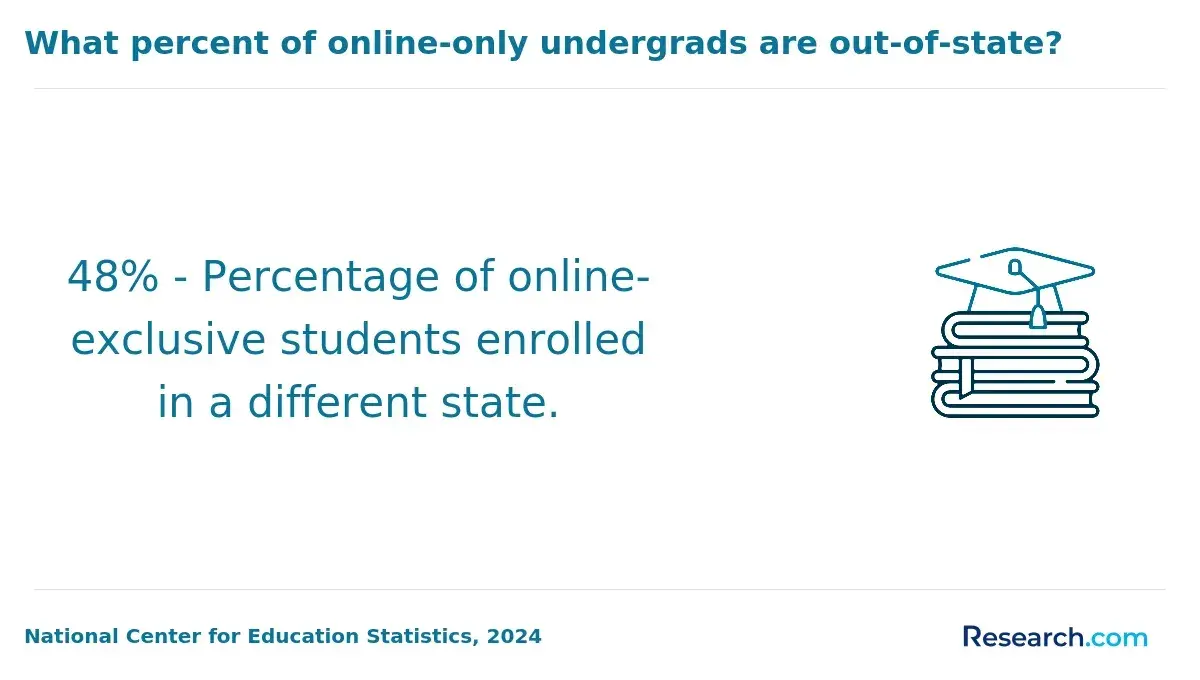
Online bachelor's degrees are not automatically easier academically, but many are easier to enter because they are designed for adult learners, transfer students, and applicants with nontraditional records. Some colleges also offer rolling admissions, monthly starts, or short-term sessions, which can help students begin sooner after deciding to return.
If timing is your biggest obstacle, programs listed among online colleges starting this month can be worth comparing, especially if they are accredited and transparent about transfer credit, tuition, and support services.
This comparison shows how online and campus formats typically differ for students applying with a 2.0 GPA.
| Factor | Online bachelor's programs | On-campus bachelor's programs |
| Admissions calendar | Often rolling, multiple starts, or accelerated terms | Often semester-based with fewer entry points |
| Student profile | Commonly transfer students, working adults, military learners, and degree completers | More often first-time students, residential learners, and traditional-age students |
| Academic rigor | Can be equal to campus if accredited and faculty-led | Can offer more in-person labs, studio work, and campus resources |
| Best fit | Students needing schedule flexibility and credit transfer | Students who benefit from face-to-face structure or campus-based facilities |
The best choice depends on your learning style. Online programs reward self-management, while campus programs may provide more routine, in-person accountability, and access to labs or clinical sites.
Which accredited schools offer 2.0 GPA bachelor's options?
Accredited schools offering 2.0 GPA bachelor's options commonly include public universities, private nonprofit universities, community college bachelor's programs where available, and adult-focused online institutions. Institution type alone does not determine quality; accreditation, transfer policies, program outcomes, and student support are more important.
Students who want flexible but reputable options can begin by comparing non-profit online colleges, then verify each school's admissions rules directly because GPA requirements vary by program and applicant type.
The table below explains the accreditation signals that matter most before enrolling in a 2.0 GPA bachelor's pathway.
| Accreditation or approval | Why it matters | Examples of programs affected |
| Institutional accreditation | Supports federal financial aid eligibility, credit transfer, and baseline academic recognition | All bachelor's programs |
| Programmatic accreditation | May be expected by employers, graduate schools, or licensing boards | Nursing, engineering, business, education, social work, public health |
| State authorization | Determines whether an online school may enroll students in your state | Online and distance education programs |
| State board approval | Can affect licensure eligibility after graduation | Nursing, teacher education, counseling-related pathways |
A reputable school should clearly publish its accreditor, tuition, fees, transfer credit rules, graduation requirements, complaint process, and licensure disclosures.
What majors are best for students admitted with a 2.0 GPA?
The best majors for students admitted with a 2.0 GPA are usually those with clear career applications, flexible admissions, and enough academic support to help you raise your GPA after enrollment. A low GPA should not push you into a random major; it should push you to choose a realistic program with a strong support system and a career plan.
If your GPA is below the bachelor's threshold or your transcript has many unsuccessful attempts, starting with associate degrees can help you rebuild momentum, complete general education courses, and transfer later with a stronger record.
This table helps match common goals with practical bachelor's majors that may be accessible to 2.0 GPA applicants.
| Student goal | Major to consider | Why it may fit |
| Flexible business career | Business administration or management | Broad employer relevance and many online degree-completion options |
| Technology job without heavy theory | Information technology | Applied coursework in systems, support, networks, cloud, and security |
| Public safety or justice work | Criminal justice | Direct connection to law enforcement, corrections, courts, and public administration |
| People-focused support roles | Psychology or human services | Useful foundation for case support, HR, behavioral health support, or graduate study |
| Healthcare leadership | Healthcare administration | Administrative path with fewer clinical admission barriers than nursing |
| Technical infrastructure work | Cybersecurity or IT security | Strong fit for students willing to build labs, certifications, and hands-on skills |
Students should be cautious about choosing a major only because it admits them. The better question is whether the program leads to internships, certifications, licensure eligibility, graduate admission, or entry-level roles that match your goals.
How long do 2.0 GPA bachelor's programs take and cost?
Most bachelor's degrees require about 120 credits. Full-time students usually finish in four years from the beginning, while transfer students may finish faster depending on accepted credits. Part-time students often need longer, especially if they work full time or take breaks between terms.
Cost depends on tuition, fees, books, technology charges, living expenses, and lost work time. College Board 2024-25 data lists average published tuition and fees of $11,610 at in-state public four-year colleges and $43,350 at private nonprofit four-year colleges, which means school choice can substantially change total debt risk.
The table below shows cost and timeline factors that students with a 2.0 GPA should compare before choosing a program.
| Factor | How it affects time or cost | What to compare |
| Transfer credits | Accepted credits can reduce the number of courses you must pay for | Maximum transfer limit, grade minimums, and whether old credits expire |
| Course retakes | Retaking failed or low-grade prerequisites can extend time to graduation | Retake policy, GPA replacement rules, and financial aid impact |
| Online fees | Some online programs add technology, proctoring, or distance learning fees | Total program cost, not only per-credit tuition |
| Enrollment pace | Full-time study can finish faster, while part-time study may fit work schedules | Credit load, term length, and availability of required courses |
| Financial aid eligibility | Academic standing can affect satisfactory academic progress requirements | Federal aid rules, scholarships, employer tuition assistance, and payment plans |
Students near a 2.0 GPA should also ask how the school handles satisfactory academic progress. Falling below required completion rates or GPA standards can put financial aid at risk.
What careers can you get with a 2.0 GPA bachelor's degree?
A 2.0 GPA bachelor's degree can lead to many of the same entry-level roles as other bachelor's degrees, but hiring outcomes depend on the major, experience, internships, certifications, portfolio, location, and employer expectations. Most employers care more about whether you have the credential, relevant skills, and a credible work history than your admission GPA, though some competitive internships or graduate programs may review transcripts.
Common career directions include business operations, sales, HR support, IT support, cybersecurity analysis, public safety administration, health services administration, case support, and education-related roles. Students planning long-term academic progression should know that graduate admission standards are usually higher; comparing options such as the easiest PhD to get only makes sense after building a stronger bachelor's GPA and clear research or professional goals.
The table below connects accessible bachelor's majors with practical early-career directions.
| Bachelor's major | Possible early-career roles | Extra preparation that can help |
| Business | Operations coordinator, sales representative, HR assistant, management trainee | Internships, Excel skills, CRM experience, project coordination |
| Information technology | Help desk analyst, systems support specialist, network technician | CompTIA, cloud labs, scripting basics, customer support experience |
| Cybersecurity | Security operations center analyst, junior risk analyst, IT security assistant | Home labs, Security+, Linux, networking fundamentals |
| Criminal justice | Probation support, case aide, corrections administration, public safety coordinator | Background readiness, report writing, local hiring requirements |
| Psychology | Behavioral health technician, research assistant, HR assistant, case support worker | Volunteer work, statistics, crisis communication, graduate school planning |
| Healthcare administration | Medical office coordinator, patient services supervisor, health records specialist | HIPAA knowledge, EHR systems, billing basics, leadership experience |
The strongest applicants do not rely on the degree alone. They combine the bachelor's credential with evidence of reliability, skill development, and practical experience.
What salaries do 2.0 GPA bachelor's graduates earn?
Salary outcomes vary widely by occupation, region, employer, experience, and whether the role actually requires a bachelor's degree. GPA at admission is usually less important than the field you enter and the skills you build while enrolled.
The table below uses BLS May 2024 median annual wage data for selected U.S. occupations related to common 2.0 GPA bachelor's pathways. These figures describe occupations, not guaranteed earnings for any individual graduate.
| Career area | Selected occupation | Median annual wage | How to interpret it |
| Business | Accountants and auditors | $81,680 | Accounting can pay well, but CPA-track roles may require specific coursework and stronger academic performance. |
| Business analysis | Management analysts | $101,190 | Analyst roles often reward experience, communication, Excel, data interpretation, and industry knowledge. |
| Information technology | Computer support specialists | $61,550 | This can be an entry point for students building toward network, systems, cloud, or cybersecurity roles. |
| Cybersecurity | Information security analysts | $124,910 | Higher pay usually reflects specialized skills, certifications, experience, and strong technical competence. |
| Software and computing | Software developers | $133,080 | Computer science and software roles can be lucrative, but hiring commonly depends on coding ability and portfolio quality. |
| Nursing | Registered nurses | $93,600 | RN pay requires completing an approved nursing pathway and meeting state licensure requirements. |
| Healthcare leadership | Medical and health services managers | $117,960 | Management roles usually require experience in addition to the degree. |
| Engineering | Civil engineers | $99,590 | Traditional engineering outcomes may require ABET-aligned education and, for some roles, licensure steps. |
Use salary data as a comparison tool, not as a promise. A lower-cost accredited program with strong transfer credit and career services may produce better value than a higher-cost program with weak support.
How do you choose a reputable 2.0 GPA degree program?
Choosing a reputable 2.0 GPA bachelor's program means finding a school that will admit you and help you finish with a credential employers, graduate schools, or licensing boards recognize. The right program should be transparent, accredited, affordable enough to justify the outcome, and honest about selective major requirements.
Use these steps before applying or enrolling:
- Confirm institutional accreditation through the school's official accreditation page and federal school information tools.
- Check whether your major has separate admission standards after general university admission.
- Ask for a written transfer credit evaluation before committing to the program.
- Compare total cost, including fees, books, technology charges, residency rules, and expected time to finish.
- Review satisfactory academic progress rules so you understand how GPA and course completion affect financial aid.
- Ask whether the program meets licensure or certification requirements in your state if your career requires approval.
- Look for academic support, tutoring, career services, internship access, and proactive advising.
- Speak with admissions and the department advisor, not just an enrollment representative.
Common red flags include unclear accreditation, pressure to enroll immediately, vague transfer credit promises, missing licensure disclosures, unusually high fees, no published curriculum, and advisors who cannot explain completion requirements. If a school cannot answer basic questions in writing, keep comparing options.
Other Things You Should Know About
Yes, many accredited colleges consider applicants with a 2.0 GPA, especially transfer, online, adult learner, and degree-completion applicants. Selective majors may still require higher prerequisite grades or separate admission.
Most employers focus on the completed degree, relevant skills, work experience, certifications, and interview performance. Some competitive internships, government roles, or graduate programs may request transcripts.
Consider retaking key courses, completing community college credits, applying for academic renewal if available, or entering a certificate or associate pathway first. Ask schools how they recalculate transfer GPA.
Not necessarily. Admission flexibility does not automatically mean low quality. Accreditation, curriculum, faculty, student support, outcomes, transfer policies, and licensure alignment are better indicators of program value.
References
- Does GPA Matter in College? What Students Need to Know About Academic Performance https://ingeniusprep.com/blog/does-gpa-matter-in-college/
- Average GPA In High School & College (Statistics) https://www.crossrivertherapy.com/research/average-gpa
- How to Improve Student Retention in Higher Education https://www.perts.net/student-retention-in-higher-education
- 5 Student Retention Strategies and the Tech Features That Make Them Work https://www.stellic.com/resources/student-retention-strategies
- 10 Strategies to Increase Student Retention https://www.unit4.com/blog/10-ways-to-increase-student-retention
- 2.0 GPA: Letter Grade, Percentage & Is It Good? https://teachercalculator.net/gpa-scale/2-0-gpa/
- Does GPA Determine Post-Grad Success? - Madonna https://absn.madonna.edu/gpa-grad-sucess/
- How does a college degree improve graduates’ employment and earnings potential? - APLU https://www.aplu.org/our-work/4-policy-and-advocacy/publicuvalues/employment-earnings/
- GPA and retention: The connection between scholarships and dropout | Genio https://genio.co/blog/gpa-retention-connection-between-scholarships-dropout