2027 Most Affordable Bachelor's Degrees for Students Over 30

Co-Founder and Chief Data Scientist
Returning to college after 30 often means balancing tuition, work, family, and career payoff. The cost gap is real: College Board's 2024 pricing report lists average published tuition and fees at $11,610 for in-state public four-year colleges and $43,350 for private nonprofit four-year colleges.
This guide is for adults starting, finishing, or changing direction with a bachelor's degree. You'll learn which fields can be affordable, how to compare true program costs, and how to choose a degree that fits your time, budget, and career goals.
Key Things You Should Know
- For many students over 30, the most affordable bachelor's degree is not simply the lowest tuition option; it is the program that accepts the most transfer credits, minimizes fees, and leads to realistic career advancement.
- Public in-state universities, accredited online programs, employer tuition benefits, and credit for prior learning can reduce the total cost more than small differences in advertised per-credit tuition.
- BLS 2024 wage data shows stronger salary potential in fields such as information technology, cybersecurity, nursing, engineering, and business, but licensure, experience, location, and employer requirements still shape outcomes.
Top 10 Most Affordable Bachelor's Degrees for Students Over 30
Business Degrees
A bachelor's in business is often affordable because it transfers well, appears in many online formats, and applies to multiple industries. Common majors include accounting, management, finance, marketing, and supply chain management.
BLS 2024 data places the median annual wage for business and financial occupations at $82,940, which can support a solid return if tuition is controlled. Choose business if you want broad mobility; consider a different major if your goal requires a technical license, such as engineering or nursing.
Healthcare Degrees
Healthcare bachelor's degrees can be affordable when they build on prior clinical experience, an associate degree, or existing certifications. Options include health administration, public health, health sciences, and healthcare management. These programs fit adults who want healthcare careers without direct nursing licensure.
BLS 2024 data lists medical and health services managers at a median annual wage of $117,960, but many management roles require experience. Verify internships, transfer policies, and whether the degree supports your intended credential or graduate path.
Information Technology Degrees
Information technology degrees are practical for adults who want career-ready skills in systems administration, cloud computing, networking, database management, and technical support. Many programs are online and may accept industry certifications for credit.
BLS 2024 data reports a $105,990 median annual wage for computer and IT occupations, making cost control especially important because high-priced programs are not the only path. Look for hands-on labs, certification alignment, career services, and courses that reflect current cloud, security, and automation tools.
Computer Science Degrees
Computer science can offer strong salary potential, but it is usually more math- and programming-intensive than general IT. Students study algorithms, software development, data structures, operating systems, and sometimes AI.
BLS 2024 data lists software developers at a median annual wage of $133,080, though entry-level hiring can be competitive. This degree fits adults who enjoy coding and problem-solving. If you mainly want support, networking, or cloud operations roles, an IT degree may be faster and more directly aligned.
Cybersecurity Degrees
Cybersecurity degrees focus on protecting systems, networks, data, and organizations from digital threats. Coursework often includes network defense, digital forensics, risk management, secure systems, and incident response. BLS 2024 data lists information security analysts at a median annual wage of $124,910, with demand tied to cloud adoption, regulation, and persistent cyber risk.
Adults should compare programs by lab access, certification preparation, and employer partnerships. A lower-cost program with strong practical training may beat a costly program with mostly theoretical coursework.
Psychology Degrees
A psychology bachelor's degree can be affordable and flexible, but students should understand its limits. It supports roles in human services, case support, research assistance, sales, HR, and nonprofit work, but becoming a licensed psychologist or counselor typically requires graduate education and state licensure.
BLS 2024 data places the median annual wage for social and human service assistants at $44,240. Choose psychology if it matches your long-term plan; avoid assuming the bachelor's alone leads to clinical practice.
Nursing Degrees
Nursing can be one of the strongest affordability-to-income choices for adults who already hold an RN license or healthcare experience. RN-to-BSN programs are often designed for working nurses and may be online for theory courses, though clinical requirements vary. BLS 2024 data lists registered nurses at a median annual wage of $93,600.
Check state board approval, clinical placement support, accreditation, and employer tuition assistance. Students without an RN should compare pre-licensure BSN costs carefully because clinical programs can be less flexible.
Education Degrees
Education degrees can be affordable at public universities and transfer-friendly online programs, but licensure rules matter. Adults should confirm that the program leads to certification in the state where they plan to teach.
BLS 2024 data lists elementary school teachers, except special education, at a median annual wage of $63,670. This path fits students committed to classrooms, training, or youth services. If you need maximum salary growth, compare education with business, IT, or healthcare management before enrolling.
Criminal Justice Degrees
Criminal justice degrees are commonly available online and may be affordable for adults with military, law enforcement, corrections, or public safety experience. Courses cover courts, policing, corrections, criminology, ethics, and public policy.
BLS 2024 data lists police and detectives at a median annual wage of $77,270, but hiring standards vary by agency. Ask whether the program awards credit for academy training. Avoid programs that imply a degree alone qualifies you for federal or sworn roles without meeting separate hiring requirements.
Engineering Degrees
Engineering can offer strong outcomes but is less commonly available in low-cost fully online formats because of labs, ABET expectations, and advanced math sequencing. Civil, electrical, mechanical, and industrial engineering are common options.
BLS 2024 data lists architecture and engineering occupations at a median annual wage of $97,310. Adults should prioritize ABET-accredited programs when licensure as a professional engineer may matter. This degree is best for students who can handle a structured, prerequisite-heavy path rather than a highly self-paced program.
What makes a bachelor's degree truly affordable for students returning to college later in life?
A bachelor's degree is truly affordable for adults when the total cost fits the student's budget and the credential supports a realistic career goal. Tuition matters, but it is only one part of the calculation. Fees, books, technology costs, commuting, childcare, lost work hours, clinical requirements, and the number of credits still needed can change the final price substantially.
For students over 30, the biggest affordability lever is often transfer credit. A school with slightly higher tuition may cost less overall if it accepts more previous credits, recognizes military or professional training, or offers credit for prior learning. Adults should also consider opportunity cost: a program that takes six years part time may delay advancement longer than a moderately priced program with shorter terms and strong advising.
Use the following affordability test before applying. It helps separate a genuinely low-cost program from one that only looks inexpensive at first glance:
- Calculate the number of credits you actually need after an official transfer evaluation, not the number listed in the full degree plan.
- Ask for a complete cost estimate that includes tuition, mandatory fees, books, technology charges, exams, background checks, labs, and graduation fees.
- Compare the program's format with your work schedule so you do not pay for classes you later have to drop.
- Check whether the degree is required, preferred, or optional for your target role.
- Estimate whether likely salary growth, promotion access, or job mobility justifies the remaining cost.
The best affordable option is usually the one that reduces both financial risk and completion risk. A cheap program that lacks support, delays transfer evaluations, or does not align with your target career can become expensive if it leads to extra semesters or limited job value.
How can students over 30 compare total program costs across different bachelor's degrees?
Adults should compare bachelor's programs by total completion cost, not sticker price. The right comparison starts with an official transcript review because two schools with similar tuition can produce very different final bills if one accepts 75 credits and another accepts only 45.
This table summarizes the main cost categories to request from each school. It is useful because adult students often underestimate non-tuition expenses that affect monthly cash flow:
| Cost factor | Why it matters for students over 30 | What to ask the school |
| Transfer credit acceptance | More accepted credits can shorten the degree and lower total tuition. | Will I receive an official transfer evaluation before committing? |
| Per-credit tuition | This determines the base cost of remaining coursework. | Is tuition different for online, out-of-state, or upper-division courses? |
| Mandatory fees | Technology, student service, course, and graduation fees can add up. | Which fees apply every term and which apply only once? |
| Books and materials | Programs with open educational resources may reduce recurring costs. | Are textbooks, software, exams, or subscriptions included? |
| Time to completion | Longer timelines may increase fees and delay career benefits. | How many terms will I need if I take one or two courses at a time? |
| In-person requirements | Travel, clinicals, labs, or residencies may create indirect costs. | Are any campus visits, placements, or weekend sessions required? |
When comparing flexible programs, also look at pacing models. Some competency-based programs charge by term rather than by credit, which can help motivated students finish faster, though it is not ideal for everyone. If you are considering graduate study later, understanding how a competency based masters degree works can also help you evaluate whether that learning model fits your habits before choosing a bachelor's program with similar pacing.
What financial aid, grants, and employer tuition benefits are available for adult undergraduates?
Adult undergraduates can use many of the same aid programs as younger students, but their eligibility may look different because income, dependency status, prior credits, and enrollment intensity affect awards. The starting point is the FAFSA, which determines access to federal grants, federal student loans, and many state or institutional aid programs.
Federal Pell Grants remain one of the most important sources of need-based aid for undergraduates. The U.S. Department of Education set the maximum Pell Grant at $7,395 for the 2024-2025 award year, but the amount a student receives depends on financial need, enrollment status, and remaining lifetime eligibility. For adults, this means part-time attendance can reduce the per-term amount even if the degree is affordable overall.
Students over 30 should investigate these funding sources before borrowing. Each can reduce out-of-pocket cost, but rules vary by employer, state, and school:
- Federal Pell Grants and state grants for eligible undergraduates who have not already completed a bachelor's degree.
- Employer tuition assistance or reimbursement, especially in healthcare, business, technology, education, public safety, and government roles.
- Institutional scholarships for transfer students, adult learners, veterans, first-generation students, or students in high-demand majors.
- Credit for prior learning, military training, professional certifications, workplace training, or standardized exams when accepted by the institution.
- Payment plans that spread remaining balances across the term without requiring private loans.
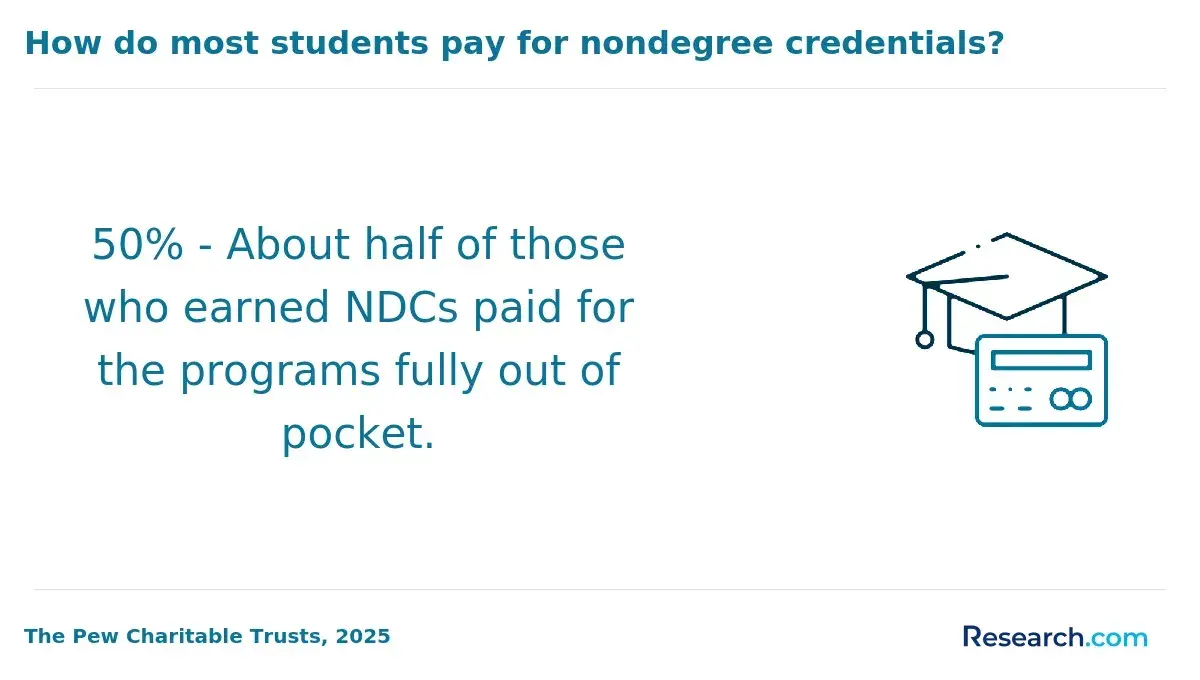
Use loans carefully. Independent undergraduate students can often borrow more in federal loans than dependent students, but borrowing capacity should not be treated as affordability. A degree is more financially resilient when grants, transfer credits, employer aid, and manageable payment plans reduce the need for debt.
Which bachelor's degrees offer the best balance of low cost and strong salary potential?
The strongest balance of low cost and salary potential usually appears in majors that are widely available at public universities, transfer-friendly online colleges, and employer-supported programs while also leading to roles with clear labor market demand.
For many adults, these include IT, cybersecurity, computer science, nursing, healthcare administration, accounting, supply chain, and selected engineering fields.
This comparison highlights how affordability and career potential interact. It does not rank degrees by guaranteed income; instead, it shows where adults may find a practical mix of accessible programs and stronger wage signals:
| Degree area | Affordability strengths | Salary potential signal | Best fit |
| Information technology | Many online options, certification credit, broad transfer pathways. | BLS reports computer and IT occupations at a $105,990 median annual wage in 2024. | Adults seeking technical roles without a heavy theory focus. |
| Cybersecurity | Often available online and may align with certifications. | Information security analyst roles show high wage potential and strong demand. | Students interested in risk, networks, compliance, and incident response. |
| Nursing | RN-to-BSN programs can be affordable for licensed nurses. | Registered nurses had a $93,600 median annual wage in 2024. | Working RNs seeking advancement or employer-preferred credentials. |
| Business or accounting | Highly transferable and available at many public institutions. | Business and financial occupations had an $82,940 median annual wage in 2024. | Adults pursuing management, finance, operations, or accounting paths. |
| Engineering | Public universities may offer strong value, though flexibility varies. | Architecture and engineering occupations had a $97,310 median annual wage in 2024. | Students prepared for math-intensive, structured programs. |
Readers comparing affordability with earnings should also review broader major-level salary patterns, such as lists of the highest paying college majors, while remembering that salary varies by region, experience, industry, and job market timing.
How do online bachelor's programs for adults differ from campus options in flexibility and price?
Online bachelor's programs can be a strong fit for students over 30 because they reduce commuting time and may allow evening, asynchronous, or accelerated coursework. However, online does not automatically mean cheaper. Some schools charge separate online tuition, technology fees, or flat-rate terms that only save money if you can take enough credits.
Campus programs may be better for students who need labs, clinical placements, in-person tutoring, structured schedules, or local networking. Hybrid programs can offer a middle ground, especially in nursing, education, engineering, and lab-based sciences.
The most important question is not whether online or campus is universally better; it is which format you can complete without repeated withdrawals, scheduling conflicts, or extra terms.
Use this comparison to decide which format fits your budget and life constraints. It focuses on the trade-offs that affect adult learners most directly:
| Format | Flexibility | Cost considerations | Best for |
| Fully online | Highest flexibility when courses are asynchronous. | May reduce travel costs but can include online fees. | Working adults with stable internet, self-discipline, and limited campus access. |
| Campus-based | Less flexible but more structured. | May include commuting, parking, and schedule-related work trade-offs. | Students who need labs, local support, or face-to-face accountability. |
| Hybrid | Moderate flexibility with some required meetings. | Can reduce commuting while preserving hands-on requirements. | Adults in clinical, teaching, technical, or cohort-based programs. |
| Accelerated online | Fast pacing, often shorter terms. | Can save time but may increase workload pressure. | Students with transfer credits and predictable weekly study time. |
If speed is a priority, compare accelerated formats carefully against lists of fast online degrees. The fastest option is only affordable if you can keep up academically and avoid retaking courses.
How can students over 30 verify accreditation and avoid low-value or predatory programs?
Accreditation is one of the most important safeguards for adult students because it affects credit transfer, federal aid eligibility, employer recognition, graduate admission, and licensure pathways.
Start by confirming that the institution is accredited by an agency recognized by the U.S. Department of Education or the Council for Higher Education Accreditation. For fields such as nursing, education, business, engineering, and cybersecurity, also check whether programmatic accreditation or state approval matters.
Predatory or low-value programs often use urgency, vague claims, and incomplete cost information. Red flags are especially risky for adults who are trying to finish quickly and may be targeted by aggressive marketing:
- The school will not provide a written transfer credit evaluation before enrollment.
- Admissions staff pressure you to sign immediately or borrow before comparing programs.
- The program advertises job placement or salary outcomes without explaining the data source or limitations.
- Licensure programs do not clearly state which states they meet requirements for.
- Total costs are hard to find, or fees appear only after you start the application process.
- Credits are unlikely to transfer to public universities or recognized graduate programs.
Before enrolling, verify the school in official accreditation databases, ask your target employer whether the degree is recognized, and contact the relevant state licensing board if your field requires licensure. A legitimate program should be transparent about costs, outcomes, transfer rules, and limitations.
What are typical admission requirements for adult learners starting or finishing a bachelor's degree?
Admission requirements for adult bachelor's students vary by school and program, but many colleges offer transfer, degree-completion, and readmission pathways. Applicants usually need a high school diploma or equivalent, official transcripts from all prior colleges, and sometimes a minimum GPA for transfer admission. Selective majors may require prerequisites, background checks, entrance exams, portfolios, or proof of professional licensure.
Adult learners should pay close attention to the difference between general university admission and major admission. Being admitted to the institution does not always mean immediate entry into nursing, education, engineering, cybersecurity, or business programs with additional requirements.
Prepare these items before applying so you can get accurate cost and completion estimates:
- Official transcripts from every college attended, even if the credits are old or the grades were low.
- Documentation for military training, professional certifications, licenses, or workplace learning that may qualify for credit.
- A resume if the program evaluates professional experience or offers adult learner scholarships.
- FAFSA information and employer tuition benefit details before the payment deadline.
- Questions about prerequisite courses, GPA renewal policies, academic forgiveness, and readmission options.
If you left college years ago with a low GPA, do not assume you are out of options. Many schools have adult-friendly policies, probationary admission, academic renewal, or pathways that let returning students rebuild momentum.
Which affordable bachelor's degrees align with in-demand careers and strong job growth?
Affordable degrees are most valuable when they align with occupations that employers continue to need. Current demand is shaped by healthcare staffing needs, cybersecurity risk, cloud computing, data use, infrastructure investment, financial regulation, and retirements across public service fields. AI is also changing job tasks, making analytical, technical, communication, and judgment-based skills more important.
This table connects degree choices with career directions and demand signals. Use it to narrow options, then verify local job postings because hiring conditions vary by region:
| Degree | Common career directions | Demand signal to consider | Important caution |
| Information technology | Systems administrator, cloud support, network specialist, IT analyst. | Organizations continue moving infrastructure, security, and operations into digital platforms. | Certifications and hands-on projects may matter alongside the degree. |
| Cybersecurity | Security analyst, risk analyst, incident response associate, compliance analyst. | BLS projects information security analyst employment to grow much faster than average over the 2024-2034 period. | Some roles require prior IT experience, clearance, or specialized tools. |
| Nursing | Registered nurse, nurse supervisor, care coordinator, public health nurse. | Healthcare systems continue to need licensed nurses across hospitals, clinics, and community settings. | State licensure and clinical requirements are nonnegotiable. |
| Healthcare administration | Clinic manager, operations coordinator, health services manager track. | Aging populations and complex healthcare operations support management demand. | Higher-level roles often require healthcare experience. |
| Accounting or business | Accountant, analyst, operations manager, project coordinator. | Organizations need financial controls, reporting, compliance, and process improvement. | CPA eligibility requires specific accounting credits and state rules. |
| Education | Teacher, instructional coordinator pathway, training specialist. | Teacher demand varies heavily by state, subject, and district. | Licensure requirements differ by state and endorsement area. |
Students over 30 should choose a degree that matches both job demand and their existing experience. For example, a medical assistant may get more value from healthcare administration or nursing than from an unrelated major, while an office manager may turn business, accounting, or IT coursework into faster advancement.
How can working adults choose the right affordable bachelor's program for their career goals?
The right affordable bachelor's program is the one you can finish, fund responsibly, and use toward a specific career outcome. Start with your target job, then work backward to the degree, accreditation, licensure, experience, and skills required. This prevents a common mistake: choosing the cheapest program first and discovering later that it does not meet employer or licensing expectations.
Follow this decision process before enrolling. It is designed for working adults who need a practical way to compare schools without getting overwhelmed by marketing claims:
- Define your target role or promotion path, including whether the degree is required, preferred, or optional.
- Identify the acceptable majors for that role by reviewing job postings, employer policies, professional associations, and licensing board rules when relevant.
- Request official transfer evaluations from at least three accredited schools before comparing prices.
- Calculate total remaining cost, including fees, books, lost work time, travel, exams, and required in-person experiences.
- Ask how courses are scheduled, how often required classes are offered, and what happens if you need to stop out for a term.
- Compare academic support, tutoring, career services, internship help, and access to faculty for online and adult students.
- Choose the lowest-risk program that meets your career requirements, not simply the lowest advertised tuition.
Adults considering online study should compare accredited, student-supportive options rather than relying only on ads or speed claims. A curated guide to the best online degrees can help you understand what to look for in legitimate online institutions.
Finally, be honest about time. A full-time course load may look cheaper on paper, but it can become costly if work, caregiving, or burnout leads to withdrawals. For many students over 30, the smartest path is a steady part-time plan with strong transfer credit, predictable terms, and a degree directly tied to career mobility.
Other Things You Should Know About
The cheapest option is usually a transfer-friendly public university or accredited online degree-completion program, especially if it accepts prior college credits, military training, certifications, or credit for prior learning. The best choice depends on how many credits you still need.
Yes, many employers accept online bachelor's degrees from properly accredited institutions. What matters most is institutional accreditation, program relevance, licensure alignment when required, and whether you can explain the skills and experience gained.
Yes. Age does not disqualify students from federal financial aid. Eligibility depends on factors such as financial need, prior degree status, enrollment level, satisfactory academic progress, and remaining aid limits.
IT, cybersecurity, nursing, healthcare administration, accounting, business, and some engineering degrees often offer strong career alignment for adults. The best option depends on your previous experience, local job market, schedule, and whether the field requires licensure or certifications.
References
- 2025 Most Affordable Online Bachelor's Degrees https://www.onlineu.com/most-affordable-colleges/bachelors-degrees
- Financial Aid for Adult Learners: Grants, Scholarships & How to Pay for College (2026 Guide) https://www.straighterline.com/blog/financial-aid-resources-adults
- Top 50 Scholarships for Non-Traditional Students to Apply for in July 2026 https://bold.org/scholarships/by-type/non-traditional-scholarships/
- How does a college degree improve graduates’ employment and earnings potential? - APLU https://www.aplu.org/our-work/4-policy-and-advocacy/publicuvalues/employment-earnings/
- Best Colleges for Non-Traditional Students in 2026 https://www.college-scholarships.com/best-colleges-for-non-traditional-students/
- 31 Affordable Universities in the USA for International Students https://www.wemakescholars.com/blog/cheapest-universities-in-usa-for-international-students
- College Graduation Statistics [2025]: Total Graduates per Year https://educationdata.org/number-of-college-graduates
- Aid for Non-Traditional Students - Finaid https://finaid.org/otheraid/nontraditional/
- Career earnings by college major - The Hamilton Project https://www.hamiltonproject.org/data/career-earnings-by-college-major/