2027 Best Undergraduate Degrees With Resume Help

Co-Founder and Chief Data Scientist
Choosing an undergraduate degree is also choosing the first version of your professional resume. The payoff can be meaningful: the U.S. Bureau of Labor Statistics reports that workers with a bachelor's degree had median weekly earnings of $1,543 in 2024, compared with $930 for high school graduates.
This guide is for students comparing majors, online programs, campus options, and career support. You will learn which degrees typically offer the strongest built-in resume help, what outcomes to compare, and how to choose a program that improves employability without overpaying.
Key Things You Should Know
- Degrees with the strongest resume support usually combine career-center coaching, required projects, internships, clinicals, labs, portfolios, capstones, or co-ops rather than offering resume review as a one-time service.
- Cost and ROI vary widely: College Board's 2024-25 published tuition and fees averaged $11,610 for in-state public four-year colleges and $43,350 for private nonprofit four-year colleges, before aid.
- Career outcomes depend heavily on major, accreditation, location, experience, and licensure; BLS 2024 data shows median pay above $100,000 for several technology, engineering, and management roles, but not for every graduate or entry-level job.
Top 10 Best Undergraduate Degrees With Resume Help
Business Degrees
Business degrees are strong choices for students who want resume-ready evidence of leadership, analytics, communication, and project work. The best programs include case competitions, internships, sales labs, consulting projects, accounting software, or entrepreneurship incubators.
Look for career coaching tied to concentrations such as finance, marketing, accounting, human resources, operations, or business analytics. This degree fits students seeking flexible entry-level roles, but it is less ideal for those who want a tightly licensed path unless they choose accounting or another credential-aligned track.
Healthcare Degrees
Healthcare undergraduate programs can strengthen resumes through clinical exposure, simulation labs, compliance training, patient documentation, and health information systems. Strong options include health sciences, healthcare administration, public health, radiologic technology, and allied health pathways.
Students should verify programmatic accreditation and state requirements before enrolling, especially for patient-facing roles. This path fits organized, service-oriented students, but those seeking independent clinical practice may need graduate education, licensure, or a specialized professional program.
Information Technology Degrees
Information technology degrees often provide practical resume assets quickly: help desk experience, cloud labs, networking projects, database work, system administration, and vendor-aligned coursework. Strong programs help students document technical skills in a portfolio and prepare for certifications while earning the degree.
IT is a good fit for students who enjoy troubleshooting and business-facing technology work. It may be less suitable for students who want heavy theory, advanced algorithms, or research-focused software engineering, where computer science may be stronger.
Computer Science Degrees
Computer science degrees are among the strongest resume-building options when they include coding portfolios, Git-based collaboration, algorithms, software engineering projects, internships, and capstones. Students can show employers applications, repositories, technical documentation, and team development experience.
This degree fits students interested in software development, AI, data systems, cybersecurity, or graduate study. It can be challenging for students who want minimal math or prefer user support and infrastructure work over programming-intensive coursework.
Cybersecurity Degrees
Cybersecurity degrees help students build resumes through labs in ethical hacking, incident response, risk management, digital forensics, cloud security, and security operations. The strongest programs encourage competitions, security portfolios, and certification preparation.
Students should look for hands-on labs and employer partnerships, not just policy lectures. This field suits detail-oriented learners who can keep up with changing threats. Entry-level roles may still require IT fundamentals, so students without technical experience should seek internships or help desk pathways.
Psychology Degrees
Psychology degrees can support strong resumes when students complete research projects, statistics coursework, human services internships, lab experience, and writing-intensive assignments. The major builds communication, assessment, data interpretation, and behavioral insight.
It fits students considering counseling, human resources, UX research, social services, or graduate school. Students should know that many licensed psychology and counseling roles require graduate education, so undergraduate resume support should focus on research, applied experience, and transferable skills.
Nursing Degrees
Nursing degrees offer some of the clearest resume-building structures because clinical rotations, simulation labs, care plans, licensure preparation, and patient-care competencies are built into the curriculum. Students should choose accredited programs that meet state board requirements for RN licensure.
Nursing fits students who want direct patient care and a defined occupational pathway. It may not fit students who are uncomfortable with clinical schedules, physical demands, high-stakes documentation, or state-specific licensure obligations.
Education Degrees
Education degrees build resumes through classroom observations, lesson plans, student teaching, assessment design, and state certification preparation. Strong programs help students document classroom management, differentiated instruction, educational technology, and literacy or STEM methods.
This degree fits students committed to teaching or youth development. Before enrolling, students should confirm that the program leads to the right state licensure area, because a general education degree may not qualify graduates for every teaching role or grade level.
Criminal Justice Degrees
Criminal justice degrees can strengthen resumes through internships, legal research, report writing, ethics training, emergency management projects, and exposure to courts, corrections, policing, or homeland security. The best programs develop communication, evidence analysis, public service judgment, and policy understanding.
This degree fits students interested in law enforcement, victim advocacy, probation, security, or pre-law. Requirements vary by agency, and some roles depend more on exams, background checks, physical standards, or academy training than on the degree alone.
Engineering Degrees
Engineering degrees are resume-friendly when they include design labs, team projects, CAD work, internships, co-ops, undergraduate research, and a senior capstone. ABET accreditation is especially important for students who may pursue professional engineering licensure.
This path fits students with strong math, science, and problem-solving skills. It may not fit students looking for a light technical workload, but it can produce highly concrete resume evidence through prototypes, calculations, lab reports, and industry-sponsored projects.
What are the best undergraduate majors for built-in resume writing and career services support?
The best undergraduate majors for built-in resume writing and career services support are usually applied, project-heavy, and connected to employers. A "resume-supported degree" is not a separate credential; it is a bachelor's or associate-to-bachelor's pathway where the curriculum and career office help students produce marketable evidence before graduation.
The table below compares major categories by the kinds of resume proof they commonly generate. Use it to match your major choice with the evidence employers will expect to see.
| Degree area | Best-fit student | Resume evidence to expect | Important caution |
| Business | Students seeking broad corporate, nonprofit, sales, finance, or operations roles | Case projects, internships, analytics dashboards, leadership roles, client presentations | Choose a concentration; a general business degree can look unfocused without experience |
| Healthcare | Students interested in patient care, administration, public health, or allied health | Clinical hours, compliance training, patient documentation, health systems projects | Licensure and accreditation requirements vary by role and state |
| IT, computer science, and cybersecurity | Students who want technical roles with visible project output | Code repositories, labs, certifications, cloud projects, security reports, capstones | Employers often expect proof of skills beyond completed coursework |
| Nursing and education | Students who want structured professional pathways | Clinical rotations, student teaching, competency evaluations, licensure preparation | State approval matters as much as institutional accreditation |
| Engineering | Students with strong math and design interests | Design portfolios, prototypes, lab reports, co-op experience, capstone projects | ABET accreditation may affect licensure eligibility and employer recognition |
For most students, the "best" major is the one that produces credible work samples, supervised experience, and a clear story about skills. A high-demand major without internships or projects can be weaker than a moderately competitive major with excellent evidence of readiness.
How do degrees with integrated resume help differ from traditional undergraduate programs?
Degrees with integrated resume help differ from traditional programs because career preparation is embedded across the student experience, not postponed until senior year. Instead of telling students to visit the career center on their own, stronger programs connect assignments, advising, internships, and employer feedback to the resume.
These features are especially valuable for first-generation students, adult learners, transfer students, and online students who may not already have professional networks. Students comparing flexible completion paths can also review accelerated bachelor's degree online accredited options, but speed should not come at the expense of projects, advising, or employer engagement.
Key differences often include the following program design choices:
- Career milestones built into required courses, such as resume drafts, LinkedIn profiles, mock interviews, and portfolio reviews.
- Assignments that become resume evidence, including business cases, lesson plans, software projects, care plans, lab reports, or policy briefs.
- Employer-facing experiences such as internships, co-ops, practicums, clinicals, fieldwork, advisory-board projects, or industry competitions.
- Advising that connects course selection to target job titles, certifications, graduate school plans, or licensure requirements.
The trade-off is that these programs may feel more structured. That structure is helpful if you want accountability, but it can be frustrating if you want maximum elective freedom or already have strong professional experience.
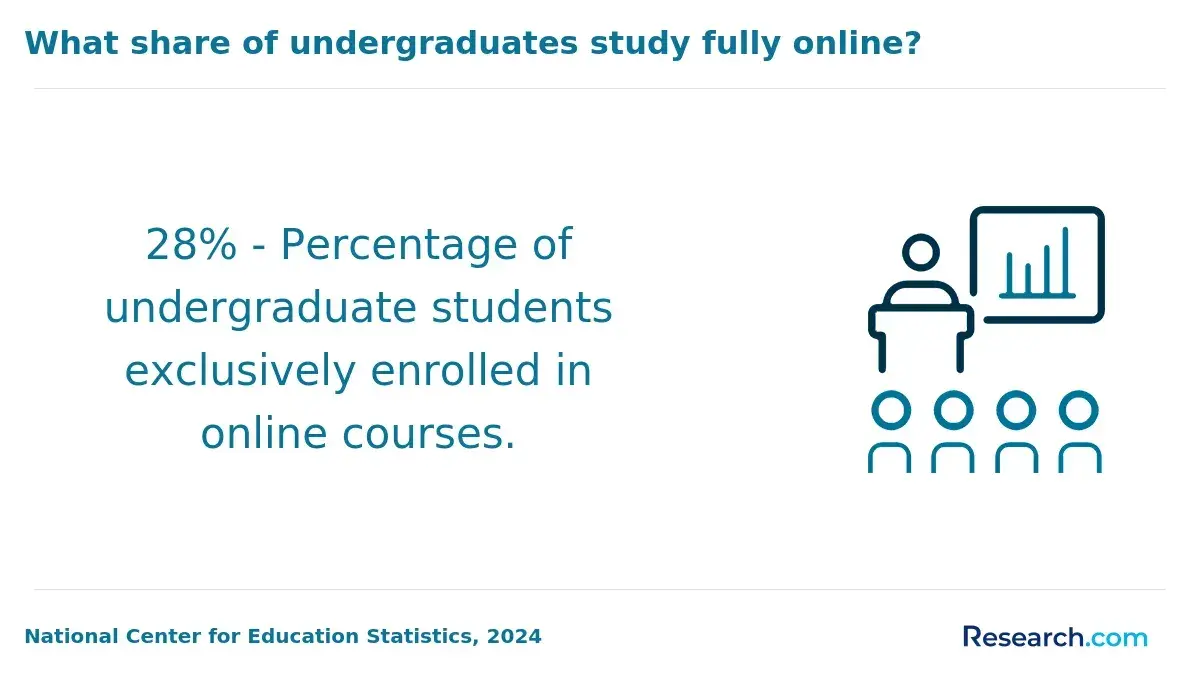
Which accredited online and campus programs offer the strongest resume and career coaching?
The strongest accredited online and campus programs are not defined by one universal ranking. They are programs that combine recognized accreditation, transparent outcomes, experienced career staff, required experiential learning, and employer-connected coursework.
Students comparing online options can begin with Research.com's guide to the most popular online colleges, then narrow the list by major-specific accreditation and career-service depth. Popularity alone should never replace checks for fit, cost, outcomes, and licensure alignment.
The table below summarizes the signals that usually separate strong resume-support programs from programs that only advertise career help.
| Program signal | Why it matters | What to verify |
| Institutional accreditation | Helps protect transfer credit, financial aid eligibility, and baseline academic quality | Confirm recognition by the U.S. Department of Education or CHEA-listed accrediting bodies |
| Programmatic accreditation | May matter for licensure, employer trust, or graduate admission | Look for examples such as ABET for engineering, CCNE or ACEN for nursing, CAEP for educator preparation, or AACSB, ACBSP, or IACBE for business |
| Required experience | Creates resume content before graduation | Check whether internships, clinicals, practicums, student teaching, co-ops, labs, or capstones are required or optional |
| Career coaching access | Determines whether students receive practical help, not just a template | Ask whether online and part-time students receive appointments, mock interviews, employer events, and resume reviews |
| Outcome transparency | Helps students judge whether the program supports career movement | Request job placement definitions, graduate school placement, licensing pass rates, internship participation, and salary survey methodology when available |
For campus students, co-op universities, regional public colleges with strong employer pipelines, and professionally accredited schools can be excellent choices. For online students, the strongest programs usually provide virtual career fairs, remote internship guidance, portfolio tools, and evening or asynchronous career appointments.
What admission requirements and prerequisites do resume-focused undergraduate programs typically have?
Admission requirements for resume-focused undergraduate programs are usually similar to standard undergraduate admissions, but some majors add selective progression points after enrollment. Students should read both university admission rules and major-specific requirements before assuming they are fully admitted to the professional track.
Typical requirements may include the following:
- A high school diploma, GED, or equivalent credential for first-year admission.
- Official transcripts from high school and any colleges previously attended.
- Minimum GPA requirements that may be higher for nursing, education, engineering, cybersecurity, or competitive business programs.
- Prerequisite courses in math, science, English, statistics, or introductory technology, depending on the major.
- Background checks, immunization records, drug screening, CPR certification, or liability insurance for clinical, education, or public safety placements.
- Placement tests, portfolio reviews, interviews, or supplemental applications for selective programs.
Students who are not ready for a full degree may consider best online certificate programs as a shorter way to test a field, build skills, or add resume evidence. Certificates are not a substitute for licensure-based degrees, but they can be useful for IT, business analytics, project management, digital marketing, and other skill-specific goals.
A common mistake is applying to a college without checking whether admission to the university automatically includes admission to the major. In nursing, education, engineering, and some health programs, students may need to complete prerequisites before entering the professional phase.
What coursework and projects help students build strong, employer-ready resumes during their degree?
The coursework that best strengthens a resume produces concrete proof of skill. Employers are more likely to understand a resume that names tools, projects, settings, outcomes, and responsibilities than one that simply lists course titles.
Students should prioritize courses and projects that create usable resume content in these areas:
- Capstone projects: A senior project can show research, teamwork, documentation, presentation skills, and problem-solving in one concise resume entry.
- Portfolio assignments: Design work, code repositories, lesson plans, dashboards, policy memos, lab reports, and writing samples help students show rather than merely claim competence.
- Industry tools: Coursework using Excel, SQL, Python, Tableau, electronic health record systems, CAD, cloud platforms, simulation tools, or learning management systems can make skills easier to verify.
- Writing-intensive work: Reports, briefs, care plans, technical documentation, and research papers help students demonstrate communication ability across fields.
- Team-based projects: Group assignments can support resume bullets about collaboration, leadership, stakeholder communication, and conflict resolution.
AI is also changing resume expectations. Students should learn how to use AI tools ethically for research, drafting, coding assistance, and productivity while still being able to explain their own work. A portfolio that shows process, reflection, and original contribution is more credible than a collection of polished but unexplained outputs.
How do career centers, internships, and co-ops strengthen resumes in these undergraduate programs?
Career centers, internships, and co-ops strengthen resumes by turning academic learning into documented experience. This matters because many entry-level job postings still ask for experience, even when the role is designed for new graduates.
Students should use career services early and repeatedly, not only during the final semester. A practical sequence looks like this:
- In the first year, meet with career services to identify target roles, choose student organizations, and create a baseline resume.
- In the second year, add projects, part-time work, volunteer experience, labs, and class assignments that match the target field.
- In the third year, pursue internships, clinicals, research roles, co-ops, or employer-sponsored projects that provide supervised experience.
- In the final year, refine the resume for specific roles, complete mock interviews, gather references, and build a portfolio or credential list.
Co-ops can be especially valuable because they are longer and more structured than many internships, but they may extend time to graduation. Internships are often shorter and easier to fit into summer or part-time schedules. The better option depends on your financial situation, academic calendar, and target industry.
What jobs and entry-level roles do graduates with resume-supported degrees commonly pursue?
Graduates with resume-supported degrees pursue a wide range of entry-level roles. The common thread is not one job title; it is the ability to connect coursework, experience, and skills to employer needs.
The table below shows common first-step roles by degree area. These are examples, not guaranteed outcomes, and some roles require licensure, certifications, exams, or additional experience.
| Degree area | Common entry-level roles | Resume strengths employers may look for |
| Business | Business analyst assistant, marketing coordinator, sales representative, financial services associate, HR assistant, operations coordinator | Excel, presentations, customer insight, project work, internships, measurable results |
| Healthcare | Health services coordinator, public health assistant, medical records specialist, patient services representative, allied health roles where qualified | Compliance awareness, healthcare systems knowledge, documentation, clinical or administrative exposure |
| Information technology | Help desk analyst, junior systems administrator, network support technician, cloud support associate, database support assistant | Troubleshooting, ticketing systems, labs, certifications, customer support, infrastructure projects |
| Computer science | Junior software developer, QA analyst, data analyst, web developer, application support analyst | Code portfolio, algorithms, testing, version control, team projects, technical interviews |
| Cybersecurity | Security operations center analyst, IT security technician, risk analyst assistant, junior digital forensics technician | Networking fundamentals, security labs, incident reports, scripting, ethical judgment |
| Nursing and education | Registered nurse where licensed, classroom teacher where certified, instructional aide, education program assistant | Clinical or student-teaching evaluations, licensure readiness, documentation, classroom or care experience |
| Engineering | Junior engineer, design engineer assistant, field engineer, manufacturing engineer associate, quality engineer associate | Design projects, CAD, lab work, calculations, co-ops, ABET-aligned preparation |
Students should write resumes around target roles, not around majors alone. For example, a psychology major applying to HR should highlight interviewing, research, statistics, conflict resolution, and organizational behavior rather than relying on the degree title to explain fit.
What salary ranges and job outlook can students expect from degrees with resume support?
Salary and job outlook vary by occupation, geography, experience, employer, and licensure. The most responsible way to evaluate earnings is to compare target occupations, not assume a degree automatically produces a specific salary.
The table below uses U.S. Bureau of Labor Statistics 2024 median pay for selected occupations commonly connected to resume-supported undergraduate pathways. Median pay is not entry-level pay, but it provides a useful benchmark for comparing fields.
| Career path | Related degree areas | 2024 median pay | How to interpret the figure |
| Management analyst | Business, analytics, economics | $101,190 | Often favors strong analytical projects, client communication, and internship experience |
| Registered nurse | Nursing | $93,600 | Requires state licensure; clinical performance and NCLEX eligibility matter |
| Software developer | Computer science, software engineering | $133,080 | Portfolio quality, internships, technical interviews, and local market conditions strongly affect entry opportunities |
| Information security analyst | Cybersecurity, IT, computer science | $124,910 | Many candidates enter through IT support, networking, or systems roles before specializing |
| Civil engineer | Engineering | $99,590 | ABET accreditation and the Fundamentals of Engineering exam may matter for licensure pathways |
| Elementary school teacher | Education | $63,670 | State certification, district pay scales, and geographic location shape compensation |
Students should also account for cost. Published tuition is only part of the equation; fees, books, commuting, housing, lost work hours, transfer-credit loss, and time to graduation can change ROI. A lower-tuition program with weak career support may be less valuable than a moderately priced program with strong internships, but the reverse can also be true if the expensive program does not improve outcomes.
How can students evaluate and choose reputable colleges that truly strengthen their resumes?
To evaluate colleges that truly strengthen resumes, look beyond slogans such as "career-ready" or "job-focused." A reputable program should be able to show how students build experience, receive feedback, and connect with employers before graduation.
Use the following steps before enrolling:
- Verify institutional accreditation through recognized accrediting bodies and confirm programmatic accreditation when it matters for your field.
- Ask whether resume reviews, mock interviews, portfolio reviews, and employer events are available to online, part-time, transfer, and adult students.
- Review the curriculum for required internships, clinicals, practicums, co-ops, capstones, labs, or fieldwork rather than optional add-ons.
- Request outcome details, including how the school defines placement, whether salary data is self-reported, and how many graduates responded to surveys.
- Compare net price after grants and scholarships, not only published tuition.
- Check transfer-credit policies before enrolling, especially if you have prior college, military, workplace, or exam-based credit.
- Speak with current students or recent graduates about advising responsiveness, internship access, and the usefulness of career coaching.
Students trying to reduce upfront costs can compare online colleges no application fee, but application cost should be a small part of the decision. A free application is helpful only if the program is accredited, affordable overall, and aligned with your career goal.
Watch for red flags: vague placement claims, no named accreditation, pressure to enroll quickly, unclear licensure language, limited access to career services for online students, and programs that promise salaries or jobs. No college can guarantee an outcome, but a strong program can show the process it uses to help students become credible candidates.
Other Things You Should Know About
Not always. Some public universities and online programs include career coaching, internships, and capstones in standard tuition. Compare total net price, required fees, travel costs, technology costs, and time to graduation before assuming a higher-priced program offers better support.
Most 2027 top undergraduate programs with resume help offer access to professional career counseling. This typically includes one-on-one sessions with career advisors, workshops, and networking events to enhance employability skills and provide direct pathways to industry connections.
Business, information technology, health sciences, and psychology can be flexible starting points if paired with internships and targeted electives. Undecided students should choose a program with strong advising, early career exploration, and room to change concentrations without losing many credits.
No. Resume help improves how you present your qualifications, but internships, co-ops, clinicals, practicums, labs, and projects create the experience that makes the resume stronger. The best programs provide both practical experience and coaching on how to communicate it.
References
- How does a college degree improve graduates’ employment and earnings potential? - APLU https://www.aplu.org/our-work/4-policy-and-advocacy/publicuvalues/employment-earnings/
- The Most Effective Job Search Strategies For New Graduates In 2025 | United Career Institute | July 2026 https://unitedcareer.edu/job-search-strategies-for-new-graduates/
- How to List Degrees on Your Resume (with Tips and Examples) | Resumonk Articles https://www.resumonk.com/articles/listing-degrees-on-resume
- Best Resume Services for College Students - Job Support | Workruit https://www.workruit.com/college-student-job-resume-services/
- Top 10 Best College Majors for Future Careers - Grace Christian University https://gracechristian.edu/blog/top-10-best-college-majors-for-future-careers/
- Degree in Hand, Resume in Demand: New Grad Resume Stats https://zety.com/blog/resume-statistics-for-recent-graduates
- Guide to an Irresistible College Student Resume (+Examples) https://www.kickresume.com/en/blog/complete-guide-college-student-resume/
- Labour market value of higher and further education qualifications: a summary report https://www.gov.uk/government/publications/labour-market-value-of-higher-and-further-education-qualifications-a-summary-report/labour-market-value-of-higher-and-further-education-qualifications-a-summary-report
- Career Outcomes by Major: What the Data Really Says https://myls.ai/blog/career-outcomes-by-major-what-the-data-really-says/
- Importance of Professional Resume Writing Service | MME https://mmenterprises.co.in/importance-of-professional-resume-writing-services/